-
-
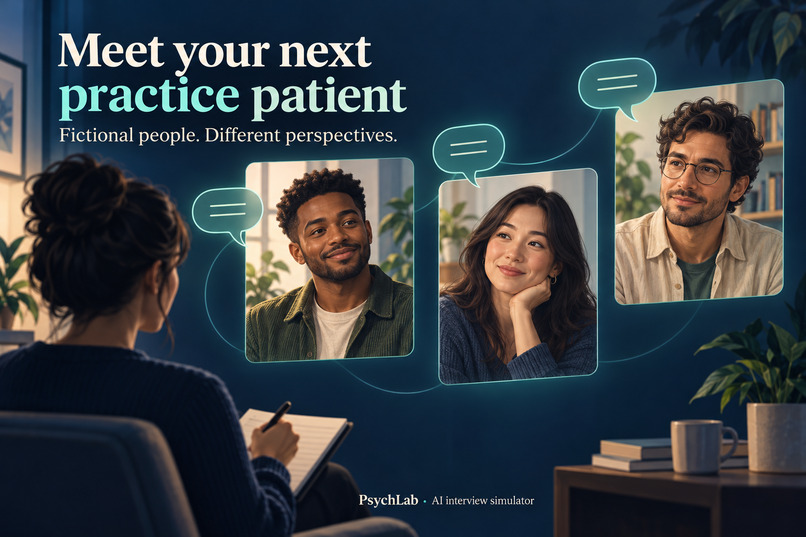
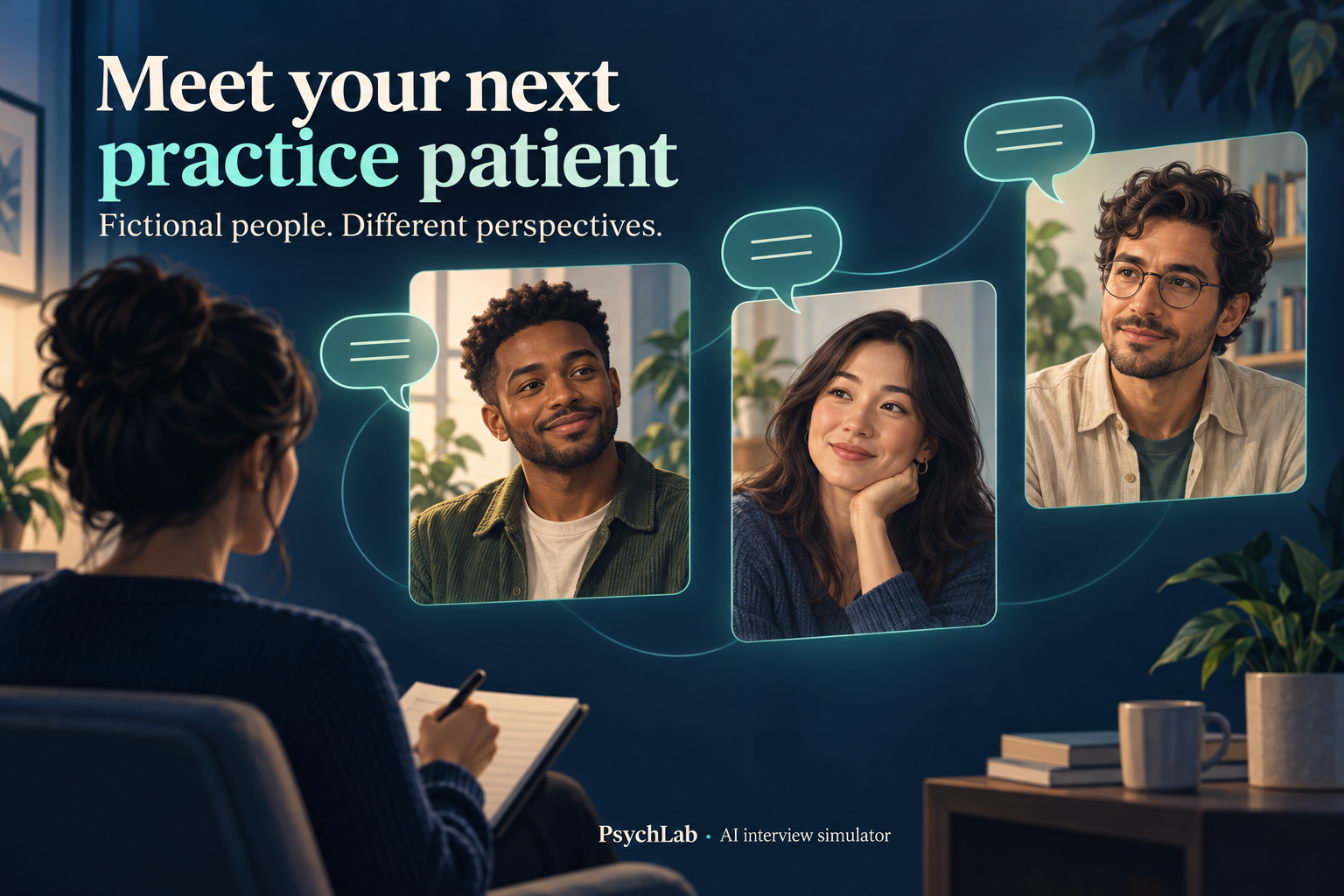
Concept illustration: Meet fictional patients with distinct personalities and simulated life experiences.
-
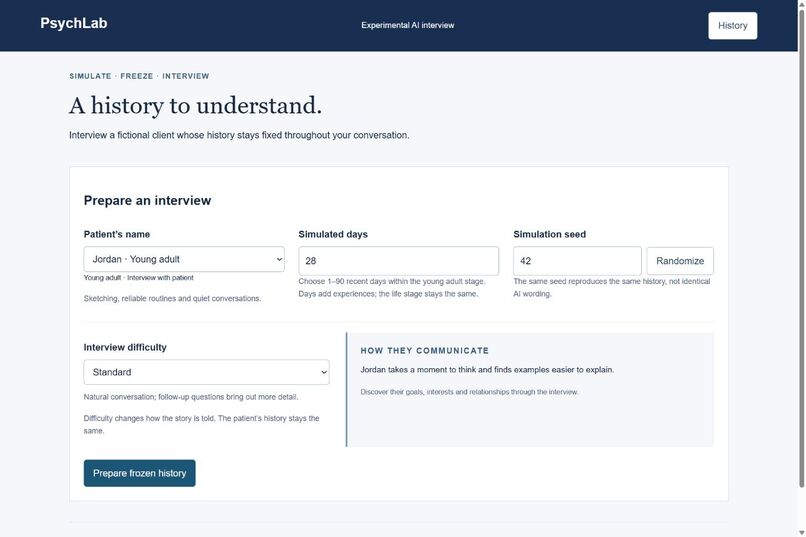
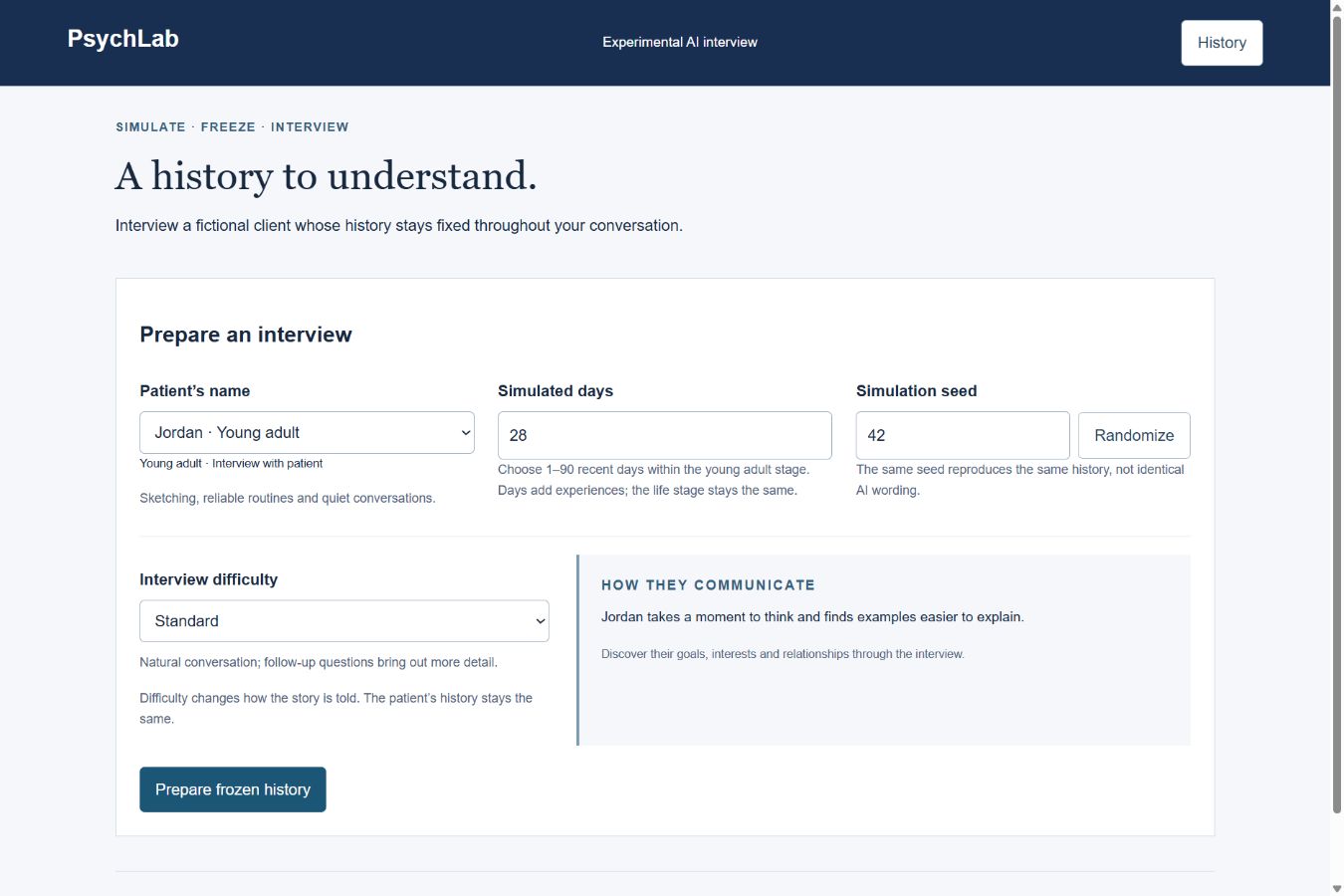
repare your interview: choose a patient, simulated days, simulation seed, and difficulty.
-
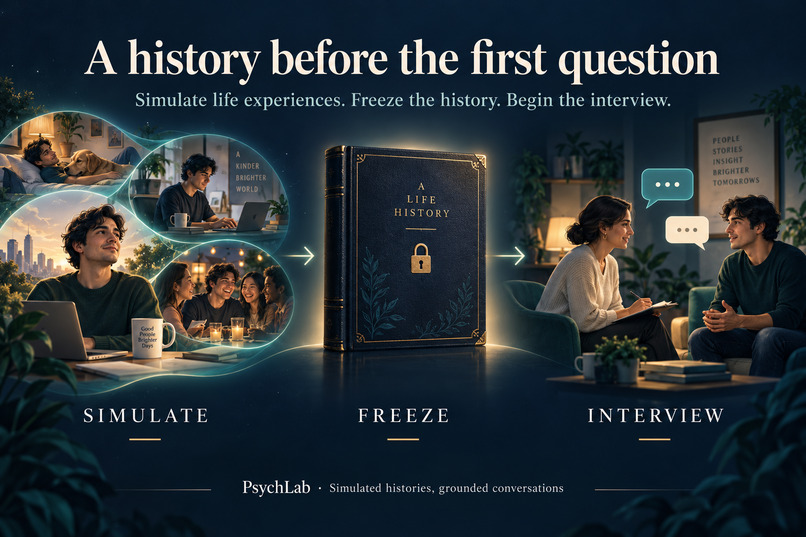
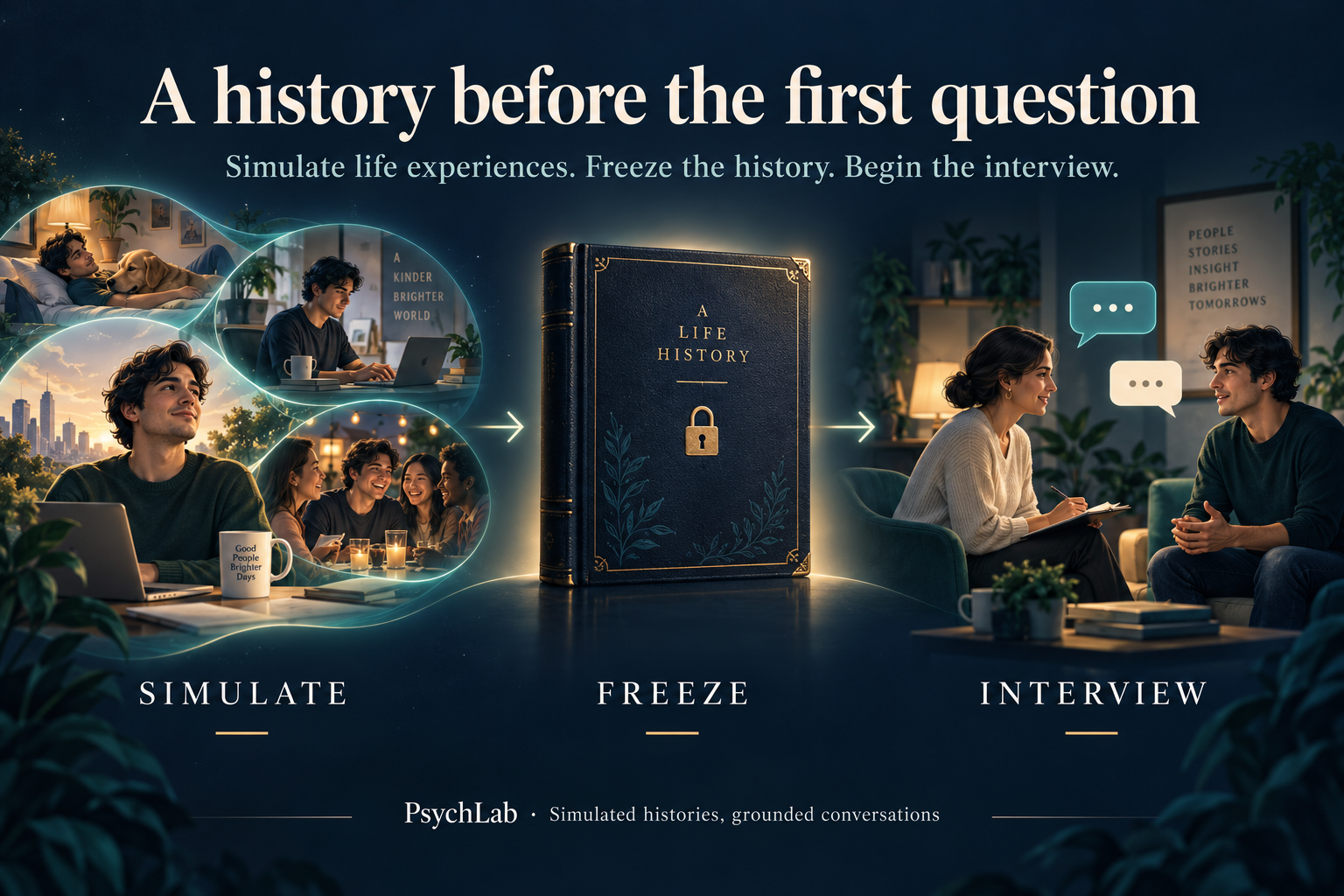
Concept illustration: Simulate life experiences, freeze the history, and begin the interview.
-
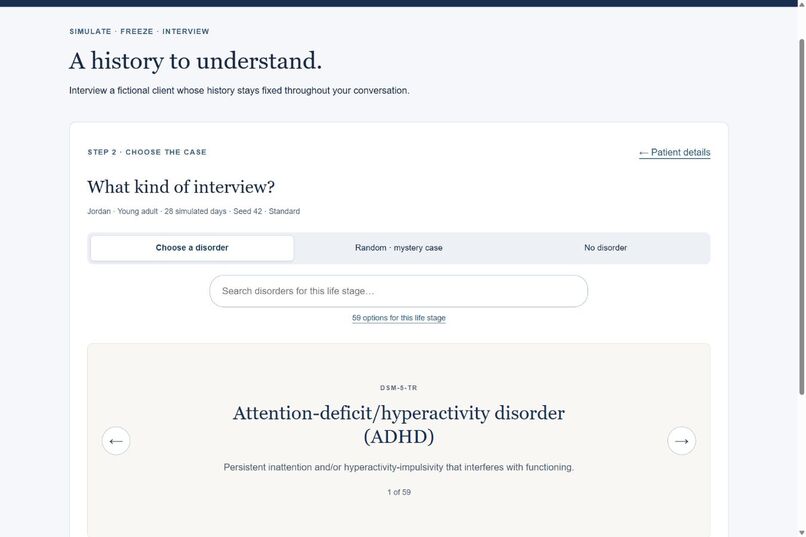
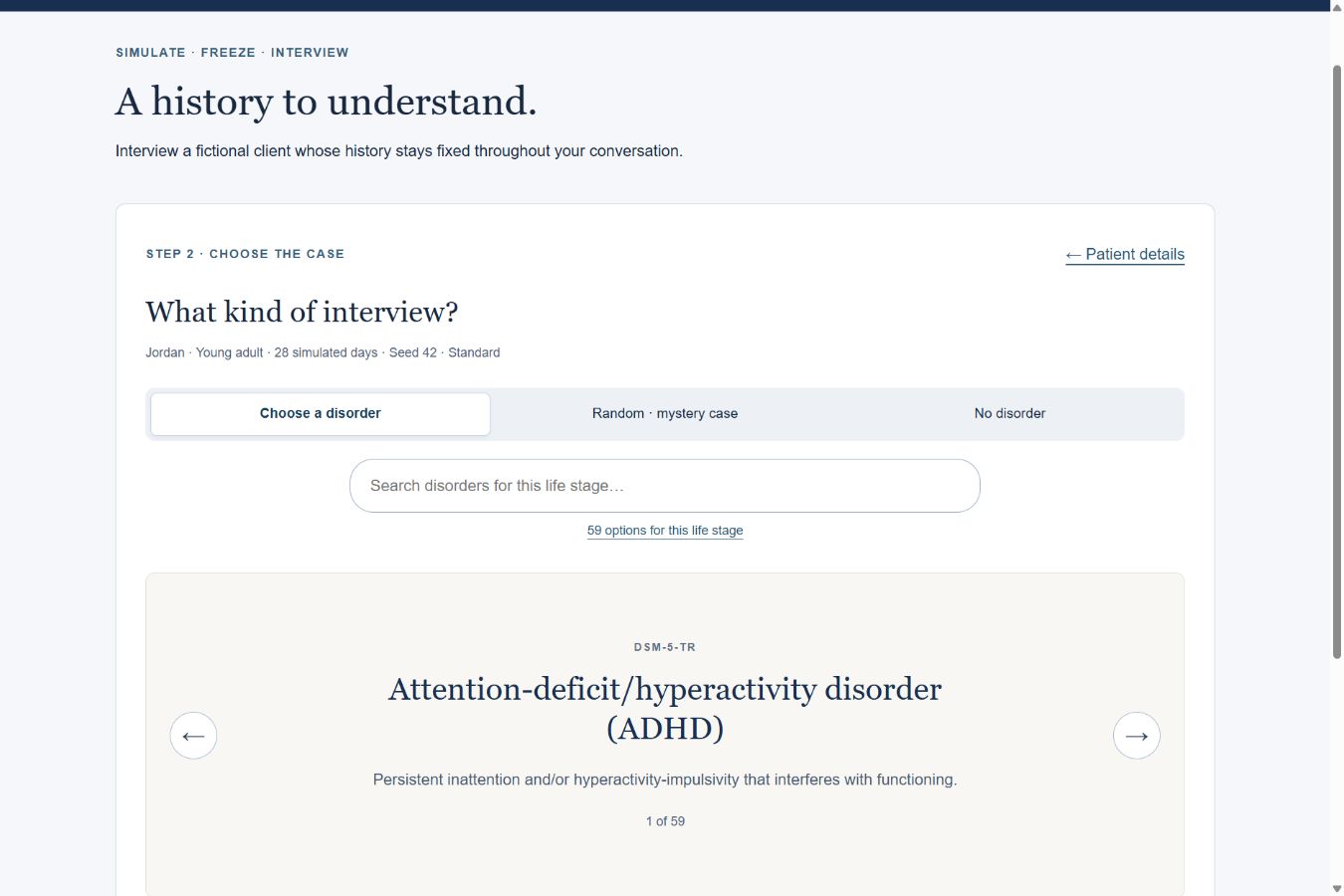
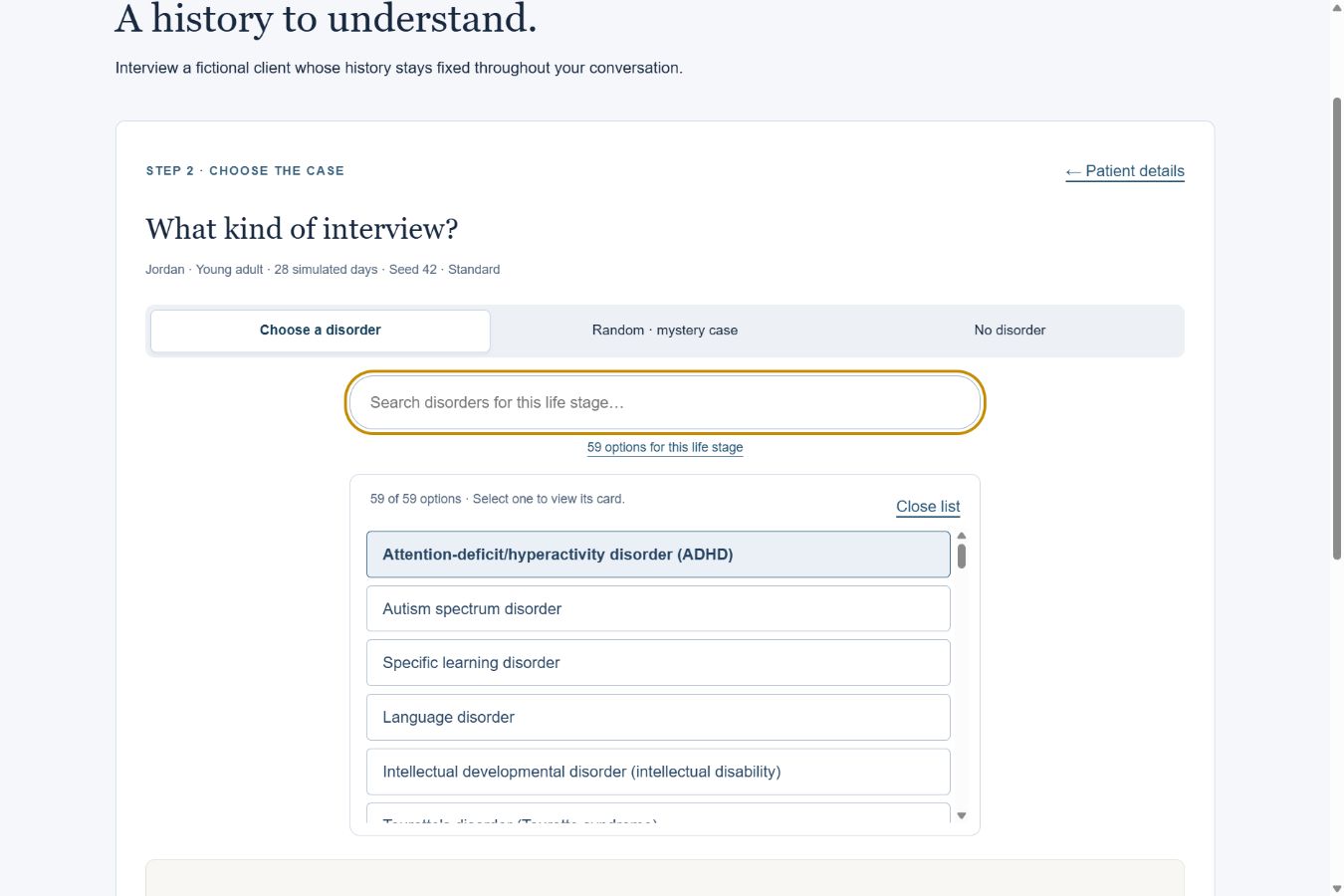
Choose a disorder, explore a mystery case, or practice with no disorder selected.
-
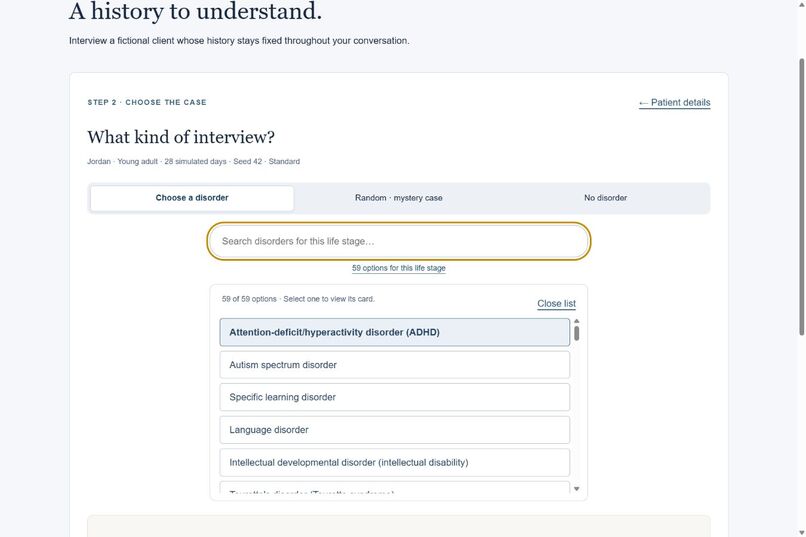
Search and browse the available disorder options for your patient’s life stage.
-
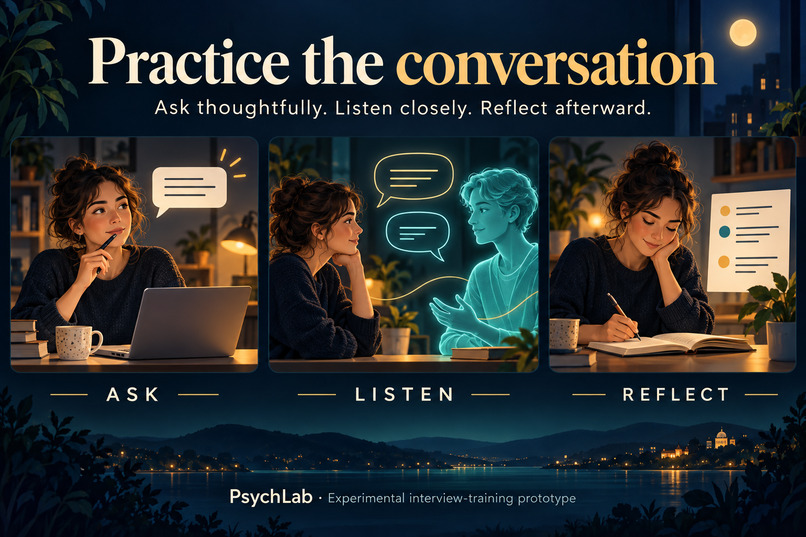
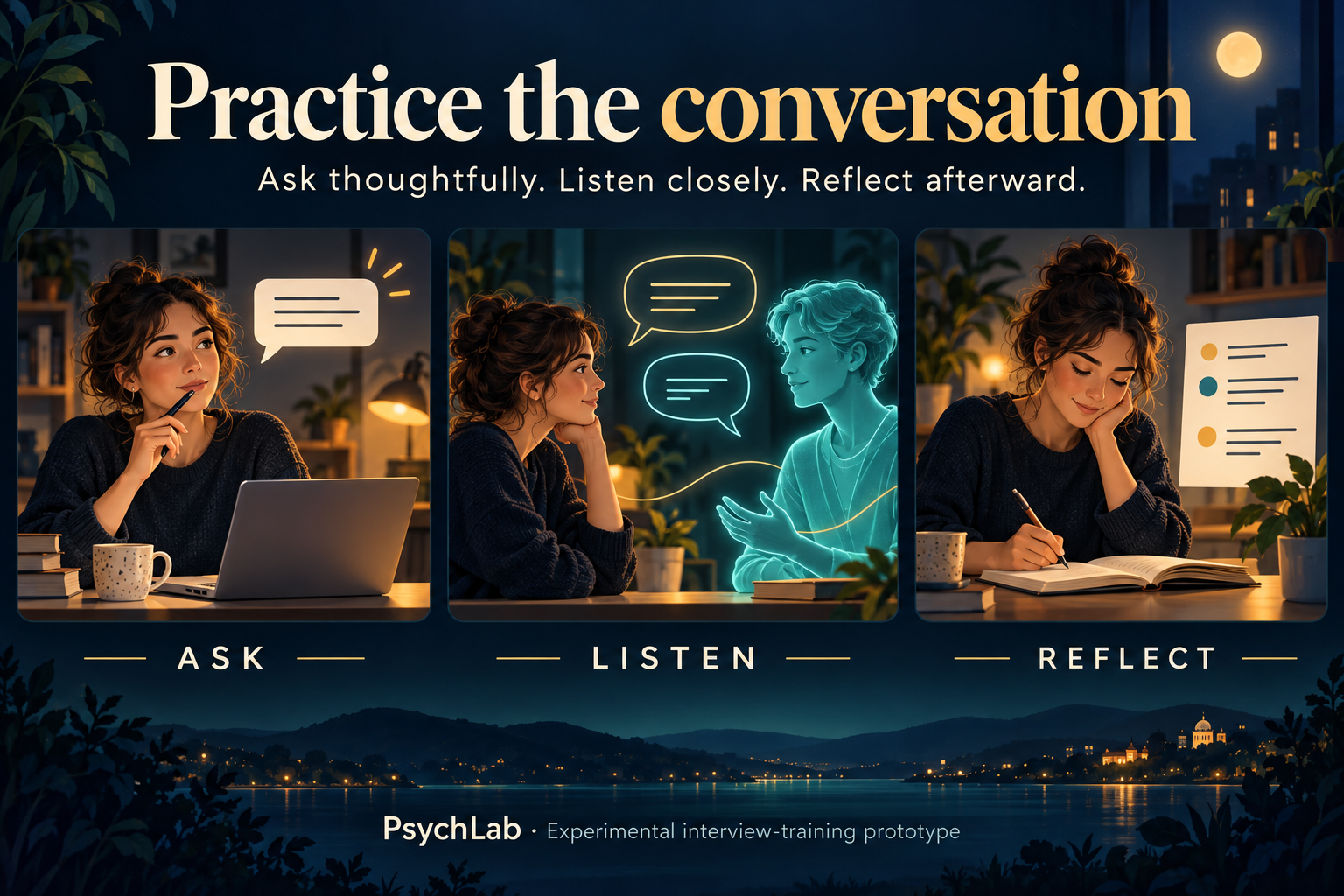
Concept illustration: Ask thoughtfully, listen closely, and reflect on your interview.
-
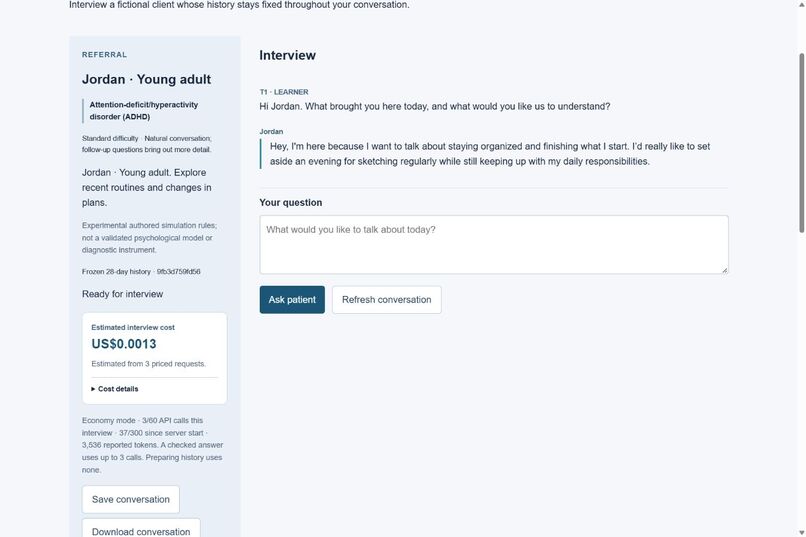
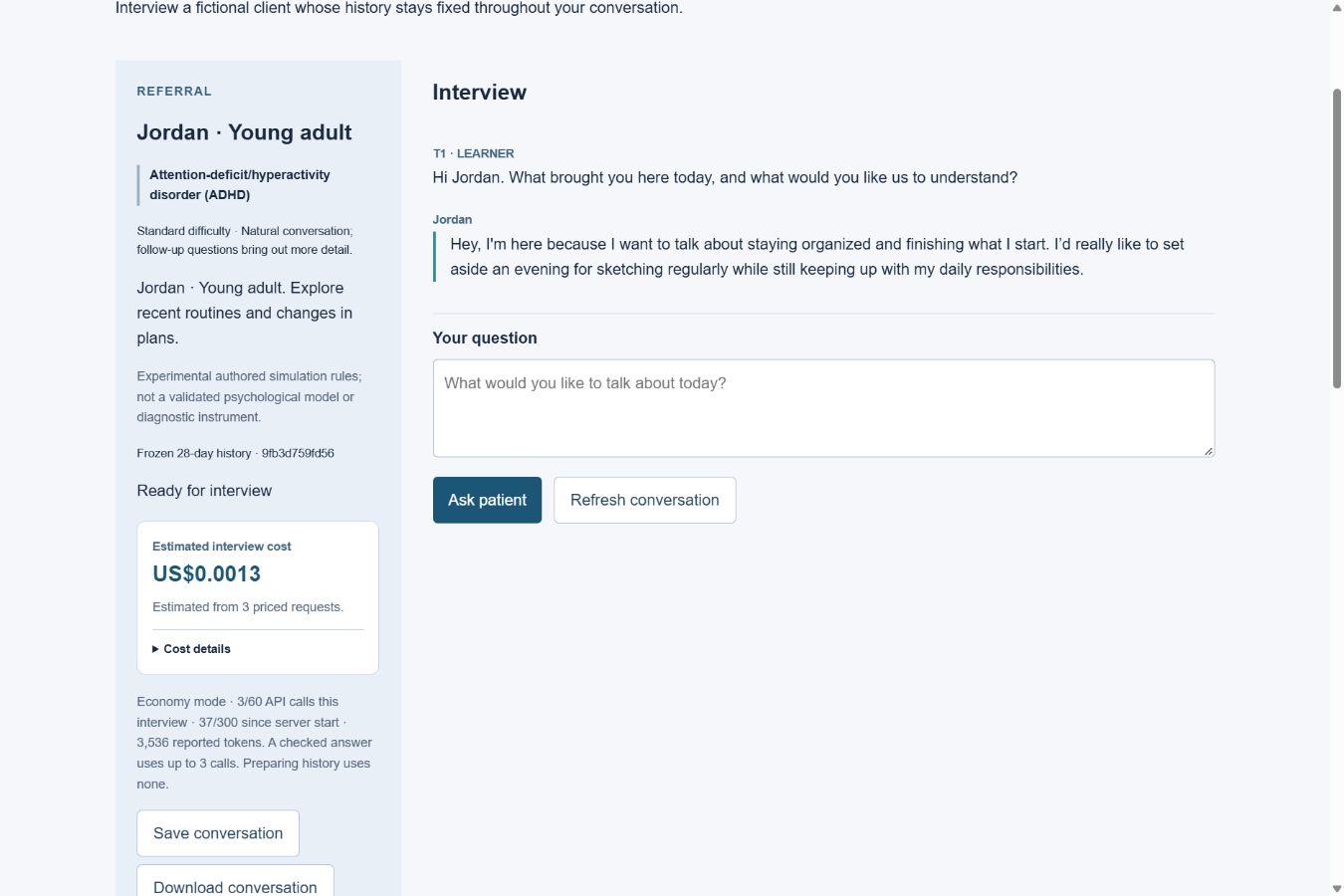
Interview an AI patient using a fixed simulated history, with visible cost tracking and saved conversations.
-
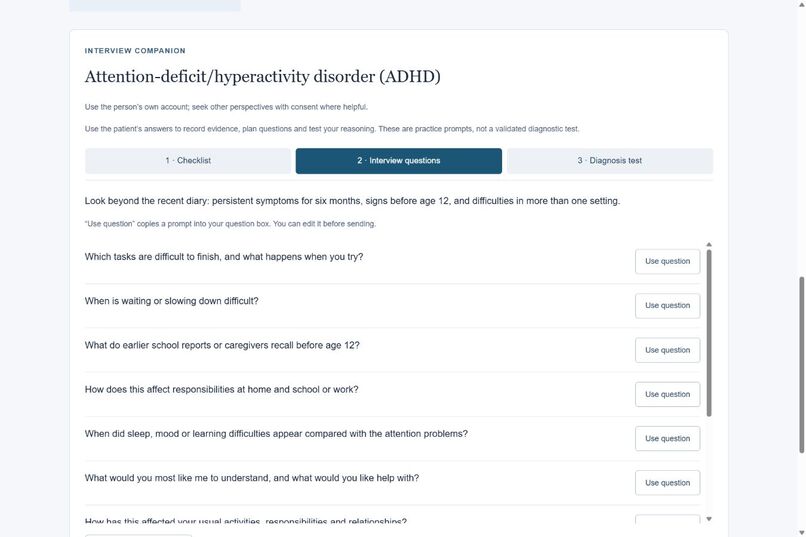
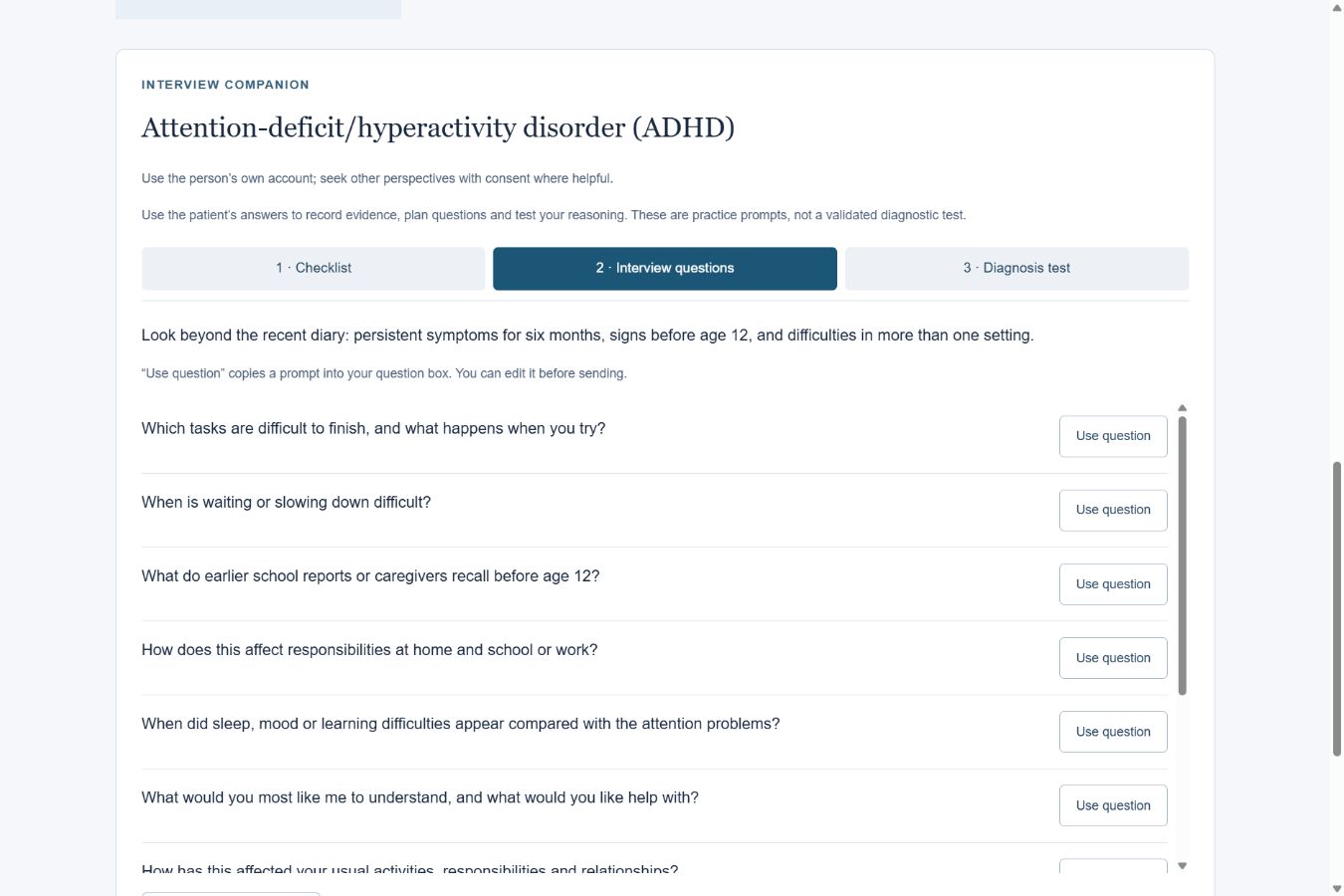
Explore suggested questions with the interview companion to guide follow-up and reflection.
Inspiration
Inspiration
PsychLab began with a question: How can someone practice psychological interviewing before working with a real patient?
Learning about mental health conditions is different from having a conversation with someone whose experiences, personality, and communication style shape what they share. We wanted to create a space where learners could practice asking thoughtful questions, listening carefully, and exploring a fictional patient’s story.
What it does
PsychLab is an AI-powered psychological interview simulator. Users choose a fictional patient, life stage, and case configuration, then prepare a simulated history before beginning an interview.
The simulation creates experiences across a selected number of days. That history is then “frozen,” giving the AI a fixed background to draw from during the conversation. Personality and psychological context help guide how the patient responds.
Users can explore different cases, adjust simulation settings, and save conversations for reflection. The goal is to support interview practice—not diagnose real people or replace clinical supervision.
How we built it
We built PsychLab with a browser-based interface and a Node.js backend. The simulation logic creates the patient’s background locally, while Featherless provides language-model responses during interviews.
We organized the patient context around personality, life stage, and psychological presentation. Rather than asking the AI to invent a new patient from scratch with every reply, we supply relevant information from the prepared case.
To keep usage manageable, we added request budgets and limits on the context sent to the model. We also connected our domain through Cloudflare Tunnel and configured email-code authentication for approved users. The server independently checks signed access tokens before accepting requests through the public domain.
Challenges we faced
One major challenge was balancing natural conversation with consistency. A believable answer is not necessarily an answer supported by the patient’s history. We worked on grounding responses in the prepared case, while recognizing that model reliability still needs further evaluation.
Another challenge was making simulated experiences relevant to different life stages. Changing a patient’s age category should affect the context of their experiences, not simply change a label.
Deployment introduced another lesson: registering a domain does not make a local application continuously available. Our current prototype runs from a laptop, so availability still depends on that device staying awake and connected.
What we learned
We learned that an effective AI simulation needs more than a detailed prompt. It needs structured context, clear boundaries, cost controls, and testing.
We also learned to be cautious about evaluation results. Higher review scores alone do not establish better responses, especially when the evaluation process is inconsistent.
What’s next
Our next priorities are testing complete interview sessions, improving consistency across cases, and gathering feedback from psychology educators and learners. We also want to move to always-on hosting.
PsychLab remains an experimental training prototype. Its clinical validity and educational effectiveness have not yet been established, but it provides a foundation for exploring more accessible psychological interview practice.
What it does
How we built it
Challenges we ran into
Accomplishments that we're proud of
What we learned
What's next for MindLab:Blind Participants
Built With
- ai
- astra
- cloudflare
- css3
- featherless
- generative
- html5
- javascript
- node.js
- qwen
- tunnel

Log in or sign up for Devpost to join the conversation.