Inspiration
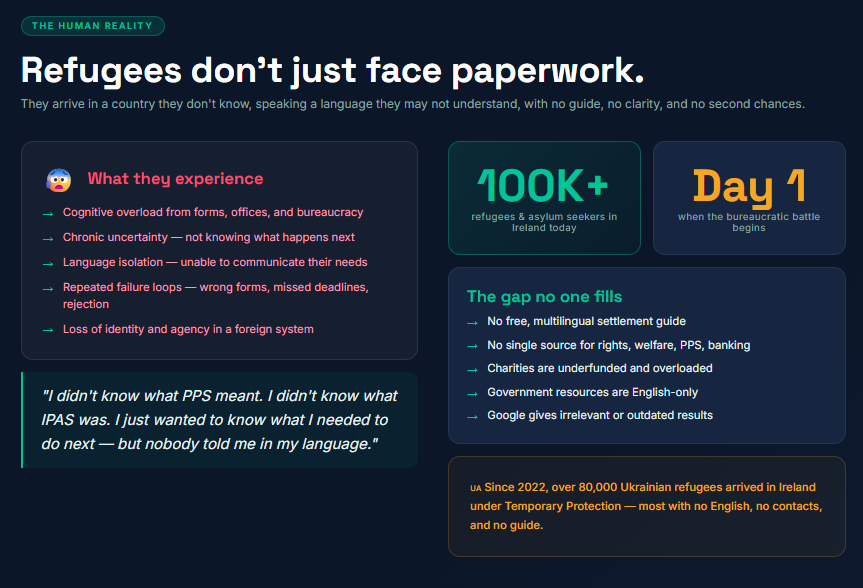
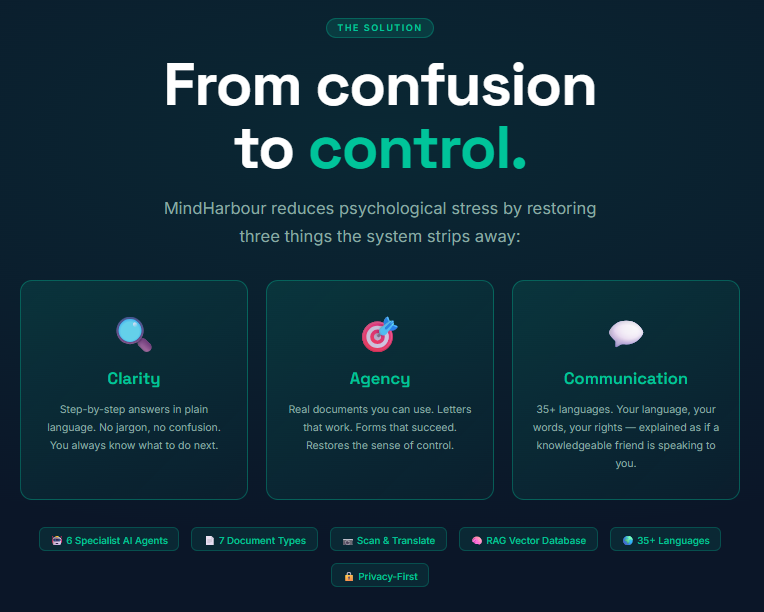
Moving to a new country can be overwhelming. Refugees, immigrants, and international students often face stress, loneliness, language barriers, and unfamiliar systems at the same time. Many also struggle with low literacy or limited confidence when completing important tasks such as opening a bank account, applying for a PPSN, or getting an IRP.
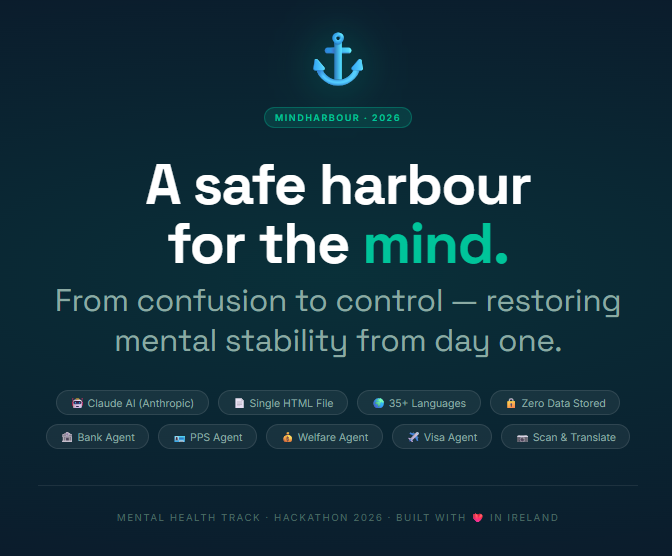
We wanted to build something that supports both mental well-being and daily survival needs. That idea became MindHarbour , a safe digital space where users can express how they feel like a diary or journal, while also getting practical help navigating essential processes in a new country.
What it does
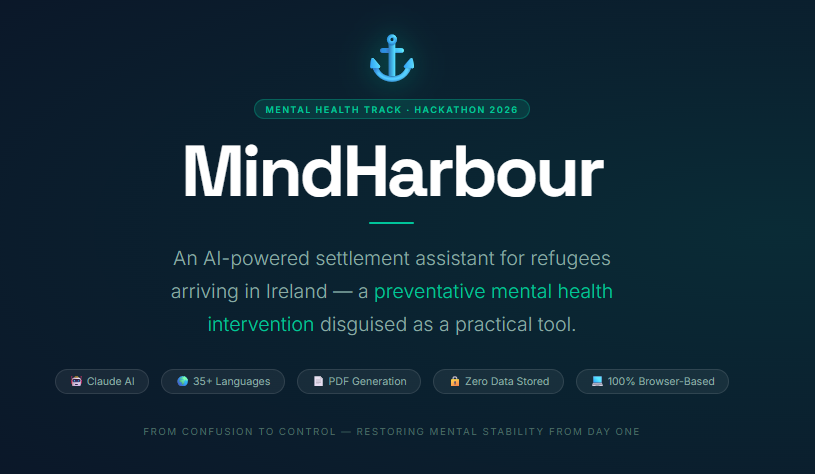
MindHarbour is an AI-powered support app designed for refugees and immigrants adapting to a new environment.
It helps users by:
- Providing a mental health journaling experience through voice or text
- Analyzing entries to detect emotional distress, stress patterns, and possible mental health concerns
- Supporting users with low literacy through simple interaction flows
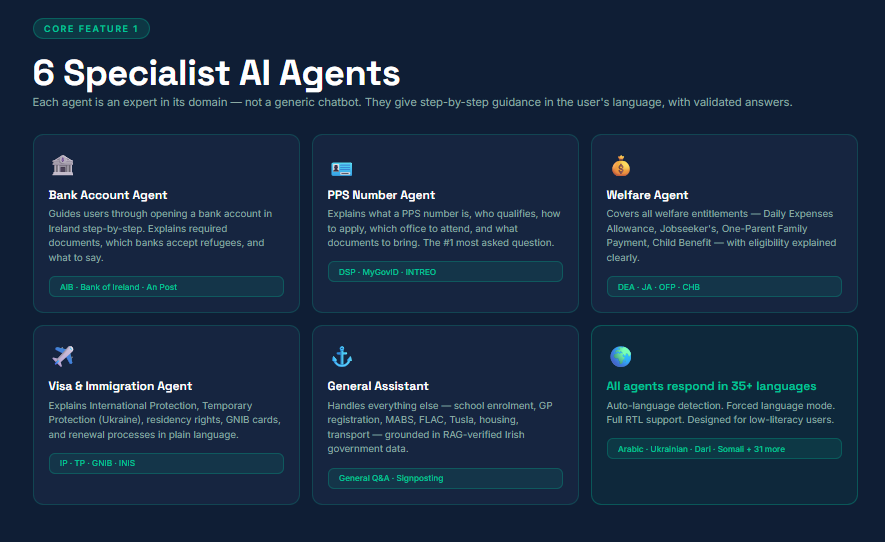
Assisting with real-life tasks such as:
- Creating a bank account
- Applying for a PPSN
- Understanding the IRP process
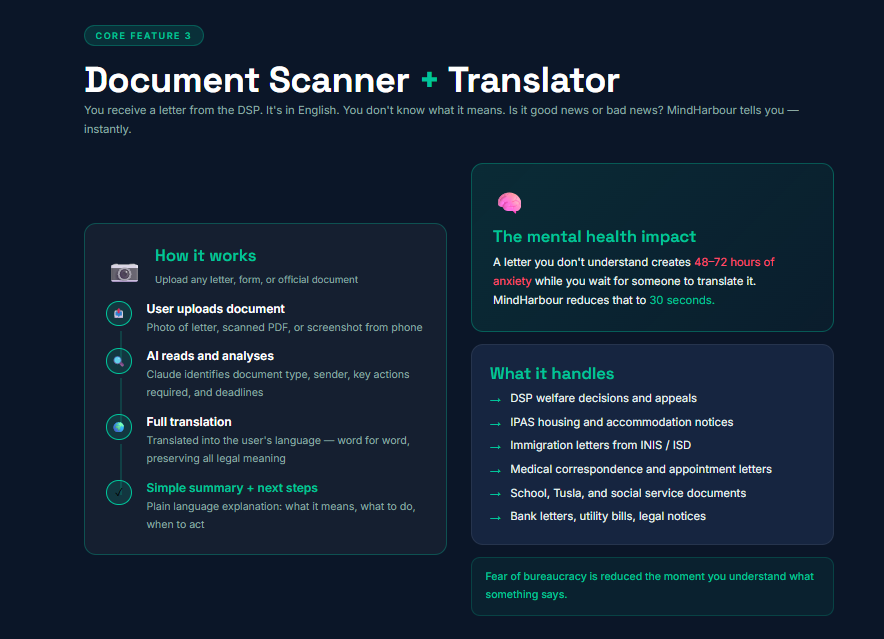
Checking documents through uploaded photos to help users verify whether they may have the right paperwork
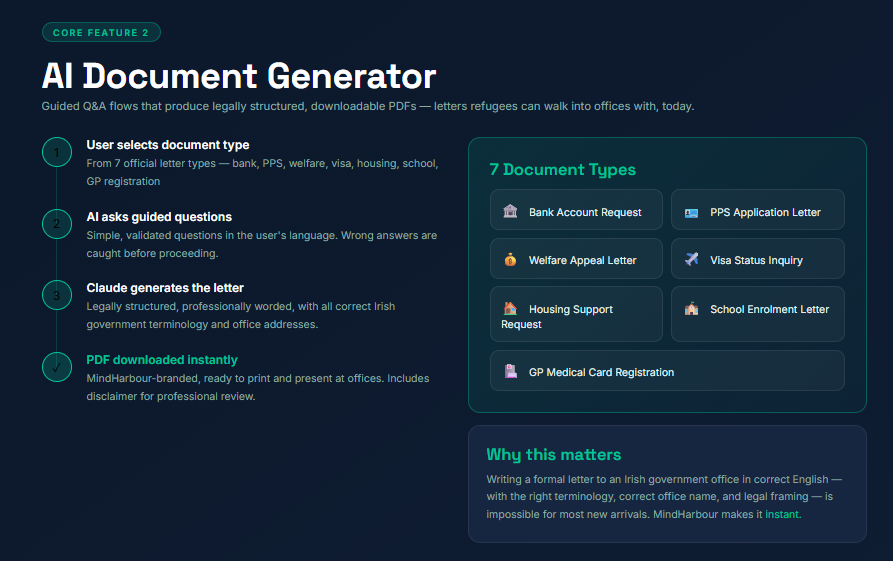
Our vision is to go further by building AI agents that can guide users step by step and eventually help autofill forms and processes, reducing confusion, fear, and mistakes.
How we built it
We designed MindHarbour as a combination of emotional support and practical assistance.
The core of the project is a journaling-style system where users can talk or type about their situation. We then use AI to analyze the input and identify emotional signals such as stress, anxiety, confusion, or sadness. This transforms a normal diary app into a more intelligent support tool.
On top of that, we added a service assistance layer focused on common settlement tasks. We explored how users could submit photos of documents so the system could help check whether the documents appear relevant for applications like PPSN, IRP, or banking.
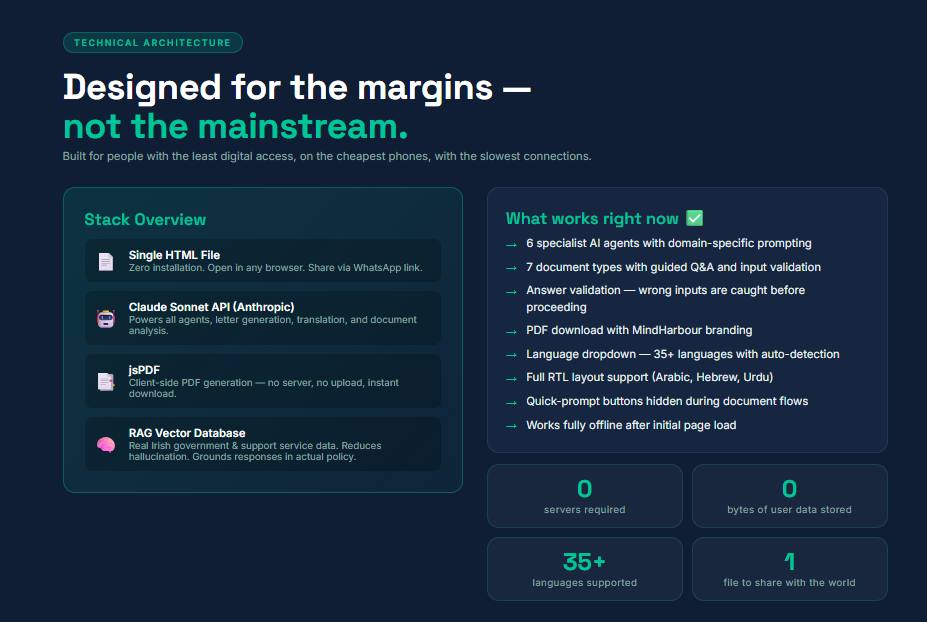
Our planned architecture combines:
- Voice and text input for accessibility
- Natural language processing for emotional and contextual analysis
- Image-based document checking using photo uploads
- A future agent-based workflow system for form guidance and autofill support
In simple terms, we built MindHarbour to answer two questions:
- How is the user feeling?
- What does the user need help doing next?
Challenges we ran into
One of the biggest challenges was balancing two very different problem spaces: mental health support and administrative assistance. We did not want the app to feel too clinical, but we also wanted it to be genuinely useful in day-to-day life.
Another challenge was designing for users with low literacy or limited familiarity with digital systems. Many apps assume people can read long instructions or understand formal application language, but that is often not realistic for newly arrived users.
We also faced challenges around:
- Making the mental health analysis supportive without sounding overly diagnostic
- Figuring out how document checking should work safely and clearly
- Designing flows that are simple, multilingual-friendly, and trustworthy
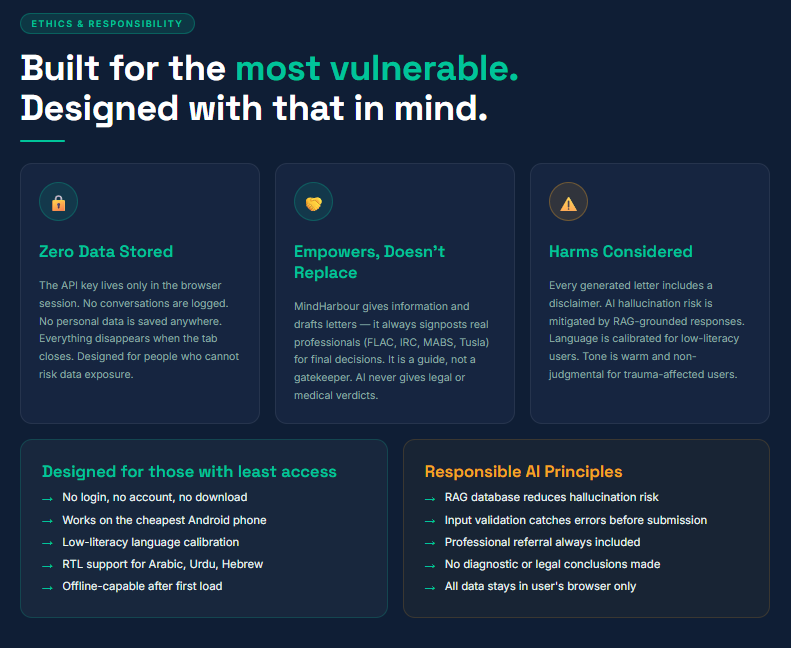
- Thinking ahead about privacy, especially because the app deals with sensitive emotional and personal information
Building something meaningful in a limited time forced us to focus on the most important features first.
Accomplishments that we're proud of
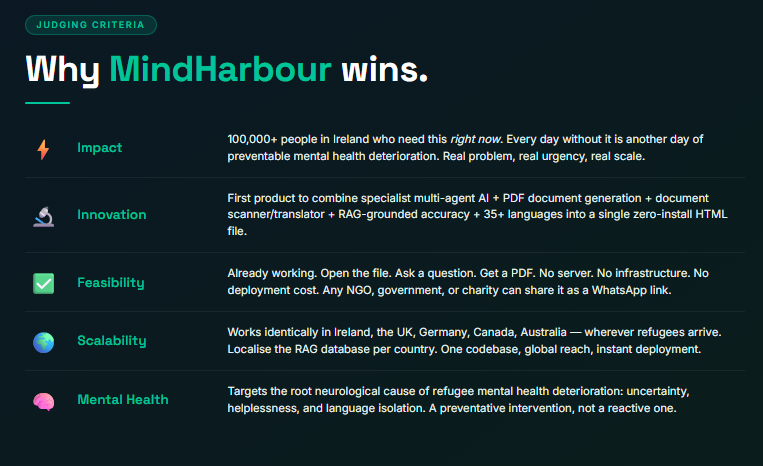
We are proud that MindHarbour is not just another mental health chatbot. It connects emotional care with real-life settlement support, which makes the project more relevant to the people who need it most.
Some accomplishments we are especially proud of:
- Creating a concept that supports both mental health and practical integration
- Making the journaling feature accessible through voice or text
- Addressing the needs of low-literacy users
- Exploring document photo checking as a way to reduce confusion in complex processes
- Building a project with clear social impact for refugees and immigrants
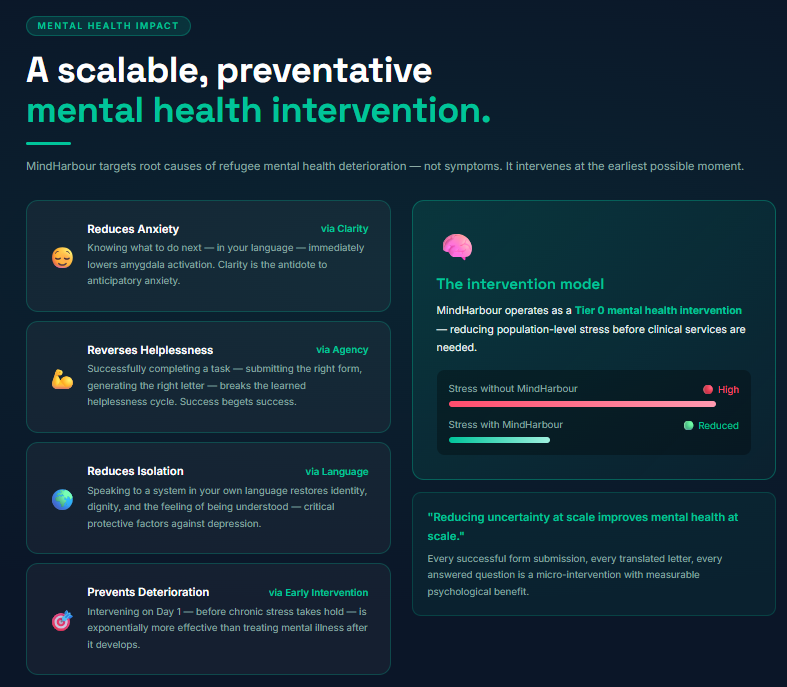
Most importantly, we created something that is empathetic. MindHarbour is designed to reduce stress at the source, not just react after it becomes severe.
What we learned
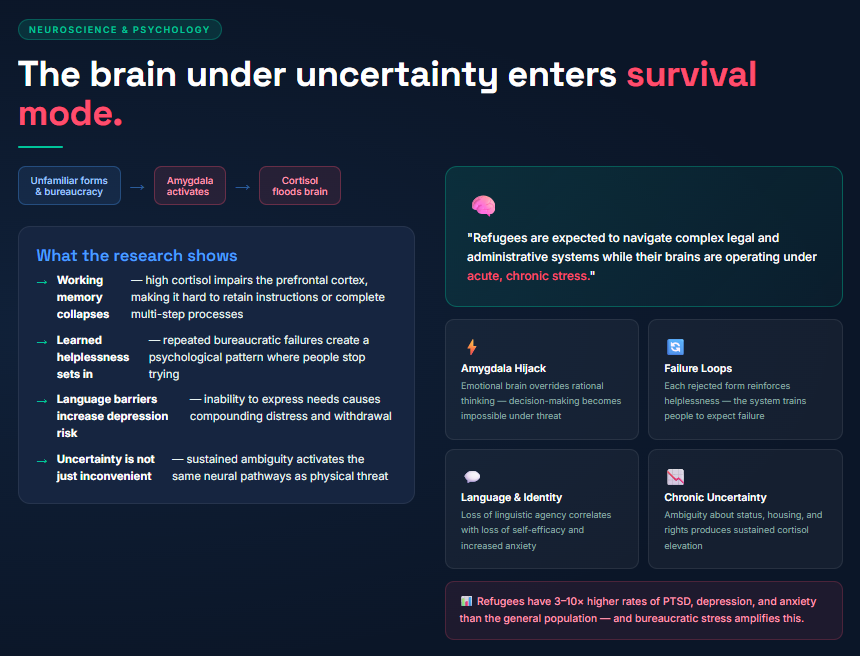
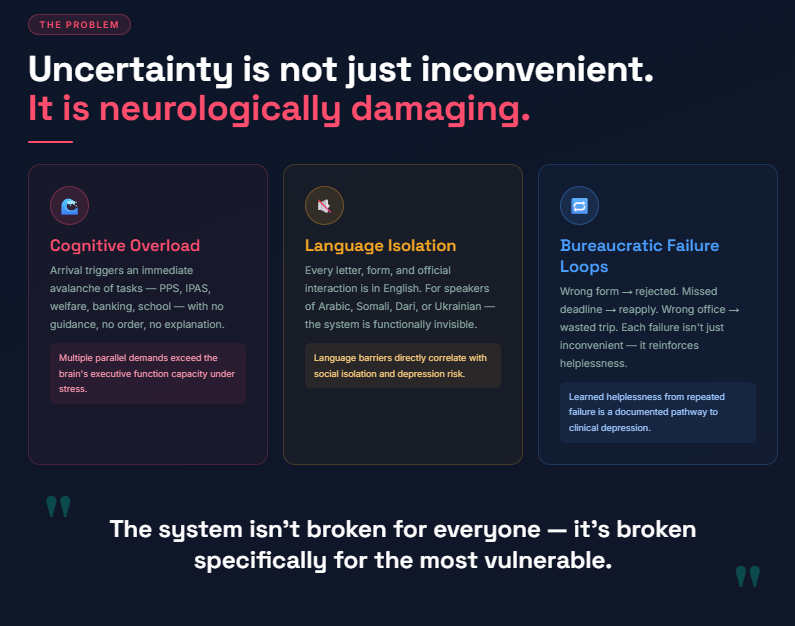
This project taught us that mental health challenges are often deeply connected to everyday barriers. Stress does not come only from trauma or loneliness. It also comes from not knowing how to fill out a form, what document is missing, or where to begin.
We learned that:
- Accessibility matters as much as intelligence
- Simple, supportive design can be more powerful than complex features
- Users need systems that understand both emotion and context
- AI can be used not only to analyze problems, but also to guide people toward practical next steps
We also learned how important it is to design responsibly when working with sensitive topics like mental health, migration, and identity.
What's next for MindHarbour
Our next step is to make MindHarbour more proactive and more helpful in real-world situations.
We want to develop:
- AI agents that can guide users through tasks step by step
- Smart assistance for autofilling forms
- Stronger document validation through image analysis
- More accessible support for multilingual and low-literacy users
- Personalized recommendations based on both emotional state and practical needs
In the long term, we want MindHarbour to become a trusted companion for people starting over in a new country, a tool that supports both their mental well-being and their ability to navigate life with confidence.
Project Story
About the project
MindHarbour is an AI-powered journaling and support platform built for refugees, immigrants, and newcomers facing emotional stress while adapting to a new country.
The app works like a diary: users can describe their situation through voice or text, and the system analyzes their emotional condition to identify signs of stress, anxiety, or other mental health difficulties. But MindHarbour goes further than emotional analysis. It also helps users with important life processes such as applying for a PPSN, understanding IRP requirements, opening a bank account, and checking documents through photos.
The project was inspired by the idea that mental health support should not exist separately from everyday challenges. For many newcomers, stress is caused not only by emotional hardship, but by confusion, bureaucracy, and lack of accessible guidance.
By combining journaling, AI analysis, document support, and future workflow automation, MindHarbour aims to become a digital harbour, a place of safety, clarity, and support during one of the hardest transitions in a person’s life.

Log in or sign up for Devpost to join the conversation.