Inspiration## Inspiration
Engineering students often face an overwhelming amount of coursework, from Data Structures and Algorithms to Electrical Circuits and Mathematics. The hardest part isn't always studying—it's knowing what to study first.
Mindguide (RUET AI) was created to eliminate this guesswork. Instead of giving students another generic to-do list, Mindguide analyzes their mastery, course workload, exam trends, and academic goals to answer one simple question:
“What should I study right now to maximize my academic performance?”
What It Does
Mindguide is an AI-powered academic mentor and personalized study assistant designed for engineering students.
Key Features
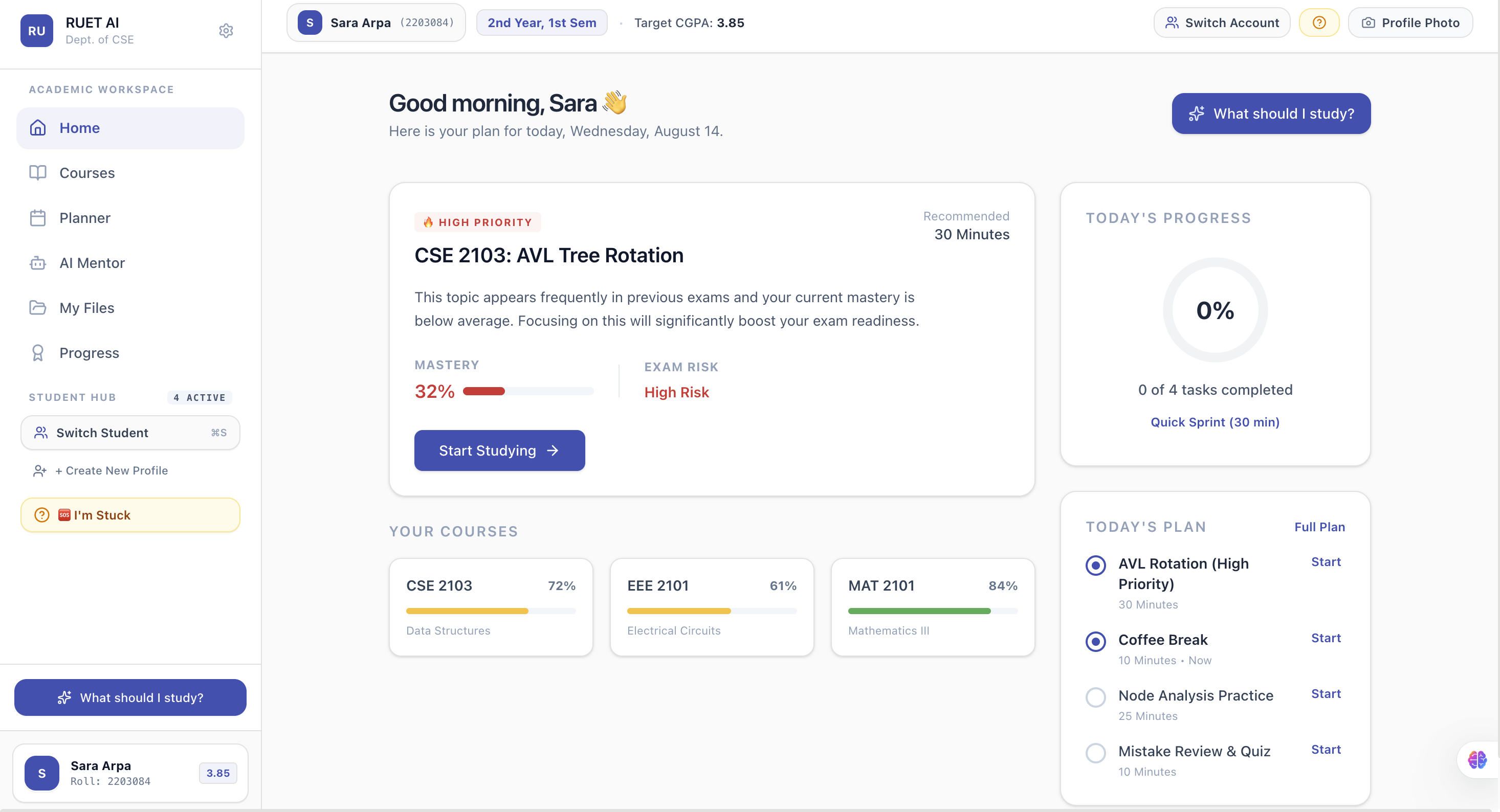
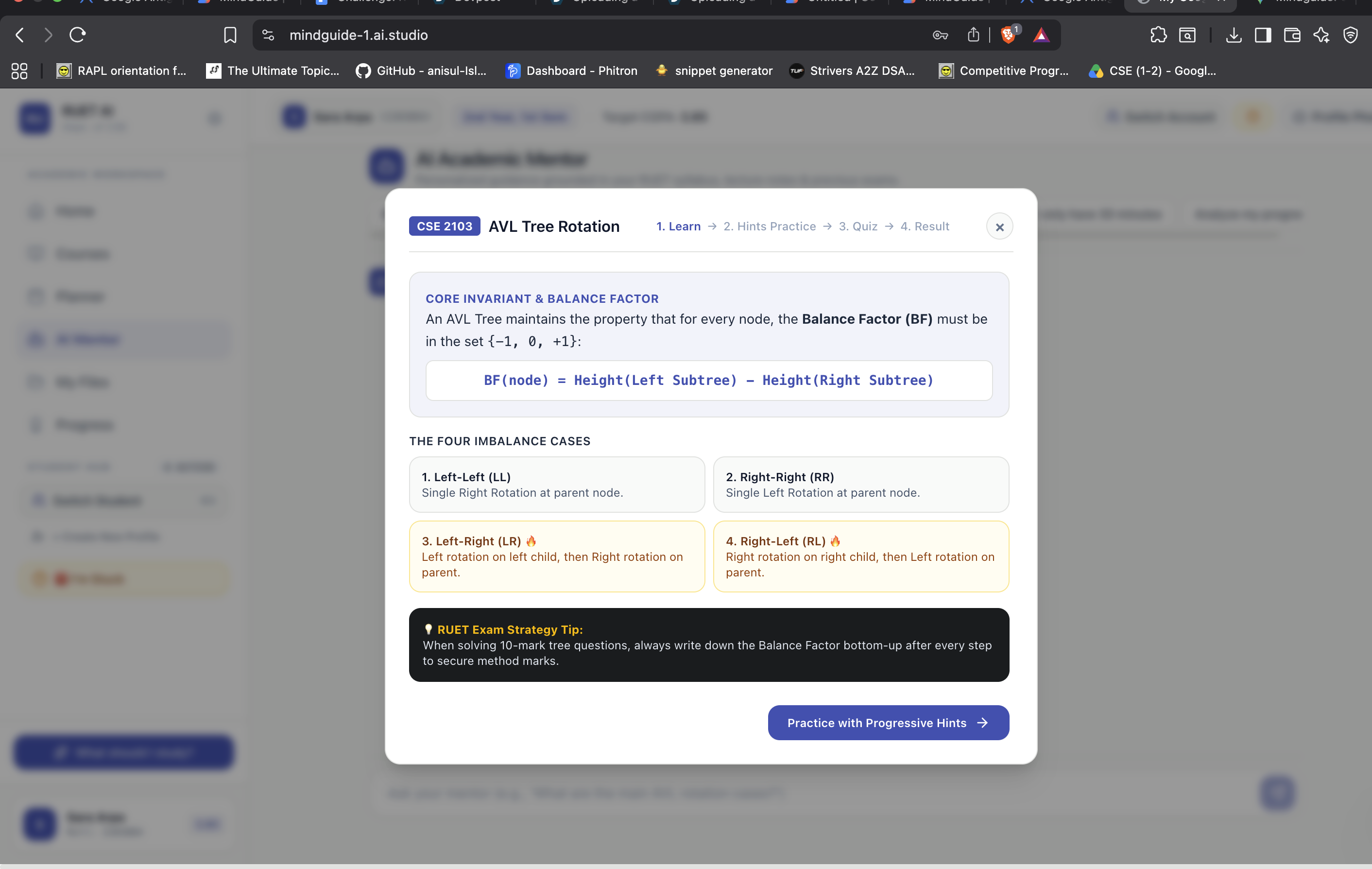
- Smart Study Prioritization: Identifies high-risk topics by combining student mastery with historical exam importance. For example, it can flag CSE 2103 — AVL Tree Rotation as a priority topic.
- Personalized Daily Planner: Converts priorities into manageable micro-sprints with focused study sessions and break intervals.
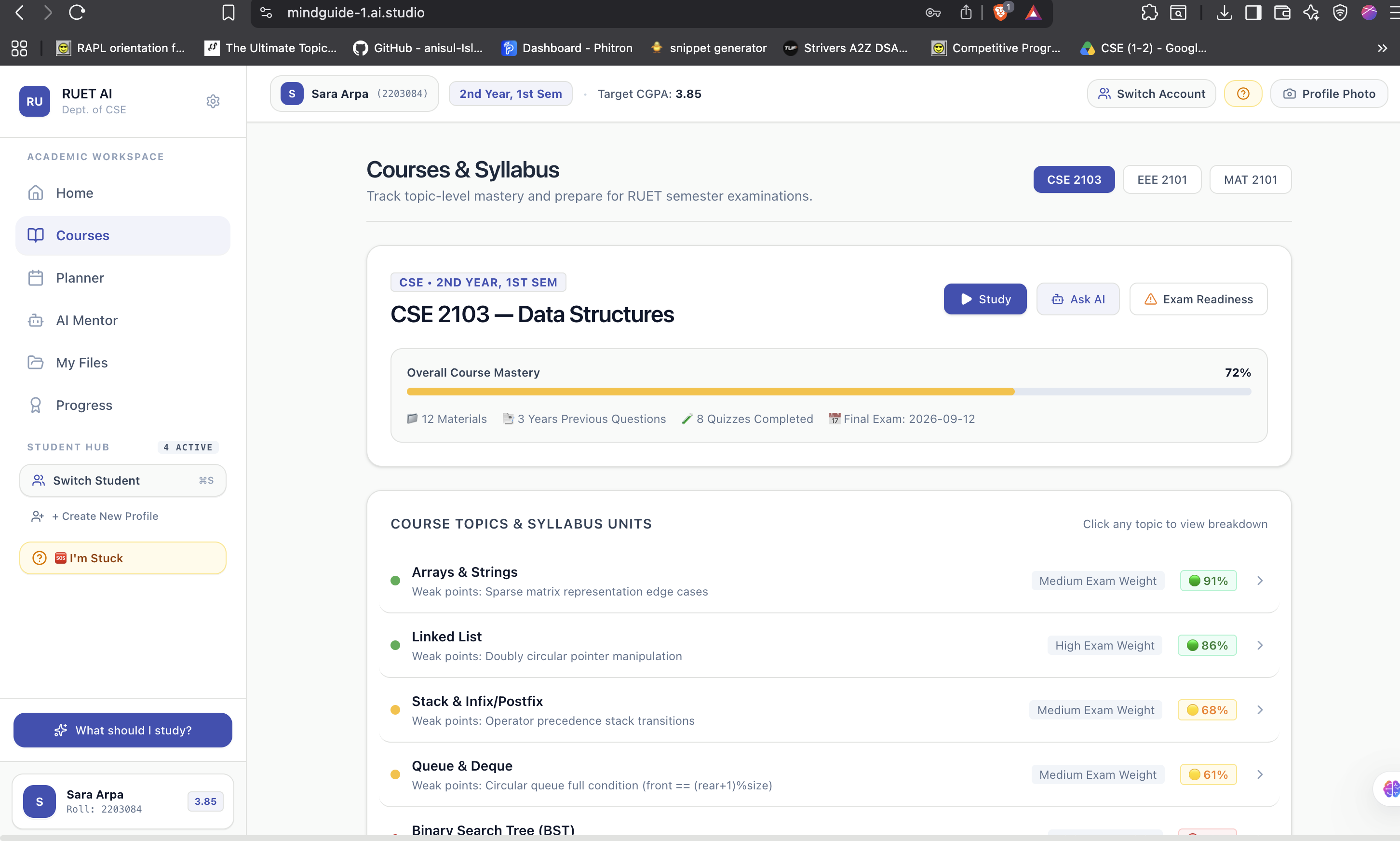
- Unified Academic Workspace: Brings courses such as Data Structures, Electrical Circuits, and Mathematics into one organized dashboard.
- Real-Time Performance Tracking: Visualizes daily progress, topic mastery, course performance, and progress toward a target CGPA.
- Exam Risk Analysis: Helps students identify topics where low mastery and high exam importance overlap.
How We Built It
Mindguide combines a modern interactive frontend with an academic prioritization engine.
The recommendation logic evaluates student performance against topic importance and exam relevance to dynamically calculate study risk:
Exam Risk = f(Mastery Level, Historical Topic Weight, Exam Urgency)
The system then ranks topics and transforms those priorities into actionable daily study plans.
The interface was designed around a simple principle: less information overload, more actionable guidance.
Challenges We Faced
1. Making Recommendations Useful
A student may have dozens of weak topics, but studying all of them is unrealistic. We had to design a prioritization system that balances:
- Mastery gaps
- Topic importance
- Exam urgency
- Available study time
2. Simplifying Complex Information
Academic dashboards can quickly become overwhelming. We had to present courses, progress, risk scores, schedules, and performance analytics in a way that students can understand within seconds.
What We Learned
Building Mindguide taught us that personalized education isn't just about adding AI—it is about turning complex academic data into clear and actionable decisions.
We learned how to:
- Build adaptive prioritization algorithms.
- Design interfaces that reduce cognitive overload.
- Translate student performance data into meaningful recommendations.
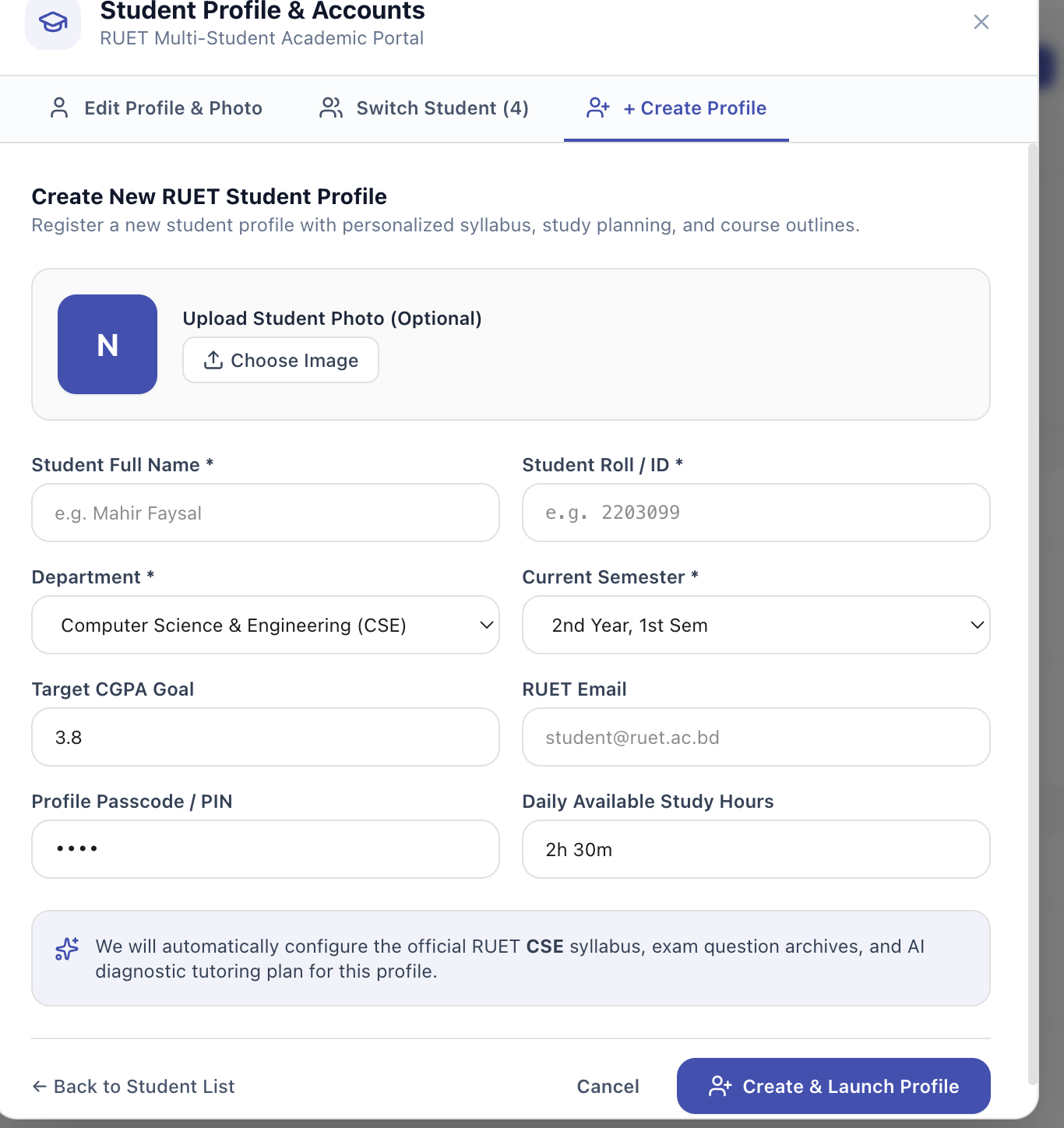
- Create personalized study experiences around real academic needs.
What's Next
Mindguide is designed to evolve into a complete AI academic companion.
Future improvements include:
- Interactive AI Mentor: Students can click “I'm Stuck” to receive step-by-step help with difficult concepts.
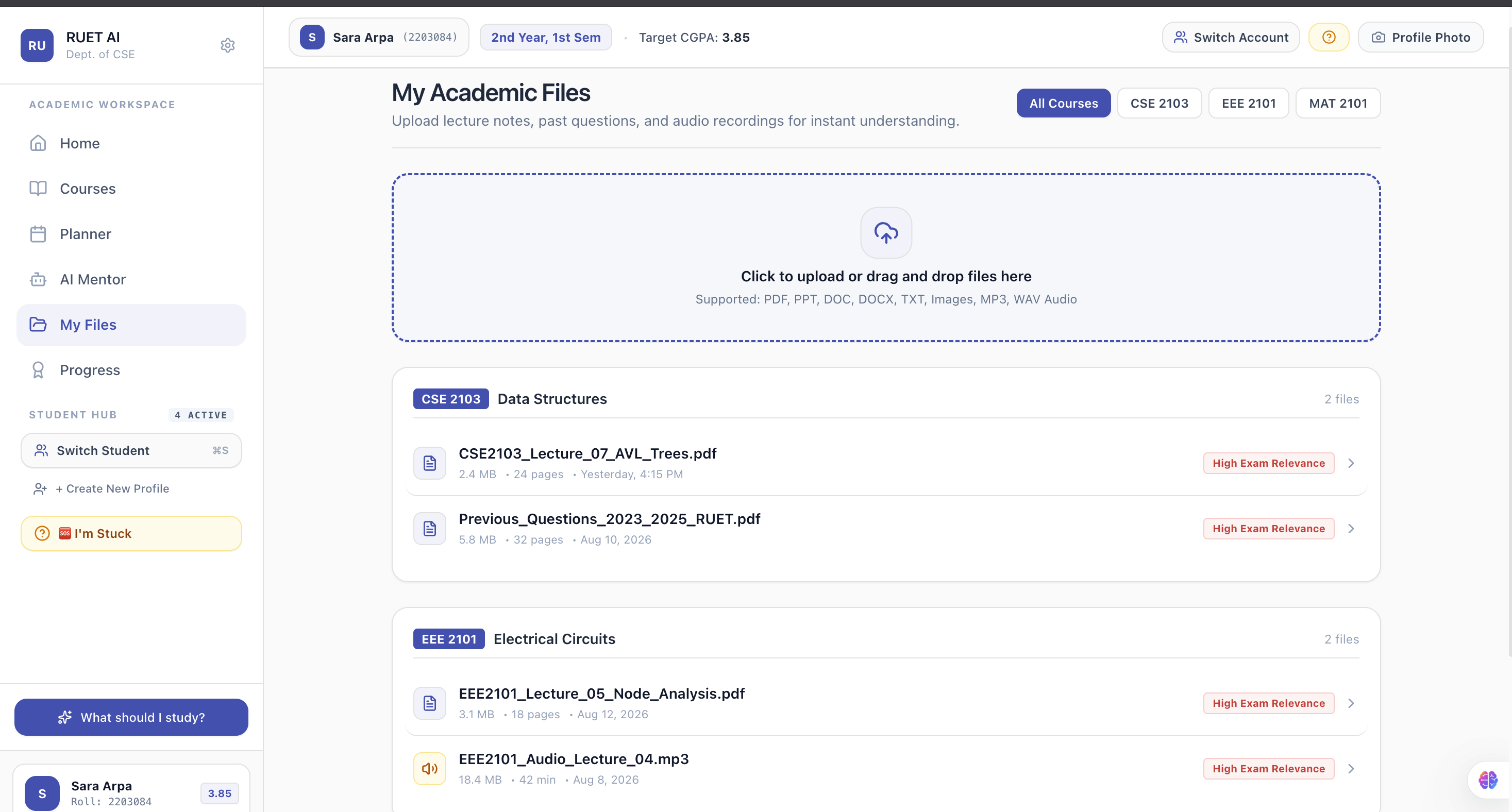
- Document Intelligence: Upload lecture slides, notes, and question papers for AI-powered analysis.
- Exam Trend Analysis: Detect repeated concepts and emerging question patterns from previous exams.
- Long-Term Academic Analytics: Track semester-wide performance and predict progress toward CGPA goals.
- Adaptive Planning: Automatically update the study plan as the student's mastery and deadlines change.
Our Vision
Mindguide aims to become more than a planner.
It is a personal academic navigation system that helps every student know what to learn, when to learn it, and why it matters.
What it does
How we built it
Challenges we ran into
Accomplishments that we're proud of
What we learned
What's next for Mindguide
Built With
- ai
- studio
