Inspiration
Inspiration
We wanted to create a simple way for people to pause, reflect on how they are doing, and understand their wellbeing over time.
Many wellbeing tools can feel overwhelming or focus too heavily on complicated dashboards. We wanted MindGuard AI to feel different: simple, calm, and focused on daily self-awareness.
What We Built
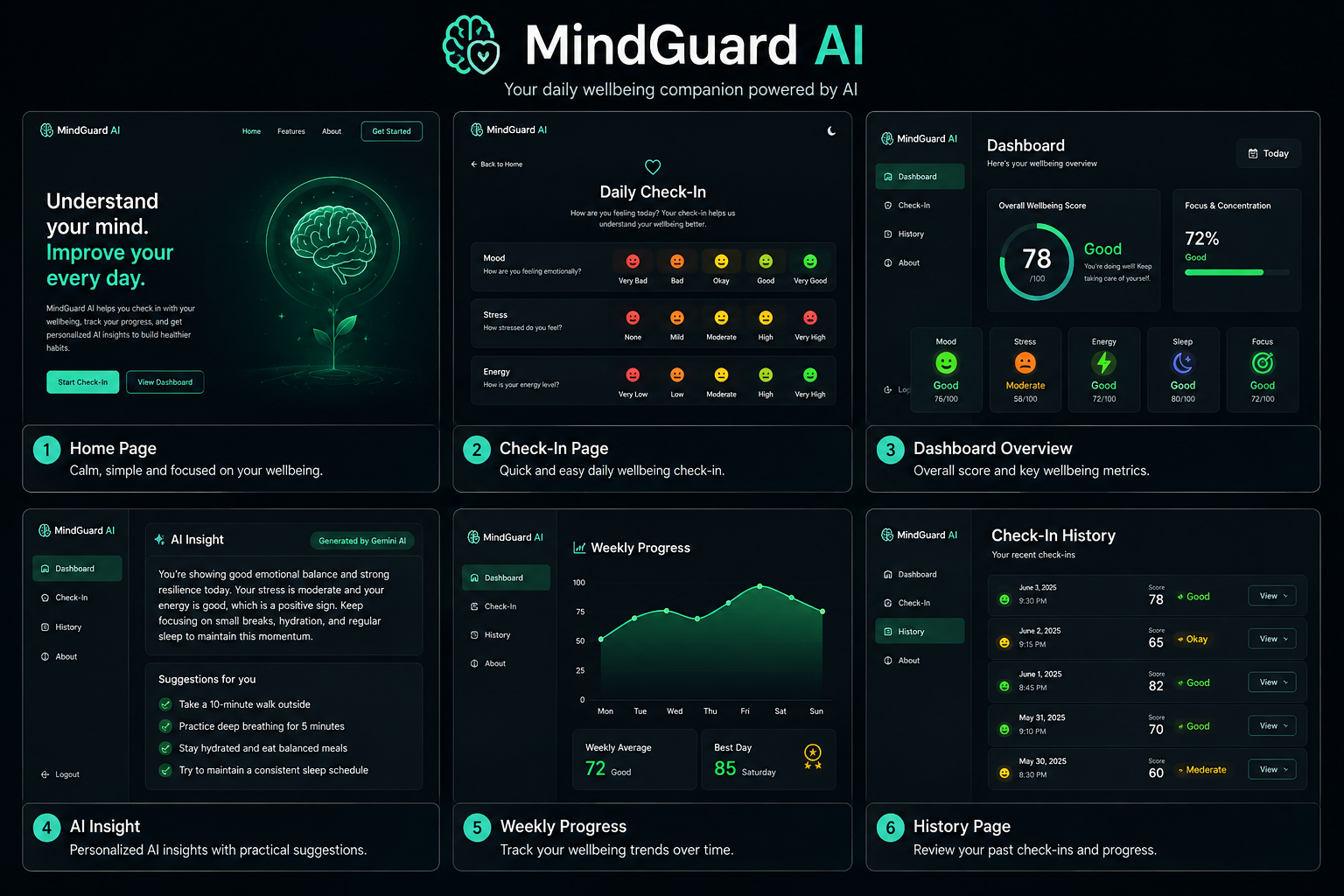
MindGuard AI is an AI-powered wellbeing companion that allows users to complete a short daily check-in covering:
- Mood
- Stress
- Energy
- Sleep
- Focus
The application converts these answers into an overall wellbeing score and visual metrics.
Users can also see their wellbeing progress over time through a weekly trend chart and review previous check-ins through the history page.
The dashboard includes an AI Insight section that provides a concise interpretation of the latest check-in and practical suggestions.
How We Built It
We built MindGuard AI using:
- Next.js
- React
- TypeScript
- Tailwind CSS
- Recharts
- Google Gemini API
- Browser localStorage and sessionStorage
The application uses a Next.js API route to securely communicate with Gemini rather than exposing the API key in the browser.
We also implemented a smart local fallback system. If Gemini is unavailable or the API quota is exceeded, the application continues working and clearly identifies the analysis source as "Smart local analysis."
This helped us make the experience reliable instead of allowing an API limitation to break the dashboard.
Challenges
One of our biggest challenges was working with AI API limits.
During development, we reached the Gemini free-tier request quota. Instead of letting the application fail, we designed a fallback experience that keeps the dashboard functional.
We also had to carefully handle client-side data persistence, dashboard state, weekly history calculations, loading states, and error states.
Another challenge was keeping the interface visually simple while still presenting useful information. We focused on a dark, minimal interface with clear cards, progress indicators, charts, and source labels.
What We Learned
We learned that building an AI-powered application is not only about connecting an AI model.
A reliable AI product also needs:
- Graceful API failure handling
- Clear user feedback
- Data persistence
- Loading and error states
- Responsible AI messaging
- A fallback when external services are unavailable
We also learned how important it is to separate AI-generated content from deterministic application logic. The wellbeing score and historical trends are calculated locally, while Gemini is used for the personalized insight layer.
What's Next
Future versions of MindGuard AI could include:
- Longer-term wellbeing trends
- More personalized recommendations
- User accounts and cloud synchronization
- Optional reminders
- More advanced AI insights
- Additional wellbeing metrics
- Improved personalization based on historical patterns
MindGuard AI is designed as a general wellbeing support tool and is not intended to diagnose medical or mental health conditions.
What it does
How we built it
Challenges we ran into
Accomplishments that we're proud of
What we learned
What's next for MindGuard AI
Built With
- abbyy-cloud-ocr
- ai
- alohar-mobile
- api
- app
- appy-pie
- bit.ly
- clarifai
- css
- gemini
- genai
- generative
- groq
- localstorage
- lucide
- react
- recharts
- router
- sdk
- sessionstorage
- tailwind
- typescript

Log in or sign up for Devpost to join the conversation.