Inspiration
As a high school student, I noticed many teens struggle with stress, anxiety, and emotional overload, especially due to school pressures and social challenges. I wanted to create a tool that could help teens understand their emotions, recognize risk, and get personalized guidance to manage their mental health effectively.
What I Learned
Through building MindGuard AI, I deepened my skills in AI, Python programming, and Streamlit for web apps. I learned how to integrate Hugging Face transformers for emotion detection, visualize data with Matplotlib, and generate PDFs dynamically. Most importantly, I learned how to think about technology that impacts social well-being.
How I Built It
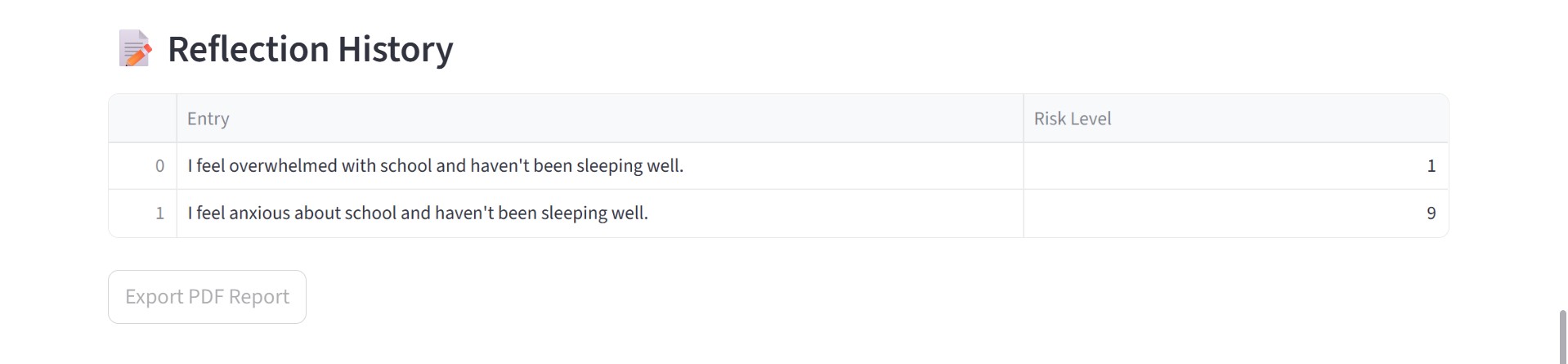
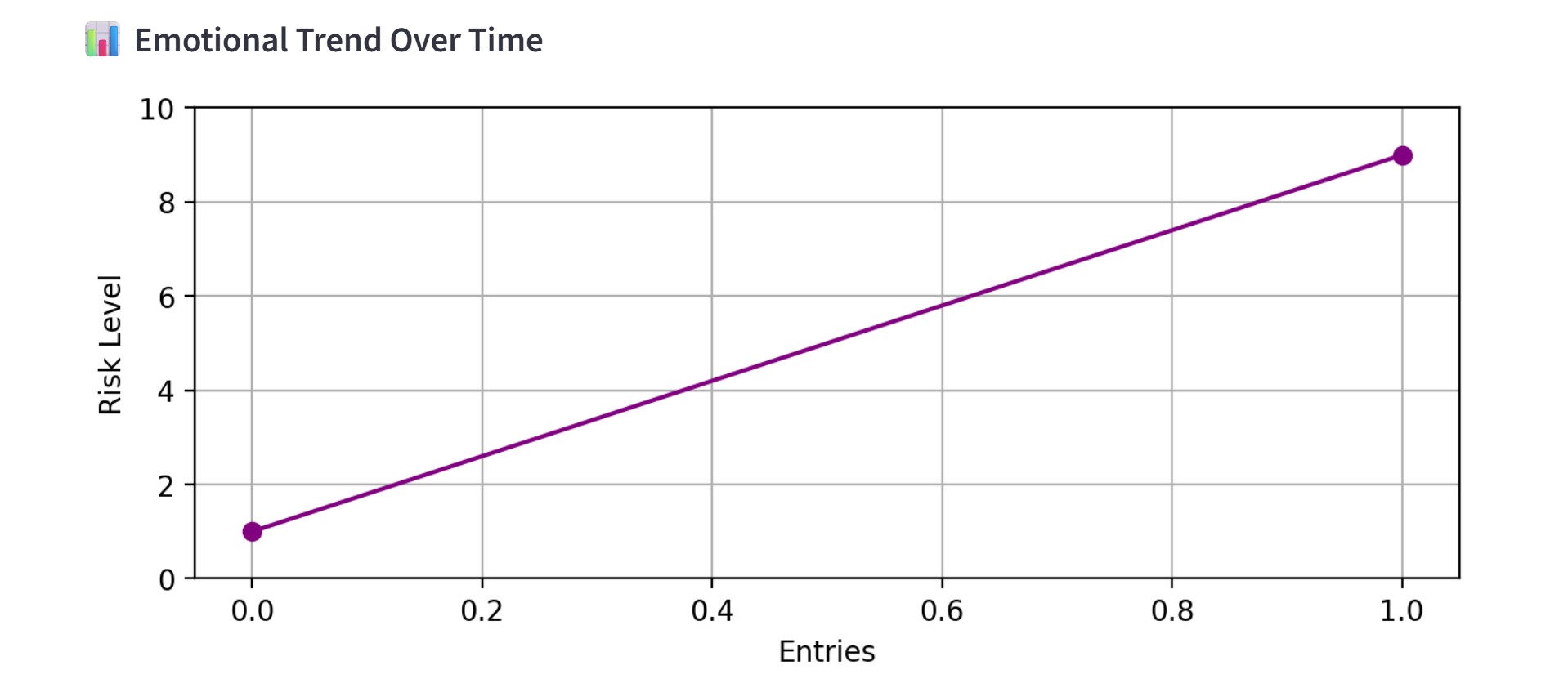
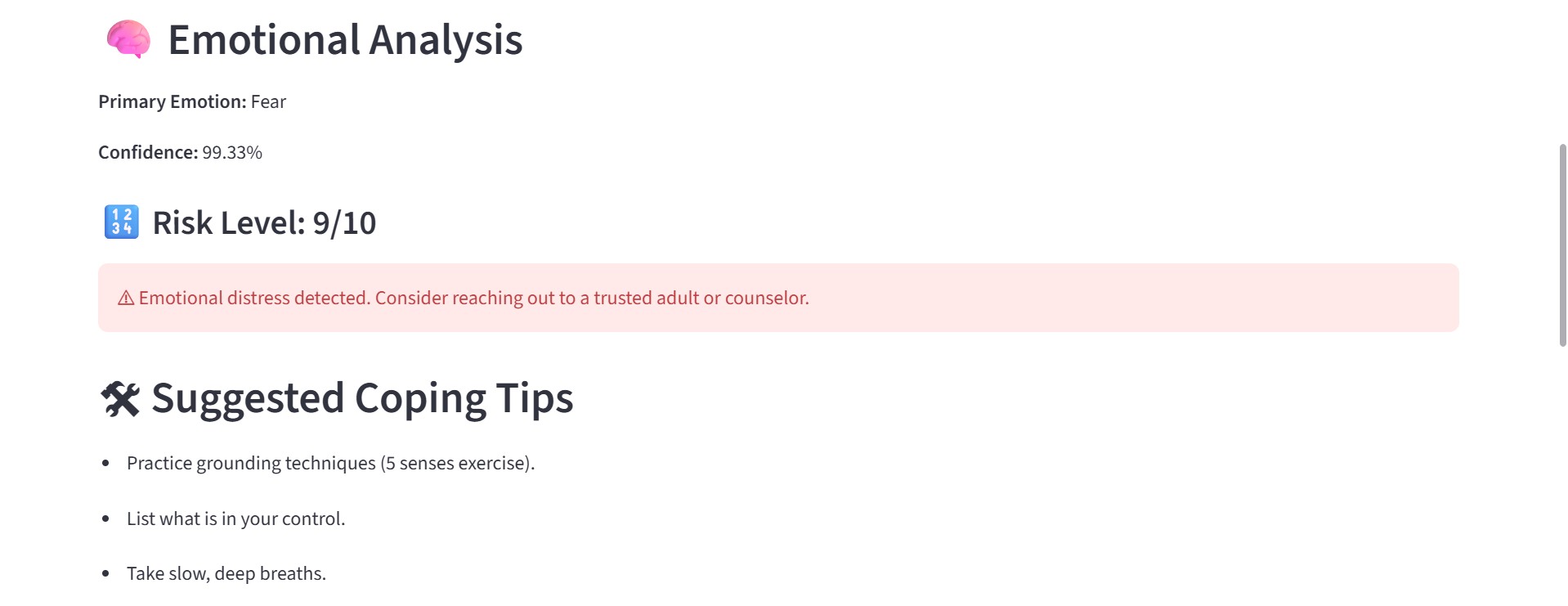
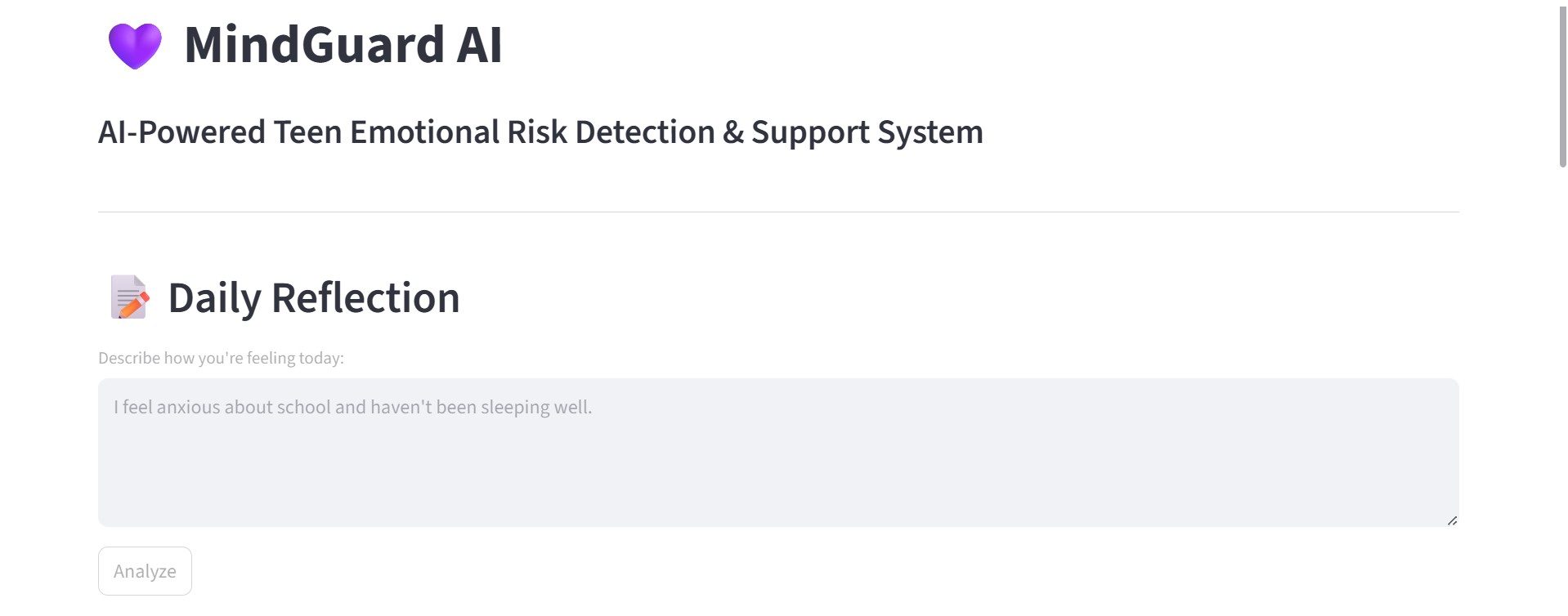
MindGuard AI is a Streamlit web app built in Python. Users input their daily reflections, and the app uses a Hugging Face emotion classification model to detect emotional state and confidence. The app calculates a risk score, provides personalized coping strategies, and visualizes emotional trends over time in a graph. Users can also export their reflections as a PDF to track progress.
Key components:
- Emotion Detection: Hugging Face
j-hartmann/emotion-english-distilroberta-base - Data Visualization: Matplotlib & Pandas
- PDF Export: fpdf
- Frontend: Streamlit for an interactive web interface
Challenges
The biggest challenge was handling real-time AI predictions efficiently and ensuring the model output was interpreted correctly. I also focused on creating a teen-friendly interface that is clear, supportive, and encourages positive action.

Log in or sign up for Devpost to join the conversation.