-
MindGard
🧠 About the Project – MindGuard
💡 Inspiration
Mental health is often overlooked — yet it's something most of us struggle with silently. We were inspired by the growing mental health crisis, especially among youth and professionals, and the lack of accessible, stigma-free tools to help.
The question we asked ourselves: “What if we could create a digital companion that listens, understands, and acts when no one else does?”
MindGuard was born from the idea of combining AI and empathy to create a mental health safety net.
🧰 What it does
MindGuard is an AI-powered mental health companion designed to:
- Detect early signs of emotional distress or suicidal ideation through journaling (text or voice).
- Use sentiment and emotion analysis to identify risky patterns.
- Visualize mood trends with graphs and insights.
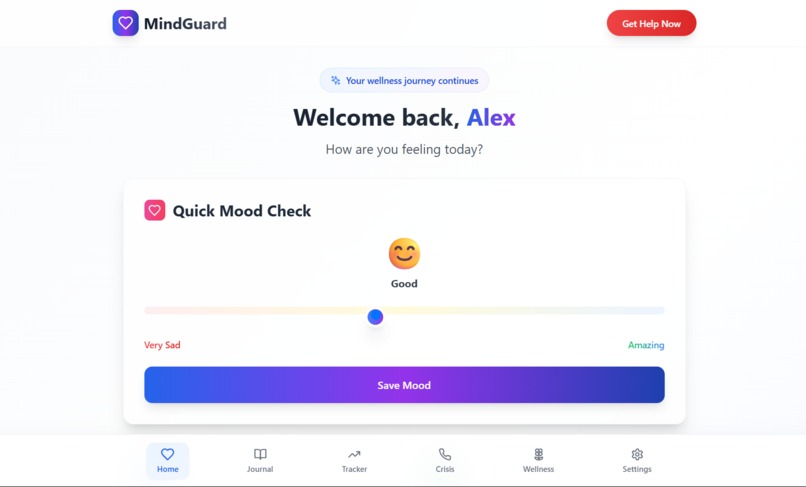
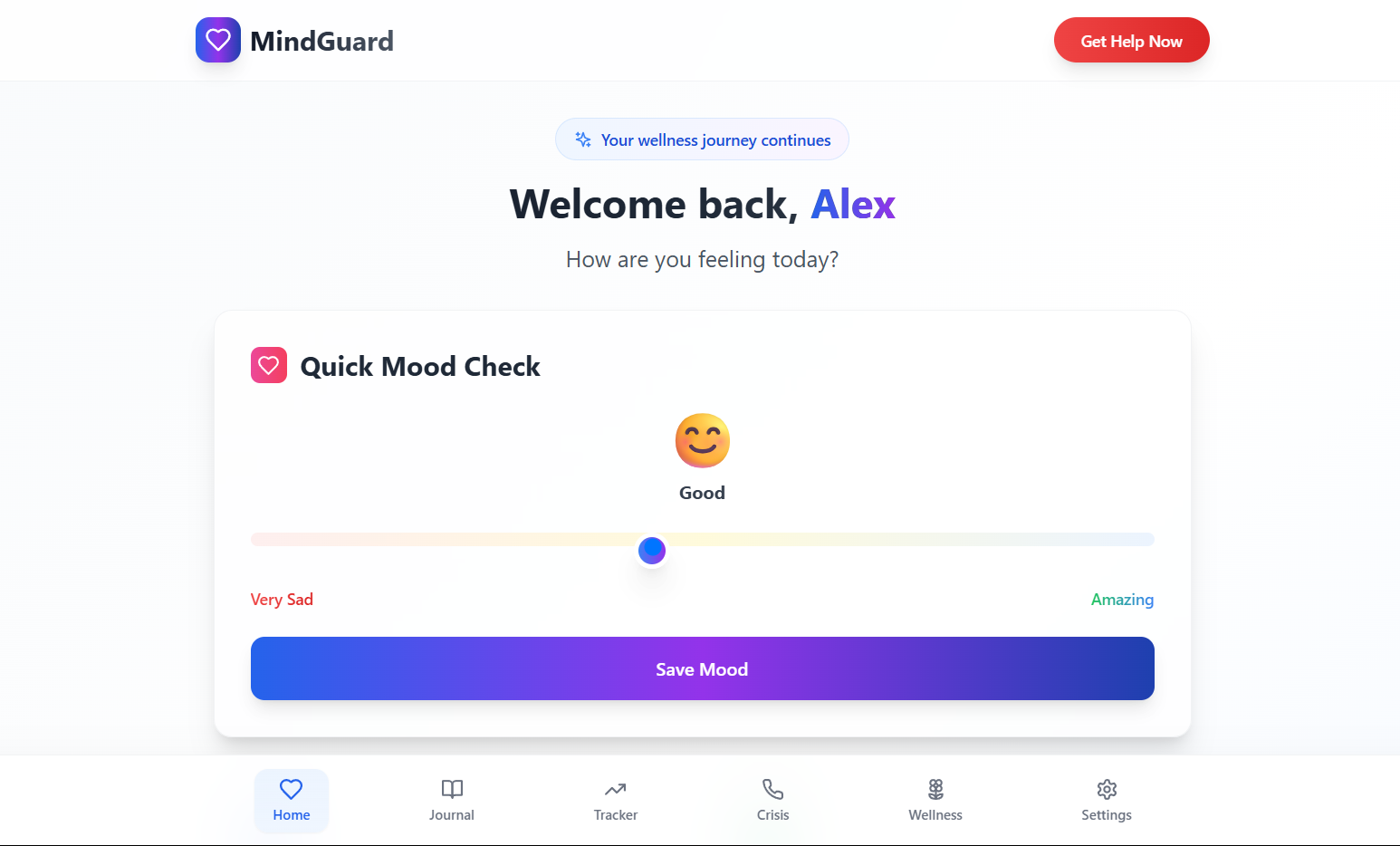
- Provide grounding and calming tools in moments of emotional danger.
- Trigger Emergency Mode when high-risk emotions are detected (e.g., access to helplines, simulated alerts).
🛠️ How we built it
We used a full-stack architecture for MindGuard:
- Frontend: React with TypeScript, styled using Tailwind CSS, and animated with Framer Motion for a smooth, calming experience.
- Backend: Node.js with Express and MongoDB for storing user journal entries and mood scores.
- AI/NLP Layer: Hugging Face emotion models like
distilbert-base-uncased-emotionandtwitter-roberta-base-sentimentfor analyzing journal entries. - Voice Input: Web Speech API for voice journaling.
- Visualization: Chart.js for plotting mood trends.
- Emergency Tools: Simulated contact alert system and a wellness toolbox with calming activities.
⚠️ Challenges we ran into
- 🧠 Integrating accurate NLP models that could detect nuanced emotional language, especially from short journal entries.
- 🎯 Balancing sensitivity: Avoiding false positives (e.g., detecting depression when a user is just tired).
- 📱 Designing a UI that feels calming, non-intrusive, and emotionally safe.
- ⏱ Time constraints — building and testing the full AI pipeline in a short hackathon window.
- 🔒 Ensuring data privacy and user trust, even in a simulated prototype.
🏆 Accomplishments that we're proud of
- Successfully integrated Hugging Face emotion models into a real-time journaling system.
- Built a responsive and intuitive UI that feels minimal, safe, and user-first.
- Created a real-world solution that can genuinely help people and start conversations around mental health.
- Finished a complete end-to-end system — from emotion detection to emergency response — in under 48 hours.
📚 What we learned
- How to fine-tune and use pre-trained NLP models for emotional sentiment classification.
- The importance of mental health design patterns — colors, fonts, and layout can impact how safe users feel.
- Building for impact requires empathy as much as technical skill.
- How to scope emotional safety features realistically within a hackathon time limit.
🔮 What's next for MindGuard
- 🔐 End-to-end encryption for journal entries and emotion data.
- 📱 Native mobile app with offline capabilities and daily mood check-ins.
- 🧑⚕️ Therapist dashboard (optional) to connect users with licensed professionals when needed.
- 🌍 Multi-language support to reach global users with culturally sensitive AI.
- 🧠 More advanced emotion models fine-tuned on longer mental health conversations.
MindGuard is just the beginning — our goal is to build a future where no one has to suffer in silence.
Built With
- ai
- distilbert-base-uncased-emotion
- express.js-database:-mongodb-(using-mongoose)-ai/nlp:-hugging-face-transformers-(e.g.
- fallback
- framer-motion-backend:-node.js
- inference
- javascript-frontend-framework:-react-styling:-tailwind-css
- languages:-typescript
- local
- optional
- render/railway-(backend)-version-control:-git-+-github-apis/tools:-hugging-face-inference-api-(optional)
- roberta-base-sentiment)
- transformers.js
- transformers.js-voice-input:-web-speech-api-(browser-native)-visualization:-chart.js-authentication:-firebase-auth-(email/google-login-?-optional)-deployment-platforms:-vercel-(frontend)
- using

Log in or sign up for Devpost to join the conversation.