-
-
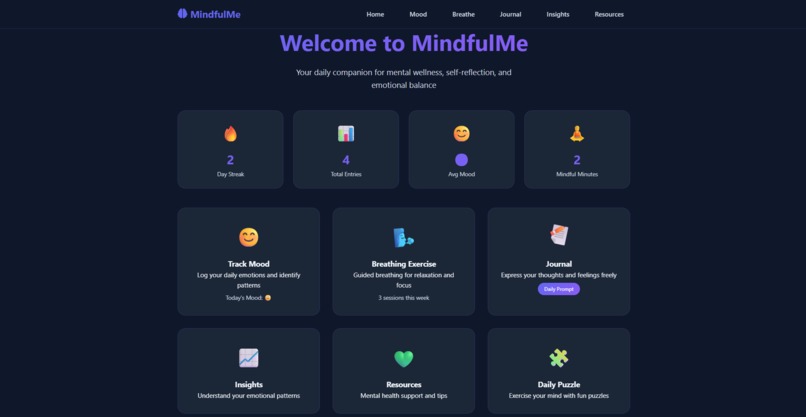
Homepage
-
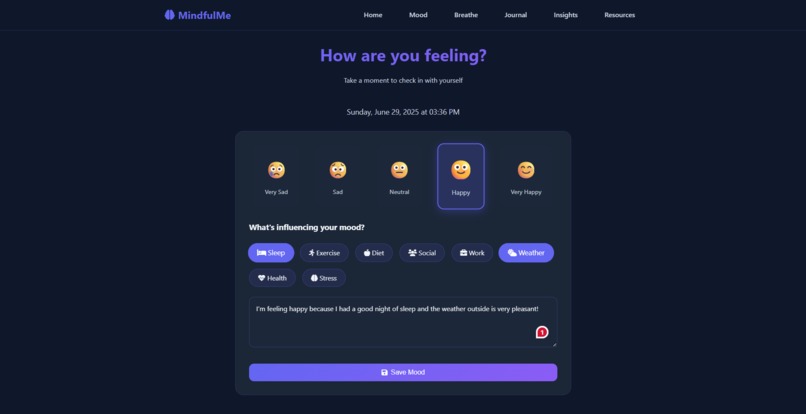
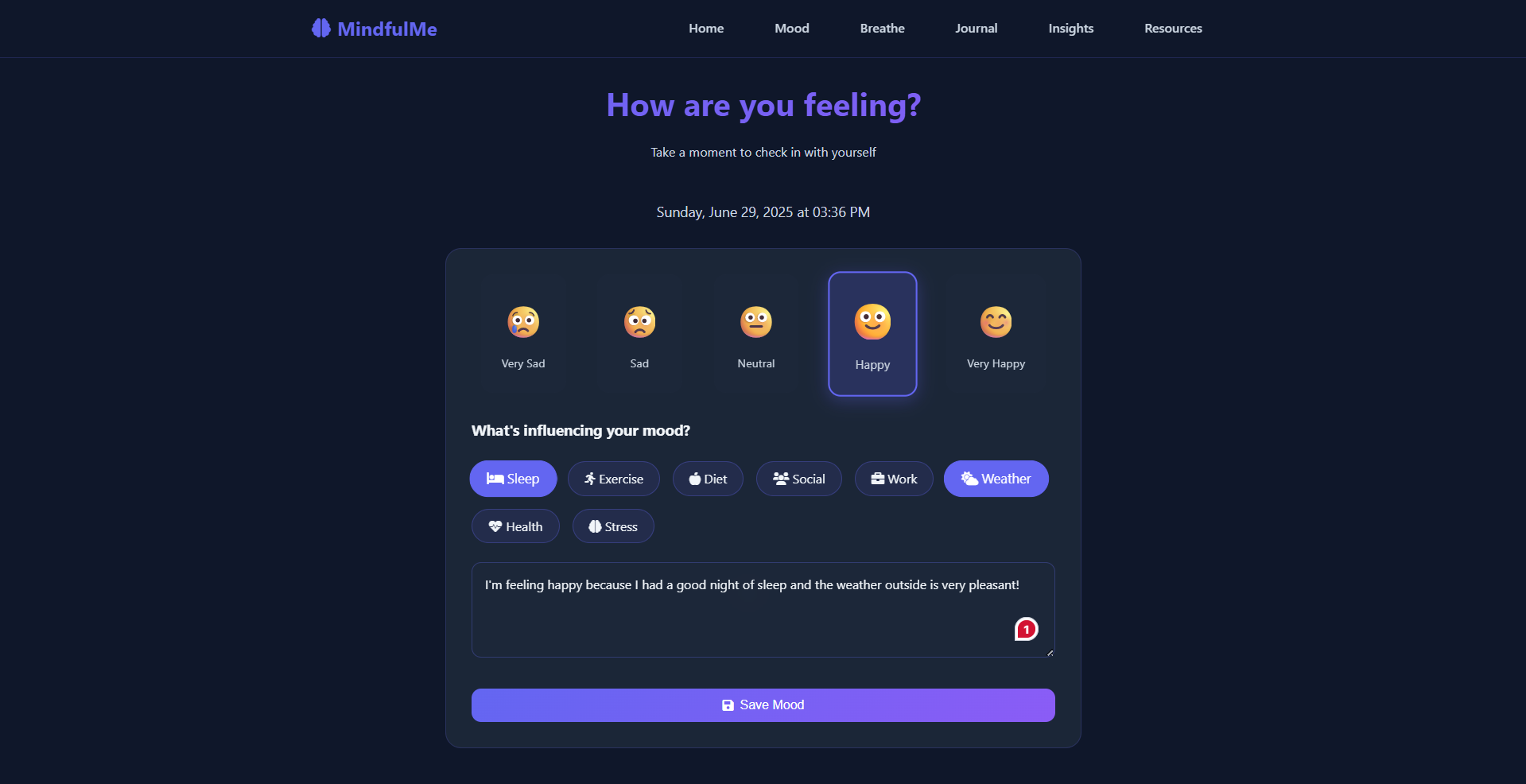
Mood Tracking in Action
-
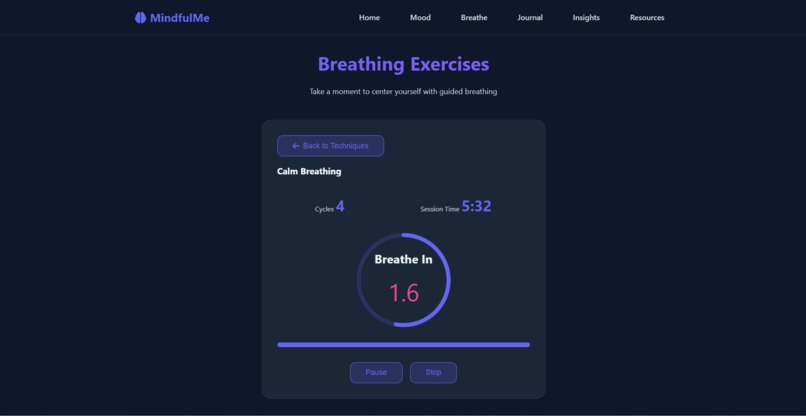
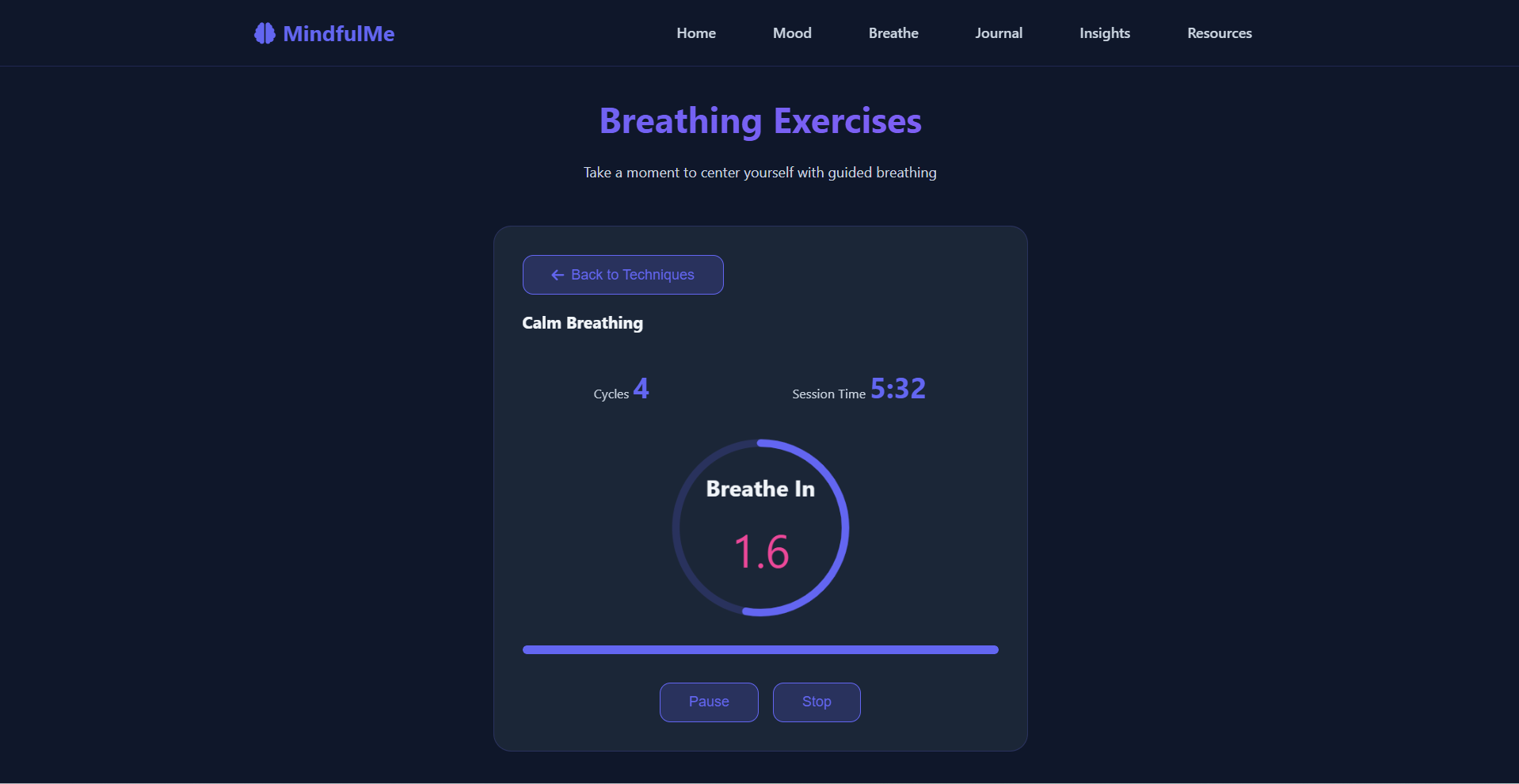
Breathing Exercise Visual
-
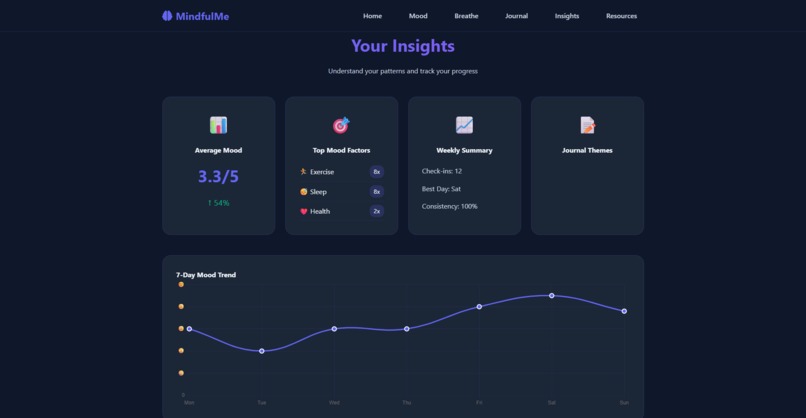
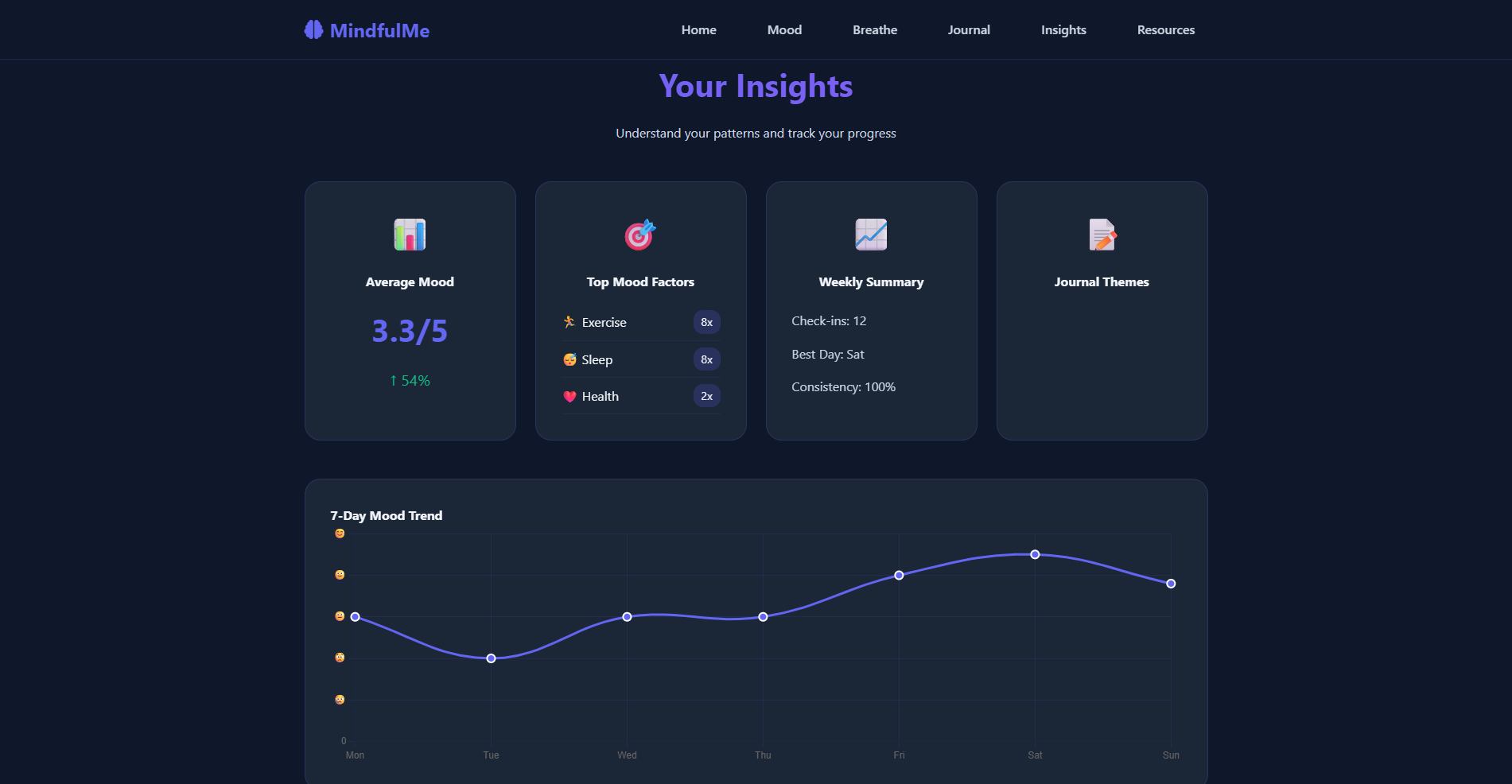
Insights Dashboard
-

Achievements Section
-
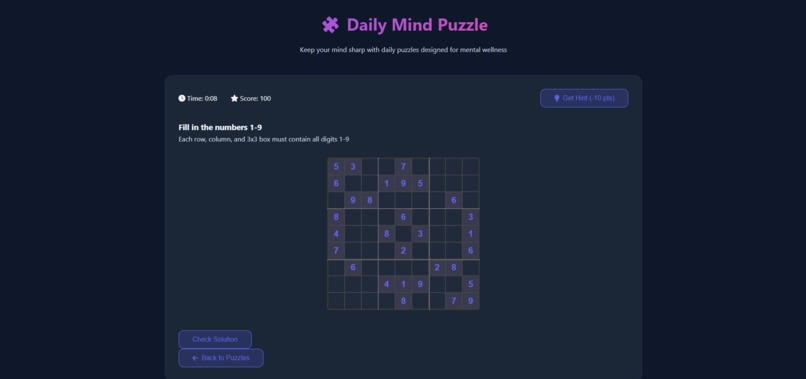
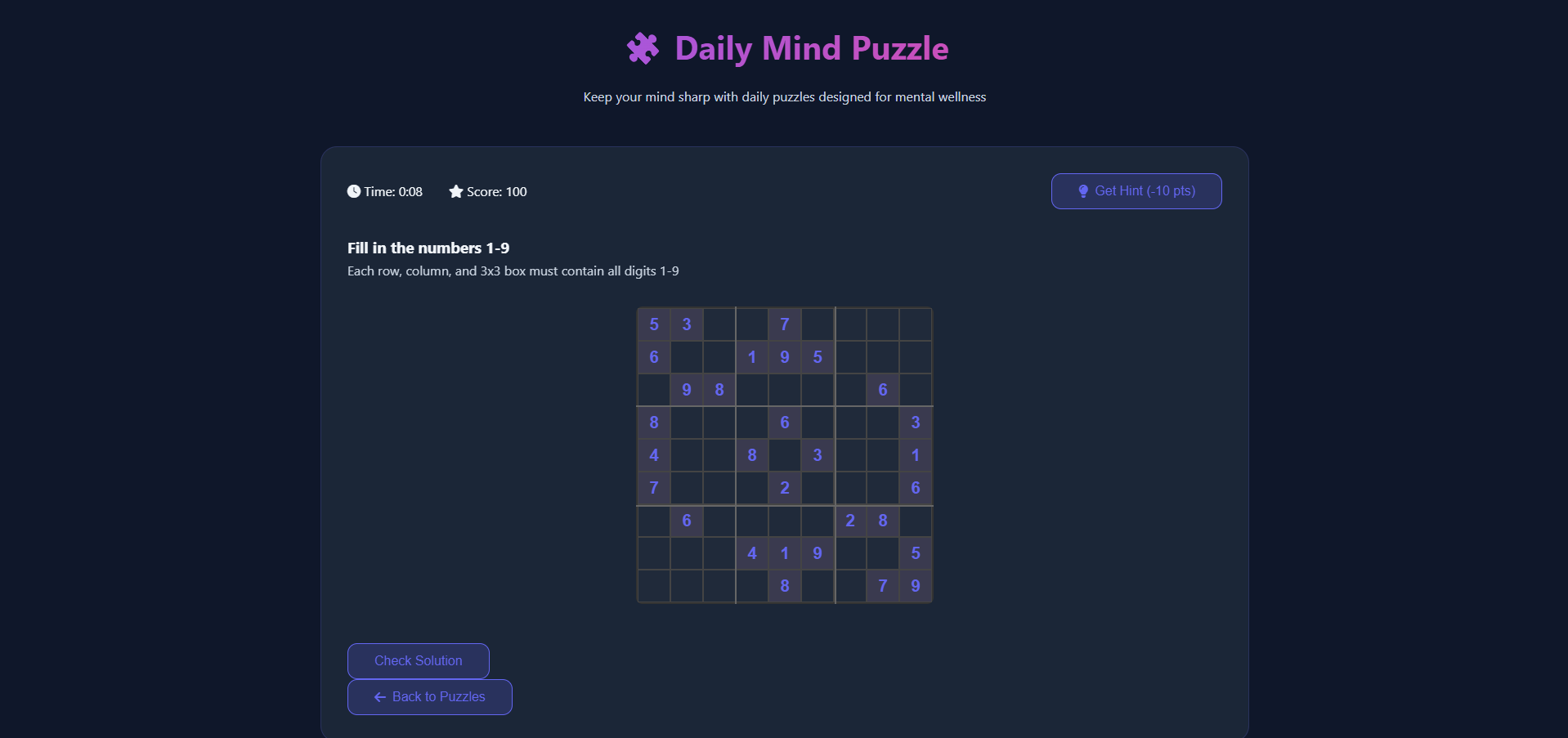
Daily Puzzle: Sudoku
-
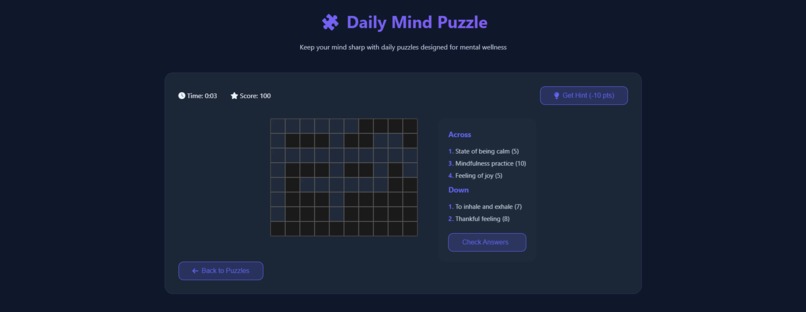
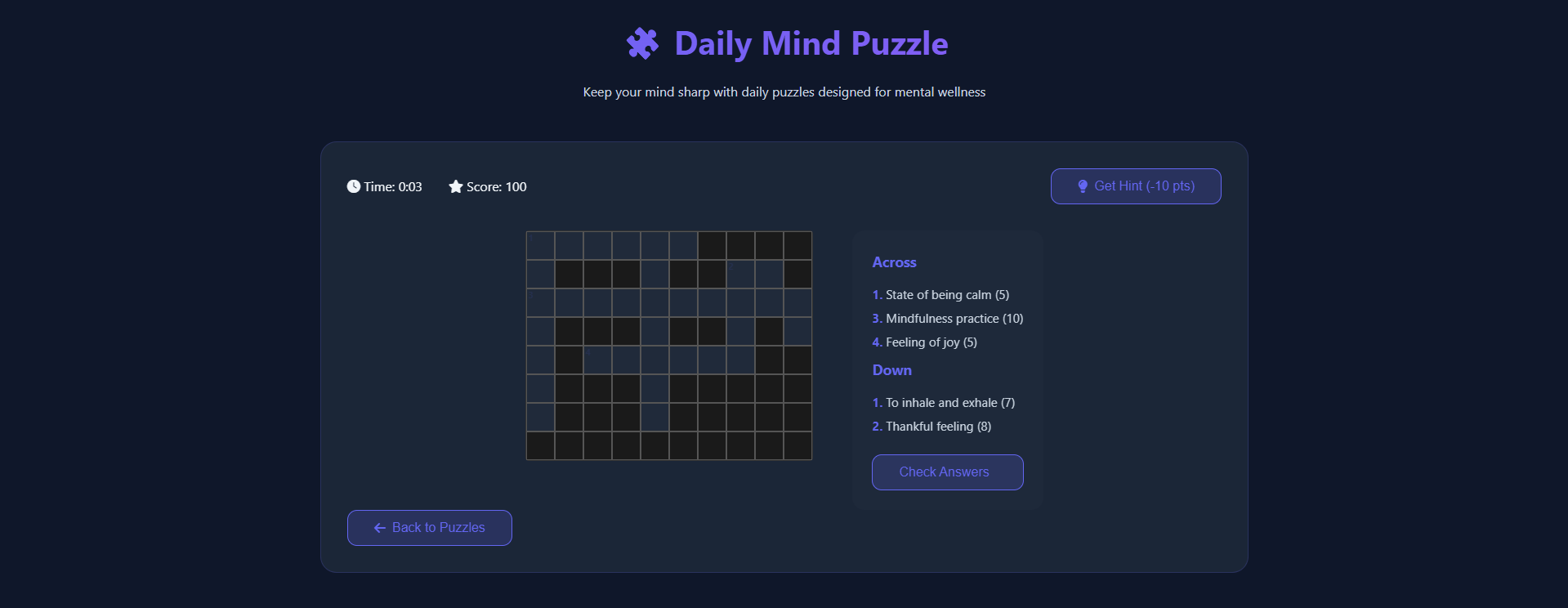
Daily Puzzle: Mini Crossword
-
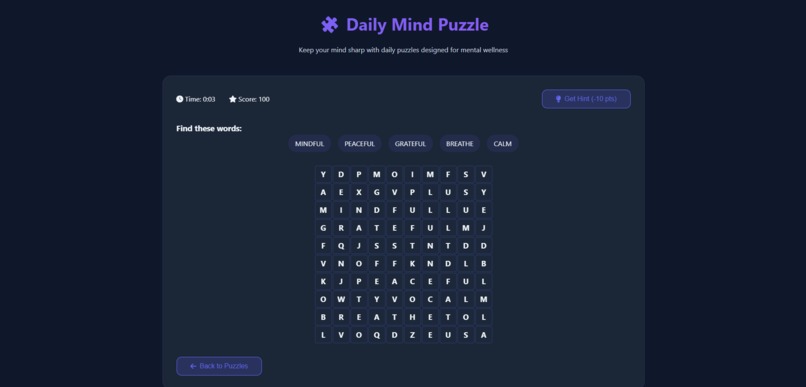
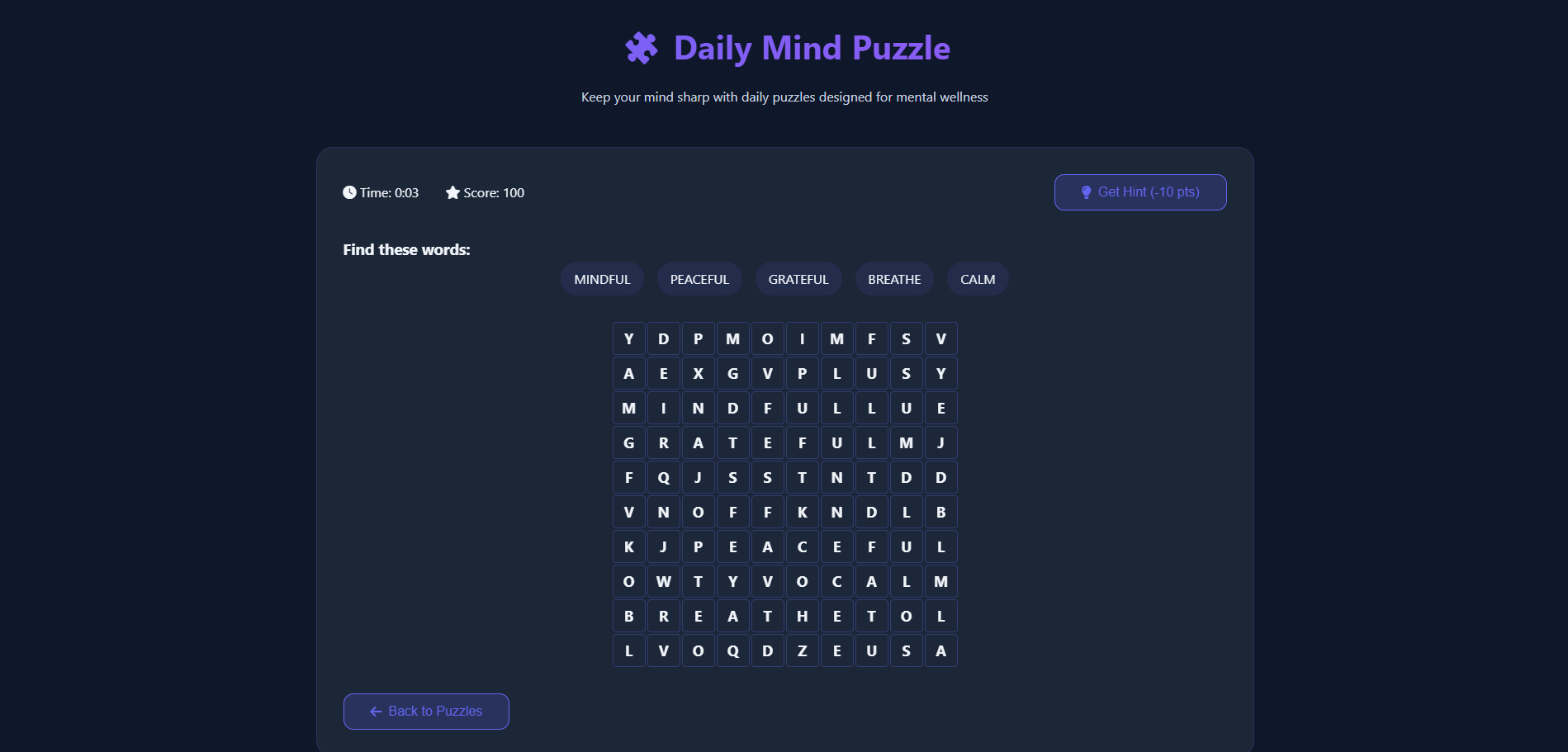
Daily Puzzle: Word Search

Inspiration
The inspiration for MindfulMe came from a personal place. Like many young people, I've witnessed friends and family struggle with mental health challenges, especially post-pandemic. Therapy can be expensive and inaccessible, with wait times stretching months. I realized that while professional help is irreplaceable, there's a gap for daily mental wellness tools that are free, private, and always available.
I wanted to create something that makes mental health check-ins as routine as checking the weather - removing stigma and encouraging proactive self-care. The goal was simple: help people understand their emotions, develop healthy coping mechanisms, and recognize patterns before they become problems.
What it does
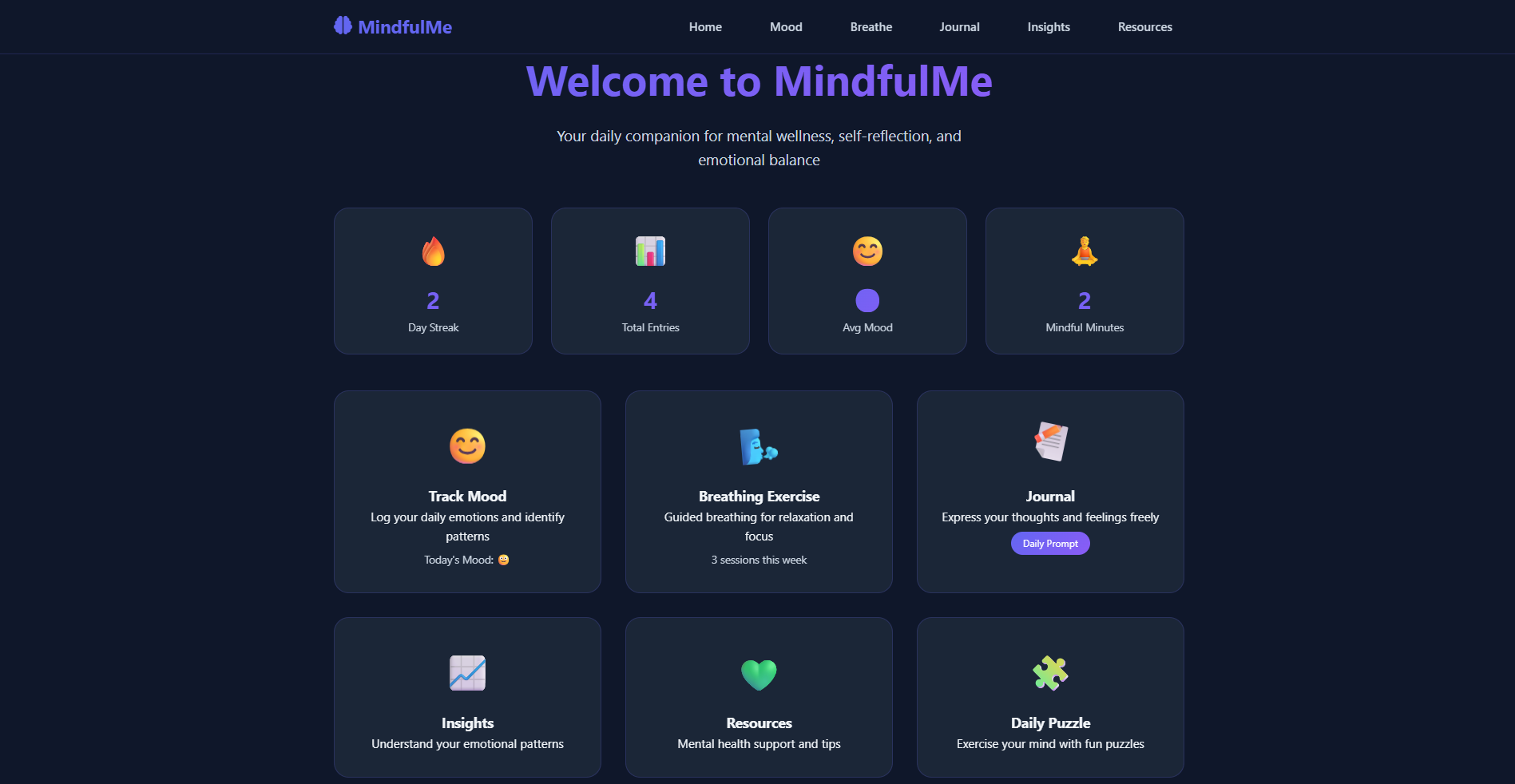
MindfulMe is a comprehensive mental wellness web application that combines evidence-based techniques in one beautiful, intuitive interface:
- Mood Tracking: Log daily emotions with contributing factors (sleep, exercise, social interactions) to identify patterns
- Guided Breathing Exercises: Three scientifically-proven techniques (4-7-8, Box Breathing, Calm Breathing) with visual guides and timers
- Smart Journaling: Daily prompts and tag system for emotional processing and self-reflection
- Data Insights: Interactive charts showing mood trends, helping users understand their emotional patterns
- Daily Puzzles: Word search, crossword, and sudoku to promote cognitive wellness and provide healthy distraction
- Achievement System: Gamification elements that encourage consistent use and celebrate progress
- Resource Hub: Crisis support information and self-care tips
All data is stored locally in the browser, ensuring complete privacy - your thoughts and feelings never leave your device.
How I built it
MindfulMe was built using vanilla web technologies to ensure accessibility and performance:
- HTML5: Semantic markup for accessibility and structure
- CSS3: Modern styling with glassmorphism effects, CSS Grid, and smooth animations
- JavaScript (ES6+): Object-oriented design with a central MindfulMeApp class managing all functionality
- Chart.js: For beautiful mood trend visualizations
- LocalStorage API: For privacy-first data persistence
- Progressive Enhancement: Core features work on any device
The architecture follows a modular approach with separate concerns for data management, UI updates, and user interactions. No frameworks were used to keep the codebase lightweight and beginner-friendly.
Challenges I ran into
Breathing Exercise Timer: Creating smooth, accurate timers that handle pauses and maintain synchronization with animations was tricky. Solved by tracking pause durations separately.
Puzzle Generation: Building a word search algorithm that reliably places words without conflicts required multiple iterations and careful grid management.
Data Persistence: Balancing feature richness with LocalStorage limitations meant carefully structuring data and converting between Sets and Arrays for storage.
Mobile Responsiveness: Ensuring complex features like crossword puzzles and mood charts worked well on small screens required creative CSS solutions.
User Experience: Making mental health tracking feel approachable rather than clinical involved many iterations on copy, colors, and interactions.
Accomplishments that I'm proud of
- Complete Privacy: All data stays on the user's device - no servers, no accounts, no tracking
- Beautiful UI: Modern glassmorphism design that feels premium and calming
- Gamification Done Right: Achievements that encourage healthy habits without trivializing mental health
- Accessibility: Semantic HTML, keyboard navigation, and high contrast for inclusivity
- Real Impact: Features based on evidence-based mental health practices (4-7-8 breathing, mood tracking, journaling)
- Zero Dependencies: Pure vanilla implementation proves you don't need heavy frameworks to build something impressive
What I learned
- Simplicity is Powerful: Users dealing with mental health challenges need low-friction tools. Every extra click is a barrier.
- Privacy Matters: Many people won't use mental health apps due to privacy concerns. Local-first architecture removes this barrier.
- Design Affects Mood: The visual design directly impacts how users feel. Calm colors, smooth animations, and thoughtful spacing create a therapeutic experience.
- Small Features, Big Impact: Simple additions like daily prompts or streak tracking significantly boost engagement.
- Mental Health is Holistic: Combining mood tracking, breathing, journaling, and puzzles addresses different aspects of wellness.
What's next for MindfulMe - Your Mental Health Companion
- Progressive Web App: Offline functionality and installability for true anywhere access
- Meditation Timer: Guided and unguided meditation with ambient sounds
- Mood Predictions: ML-based insights to predict mood patterns and suggest interventions
- Customizable Reminders: Gentle nudges for check-ins and breathing exercises
- Multiple Languages: Making mental health support accessible globally
- Wearable Integration: Connect with fitness trackers for automatic factor tracking
- Community Features: Optional anonymous sharing of coping strategies
- Therapist Mode: Export formatted reports for mental health professionals
The vision is to make MindfulMe the companion app that grows with users on their mental health journey, always respecting privacy while providing increasingly personalized support.


Log in or sign up for Devpost to join the conversation.