-
-
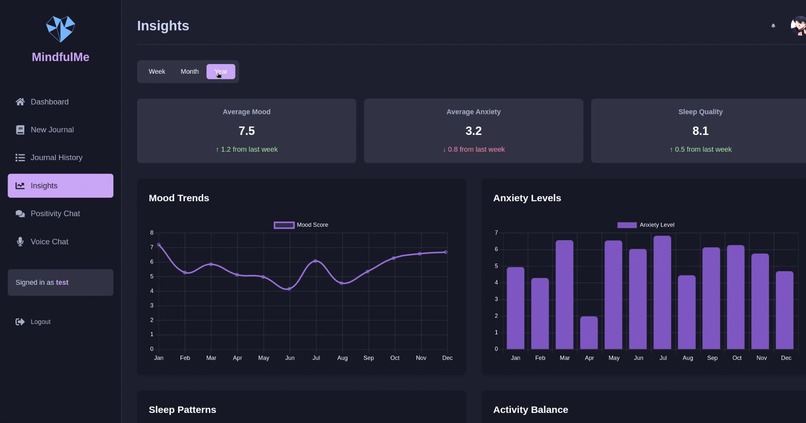
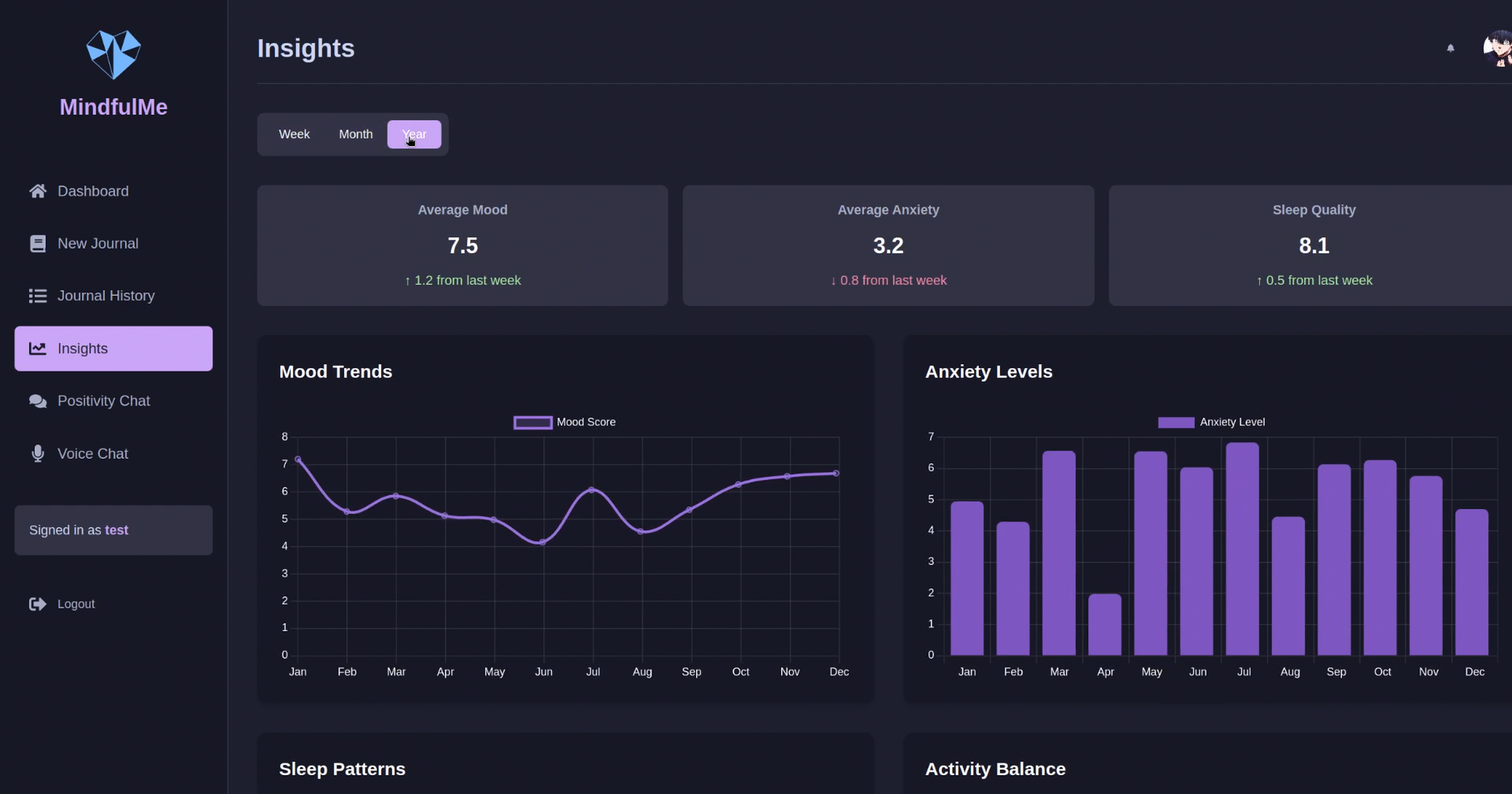
charts part of my page
Inspiration
Mental health support often feels out of reach for many people - whether due to cost, stigma, or lack of access. As someone who understands these challenges, I wanted to create something that could be there for people 24/7, offering a safe space to express themselves and track their emotional journey. The idea for MindfulMe was born from a simple truth: sometimes we all need someone to talk to, and AI could be that non-judgmental, always-available companion that helps us understand ourselves better.
What it does
MindfulMe is your personal mental wellness companion that feels like talking to a caring friend. It lets you pour your heart out through writing, speaking, or even sharing images, and then helps you make sense of your emotional patterns. Think of it as a smart journal that not only listens but understands and responds with empathy. You can track your moods over time through beautiful visualizations, have supportive conversations with an AI that truly gets you, and receive gentle insights about your emotional well-being. The best part? It's all private and secure, so you can be completely honest about your feelings.
How we built it
We crafted MindfulMe with a lot of heart and modern technology. The frontend uses React 19 to create a warm, welcoming interface that feels more like a cozy digital space than a clinical app. We integrated Groq's powerful LLMs (including llama-3.3-70b-versatile) to make conversations feel natural and insightful. The backend runs on Node.js and Express, with MongoDB storing your journal entries securely. We used Chart.js to visualize emotional patterns in a way that's both beautiful and meaningful. What makes it special is how we combined text, voice, and image analysis to understand emotions from multiple angles - because sometimes feelings are hard to put into words.
Challenges we ran into
Building something this personal and sensitive wasn't easy. Our biggest challenge was making the AI responses feel genuinely supportive rather than robotic - we spent countless hours fine-tuning the conversation flow to strike the right balance. Handling multiple input types (text, voice, images) while maintaining a seamless experience was tricky. We also wrestled with the responsibility of handling sensitive mental health data, making sure everything was private and secure. Perhaps the most challenging part was designing an interface that felt warm and welcoming while still being professional - we wanted users to feel like they're talking to a friend, not a clinical tool.
Accomplishments that we're proud of
I'm incredibly proud of how natural and supportive the AI conversations feel - it's like talking to someone who really listens. The mood tracking dashboard turned out beautifully, making it easy to spot emotional patterns over time. We successfully integrated multiple ways to express yourself - whether through writing, speaking, or sharing images - making it accessible for different comfort levels. The privacy-first approach means users can be completely honest without worrying about their data. But what makes me most proud is the feedback from early users who said MindfulMe feels like a safe space they can turn to anytime.
What we learned
This project taught us so much about the delicate balance between technology and human emotion. We learned that AI can be incredibly powerful in supporting mental health, but it needs to be implemented with great care and empathy. The technical challenges pushed us to master new technologies like Groq's LLMs and multi-modal input processing. But more importantly, we learned about the responsibility that comes with building tools for mental wellness - every design decision needed to prioritize the user's emotional well-being. The experience showed us that technology can be both powerful and gentle when used thoughtfully.
What's next for MindfulMe
The journey of MindfulMe is just beginning! We're excited to add guided meditation and breathing exercises based on detected mood patterns. We're planning to introduce optional community features where users can anonymously share insights and support each other. Advanced analytics will help provide even more personalized recommendations, and we want to make the platform accessible to non-English speakers. We're also exploring adding achievement systems to make regular journaling more engaging. Most importantly, we'll continue refining the AI companion to be an even better emotional support partner. The future of mental wellness support is bright, and we're committed to making it more accessible to everyone.


Log in or sign up for Devpost to join the conversation.