Inspiration
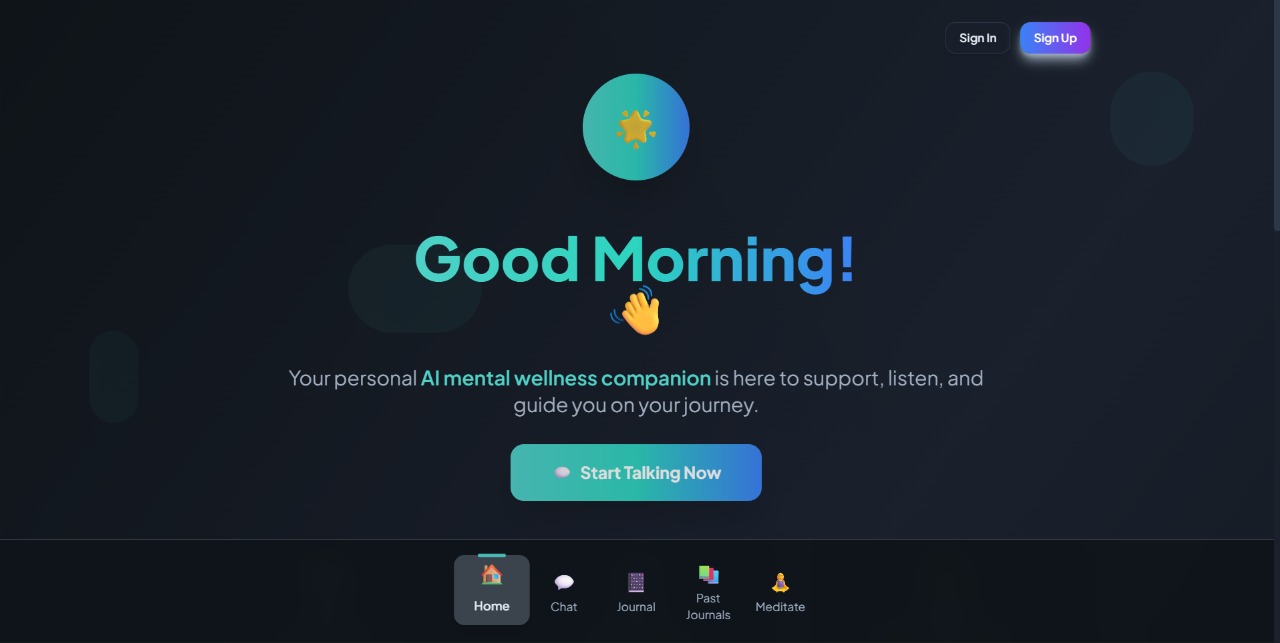
We built MindfulMate because mental health support should be accessible, empathetic, and available the moment someone needs it. Everyday stress, loneliness, and anxiety often happen outside clinic hours — we wanted a judgment-free, always-on companion that helps people feel heard, reflect, and build resilient habits.
What it does
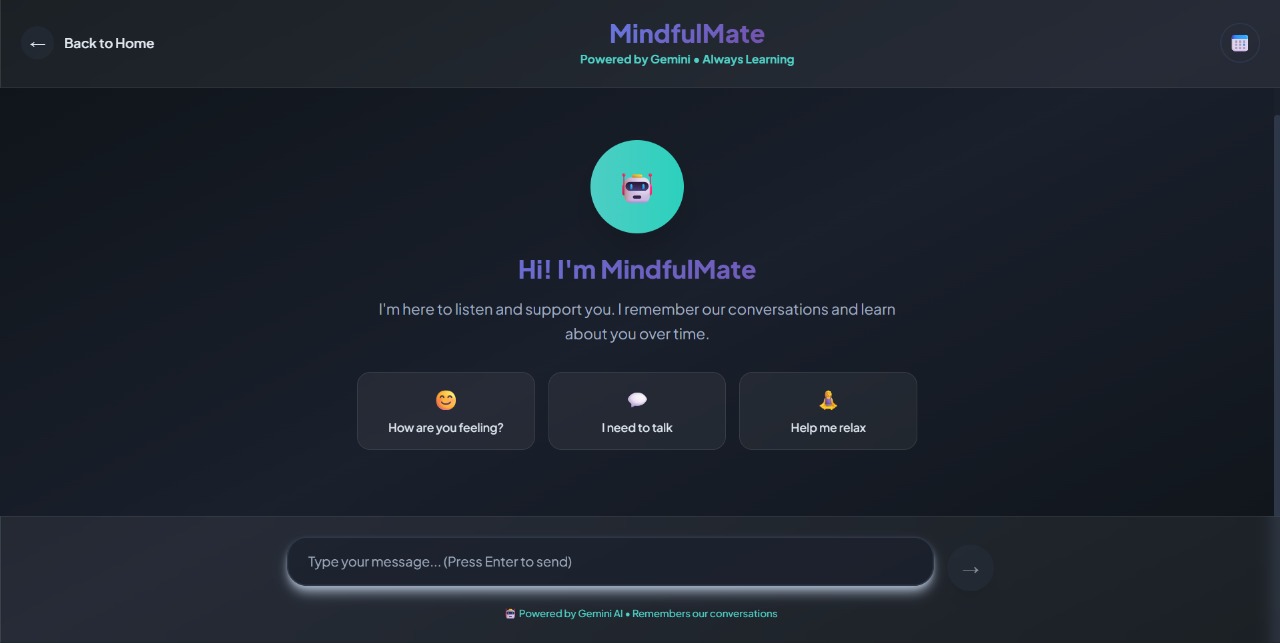
- Conversational AI that responds empathetically to user feelings.
- Real-time sentiment-aware replies powered by retrieval-augmented generation (RAG) so conversations stay relevant and grounded.
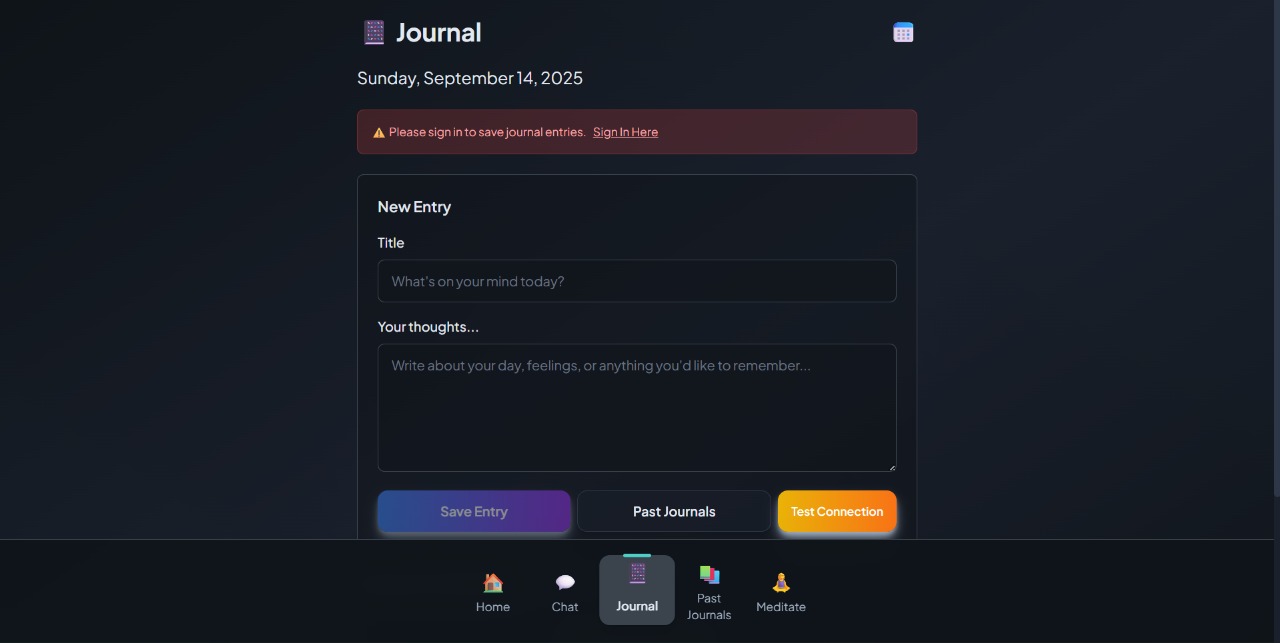
- Secure journaling: write, save, and revisit private entries to track emotion over time.
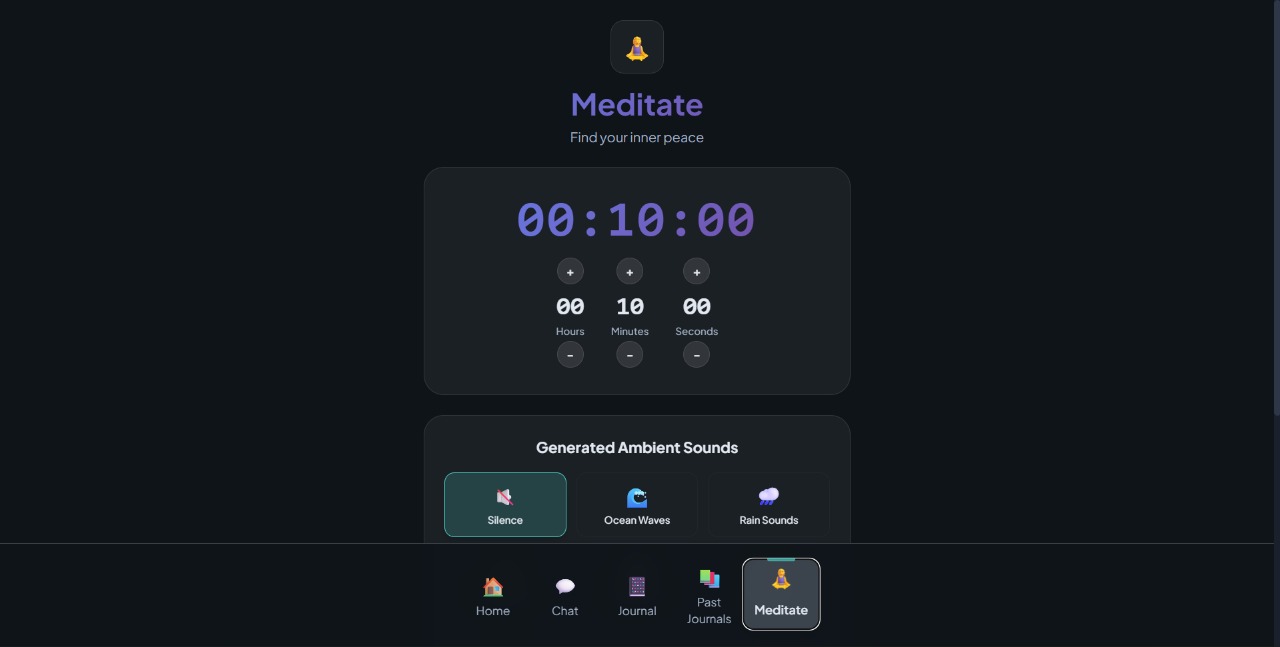
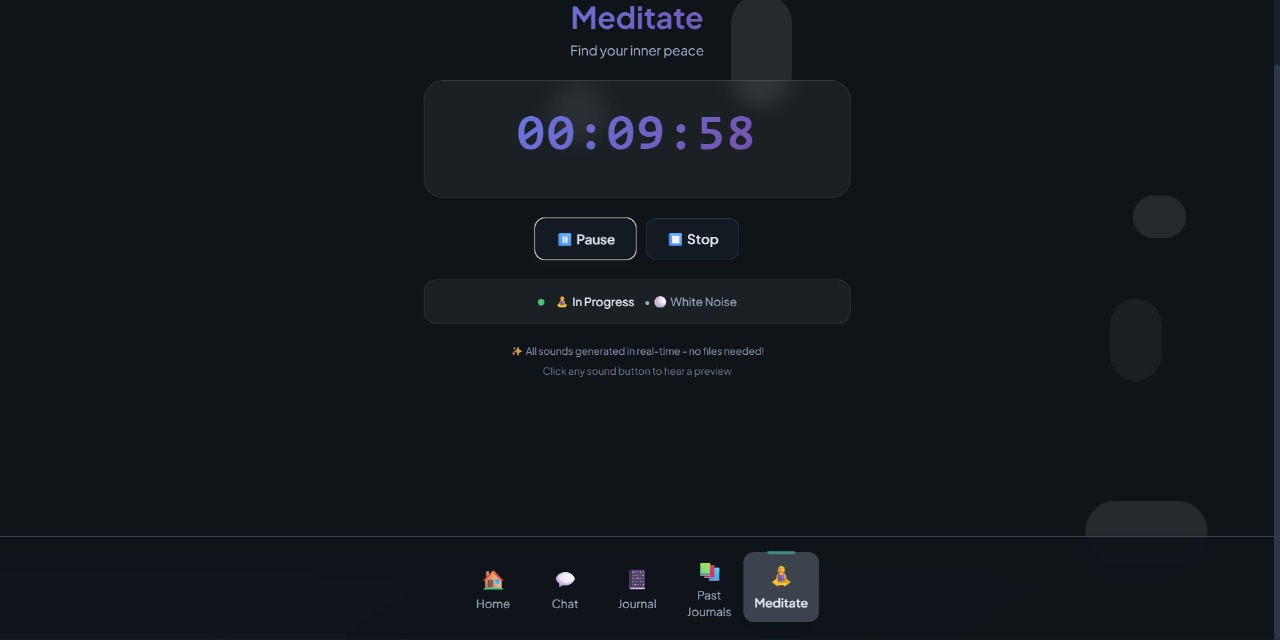
- Guided meditation with curated ambient tracks (rain, nature, binaural beats) to help users relax and reset.
- Personalized experience: remembers context from prior sessions to offer deeper, more meaningful support.
How we built it
- Frontend: React (TypeScript + Tailwind) for a fast, accessible web experience.
- Backend: FastAPI powering authentication, journaling, and AI orchestration.
- Storage: MongoDB for user data and Weaviate as the vector database for semantic retrieval.
- AI layer: LangChain orchestration with GPT-4o, integrated sentiment analysis, and RAG for safe, context-rich responses.
- Audio: HTML5 audio for seamless ambient playback and meditation sessions.
- Dev practices: iterative testing, security-first data handling, and user-focused UX iterations.
Challenges we ran into
- Safety vs. usefulness: tuning the LLM + RAG pipeline to produce empathetic responses while avoiding the impression of clinical advice.
- Retrieval relevance: surfacing past journal context without exposing private details in the chat.
- Real-time UX: keeping conversations snappy while running sentiment analysis and semantic retrieval.
- Cross-device sync & resilience: ensuring saved journals and audio playback behave well offline and across devices.
Accomplishments that we're proud of
- Built a polished, end-to-end product in a short timeframe that balances UX with a sophisticated AI stack.
- Implemented secure journaling and context-aware retrieval so the companion genuinely learns from prior sessions.
- Crafted a calming meditation experience with high-quality ambient audio and intuitive controls.
- Strong team coordination: Tejesh led AI & retrieval; Srivastav and Moksha delivered an elegant frontend and audio/visual polish.
- We believe MindfulMate is deserving of the First Prize at Zero Boundaries — this recognition will help us scale impact and bring MindfulMate to more people in need.
What we learned
- Human-centered AI is as much about clear safety guardrails and UX as it is about model choice.
- Small, focused features (empathetic replies + private journaling + simple meditation) create real user value when executed well.
- Cross-functional teams accelerate iteration: backend, AI, and frontend needed tight alignment to ship reliably.
- Real-world testing uncovered privacy and UX edge cases that shaped our final design.
What's next for MindfulMate
- Richer personalization: advanced mood-tracking analytics and longer-term progress visualizations.
- Enhanced safety: integrate crisis-detection flows and vetted escalation resources (clearly labeled — not a replacement for professional help).
- Mobile-first rollout: offline journaling with secure sync and push reminders.
- Pilot studies: collaboration with student and community groups to gather outcome data and validate impact.
- Scale & partnerships: fundraising and partnerships to expand audio libraries, localization, and accessibility.
Note to judges: MindfulMate blends technical rigor with deep empathy. We poured long nights and our best work into this project — we sincerely ask for your support and consideration for the First Prize so we can bring MindfulMate to the people who need it most.


Log in or sign up for Devpost to join the conversation.