Inspiration
AI tools are now part of everyday life for students, developers, creators, and professionals. But many people still do not fully understand what data they are sharing, how much they might spend, or whether they are choosing the right AI tool for their task.
I built MindfulAI Compass to help users make safer and smarter AI decisions before they share sensitive data or commit to using a tool. The idea was inspired by the need for more transparency, control, and confidence when using AI products.
What it does
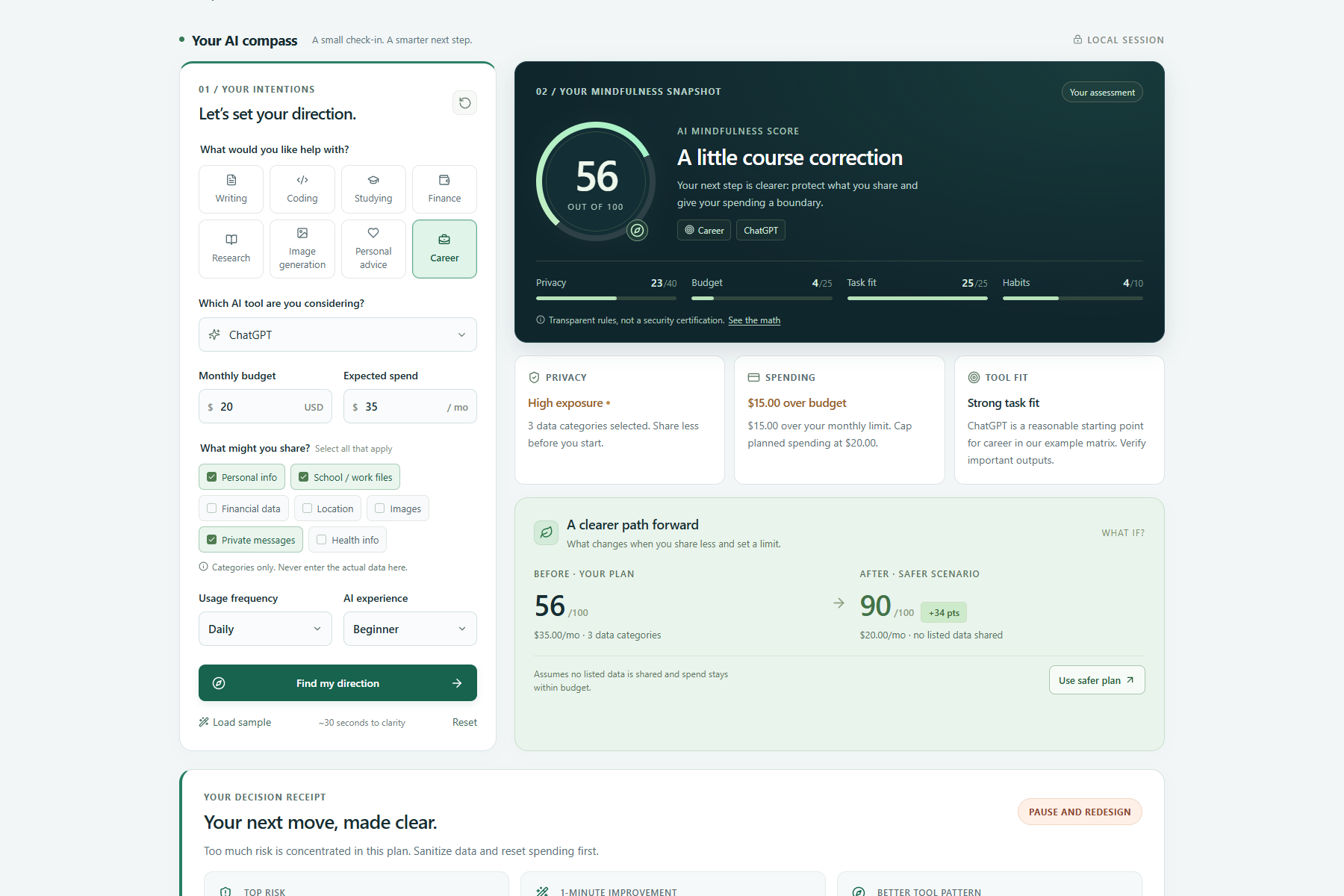
MindfulAI Compass is a decision-support dashboard that helps users evaluate an AI tool before using it.
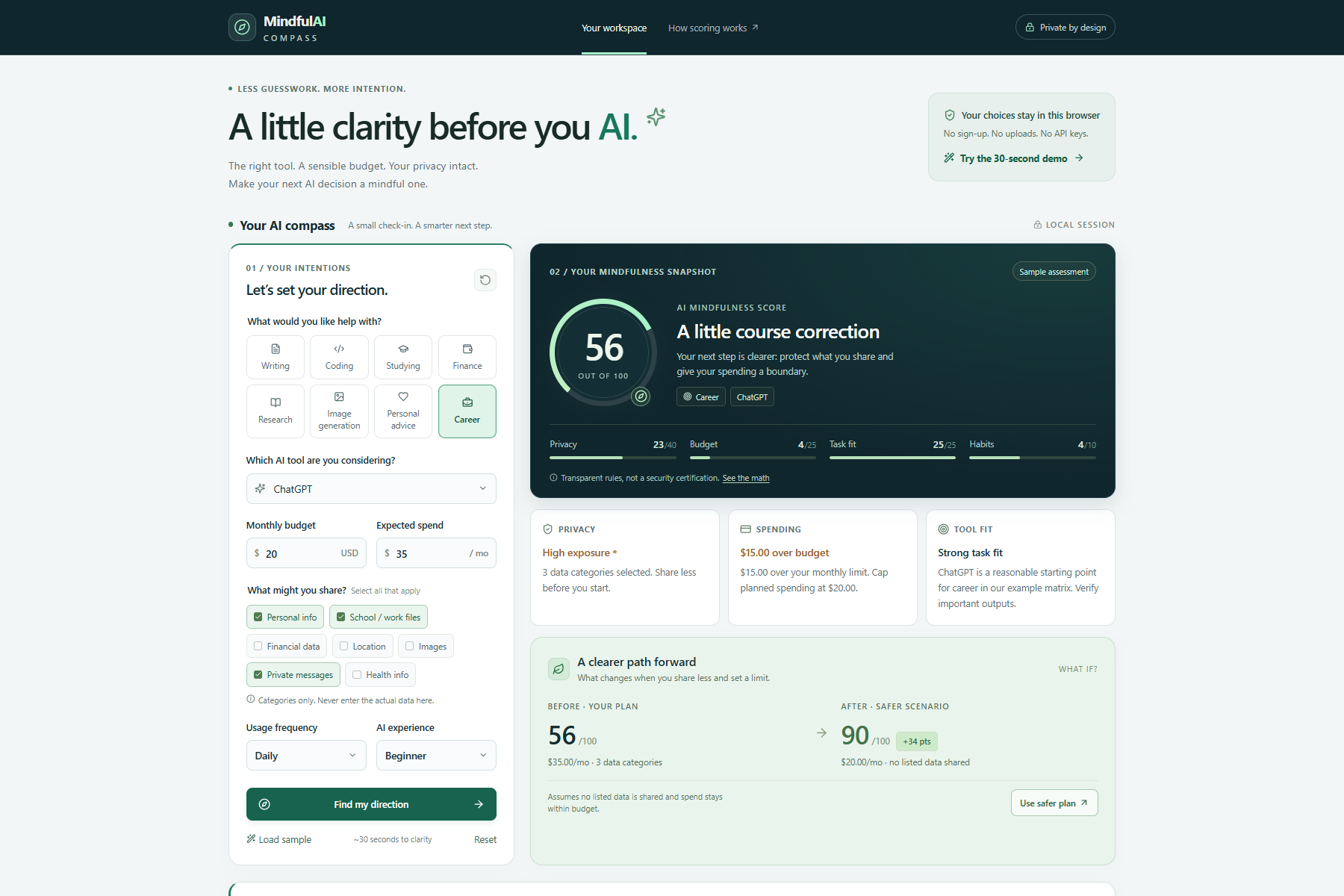
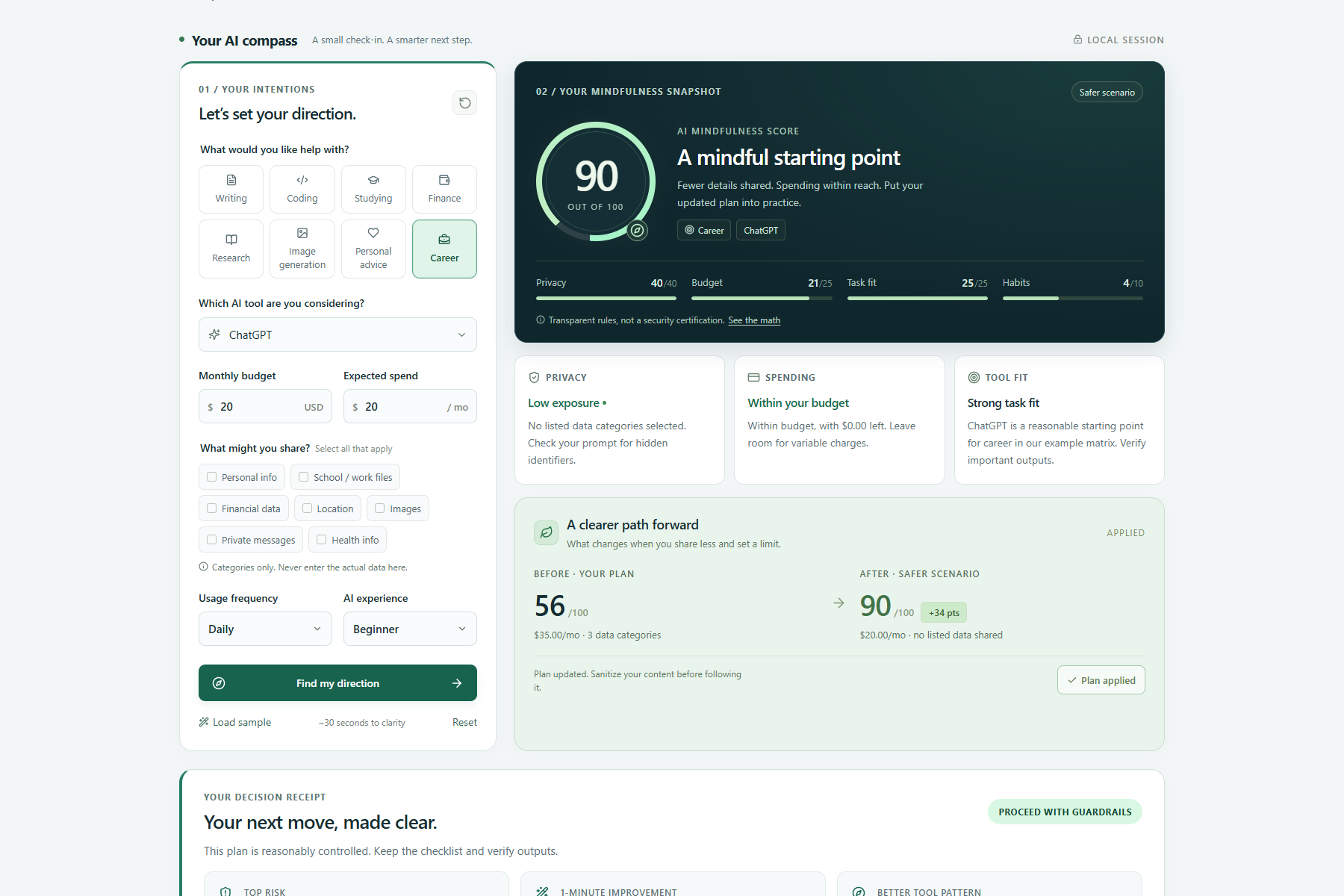
The user enters their goal, the AI tool they plan to use, their monthly budget, expected spending, usage frequency, experience level, and the type of data they may share. Based on those inputs, the app generates:
- An AI Mindfulness Score
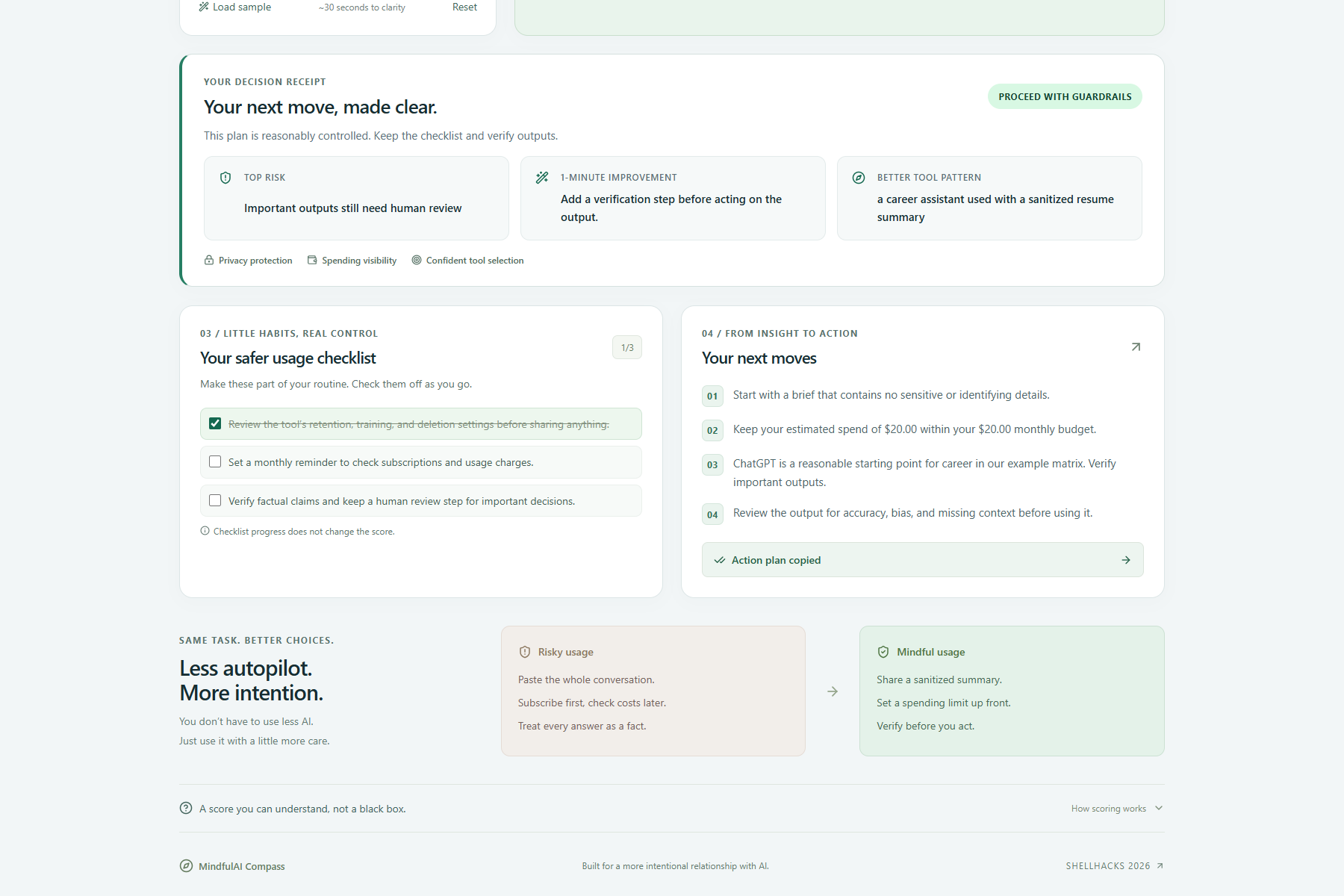
- Privacy risk level
- Spending warning
- Tool-fit recommendation
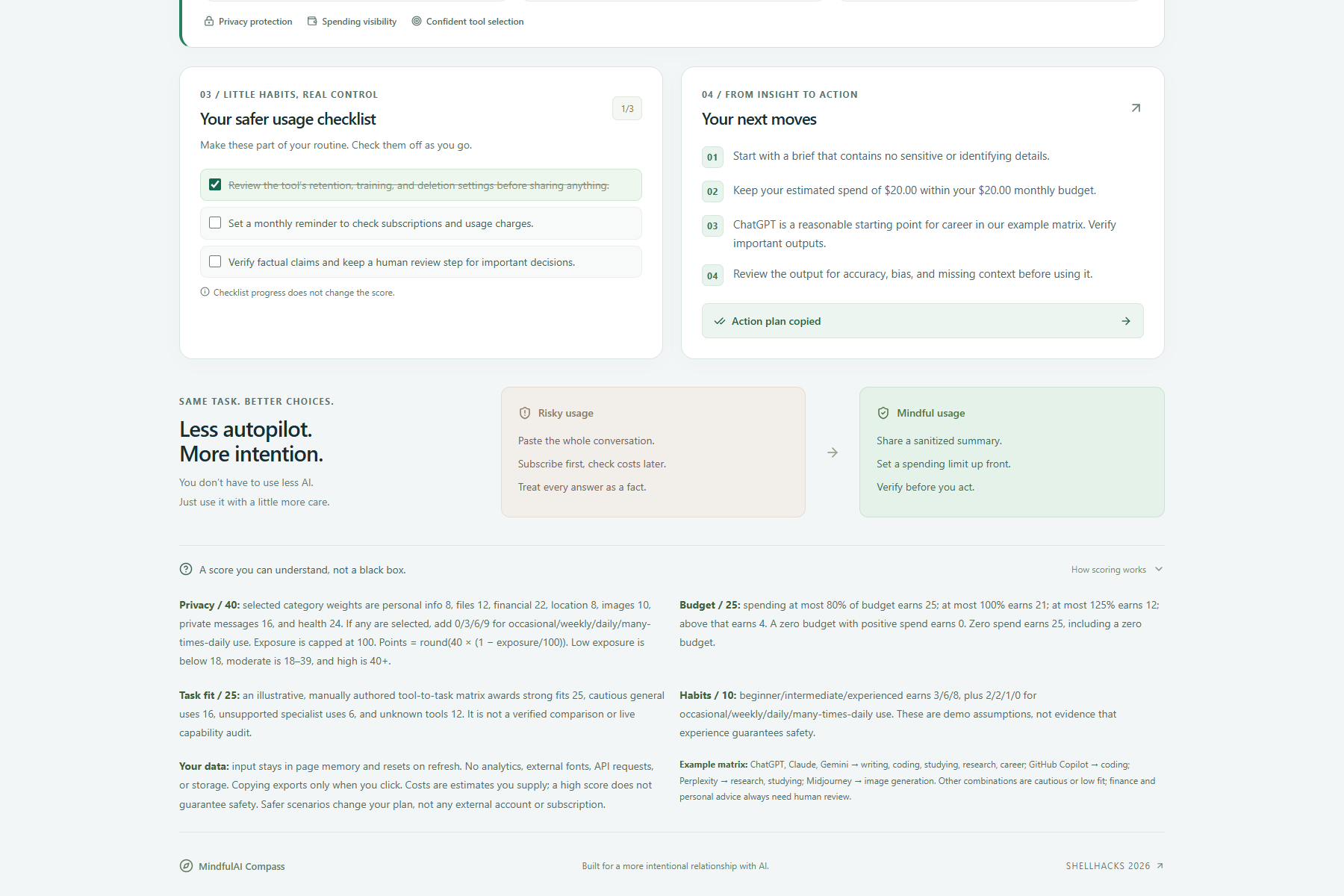
- Safer usage checklist
- Final action plan
- Before-vs-after decision clarity
The project is not a chatbot. Instead, it helps users complete a real task: deciding whether and how to use an AI tool safely.
How I built it
I built MindfulAI Compass using React, Vite, JavaScript, HTML, and CSS. The app uses transparent rule-based scoring instead of requiring a backend, database, login system, or paid API key.
The scoring logic considers privacy sensitivity, expected spending, selected use case, usage frequency, and user experience level. The interface presents the result as a clean dashboard with score cards, recommendations, warnings, and copyable next steps.
I focused on making the project lightweight, fast, reliable, and easy to demo during the hackathon.
Challenges I faced
The biggest challenge was building something useful and complete within a short time. I had to avoid overengineering and focus only on the features that made the project practical, understandable, and demo-ready.
Another challenge was making the project valuable without depending on a fragile external API. I solved this by using transparent rule-based logic so the app works consistently and users can understand why they received a certain score.
What I learned
I learned that an AI-related product does not always need to be a chatbot. Sometimes, the better experience is a clear decision-making tool that helps people understand risks, compare choices, and take safer action.
I also learned how important it is to prioritize completion, usability, design, and storytelling in a hackathon project.
Accomplishments that I am proud of
I am proud that MindfulAI Compass is:
- Fully usable as a working web app
- Practical for real AI users
- Focused on privacy, spending, and confident tool selection
- Simple enough to use quickly
- Reliable because it does not depend on external APIs
- Easy to demo in under two minutes
- Designed around user control and mindful AI usage
What’s next
In the future, MindfulAI Compass could become a browser extension or team dashboard that helps users and organizations track AI tool usage, privacy risk, cost, and safer alternatives.
Future improvements could include:
- AI tool database with pricing and privacy comparisons
- Browser extension support
- Exportable AI safety reports
- Team dashboard for schools or companies
- Budget tracking for multiple AI subscriptions
- Optional generative AI explanations
- Personalized safer alternatives for different goals
Built With
- astra-assisted
- css
- devpost
- github
- html
- javascript
- openai/codex
- react
- vite

Log in or sign up for Devpost to join the conversation.