-
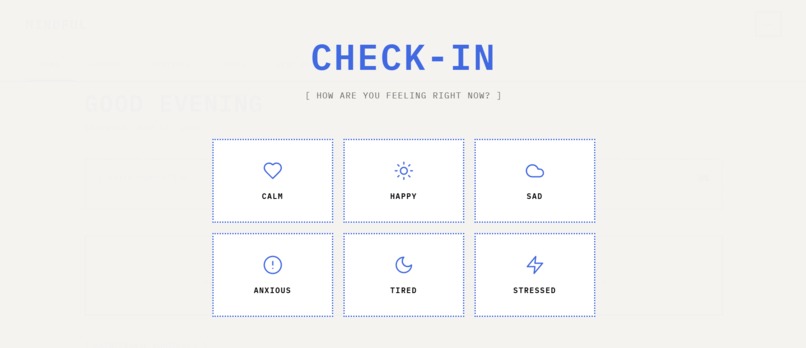
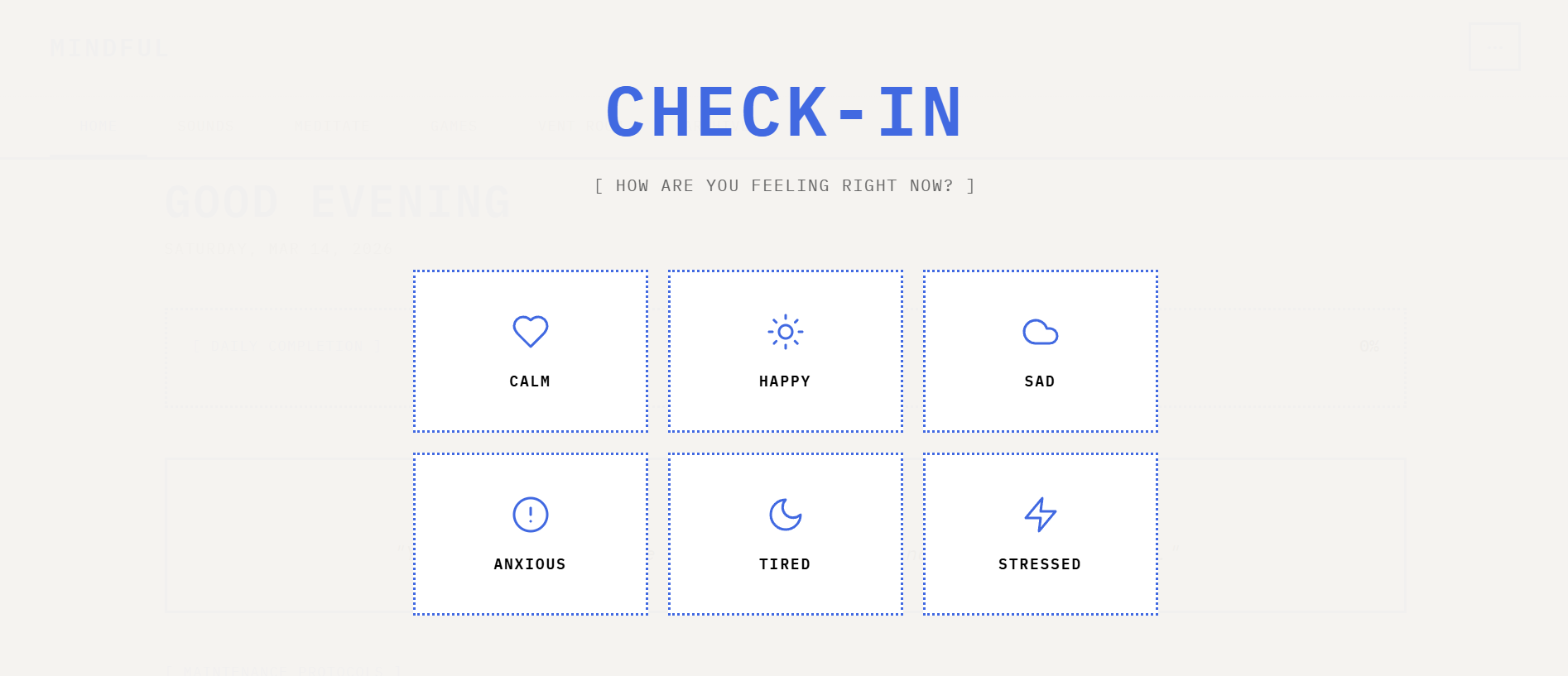
start page
-
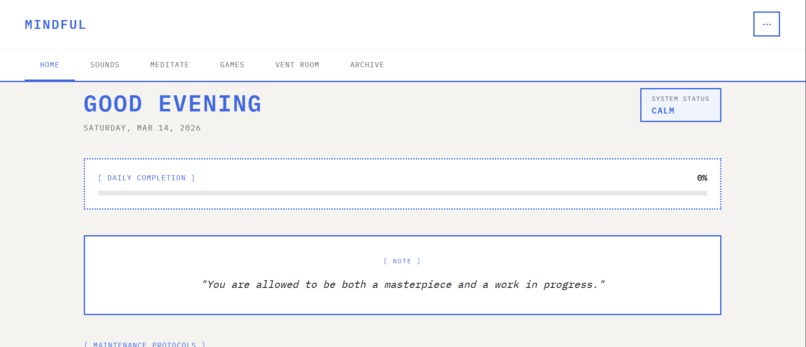
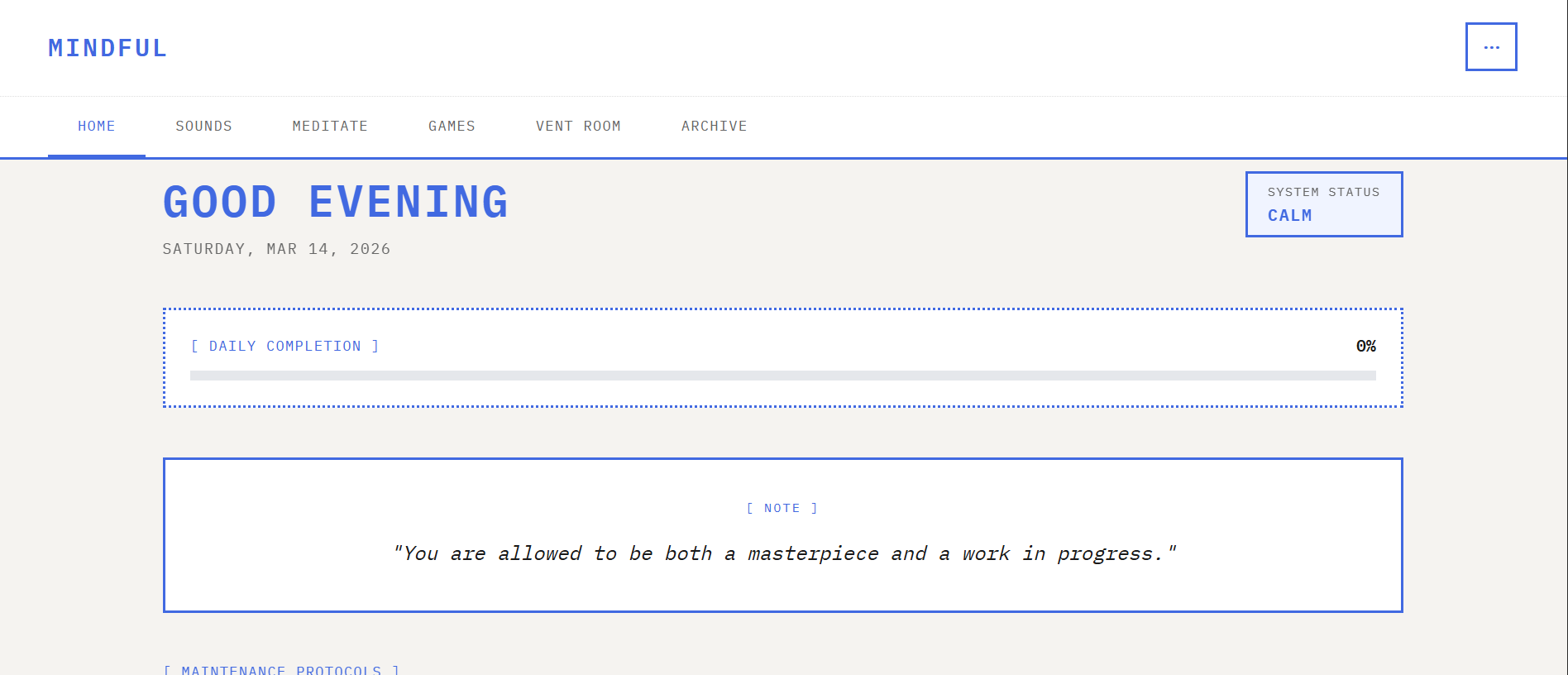
dashboard
-
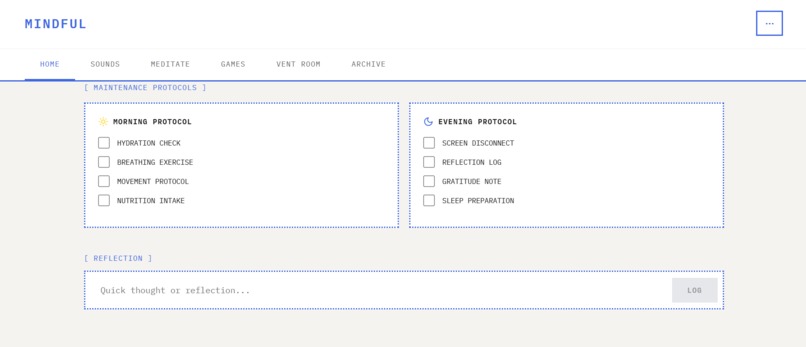
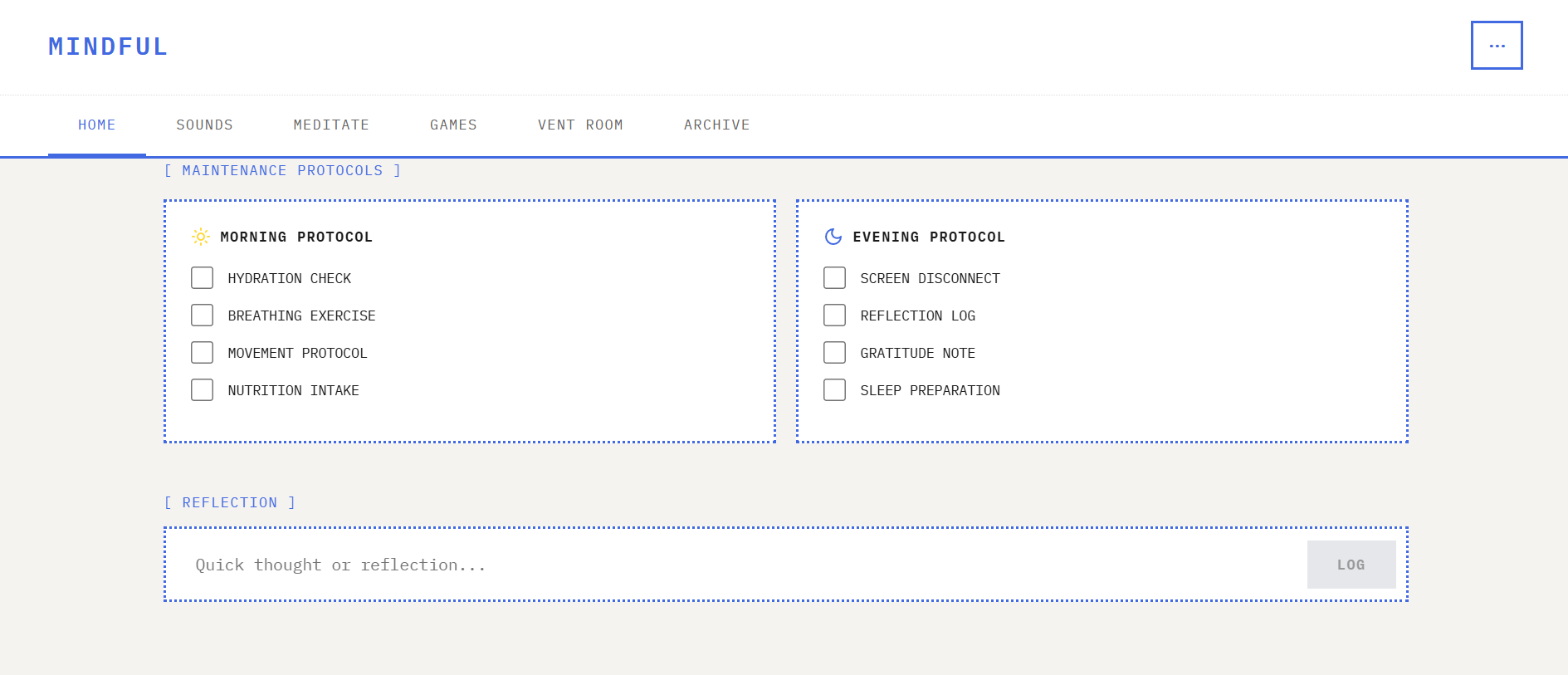
dashboard (cont.)
-
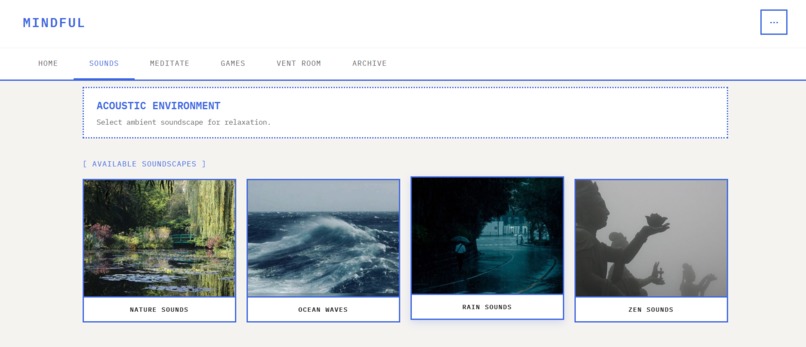
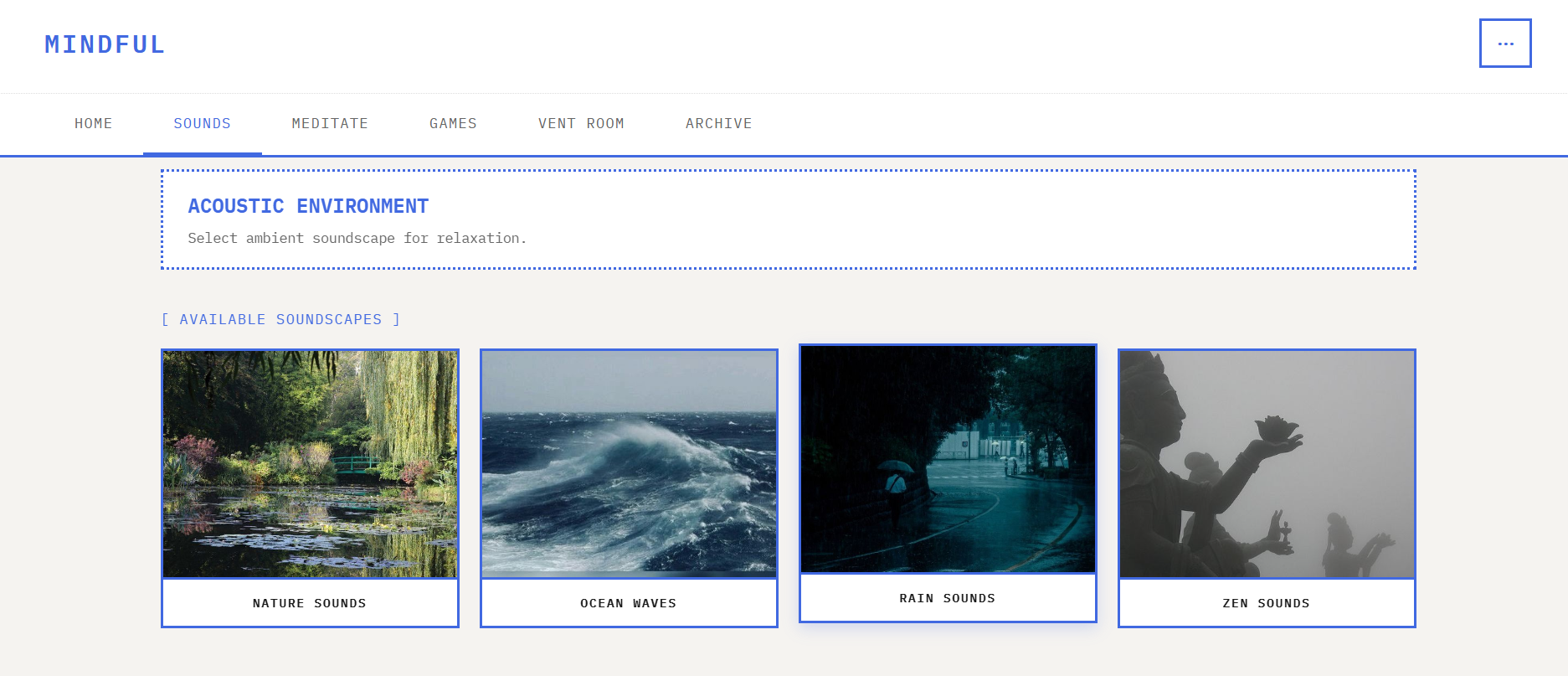
soothing souds
-
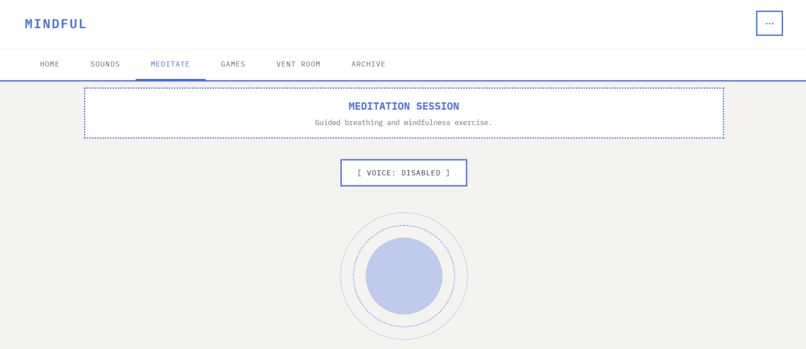
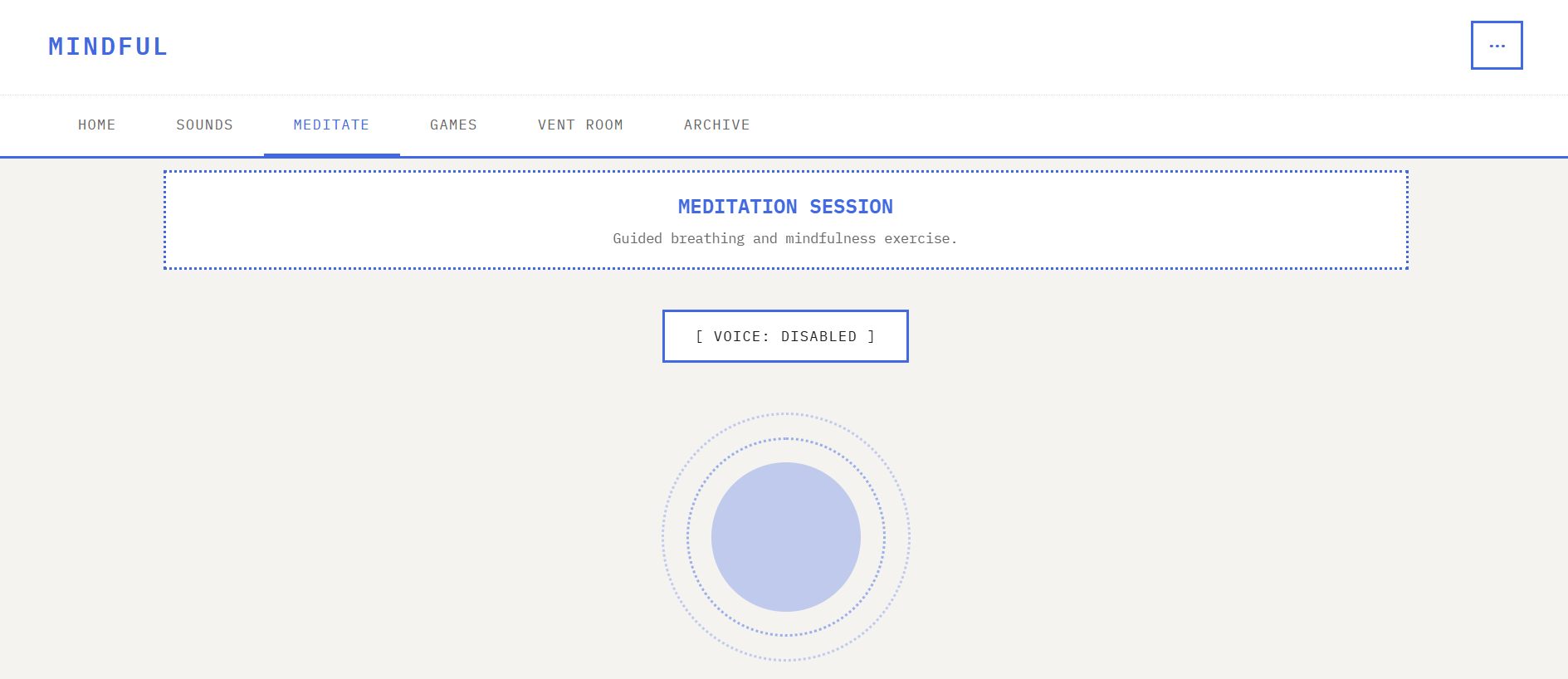
voice guided meditation
-
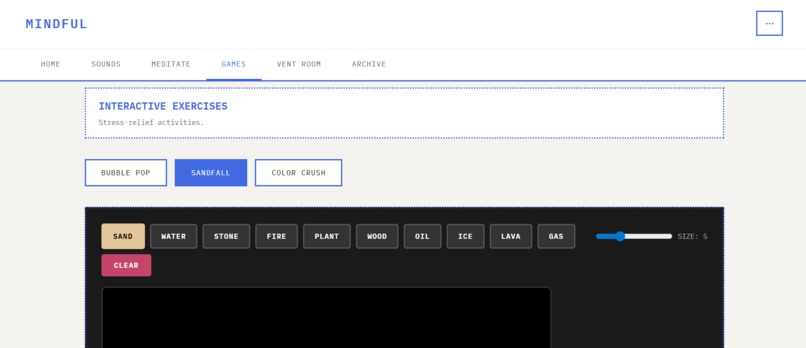
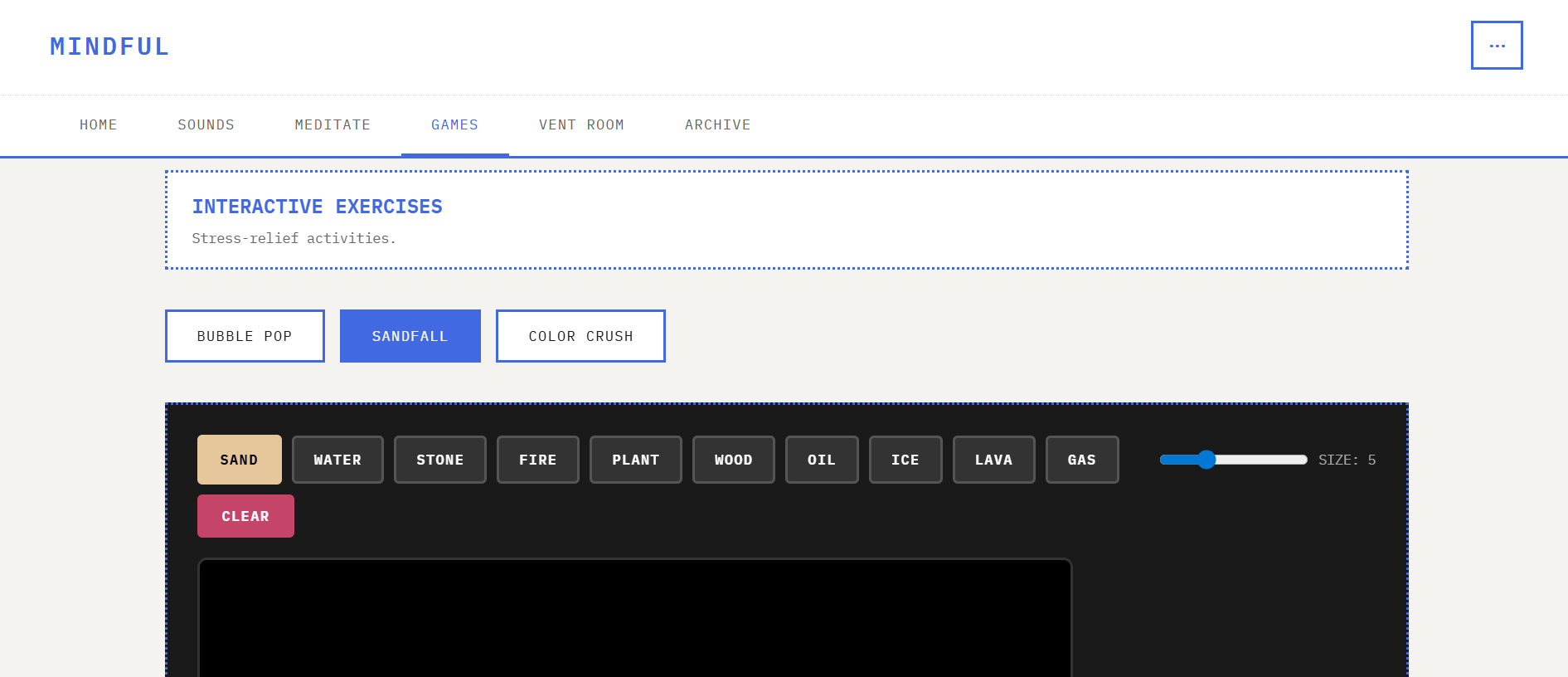
games to relax
-
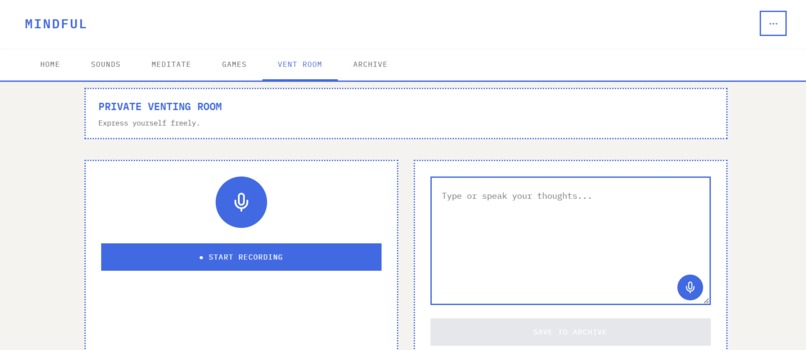
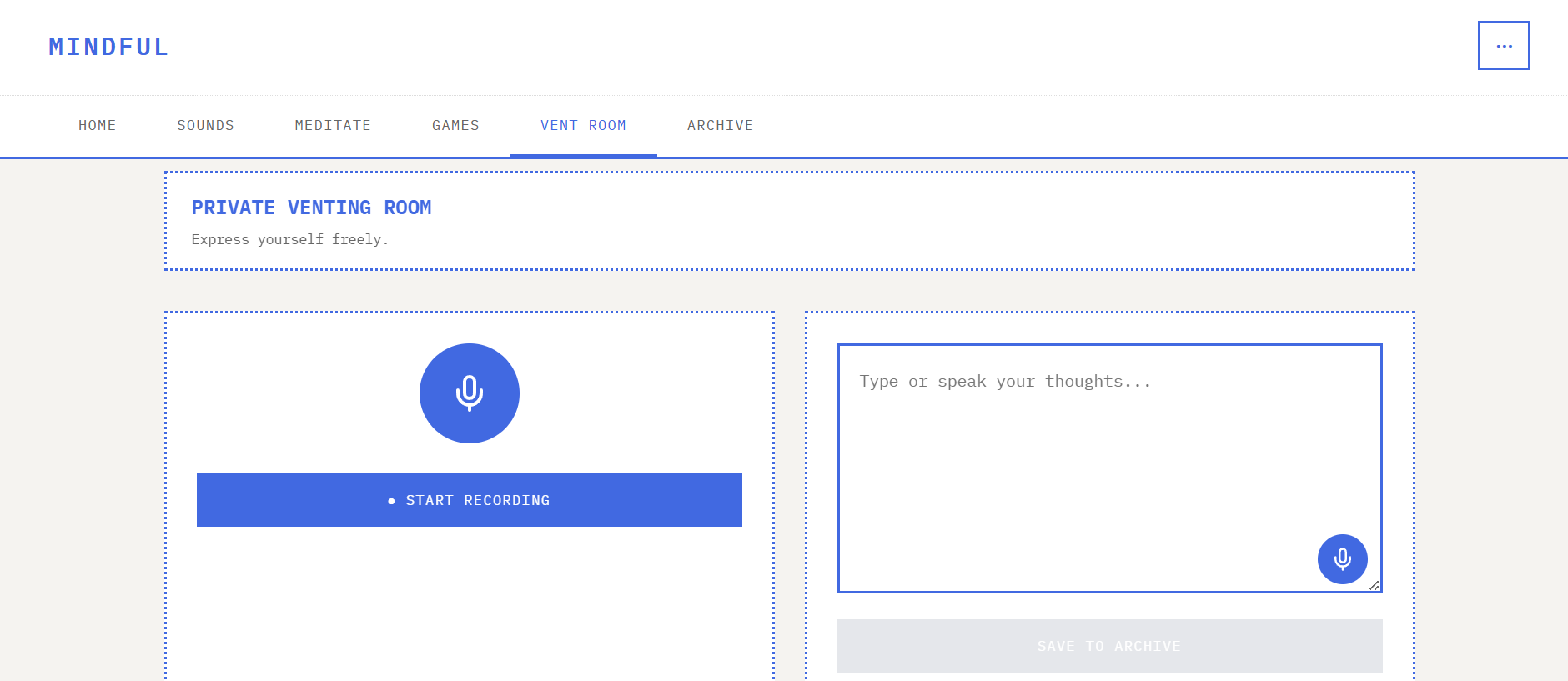
a voice recording/typing vent room
-
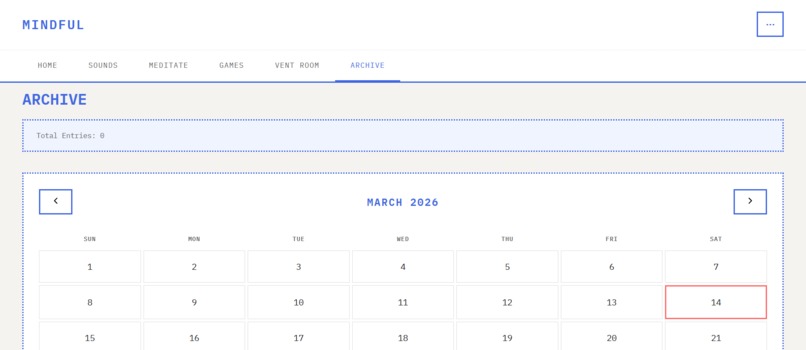
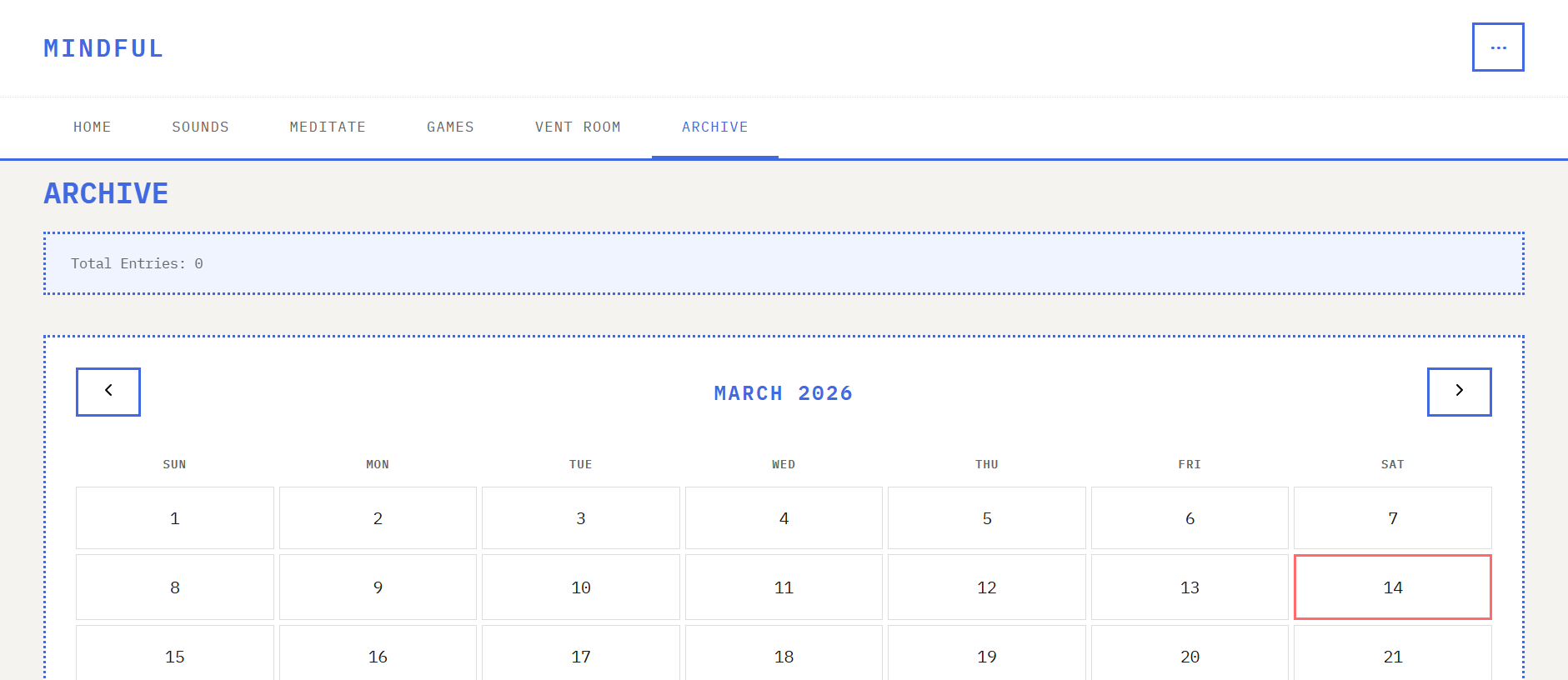
a calender for arcived
Inspiration
Navigating the final years of an engineering degree comes with intense academic pressure, and it’s incredibly easy for students to experience burnout, stress, and fatigue. I wanted to build a tool that didn't add to that cognitive load. Most health apps are cluttered, noisy, and overwhelming, which is the last thing a stressed student needs. The inspiration for Mindful was to create a digital sanctuary: a student mental health tracker with a highly minimalist, Notion-like aesthetic that actually helps reduce anxiety just by using it.
What it does
Mindful is a clean, distraction-free platform designed to help students monitor their cognitive health and daily habits. It allows users to seamlessly log their mood, academic workload, and sleep patterns. By tracking this data, the app helps identify early warning signs related to stress, anxiety, and cognitive fatigue, empowering students to take proactive steps to protect their peace and prevent burnout before it happens.
How we built it
The frontend is built using React and styled to achieve a stark, minimalist aesthetic with clean typography and ample whitespace. We integrated a robust backend to handle user accounts and data securely. To make the tracker intelligent, the architecture incorporates Machine Learning workflows designed to analyze user inputs and recognize behavioral patterns commonly associated with cognitive overload.
Challenges we ran into
One of the biggest hurdles was balancing deep functionality with absolute minimalism. It takes a lot of restraint to display complex tracking data like weekly stress trends or fatigue levels without cluttering the interface. Additionally, smoothly integrating the data flow between the React frontend, the backend database, and the analytical models required careful state management to ensure the application always felt lightning-fast and responsive.
Accomplishments that we're proud of
I am incredibly proud of the user experience. Achieving a calming, Notion-inspired design that feels intuitive rather than like a clinical medical app is a huge win. I'm also proud of successfully bridging front-end web development with data analytics to create a tool that isn't just a static diary, but a proactive wellness platform.
What we learned
Building Mindful deepened my understanding of React state management and full-stack integration. I also learned a tremendous amount about user-centered design specifically how visual hierarchy, whitespace, and color theory directly impact a user's emotional state, which is critical when building for mental health.
What's next for Mindful
The next step is to expand the machine learning models to provide even more granular insights, leveraging larger datasets (like EEG study data on cognitive health disorders) to better predict episodes of focus loss or anxiety. I also plan to add an automated feature that suggests personalized, real-time coping mechanisms and breathing exercises based on the user's immediate mood logs.
Built With
- ai
- css3
- html5
- javascript
- machine-learning
- react
- tailwind-css

Log in or sign up for Devpost to join the conversation.