-
Website
Inspiration
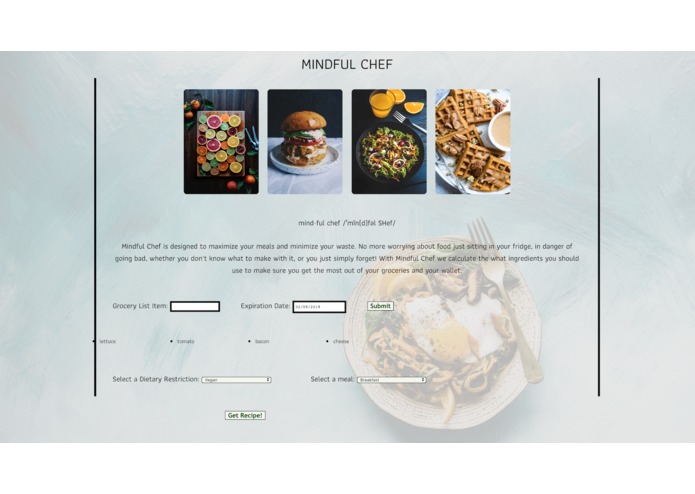
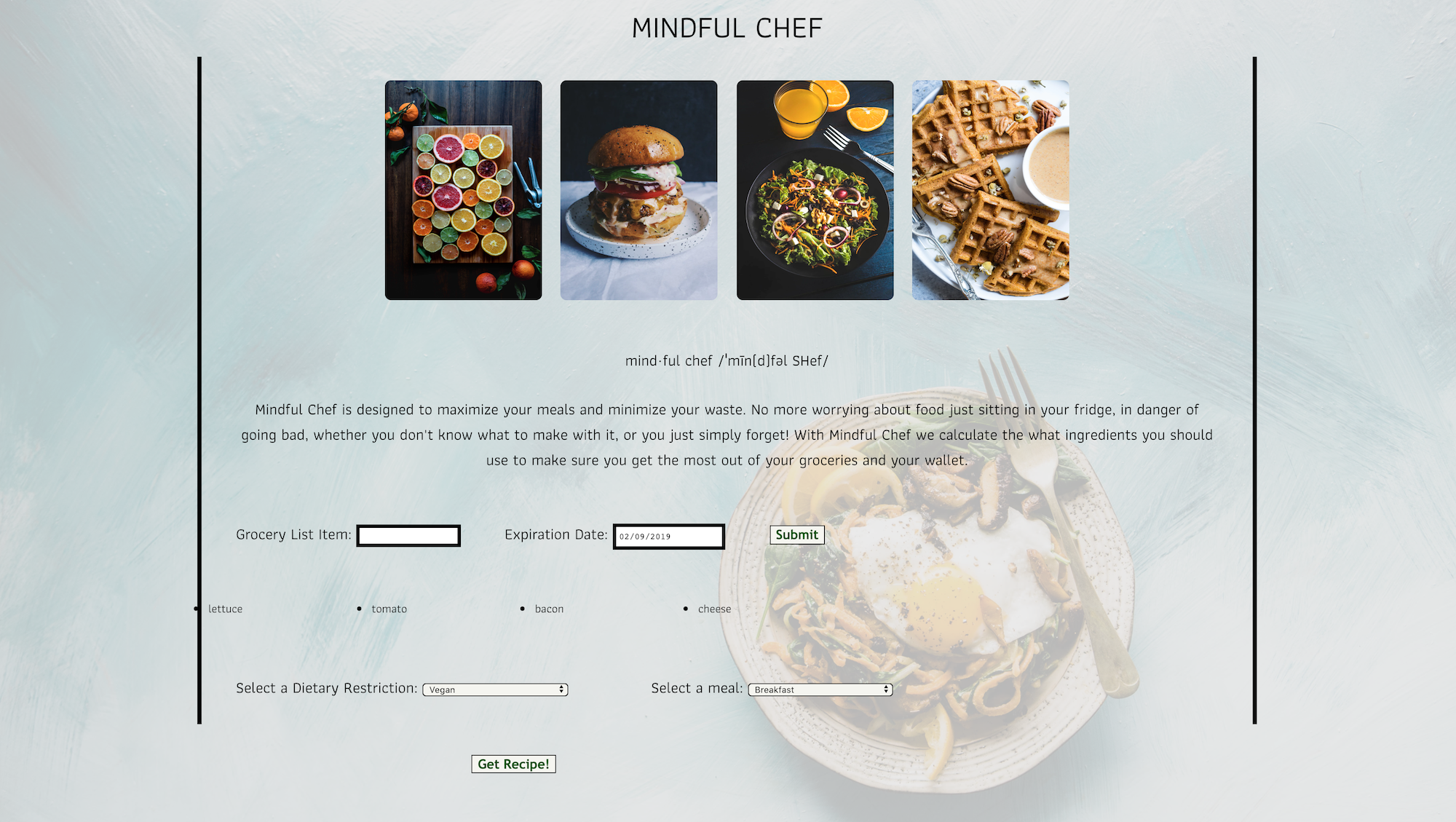
As students, we have discovered that unintentionally wasting food due to forgetting when its expiring is pretty common. Sometimes we have things sitting in our fridge that we don't even remember we bought and meanwhile they're sitting in the corner of the fridge, wasting away. When food spoils, it is not only a monetary problem for the purchaser, but it is also wasting the resources that went into the ingredients. This contributes to overproduction of various produces and food items, creating even more waste. Our web application takes in a list of groceries and their expiration dates, sorts them by how important it is for you to cook with them in regards to each expiration date, and gives you recipes that utilize the most perishable ingredients first. Not only does this combat food waste, but it also gives students and busy individuals easy recipes with ingredients from their own shopping list.
How we built it
We used HTML, CSS, and Javascript to build our web application, as this was a platform that could be accessed by any device with internet connection, making sure it was not only available to smartphones.
Challenges we ran into
By the beginning of the Hackathon, nobody in our team had ever worked with any of the tools, or web development in general, so in record time we had gone through documentation, tutorials, attended workshops, and utilized additional resources to not only understand how to use the tools, but how web applications and the web in general work.
Accomplishments that we're proud of
We saw the project as an excellent learning experience because we are all interested in web development, even though this was collectively our first time doing anything web-related. When we devised our plan, we truly thought we might not finish the project as the learning curve only seemed to get steeper. Luckily, we were so involved with our idea and learning, that we continued asking questions, seeking out mentors and trying over and over until we had a working version.
What we learned
We not only learned about the tools and the basics of web development, but we learned how to coordinate with a team and delegate responsibilities, while building a coding project. Most of this team is classified as beginner when it comes to hackathons, so many of us hadn't worked on coding projects with other people. We educated ourselves on version control and integration, so that our project is working and cohesive. Our team experienced many different perspectives and ideas, and most importantly, found a smooth, easy way to communicate effectively. At the end of the day, we were mostly on the same page, which is a feat in itself as logic can be a very difficult thing to communicate.
What's next for Mindful Chef
An integration of Google cloud vision for new, streamlined features such as the option to input groceries via a photo of either a receipt or handwritten list. This would utilize cloud vision text extraction. A new function that pulls data from the FDA and other food safety organizations to automatically input shelf life and perishable dates for items on the list. Added customization options for dietary preferences as well as additional recipe options (snacks, smoothies, dessert, paleo diets, Mediterranean diets). Our most ambitious hope: having an Android/iOS mobile application that is compatible with your amazon shopping cart and Whole Foods.
special acknowledgements: https://www.youtube.com/watch?v=-FrpuPLYnvY


Log in or sign up for Devpost to join the conversation.