Inspiration
Our inspiration came from a simple observation: in an age of constant connectivity, it's never been easier to feel disconnected from ourselves. Many of us navigate daily stress, anxiety, and the quiet influence of our own cognitive biases without the right tools to understand them. While professional therapy is an invaluable resource, there's a significant gap for those who are not in crisis but are seeking to build proactive mental resilience and self-awareness.
We were inspired by the Hack4Health challenge to use technology not as a distraction, but as a mirror. We asked ourselves: Can we build a tool that empowers individuals to become active participants in their own mental well-being? We wanted to demystify concepts from psychology like CBT and cognitive biases, making them accessible and actionable. This project is our answer—a private, supportive space to explore one's own mind, guided by the principle of the UN's Sustainable Development Goal 3: Good Health and Well-being.
What it does
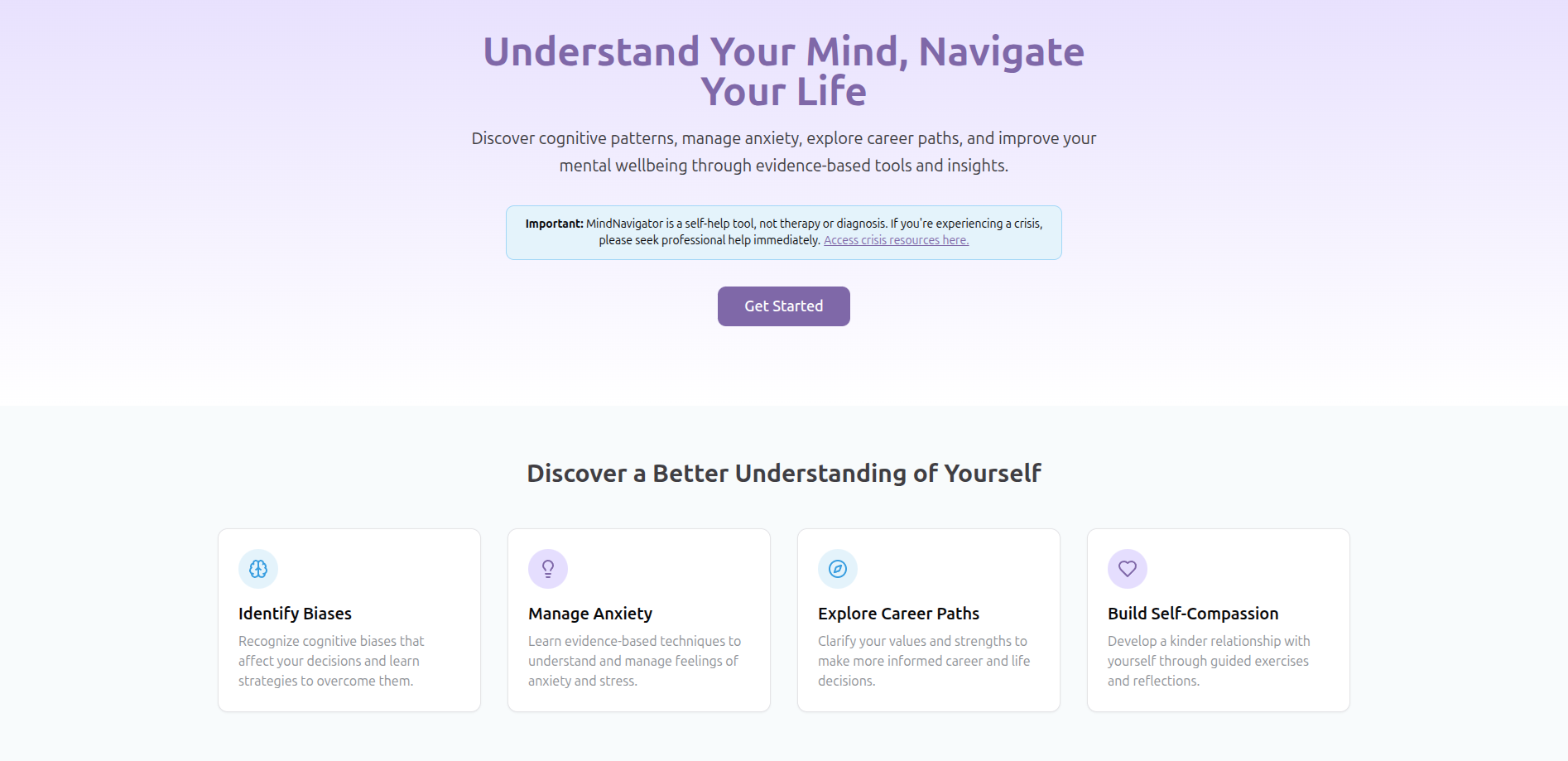
Mindfluence is a personal self-awareness toolkit designed to help users understand their thoughts, clarify their values, and build healthier mental habits. It is explicitly not a therapy or diagnostic tool, but a platform for self-guided improvement.
Here’s what a user can do:
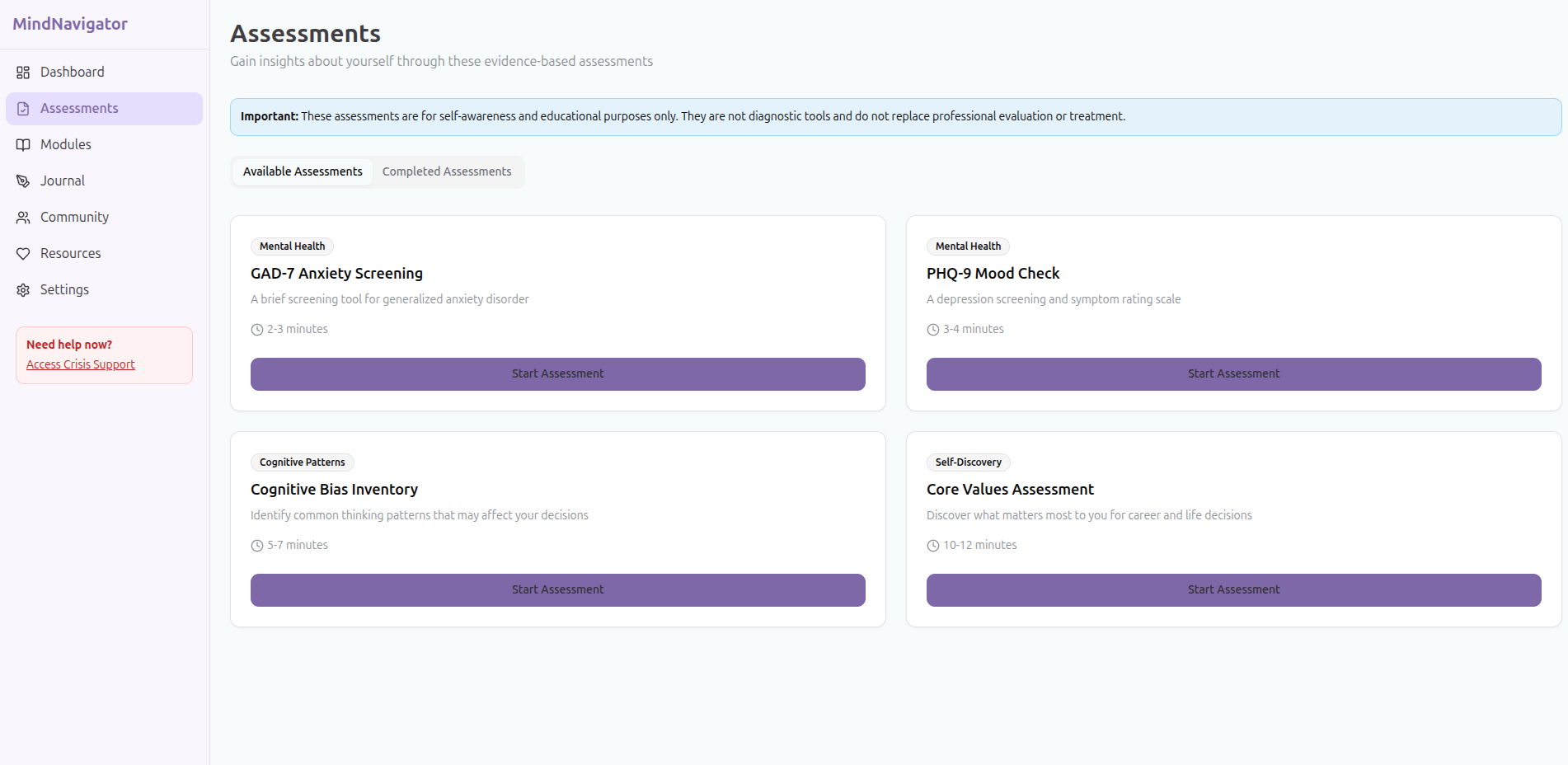
Take Guided Assessments: Users can explore validated assessments (like GAD-7 for anxiety) to get a private baseline of their current mental state.
Use Interactive Tools: The platform offers structured exercises based on Cognitive Behavioral Therapy (CBT) and Acceptance and Commitment Therapy (ACT). A user can use a "Thought Record" to identify, challenge, and reframe negative thought patterns.
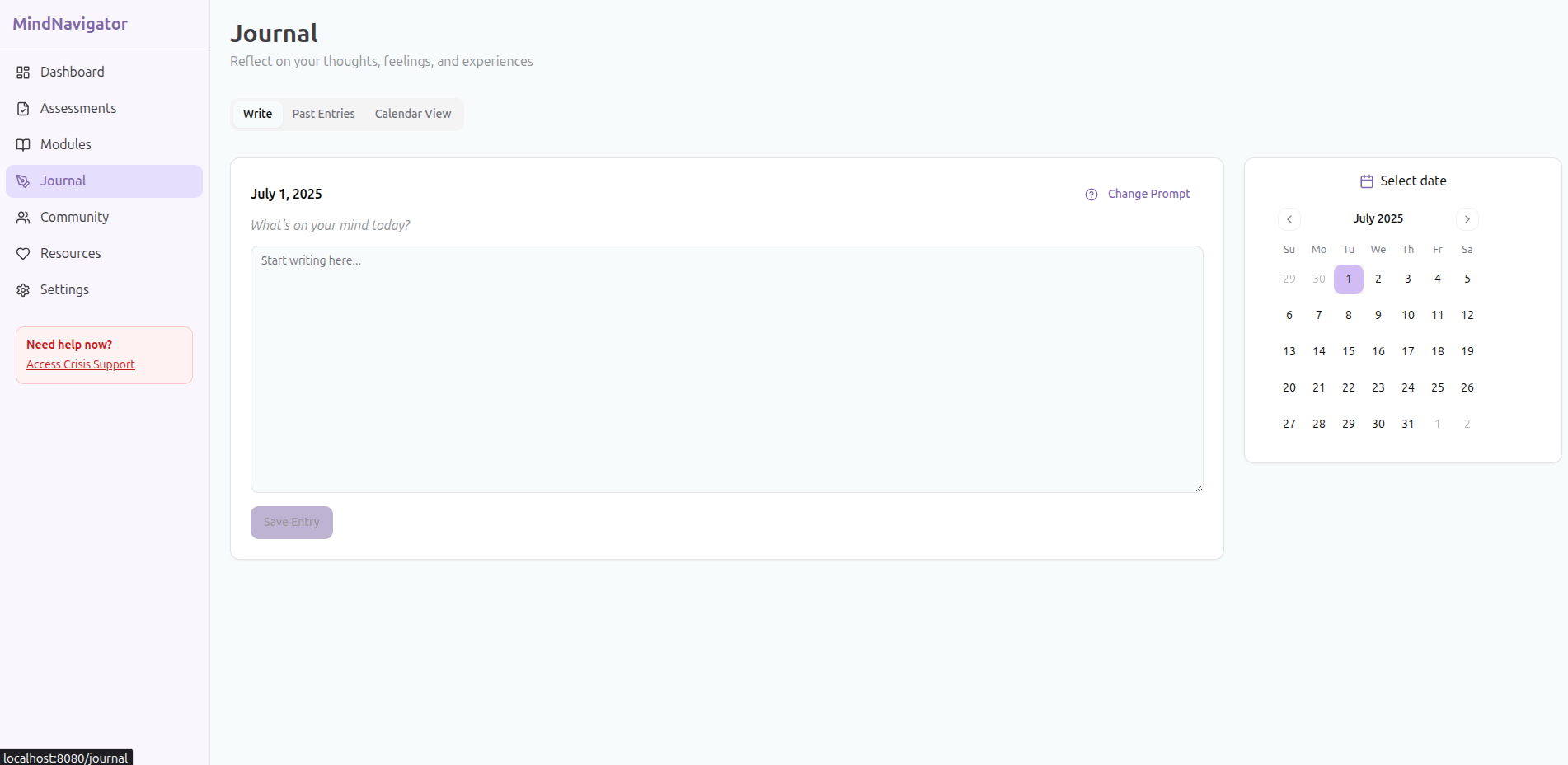
Reflect with a Guided Journal: A secure, private journal allows users to write freely. Our AI engine gently analyzes entries to identify recurring sentiment and themes, helping users see patterns they might have missed.
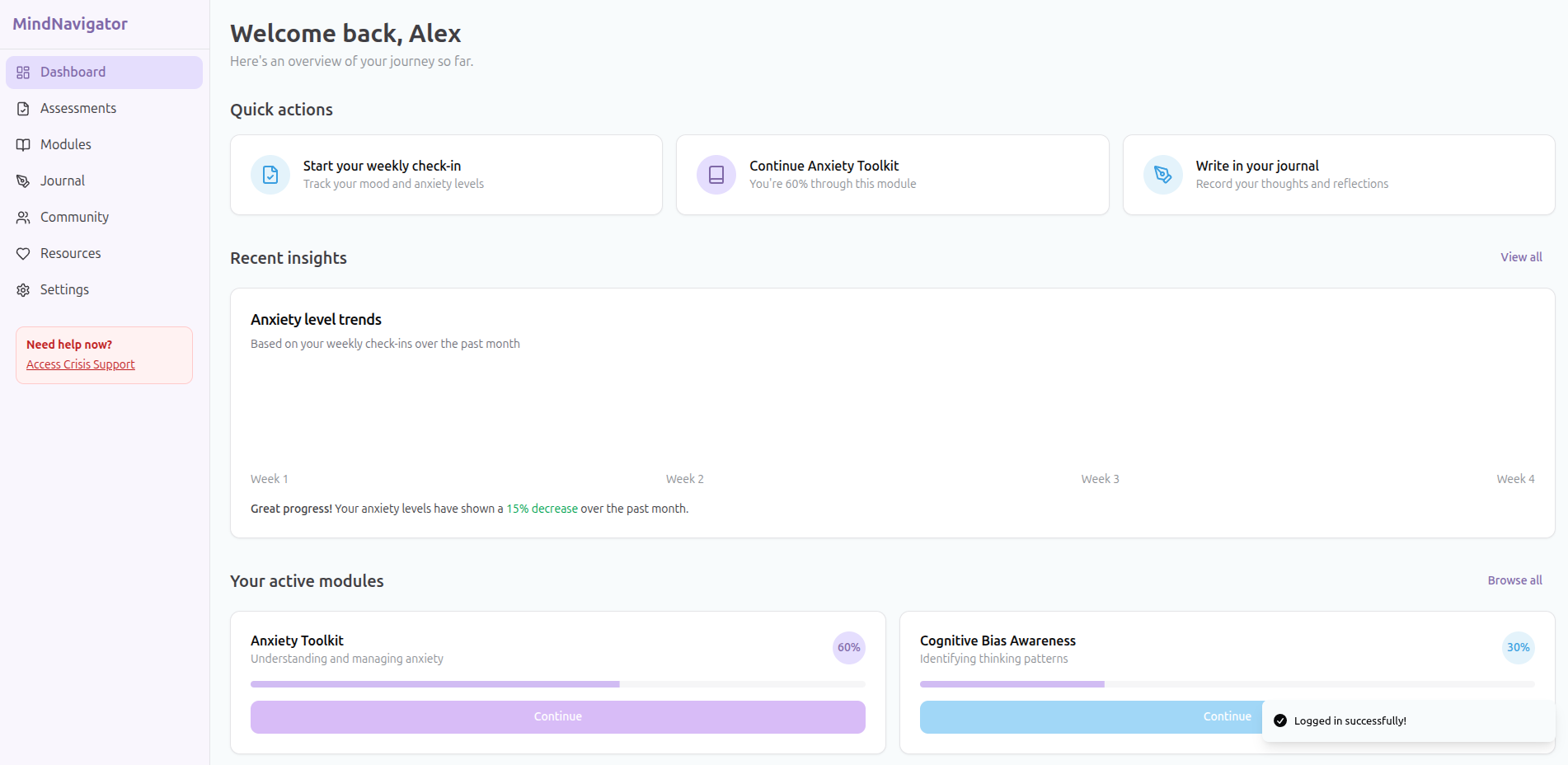
Gain Personalized Insights: The core of Mindfluence is the Insights Engine. It connects the dots between a user's assessments, tool usage, and journal entries to provide a holistic view of their progress and offer personalized suggestions for which module or tool to try next.
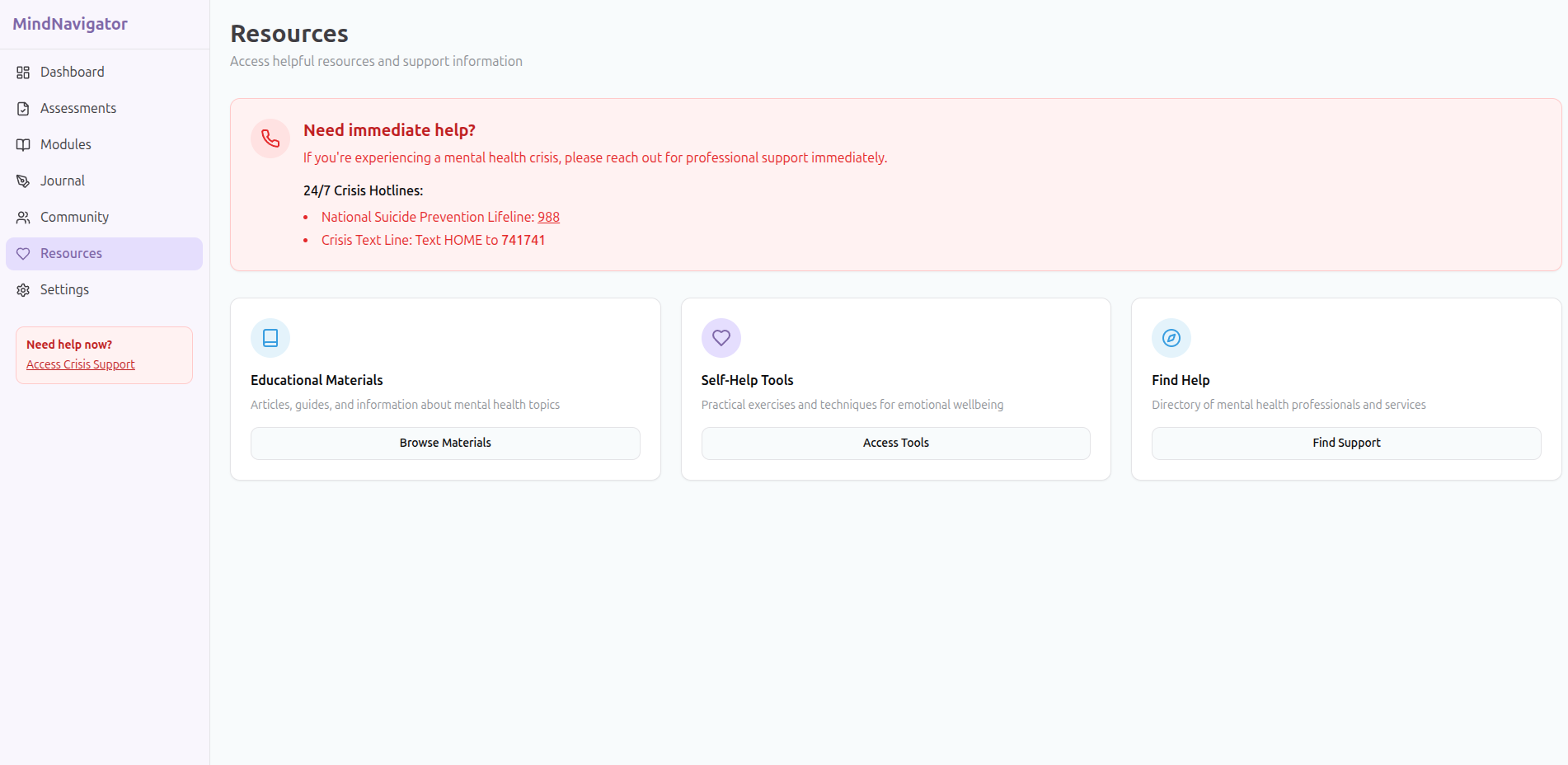
Explore Learning Modules: Users can browse curated content on topics like anxiety management, career exploration, and understanding cognitive biases.
How we built it
We chose React with tailwind to first complete the frontend, then will use scalable microservices to build the backend.
Frontend: The user interface was built with React and TypeScript, creating a responsive, dynamic, and type-safe user experience.
Backend Services: Our backend is composed of several independent services:
User Service (Node.js/Express): Manages secure authentication, user profiles, and authorization.
Content Service (Node.js/Express): Manages all assessments, modules, and tool definitions.
AI/Insights Service (Python/FastAPI): This is the brain of our operation. We used Python for its powerful machine learning libraries.
AI and Machine Learning: To power our Insights Engine, we leveraged Natural Language Processing (NLP) using pre-trained models from the Hugging Face Transformers library. This allows us to perform sentiment analysis, topic modeling, and theme extraction on journal entries securely on our backend.
Database: We used PostgreSQL for its reliability and ability to handle the relational data between users, assessments, and entries.
Challenges we ran into
One of our biggest challenges was an ethical one: how to provide helpful AI insights without ever crossing the line into diagnosis or therapy. We solved this by designing a "suggestion" system, not a "prescription" system. The AI's output is carefully constrained to only recommend other content within the app and to frame insights as "patterns you may want to explore," reinforcing the user's autonomy.
Technically, orchestrating the communication between our different microservices was a significant hurdle. Defining clear API contracts and using an API Gateway from the start was crucial to prevent chaos. Debugging a request that flowed through the Gateway to the User Service and then to the Insights Service taught us a lot about distributed systems.
Accomplishments that we're proud of
We are incredibly proud of creating the Personalized Insights Engine. Seeing it successfully analyze a journal entry, cross-reference it with an assessment score, and then suggest a relevant tool from a different module was a "wow" moment. It's the core of our vision brought to life.
We are also proud of building an ethical AI framework from the ground up. We didn't just add a disclaimer; we designed the entire system around user safety and empowerment, ensuring our platform is a responsible tool for self-exploration.
Finally, successfully implementing a full-stack, microservices-based application of this complexity within the hackathon timeframe is an accomplishment in itself. It’s a testament to our team's planning and execution.
What we learned
This project was a massive learning experience. We learned the immense responsibility that comes with building technology for mental well-being—every feature, button, and line of text must be crafted with empathy and care.
On the technical side, we gained firsthand experience in designing and deploying a microservices architecture. We learned that the upfront investment in setting up an API Gateway and clear service boundaries pays off immensely in development speed and scalability. Furthermore, we learned how to practically apply sophisticated NLP models to solve a real-world problem while navigating the ethical guardrails required.
What's next for Mindfluence
We see a bright future for Mindfluence and believe it has the potential to grow beyond a hackathon project. Our next steps include:
Developing an Interactive AI Assistant: Evolving our AI from a background engine into an optional, LLM-powered chat assistant that can provide guided reflection and help users navigate the platform's tools in real-time.
Expanding Content Modules: Adding new modules focused on topics like mindfulness, self-compassion, relationship habits, and focus management.
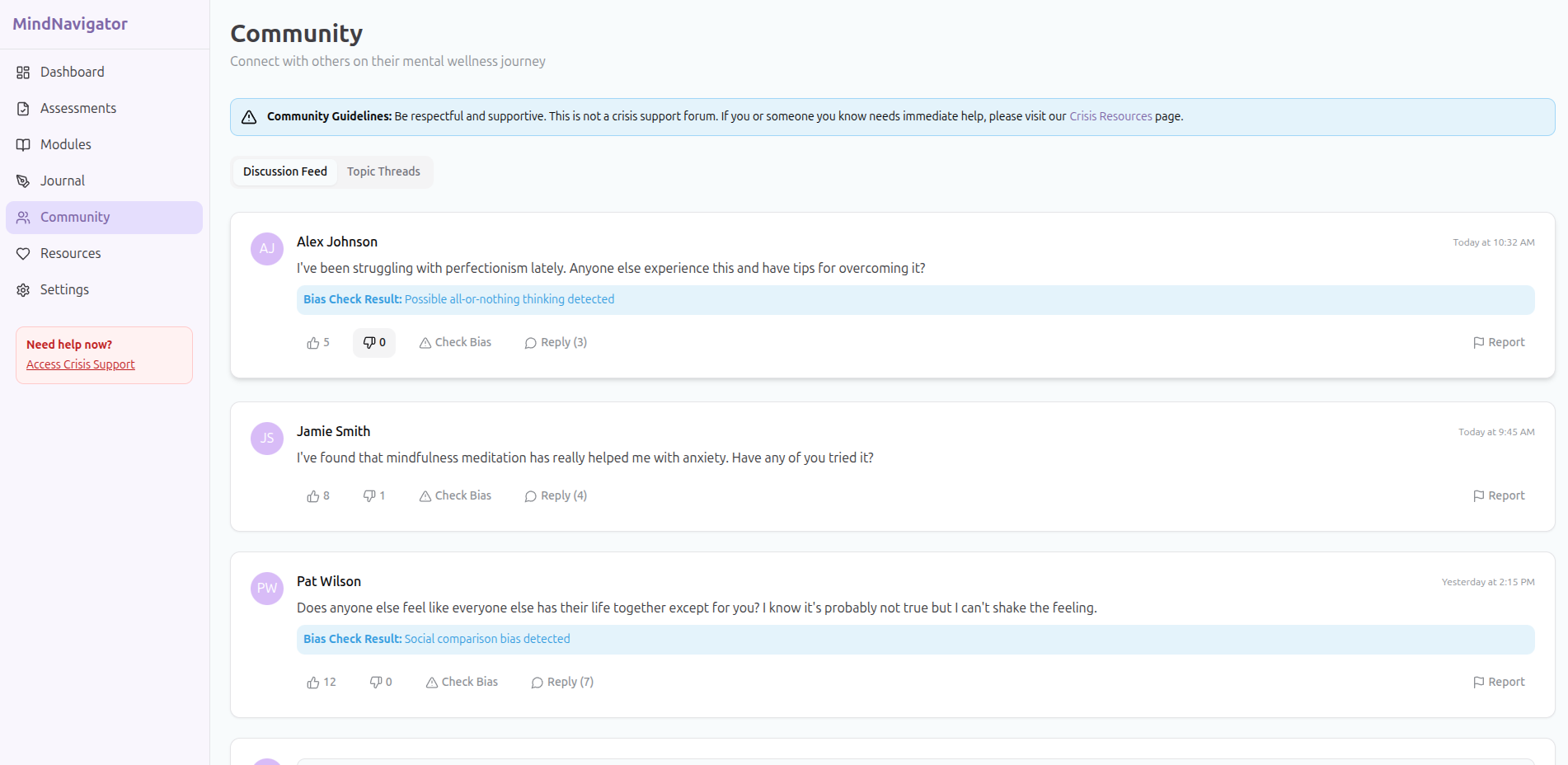
Introducing a Moderated Community: Building an opt-in, moderated community forum where users can share their progress and insights anonymously. We plan to integrate our "bias check" feature to promote healthy and constructive communication.
Native Mobile Apps: Creating dedicated iOS and Android applications to make Mindfluence even more accessible for daily check-ins and on-the-go reflection.
Built With
- react
- ts

Log in or sign up for Devpost to join the conversation.