-
-
Graph knowledge system
Inspiration
We were inspired by the idea that while people generate valuable insights every day through notes, journals, and meetings, most of that thinking gets buried and forgotten. Existing tools help us store information, but not reflect on it. We wanted to build a system that helps people see connections in their own ideas and learn from their past thinking.
What it does
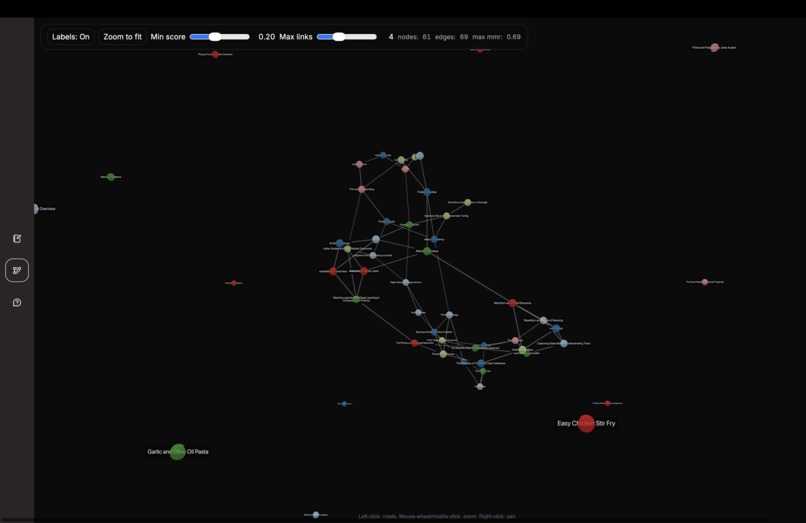
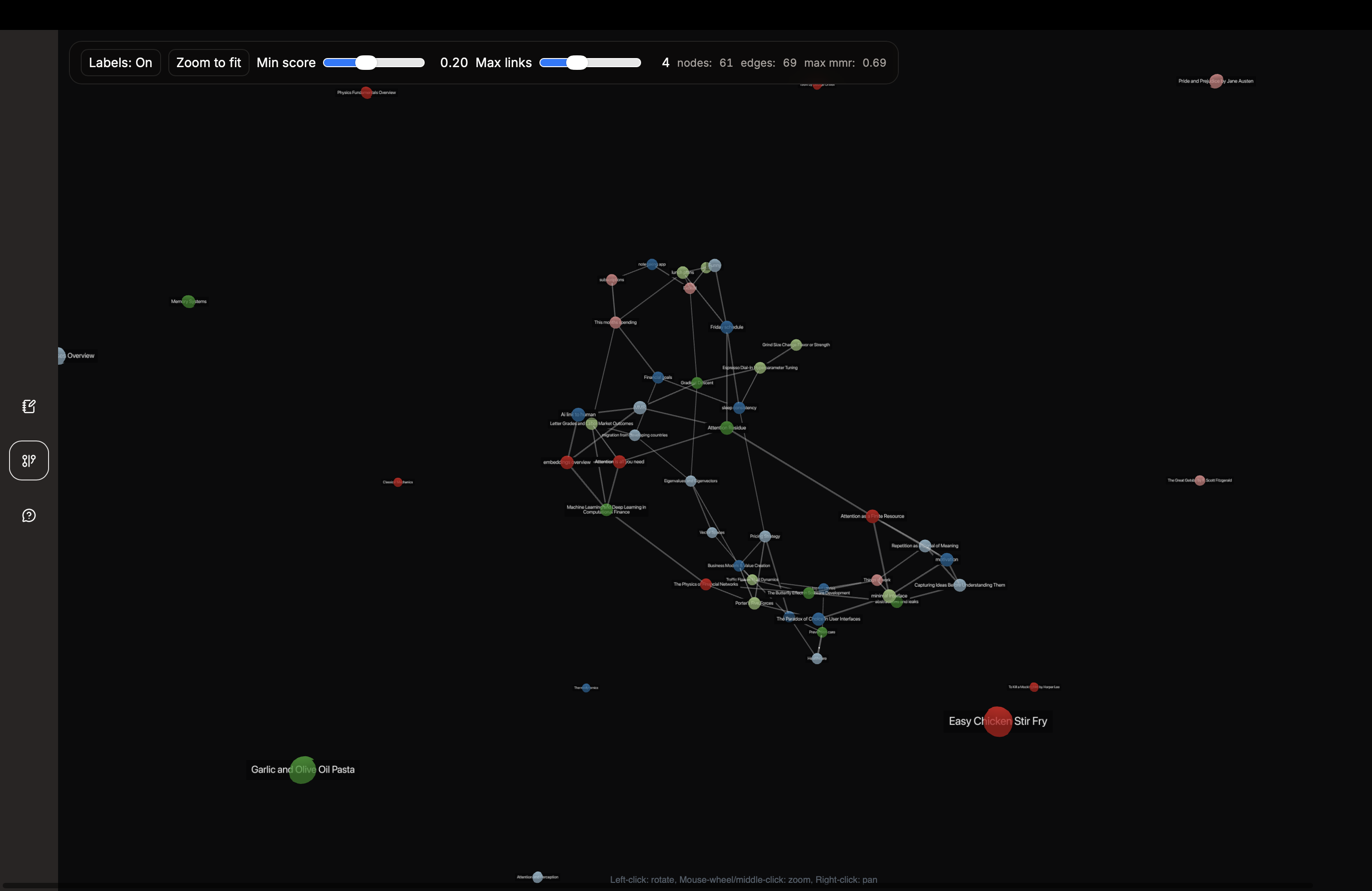
Mindflow turns your notes into a visual knowledge graph that reveals how your ideas, themes, and experiences connect over time. Users can explore clusters of related thoughts, revisit linked notes, and query their writing using natural language with citations. Instead of just storing notes, Mindflow helps you reflect on patterns in your thinking and surface insights that might otherwise stay hidden.
How we built it
We built Mindflow using a React-based frontend with a note editor and interactive graph visualization. Notes are processed into embeddings, which allow us to compute semantic similarity and construct connections between related entries. We also implemented a retrieval system that lets users query their notes in natural language, grounding responses directly in their own writing. The graph and retrieval components work together to transform isolated notes into a connected knowledge system.
Challenges we ran into
One challenge was designing the graph so it revealed meaningful relationships rather than just surface-level topic similarity. Embeddings tend to assign very high similarity scores to notes that use the same vocabulary or discuss the same subject, which often results in obvious or redundant connections. Our goal, however, was to highlight underlying patterns in thinking — such as recurring struggles, themes, or decision-making approaches — even when the notes weren’t about the same topic. We had to experiment with filtering strategies, similarity thresholds, and connection limits to surface deeper relationships while keeping the graph interpretable. Another challenge was designing the interaction model. Instead of building a system that answers questions for users, we wanted the tool to encourage reflection and mindful exploration. This meant carefully balancing automation with user control so that the system supports thinking rather than replacing it.
Accomplishments that we're proud of
We’re proud that we built a system that goes beyond note storage and actually helps users reflect on their thinking. The graph visualization makes abstract connections tangible, and the ability to move from an insight directly back to the original note makes the system trustworthy and grounded. Most importantly, we created something that encourages deeper reflection rather than replacing human thinking.
What we learned
We learned that the hardest part of building thinking tools isn’t the AI — it’s designing interactions that actually help users reflect. We also learned how important visualization is for understanding complex relationships, and how even simple semantic links can reveal surprising patterns in personal data.
What's next for Mindflow
Next, we want to improve insight discovery by highlighting recurring themes and long-term patterns across notes. We also plan to support richer graph exploration, better clustering, and timeline-based views of how ideas evolve. Ultimately, we want Mindflow to become a personal thinking system that helps users continuously learn from their own experiences.
Built With
- gpt-4o-mini
- python
- react
- text-embeddings
- typescript

Log in or sign up for Devpost to join the conversation.