-
-
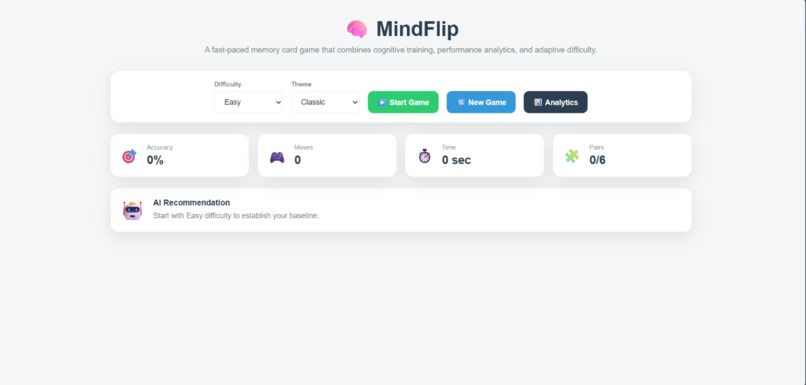
Game User Interface
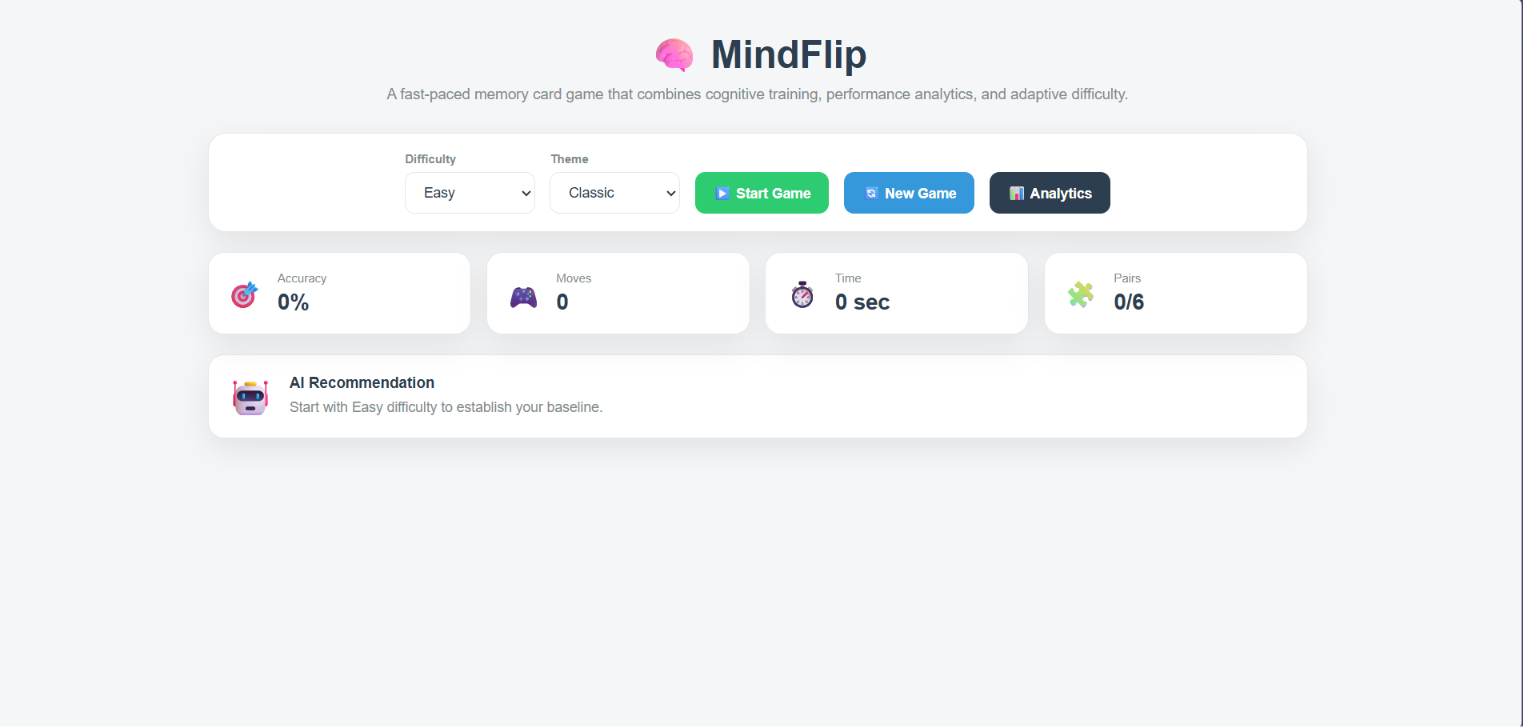
Inspiration
MindFlip was inspired by the idea of making memory training fun, simple, and engaging. I wanted to transform a traditional memory card game into a cognitive wellness experience that helps users improve memory and concentration while tracking their progress. I also embraced vibecoding to rapidly turn ideas into a functional and visually engaging product through AI-assisted development and experimentation.
What it does
MindFlip is an interactive memory-matching game that offers:
- 🧠 Memory and concentration challenges
- 🎚️ Easy, Medium, and Hard difficulty levels
- 🎨 Multiple visual themes
- 🎯 Accuracy and move tracking
- ⏱️ Best-time tracking
- 📊 Performance analytics
- 🤖 AI-based difficulty recommendations
- 💾 Persistent game history using LocalStorage
How I built it
MindFlip was built using HTML, CSS, and JavaScript, with vibecoding playing an important role in the development process. I used AI-assisted coding to brainstorm features, refine the UI, experiment with game mechanics, and quickly iterate on ideas. JavaScript handles the game logic, difficulty levels, timer, accuracy calculations, and recommendations. CSS provides the responsive UI and themes, while LocalStorage stores performance history and the Canvas API displays analytics.
Challenges we ran into
Some key challenges were managing card states, preventing invalid clicks, calculating meaningful performance metrics, maintaining best scores across difficulty levels, creating responsive layouts, and developing an adaptive recommendation system. Using vibecoding also required reviewing and refining AI-generated solutions to ensure the final implementation was reliable and aligned with the project's goals.
Accomplishments that I'm proud of
I transformed a simple memory game into a complete cognitive fitness application with analytics, multiple difficulty levels, customizable themes, persistent performance tracking, and personalized recommendations. I'm also proud of using vibecoding as a creative development approach to quickly experiment, iterate, and bring the idea from concept to a working application.
What I learned
This project strengthened my skills in JavaScript game development, responsive UI design, LocalStorage, data visualization, state management, and recommendation systems. I also learned how vibecoding and AI-assisted development can accelerate prototyping and encourage rapid experimentation while still requiring human creativity, testing, and decision-making.
What's next for MindFlip
Future plans include integrating a real machine-learning model, user accounts, cloud-based analytics, achievements and leaderboards, daily challenges, additional cognitive games, and personalized cognitive fitness scores. I also plan to continue using vibecoding to rapidly prototype and experiment with new features and ideas for the platform.
Built With
- chatgpt
- css
- html5
- javascript


Log in or sign up for Devpost to join the conversation.