-
-
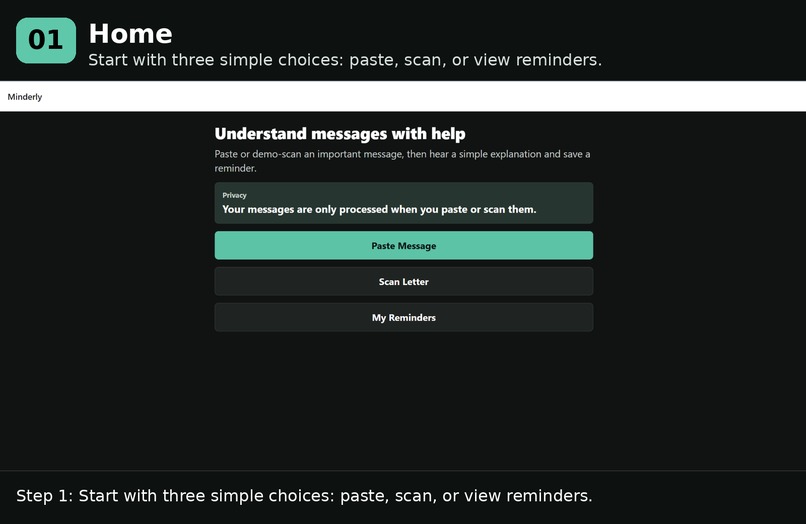
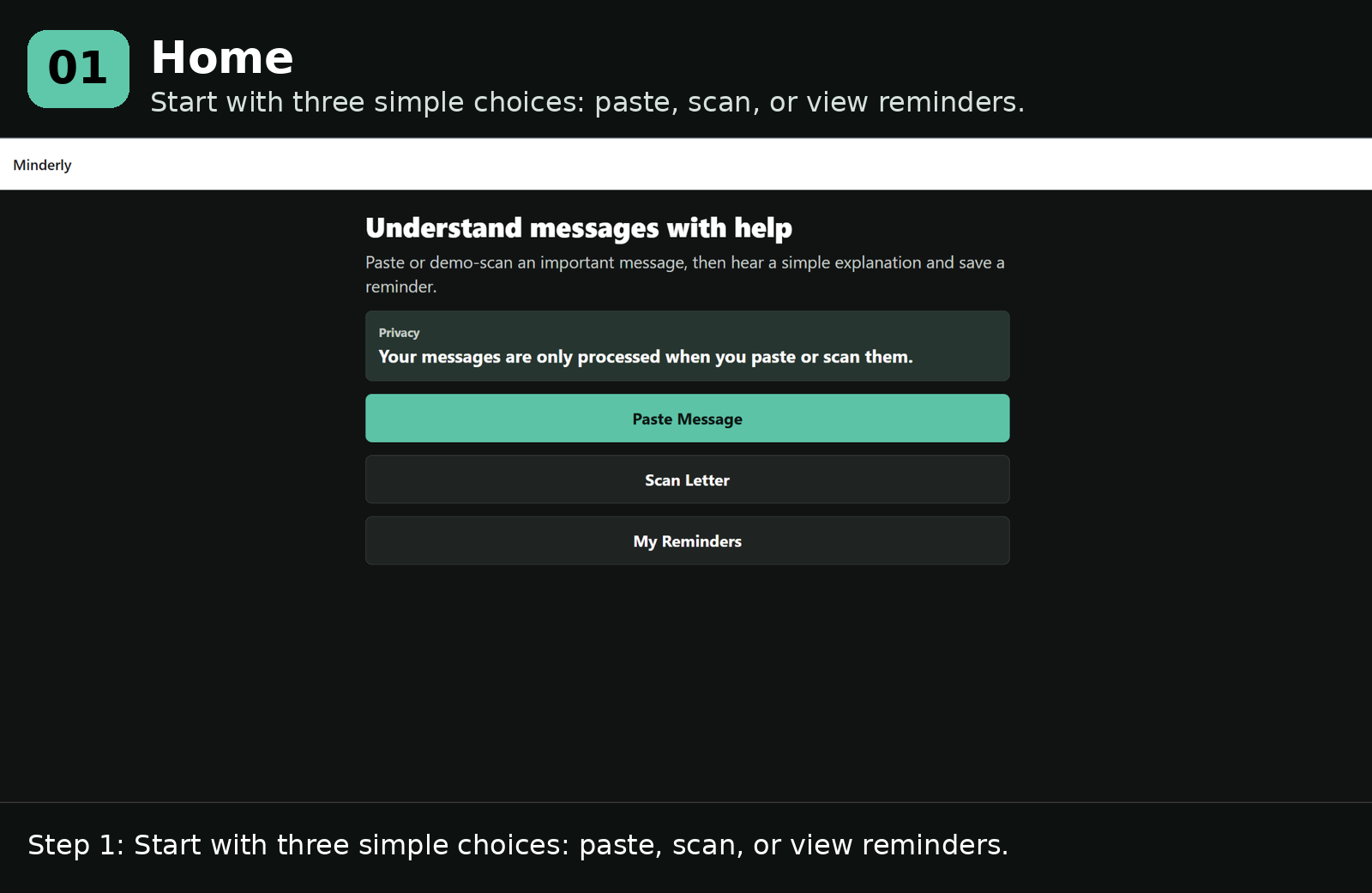
Minderly starts with three simple choices: paste a message, scan a letter, or view reminders.
-
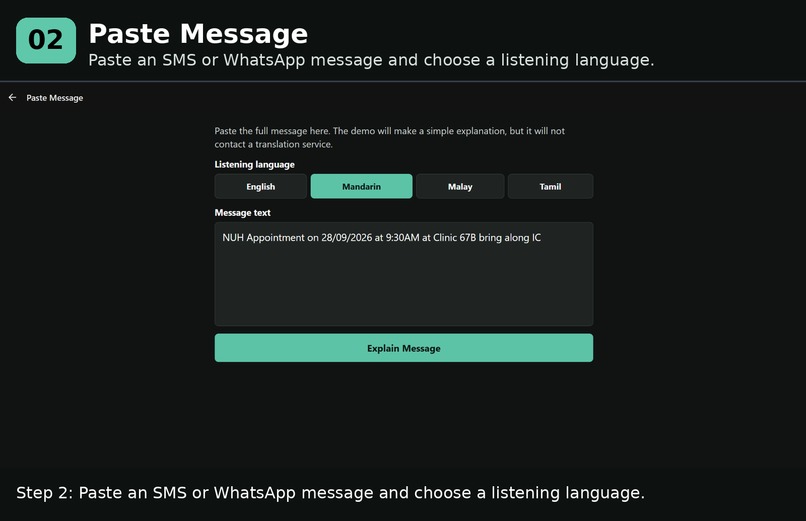
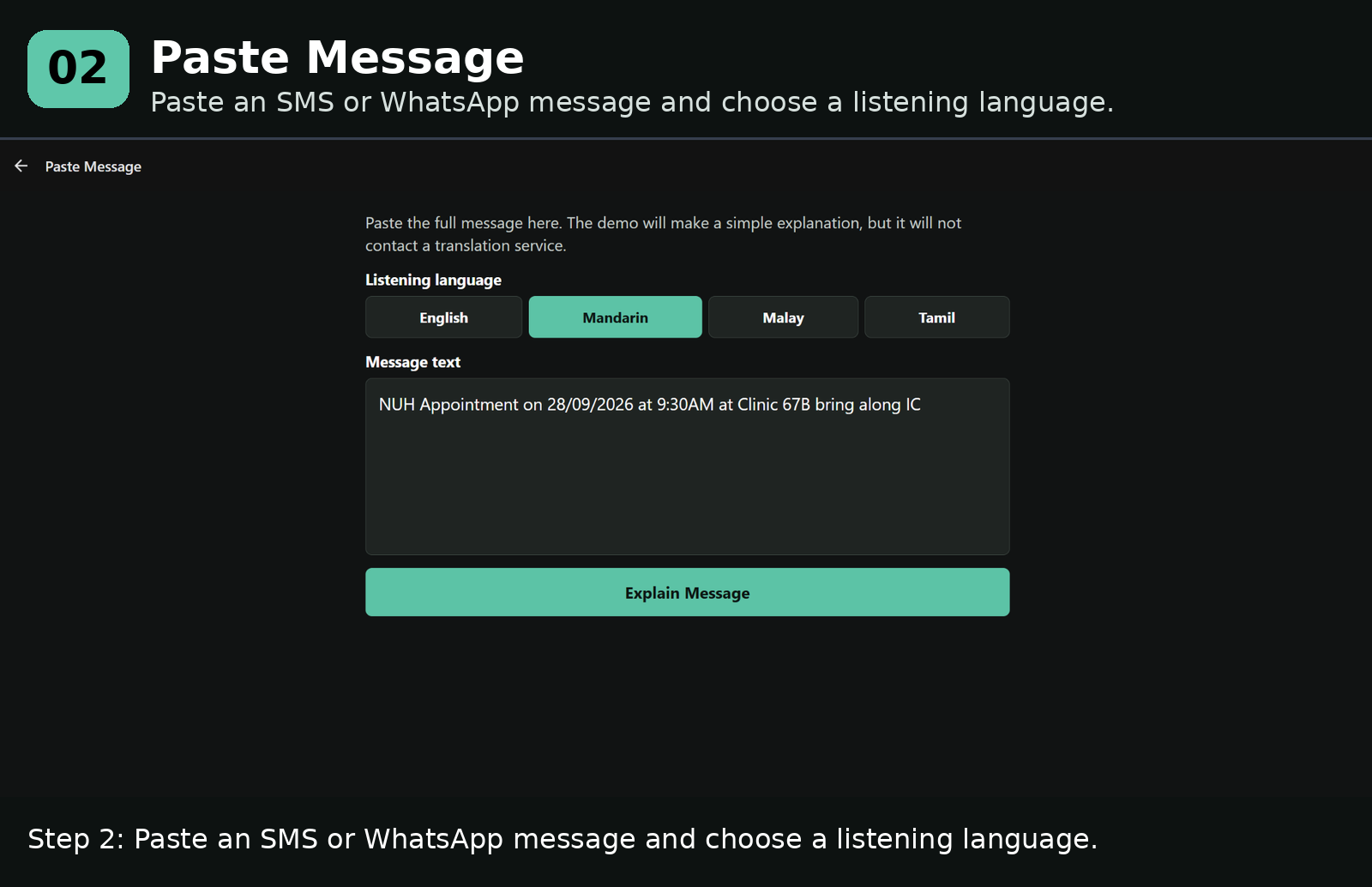
Users paste an SMS or WhatsApp message and choose their preferred listening language.
-
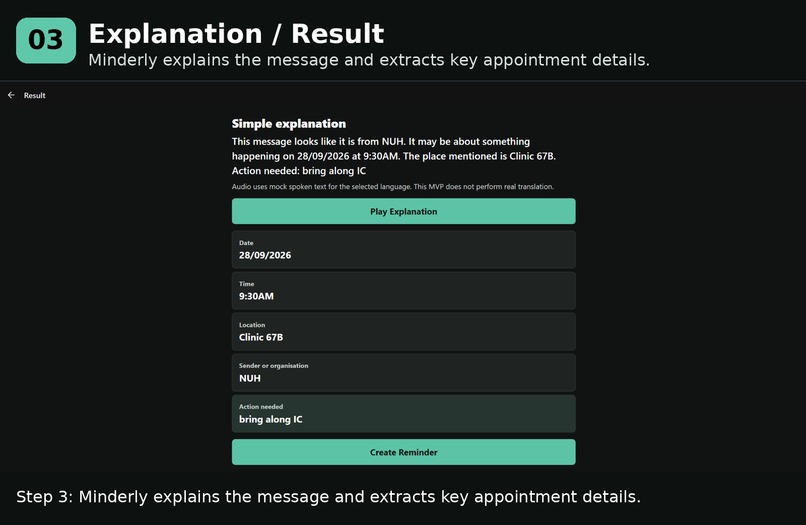
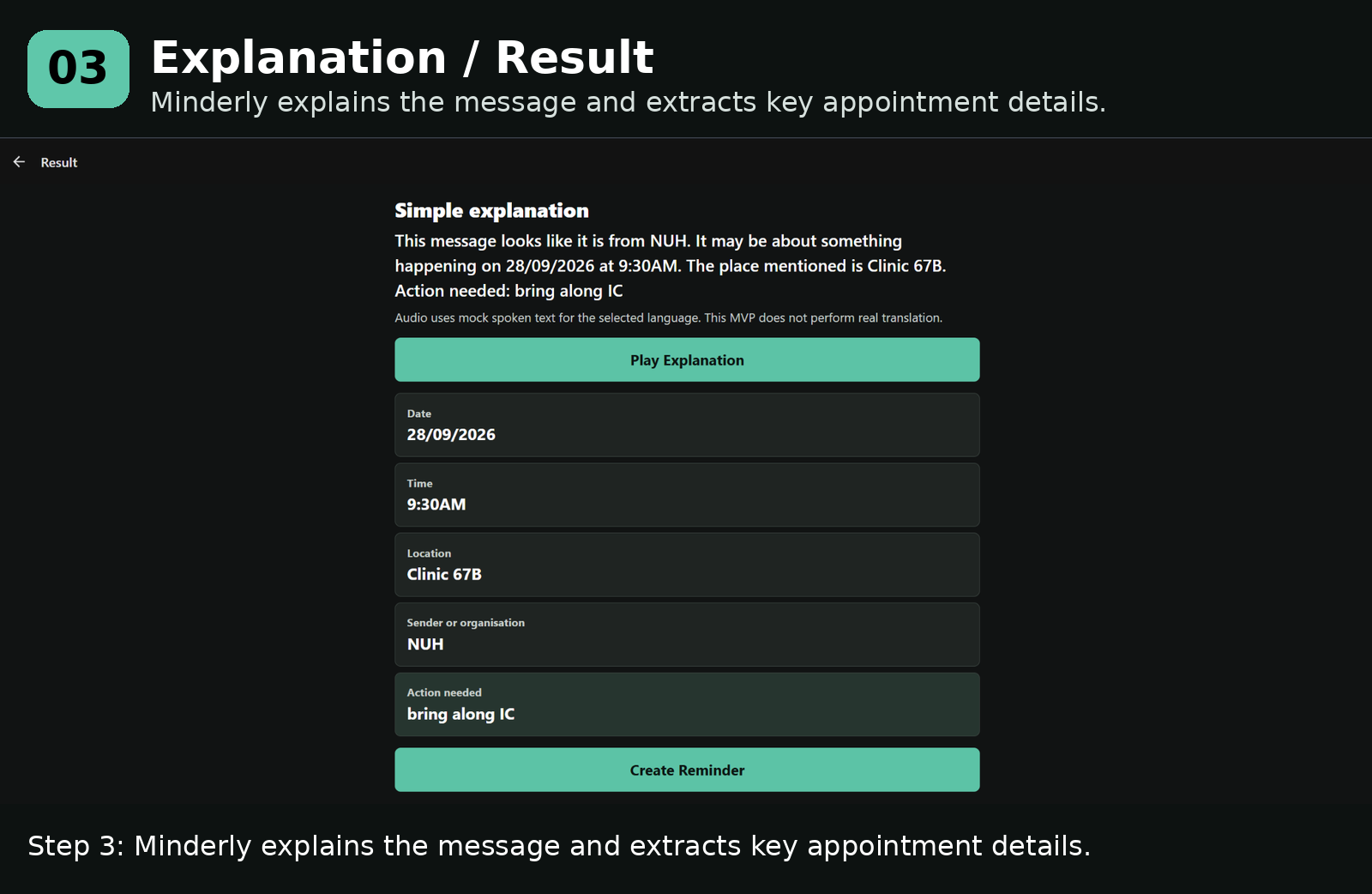
Minderly explains the message in simple text and detects key appointment details.
-
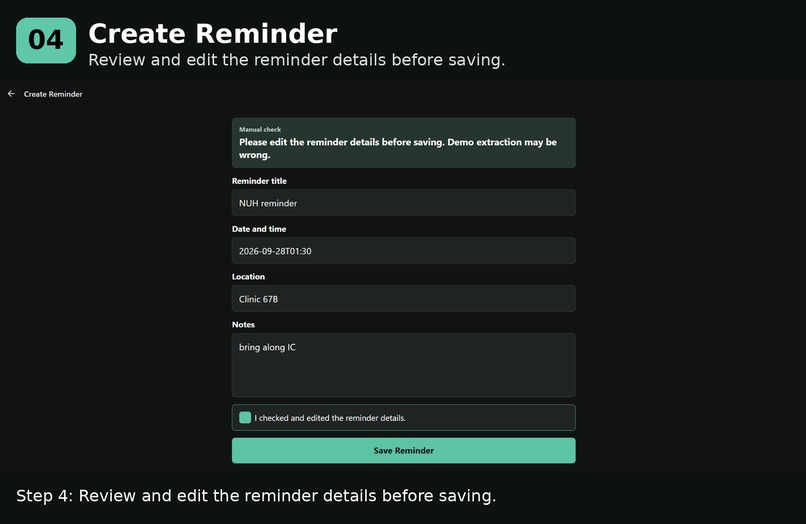
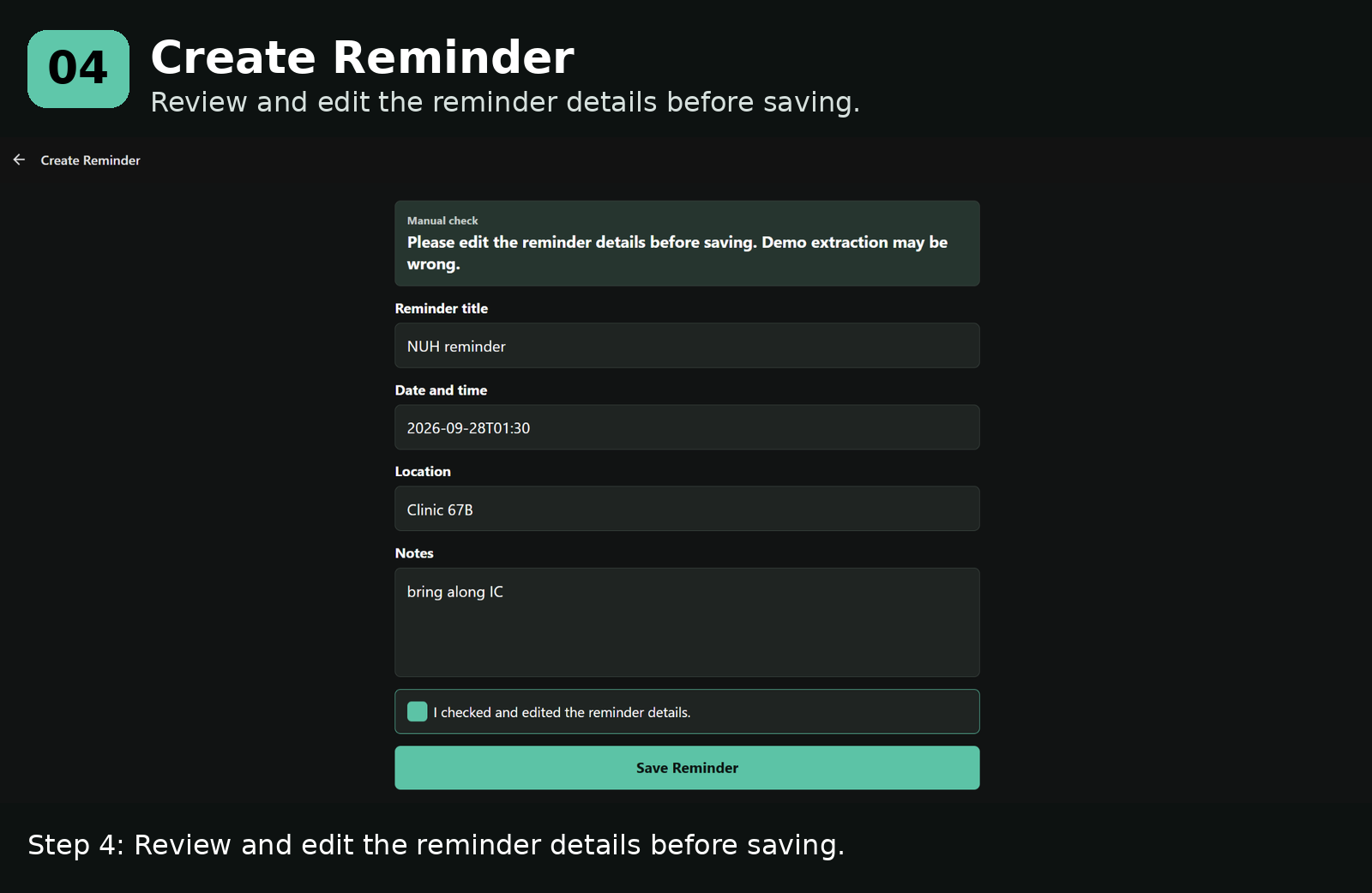
Users review and edit the reminder details before saving to reduce mistakes.
-
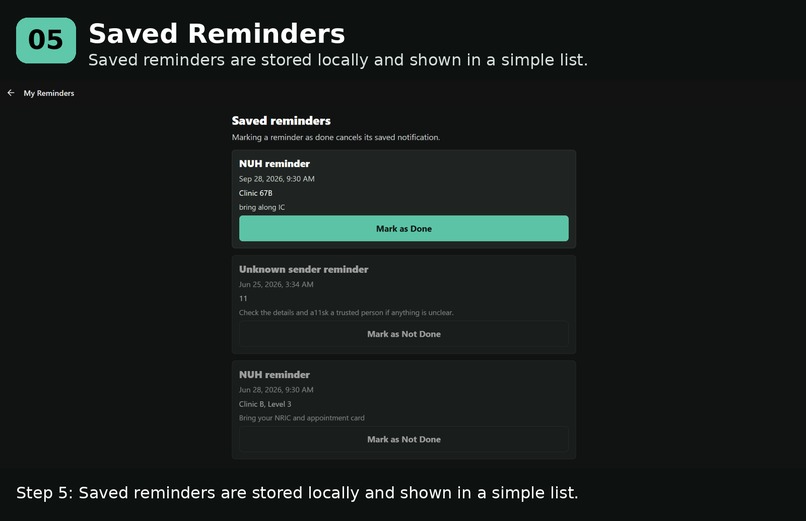
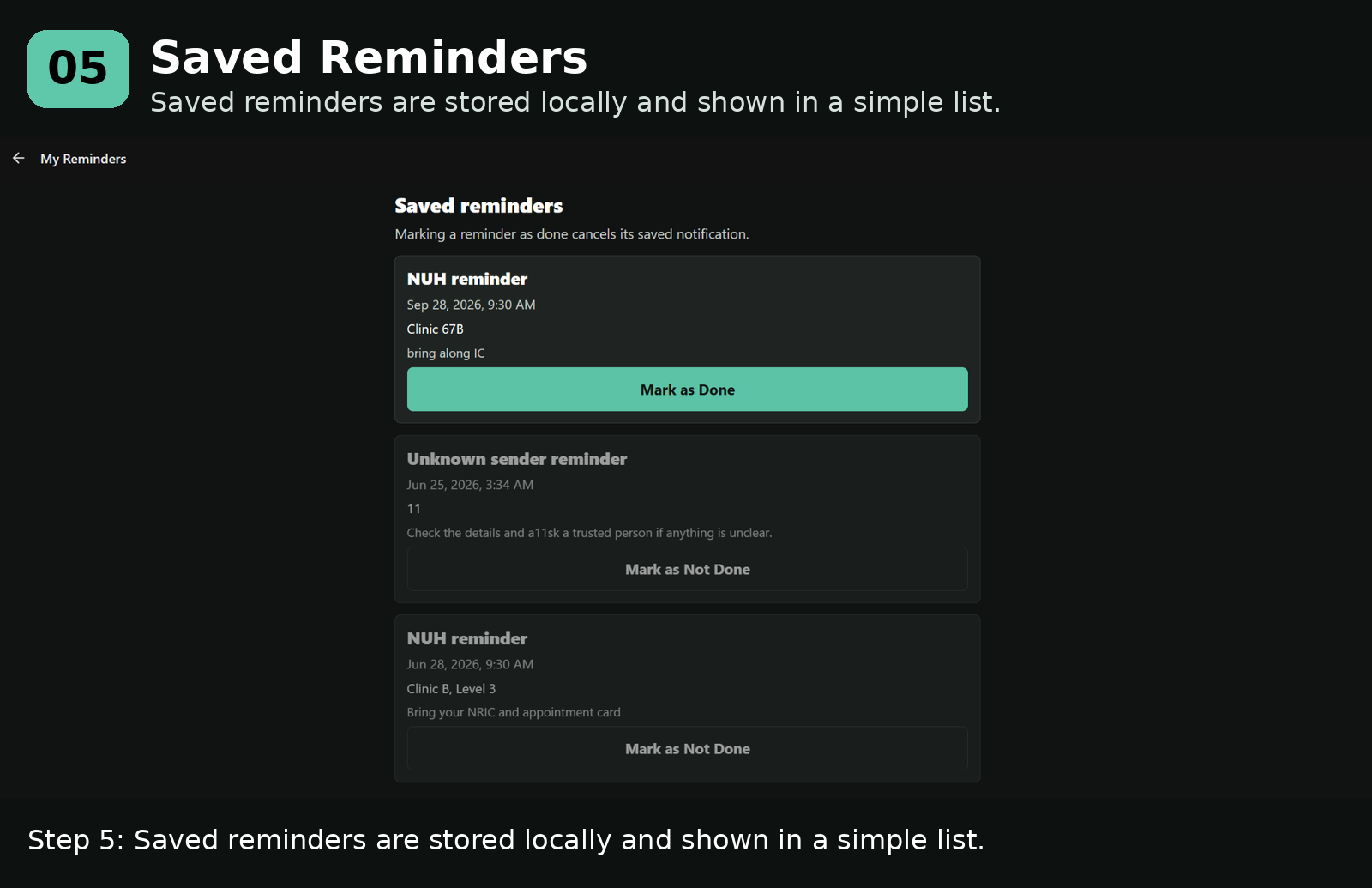
Saved reminders are stored locally and shown in a clear, easy-to-read list.
-
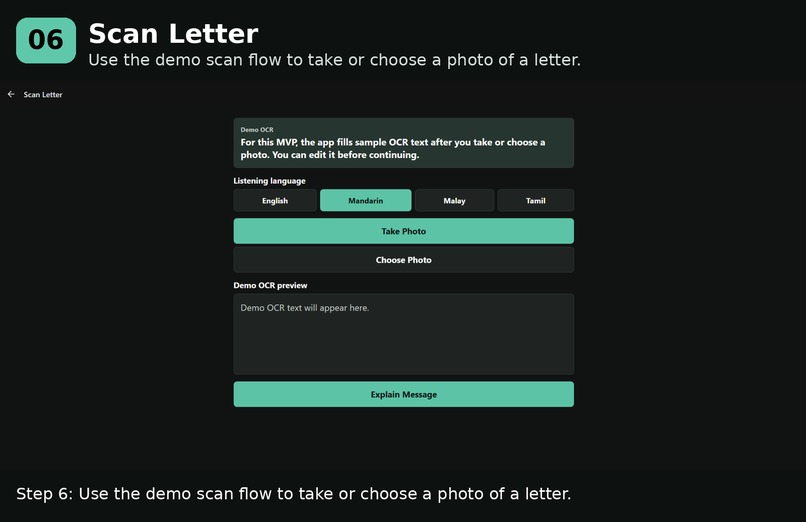
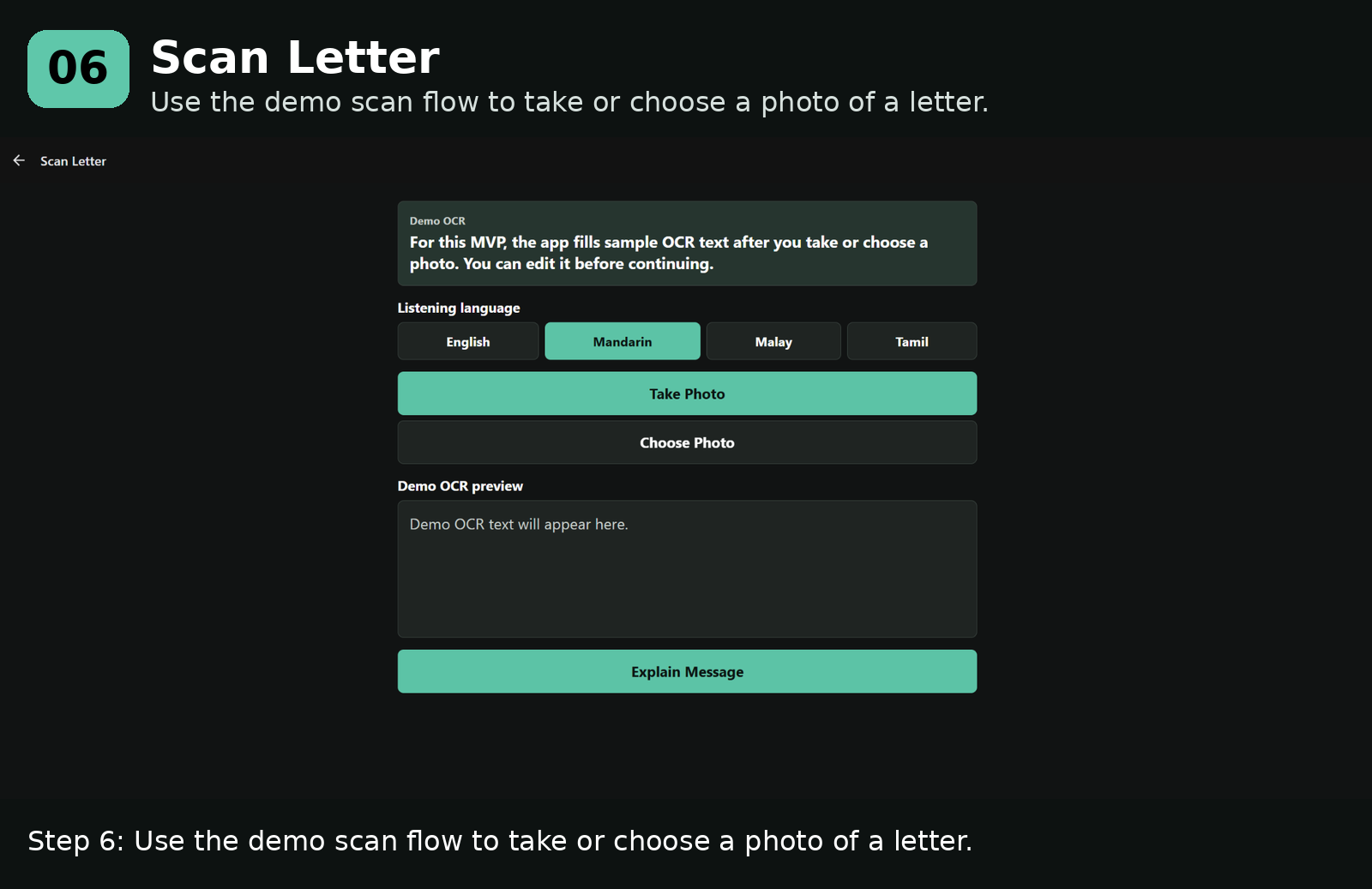
Users can take or choose a photo of a letter using the demo scan flow.
-
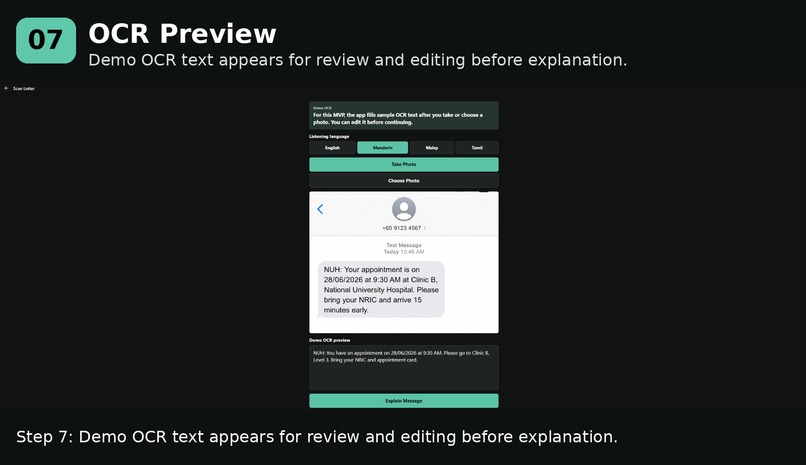
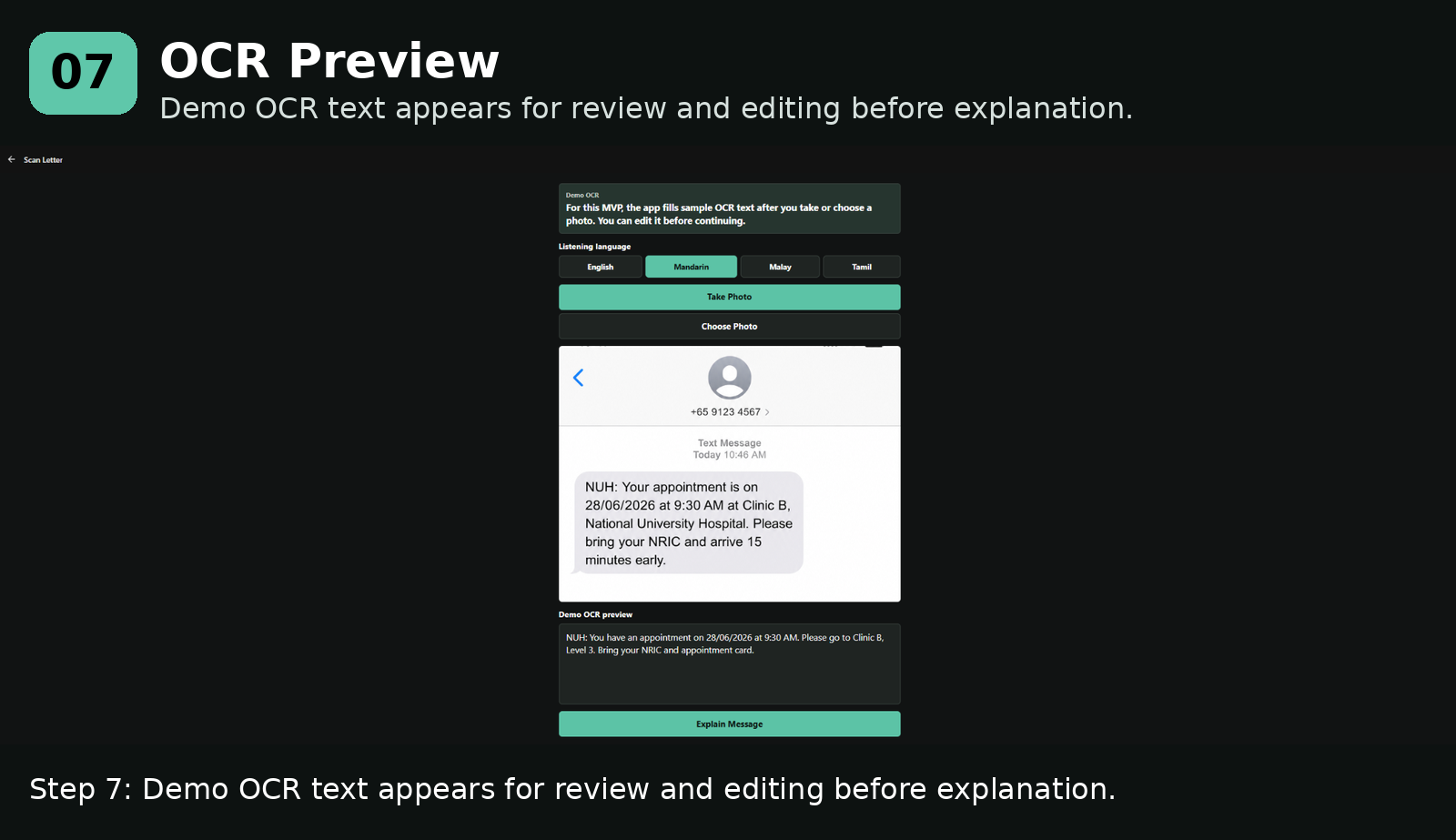
Demo OCR text appears for users to review and edit before creating an explanation.
Inspiration
Minderly was inspired by elderly and low-literacy users who may understand a language when they hear it, but struggle to read important written messages. A common example is someone receiving an SMS about a medical appointment, understanding the language verbally, but needing help reading the message and writing down a reminder.
This came from real observations of my mother and elderly neighbour, who sometimes need help understanding WhatsApp messages, SMS messages, or letters. The goal was to make a calm, simple tool that helps users understand important messages without feeling monitored or overwhelmed.
What It Does
Minderly lets users paste a message or use a demo letter scan flow. The app then creates a simplified explanation, shows key details, and lets the user play the explanation aloud.
It can detect and show:
- Date
- Time
- Location
- Sender or organisation
- Action needed
The user can then review and manually edit the reminder before saving it. Saved reminders appear in My Reminders, where they can be marked as done.
Minderly is designed to support independence without automatic monitoring. Users choose when to paste or scan content, so the app helps only when they ask for help.
How We Built It
Minderly was built with:
- Expo React Native
- TypeScript
- Expo Router
expo-speechfor text-to-speechexpo-image-pickerfor the scan/demo OCR flowexpo-notificationsfor local reminder notifications- AsyncStorage for local reminder storage
- Vercel for the web deployment
- ChatGPT and Codex for planning, prototyping, debugging, and improving the app flow
AI tools were used throughout the development process. ChatGPT helped refine the problem statement, target users, pitch, demo script, and product direction. Codex was used to help plan the Expo app structure, generate and improve TypeScript code, build screens, fix bugs, and prepare the MVP for deployment.
For the hackathon MVP, OCR, parsing, and translated spoken text are mocked. This keeps the demo achievable while still showing the core user experience. The app is designed so these mocked parts can later be replaced with real AI services, such as OpenAI for message understanding, translation, summarisation, and structured reminder extraction.
Challenges
One challenge was keeping the app honest and simple. We avoided claiming real translation, OCR, or AI extraction when those parts are mocked.
Another challenge was making reminders reliable. Notification scheduling can fail or be unavailable, especially on web, so the app was updated to save reminders locally even if notifications do not work.
We also focused on accessibility: large text, high contrast, big buttons, clear spacing, and minimal screens. The aim was to make the app feel calm and easy to use, especially for elderly users.
What We Learned
We learned that accessibility is not only about adding features. It is also about reducing stress, avoiding clutter, and giving users control.
A key design lesson was that AI-style extraction should not be treated as automatically correct. Minderly includes a manual review step before saving reminders so users can correct mistakes.
We also learned how AI tools like ChatGPT and Codex can speed up the process of turning a real-world problem into a working prototype. They helped with planning, coding, debugging, writing, and refining the product story, but the design decisions were still guided by the real user problem.
What’s Next
Future improvements could include:
- Real OCR for letters and documents
- OpenAI-powered message understanding
- Real translation API support
- Better date and time extraction
- Voice language customization
- Caregiver sharing options with consent
- Calendar integration
- More robust notification handling on mobile
Minderly is a small MVP, but it shows how written information can become easier to understand, hear, and remember. It turns important messages into simple explanations and reminders, helping users move from confusion to action with more independence.
Other attachments
Try Out: https://minderly-codex.vercel.app/
Vercel: https://vercel.com/codingfory0us-projects/minderly-codex
Github: https://github.com/CodingForY0U/Minderly-Codex
Video Demo: https://youtu.be/dQeLiYt5Wmc
Pitch Decks: https://canva.link/fnypq7m9dl1oi8y
Built With
- canva
- codex
- elevenlabs
- expo.io
- github
- openai
- react
- typescript
- vercel

Log in or sign up for Devpost to join the conversation.