-
-
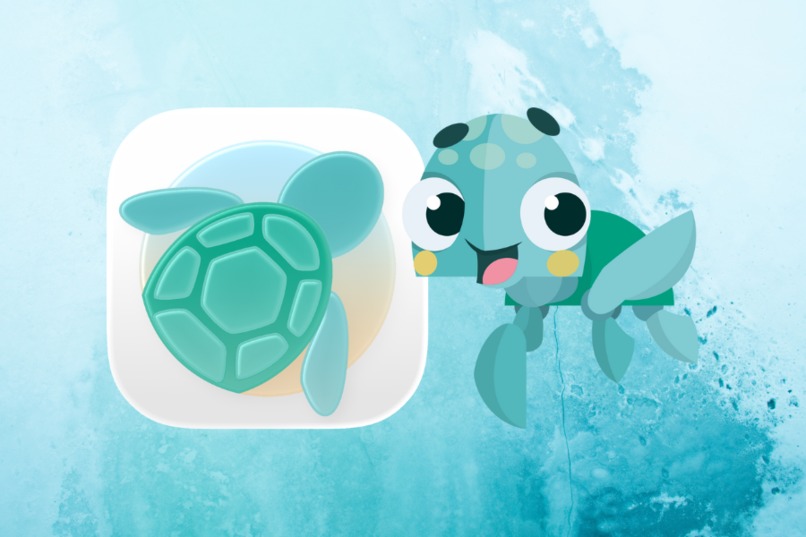
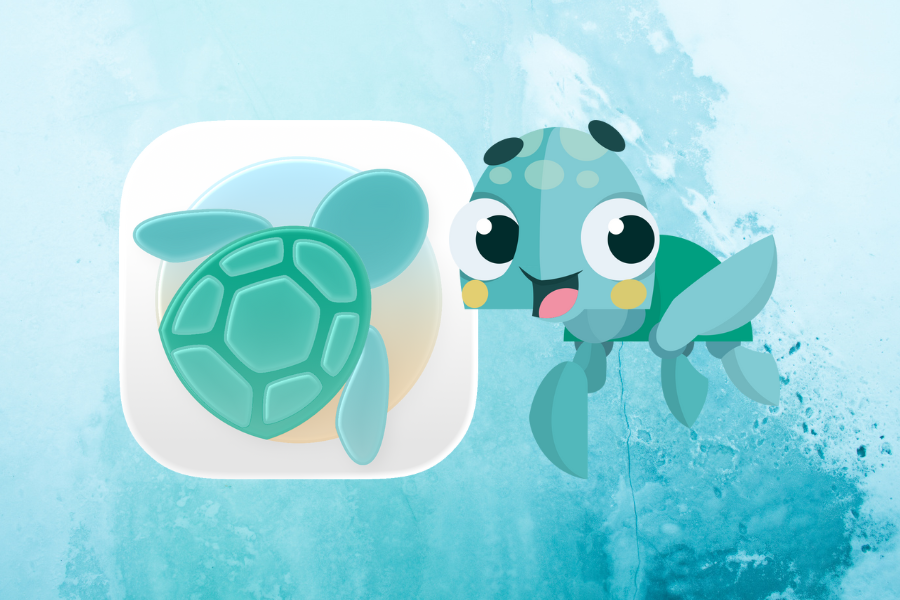
App Icon and Mascot
-
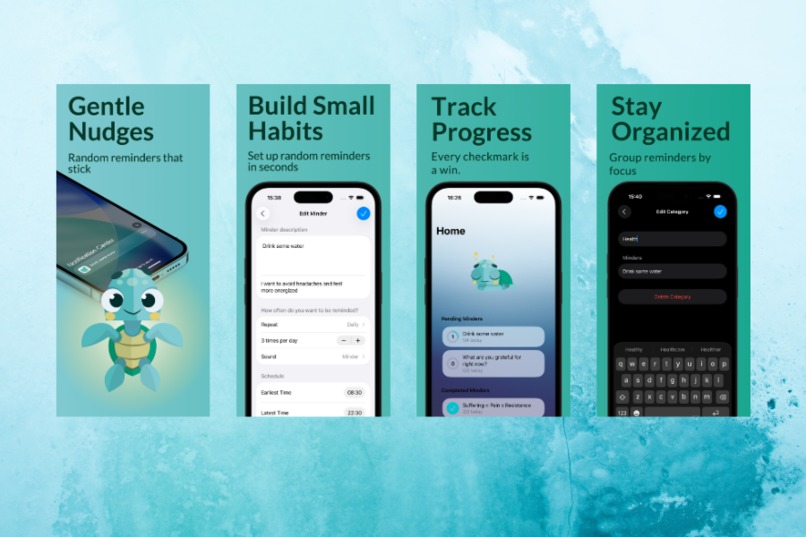
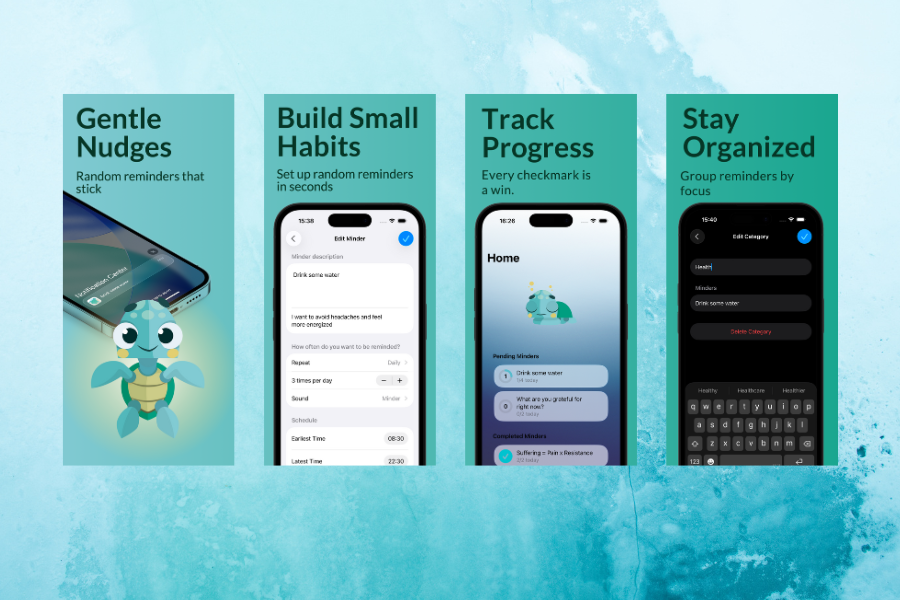
App Store Screenshots
Inspiration
In 2023, I joined the Wise Habits workshop because I needed to break negative cycles in my mind. The workshop teaches small practices that can be implemented in the day-to-day. One of these practices was to have reminders at random moments of the day so we can nurture behavior change. Since that moment I knew I wanted to build an app focused on creating lasting change through these tiny moments of reflection.
There are some "random reminder" apps out there, but none was exactly what I had in mind.
One year ago I finished the 100 Days of Hacking with SwiftUI challenge.
In April of this year my role was affected by a layoff. From the ashes, an opportunity arose, I had been saving to become an indie developer and while I was not ready, I decided to jump.
As I was getting ready to get into the app development phase, I learned about Shipaton while reading Sebastian Röhl's newsletter.
Everything aligned so I decided to give it all in the Shipaton.
What it does
Minder is a simple app with the potential of changing lives: it allows you to create random reminders. The power comes from the kind of reminders you create. I envision people creating "Minders" which are tiny nudges to break negative self-talk, and grounding in the present. Basically, to create mindful tiny habits.
The process of building a habit is divided into four steps.
And these steps originate the Four Laws of Behavior Change as described by James Clear in Atomic Habits. I incorporated them in the app:
- Make it obvious: Notifications that show the intention (why) of your Minder.
- Make it attractive: Mindy (the app mascot) gives the app personality and motivates people to be consistent.
- Make it easy: You can mark a Minder as completed with just a tap on the Home Screen.
- Make it satisfying: The app manages a global score that's reflected in Mindy's mood: sleeping, meditating, awake, excited. In future versions, I'll also add a Stats Screen.
How I built it
I experimented with the Design Thinking process. I used MindNode to establish the creative foundation of my app (see my mind map). Then came up with a hand-drawn sketch using the Crazy 8's technique:

And used Freeform to analyze the UI of existing apps (see the the overview) and come up with Minder's wireframes:

Then I created a prototype using Xcode and did a call for prototype testing:

I met with 10 wonderful people over Zoom, gave them a presentation and had them try my app prototype using Xcode's simulator. Creating the prototype in Xcode allowed me to change my app design before getting deep into the code.
As I wrapped-up the user testing interviews, the Shipaton started. I documented my adventure in YouTube.
My whole tool belt for building the app was: Xcode, Swift/SwiftUI, Warp, GitHub, ChatGPT Codex, Todoist, and Obsidian.
Challenges we ran into
- Balancing creating content and coding: Forced me to create a system so I can do it all consistently. I am proud I didn't use AI to write my essays and YouTube scripts, instead used it to coach me.
- The random notifications algorithm: If you think scheduling and tracking random notifications is easier than regular notifications, think again. It required a lot of effort and a touch of determinism to the randomness mix. (I made a video about it)
- Polishing vs Shipping: I am a recovering perfectionist. It was hard to show a half-working prototype to people, and to push to the App Store very basic app. However, pushing my work to the public allowed me to build the product with the feedback of its users. (Wrote a post about it)
Accomplishments that I'm proud of
- Every week since I started the Shipaton (August 11th) I shipped: code, essays in my newsletter, YouTube videos, and cool graphics in LinkedIn.
- Shipping my app before I felt ready, because it is rewarding to see it evolve:

- Preparing all the assets (website included) for the App Store in one day. I did a video of the tools I used.
- Implementing a workflow that allows me to work on multiple features at the same time. For instance, while I work on fixing a bug or coding a feature, AI is reviewing my PR or building the first version of a new feature.
- Designing the app icon with my wife: She helped me with basic forms, I vectorized them in Figma, and used Icon Composer to make the magic happen. I think the app icon and the app itself feel very native to iOS 26!
- I came up with fun YouTube thumbnails using Gemini Nano Banana:

What I learned
- Share before you’re ready
- Ship to get ready
- Systems over goals
- Workflows beat outputs
- Invite early supporters
- Build In Public
I wrote a post about it: From Fear to Shipping: 6 Lessons from the Shipaton
What's next for Minder: Mindful Random Reminders
I have three phases in mind which I want to later share in canny.io (or the tool I end up choosing) so users can vote and give feedback:
- Basics: Add accessibility, localization, export/import, and stats. Fix as many bugs as I can and make sure the core feature works at its best.
- iOS APIs: Implement all the iOS toys: shortcuts, app intents, widgets, Siri support etc.
- Power Users: Trigger shortcuts when completing a Minder.
In parallel I am in conversations with the creator of the Wise Habits workshop I initially mentioned, there's a high chance we'll get to collaborate so I can offer a pack of predetermined Minders in the app to support his teachings.
Built With
- revenuecat
- swift
- swiftui


Log in or sign up for Devpost to join the conversation.