-
-
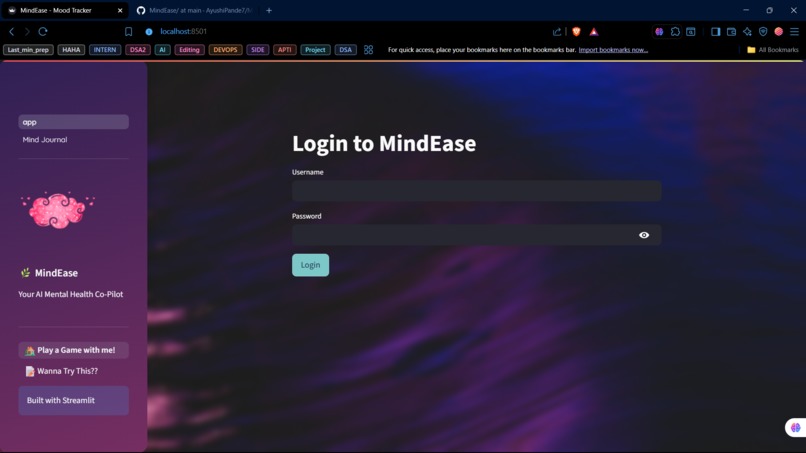
Login Page
-
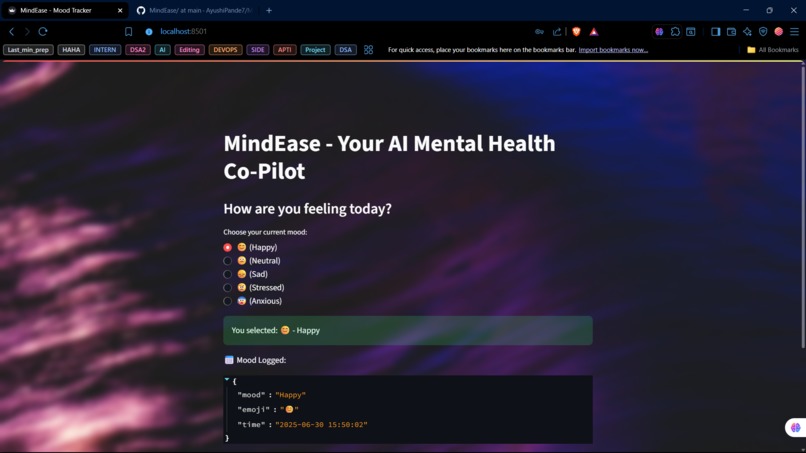
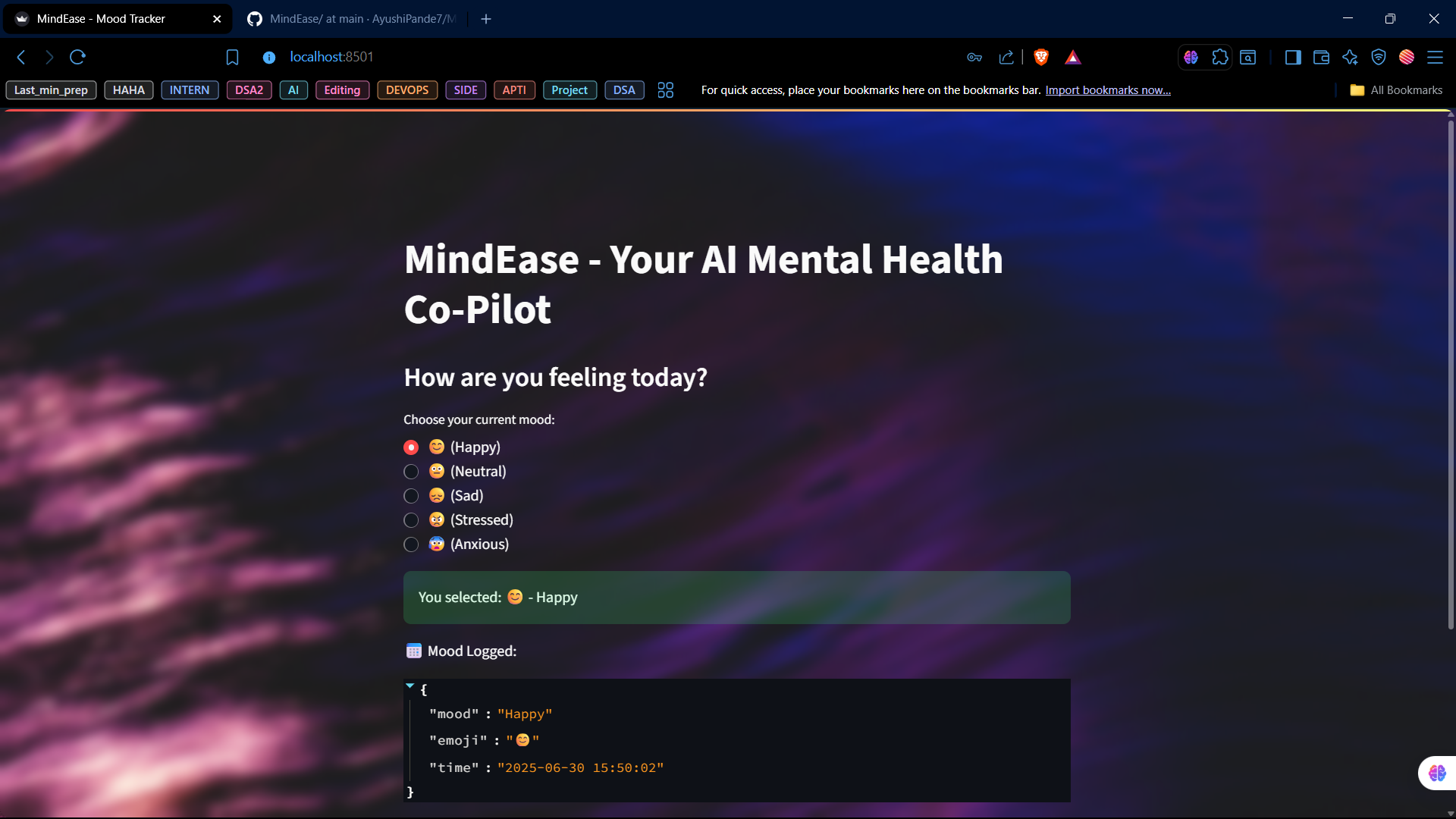
Main Page
-
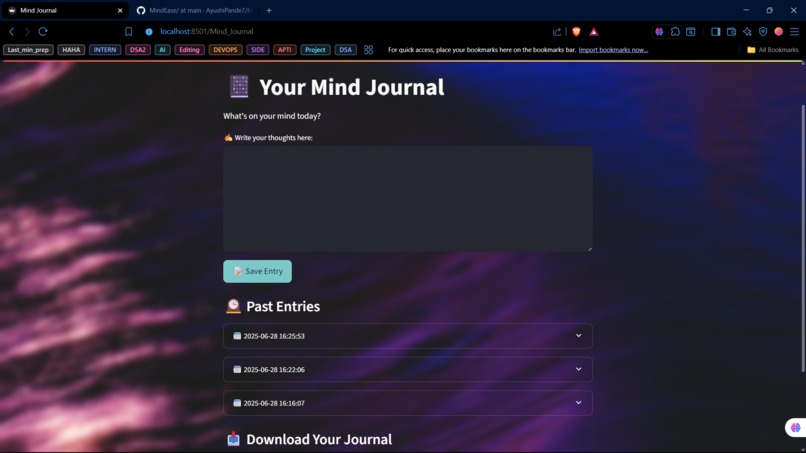
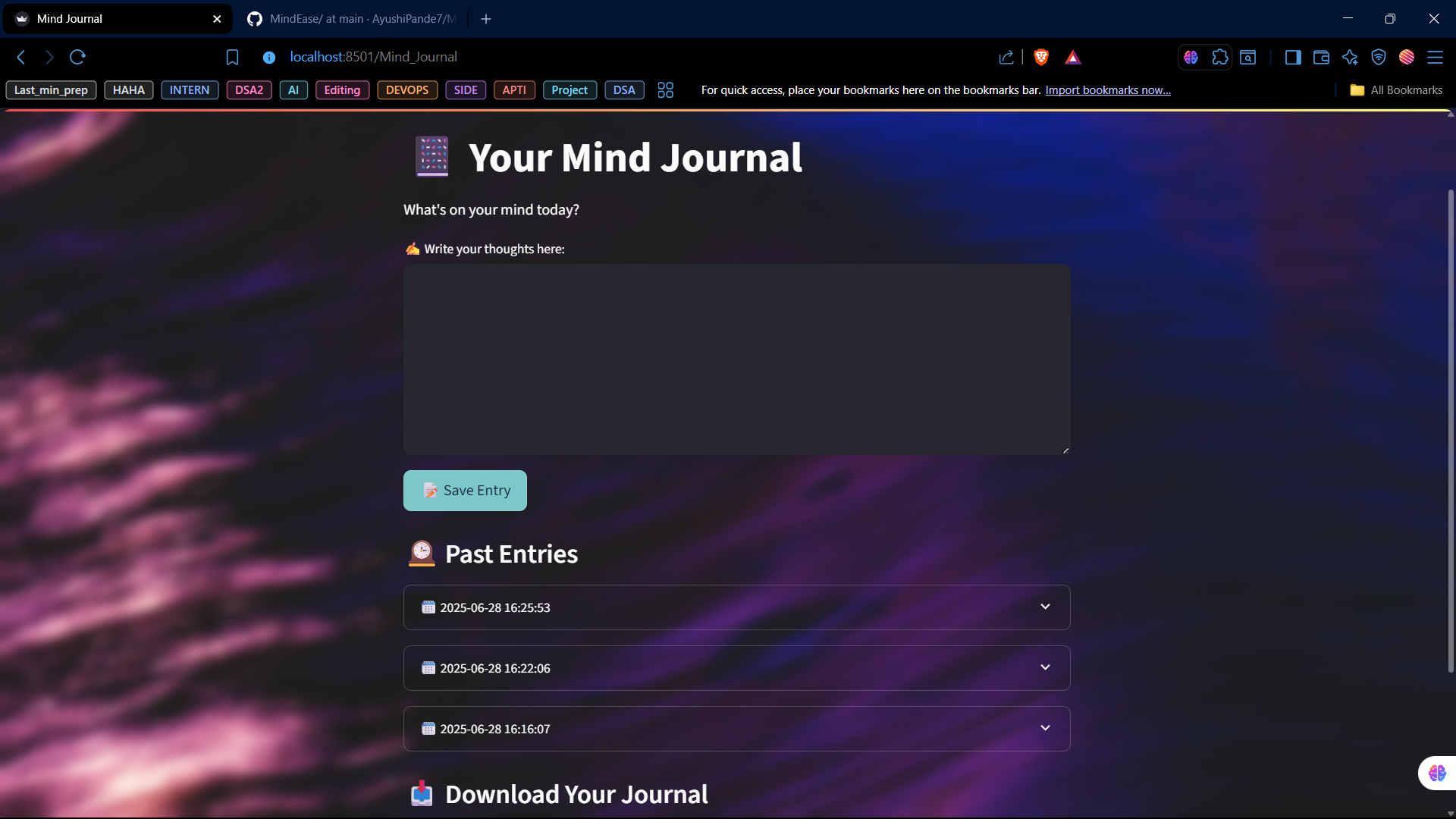
Mood Journal Page
Inspiration
This idea came to me last year during a tough phase in my life. I felt overwhelmed, alone, and wished there was a simple tool that could help me track how I was feeling, support me with small reminders to take care of myself, and encourage me to pause when life felt too heavy. That’s when I decided to build MindEase, a gentle companion for students navigating their mental health journeys.
What it does
MindEase helps students track their moods, journal their thoughts, and receive personalized self-care suggestions powered by AI. It also recommends calming or uplifting music based on your mood, creating a supportive space for students to pause, reflect, and care for themselves, one step at a time.
How we built it
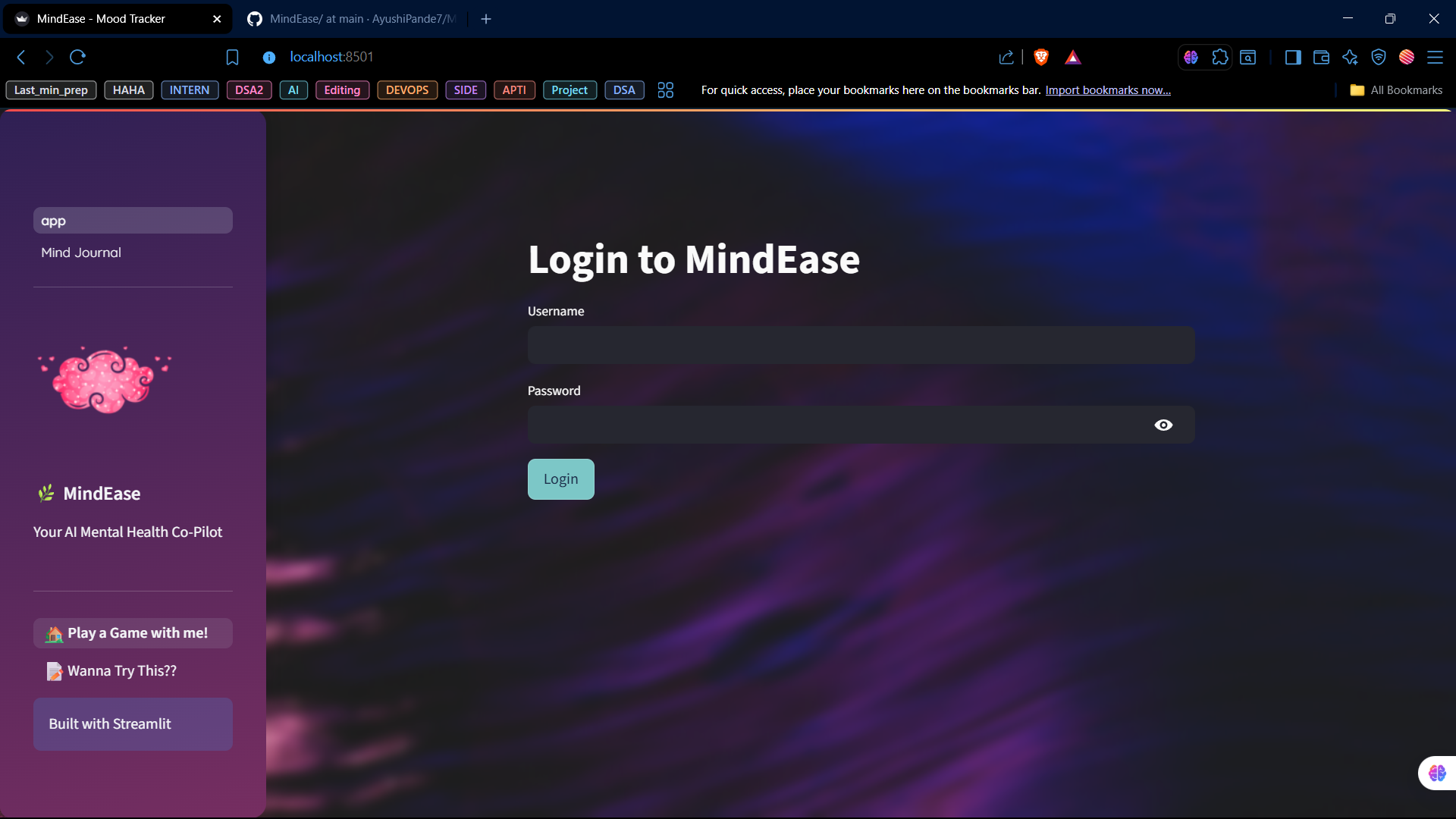
I built MindEase using Streamlit for the frontend, ensuring it is lightweight and clean. I integrated the Together AI API to generate personalized wellness suggestions and added a journaling feature where entries are stored and downloadable for reflection. I focused on a warm, aesthetic interface using background images, clear fonts, and a friendly sidebar for navigation, ensuring the app feels welcoming and easy to use.
Challenges we ran into
One challenge was designing an interface that felt comforting rather than clinical while working under tight time constraints. Another challenge was to integrate AI and ensuring the AI suggestions were genuinely helpful yet concise required careful prompt crafting. I also had to manage file handling for journaling while keeping the app accessible and simple for students.
Accomplishments that we're proud of
I am proud that I was able to transform a personal struggle into a tool that can help others, building a fully working AI-powered wellness app within a short time. I am also proud of designing an interface that feels safe and warm, encouraging students to take small steps toward their mental well-being.
What we learned
Building MindEase wasn’t just about writing code—it was about understanding what it feels like to need a small moment of calm during a chaotic day.
I learned that building a wellness app means paying attention to how it feels when you use it, not just whether it works. Choosing warm colors, friendly fonts, and simple layouts can make the difference between an app that feels cold and one that feels like a gentle companion.
I also learned how to use AI responsibly, making sure it offers supportive, human-like suggestions without overwhelming users. And most importantly, I realized that even small steps—like taking a breath, journaling a thought, or listening to a calming song—can be powerful acts of self-care, and technology can gently support us in remembering to take those steps.
Through MindEase, I discovered how technology can be a friend, not just a tool.
What's next for MindEase: Your AI Mental Health Co-Pilot
While I was able to build a working AI-powered wellness app within the hackathon timeframe, there are many meaningful features I want to add in the future to make MindEase a more holistic wellness companion for students:
1] Daily Mindfulness & Gratitude Prompts – A simple way for students to reflect on small positives in their day. 2] Mood Progress Dashboard – To visualize mood trends over weeks, helping users notice patterns and triggers. 3] Guided Meditations & Breathing Exercises – Integrated short practices to support students in moments of stress or anxiety. 4] Peer Support Circles (optional) – A safe, anonymous space where students can share encouragement with each other. 5] Smart Reminders – Gentle nudges to check in on your mood, hydrate, take breaks, or journal. 6] Multi-language Support – Making MindEase accessible to more students globally.
I believe that with these future enhancements, MindEase can become a comforting, practical companion for students, encouraging them to take small steps towards mental wellness while respecting their pace and privacy.
Built With
- css
- google-font
- html
- json
- python
- streamlit
- togetherai-api
- youtube-embeds

Log in or sign up for Devpost to join the conversation.