-
-
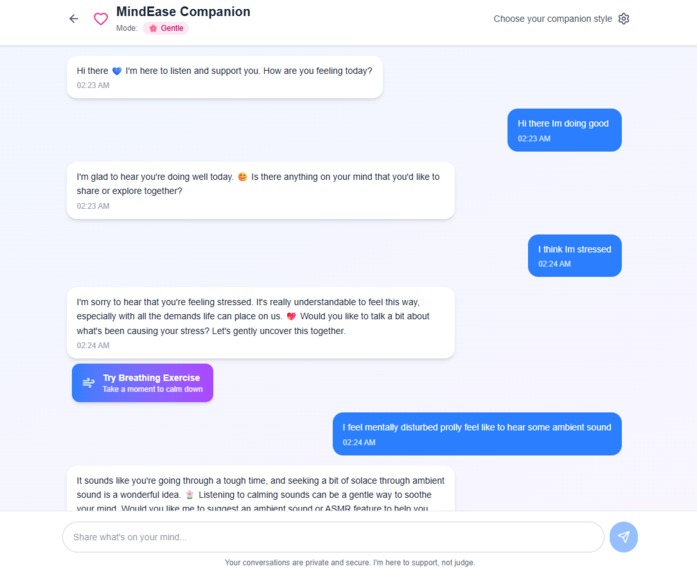
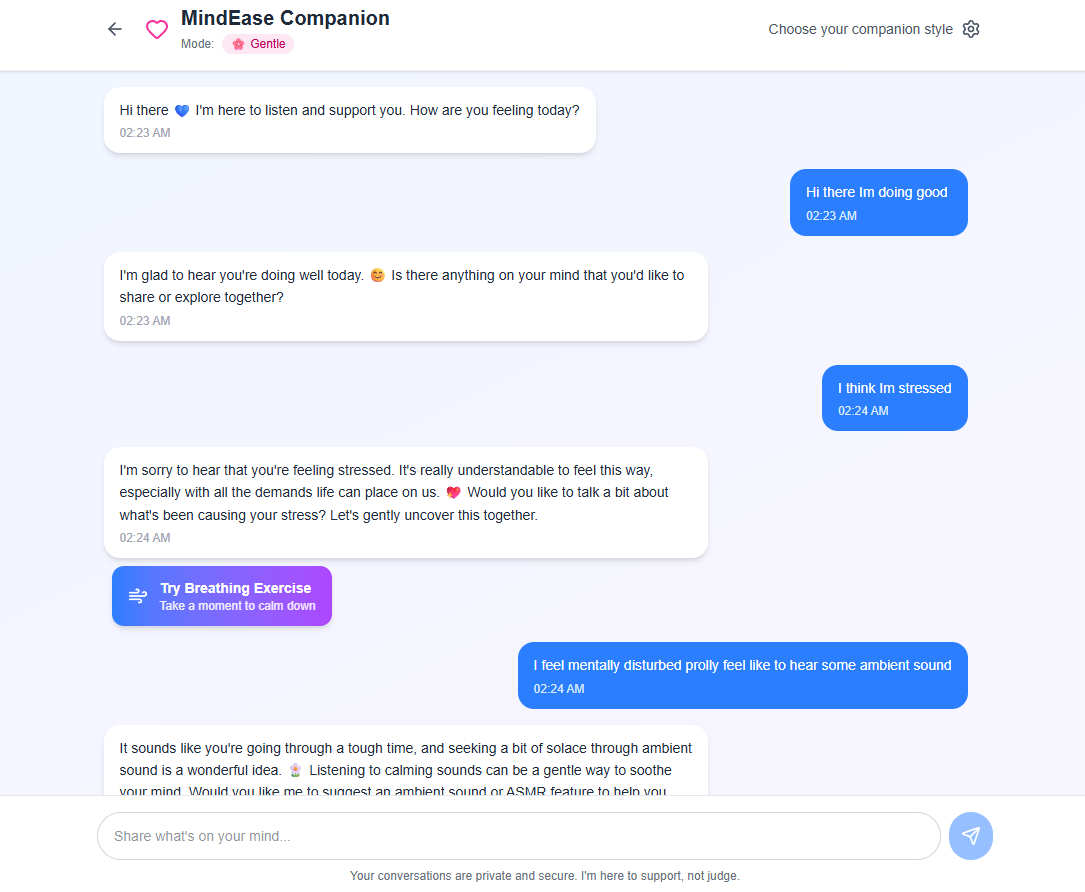
AI chatbot with multiple personas
-
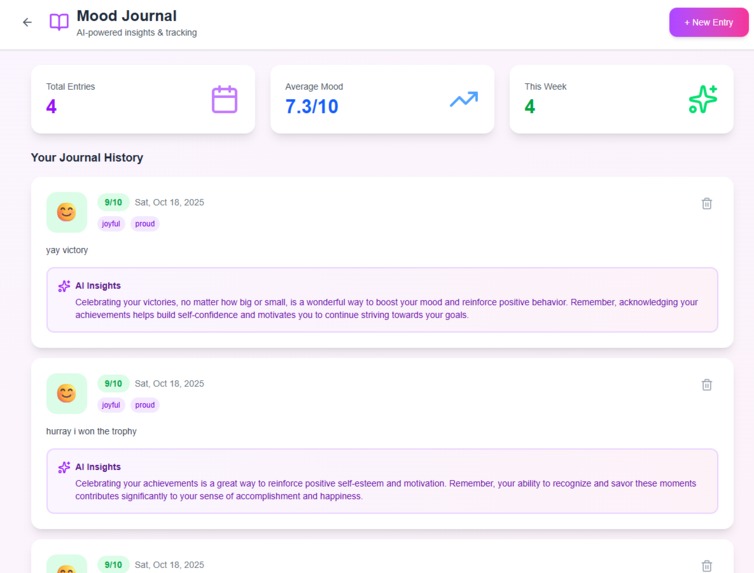
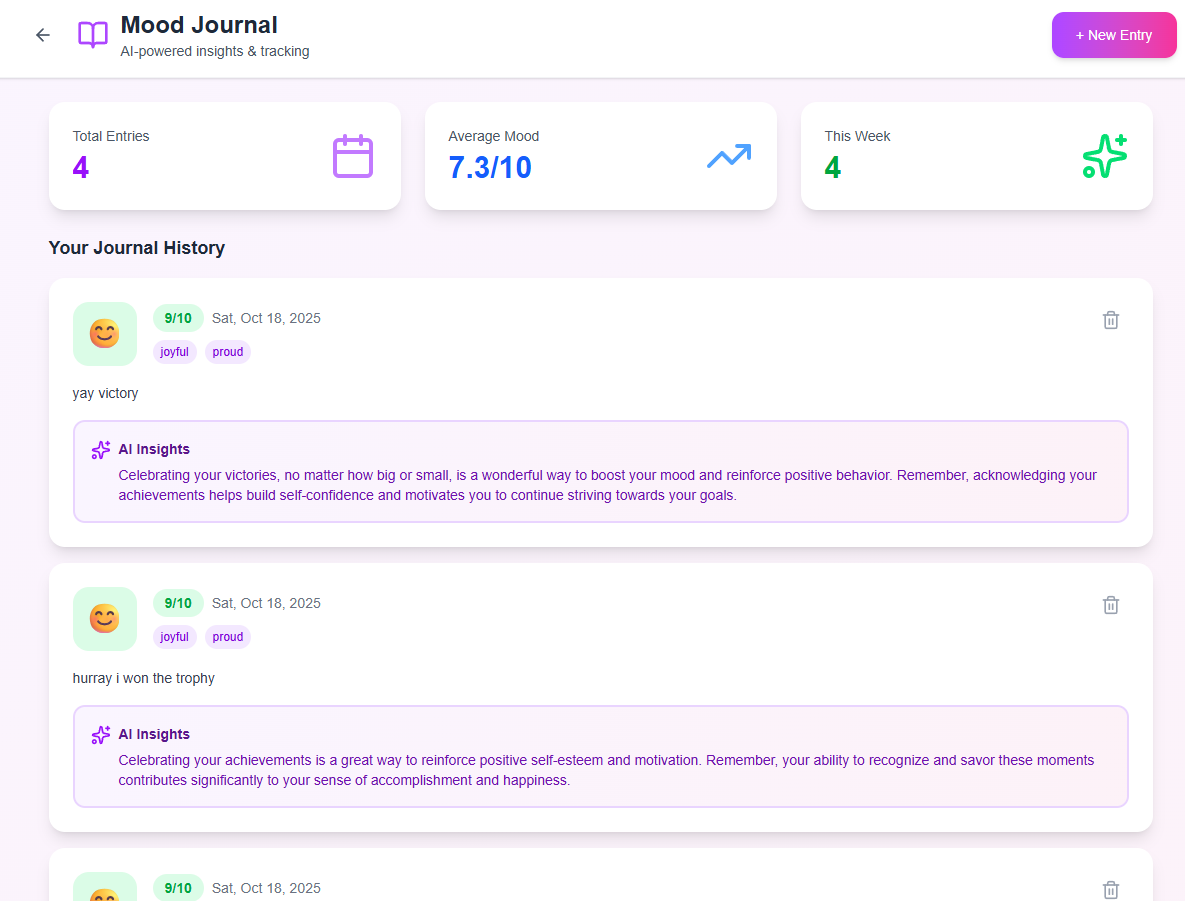
AI powered Mood journal
-
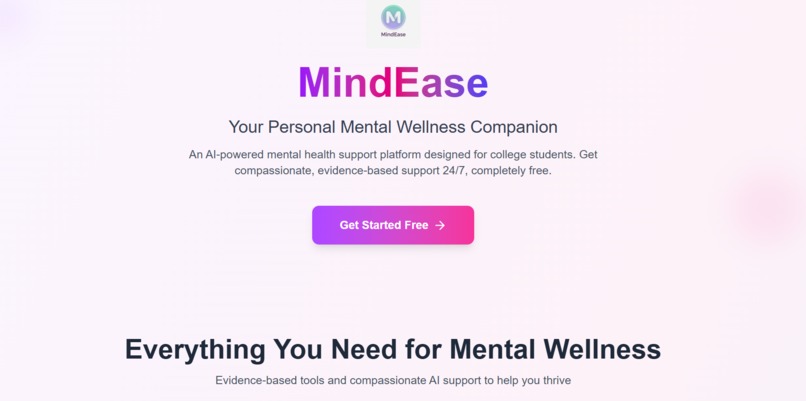
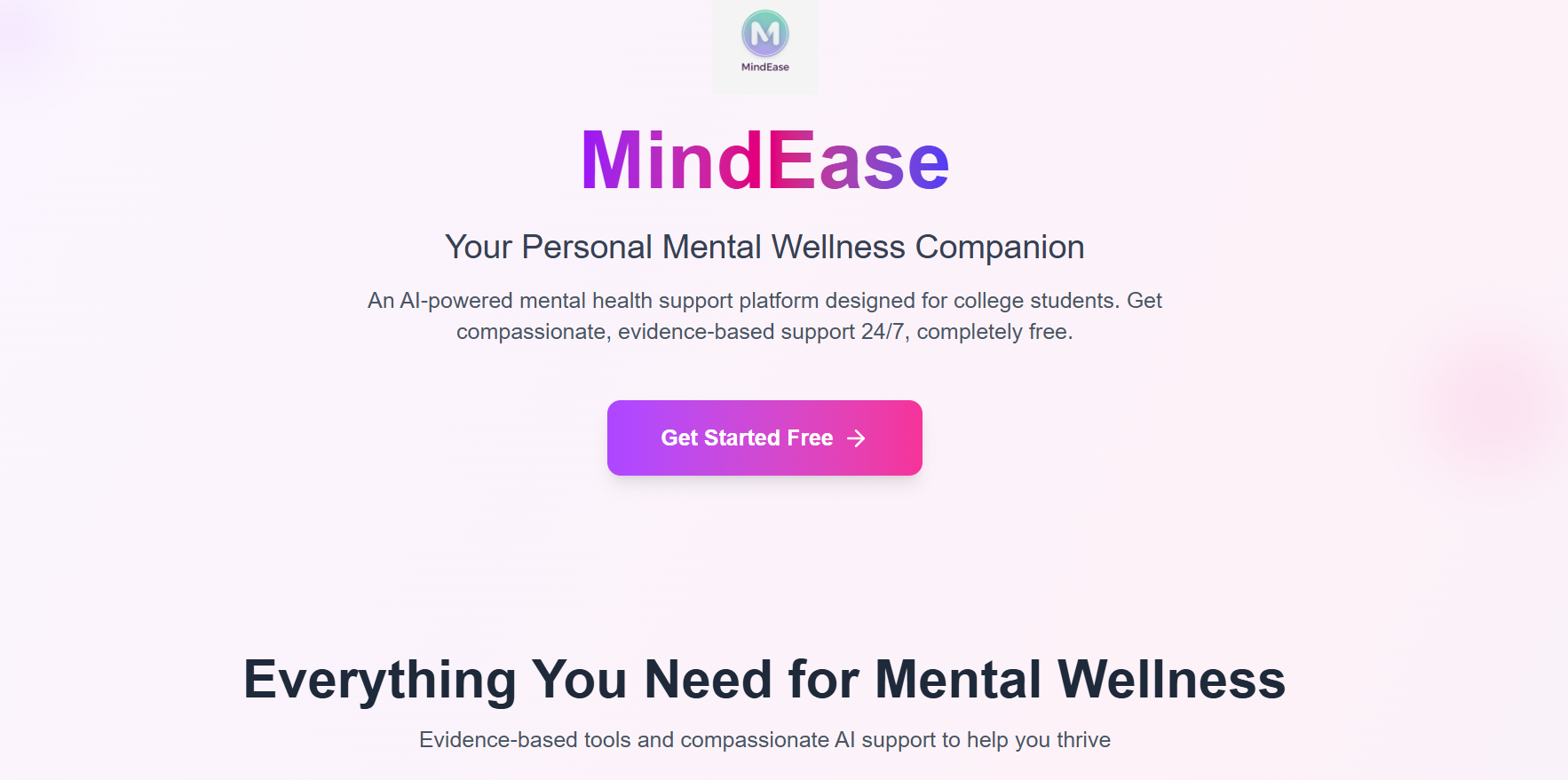
Landing Page
-
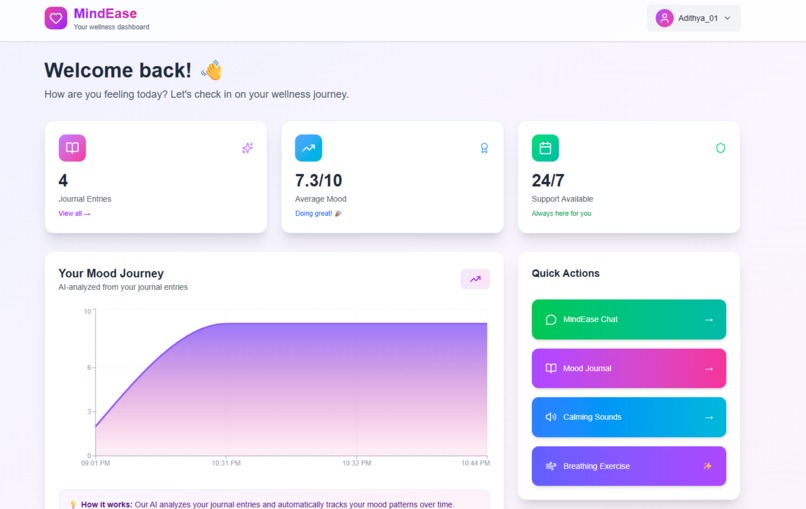
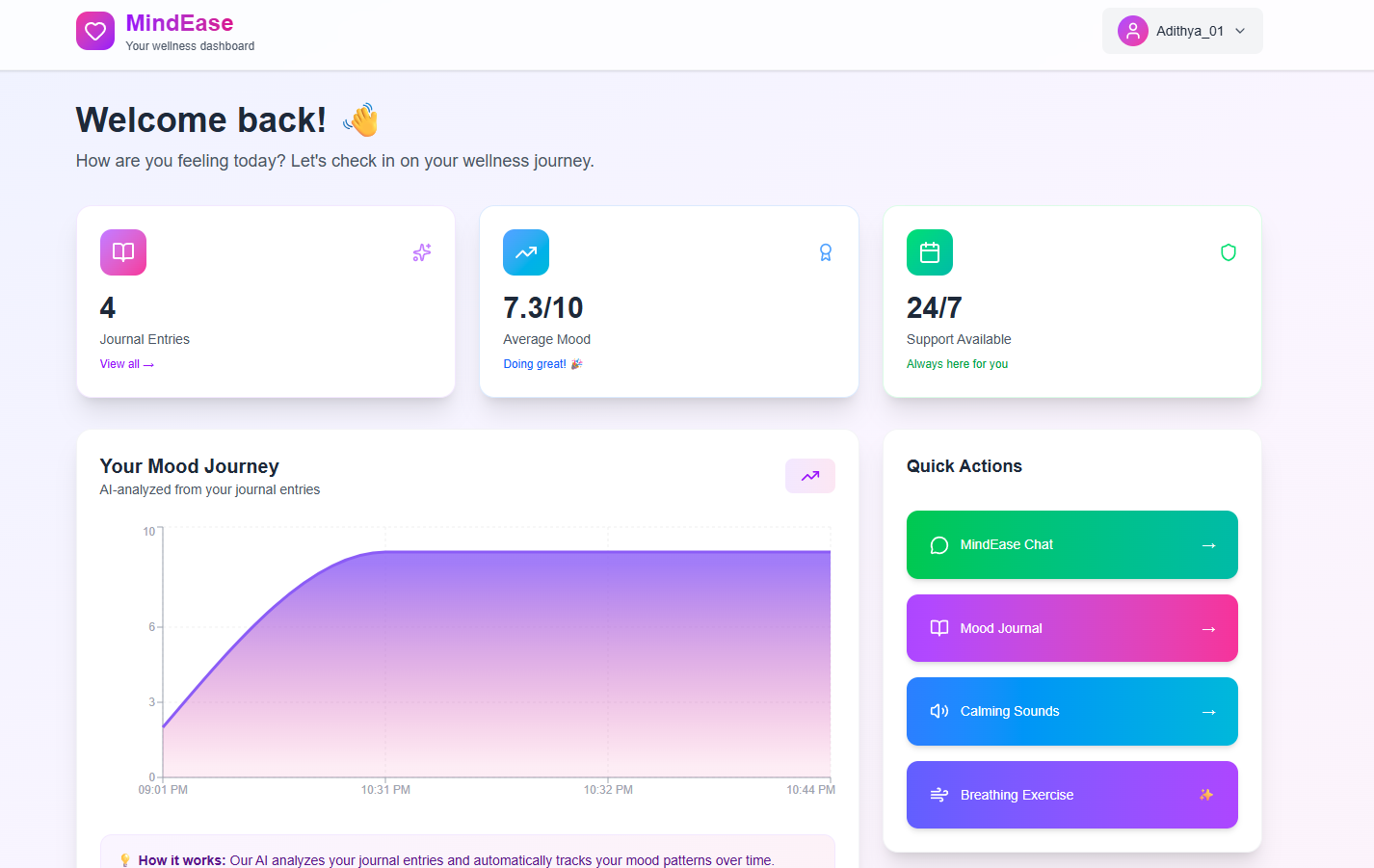
Dashboard
💡 Inspiration
College life can be exciting — but it can also be overwhelming. Balancing academics, relationships, and personal challenges often leads to stress and burnout. Many students hesitate to seek professional help due to stigma or limited access.
We wanted to change that.
MindEase was created to offer a safe, judgment-free space for students to talk, reflect, and cope — using the power of AI and evidence-based therapy (CBT & ACT).
Our goal: make mental health support accessible, empathetic, and always available.
💬 What It Does
MindEase is an AI-driven mental wellness companion that empowers students to manage their emotions through interactive and therapeutic features:
- 🧘 24/7 AI Mental Health Support – Chat with an AI trained in CBT & ACT principles.
- ✍️ AI-Powered Mood Journaling – Reflect on your day with sentiment analysis and personalized feedback.
- 🚨 Crisis Detection – Detects distress signals and provides instant mental health resources.
- 🎧 Coping Tools – Try calming breathing exercises, ASMR sounds, and therapeutic interventions.
- 📊 Mood Tracking & Pattern Recognition – Visualize emotional trends over time to gain self-awareness.
MindEase aims to complement, not replace, professional therapy — serving as an accessible first step toward mental well-being.
🏗️ How We Built It
We built MindEase as a Next.js full-stack web application integrating AI, data visualization, and a privacy-first backend.
🔹 Frontend
- Next.js 15 with React 19 for smooth and dynamic UI.
- TypeScript for reliable, type-safe development.
- Tailwind CSS for elegant and accessible styling.
- Recharts for mood trend visualization.
🔹 Backend
- Next.js API Routes to power AI chat and mood journaling features.
- OpenAI GPT-4 Turbo for contextual and empathetic responses.
- Supabase as a scalable PostgreSQL database with real-time sync.
🔹 Authentication & Security
- Supabase Auth for secure session management.
- Row Level Security (RLS) to isolate user data.
- Encrypted data storage with user-specific access control.
⚙️ Challenges We Ran Into
- 🤖 Balancing empathy and logic — tuning GPT-4 to respond with warmth while staying clinically grounded.
- 🧩 Crisis keyword detection — designing a safe system that identifies distress without false alarms.
- 🔐 Data privacy & trust — implementing strict Supabase RLS policies to protect sensitive user data.
- 🧠 User engagement — building a UI that’s calming yet interactive and encourages healthy emotional reflection.
🏆 Accomplishments We’re Proud Of
- 💬 Developed a CBT & ACT-based AI mental health companion that feels human and empathetic.
- 🔒 Built a secure, privacy-first architecture with Supabase and Next.js.
- 📊 Created mood tracking visualizations for emotion trend recognition.
- 🚨 Integrated crisis detection and intervention recommendations to enhance user safety.
- 🌍 Deployed a fully functional live app that is fast, accessible, and deeply human-centered.
📚 What We Learned
- Building an emotionally intelligent AI requires empathy modeling and context-awareness beyond prompt engineering.
- Security and privacy must be foundational, not optional.
- Designing for mental health means focusing on tone, inclusivity, and emotional safety.
- Collaboration across AI, frontend, backend, and UX is key to building meaningful digital wellness tools.
🚀 What’s Next for MindEase
- 🤖 Mood prediction models using machine learning.
- 💬 Peer support community — a moderated space for shared healing.
- 🧑⚕️ Therapist connection portal for professional help when needed.
- 📱 Mobile app (React Native) for on-the-go support.
- 📈 Advanced analytics dashboard for emotional growth insights.
- ⌚ Wearable integration for stress and emotion tracking.
- 🌐 Multi-language support for inclusive accessibility.
Built With
- gpt-4-turbo
- next.js
- openai-api
- react.js
- recharts
- supabase
- tailwind
- typescript
- vercel


Log in or sign up for Devpost to join the conversation.