-
-
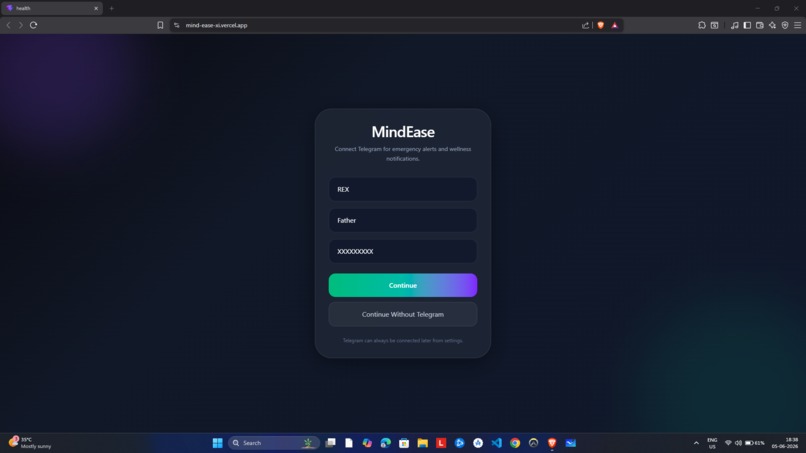
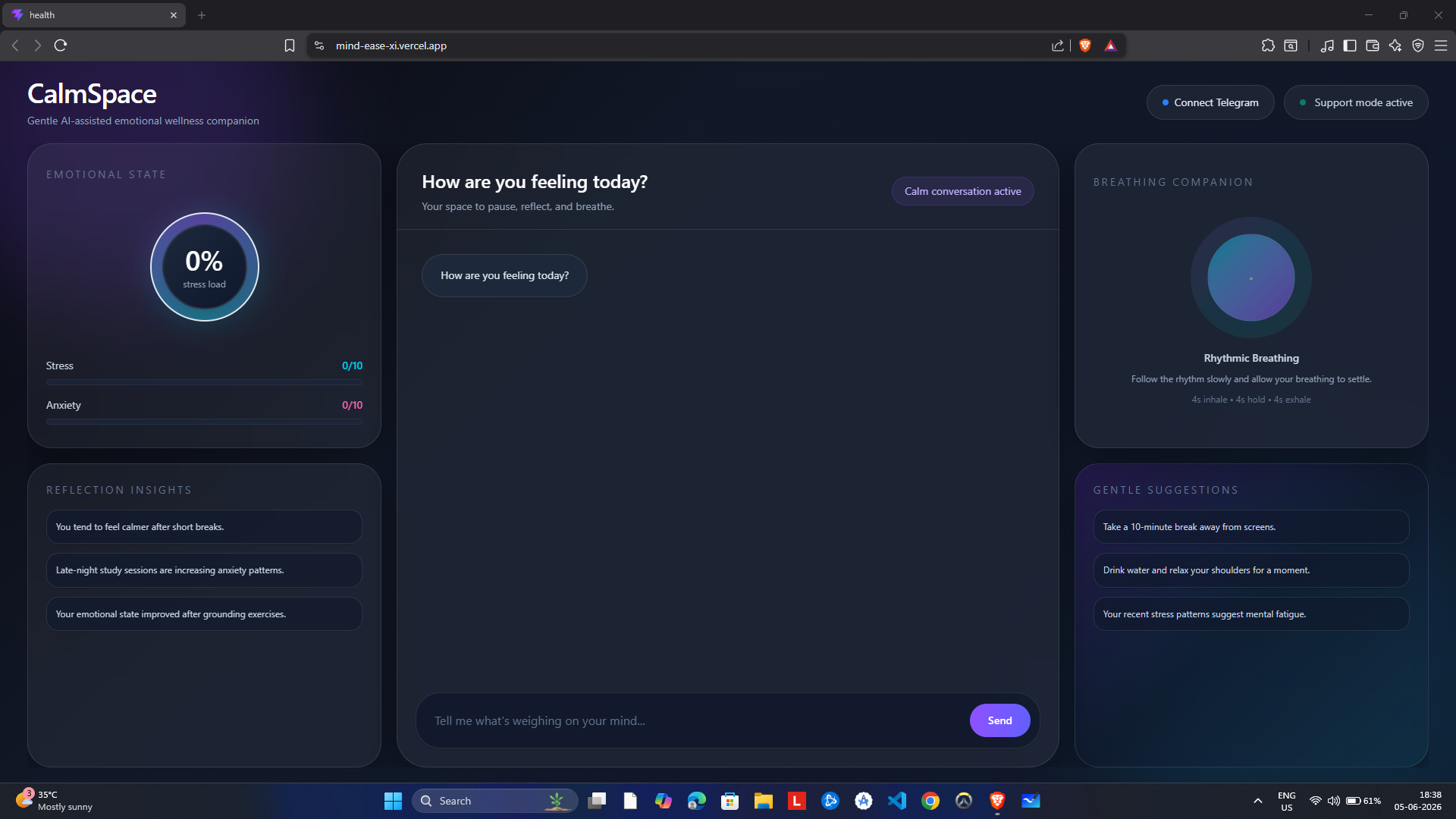
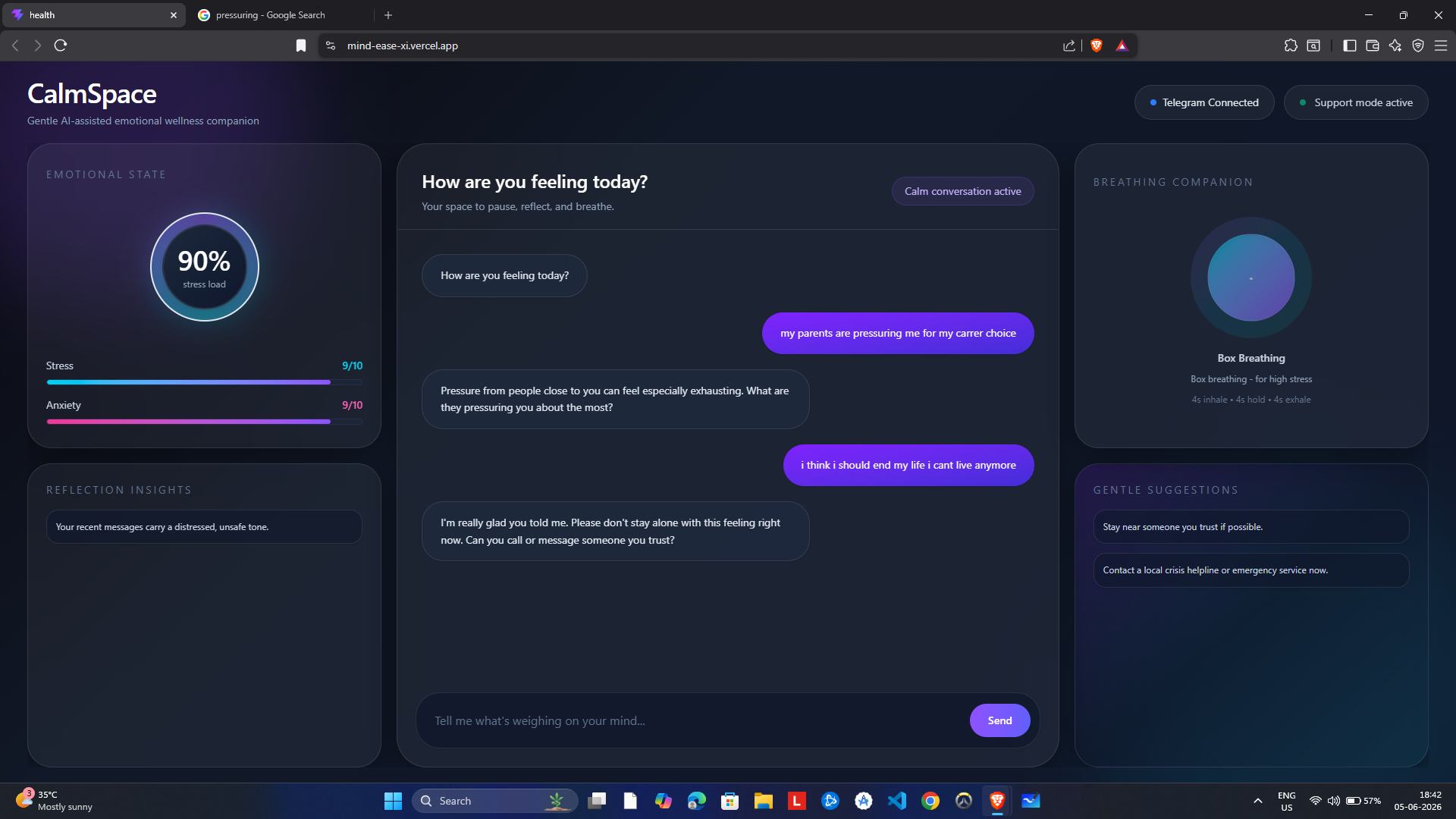
(main dashboard)
-
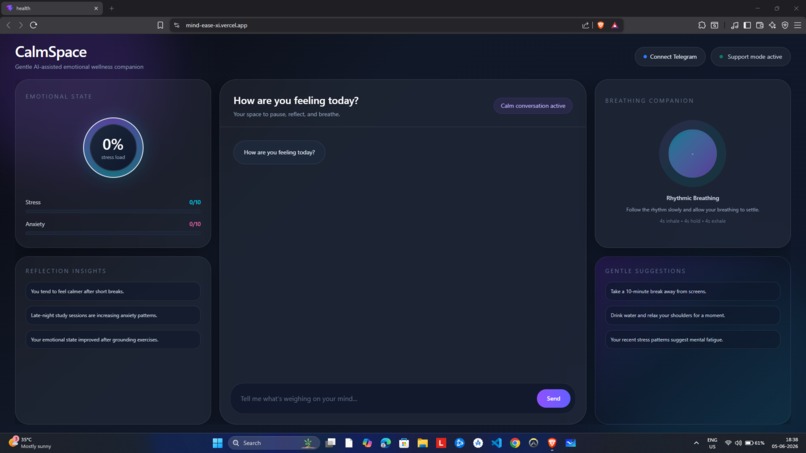
-
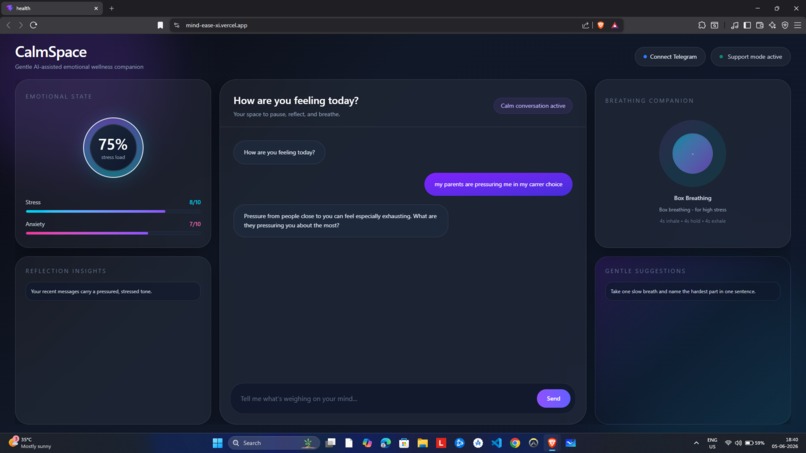
-
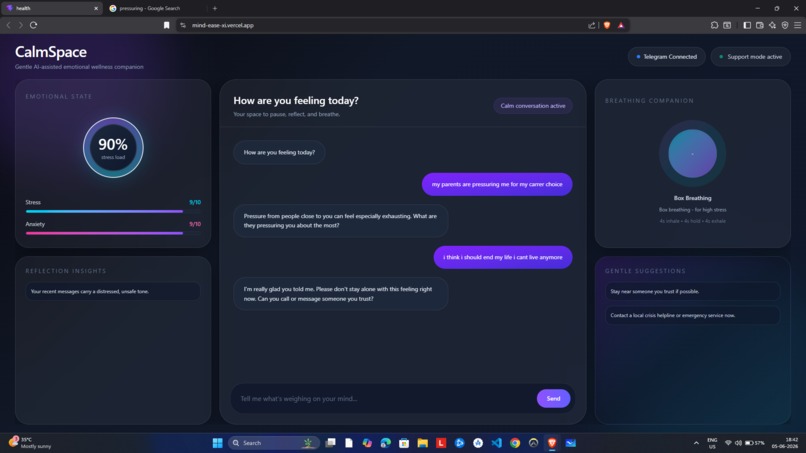
-
Inspiration
One night, I was overwhelmed with thoughts and had no one to talk to. My friend was asleep. Another wasn't in the mood to listen. I couldn't tell my parents — I didn't want to worry them. I just needed someone to express myself to, someone who would listen without judgment.
That feeling — of having emotions with nowhere to go — is something millions of people experience every day. 1 in 7 Indians suffers from a mental health disorder, yet 80% never seek help due to stigma, cost, or simply not having anyone available at that moment.
That night, I wished there was something. So we built it.
What it does
MindEase is an AI-powered mental health first-responder chatbot that acts like a caring, non-judgmental friend available 24/7.
- Listens to whatever you're feeling — stress, anxiety, heartbreak, family pressure, or just a rough day
- Responds like a real human friend, not a clinical robot
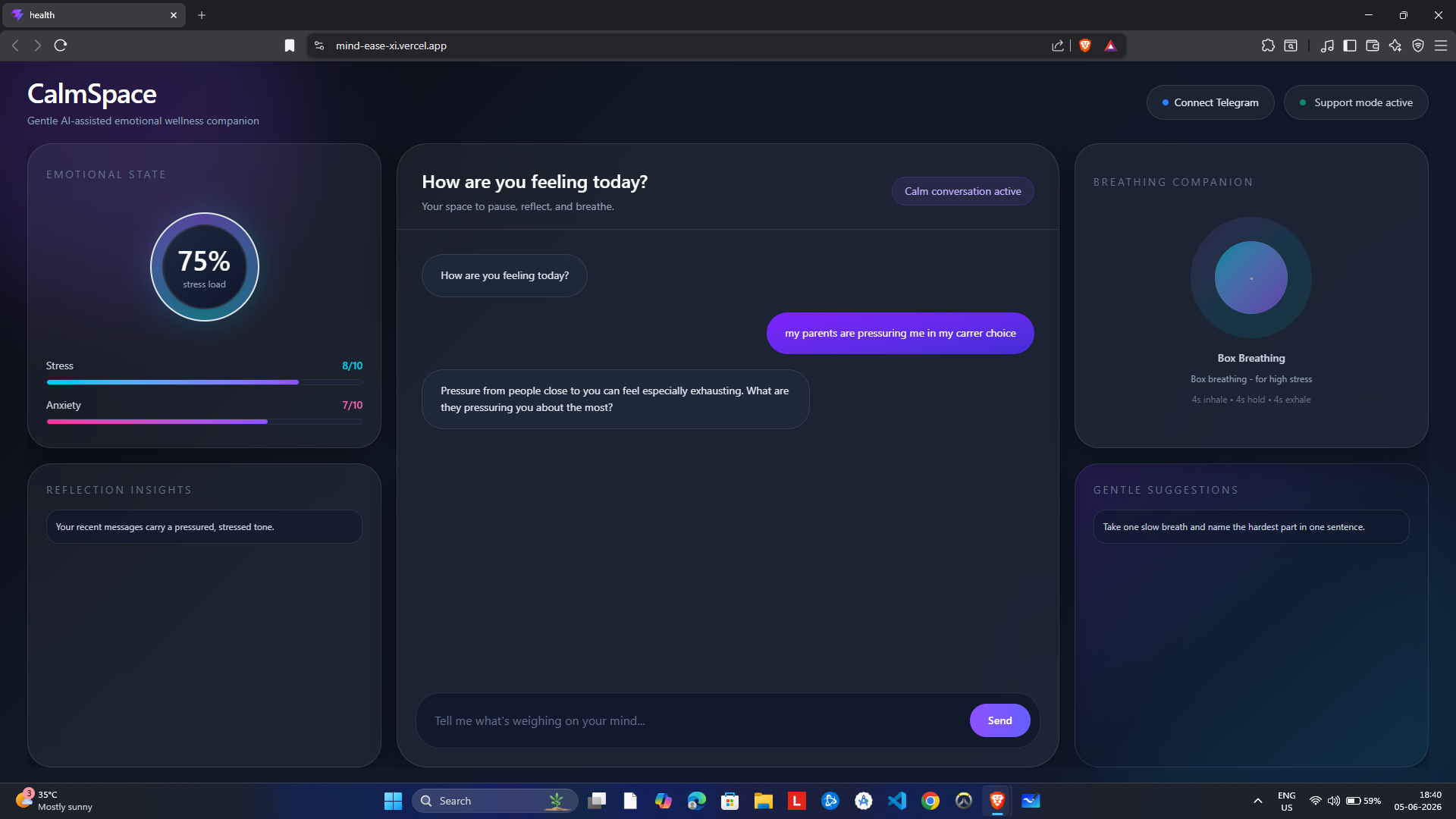
- Tracks your emotional state in real time with anxiety and stress scores
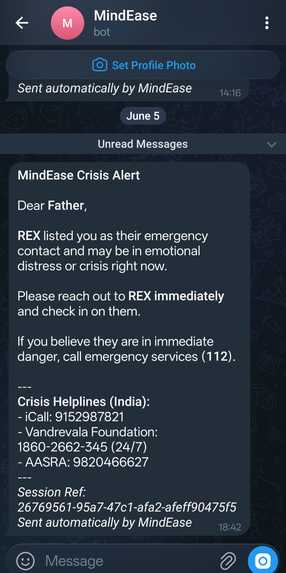
- Detects crisis signals automatically — if you're in serious distress, it immediately alerts your pre-registered guardian on Telegram
- Shows breathing exercises and coping techniques when stress is high
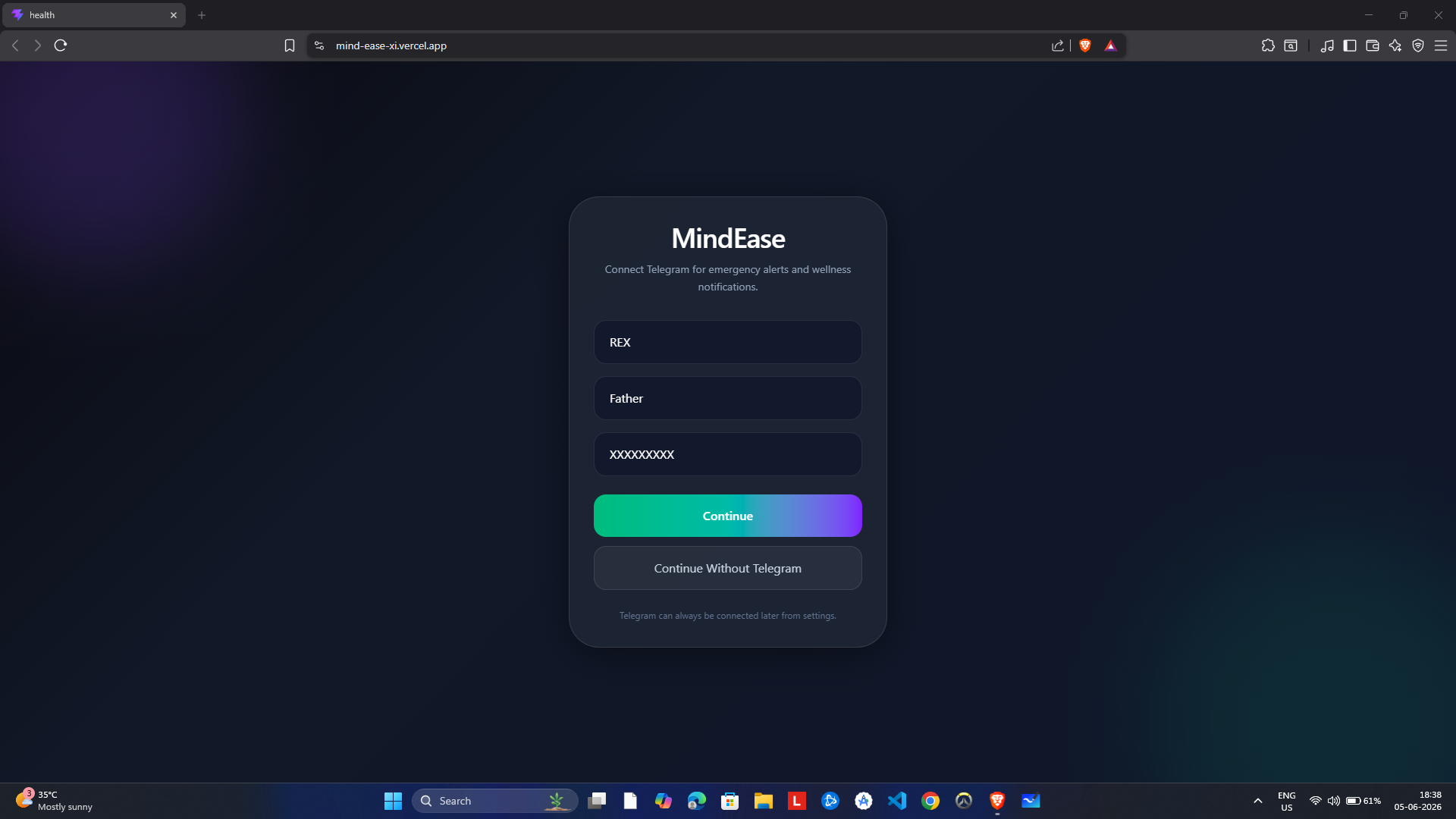
- Completely anonymous — no login, no personal data stored
How we built it
we built MindEase as an AI-powered mental health companion focused on emotional support, mood tracking, and crisis safety.
Backend (AI + Crisis Detection):
Python + FastAPI for the REST API server Google Gemini 2.5 Flash for empathetic AI conversations Custom emotion scoring system with 1-10 anxiety and stress scores Dual-layer crisis detection using Gemini AI plus hardcoded keyword safety checks Telegram Bot API for real-time trusted contact / guardian alerts FastAPI routes for chat, mood logging, and analytics
Frontend: React + Tailwind CSS for a clean and responsive user interface Real-time emotion gauge that updates after every chat message Breathing companion widget to help users calm down during stressful moments Analytics dashboard with mood trend charts Chat interface designed to feel warm, supportive, and easy to use Database:
SQLite for storing mood history SQLite conversation logs linked with session IDs Mood analytics generated from saved daily scores
Challenges we ran into
One major challenge was making the AI replies feel genuinely supportive instead of robotic or overly clinical. Since MindEase is a mental health companion, we had to carefully design prompts so Gemini could respond with empathy, stay concise, and match the user’s emotional tone.
Another challenge was crisis detection. We could not rely only on the AI model, so we built a dual-layer safety system using both Gemini’s judgment and hardcoded crisis keywords. This helped us catch risky messages more reliably, including Hindi and Hinglish phrases.
Making crisis detection sensitive enough to catch real distress without false positives on casual phrases like "this is killing me"
Free tier API rate limits during development forced us to optimize our testing approach
Accomplishments that we're proud of
We are proud that we built MindEase as a complete full-stack mental health companion, not just a basic chatbot. It can talk to users empathetically, understand emotional tone, calculate anxiety and stress scores, and respond in a way that feels warm and personal.
Built a dual-layer crisis detection system that never misses a genuine emergency — AI + keywords working together
Real-time Telegram guardian alerts that fire in under 2 seconds
Clean modular architecture where each teammate could work independently without blocking each other
What we learned
- How to integrate large language models into real applications using structured JSON prompting
- The safety net pattern — never trust AI alone for critical decisions, always have a hardcoded fallback
- FastAPI's power for building clean, auto-documented REST APIs
- How CORS works and why it matters for full-stack development
- The importance of modular code when working in a team — stubs and contracts let teammates work in parallel
What's next for MindEase
- Voice input so users can speak instead of type
- Multi-language support — Hindi, Tamil, Bengali for wider reach
- Therapist referral system — connect users to verified mental health professionals when needed
- Group support rooms — anonymous peer support communities
- Wearable integration — detect stress from heart rate data
- School and college partnerships for campus mental health programs
- Mobile app (React Native) for true 24/7 pocket access

Log in or sign up for Devpost to join the conversation.