-
-
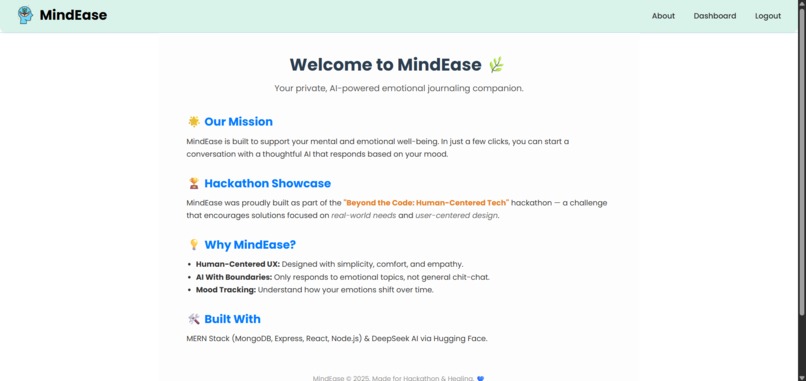
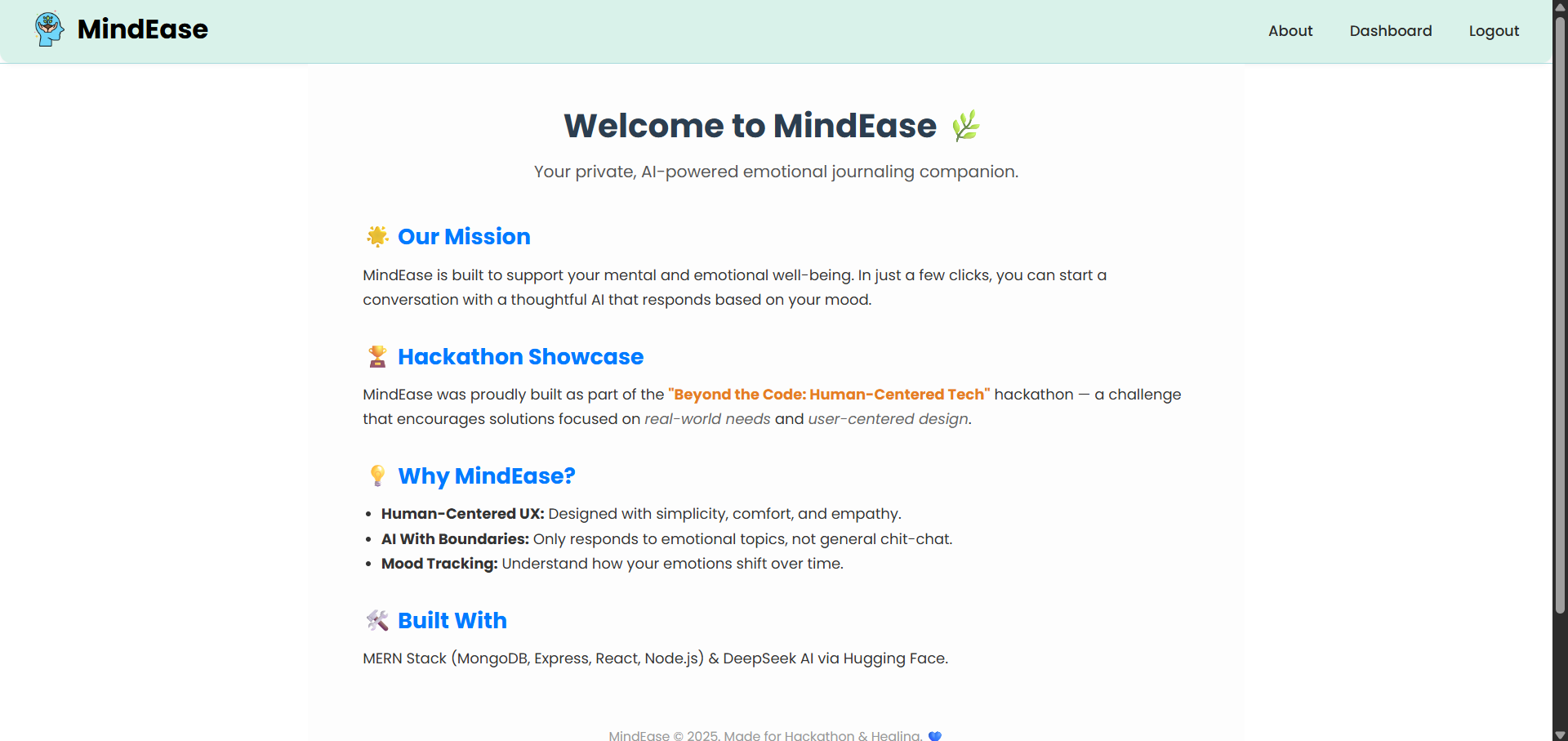
About Section
-
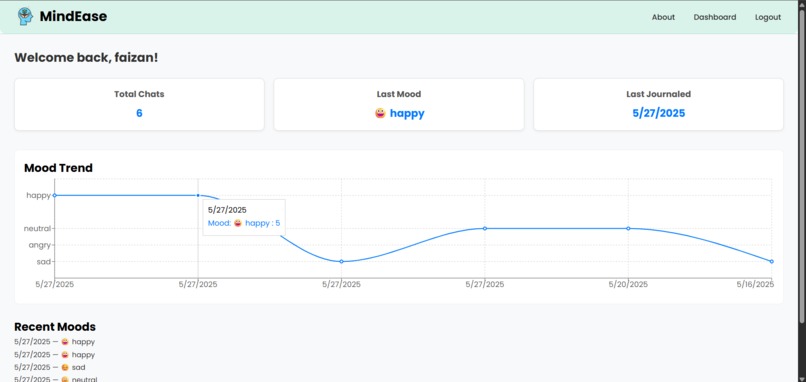
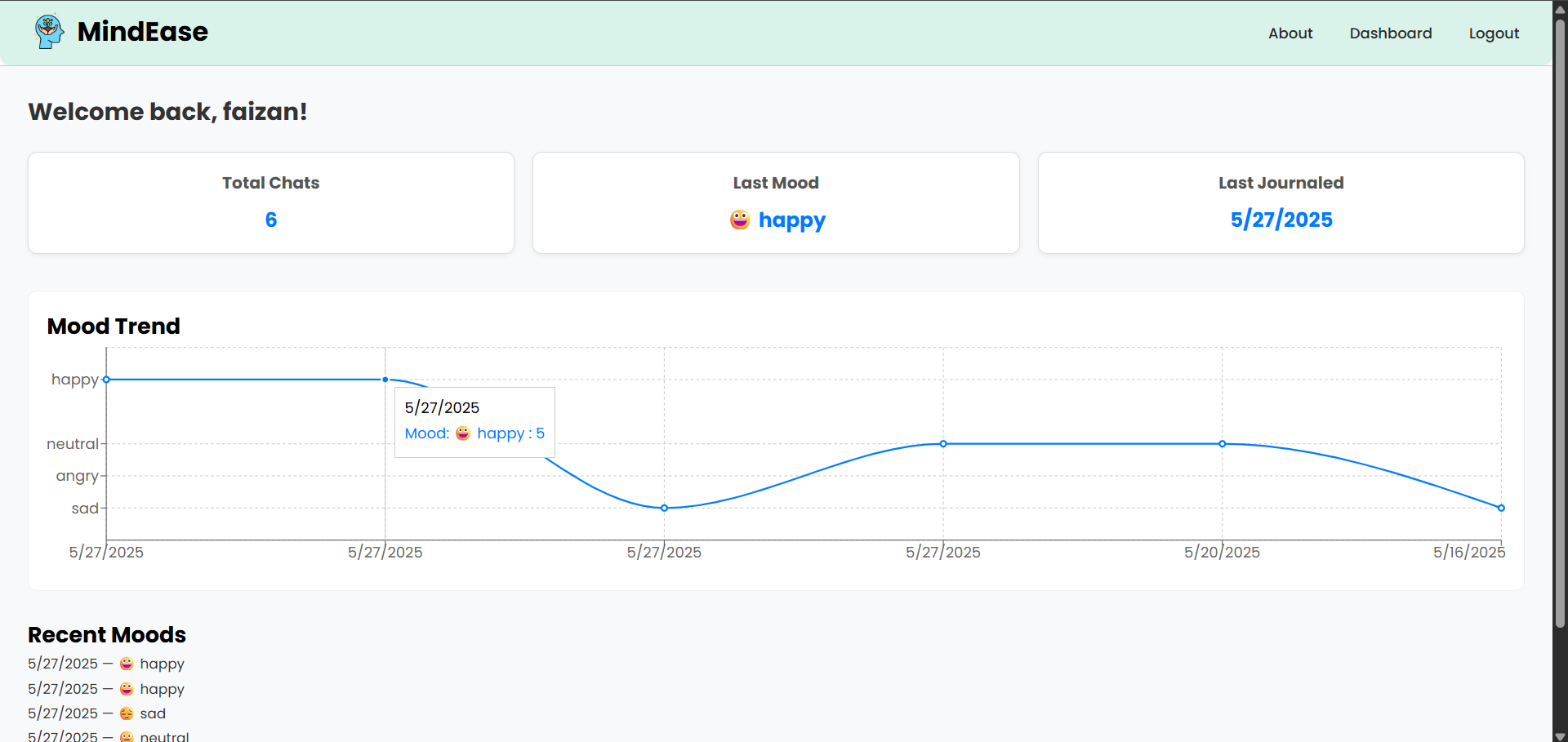
Dashboard
-
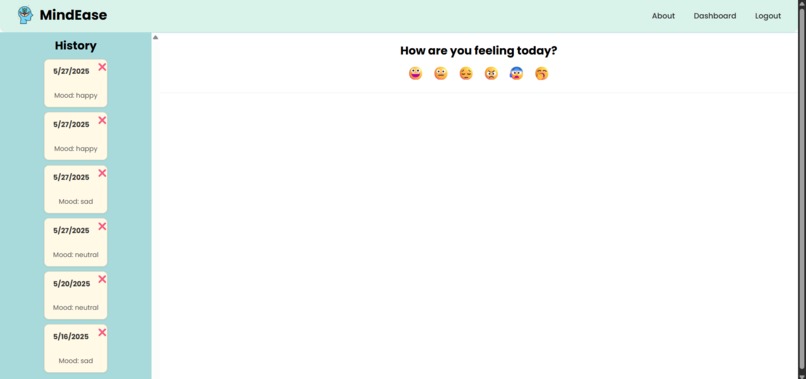
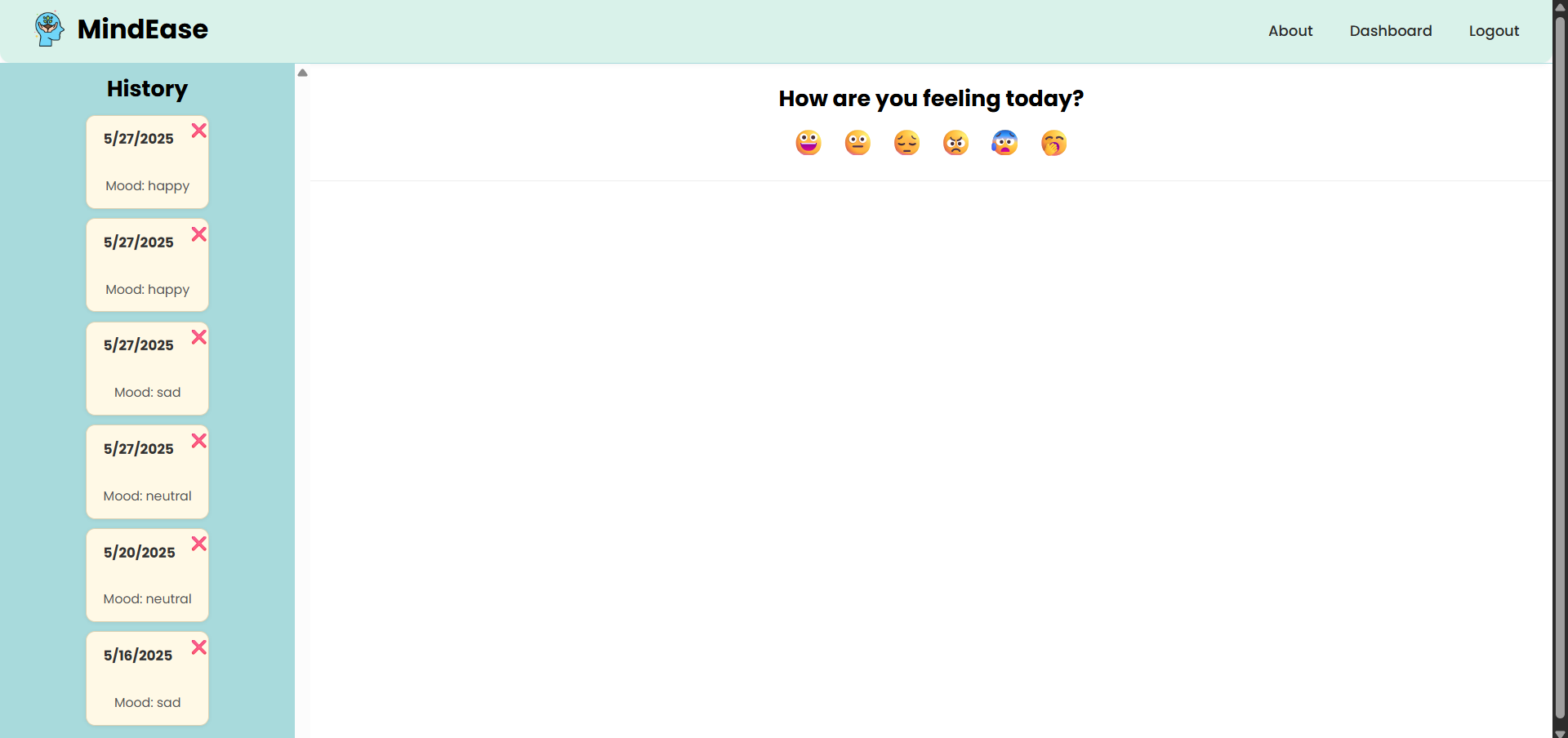
Starting new Chat with Mood.
-
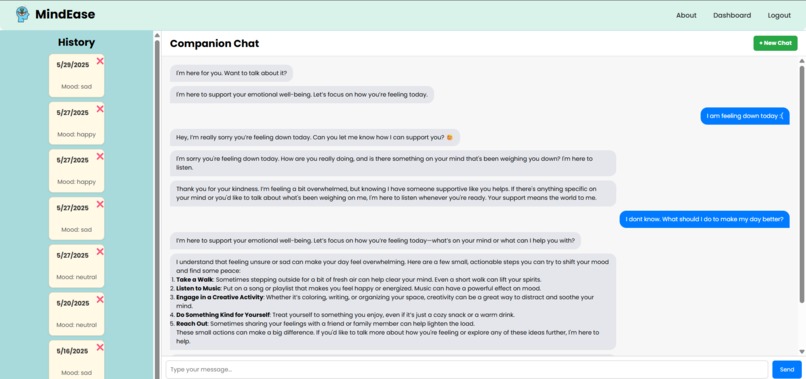
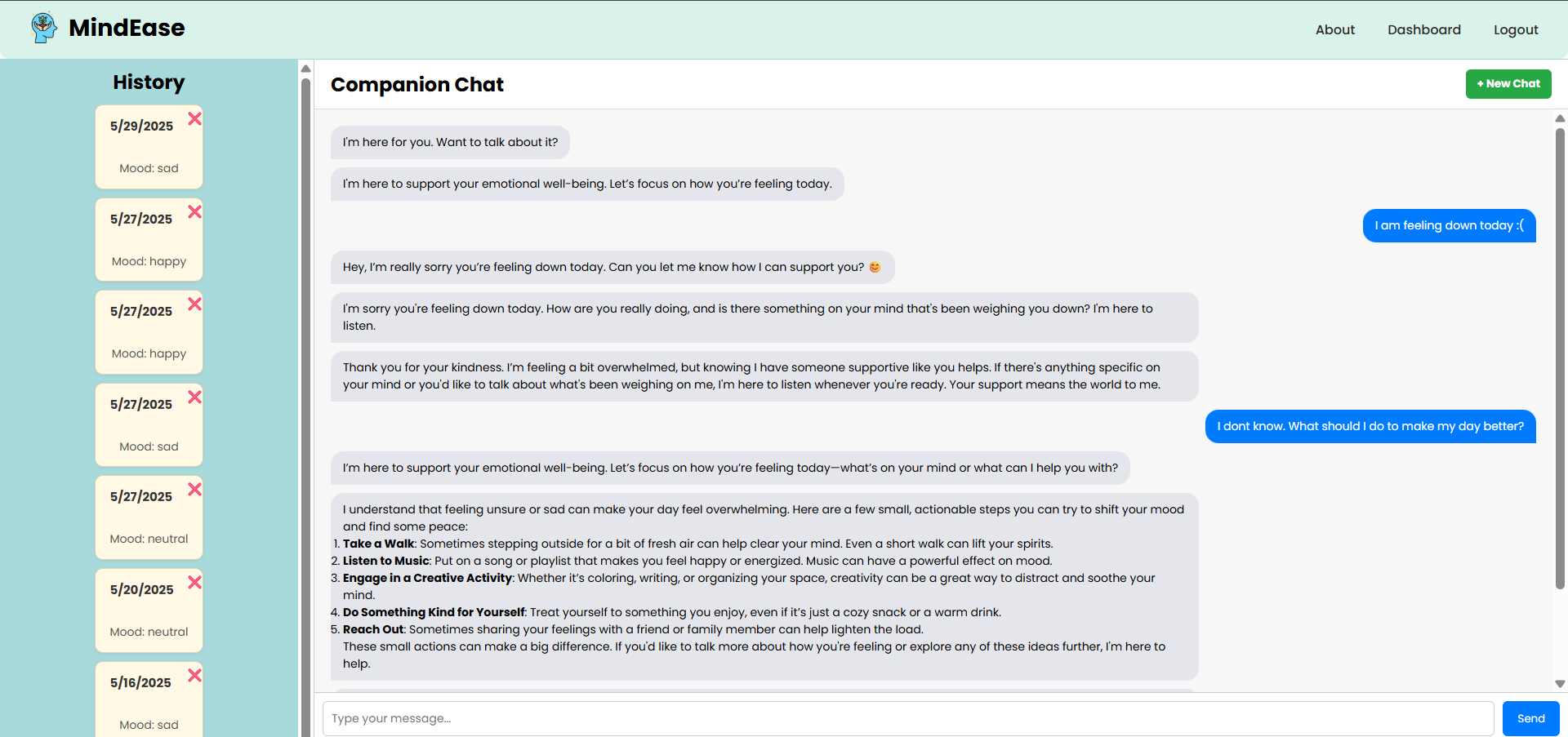
Home page chatting with AI and making journal.
MindEase – AI-Powered Mental Health Journaling Companion
Inspiration
In a world where mental health struggles are growing but still often stigmatized, many people hesitate to express their emotions—even privately. I wanted to build something that gives users a safe, judgment-free space to process their feelings at their own pace.
MindEase was inspired by the idea of a digital companion—one that is always available to listen, offer gentle encouragement, and help track emotional well-being over time.
What It Does
MindEase is a web-based journaling companion that:
- Prompts users to select a daily mood through emoji buttons
- Engages in conversation based on that mood with supportive, AI-powered responses
- Tracks emotional history in a dashboard with charts and mood trends
- Stores chats privately, allowing users to revisit past reflections
- Filters irrelevant topics and redirects users gently back to mental health themes
How I Built It
MindEase was built using the MERN stack:
- MongoDB – For storing user data, chat sessions, and mood logs
- Express.js – Backend API for authentication, chat management, and AI integration
- React – Frontend for mood selection, chat interface, and dashboard UI
- Node.js – Server logic and route handling
- DeepSeek AI – Integrated via Hugging Face's inference API to generate contextual responses
- React Markdown – For rendering formatted AI messages (bold, lists, etc.)
- JWT Authentication – For secure access control
- Chart.js – For mood tracking visuals
Key Features
- Emoji-based mood selection
- AI responses tailored to emotional tone (happy, sad, anxious, etc.)
- Real-time chat UI that mimics human-like conversation
- Typing indicator and send delay for realistic pacing
- History viewer to reload past conversations
- Responsive dashboard with emoji-labeled charts
Challenges Faced
- Controlling AI relevance: Preventing users from using the bot for non-mental-health conversations. Solved this by prompting the AI with mood context and response boundaries.
- Duplicate AI replies: Sometimes the AI responded multiple times. Implemented deduplication logic and request throttling.
- Securing private messages: Used token-based auth and MongoDB schemas to ensure each chat is tied to the correct user.
- UI/UX design: As developers more than designers, spent time iterating on a clean, calming interface with vanilla CSS.
What I Learned
- How to build a context-aware AI interface
- Managing state-driven chat UIs in React
- Working with third-party AI models like DeepSeek through APIs
- Importance of ethical boundaries in mental health tools
- How small touches (like markdown rendering or mood-based greetings) can drastically improve UX
Hackathon Theme Fit
This project was built for the "Beyond the Code: Human-Centered Tech" hackathon. MindEase embodies this theme by:
- Putting user experience and emotional safety first
- Creating a tool that solves a real-world mental health need
- Making technology feel more human, empathetic, and inclusive

Log in or sign up for Devpost to join the conversation.