💡 Inspiration
Students often deal with stress, pressure, and emotional ups and downs, but mental health tools can feel overwhelming, clinical, or inaccessible. I wanted to create something simple, safe, and approachable that encourages daily self-reflection without diagnosing or labeling users.
🚩 The Problem
Many students ignore their emotional well-being because they lack an easy way to reflect on their feelings consistently. Without reflection, emotional patterns go unnoticed, which can increase stress and burnout over time.
💡 The Solution
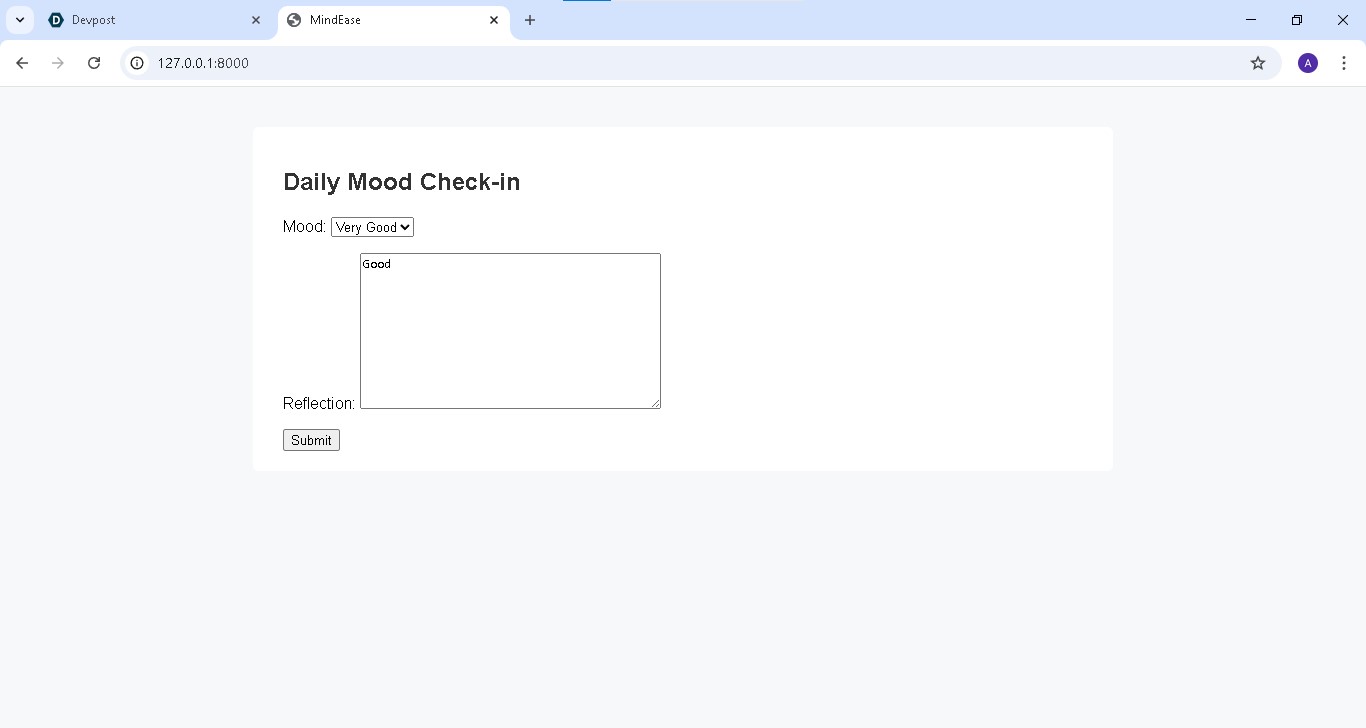
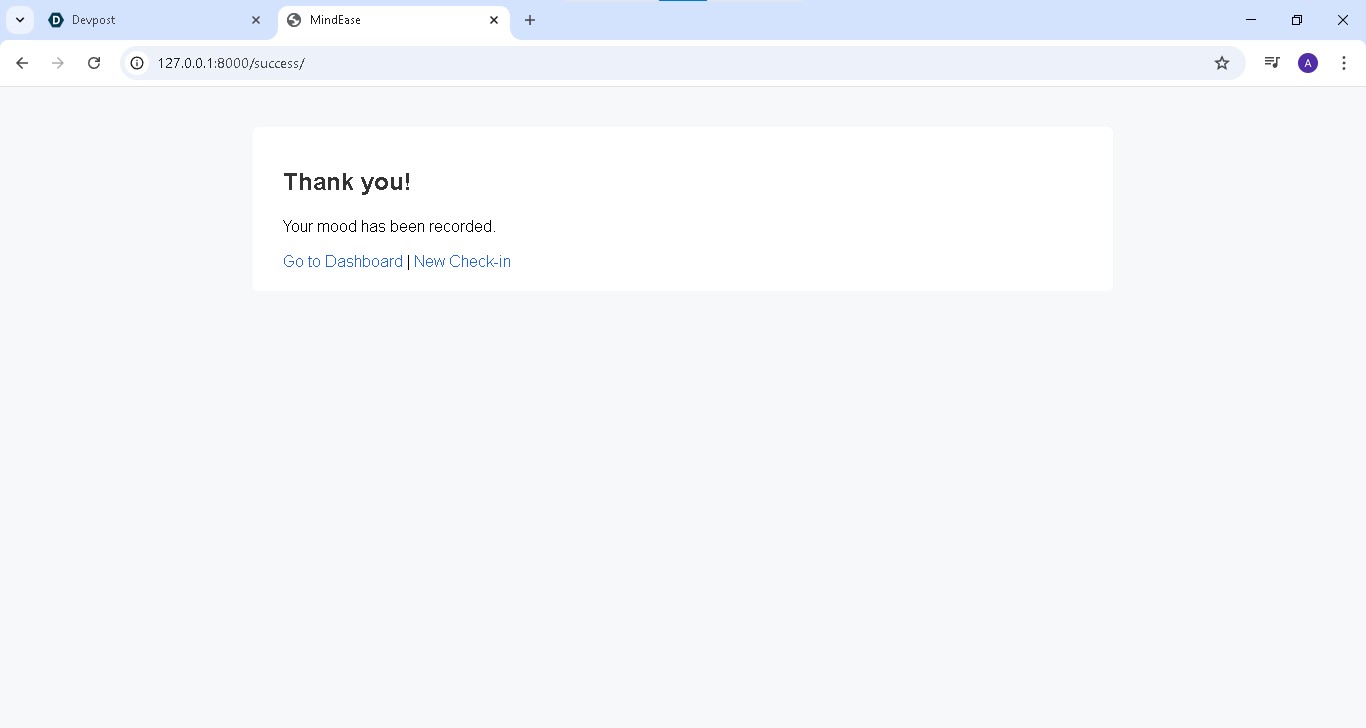
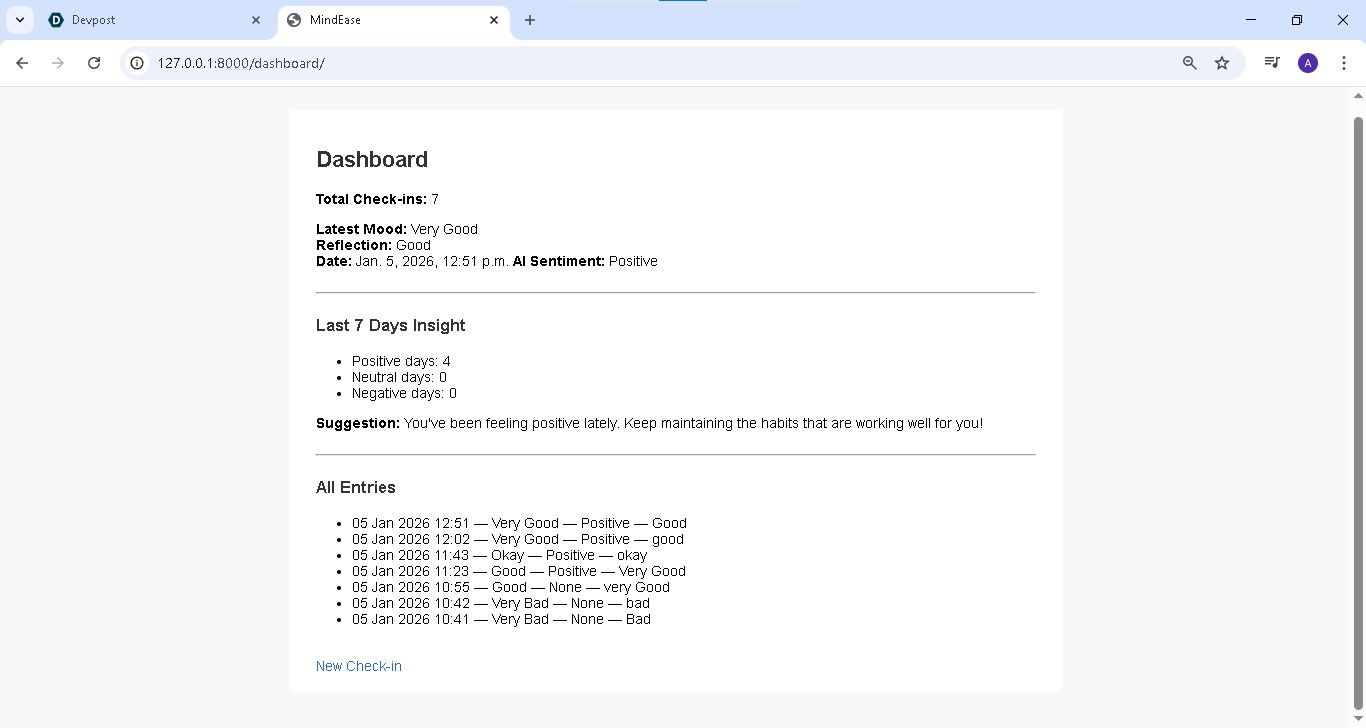
MindEase is a lightweight web application that allows students to log their daily mood and write a short reflection. Using AI-powered sentiment analysis, the app classifies reflections as Positive, Neutral, or Negative and generates weekly insights and gentle suggestions based on recent patterns.
The goal is to promote awareness and reflection, not diagnosis.
⚙️ How I Built It
I built MindEase using Django for the backend and HTML/CSS with Django templates for the frontend. Each mood entry is stored in a database along with an AI-generated sentiment score using TextBlob. The dashboard summarizes the last 7 days of emotional trends and provides simple, supportive suggestions.
🧠 AI & Ethics
The AI feature uses lightweight NLP sentiment analysis to support reflection. MindEase does not provide medical advice or mental health diagnoses—it focuses on awareness, personal insight, and responsible AI usage.
🧩 Challenges
One challenge was designing the AI logic in a way that was helpful but not misleading. I also focused on keeping the UI clean and simple while maintaining a complete end-to-end flow from input to insight.
📚 What I Learned
Through this project, I strengthened my understanding of full-stack development, database design, and ethical AI usage. I also learned how small, thoughtful features can make technology more meaningful for real users.

Log in or sign up for Devpost to join the conversation.