-
-
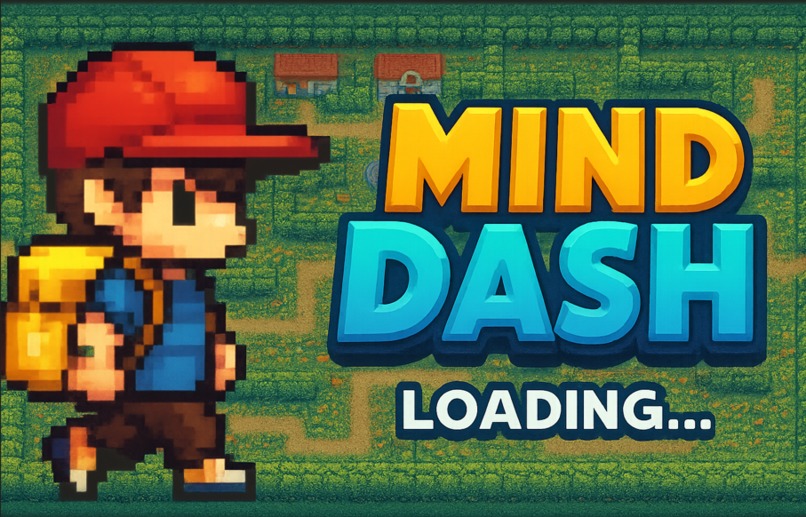
MINDDASH
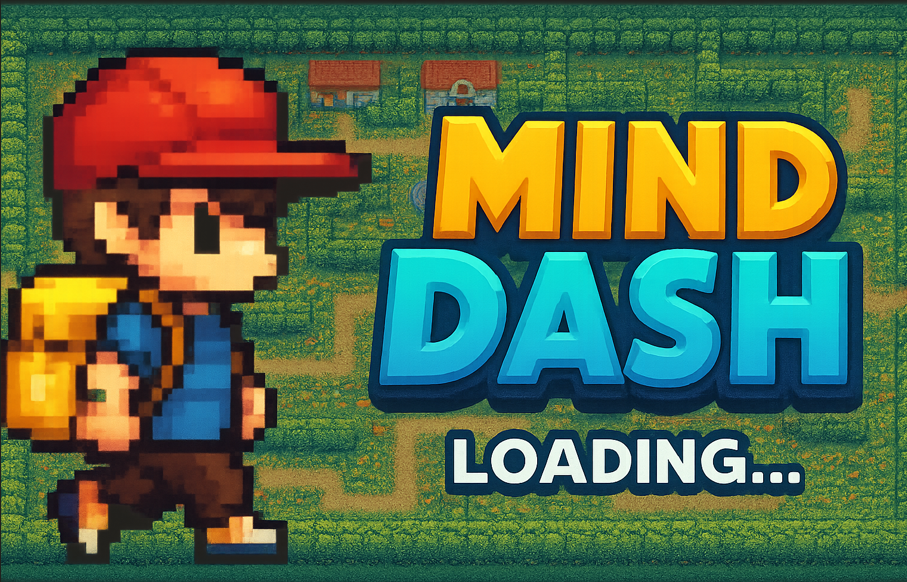
Inspiration
MindDash was inspired by the limitations of traditional difficulty systems in games.
Many games rely on fixed levels or static difficulty curves, which often fail to adapt to different player skills.
We wanted to explore a different approach: a game that learns from the player and evolves in real time.
The idea was to create an experience where every session feels unique, challenging, and fair, regardless of the player’s skill level.
What it does
MindDash is a fast-paced 2D action game powered by artificial intelligence.
The game continuously analyzes player performance — such as movement, reaction speed, and survival time — and uses this data to dynamically adjust enemy behavior and difficulty.
Instead of predefined levels, the game generates adaptive challenges, ensuring that no two playthroughs are the same.
How we built it
MindDash was built using React Native and react-native-game-engine.
The game architecture is based on entities and systems that handle movement, collisions, and game logic in real time.
An AI-based adaptive enemy generator evaluates player performance during gameplay and modifies enemy spawn rate, speed, and behavior accordingly.
This allows the difficulty to scale smoothly without relying on hard-coded progression.
Challenges we ran into
One of the biggest challenges was balancing real-time adaptability with performance, especially on mobile devices.
Frequent updates can impact frame rate if not optimized carefully.
We also faced challenges with sprite animations, collision handling, and timing consistency, which required fine-tuning frame control and entity updates to maintain smooth gameplay.
Designing an AI system that feels challenging but fair was another major challenge, as the difficulty needed to adapt without becoming frustrating or unpredictable.
Accomplishments that we're proud of
We’re proud of successfully implementing an AI-driven difficulty system that adapts in real time.
The adaptive gameplay ensures a personalized experience for each player.
We’re also proud of building a complete and functional game within limited time constraints, while maintaining performance and gameplay balance.
What we learned
Through building MindDash, we learned how to apply AI concepts to real-time gameplay systems.
We gained valuable experience optimizing performance in React Native and designing adaptive mechanics that enhance player engagement.
Most importantly, we learned that effective AI in games doesn’t have to be overly complex — thoughtful design and iteration can make simple systems feel intelligent and impactful.
What's next for MindDash
Next, we plan to expand the AI system by incorporating more player metrics and deeper behavioral analysis.
Future improvements include new enemy types, enhanced visual feedback, and more refined adaptation strategies.
We also aim to improve long-term progression and explore multiplayer or competitive modes powered by adaptive AI.
Built With
- ai-based-adaptive-systems
- development
- expo.io
- game
- gemini
- javascript
- mobile
- react-native
- react-native-game-engine
- typescript

Log in or sign up for Devpost to join the conversation.