Inspiration
Mental health is one of the biggest silent crises affecting students today. 1 in 5 teenagers experiences a mental health condition yet most never seek help — not because they don't want to, but because the barriers are too high. Therapy is expensive. School counselors are overwhelmed. And existing mental health apps are too clinical or too costly for everyday students.
But my inspiration goes deeper than statistics. I am a 16-year-old student in Nigeria coding entirely on my old Android phone with no laptop and no team. I built MindCheck because I believe two things deeply: that mental health support should be free and accessible to every student on earth, and that where you start should never limit what you can build.
What it does
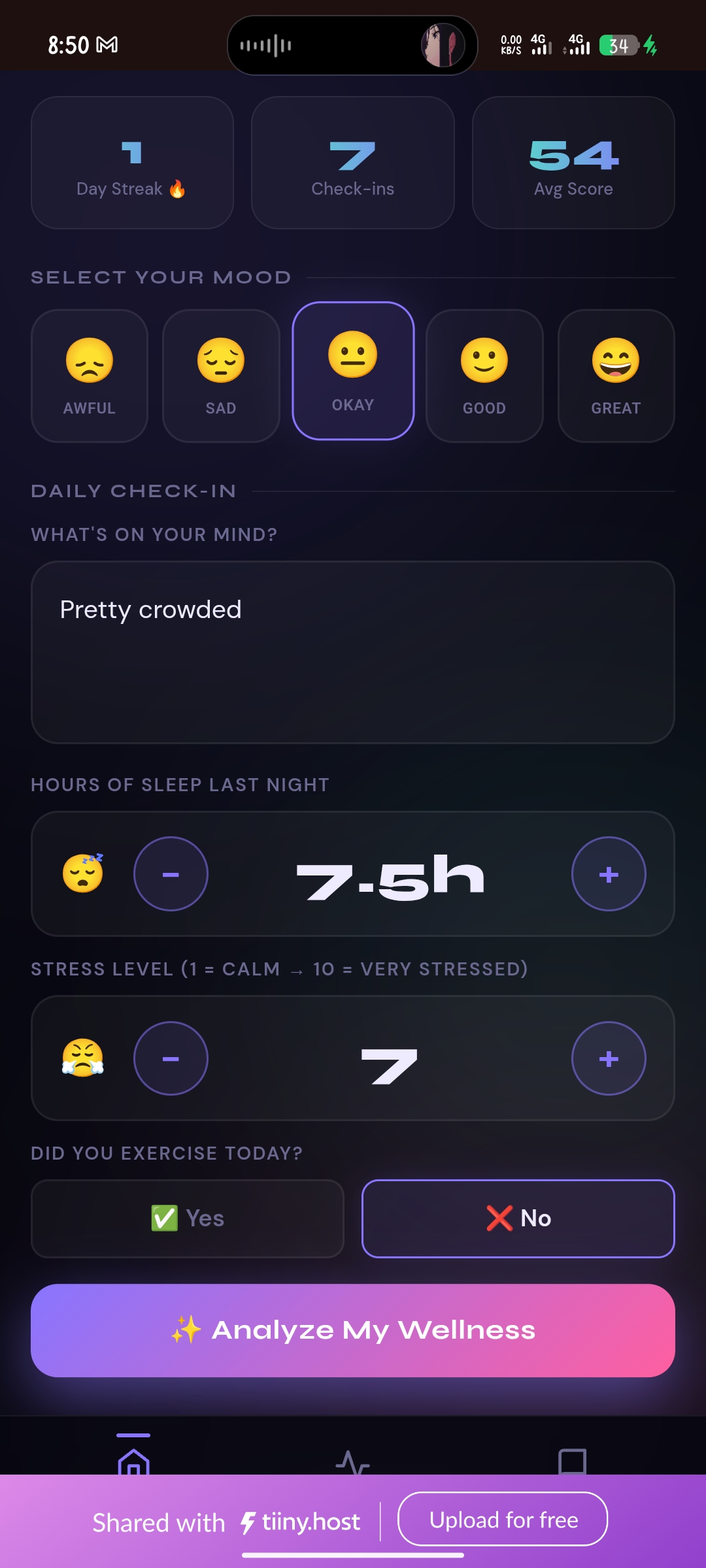
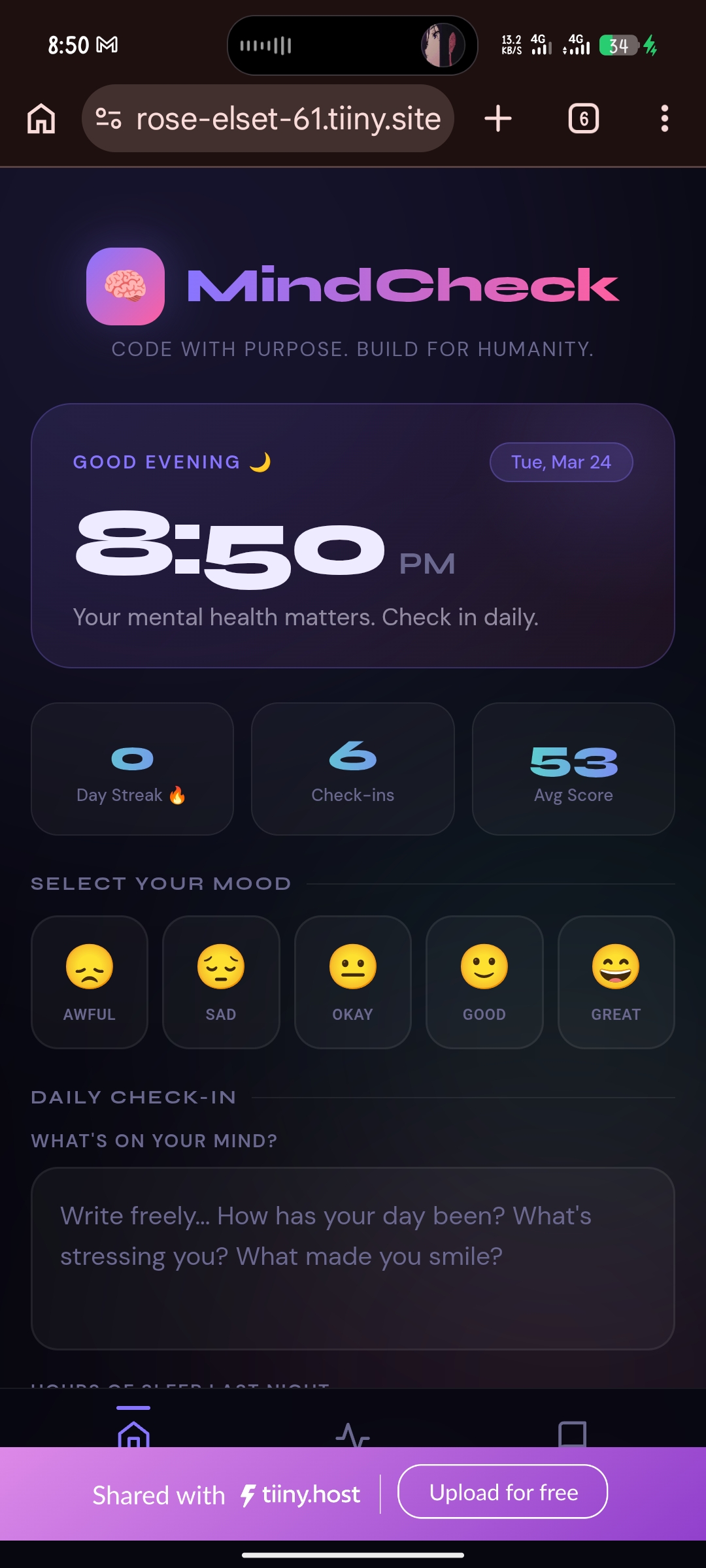
MindCheck is a free daily AI-powered mental wellness companion for students aged 13-20. Every day a student:
- Selects their mood from Awful to Great
- Writes freely about what is on their mind
- Logs their sleep hours and stress level
- Tracks whether they exercised
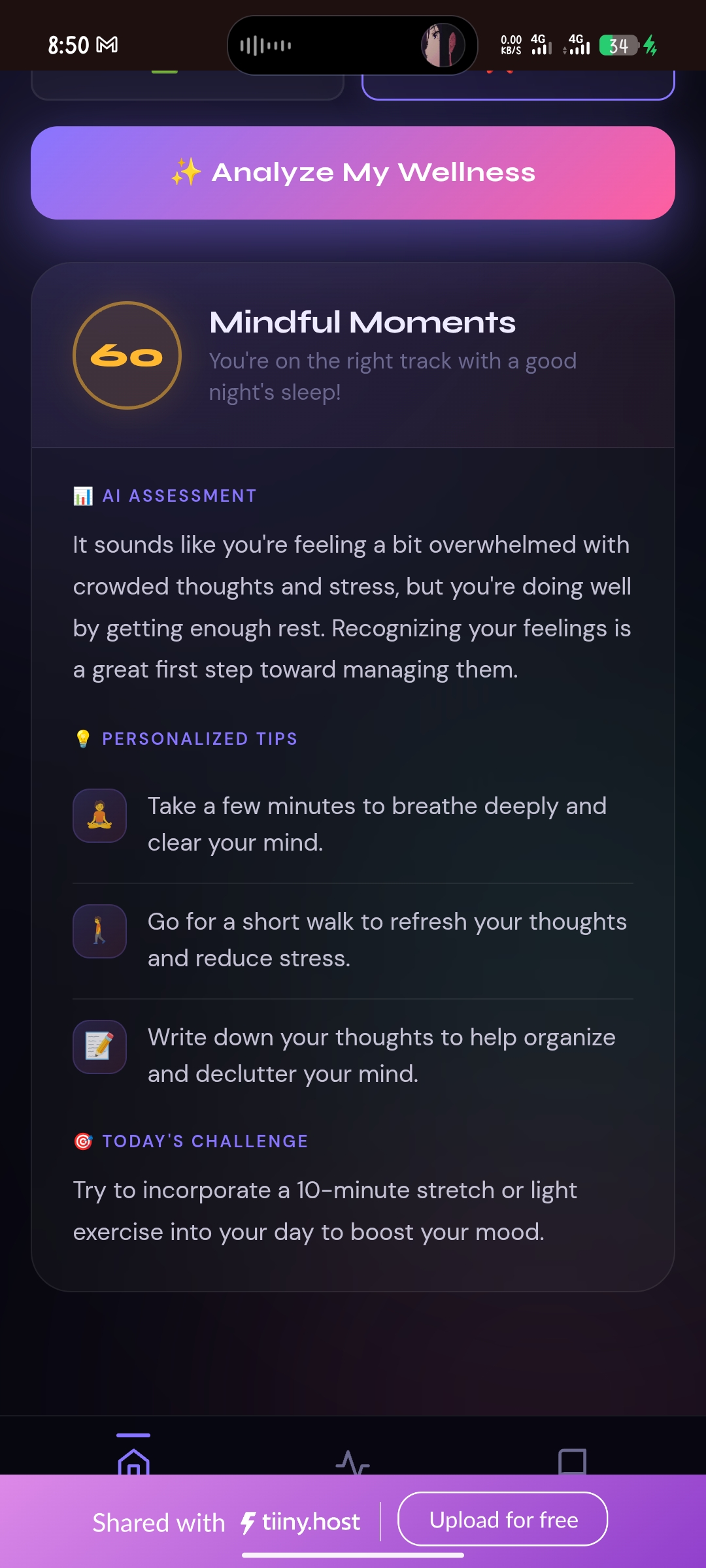
The AI instantly generates a personalized wellness score from 1-100, a warm assessment, 3 actionable tips, and a daily challenge. If the AI detects a student may be in crisis, the 988 Lifeline appears automatically — because safety is never optional.
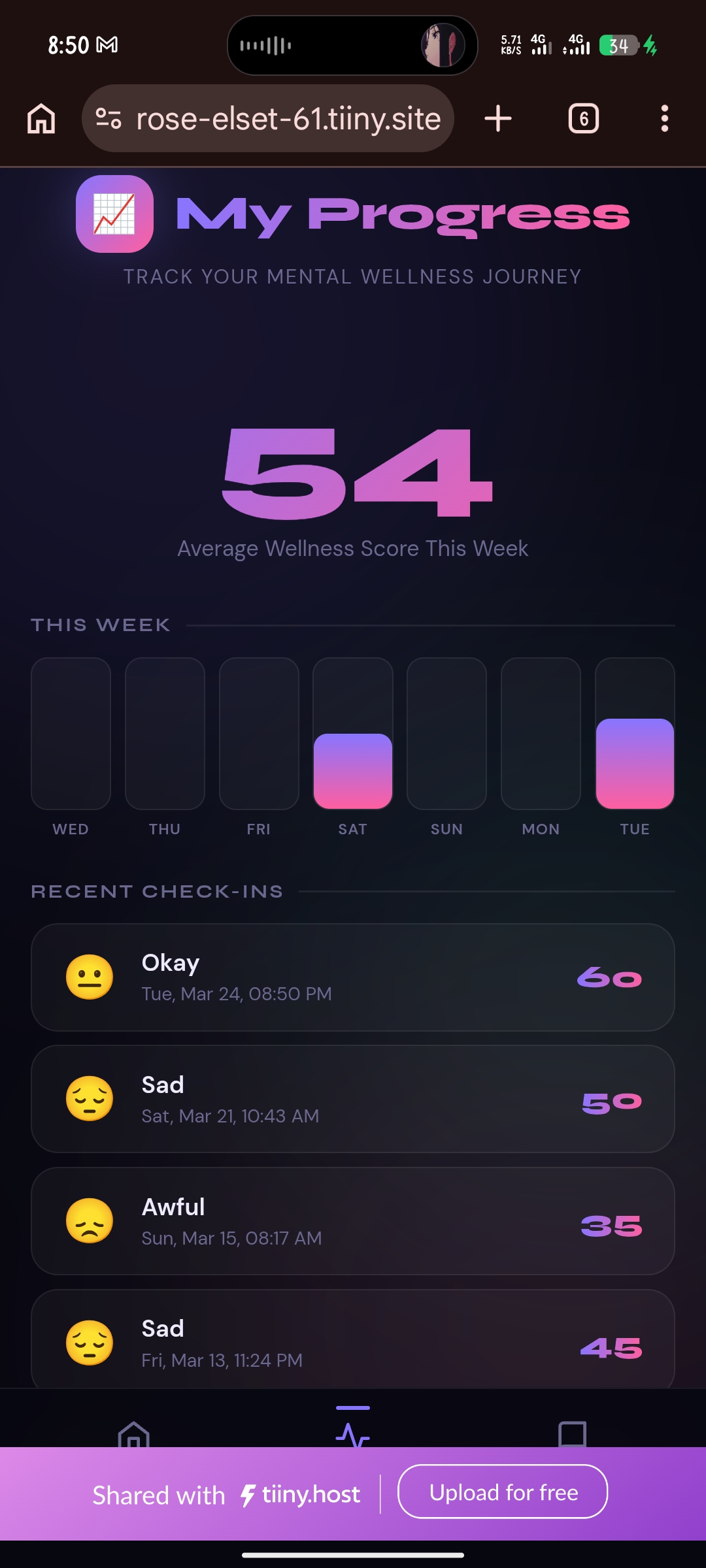
Students track progress over time with weekly charts, check-in history, and streaks that reward consistency.
Live at mindcheck.tiiny.host — free for any student in the world to use right now.
How I built it
Every single line of MindCheck was coded on my Android phone using Acode, a mobile code editor. No laptop. No desktop. No development environment. Just a phone, determination, and a clear vision.
The tech stack is intentionally simple and powerful: pure HTML, CSS, and JavaScript on the frontend with OpenRouter's API connecting to the arcee-ai/trinity- large-preview model for AI analysis. I engineered a structured prompt that forces the model to return clean JSON — parsed dynamically into the UI in real time.
All user data is stored locally in localStorage. Zero data collection. Complete student privacy.
The UI was designed mobile-first with a deep dark theme, animated orbs, live clock, and smooth transitions — because a wellness app should feel calm and safe to open every single day.
Challenges I ran into
Coding on a phone is genuinely hard in ways most developers never experience. No split-screen debugging. No browser dev tools. Every bug had to be spotted manually on a small screen and fixing one mistake took 3x longer than on a laptop.
Multiple AI models I tried — LLaMA, Mistral, Gemma — returned endpoint errors mid-build, forcing me to research and switch models under deadline pressure.
Getting the AI to consistently return structured JSON required deep prompt engineering — being extremely precise about field names, data types, and format.
Every single challenge was solved on a 6-inch screen.
Accomplishments I am proud of
- Built and deployed a fully working AI wellness app entirely on a phone with no laptop or desktop
- Engineered a structured AI prompt that reliably returns personalized JSON rendered into a rich UI
- Designed a mobile-first interface a struggling student would actually want to open every day
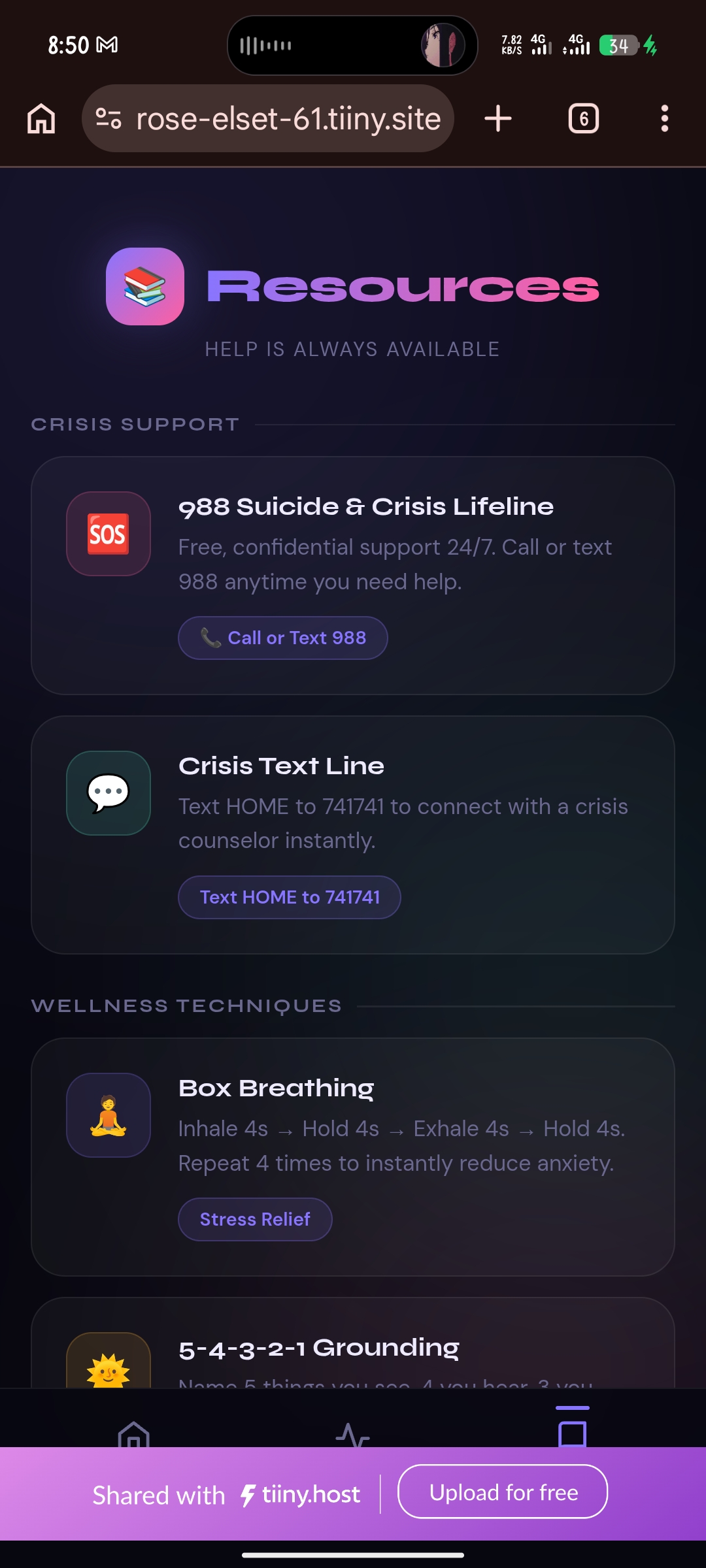
- Built automatic crisis detection with 988 Lifeline for users who may be in danger
- Zero data collection — complete student privacy
- Shipped a live product in under 2 weeks, solo, with no laptop
What I learned
I learned that constraints are not excuses — they are teachers. No laptop forced me to plan every feature carefully before writing a single line. I could not be sloppy because fixing mistakes on a phone costs double the time and energy.
I learned how to work with AI APIs under real pressure — handling model failures, engineering reliable structured prompts, and building graceful fallbacks when responses don't parse correctly.
Most importantly I learned that the best products are built with empathy first and technology second. Every decision in MindCheck — the warm AI tone, the calming dark theme, the crisis detection — was made by asking one question:
"How would a struggling 15-year-old feel using this?"
What's next for MindCheck
MindCheck is not just a hackathon project. It is the foundation of a real business.
Phase 1 — Keep MindCheck free for all students worldwide. Build trust and user base first.
Phase 2 — School subscriptions. Schools pay for an anonymous aggregate wellness dashboard helping counselors identify at-risk periods without ever compromising student privacy.
Phase 3 — Optional premium features for students who want more: guided breathing, AI coaching, and personalized mental health plans. Basic access always remains free.
Phase 4 — PWA with push notifications, African language support, parent dashboards, and API integration with school management systems.
The global mental health app market is worth over $5 billion. Almost nobody is building for teenagers in developing countries. That is MindCheck's market.
I built this on a phone. Imagine what I will build with real support behind me. 🚀
Built With
- acode-editor(andriod)
- arcee-ai/trinity-large-preview
- css
- html
- javascript
- localstorage
- openrouter-api
- tiiny.host

Log in or sign up for Devpost to join the conversation.