Inspiration
Mental health is one of the most overlooked crises among students today. 1 in 5 teens experiences a mental health condition, yet most never seek help — not because they don't want to, but because the barrier to access is too high. I wanted to build something that meets students where they are: on their phones, every single day.
But my inspiration goes deeper than statistics. I built this entire app on my old Android phone — no laptop, no desktop, no fancy development setup. Just a phone, a code editor app, and a dream. MindCheck was born from a simple belief — that checking in on your mental health should be as easy and normal as checking the weather. And that where you start should never limit what you can build.
What it does
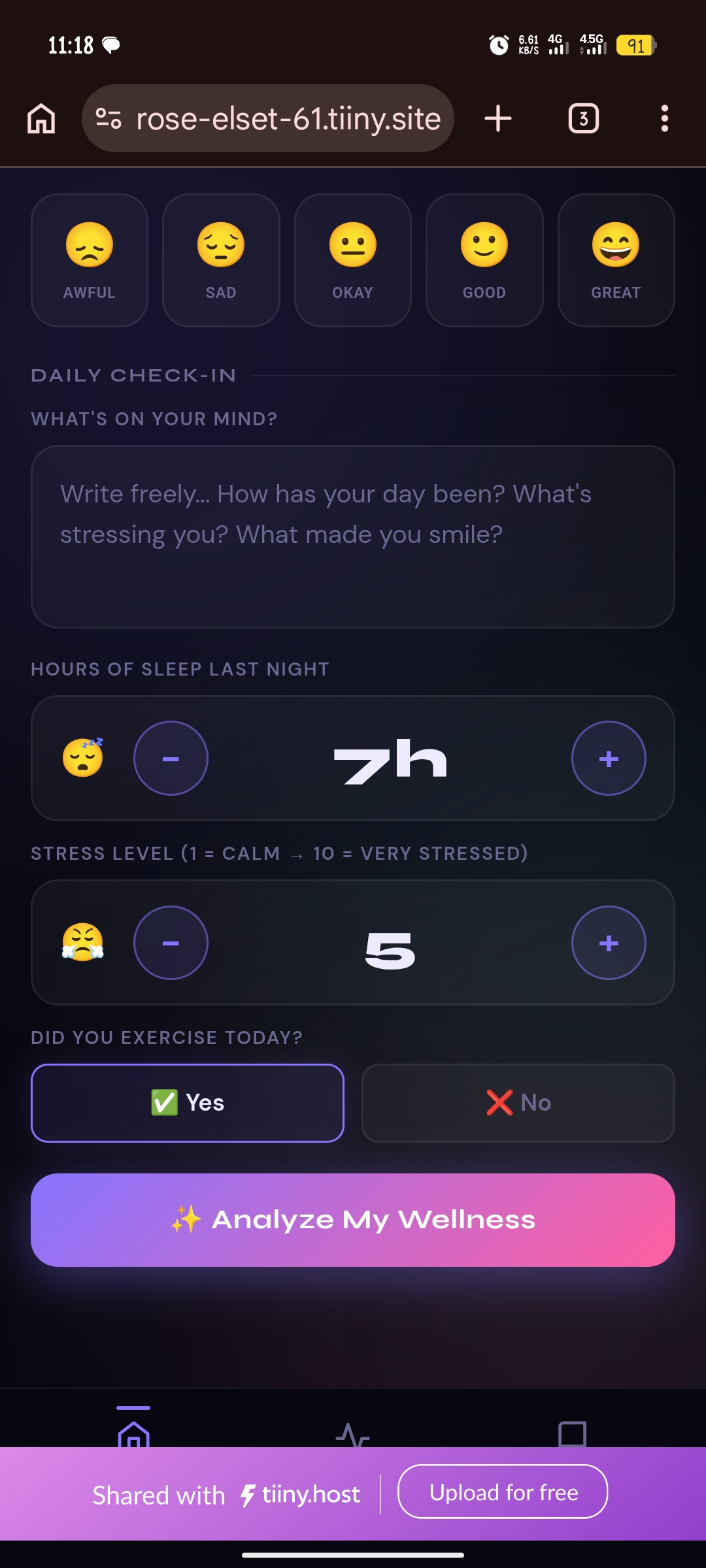
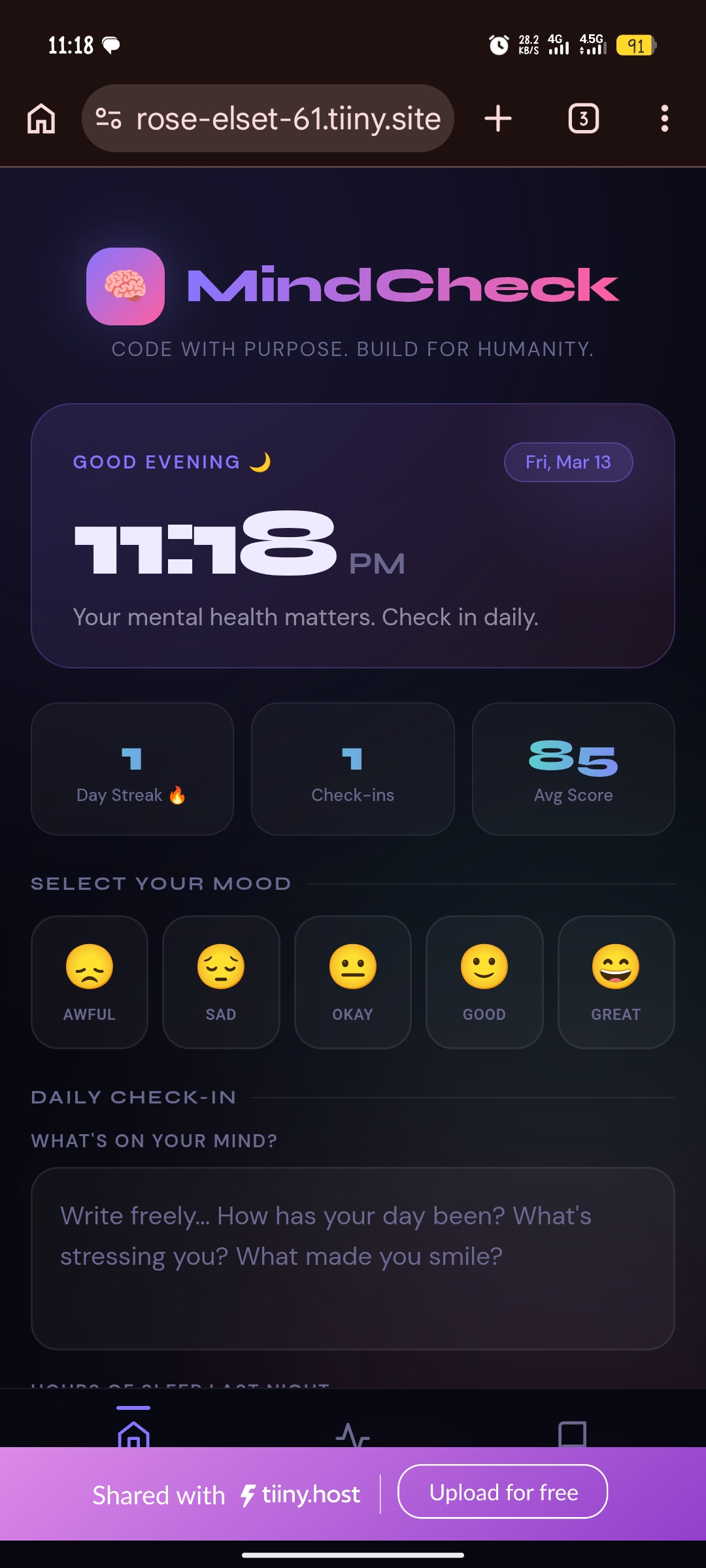
MindCheck is a daily AI-powered mental wellness companion built specifically for students aged 13–20. Every day, users:
- Select their current mood (Awful → Great)
- Share their thoughts freely in a judgment-free space
- Log their sleep hours and stress level
- Track whether they exercised
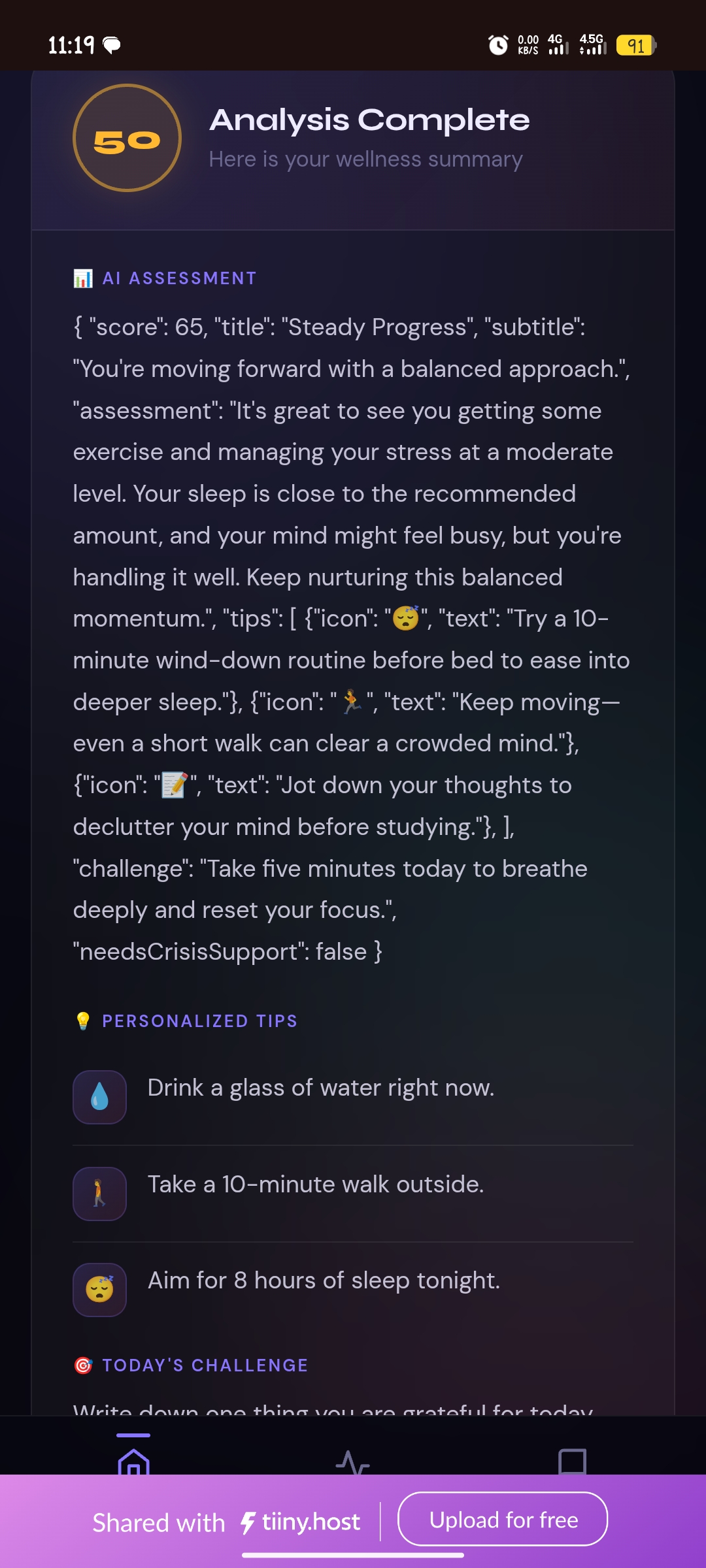
The app sends all of this to an AI model that generates a personalized wellness score (1–100), a warm assessment of how they're doing, 3 actionable tips tailored to their exact situation, and a small daily challenge to build positive habits. It also automatically displays crisis resources and the 988 Lifeline if the score is critically low — because safety always comes first.
Users can also track their progress over time with a weekly bar chart, check-in history, and a streak counter that rewards daily consistency.
How i built it
MindCheck is built entirely with vanilla HTML, CSS, and JavaScript — coded line by line on my phone using a mobile code editor. No laptop. No desktop. No fancy IDE. Every single function, every animation, every API call was written on a small screen with my fingers.
The AI layer is powered by OpenRouter's API, routing requests to the arcee-ai/trinity-large-preview model. I engineered a structured prompt that forces the model to return clean JSON — including the wellness score, assessment, tips, daily challenge, and a crisis flag — which the app parses and renders dynamically.
User data is stored locally using localStorage, keeping everything private on the user's own device with zero data collection.
The UI was designed mobile-first with a deep dark theme, animated background orbs, a live ticking clock, and smooth transitions — because a mental wellness app should feel calm, safe, and beautiful to use.
Challenges i ran into
Coding on a phone is genuinely hard. No split screen debugging, no browser dev tools, no autocomplete worth relying on. Every bug had to be spotted manually by reading through code on a tiny screen. That alone made every working feature feel like a real victory.
On top of that, several free AI models I tried — including LLaMA, Mistral, and Gemma — returned "No endpoints found" errors mid-build, forcing me to test and switch models multiple times under deadline pressure.
Getting the AI to reliably return structured JSON also required careful prompt engineering — I had to be very explicit about the exact format, field names, and data types expected.
Building a mobile-friendly number picker from scratch also proved unreliable across devices, so I pivoted to a cleaner stepper button design that works perfectly on all screen sizes.
Accomplishments that I'm proud of
- Built and deployed a fully functional AI wellness app entirely on a phone — no laptop, no desktop
- Engineered a prompt that reliably returns structured AI responses rendered into a rich, personalized UI
- Designed a mobile-first UI that feels premium and calming — something a student would actually want to open every day
- Integrated automatic crisis detection with 988 Lifeline resources for users who may be in danger
- Zero data collection — all data stays on the user's device, completely respecting student privacy
What i learned
I learned that constraints breed creativity. Not having a laptop forced me to think more carefully before writing code, plan every feature in my head first, and be intentional about every decision. I couldn't afford to be sloppy because fixing mistakes on a phone takes twice as long.
I also learned that the best products are built around empathy first and technology second. Every design decision — the warm AI tone, the calming dark theme, the crisis banner — was made by asking one question: "How would a struggling 15-year-old feel using this?"
What's next for MindCheck — Daily AI Wellness Companion
- Mood pattern detection — AI notices when a user has been consistently low for multiple days and proactively reaches out
- Parent/guardian dashboard — optional consent-based sharing so trusted adults can stay aware without invading privacy
- School integration — anonymous aggregate mood data for school counselors to identify at-risk periods like exam season
- Guided breathing & meditation — built-in audio exercises triggered automatically when stress levels are critically high
- PWA support — installable as a home screen app with daily check-in push notifications
And personally? Winning this hackathon would mean getting my first laptop — so I can keep building tools like MindCheck faster, better, and for more people who need them.
Built With
- arcee-ai/trinity-large-preview
- css
- html
- javascript
- localstorage
- openrouter-api
- tiiny.host

Log in or sign up for Devpost to join the conversation.