Inspiration
What it does
How we built it
Challenges we ran into
Accomplishments that we're proud of
What we learned
What's next for MindCheck
MindCheck — Project Story Where the Idea Came From
MindCheck was inspired by a simple but painful observation: many students struggle silently.
Across high schools in the United States, more than 40% of students report persistent feelings of sadness or hopelessness. Yet most never speak to a counselor. The issue is not only access — it is friction, stigma, and fear.
I began asking a simple question:
What happens in the space between feeling unwell and being ready to ask for help?
That “in-between” space is where MindCheck was born.
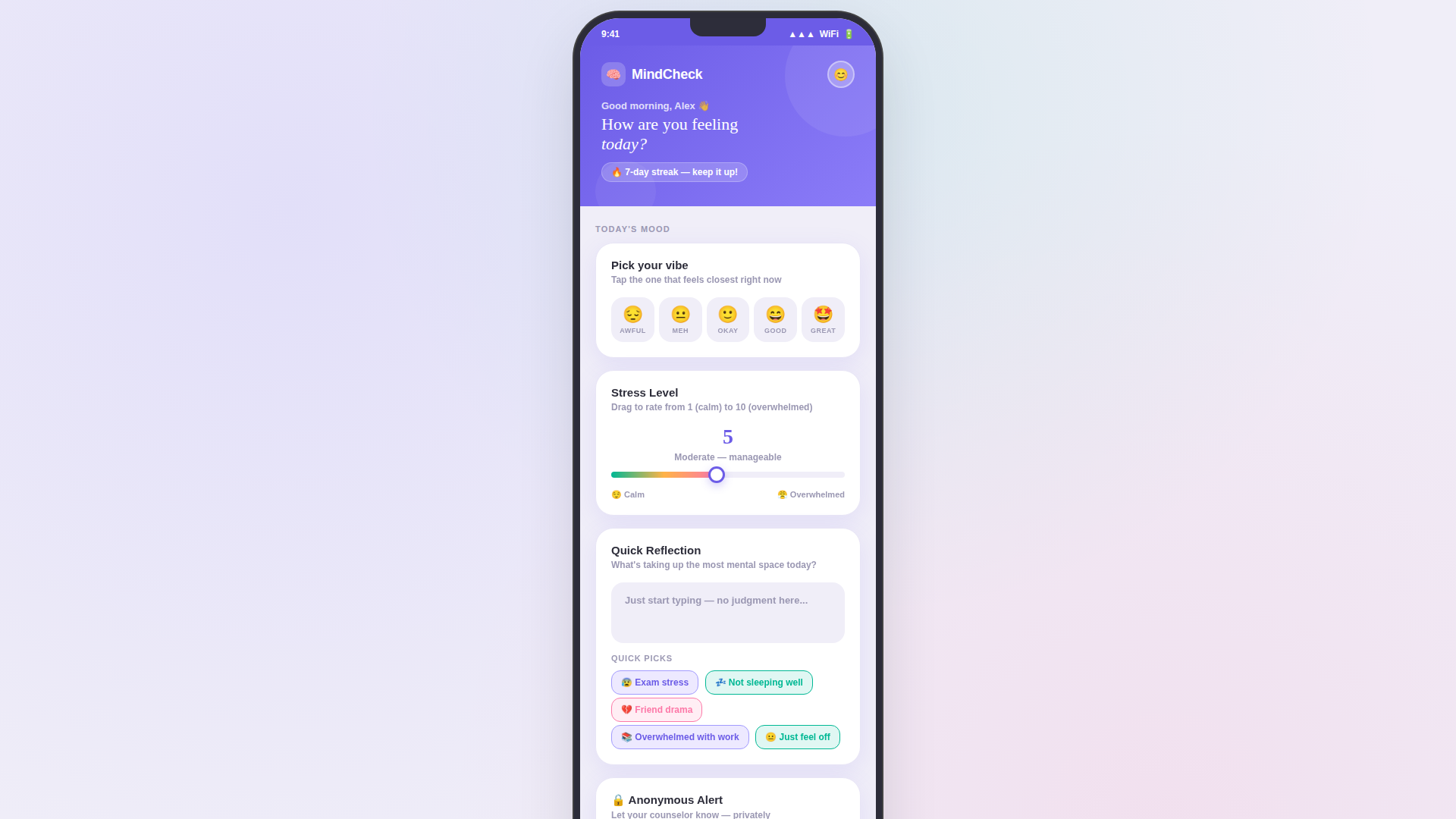
Students are already on their phones. They are already journaling in notes apps. They are already expressing emotions through emojis and short messages. So instead of building another therapy app, I wanted to design something lighter — something that feels safe, simple, and non-clinical.
MindCheck became a daily two-minute check-in that lowers the barrier to support before problems become crises.
What I Learned
During research and early design, I learned three critical lessons:
- The Barrier Is Emotional, Not Technical
Schools often focus on increasing counselor availability. But even if the counselor-to-student ratio improves from 1:408 to the recommended 1:250, students still must take the first step.
That first step is the hardest one.
- Simplicity Increases Adoption
If a tool takes 10 minutes, students will not use it consistently. So I optimized for:
Daily Usage ∝ 1 Time + Friction Daily Usage∝ Time + Friction 1
The shorter and more intuitive the experience, the higher the likelihood of consistent engagement.
- AI Should Support — Not Diagnose
MindCheck’s AI does not attempt to diagnose mental health conditions. Instead, it responds to user inputs with evidence-based coping strategies such as breathing exercises, movement prompts, or journaling ideas.
The philosophy is:
Suggest. Support. Encourage. Never label.
How I Built the Project Phase 1 — Concept Validation
I first outlined the core features:
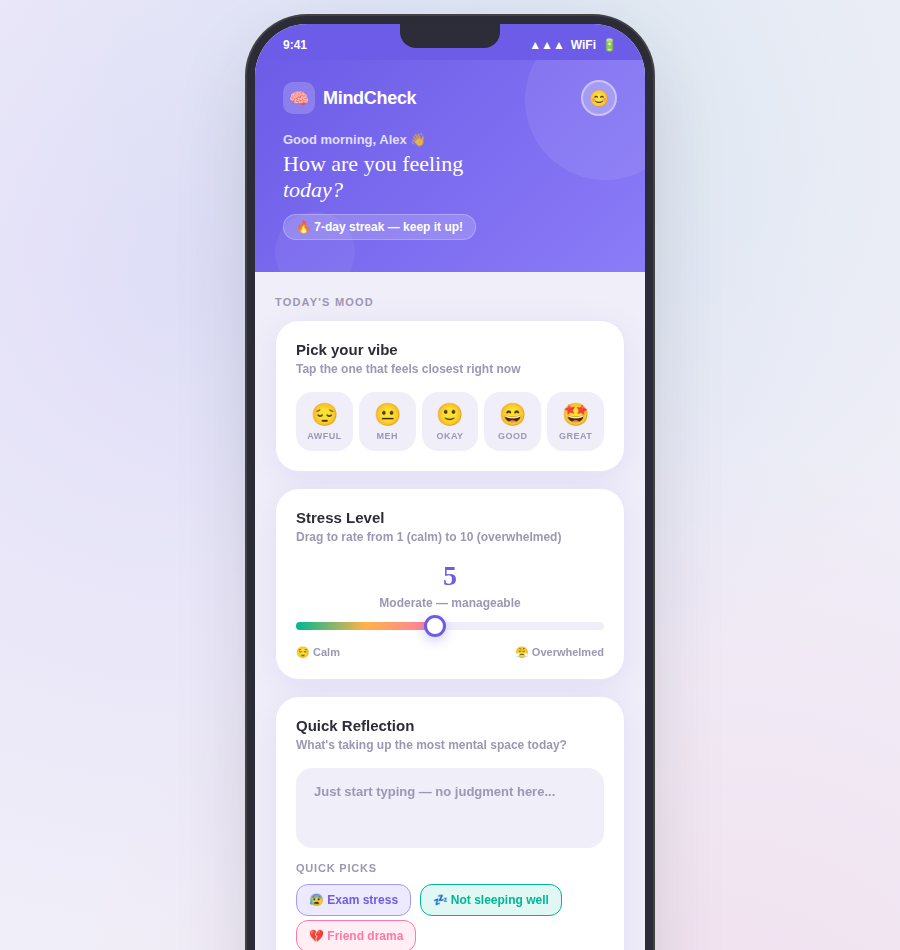
Daily mood check-in
AI-powered coping suggestions
Anonymous counselor alert
Moderated peer support board
Mood pattern tracking
I intentionally removed anything that would make the product feel clinical or overwhelming.
Phase 2 — Technical Architecture
The planned stack includes:
Frontend: React (mobile-first web app)
Backend: Node.js
Database: PostgreSQL
AI Layer: OpenAI API (with curated response library)
The system flow looks like this:
Student Input → Emotion + Stress Level → AI Processing → Coping Suggestions
For pattern tracking, the system stores daily values and visualizes trends over time:
Average Stress (7 days)
∑
𝑖
1 7 𝑆 𝑖 7 Average Stress (7 days)= 7 ∑ i=1 7
S i
This allows students to see emotional patterns across weeks or exam periods.
Phase 3 — School Integration
I designed MindCheck to work within existing school systems instead of replacing them.
The anonymous counselor alert system was one of the most carefully designed features. The goal was:
No forced identification
No overwhelming counselor workload
Simple 5-minute daily dashboard review
This balance was critical to make the system realistic for schools.
Challenges I Faced
- Ethical Design
Designing for teenage mental health requires extreme care.
Key questions included:
How do we prevent misuse?
How do we moderate peer posts effectively?
How do we protect student privacy (FERPA compliance)?
The solution was to:
Keep posts under 150 characters
Require moderator approval
Avoid storing unnecessary personal data
- Avoiding “Therapy App” Fatigue
There are already many mental health apps. I needed to clearly differentiate MindCheck.
The difference is positioning:
Not therapy
Not crisis response
Not social media
Instead, MindCheck lives in the early-intervention zone.
- Balancing AI and Human Support
AI can scale. Counselors cannot.
The system needed to reduce workload, not increase it. That meant:
Counselor Effort ≤ 5 minutes/day Counselor Effort≤5 minutes/day
Design decisions were always filtered through this constraint.
What Makes MindCheck Different
It is school-integrated, not standalone.
It lowers the first barrier to help.
It builds self-awareness before crisis.
It combines AI support with optional human follow-up.
It is affordable for schools ($500–$1,500 per year).
The real innovation is not the technology — it is the frictionless design philosophy.
Personal Reflection
This project taught me that meaningful technology is not about complexity — it is about understanding human hesitation.
A student sitting alone at night feeling anxious does not need a diagnosis. They need a small, safe step.
MindCheck is that step.
It is not trying to solve the entire mental health crisis. It is trying to make it easier for one student to say:
“I don’t feel okay today.”
And that is where real change begins.
Built With
- backend
- javascript
- node.js
- react.js

Log in or sign up for Devpost to join the conversation.