-
-
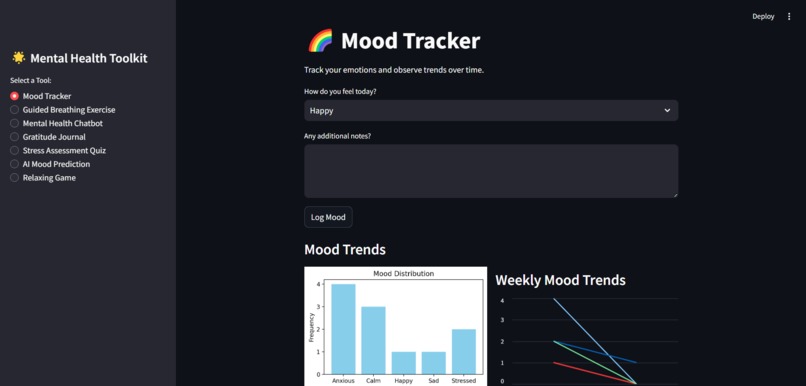
MindCare Landing Page
-
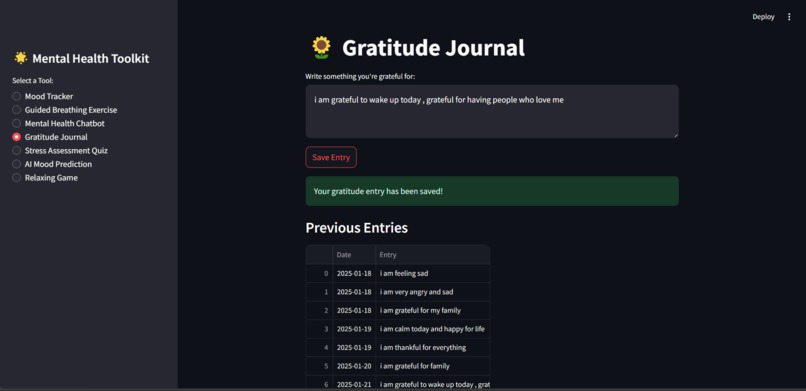
MindCare Gratitude Journal Page


Inspiration Mental health is a crucial aspect of overall well-being, yet it is often overlooked due to stigma and lack of accessible tools. The inspiration for this project came from a desire to create an easy-to-use platform where users can monitor their mental health, engage in mindfulness exercises, and access resources for emotional support. The idea is to leverage technology to make mental health care more accessible, personalized, and user-friendly.
What it does The project, titled MindCare, is a mental health-focused application designed to support users in managing their emotional well-being. Key features include: Daily Mood Tracker: Users can log their daily mood and review trends over time. Stress Analysis Quiz: A simple self-assessment quiz with recommendations for managing stress levels. Guided Breathing and Mindfulness Exercises: Step-by-step breathing and relaxation techniques for stress relief. Gratitude Journal: Users can write down positive thoughts and moments of gratitude. Interactive Chatbot: An empathetic AI bot that provides responses, suggestions, and mental health tips. The app is designed with a clean and intuitive interface, making it accessible to users of all ages.
How we built it The project was developed using the following tools and technologies: Python: The core programming language for backend functionality. GUI Framework: Tkinter was used to build the user-friendly interface. Database: SQLite for storing user data, including mood logs and journal entries. Libraries: Matplotlib: For visualizing mood trends in the form of line graphs. NLTK/Regex: For natural language processing and chatbot functionalities. Sounddevice/PyGame: For audio-based mindfulness exercises.
Development Process: Defined the project requirements and features. Designed the UI layout with a focus on simplicity and usability. Developed and tested individual features, ensuring smooth integration. Refined the project based on testing and user feedback.
Challenges we ran into Integrating the Chatbot: Developing an interactive chatbot that provides empathetic responses was challenging, especially ensuring the bot feels supportive and non-judgmental. Data Visualization: Creating an intuitive way to display mood trends required experimentation with different chart types and designs. User Experience: Ensuring the interface was both functional and visually appealing involved multiple iterations.
Accomplishments that we're proud of Comprehensive Feature Set: Successfully integrating multiple features, from mood tracking to guided exercises, into a cohesive application. Interactive Chatbot: Creating a chatbot that provides meaningful suggestions and empathetic responses was a significant milestone. User-Centric Design: The interface is simple yet effective, making mental health tools accessible to a wide audience. Practical Application: The project addresses a real-world issue and has the potential to make a positive impact.
What we learned Team Collaboration: Working together taught us the importance of clear communication and task delegation. Technical Skills: Gained hands-on experience with Python libraries, GUI development, and data visualization. Mental Health Awareness: Researching mental health topics enhanced our understanding of the challenges people face and the importance of creating supportive tools.
What's next for MindCare We will be converting streamlite interface to HTML and CSS. Mobile App Development: Expand the project into a mobile application using frameworks like Flutter or React Native for broader accessibility. Advanced Chatbot Features: Use machine learning models like GPT or BERT to improve the chatbot’s responses and empathy. Gamification: Introduce rewards for consistent mood tracking and mindfulness practice to encourage user engagement. Community Support: Add a secure forum or chat feature where users can anonymously share their experiences and support each other. Integration with Wearables: Enable integration with fitness trackers to monitor physiological data like heart rate for stress analysis. Cloud Integration: Shift to cloud-based storage for user data to allow multi-device access and better scalability.


Log in or sign up for Devpost to join the conversation.