-
-
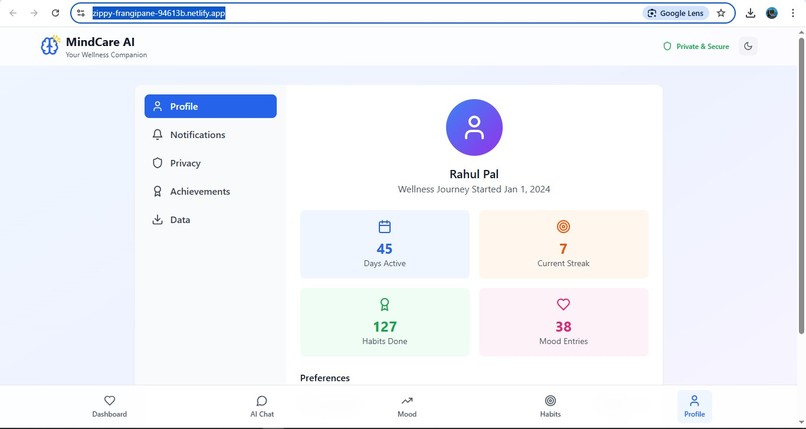
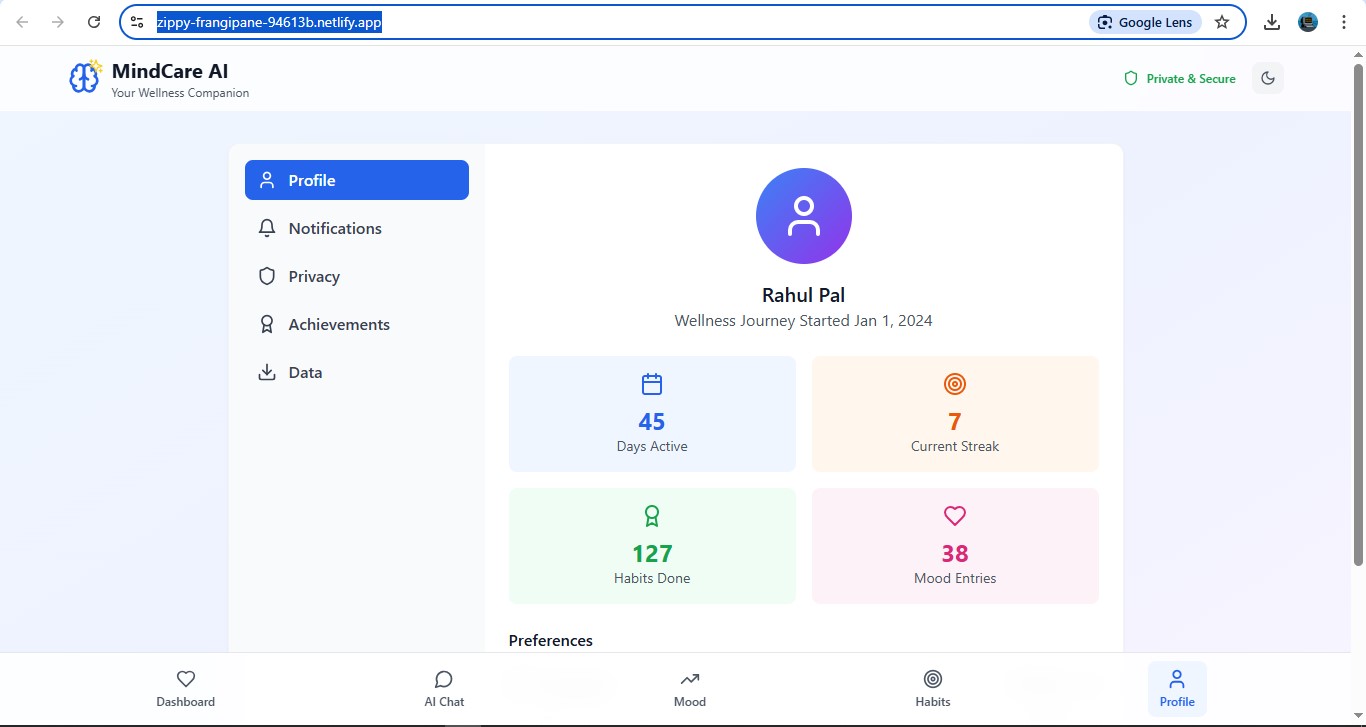
Profile
-
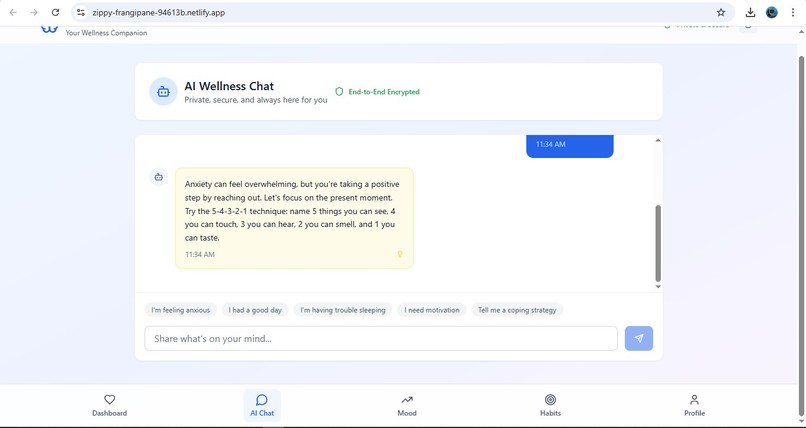
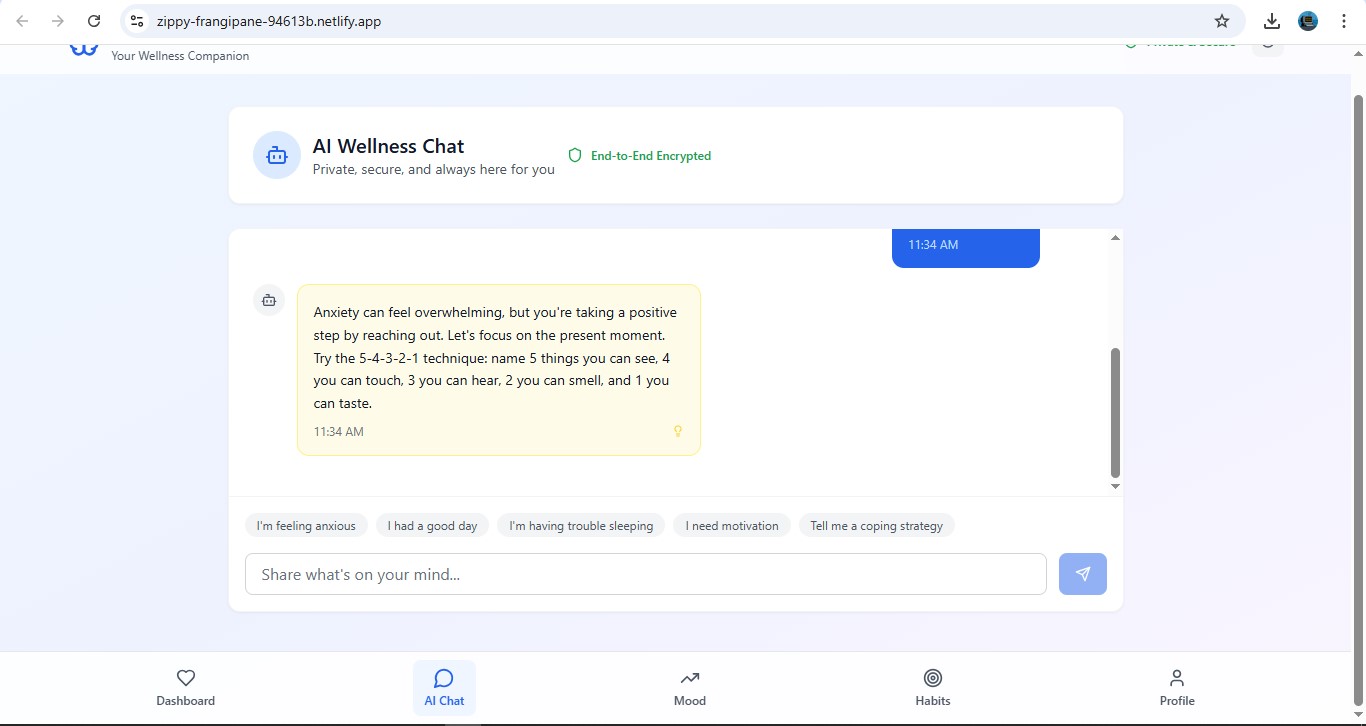
AI Powered Chat
-
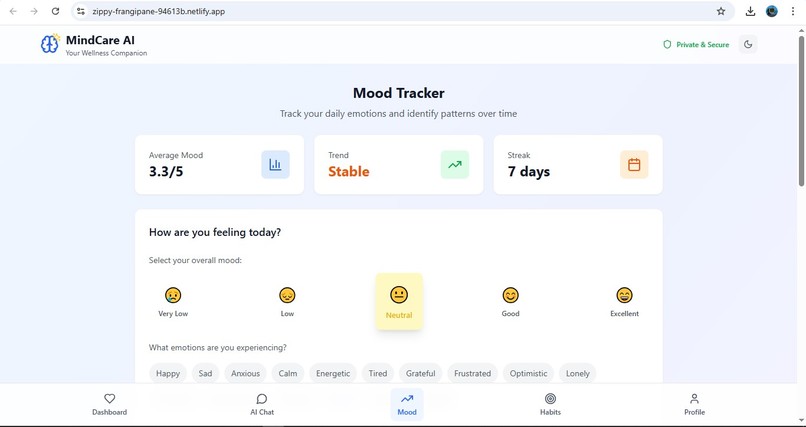
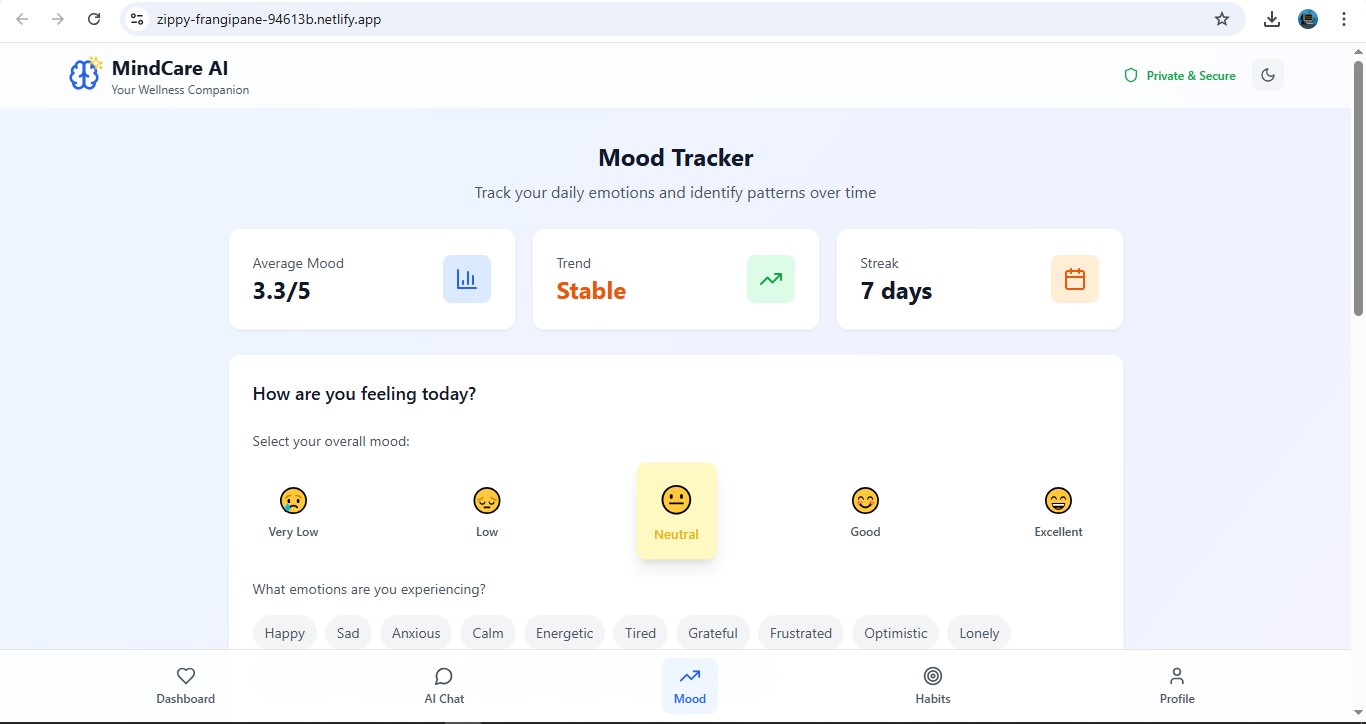
Mood Tracker Page
-
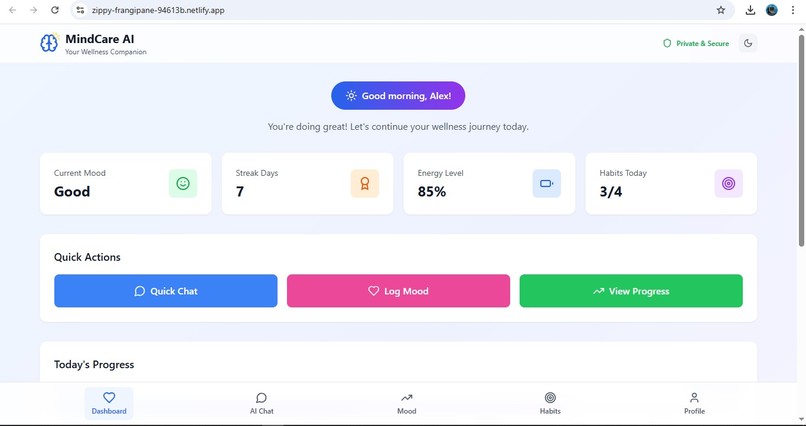
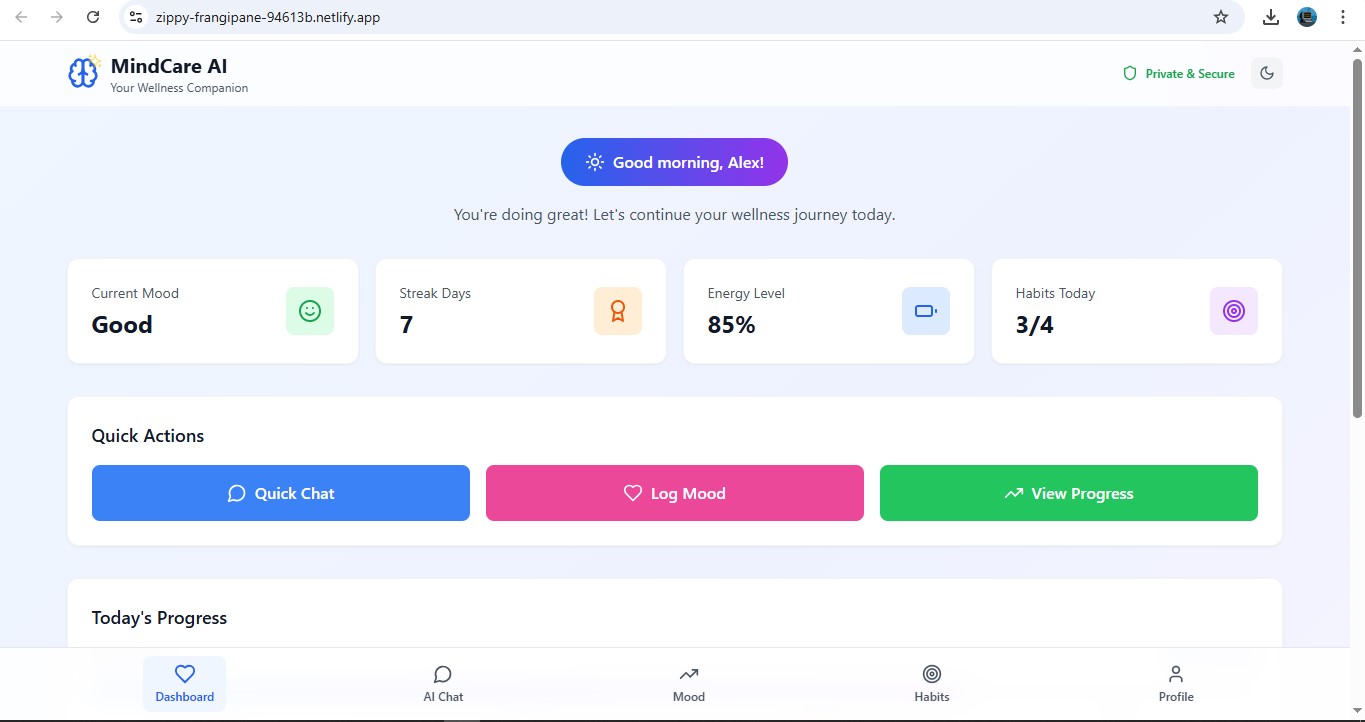
Dashboard Page
Inspiration
The rising global mental health crisis, exacerbated by limited access to affordable, stigma-free, and continuous care, inspired us to build a digital solution that is always available, private, and user-centric. Many individuals struggle with managing their mental wellness due to lack of resources, time, or awareness. We wanted to create a platform that empowers users to take charge of their mental well-being through empathetic AI support and daily self-care tools.
What it does
MindCare AI is an AI-powered mental wellness companion that offers intelligent chat support, comprehensive mood tracking, and gamified habit formation. It enables users to log emotions, receive personalized coping strategies, track their wellness trends, and stay motivated through achievement-based progress—all while ensuring privacy and ease of use.
How we built it
We used a modern tech stack to build MindCare AI:
- Frontend: React 18, TypeScript, Tailwind CSS, Vite for fast and scalable development.
- UI/UX: Custom components, Lucide React icons, responsive design with dark/light mode support.
- AI: Keyword-based response system, sentiment analysis, personalization engine, and context awareness.
- Architecture: Modular component-based structure, React hooks for state management, and local storage for privacy.
- Security: Client-side data processing, encryption-ready structure, and privacy-first controls.
We optimized the app as a Progressive Web App (PWA) to ensure it’s installable on any device and works offline.
Challenges we ran into
- Designing a conversational AI that feels empathetic while staying lightweight and privacy-respecting.
- Balancing personalization with anonymity and local data handling.
- Creating a smooth and engaging UI/UX that motivates consistent use without overwhelming users.
- Ensuring compatibility across various devices and screen sizes while maintaining performance.
Accomplishments that we're proud of
- Built a fully functional AI wellness companion with real-time mood tracking and gamification.
- Implemented a privacy-first approach with no server-side data storage.
- Designed a clean, accessible interface that adapts to user preferences.
- Created a scalable, modular frontend architecture ready for future expansion.
- Successfully launched a responsive PWA with positive early user feedback.
What we learned
- The importance of context-awareness and personalization in user mental health tools.
- How to implement sentiment analysis and emotion recognition effectively in frontend environments.
- Balancing usability with privacy is both challenging and critical.
- Gamification can play a powerful role in encouraging positive mental health habits.
- Building inclusive technology requires continuous feedback and iteration.
What's next for MindCare AI - Mental Wellness Companion
- Integrate End-to-End Encryption: Strengthen data security further with complete encryption.
- Advanced AI Support: Introduce more nuanced emotional analysis and deeper mental health models.
- Voice Interaction: Add voice-based AI support for a more natural, accessible experience.
- Community Features: Optional peer support or moderated forums while preserving anonymity.
- Professional Integration: Connect users with licensed therapists or mental health coaches for additional help.
- Multi-language Support: Broaden accessibility across diverse user bases globally.
Built with ❤️ for mental wellness and accessibility
Built With
- lucide
- react
- tailwindcss
- typescript
- vite

Log in or sign up for Devpost to join the conversation.