-
-
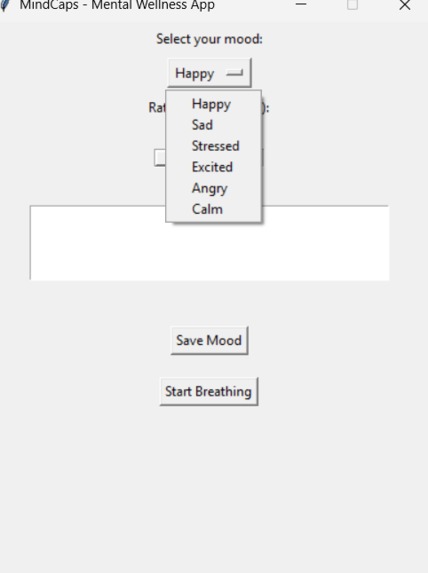
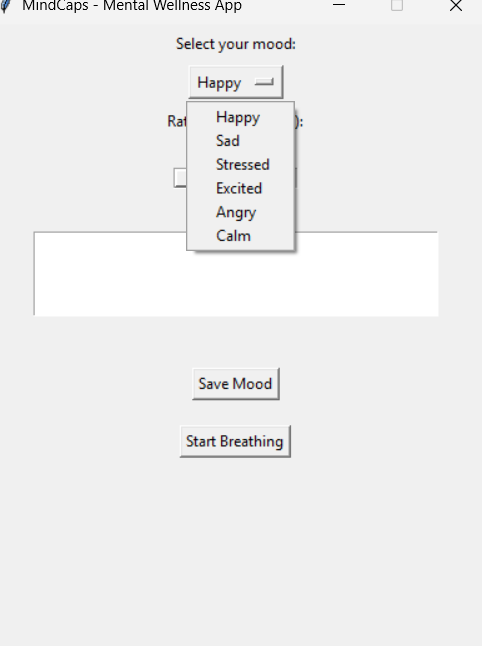
"Mood selection interface with emotional options like Happy, Sad, Stressed, Excited, Angry, and Calm.”
-
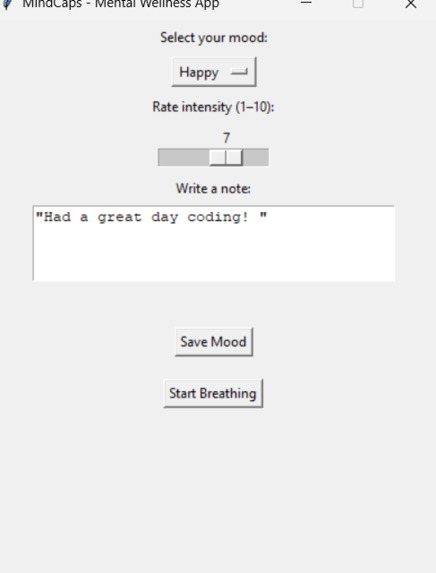
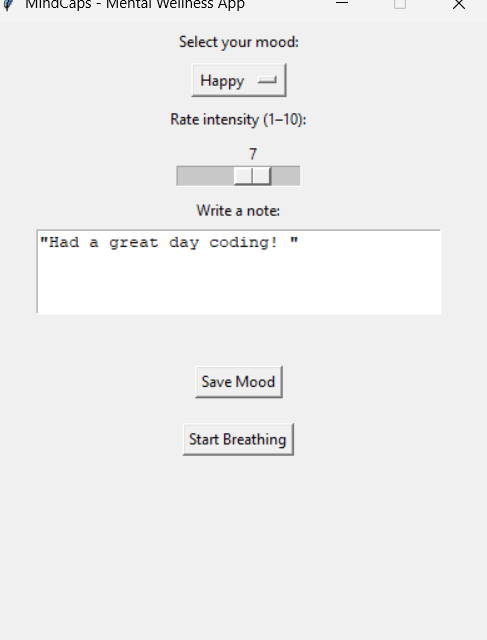
Mood entry screen where user selects emotion, rates intensity, and reflects through a personal note
-
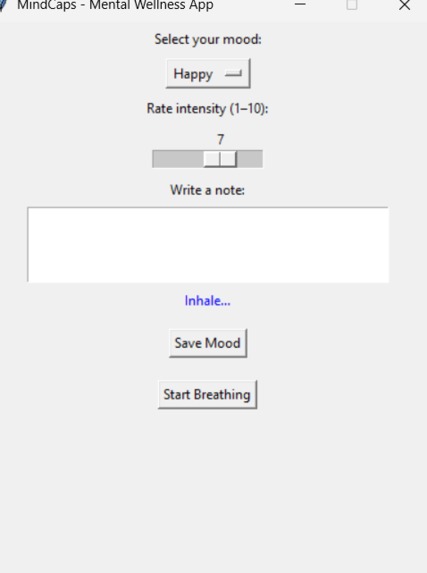
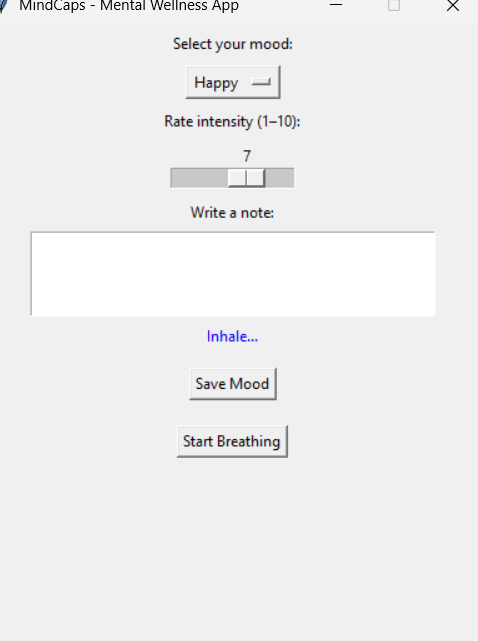
"Guided breathing exercise with Inhale, Hold, and Exhale steps to promote calmness.”
-
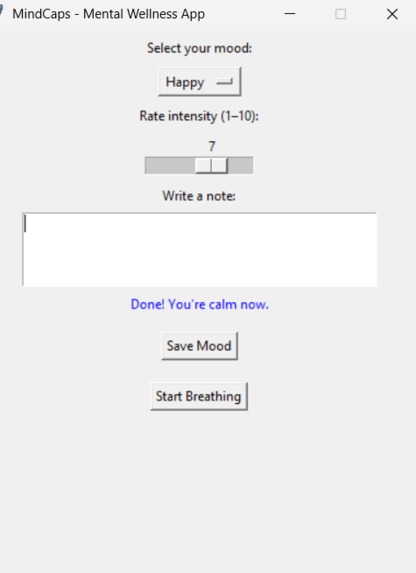
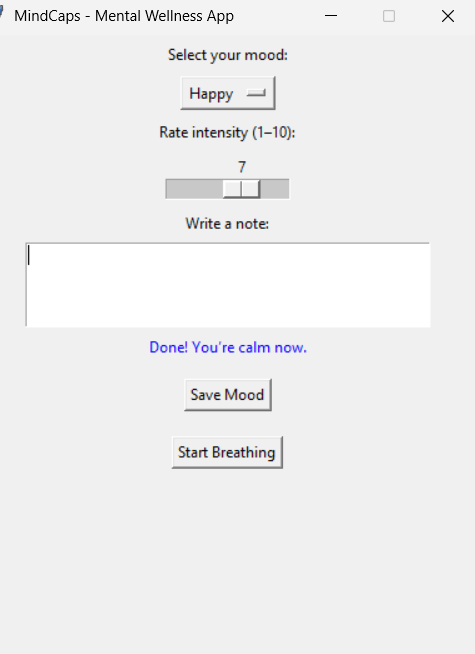
Breathing exercise completed — user guided to a calm emotional state.”
Mental health is often overlooked, especially for students and professionals under pressure.
I wanted to build a small, friendly desktop app that encourages users to reflect on their emotions and take short mindful breaks. That’s how MindCaps was born — to help users track their moods and breathe better every day.
MindCaps is a simple, offline mental wellness desktop app built in Python.
It helps users track their daily moods, write short reflections, and practice guided breathing exercises to reduce stress and improve focus.
Here’s what you can do in the app:
Select your current mood (Happy, Stressed, Sad, etc.)
Rate its intensity from 1–10 using a slider
Add a note or thought about your day
Get an instant motivational quote after saving
Access your mood history and export it to CSV
Practice a 4-4-4 breathing session when you need to calm down
All data is saved locally in an SQLite database, so your personal reflections stay private.
We built MindCaps completely in Python using only standard libraries for simplicity and portability:
Tkinter – for building the graphical user interface
SQLite – for storing user mood entries
Threading – for managing the breathing timer without freezing the UI
CSV module – to export mood history
Random module – for motivational quotes
The project is designed to run offline on any computer that has Python installed.
At first, I struggled to design a clean and organized interface with Tkinter.
Getting the layout to look nice and keeping it responsive took some time. The breathing exercise was also tricky — I had to learn how to run timers in a separate thread so the app stayed active. Another challenge was keeping everything lightweight and offline, so users can use it without worrying about privacy or setup.
The biggest accomplishment was seeing the app actually come together and work end-to-end.
It feels great to have built something that’s not just technical, but emotionally helpful too. I’m proud of how simple it is — open, click, breathe, and reflect. Also, it’s 100% offline and open-source, so anyone can use or improve it.
This project taught me how to:
Design GUIs with Tkinter
Use SQLite for small local databases
Manage threading safely in Python
Think about user experience from a wellness perspective
But more than that, it reminded me how small, mindful habits can make a big difference — both in coding and in life.
I have lots of ideas for the next version:
Adding charts to show mood trends over time
Sending gentle reminders or affirmations
Using AI to analyze notes and suggest ways to improve mood
Making a web version using Streamlit so anyone can use it easily
MindCaps started as a hackathon idea, but I want to turn it into a real tool that helps people slow down, breathe, and reflect — one day at a time. ❤️


Log in or sign up for Devpost to join the conversation.