-
-
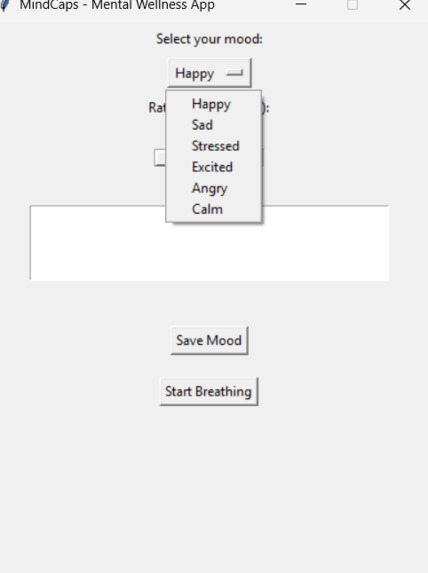
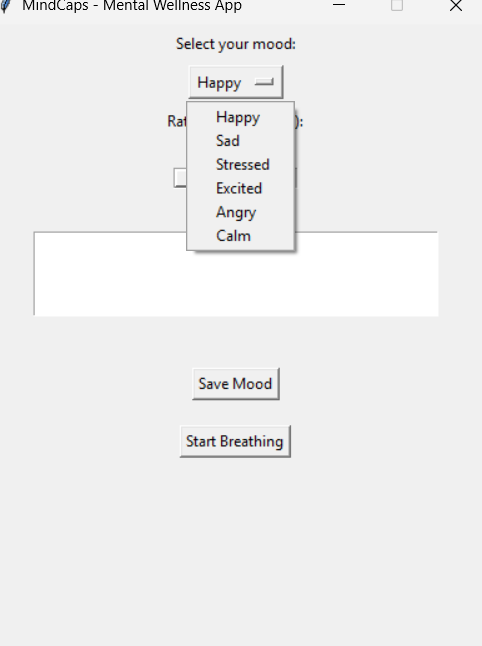
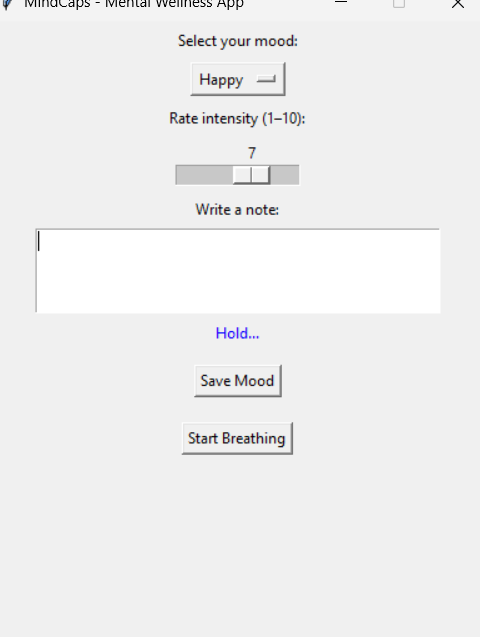
MindCaps Mood Tracker Interface – Users can select their current mood, rate their feelings, and start guided breathing .
-
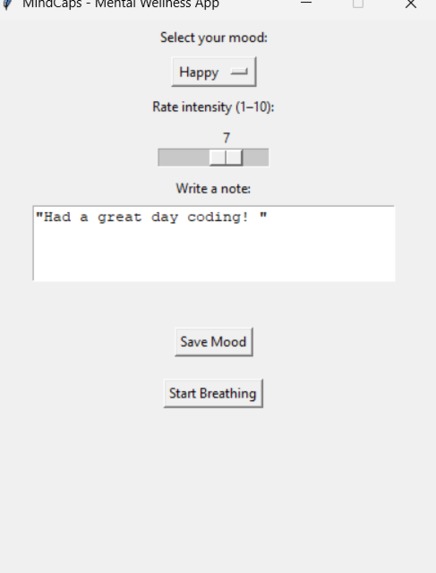
This screen allows users to record their emotional state quickly and intuitively. Users can select their mood from options like Happy, Sad.
-
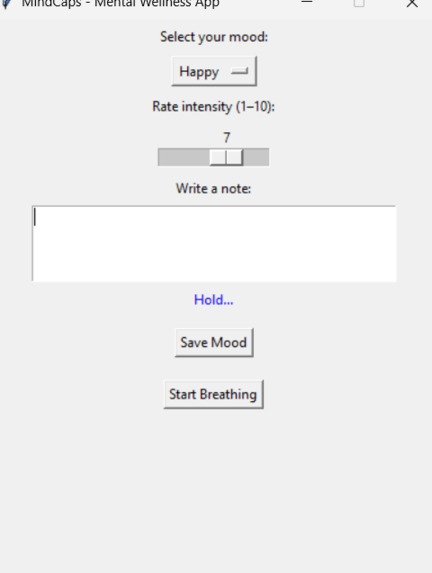
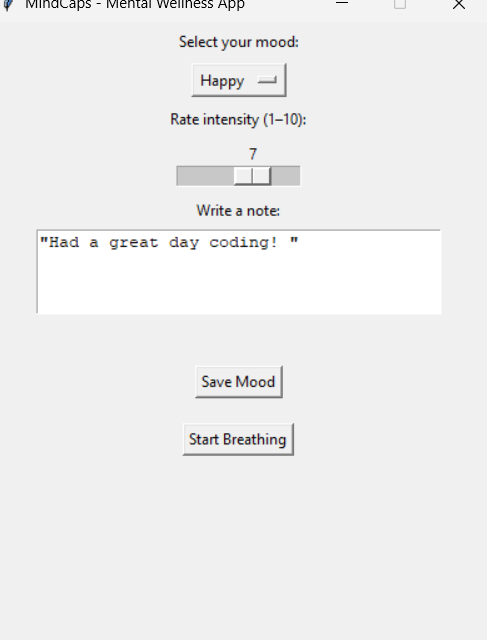
Users can select a mood, rate intensity on a scale of 1–10
-
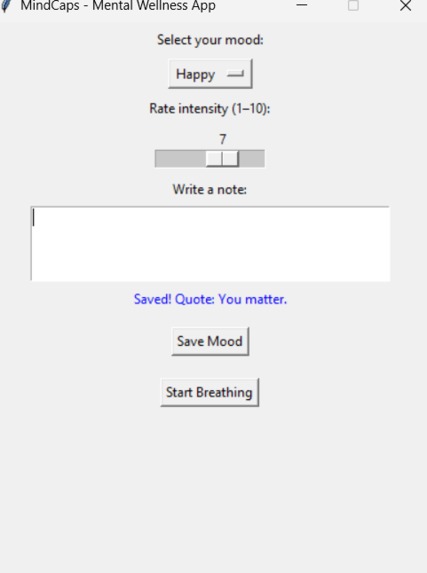
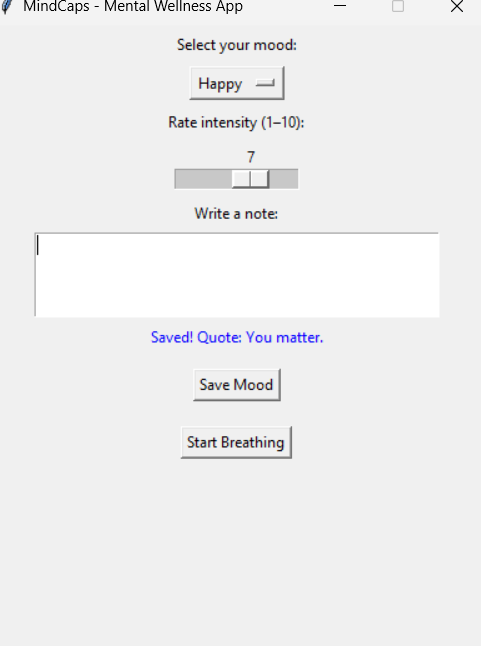
"Tracking moods, saving thoughts, and reminding yourself — You matter. "
Inspiration
In today’s busy world, mental health often gets ignored. Students and professionals struggle with stress, anxiety, and burnout — and they rarely track how they feel each day. I wanted to create a simple tool that helps people understand their emotions and improve their well-being using technology. That’s how MindCaps was born.
What it does
MindCaps is an AI-powered mental wellness app that automatically tracks users’ moods based on their text inputs and provides personalized wellness suggestions. It allows users to maintain a digital journal, view emotional trends, and receive AI-driven insights — helping them stay balanced, focused, and productive
How we built it
I built the project using Python and Tkinter for the interface. For emotion detection, I used TextBlob and NLTK to perform sentiment analysis. The mood data is stored locally using SQLite, and visualizations are generated through Matplotlib.
This setup allowed me to combine AI text processing with an easy-to-use GUI that runs on any computer.
Challenges we ran into
Designing a clean, simple GUI in Tkinter
Balancing accuracy of emotion detection with lightweight performance
Managing time while implementing multiple features (tracking, visualization, suggestions)
Accomplishments that we're proud of
💡 Successfully built a working AI-powered mood tracker using Python and NLP.
Created a system that can analyze emotions from text and give helpful suggestions — without any external API.
Designed a simple, privacy-friendly desktop interface with Tkinter that anyone can use.
Integrated automation features that suggest wellness activities based on mood.
Added data visualization to show mood progress and trends over time.
Learned and implemented multiple technologies (NLP, GUI, database, visualization) in a single weekend!
Built something that can genuinely help people improve their mental well-being through technology.
What we learned
Fundamentals of Natural Language Processing (NLP) and sentiment analysis
How to connect backend logic with GUI efficiently
Importance of clear UX design for emotional health apps
How small automation features can improve users’ mental well-being
What's next for MindCaps – AI Mental Wellness Assistant
Add voice-based mood detection
Build a mobile/web version with a cloud database
Integrate AI chatbot for personalized emotional support
Use data visualization dashboards for long-term insights

Log in or sign up for Devpost to join the conversation.