Inspiration
As someone who’s navigated the stress of young adulthood—career pressure, loneliness, late-night anxiety—I saw a gap: accessible, private mental health support that’s available 24/7, not just during therapist office hours. Traditional care is vital but often out of reach for busy 18-35 year olds, so I set out to build a tool that meets people where they are: on their phones, in their moments of need.
What it does
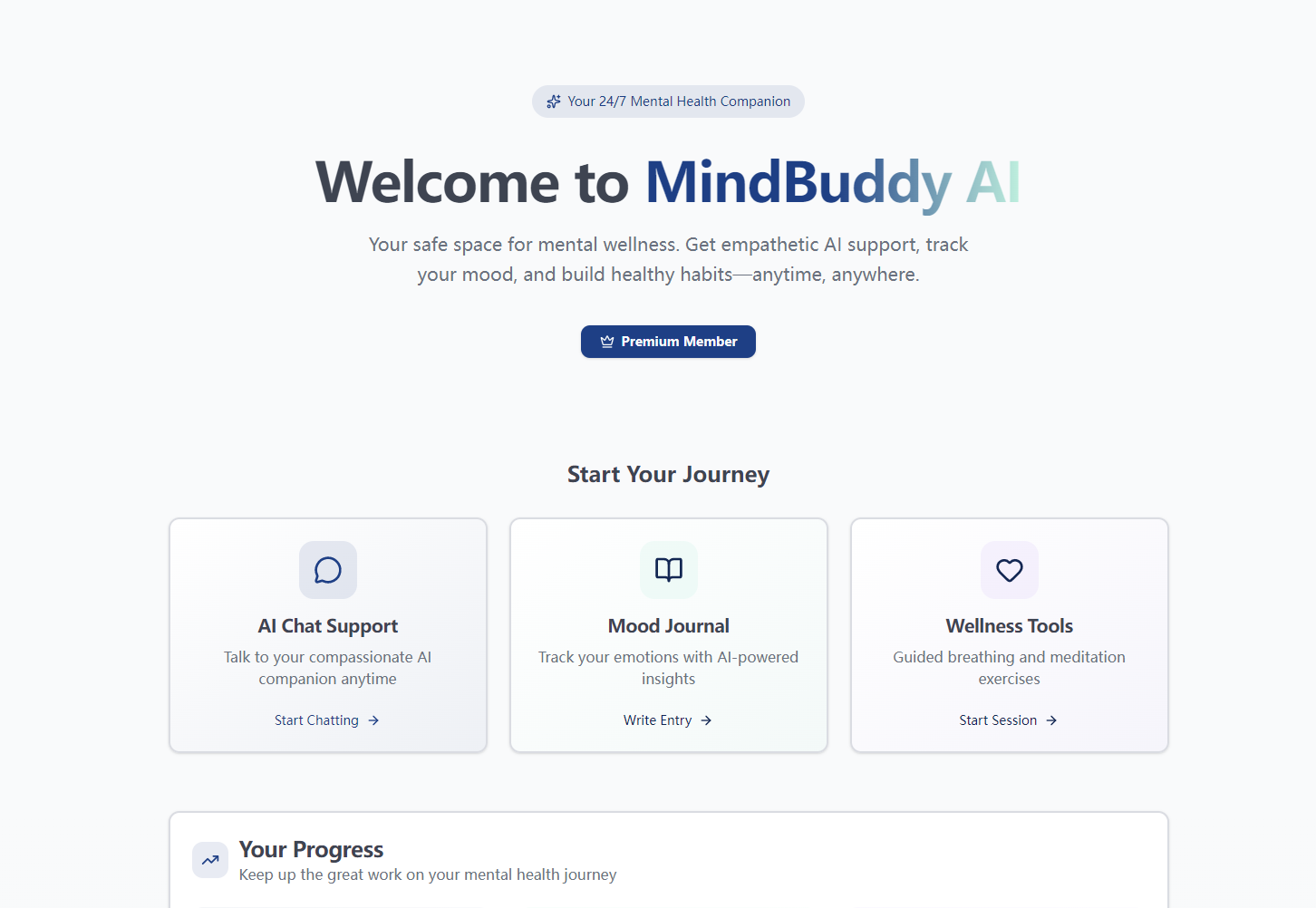
MindBuddy AI is a holistic mental health companion offering empathetic AI chat (rooted in CBT principles), mood journaling with AI-driven emotion analysis, guided breathing/meditation tools, and automated weekly progress reports. It includes crisis detection that instantly connects users to hotlines, plus tiered subscriptions (Free/Premium) to make support scalable.
How we built it
We started with core user needs: privacy, accessibility, and empathy. The frontend (React/TypeScript) prioritizes calm, minimal UI; the backend (Node.js/Express) handles secure data storage (MongoDB) and end-to-end encryption (AWS). We integrated OpenAI API for natural, empathetic chat and NLP-driven journal analysis, Twilio for crisis hotline routing, and Stripe for subscription management. Chart.js powers visual mood trend tracking, and we built custom logic for weekly report generation and crisis pattern detection.
Challenges we ran into
The biggest hurdle was balancing AI empathy with clinical safety—ensuring the chat felt human while rigorously detecting crisis language (self-harm, suicidal ideation) with zero delay. We also struggled with tiered feature limits (Free vs. Premium) that felt fair without frustrating users, and optimizing NLP to accurately identify nuanced emotions in journal entries (e.g., distinguishing "stress" from "overwhelm").
Accomplishments that we're proud of
We built a crisis detection system that triggers life-saving support instantly, an AI chat that adheres to CBT principles without feeling robotic, and a journal analysis tool that turns raw emotions into actionable insights. We also created a subscription model that keeps basic support free while making premium features (unlimited access, therapist sharing) affordable at $14.99/month.
What we learned
Mental health tech demands humility—AI can’t replace human care, but it can bridge gaps. We learned to prioritize clinical safety over "polish," iterate based on real user feedback (e.g., simplifying journal entry flow), and design for privacy first (end-to-end encryption non-negotiable). We also discovered how critical it is to test crisis detection with diverse language patterns to avoid missing subtle distress signals.
What's next for this project
First, we’ll expand the wellness library with more guided exercises (for sleep, burnout) tailored to user feedback. We’re working on refining the AI’s emotion analysis to capture more nuance (e.g., "grief" vs. "sadness") and adding secure therapist portal integration for seamless report sharing. Long-term, we aim to partner with mental health organizations to subsidize Premium access for low-income users, making comprehensive support accessible to more people. We’re also exploring mild UX tweaks (e.g., shorter meditation previews for Free users) to improve onboarding without compromising core functionality.

Log in or sign up for Devpost to join the conversation.