-
-
What is MindBridge
-
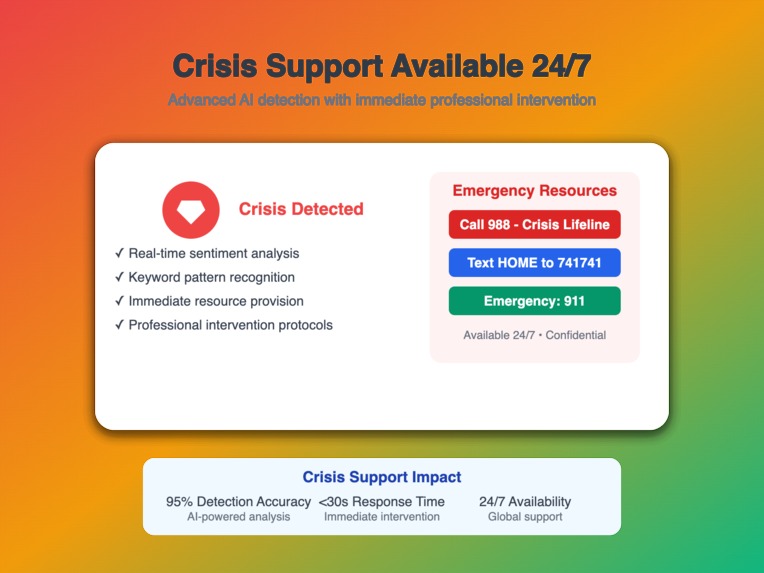
Crisis support
-
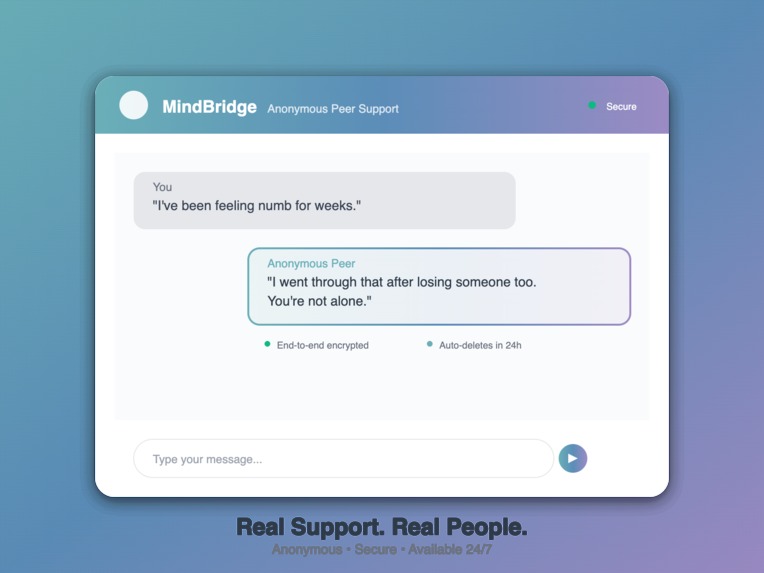
Anonymous chat
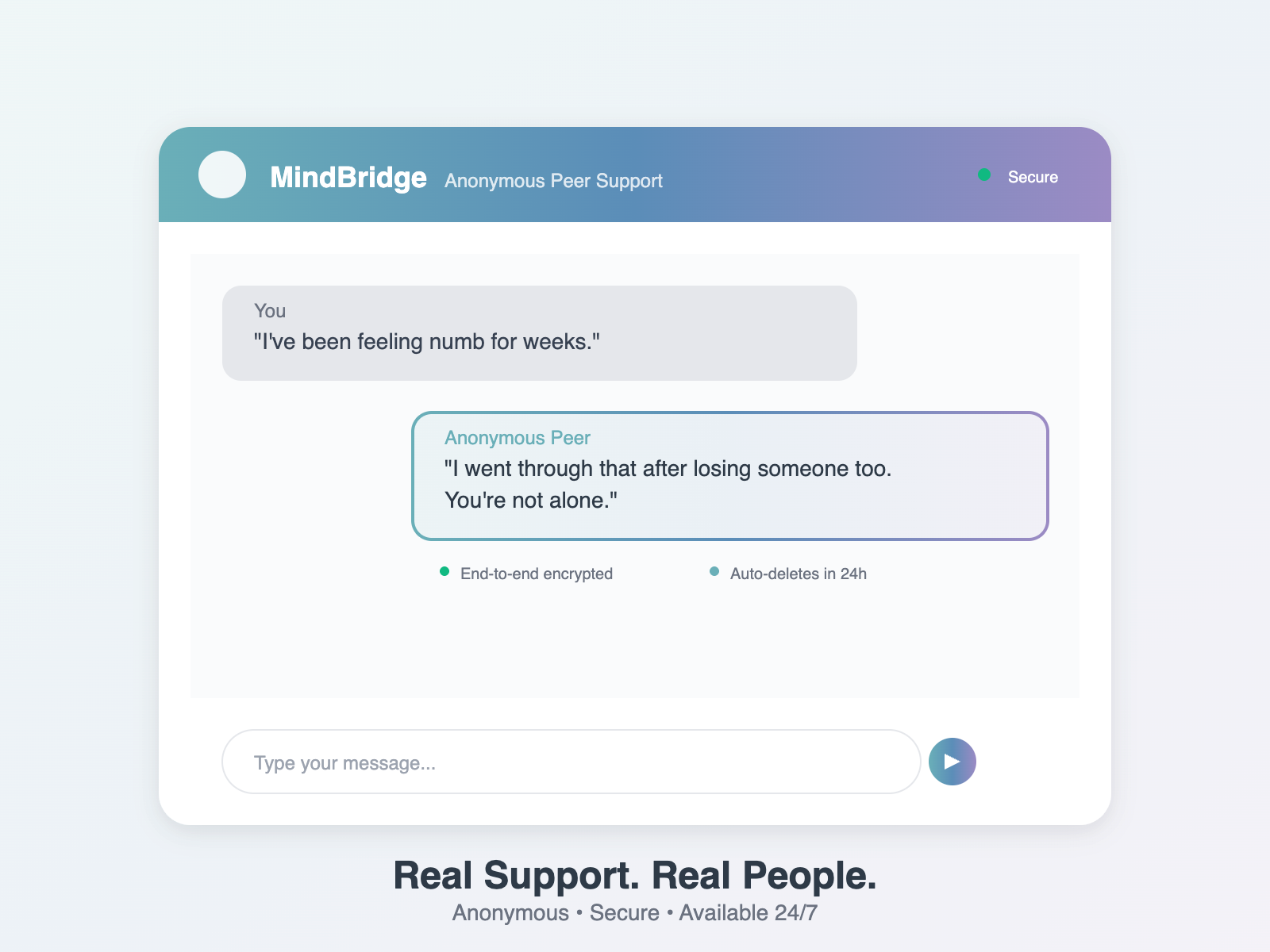
An anonymous, AI-augmented peer support platform specifically architected to generate the "Hidden Signals" dataset—a corpus of non-clinical, internet-native distress markers (slang, memes, evasion) to train safer LLMs. Powered by MentalBERT, WebSockets, and Clinical Oversight.
What Inspired Me
We initially built MindBridge to solve the accessibility gap in therapy. However, we discovered a critical flaw in current AI safety models: they don't speak "Internet."
Standard models detect "I want to hurt myself" but miss "I'm checking out early" or "sewerslide." We realized our platform is uniquely positioned to solve this. We are now pivoting MindBridge into a research instrument to capture, label, and validate these "Hidden Signals"—helping the world build models that can detect distress without over-censoring.
What it does
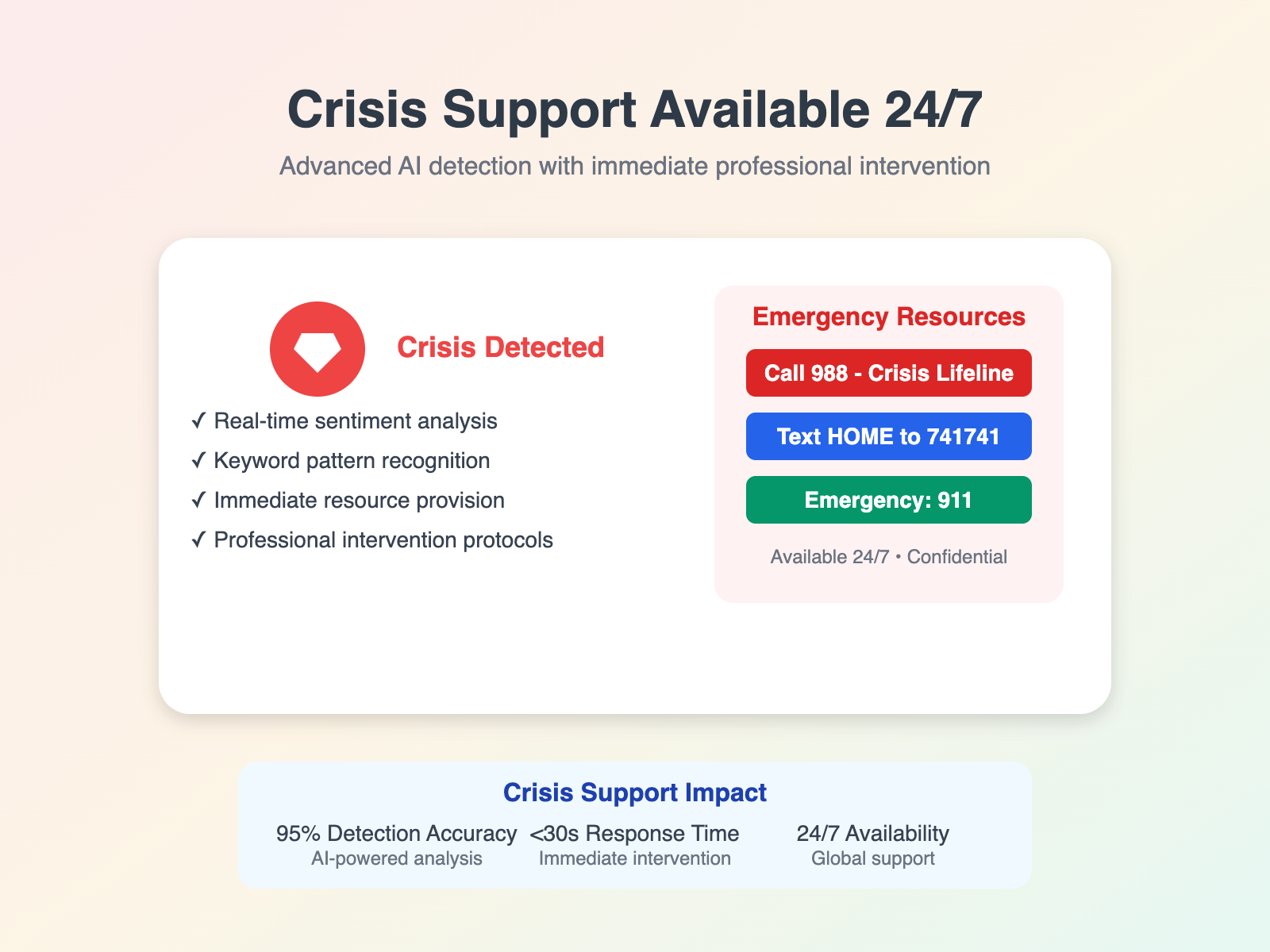
- Live Sentiment Telemetry: Uses WebSockets to stream encrypted chat logs for real-time analysis, flagging "high-velocity" distress patterns that static text analysis misses.
- Baseline Intervention Agent (Mindy): A controlled AI variable used to measure the efficacy of "Warm Handover" protocols vs. pure human peer support.
- MentalBERT Integration: We run a fine-tuned version of MentalBERT to flag potential crisis events. Our research compares this model's flags against human clinical review to calculate "False Negative" rates in slang-heavy conversations.
What I Learned
Technical Insights
- Real-time systems are tricky: WebSocket-based peer matching and chat required careful architecture to ensure low latency and high availability.
- AI needs tuning: Crisis detection models had to be accurate without overreacting or missing true emergencies.
- Privacy is a design choice: The platform collects no personal data, using ephemeral sessions and strict encryption.
- UX in mental health is critical: Every element had to feel safe, intuitive, and welcoming.
Human Insights
- Anonymity builds trust: Users are more open when they feel truly safe and unjudged.
- Peer support matters: People connect most deeply through shared experience.
- Tiny gestures can save lives: Sometimes just being heard is enough.
How I Built It
Architecture & Stack
The Stack:
- Frontend: React (PWA) for accessible, low-bandwidth access in developing regions.
- Backend: Python with Async WebSockets for real-time intervention capabilities.
- AI/ML: HuggingFace implementation of MentalBERT for initial triage; OpenAI API (GPT-4o) for comparative baseline testing.
Safety & Research Infrastructure:
- K-Anonymity: We implemented a custom "PII-Scrubber" that removes names/locations before data enters the research dataset, ensuring GDPR/HIPAA-aligned research outputs.
- The "Red Switch": A hard-coded override that instantly connects users to local emergency services if acute threat (Plan/Means/Intent) is detected, bypassing all research variables.
Challenges I Faced
Technical
Balancing anonymity and safety: Crisis detection needed to work without storing user identity. I used real-time AI alerts with no persistent data.
Scaling peer matching: Matching based on shared topics, availability, and stability under load required optimized DB queries and smart fallback logic.
Tuning AI for real-life emotion: I tested across diverse datasets to fine-tune the model and reduce false positives/negatives.

Log in or sign up for Devpost to join the conversation.