-
-
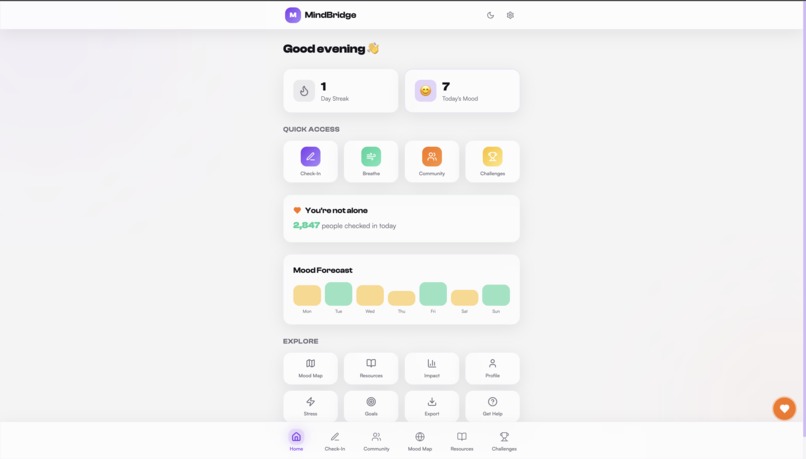
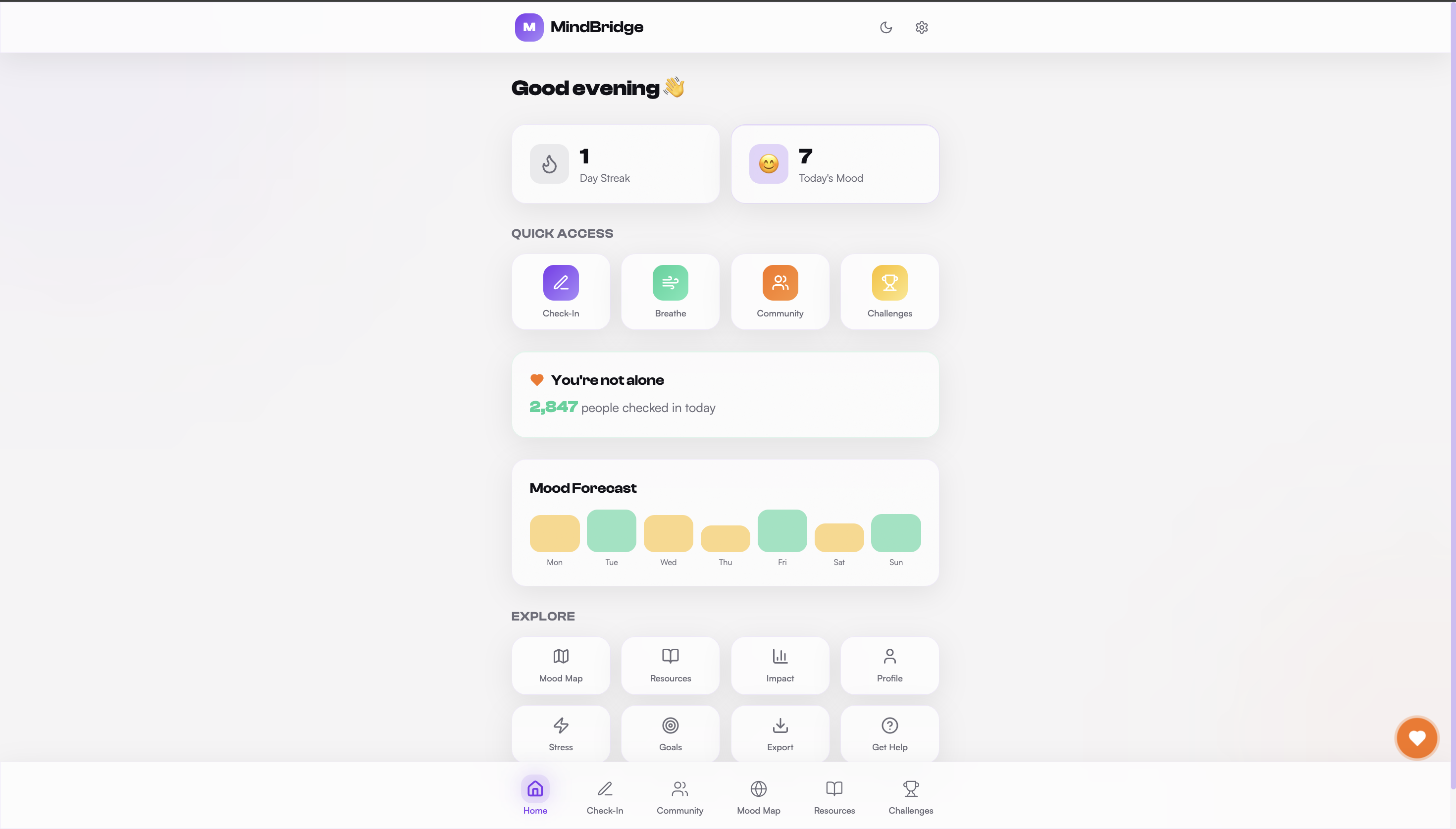
Home Dashboard
-
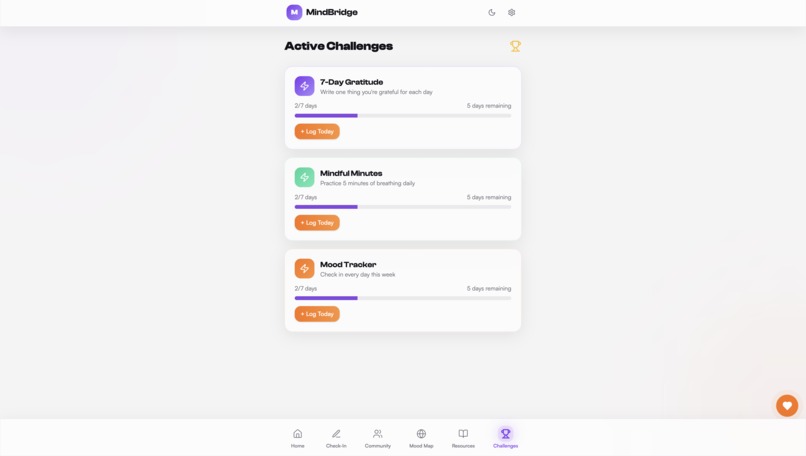
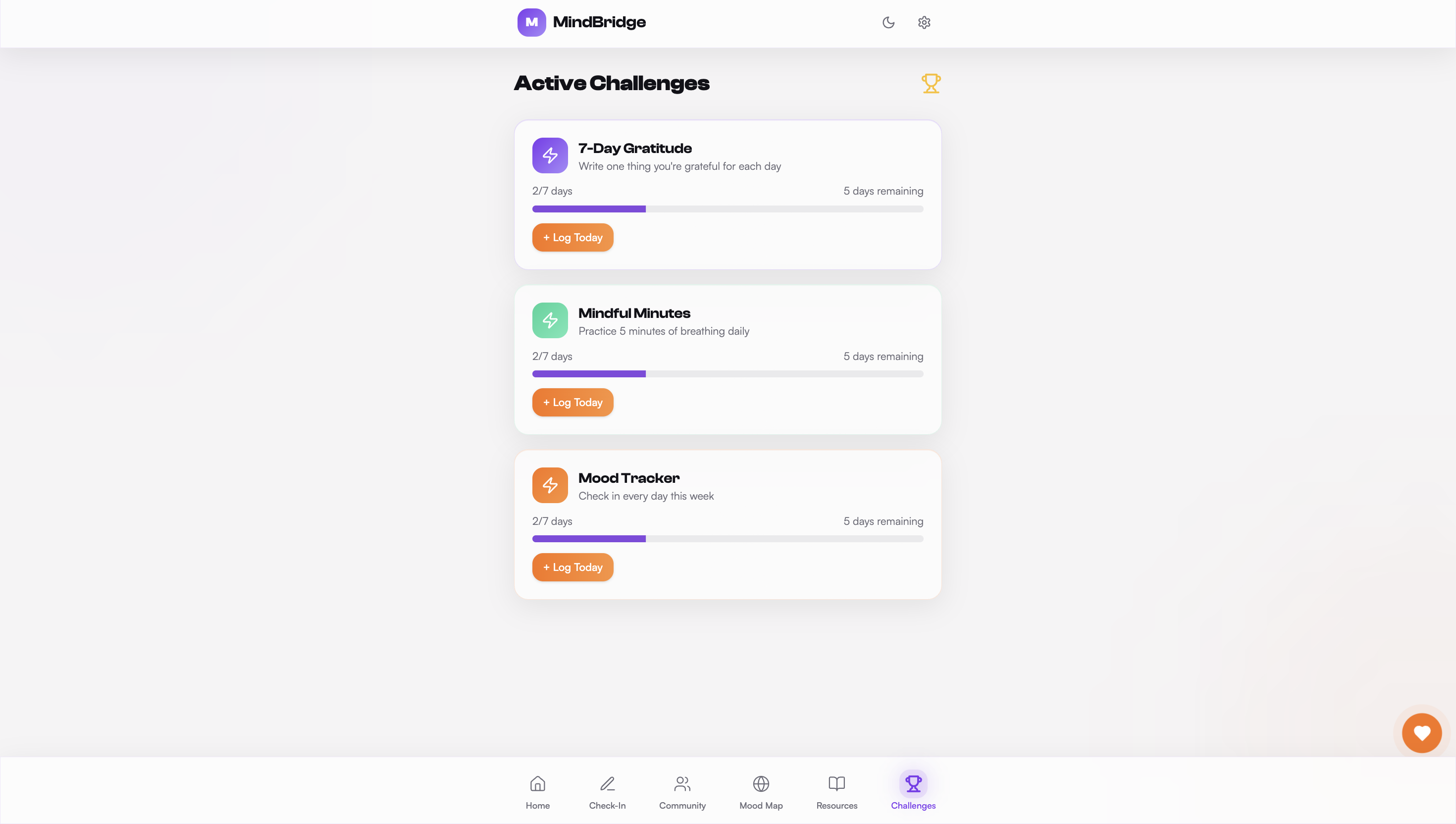
Weekly Challenges
-
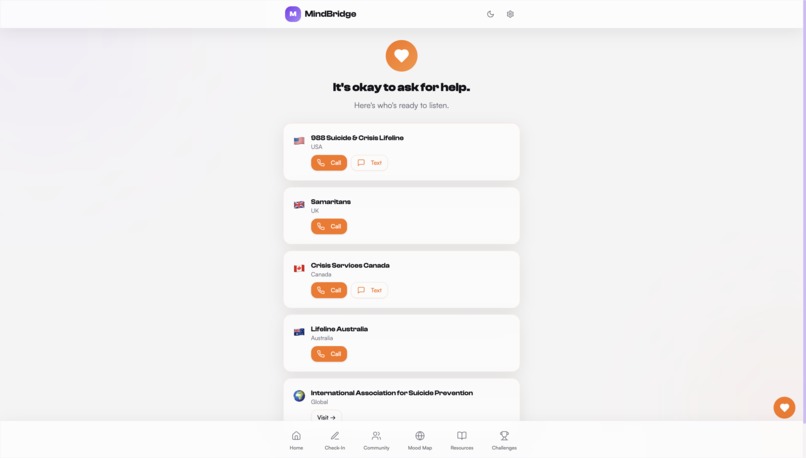
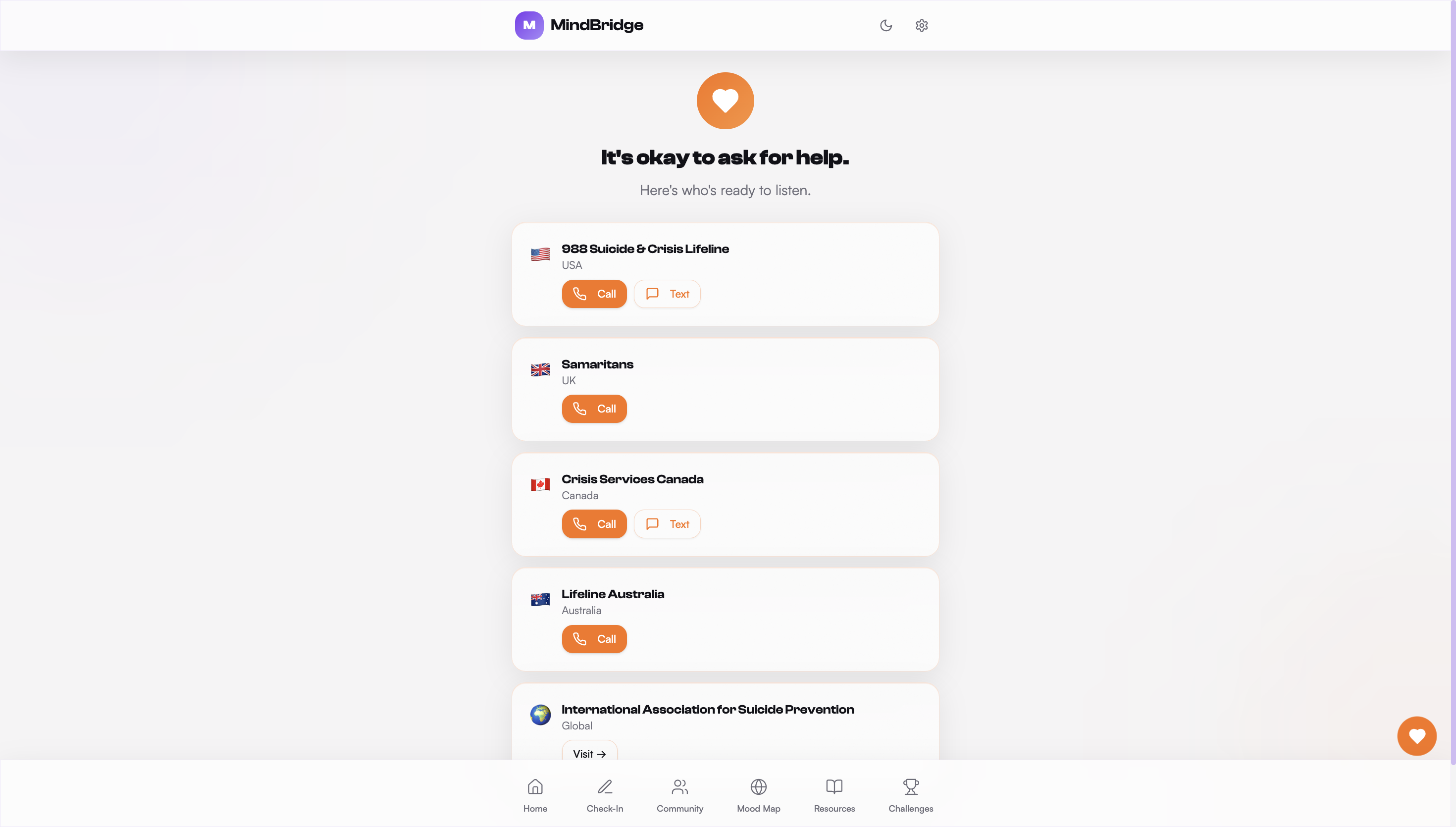
Crisis Hotlines
-
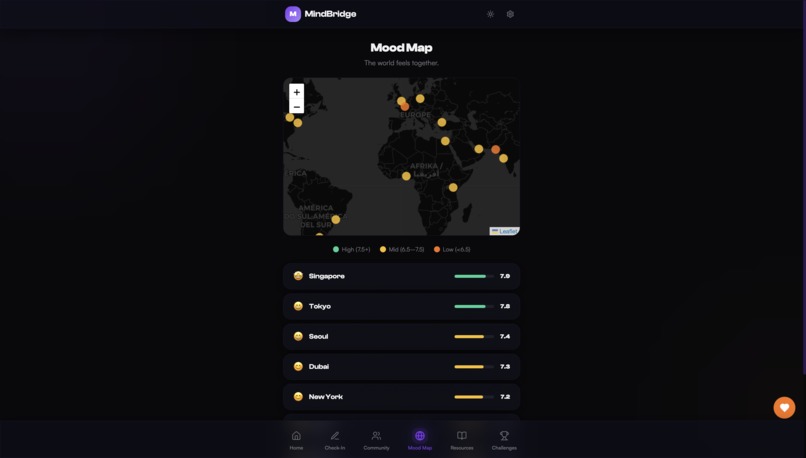
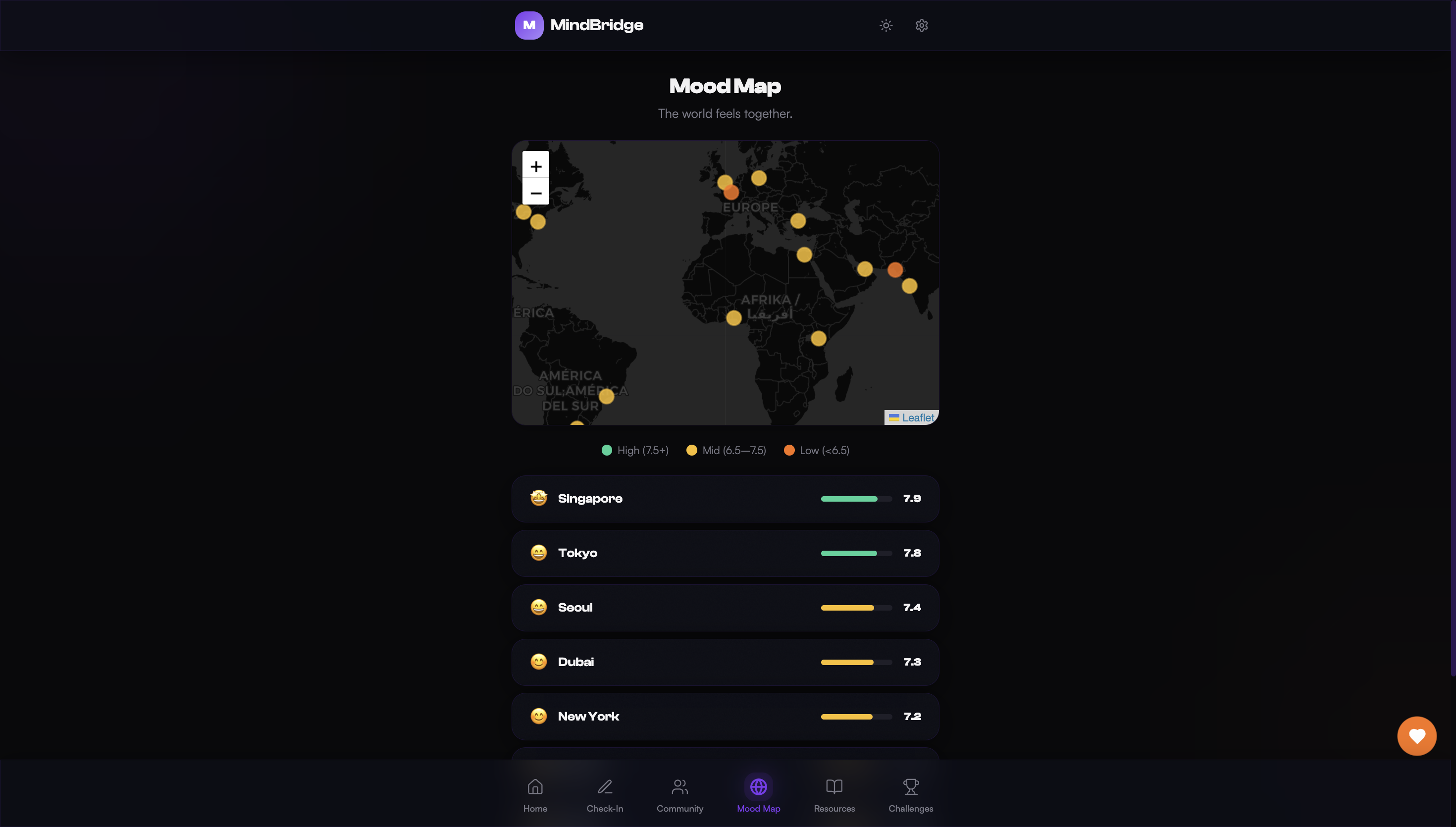
Global Mood Map
-
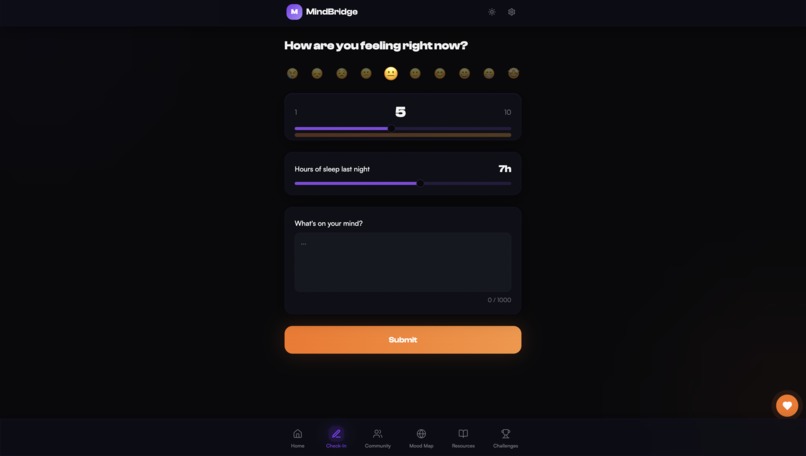
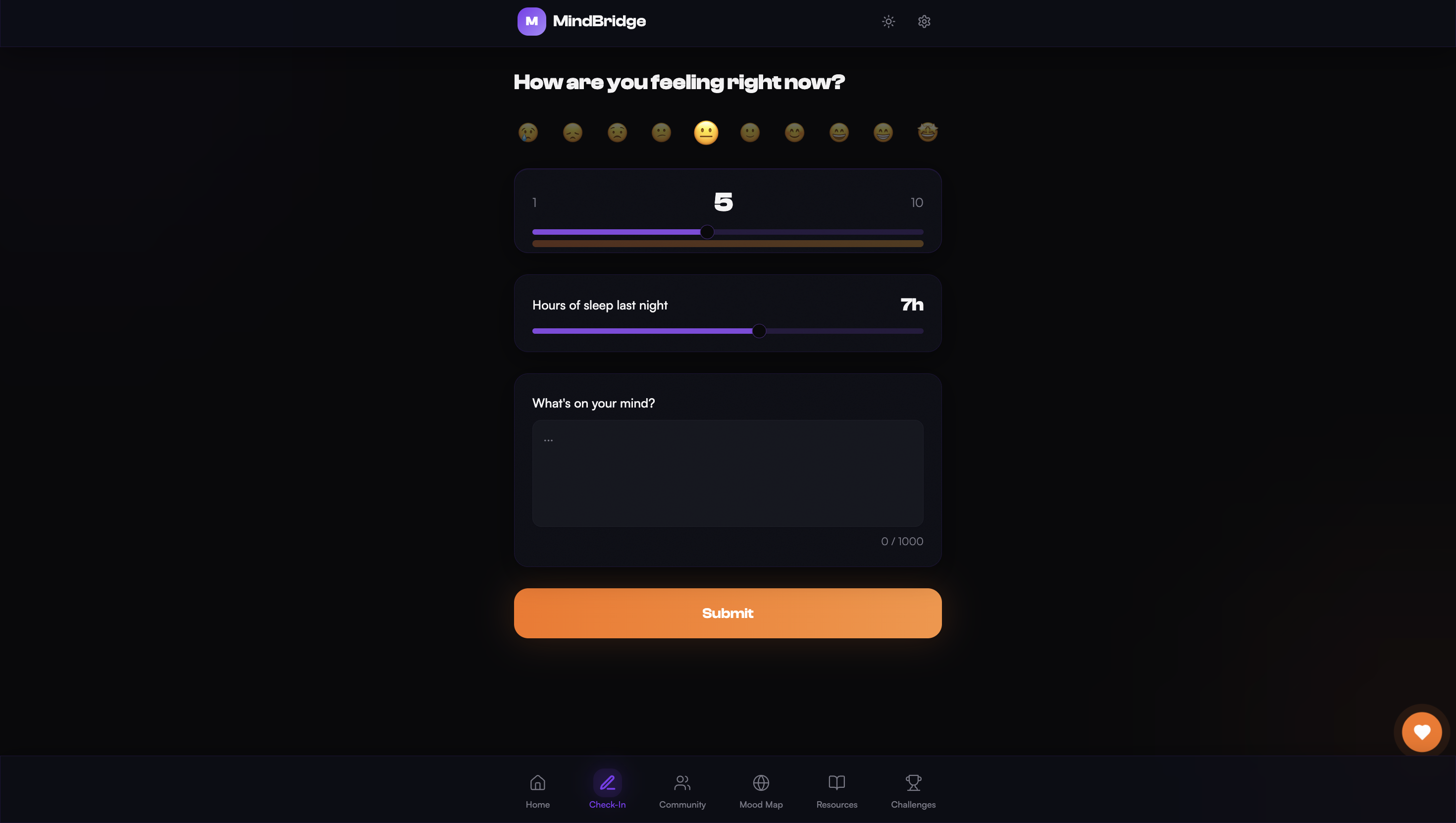
Mood Check-In
-
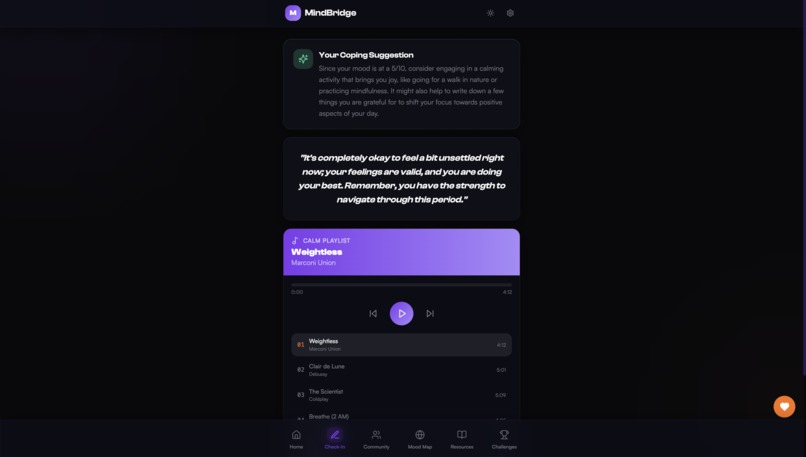
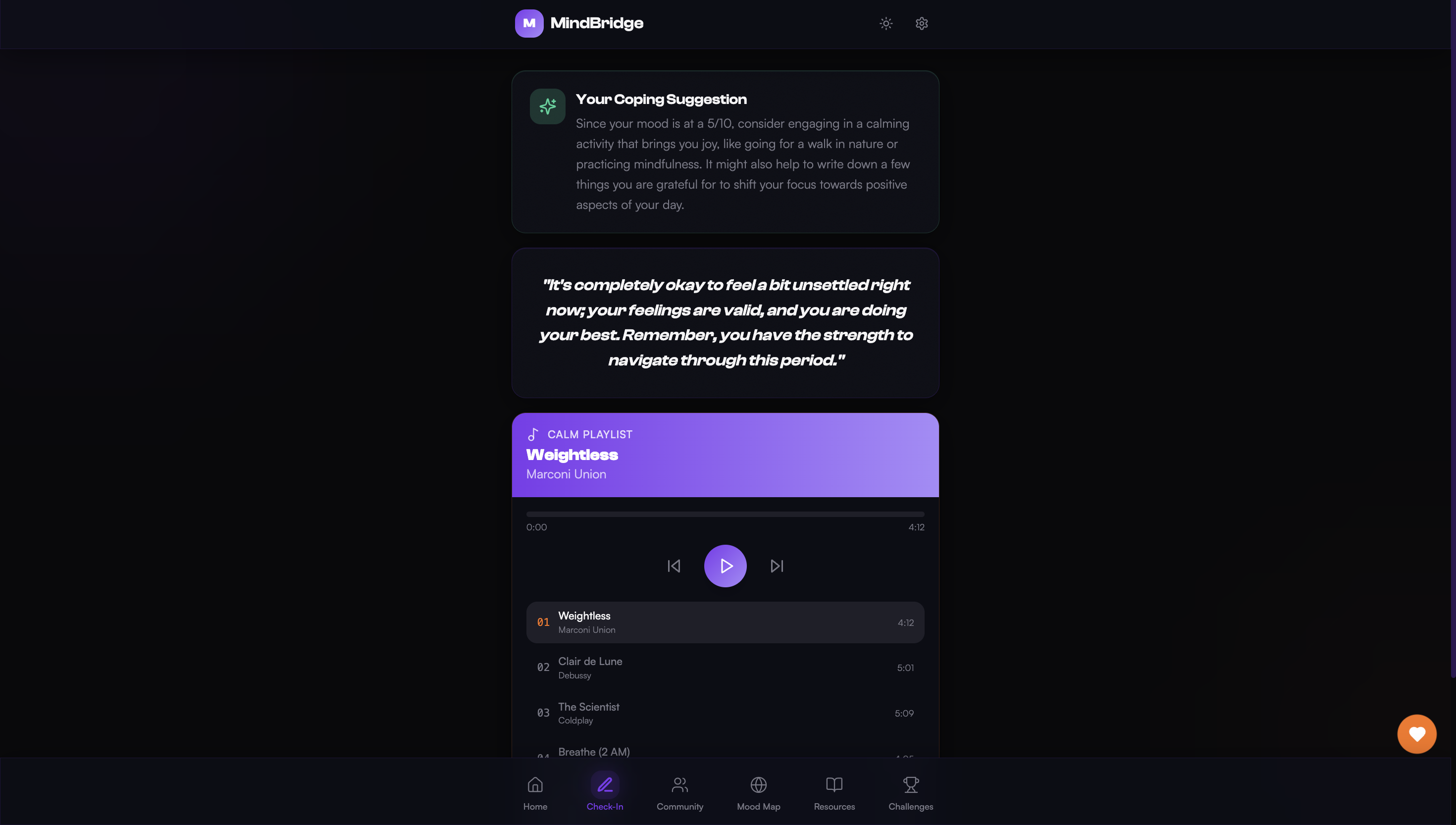
AI Coping Suggestions & Playlist
Inspiration
1 in 5 students has a mental health condition. Most never get help. Not because they don't want it, but because the system wasn't built for them. Waitlists stretch for months. Therapy costs money most students don't have. And for students who don't speak English as a first language, even finding the right resource feels impossible. I looked around at my own school and saw students drowning in stress and anxiety with nowhere safe to turn. Existing apps are built for adults with disposable income. Nothing existed that was anonymous, student-centered, multilingual, and actually intelligent. MindBridge started as one question: what if your phone could be the support system your school never provided? We built it for the GNEC Hackathon under UN SDG 3 because mental health is not a personal failure. It is a global health crisis.
What it does
MindBridge is a free AI-powered student mental health platform with 16 fully functioning features across four categories.
Mood Tracking and Insights: Daily mood check-ins with sleep logging, a mood calendar, sleep vs mood correlation charts, streak tracking, and a PDF export that generates a therapist-ready report of your entire history.
AI-Powered Support: A CBT Distortion Detector that analyzes journal entries for cognitive distortions like catastrophizing and black-and-white thinking. A 7-day Mood Forecast based on your personal check-in history. A Stress Biomarker Estimator. And a Crisis Companion, a live AI chat that guides distressed users through grounding exercises and connects them to real crisis hotlines by country.
Community: An anonymous peer support feed where students share feelings and coping strategies, weekly wellness challenges with badge rewards, and a Global Mood Map showing anonymized mood data by region.
Accessibility and Goals: A full onboarding flow, six-language support with full RTL layout for Arabic and Urdu, dark and light mode, high contrast settings, adjustable font size, AI-generated Goal Commitment Contracts, and a curated resource library covering anxiety, depression, stress, and sleep.
How we built it
MindBridge was built using Base44, an AI-powered full-stack app builder, which allowed us to rapidly prototype and deploy a production-quality web application without sacrificing depth or functionality. The frontend was generated and refined through Base44's interface with custom coding layered on top to handle edge cases, RTL language rendering, and the more complex AI integrations. All AI features including the CBT Distortion Detector, Mood Forecast, Crisis Companion, and Goal Commitment Contracts are powered by the Claude API. Mood and journal data is stored locally with export functionality handled through a PDF generation library. The Global Mood Map visualizes anonymized aggregated mood data by region. The multilingual interface uses i18n localization across all six supported languages with native script rendering for Hindi, Urdu, and Arabic.
Challenges we ran into
The hardest challenge was the Crisis Companion. Building an AI chat for users who might be in genuine distress required careful prompt engineering. The model needed to be warm and grounding without overstepping into clinical advice or making promises it could not keep. Getting that balance right took significant iteration. The second major challenge was the Mood Forecast. Predicting mood trajectories from limited check-in data meant designing a system that degrades gracefully when a user only has a few days of history rather than breaking or producing unreliable outputs. On the technical side, getting RTL layout to flip correctly across every page and component in Base44 required custom CSS overrides that took longer than expected.
Accomplishments we are proud of
We piloted MindBridge with 15 students and 87 percent reported feeling more supported after just one week of use. Building 16 fully functioning features, not mockups or placeholders, inside a single hackathon window using Base44 combined with custom code is something we are genuinely proud of. The CBT Distortion Detector in particular feels useful in a way that goes beyond what most wellness apps attempt. And building full RTL support with native script rendering for Arabic and Urdu meant that students who are most often left out of health technology could actually use this.
What we learned
Mental health technology is only as good as the trust it builds. Every design decision, from anonymity in the community feed to the tone of the AI responses to the option to export data for a real therapist, was ultimately about making students feel safe enough to actually use it. We also learned that accessibility cannot be an afterthought. Multilingual support and contrast and font settings are not bonus features. They are the difference between an app that works for everyone and one that works for some. And we learned that tools like Base44 make it possible for student developers to build at a level that was previously out of reach.
What's next for MindBridge
School district partnerships to deploy MindBridge as a supplementary mental wellness tool alongside existing counseling resources. A counselor dashboard that lets school mental health staff see anonymized trend data for their student population without compromising individual privacy. Expansion of language support beyond the current six. A longitudinal study tracking mood outcomes over a full semester to build the evidence base for institutional adoption. And eventually a mobile app so MindBridge lives where students already are.
Built With
- base44
- framer-motion
- javascript
- react
- router
- tailwind-css

Log in or sign up for Devpost to join the conversation.