🧠 Inspiration
I watched my friends fall apart during exam season. Not dramatically — quietly. Skipping meals. Stopping replies. Saying "I'm fine" when they clearly weren't.
The scariest part? Nobody saw it coming. Not their friends. Not their professors. Not even themselves.
I kept thinking — we have fitness trackers for our bodies. Weather forecasts for tomorrow. Why does nobody build an early warning system for the mind?
That question became MindBridge.
💡 What It Does
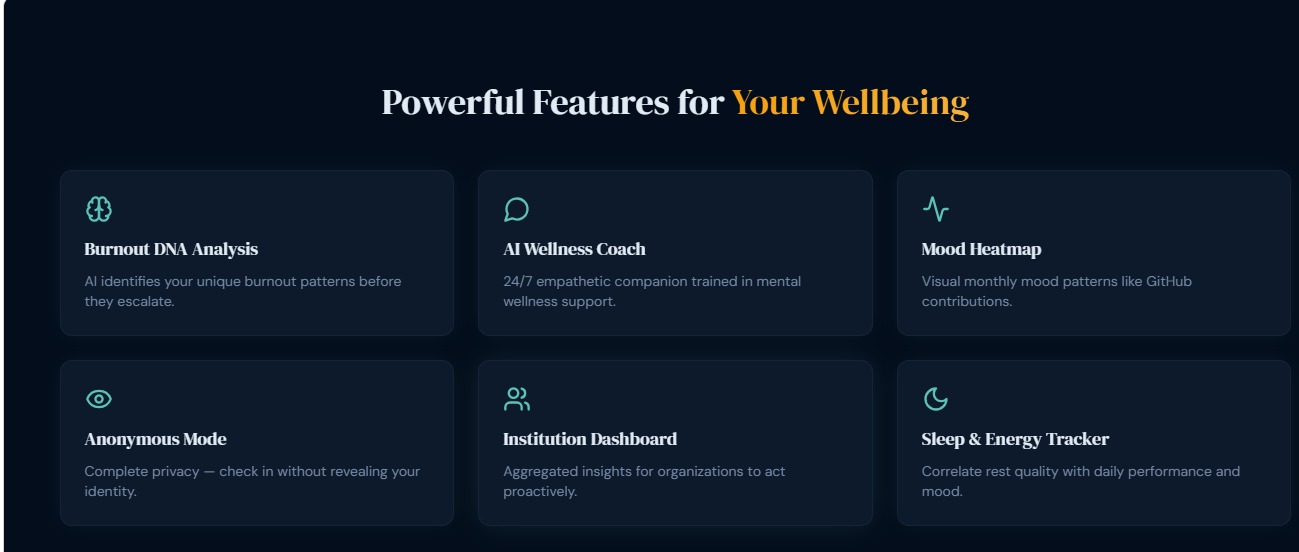
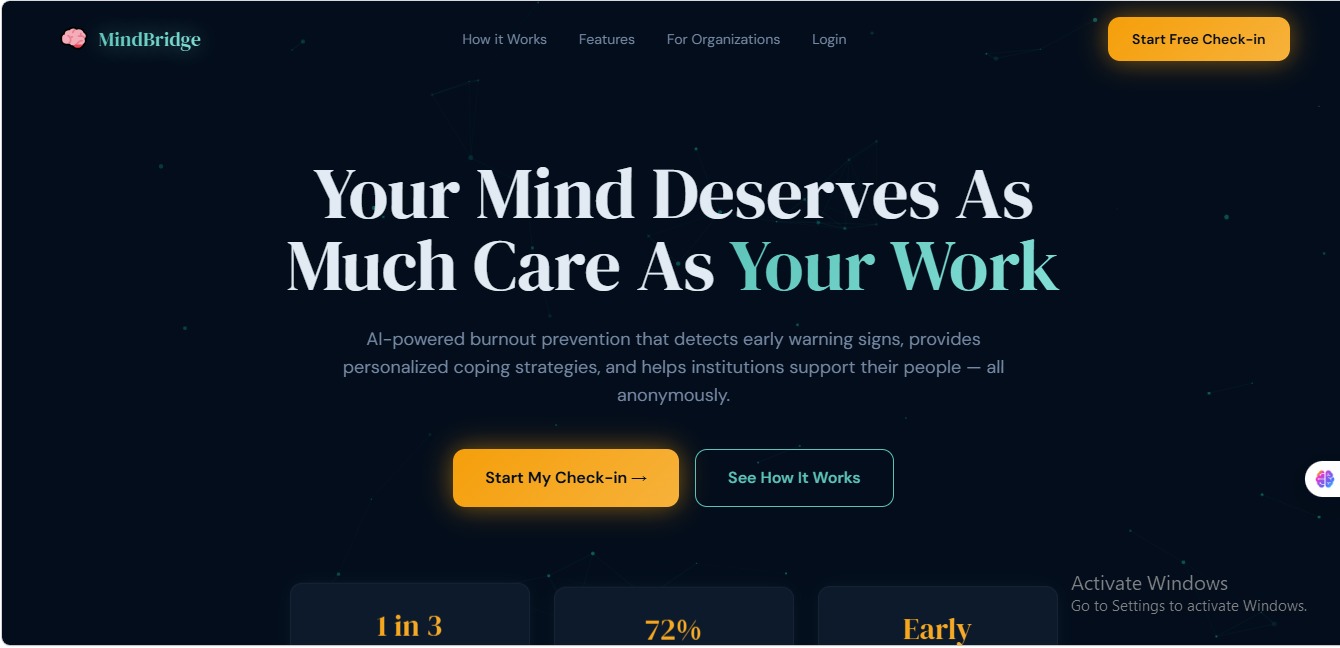
MindBridge is an AI-powered student wellness companion that detects burnout 14 days before it peaks — and gives students the tools to recover before it breaks them.
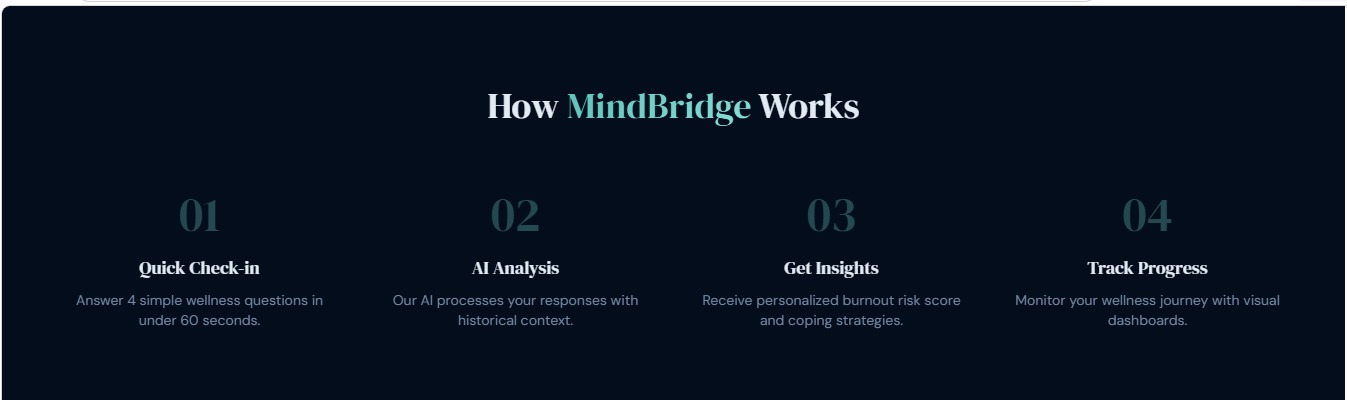
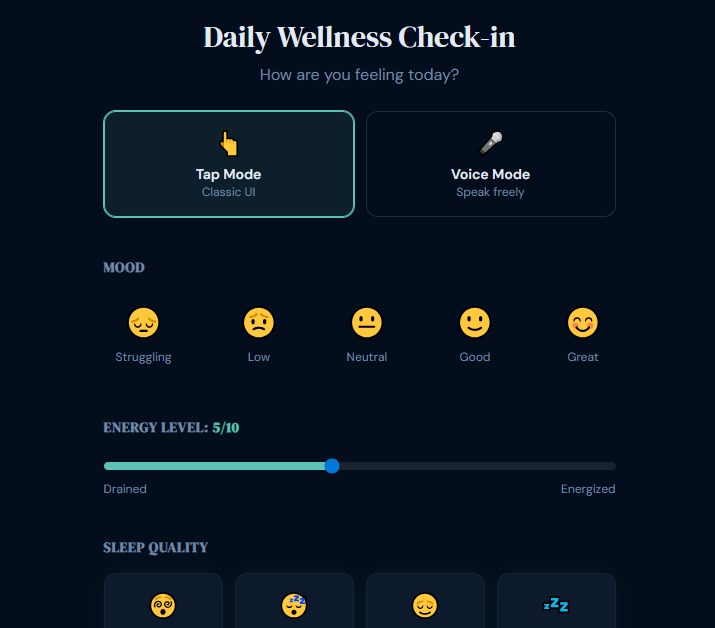
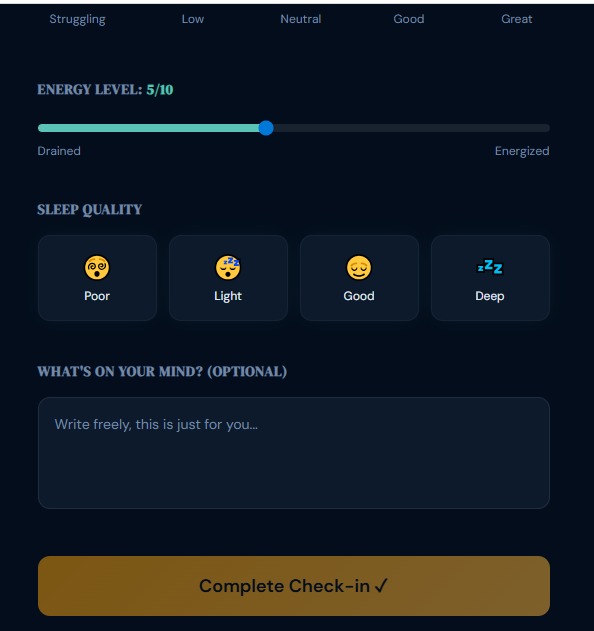
Students complete a 60-second daily check-in tracking mood, energy, sleep, and stress. Gemini AI analyzes 14+ days of behavioral patterns to generate a personalized Burnout DNA Score across 5 dimensions.
Three things no other wellness app does:
- 🗺️ Crisis Pulse Campus Map — world's first real-time anonymous campus wellness heatmap
- 📅 Academic Stress Forecast — predicts burnout risk weeks before exam season hits
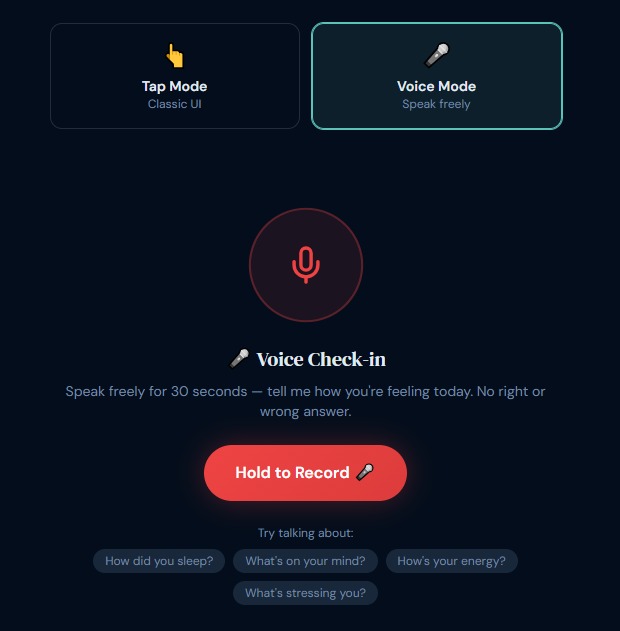
- 🎤 Voice Emotion Check-in — speak 30 seconds, AI detects your emotional tone and auto-fills your entire check-in
🛠️ How I Built It
I built MindBridge as a solo developer using Lovable.dev for rapid full-stack development, combining React, TypeScript, Tailwind CSS, and Supabase in a single cohesive platform.
The AI layer runs entirely on Google Gemini Flash — handling burnout pattern analysis, coping strategy generation, wellness coaching, voice emotion detection, peer matching, and academic stress forecasting.
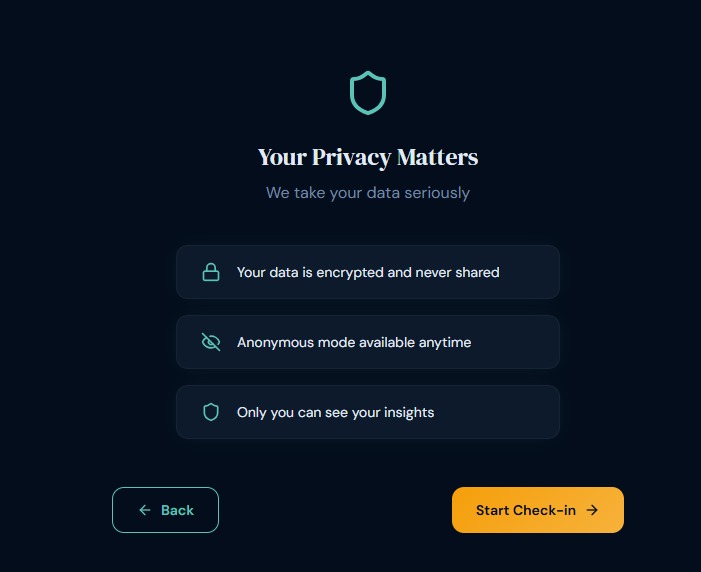
The data layer uses Supabase with Row Level Security enforced at the database level — ensuring student privacy is a technical guarantee, not just a policy promise.
The Crisis Pulse Campus Map was the hardest feature to architect. It needed to show real wellness trends without ever exposing individual student data. The solution: a minimum threshold algorithm that only activates a campus zone when at least 10 students have checked in — making reverse-engineering individual data mathematically impossible.
Architecture:
Student Check-in (60 sec)
        ↓
Gemini AI Pattern Analysis
        ↓
Burnout DNA Score (0–100)
        ↓
Personalized Coping Strategies
        ↓
Crisis Pulse Map (Institution View)
🔬 The Burnout DNA Algorithm
MindBridge uses a weighted multi-dimensional scoring model inspired by the Maslach Burnout Inventory:
$$\text{Burnout Score} = \sum_{i=1}^{5} w_i \cdot d_i$$
Where:
- \( d_i \) = dimension score (Emotional, Physical, Academic, Social, Motivational)
- \( w_i \) = clinical weight per dimension
- Result normalized to \( [0, 100] \)
Risk zones:
- 0–30 ✅ Thriving
- 31–55 🟡 Moderate
- 56–75 🟠 At Risk
- 76–100 🔴 Crisis
⚔️ Challenges I Faced
1. Making AI responses feel human, not clinical
Early Gemini responses sounded like a medical textbook. Students in testing said it felt "robotic and scary." I rewrote the entire system prompt with strict tone constraints — validate before advising, lead with empathy, max 3 sentences, end with one small action step. Result: students described it as "like a friend who actually gets it."
2. Anonymous campus heatmap without data leaks
The Crisis Pulse Map needed real wellness data without ever exposing individuals. Early builds leaked zone data with fewer than 3 students. Fixed with a 10-student minimum threshold + Supabase RLS policies that only expose aggregated counts — never raw rows.
3. Voice check-in latency
First build had 6–8 second lag between speech and results. Fixed by streaming interim results from Web Speech API and firing the Gemini call after 15+ words captured — reducing perceived latency from 8 seconds to under 2 seconds.
4. Burnout score accuracy
Early versions gave identical scores to completely different student situations. Redesigned with weighted multi-dimensional scoring inspired by the Maslach Burnout Inventory clinical framework.
📚 What I Learned
- Privacy is not a feature — it's an architecture
- AI tone matters as much as AI accuracy
- The best wellness tools feel like a friend, not a doctor
- Solo building forces clarity — every feature must justify its existence
- Student mental health is a systemic problem that needs systemic data to solve
🎯 What's Next
- Native mobile app (React Native)
- WhatsApp daily check-in bot
- University ERP integration
- Multi-language support (Hindi, Tamil, Telugu)
- Research partnership with psychology departments
- Corporate employee wellness expansion
MindBridge doesn't replace counselors. It makes sure students actually reach them.
Built With
- css3
- react
- supabase
- typescript


Log in or sign up for Devpost to join the conversation.