-
-
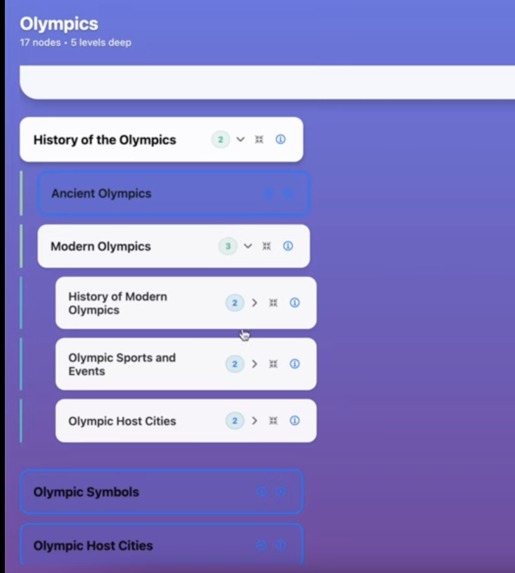
Mind Map
-
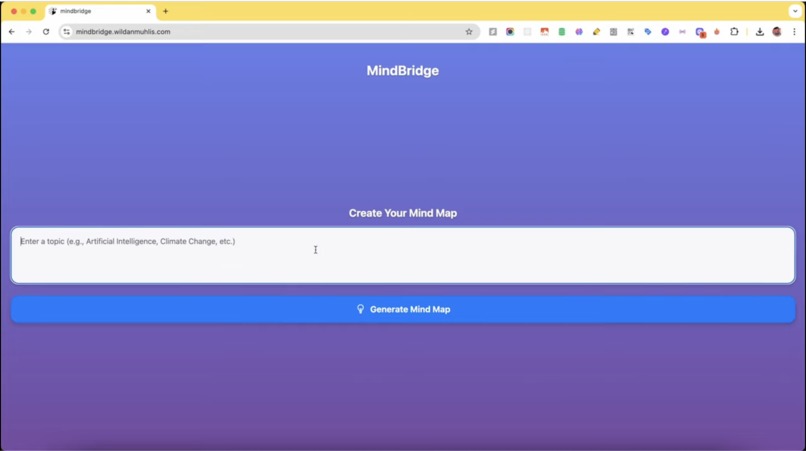
Main Screen
-
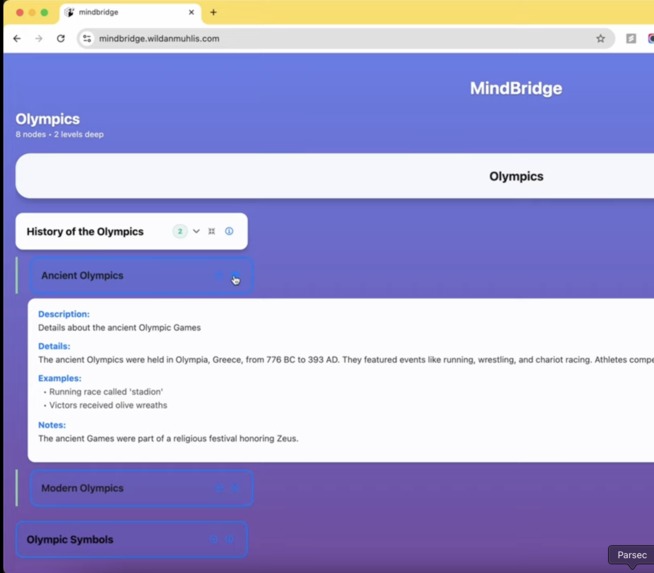
Description
-
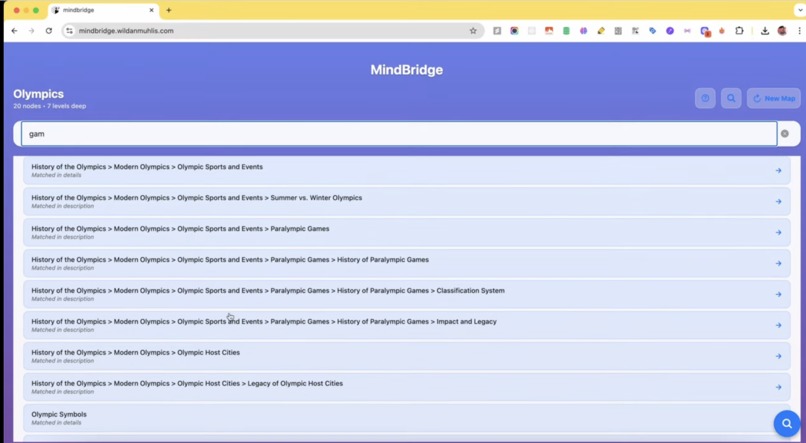
Search
MindBridge: AI-powered mind maps that expand infinitely
Inspiration
The inspiration for MindBridge came from the frustration of traditional mind mapping tools that require manual input and limited exploration. We wanted to create something that could:
- Automate the brainstorming process - No more staring at blank canvases
- Provide intelligent topic expansion - AI that understands context and relationships
- Enable infinite exploration - Every node could lead to new discoveries
- Make complex topics accessible - Visualize any subject with instant depth
The vision was to combine the power of AI with intuitive visual design to create a tool that feels like having an expert researcher working alongside you, constantly expanding your understanding of any topic.
What it does
MindBridge is an AI-powered mind mapping application that transforms how you explore and organize information:
Core Features
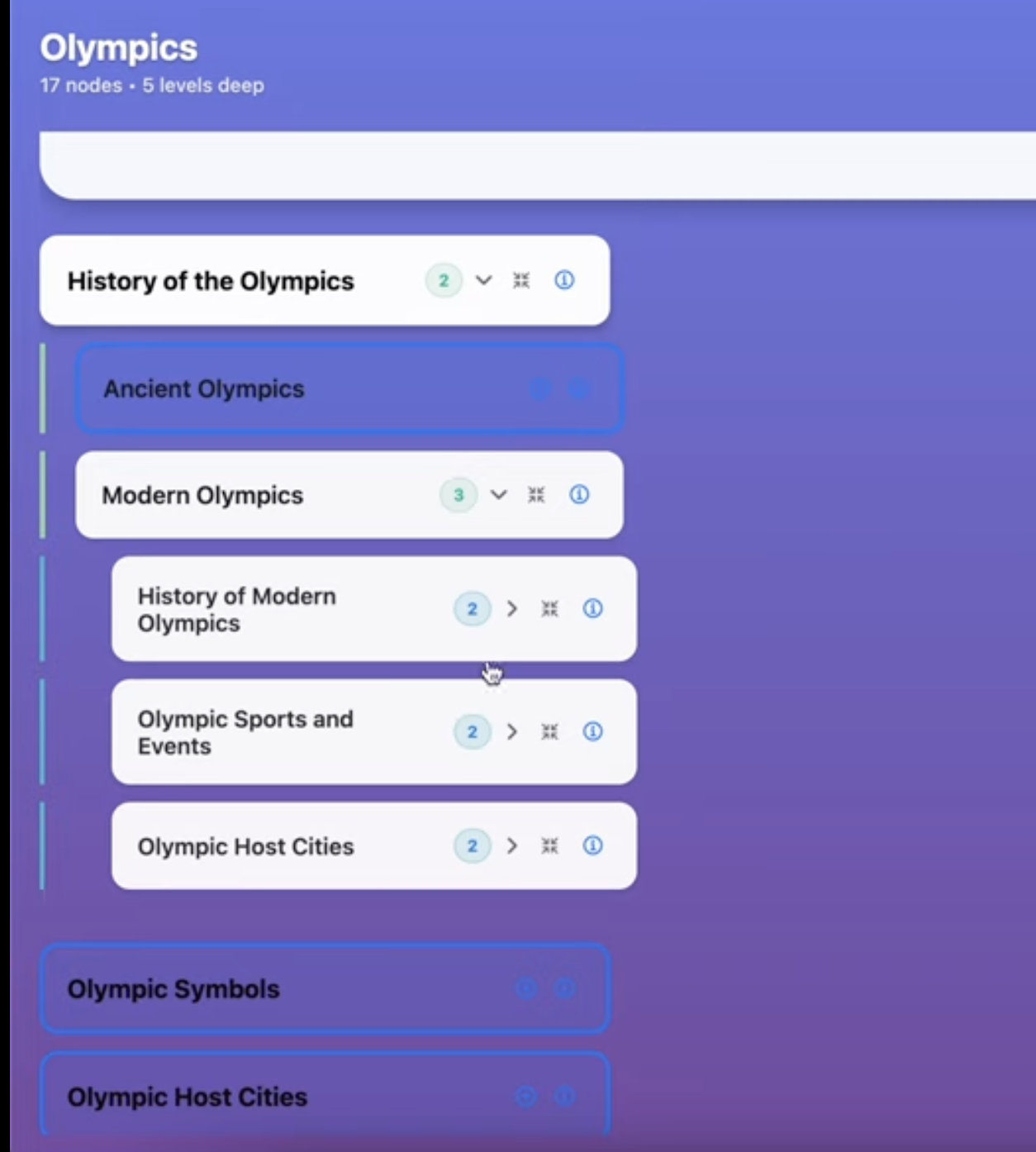
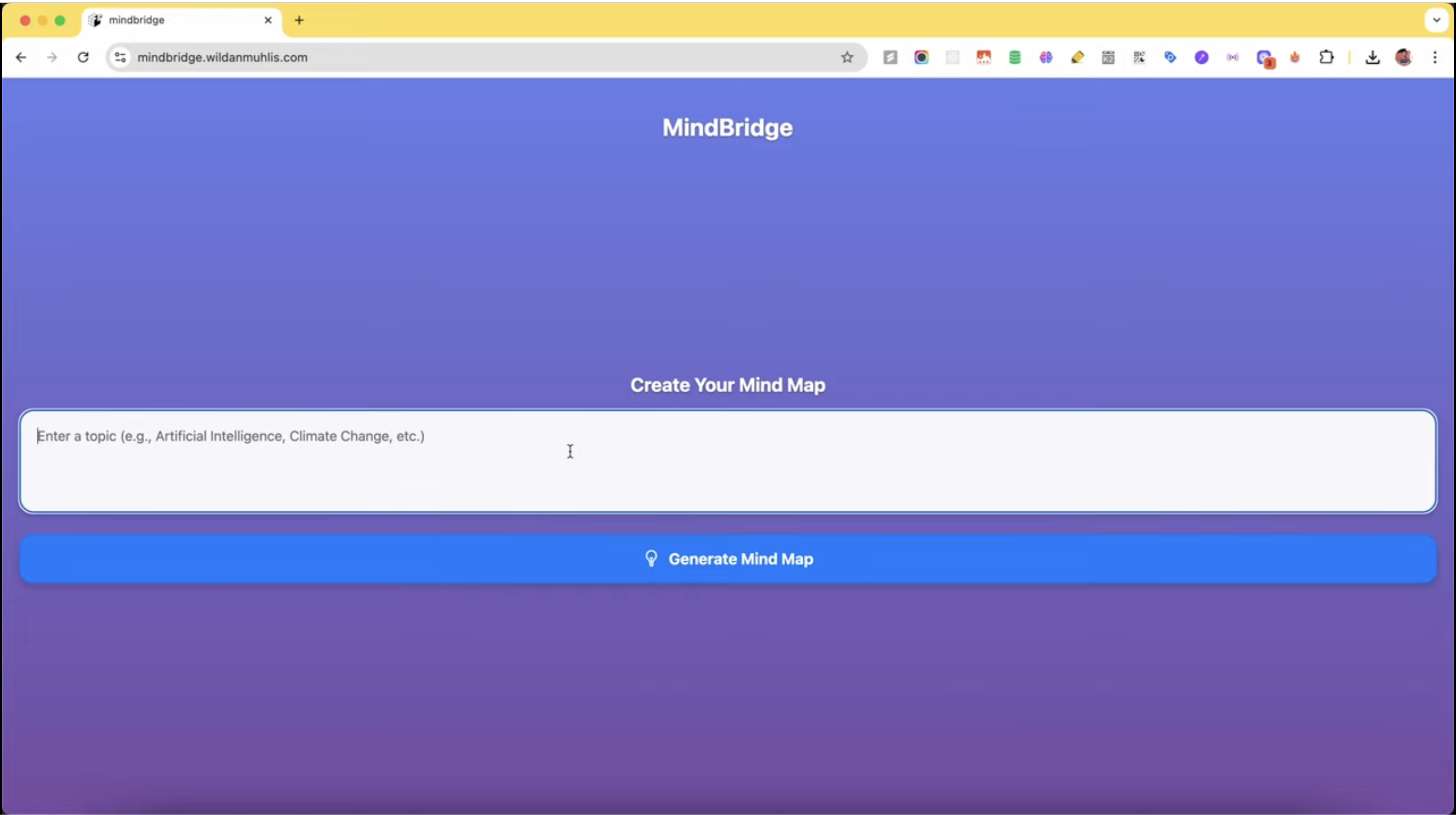
- Instant AI Generation: Type any topic and get a comprehensive mind map in seconds
- 5-Level Depth: Creates hierarchical structures with up to 5 levels of detail
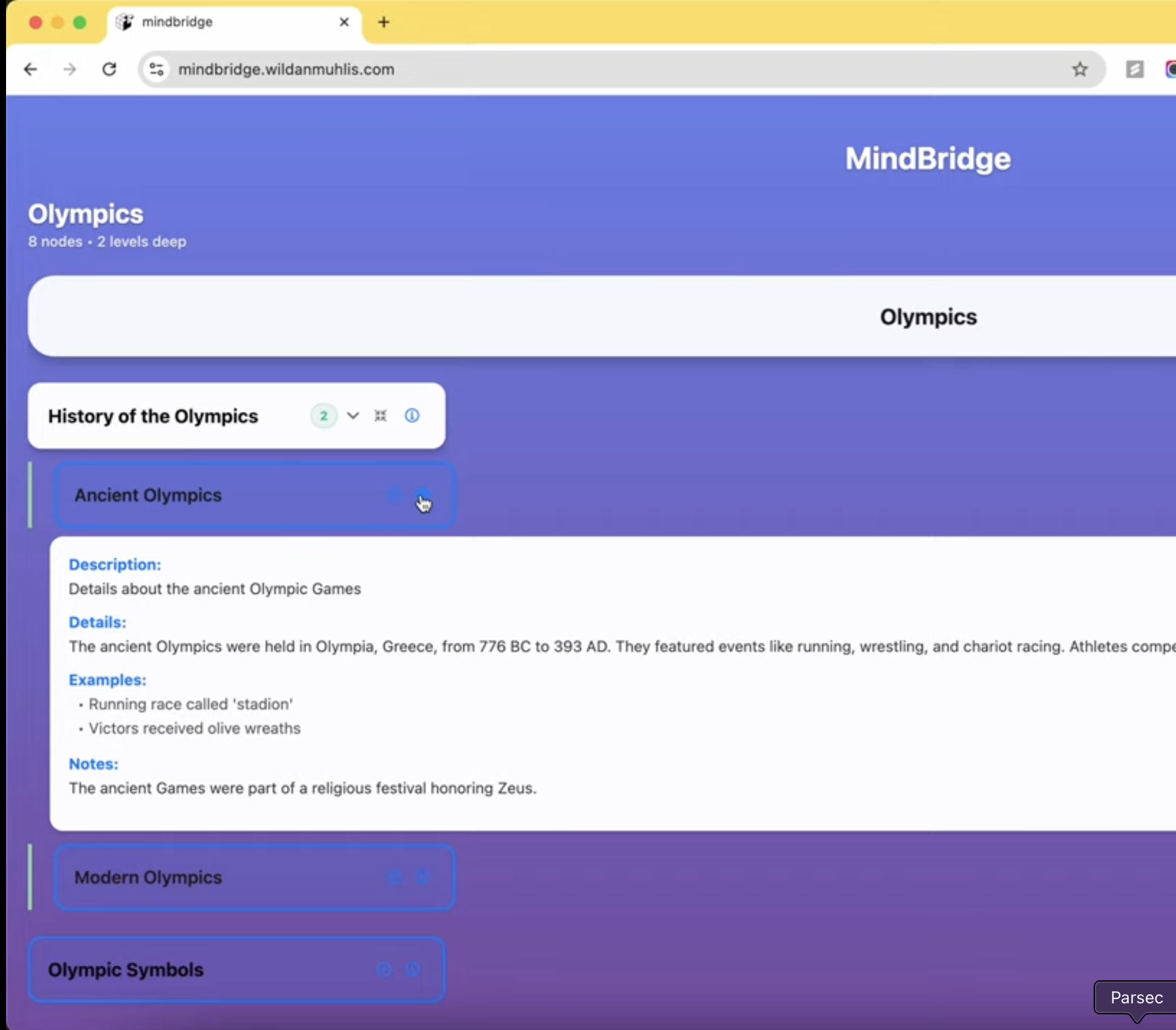
- Infinite Expansion: Click any node to expand it with new AI-generated insights
- Visual Intelligence: Color-coded depth indicators and adaptive styling
- Smart Navigation: Breadcrumb navigation with level indicators
- Real-time Statistics: Track total nodes and maximum depth
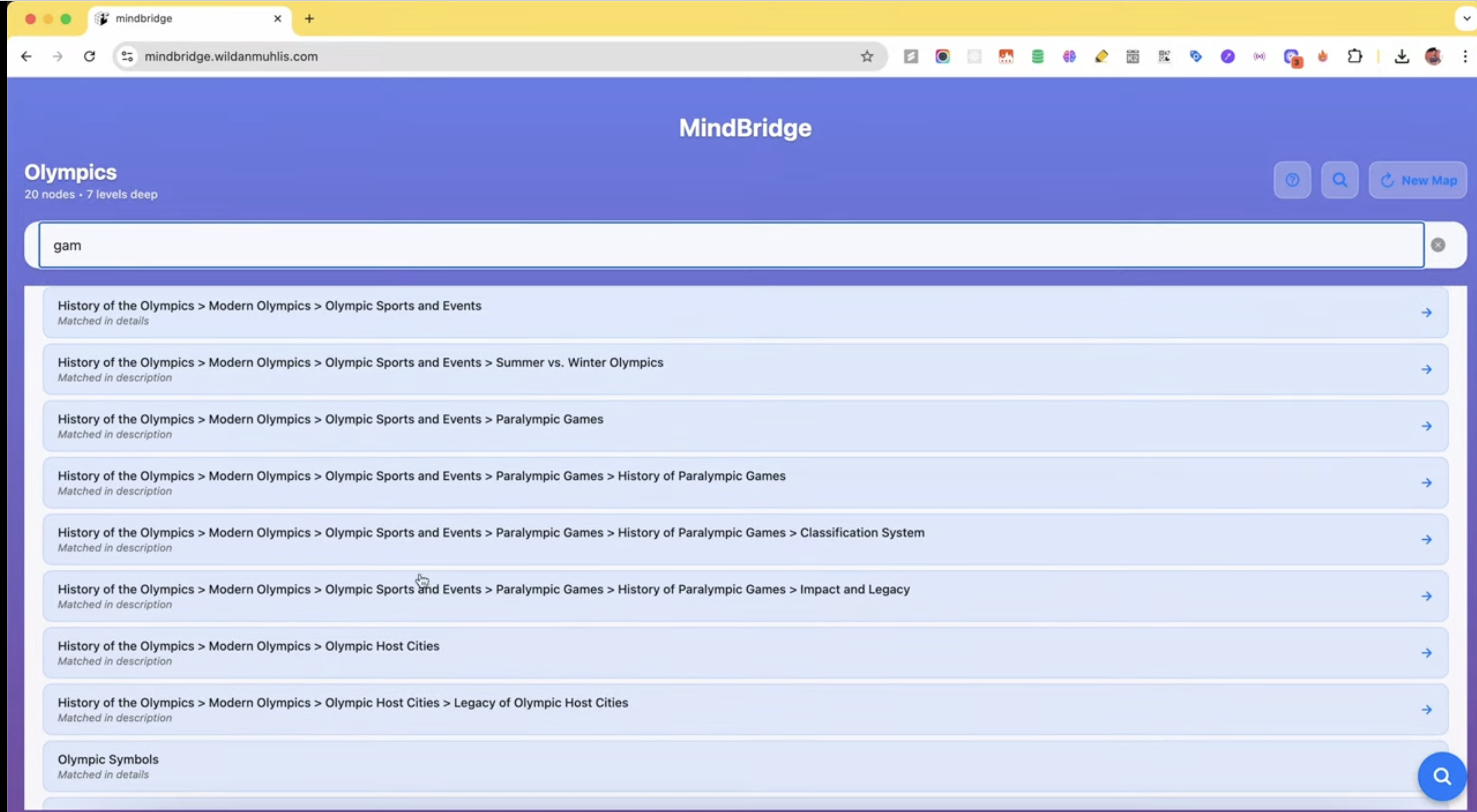
- Advanced Search: Find specific nodes across entire mind maps
Use Cases
- Students: Research paper organization and study material visualization
- Professionals: Project planning, strategy development, and team brainstorming
- Content Creators: Topic research, content planning, and idea generation
- Knowledge Workers: Information architecture and knowledge management
How we built it
Frontend Architecture
- React Native with Expo: Cross-platform development framework
- TypeScript: Type-safe development for better code quality
- Expo Linear Gradient: Beautiful gradient backgrounds and visual effects
- Axios: HTTP client for API communication
- React Native SVG: Scalable vector graphics support
Backend Architecture
- PHP: Server-side processing and API endpoints
- OpenAI API Integration: GPT-3.5-turbo for intelligent content generation
- RESTful API Design: Clean, scalable API architecture
- Environment Configuration: Secure API key management
Build System
- Combined Frontend/Backend Builds: Single command deployment
- Apache Integration: Automatic routing with .htaccess files
- Development Server: Built-in Node.js server for local development
- Production Optimization: Optimized builds with proper asset handling
Key Technical Decisions
- Web-First Approach: Optimized for web with mobile compatibility planned
- AI-First Design: Built around AI capabilities from the ground up
- Modular Architecture: Separable frontend and backend for flexibility
- Responsive Design: Works seamlessly across different screen sizes
Challenges we ran into
Technical Challenges
- AI Response Structure: Ensuring consistent JSON output from AI for reliable parsing
- Deep Hierarchy Management: Handling complex nested data structures with multiple levels
- Real-time Updates: Managing state updates when expanding nodes without conflicts
- Cross-Platform Compatibility: Balancing web optimization with future mobile development
- API Rate Limiting: Handling OpenAI API limits and implementing proper error handling
Design Challenges
- Visual Hierarchy: Creating clear depth indicators that work across multiple levels
- Responsive Layout: Adapting complex mind map layouts to different screen sizes
- User Experience: Making infinite expansion feel intuitive and not overwhelming
- Performance: Maintaining smooth animations with large, complex mind maps
- Color Coding: Developing a color system that's both informative and aesthetically pleasing
Integration Challenges
- Frontend-Backend Communication: Ensuring reliable API calls with proper error handling
- Build System Complexity: Creating a unified build process for frontend and backend
- Deployment Configuration: Setting up proper routing and server configuration
- Environment Detection: Automatically detecting development vs production environments
Accomplishments that we're proud of
Technical Achievements
- AI Integration: Successfully integrated OpenAI API with intelligent prompt engineering
- Deep Mind Mapping: Implemented 5-level hierarchical structures with smart expansion
- Real-time Statistics: Built dynamic node counting and depth tracking
- Advanced Search: Created comprehensive search functionality across entire mind maps
- Responsive Design: Achieved seamless experience across different devices and screen sizes
User Experience Achievements
- Intuitive Interface: Created a beautiful, modern UI that's easy to use
- Visual Intelligence: Developed a sophisticated color-coding system for depth levels
- Smooth Animations: Implemented fluid transitions and interactions
- Smart Navigation: Built breadcrumb navigation with level indicators
- Focus View: Created concentrated exploration modes for better user experience
Development Achievements
- Combined Build System: Created a unified build process for easy deployment
- Production Ready: Built a system that can be deployed to various hosting platforms
- Modular Architecture: Designed a system that's easy to extend and maintain
- Type Safety: Implemented comprehensive TypeScript for better code quality
- Documentation: Created comprehensive documentation for users and developers
What we learned
Technical Insights
- AI Prompt Engineering: The importance of carefully crafted prompts for consistent output
- State Management: Complex state management strategies for hierarchical data structures
- Performance Optimization: Techniques for handling large, dynamic data sets efficiently
- API Design: Best practices for creating reliable, scalable API endpoints
- Build Systems: The value of unified build processes for deployment efficiency
User Experience Insights
- Visual Hierarchy: How color and spacing can guide user attention and understanding
- Progressive Disclosure: The importance of revealing complexity gradually
- Feedback Systems: How real-time statistics and indicators improve user confidence
- Navigation Patterns: Effective ways to help users navigate complex information structures
- Responsive Design: Balancing functionality across different device types
Development Process Insights
- Iterative Design: The value of rapid prototyping and user feedback
- Modular Development: How separation of concerns improves maintainability
- Documentation: The importance of clear documentation for both users and developers
- Testing Strategies: Effective approaches for testing AI-powered applications
- Deployment Planning: Considerations for different hosting environments
What's next for MindBridge
Short-term Goals (Next 3-6 months)
- Mobile Applications: Develop native iOS and Android apps
- Offline Mode: Implement cached responses for offline functionality
- User Accounts: Add user authentication and personal mind map storage
- Export Features: Allow users to export mind maps as images or PDFs
- Collaboration: Enable sharing and collaborative mind mapping
Medium-term Goals (6-12 months)
- Database Integration: Implement persistent storage for mind maps
- Advanced AI Features: Add more sophisticated AI capabilities and customization
- Templates: Create pre-built mind map templates for common topics
- Voice Input: Implement voice-to-text for topic input
- Advanced Search: Add filters and more sophisticated search capabilities
Long-term Vision (1+ years)
- AI Model Customization: Allow users to fine-tune AI responses for specific domains
- Integration Ecosystem: Connect with other productivity and learning tools
- Enterprise Features: Develop team collaboration and enterprise management features
- Machine Learning: Implement learning from user interactions to improve AI responses
- Global Expansion: Support for multiple languages and cultural contexts
Technical Roadmap
- Performance Optimization: Further improve rendering and interaction performance
- Scalability: Enhance backend architecture for higher user loads
- Security: Implement advanced security features and data protection
- Analytics: Add comprehensive usage analytics and insights
- API Expansion: Create public APIs for third-party integrations
MindBridge represents the future of intelligent information organization, where AI and human creativity work together to explore the infinite possibilities of knowledge.
Built With
- ai
- api-integration
- brainstorming
- cross-platform
- expo.io
- hierarchical-data
- infinite
- interactive-visualization
- knowledge-management
- mind-mapping
- openai
- php
- productivity
- react-native
- real-time-updates
- research-tools
- responsive-design
- typescript
- visual-intelligence
- web-development


Log in or sign up for Devpost to join the conversation.