


💡 Inspiration
We were inspired by the critical "gap" in mental health care—the agonizing wait for appointments, the high cost of therapy, and the lonely moments between sessions when support is needed most. We saw an opportunity to leverage AI not as a replacement for human connection, but as a compassionate, immediate, and accessible bridge. Our mission is to democratize mental health first-aid, ensuring anyone, anywhere, can get support the moment they need it. 🤝
⚙️ What it does
MindBridge AI is your AI-powered mental health first-aid kit. 🚑
It provides immediate, anonymous support through a sophisticated multi-agent AI system:
- 🛡️ Safety Agent: Instantly triages conversations for crisis-level distress and provides direct links to the 988 Suicide & Crisis Lifeline.
- 💬 Support Agent: Acts as a compassionate guide, using evidence-based techniques (CBT/DBT) to help users reframe negative thoughts and perform grounding exercises.
- 🔧 Tool Recommendation Agent: Proactively suggests interactive coping tools (like our beautiful breathing exercise visualizer) based on the real-time conversation context.
It’s a safe space to de-escalate crises and find calm, anytime.
🛠️ How we built it
We built a full-stack application with a focus on safety, empathy, and performance.
// Tech Stack Breakdown:
Frontend:    lovable // For a calm, responsive UI
AI Backend:  OpenAI API (Multi-Agent Architecture) // The brain
Database:    Supabase // For auth & data
Hosting:    lovable// For blazing-fast deployment
The core innovation is our orchestrated multi-agent system. Instead of one generic chatbot, we engineered three specialized agents, each with a finely-tuned system prompt for their specific role.
🚧 Challenges we ran into
- 🤖 Engineering Compassion: Crafting AI prompts that were consistently empathetic and safe, without overstepping into diagnosis, was our biggest hurdle.
- 🔀 Multi-Agent Orchestration: Designing the backend logic to seamlessly route user input between our specialized agents, especially allowing the Safety Agent to interrupt the flow, was technically complex.
- 🎨 The "Lovable" UI: Creating an interface that feels genuinely safe, calm, and trustworthy—not clinical or cold—required deep focus on micro-interactions and copywriting.
🏆 Accomplishments that we're proud of
- Building a Safety-First AI: We're most proud of our proactive Triage Agent. Knowing our project could genuinely help someone in a moment of crisis is our biggest win. 🛡️
- Creating a "Wow" Factor: The moment the Tool Recommendation Agent intelligently suggests a breathing exercise right when the user needs it feels like magic. ✨
- Achieving Emotional Resonance: We built something that doesn't just function—it connects. The feedback from testers that the AI "feels caring" is the highest praise we could receive. ❤️
📚 What we learned
- The Power of Prompt Engineering: An AI's personality and safety are not inherent but are carefully architected. A well-designed prompt is a form of programming.
- Ethics is a Feature: In mental health tech, ethical considerations are the most critical part of the product spec.
- Simplicity in Complexity: We learned to build a system that feels simple to the user while handling immense complexity behind the scenes.
🚀 What's next for MindBridge AI
Our vision is to evolve from a first-aid kit into a comprehensive mental health companion.
- 📋 Personalized Coping Plans: Allow users to build a custom "kit" of their favorite exercises.
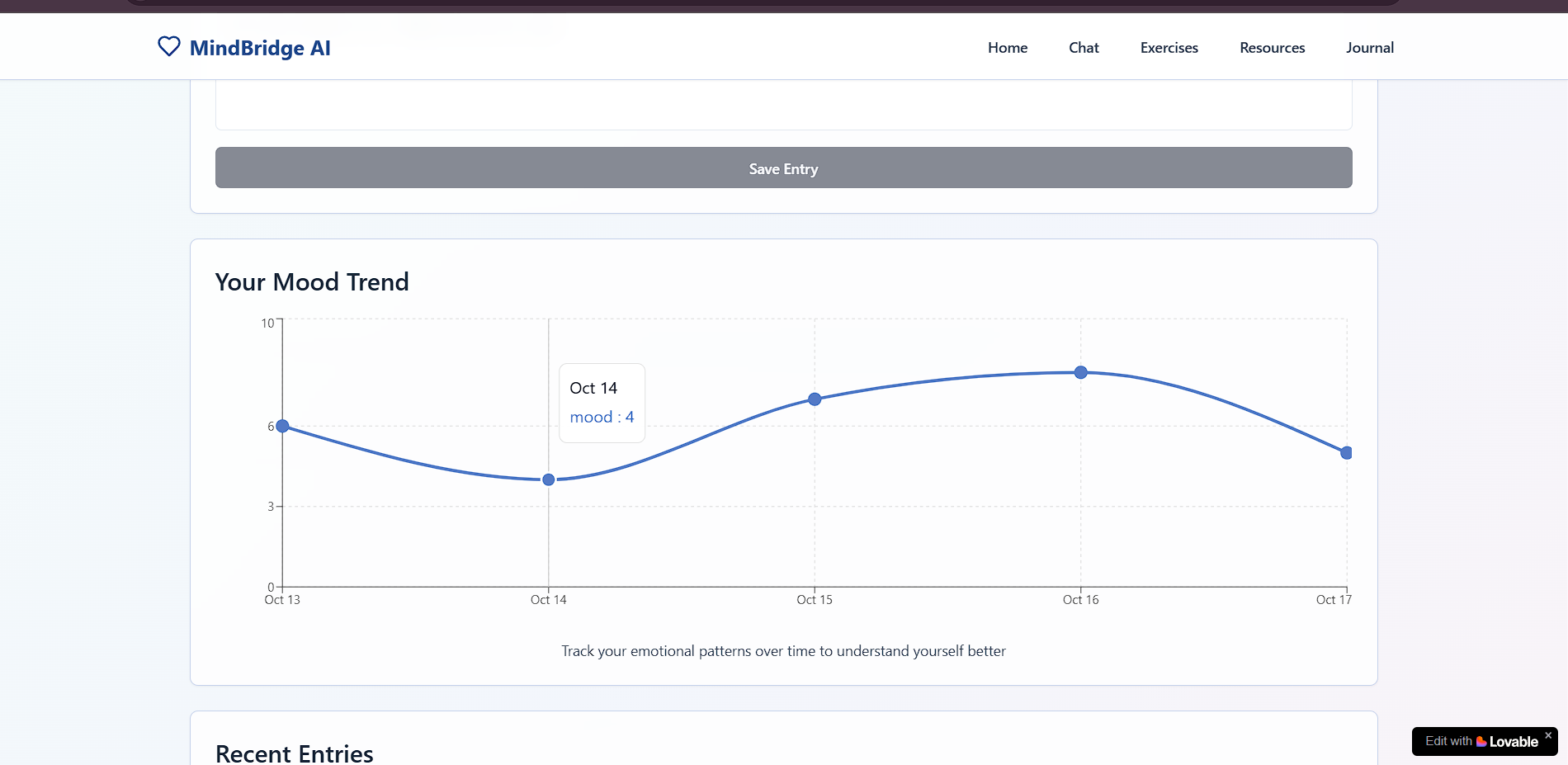
- 🧘 Expanded Toolset: Integrate guided meditations, mood-based journaling, and habit trackers.
- 🤝 Clinical Collaboration: Partner with therapists to allow them to "prescribe" MindBridge AI to clients for use between sessions.
- 🔬 Rigorous Safety Validation: Subject our AI protocols to review by mental health professionals to ensure we provide the safest and most effective support possible.
Tagline: Your AI-powered mental health first-aid kit. Immediate support before your next session. 🧠🌉
Built With
- lovable

Log in or sign up for Devpost to join the conversation.