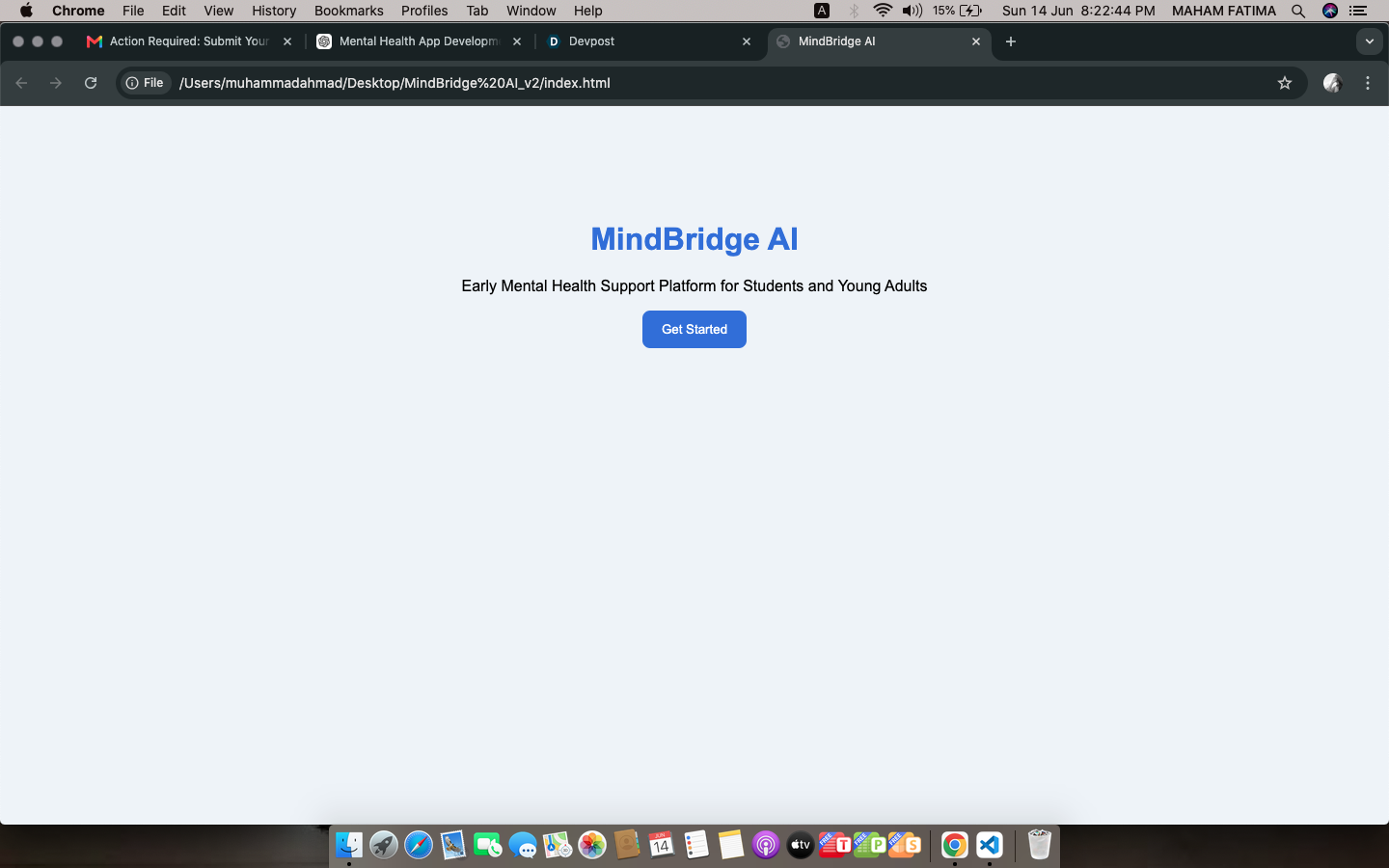
MindBridge AI: AI-Powered Mental Health Support Platform
Inspiration
Mental health challenges such as stress, anxiety, and depression are becoming increasingly common among students and young adults. Academic pressure, personal responsibilities can significantly affect emotional well-being. Unfortunately, many individuals do not receive timely support due to stigma, lack of awareness, or limited access to mental health resources.
We were inspired to create MindBridge AI to provide an accessible, supportive, and technology driven solution that encourages early intervention and promotes mental wellness. Our goal was to develop a platform that empowers users to monitor their mental health, receive personalized guidance, and access helpful resources whenever they need support.
Technologies Used
Python for application development. Streamlit for creating the interactive web interface. Google Gemini API for AI-powered conversations and recommendations. GitHub for version control and collaboration. Figma for UI/UX design and prototyping.
canva for presentation and visual assets.
AI Integration
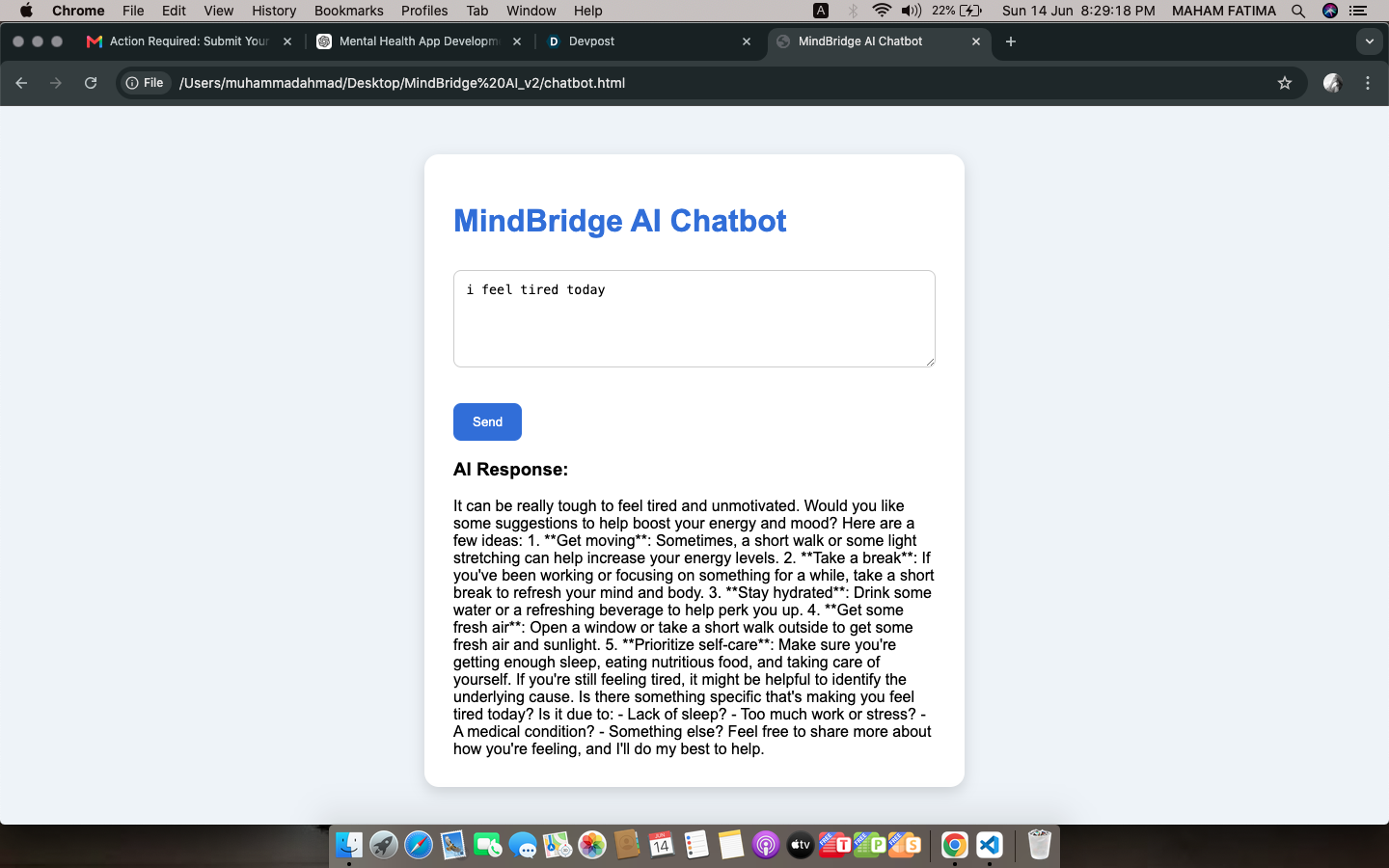
Artificial Intelligence plays a central role in our solution. The AI component analyzes user input and provides personalized responses, emotional support suggestions, and wellness recommendations. This allows the platform to deliver more meaningful and user-specific guidance compared to static mental health resources.
Impact
MindBridge aims to make mental health support more accessible, proactive, and personalized. By helping users recognize emotional challenges early and providing immediate guidance, the platform has the potential to improve well-being, reduce stigma surrounding mental health, and encourage healthier communities.
Future Roadmap
Future versions of MindBridge may include:
- Mobile application support.
- Multi-language accessibility.
- Professional counselor integration.
- Voice-based AI assistance.
- Advanced mood prediction models.
- Institution-wide deployment for schools and universities.
Conclusion
MindBridge demonstrates how artificial intelligence can be used responsibly to support mental wellness. By combining mood tracking, self-assessments, educational resources, and AI-powered guidance, we aim to bridge the gap between mental health challenges and timely support for students and young adults.
What it does
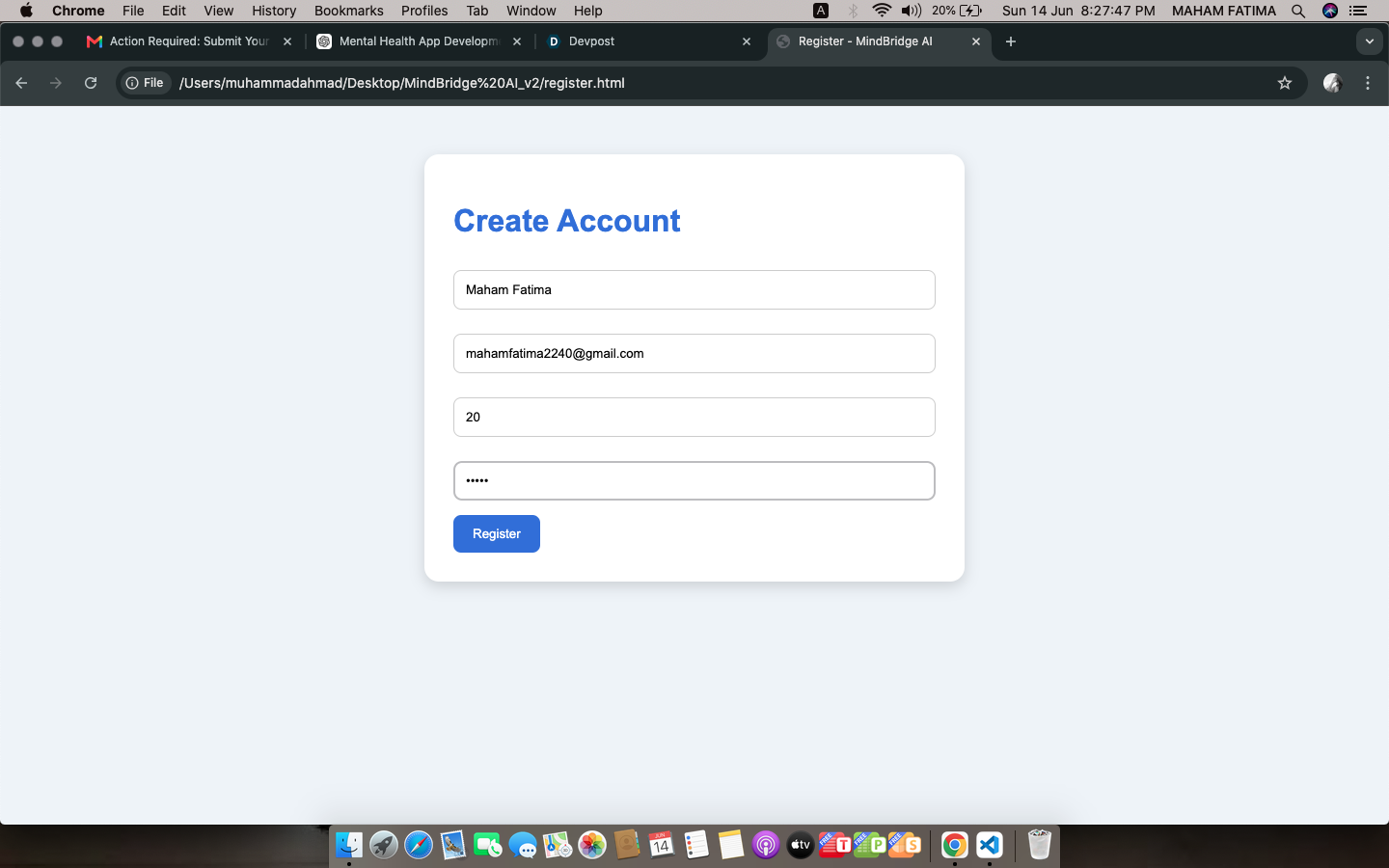
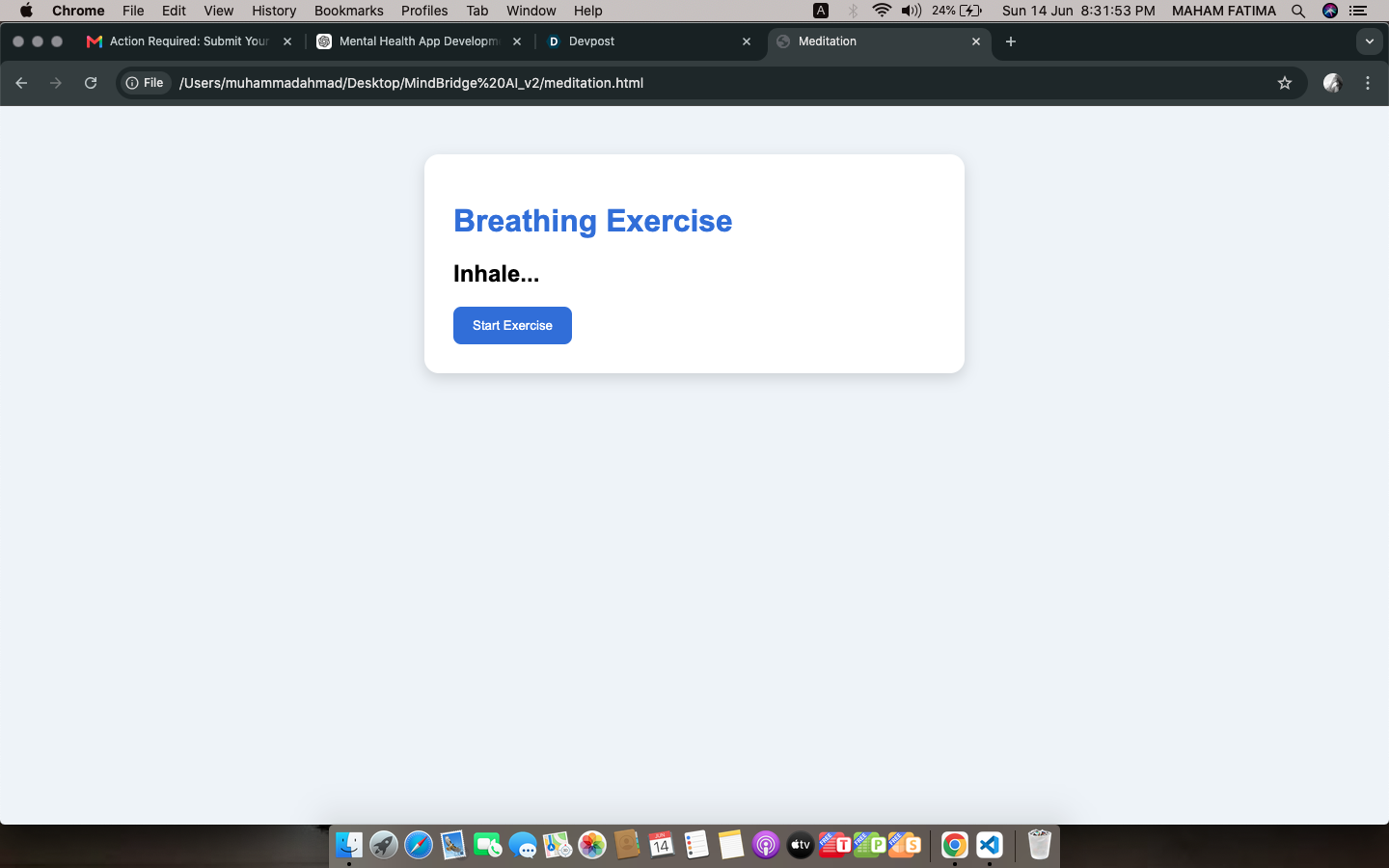
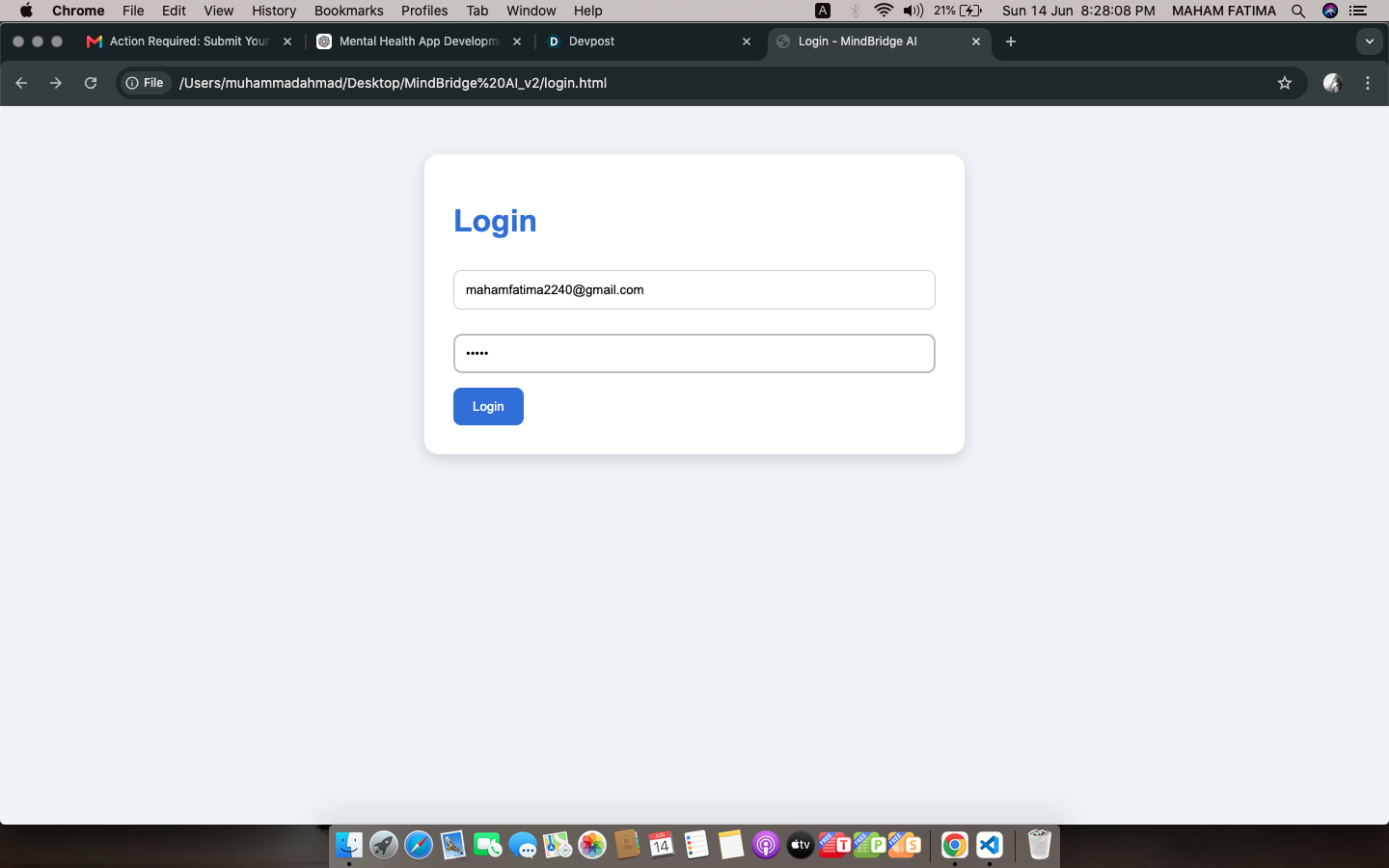
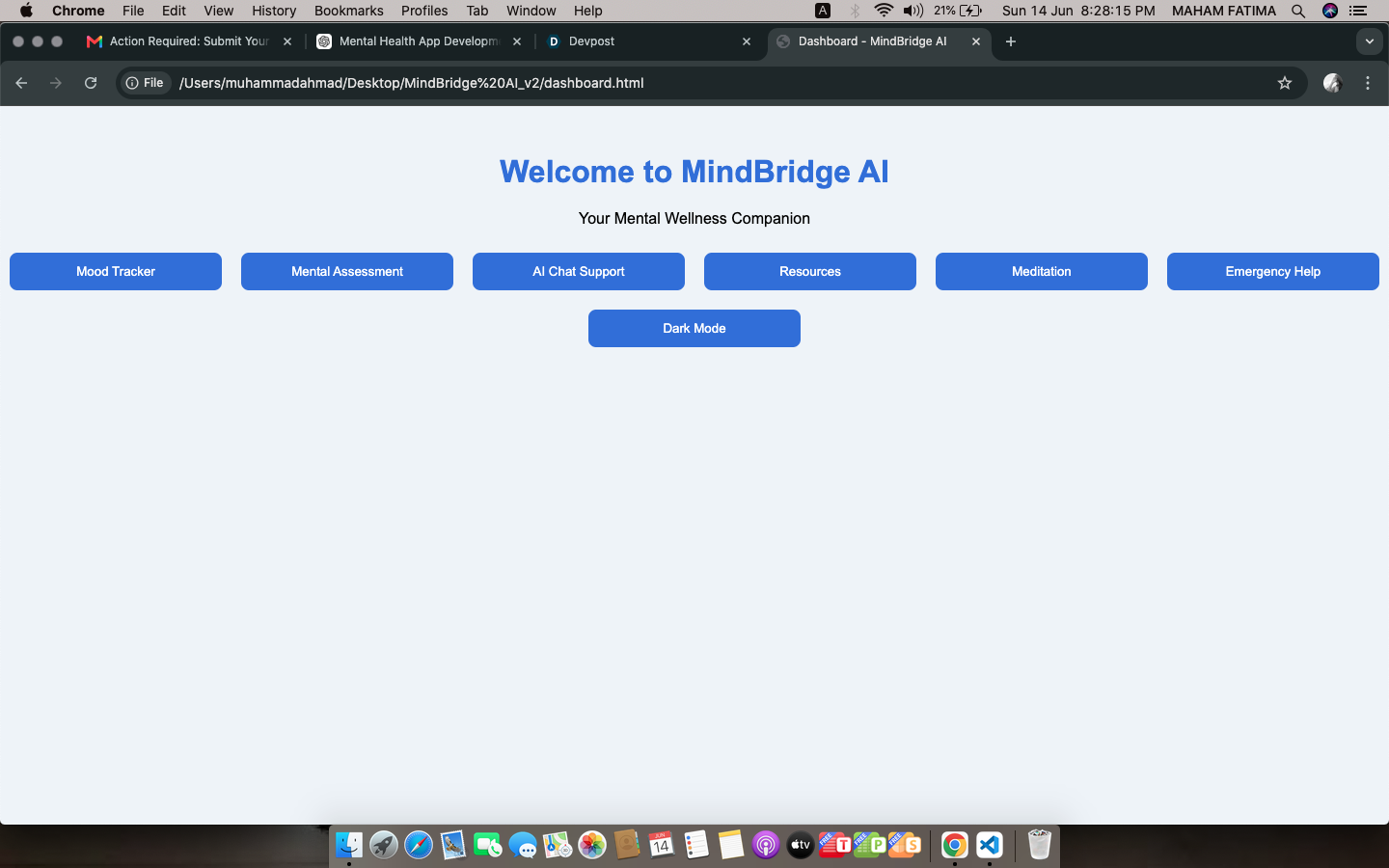
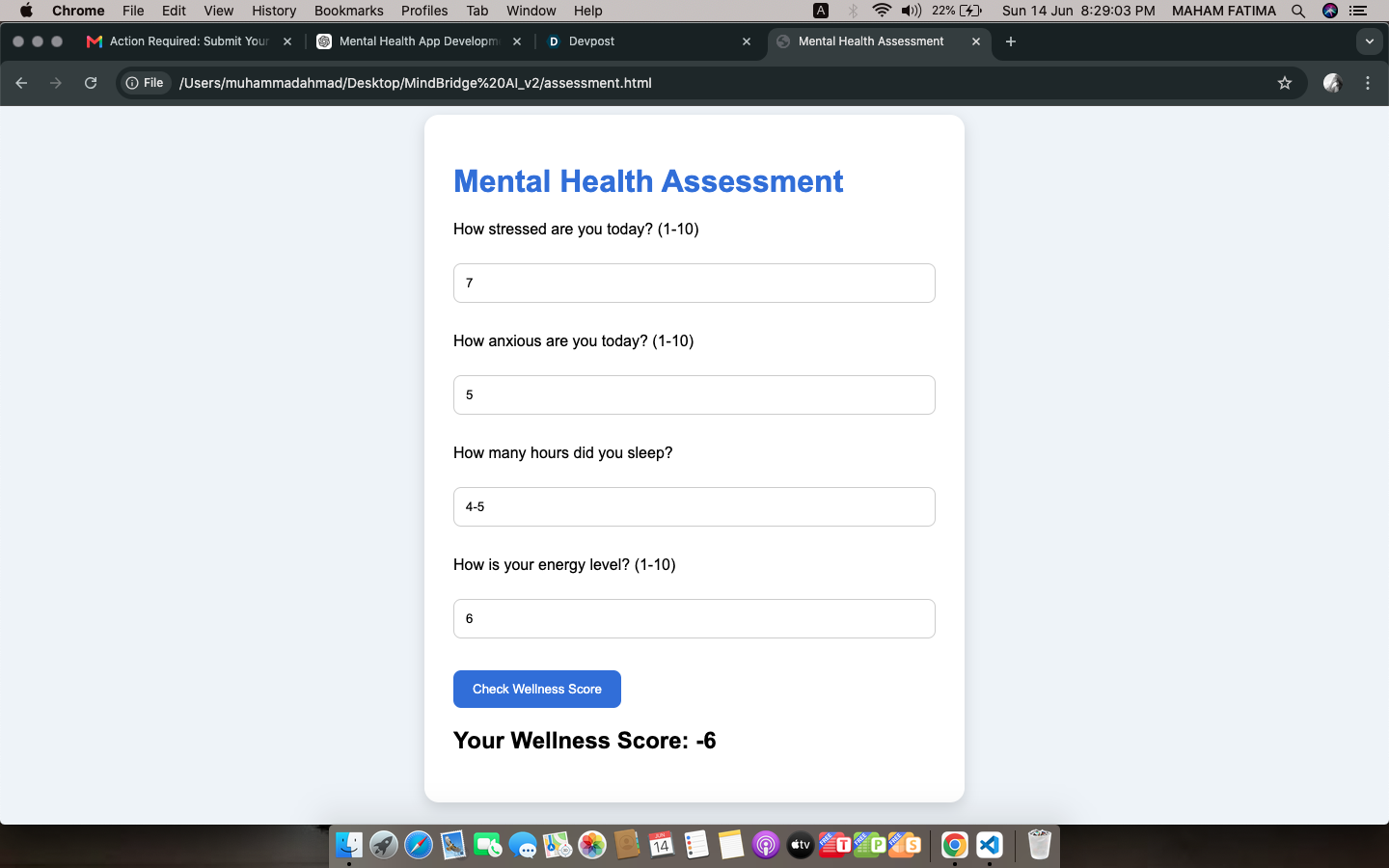
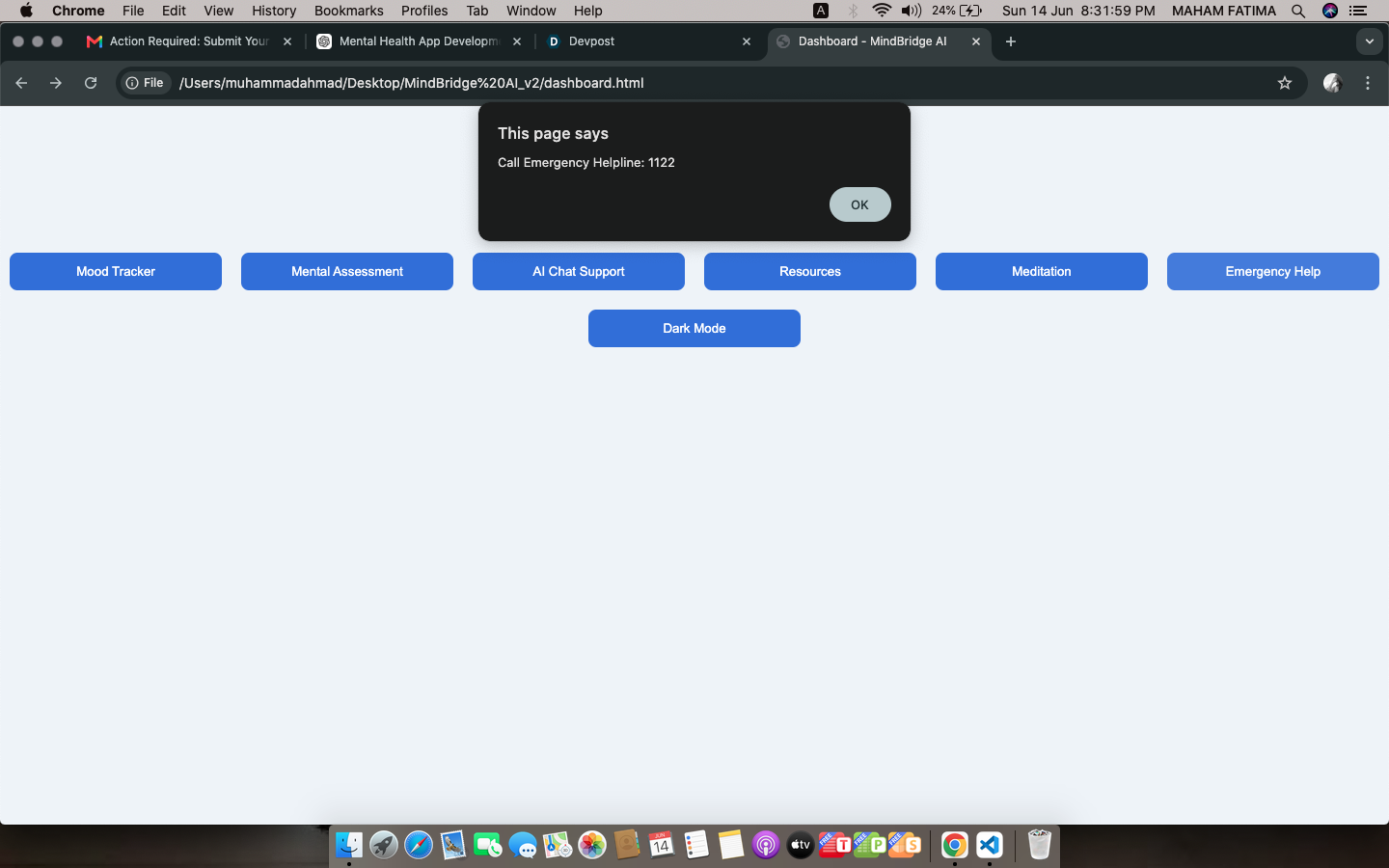
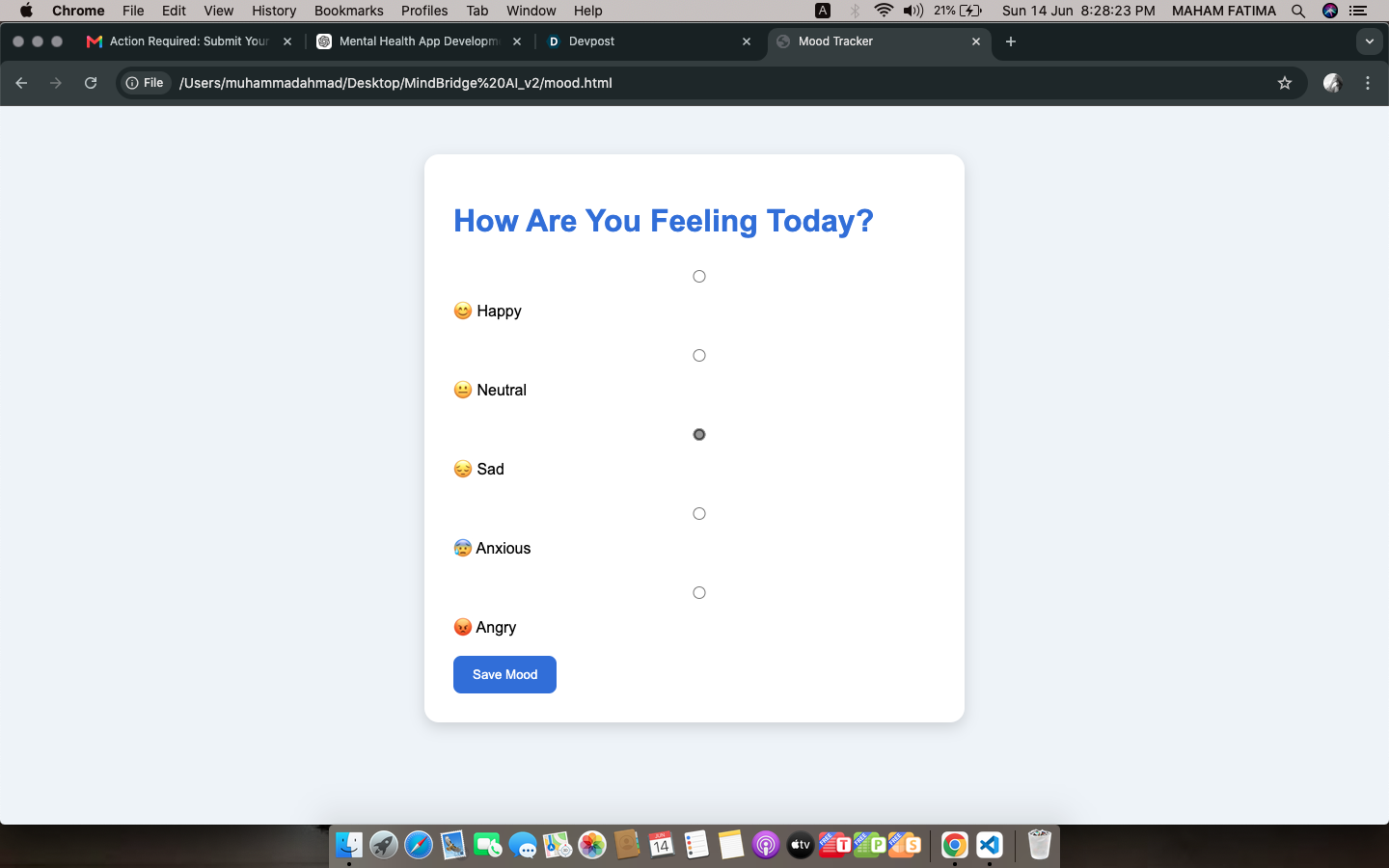
MindBridge is an AI-powered mental health support platform designed specifically for students and young adults. The platform enables users to:
- Track their daily mood and emotional well-being.
- Complete mental health self-assessments.
- Receive personalized wellness recommendations.
- Interact with an AI-powered support chatbot.
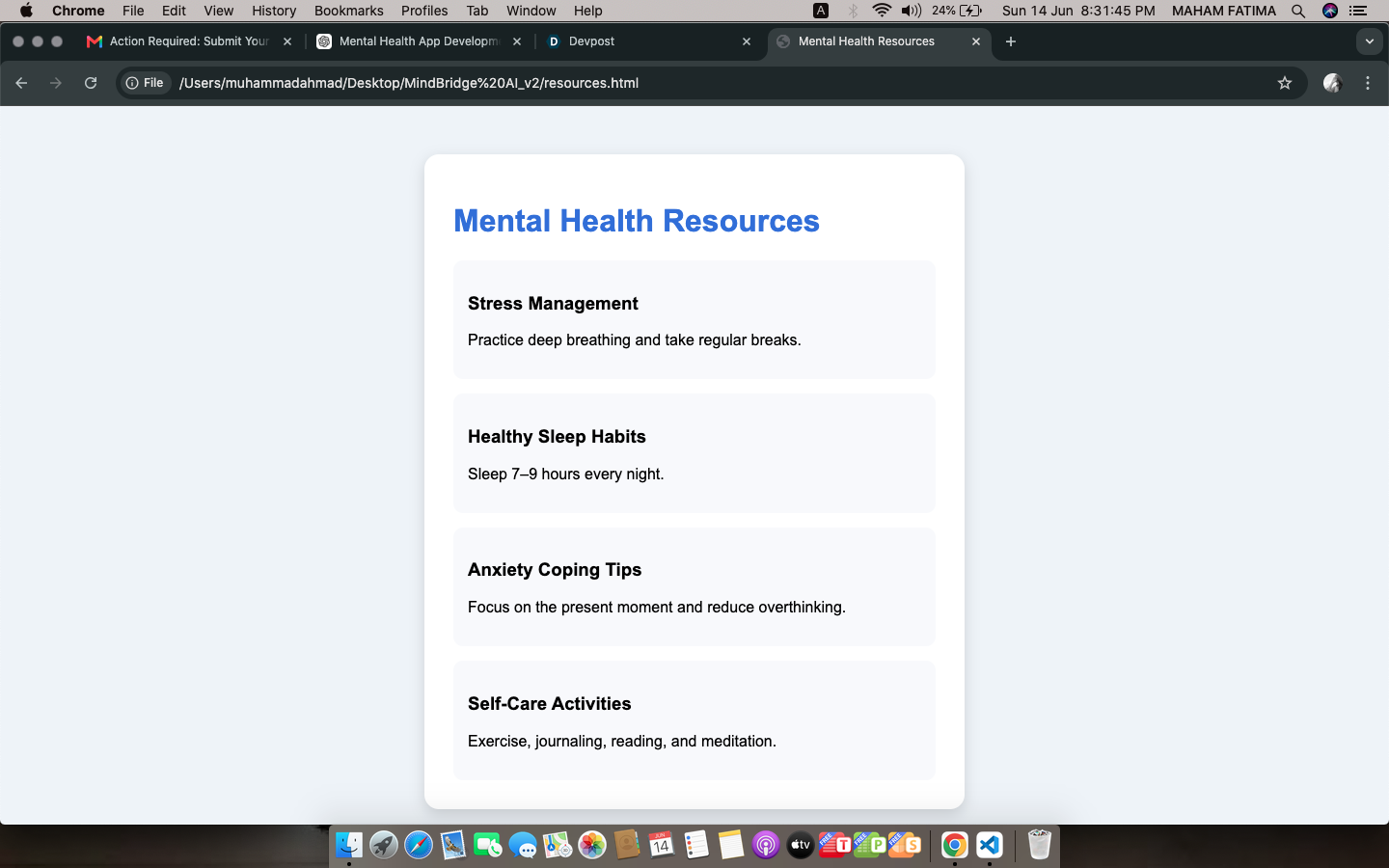
- Access educational mental health resources.
- Monitor their wellness progress over time.
The platform focuses on early identification of emotional challenges and encourages proactive mental health management.
How we built it
We developed MindBridge using a combination of modern web technologies and artificial intelligence tools.
Challenges we ran into
Building MindBridge presented several challenges:
Understanding AI Integration
As beginners, learning how to connect AI models and APIs with a web application required significant research and experimentation.
Designing a User-Friendly Interface
Mental health applications must feel welcoming, simple, and accessible. Creating a clean and supportive user experience while maintaining functionality was an important challenge.
Personalization
Providing recommendations that feel relevant to different users required careful planning of mood tracking, assessments, and AI interactions.
Time Constraints
As a hackathon project, balancing feature development, testing, presentation preparation, and documentation within a limited timeframe required efficient teamwork and planning.
What we learned
Throughout this project, we gained valuable experience in:
- Artificial Intelligence integration.
- Prompt engineering and conversational AI.
- Streamlit application development.
- User-centered design principles.
- Team collaboration and project management.
- GitHub version control and deployment workflows.
Most importantly, we learned how technology can be used to address real social challenges and create positive impact within communities.
What's next for MindBridge AI
Future versions of MindBridge may include:
- Mobile application support.
- Multi-language accessibility.
- Professional counselor integration.
- Voice-based AI assistance.
- Advanced mood prediction models.
- Institution-wide deployment for schools and universities.

Log in or sign up for Devpost to join the conversation.