-
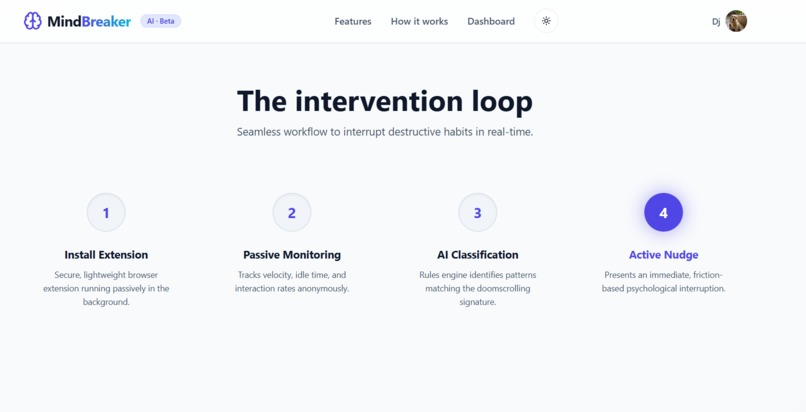
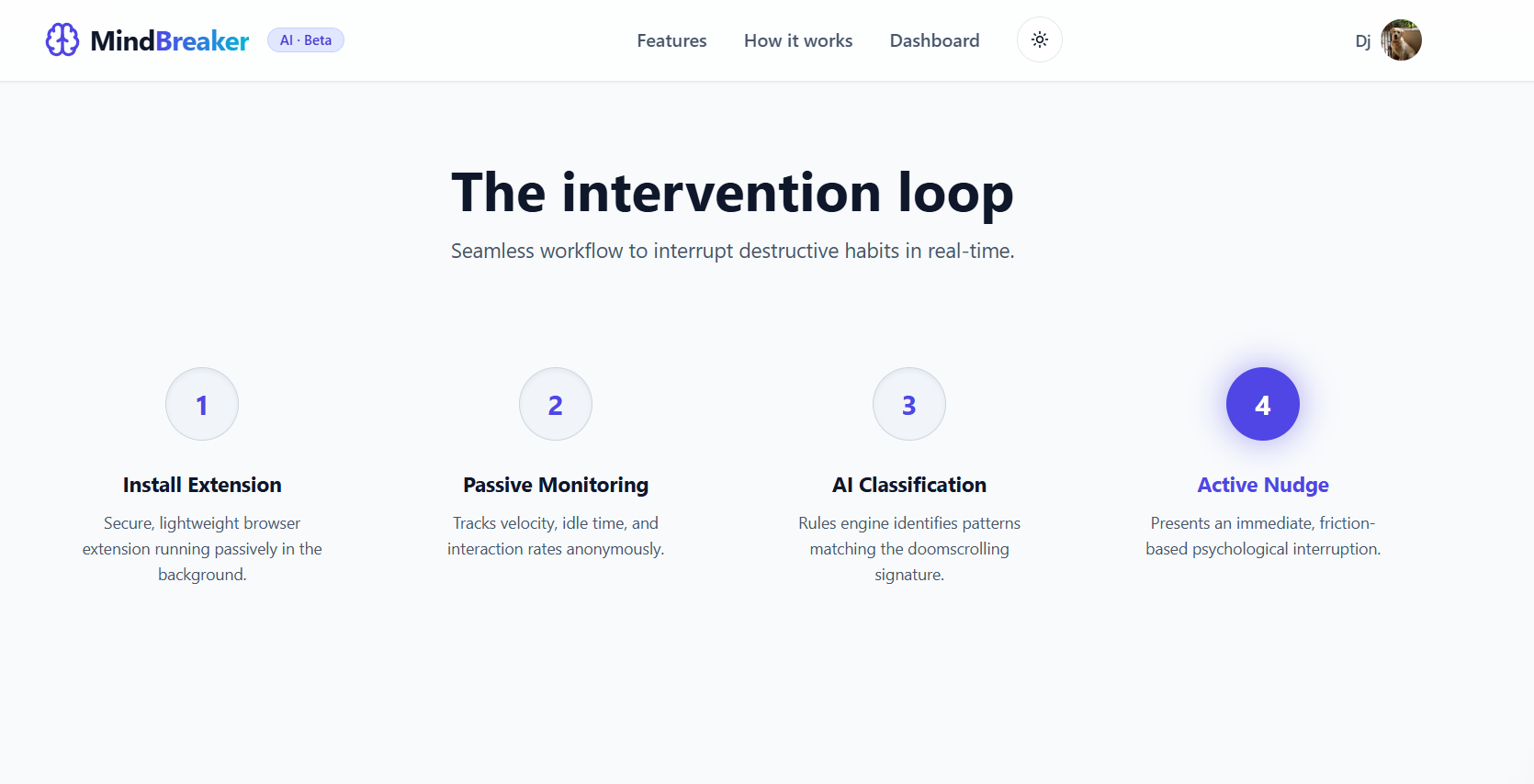
Intervention loop
-
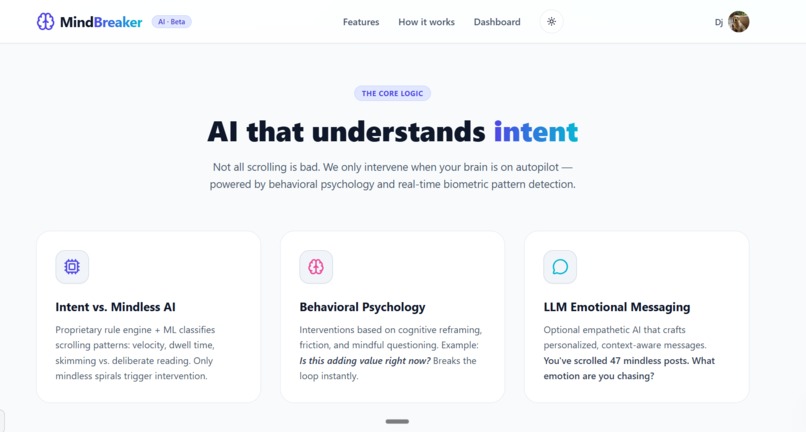
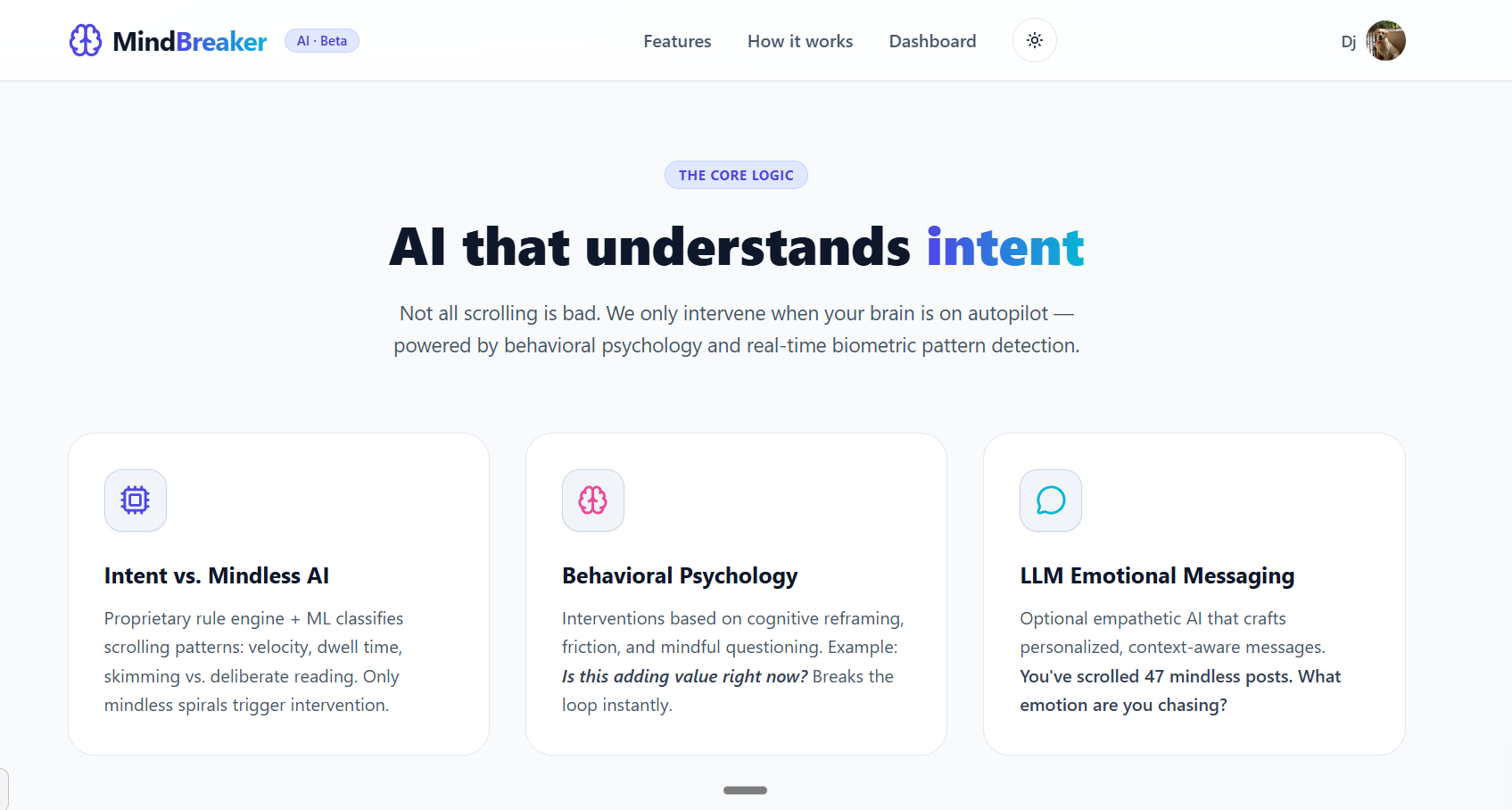
Features
-
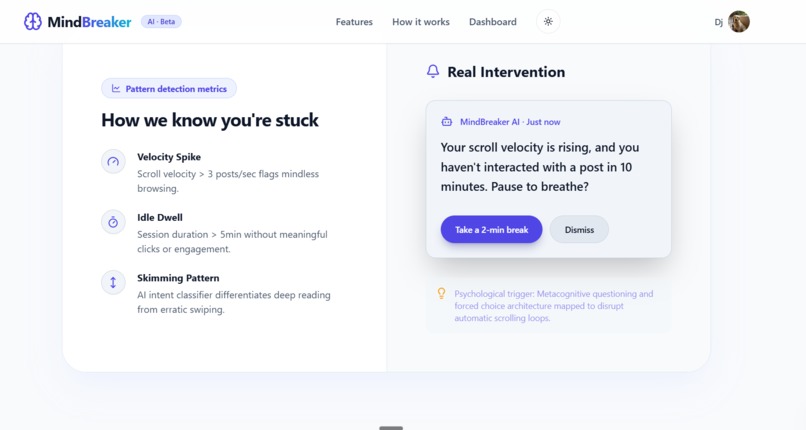
Front end feature one.
-
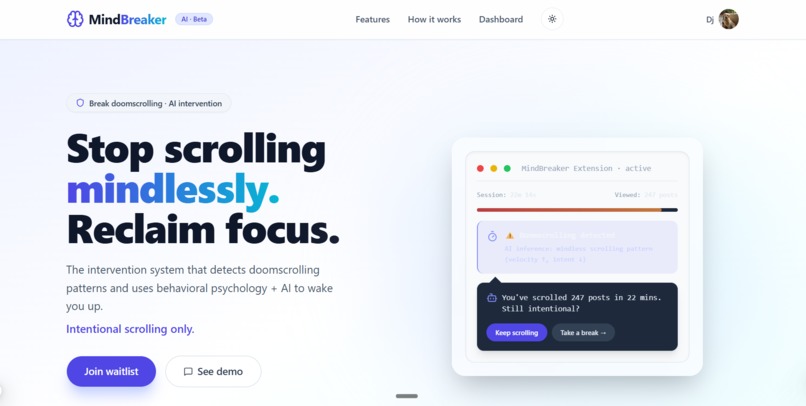
Landing page
-
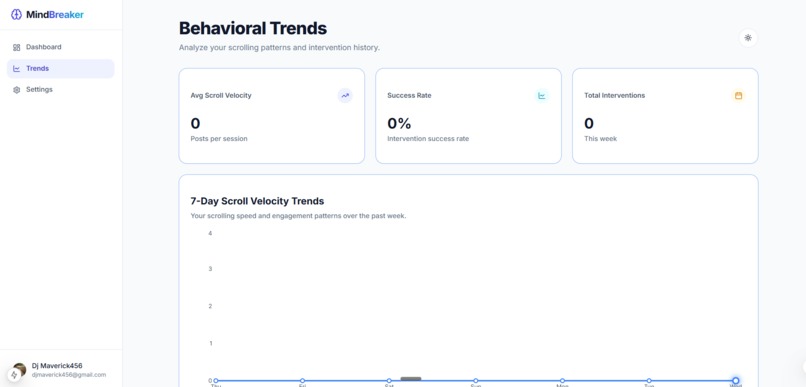
Trend Graph Sheet
-
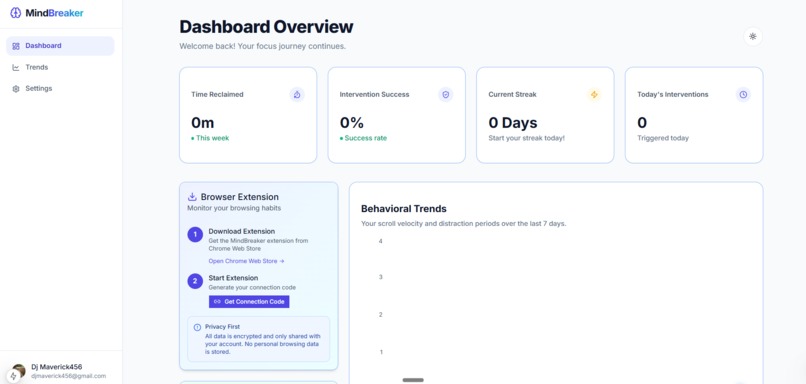
Dashboards
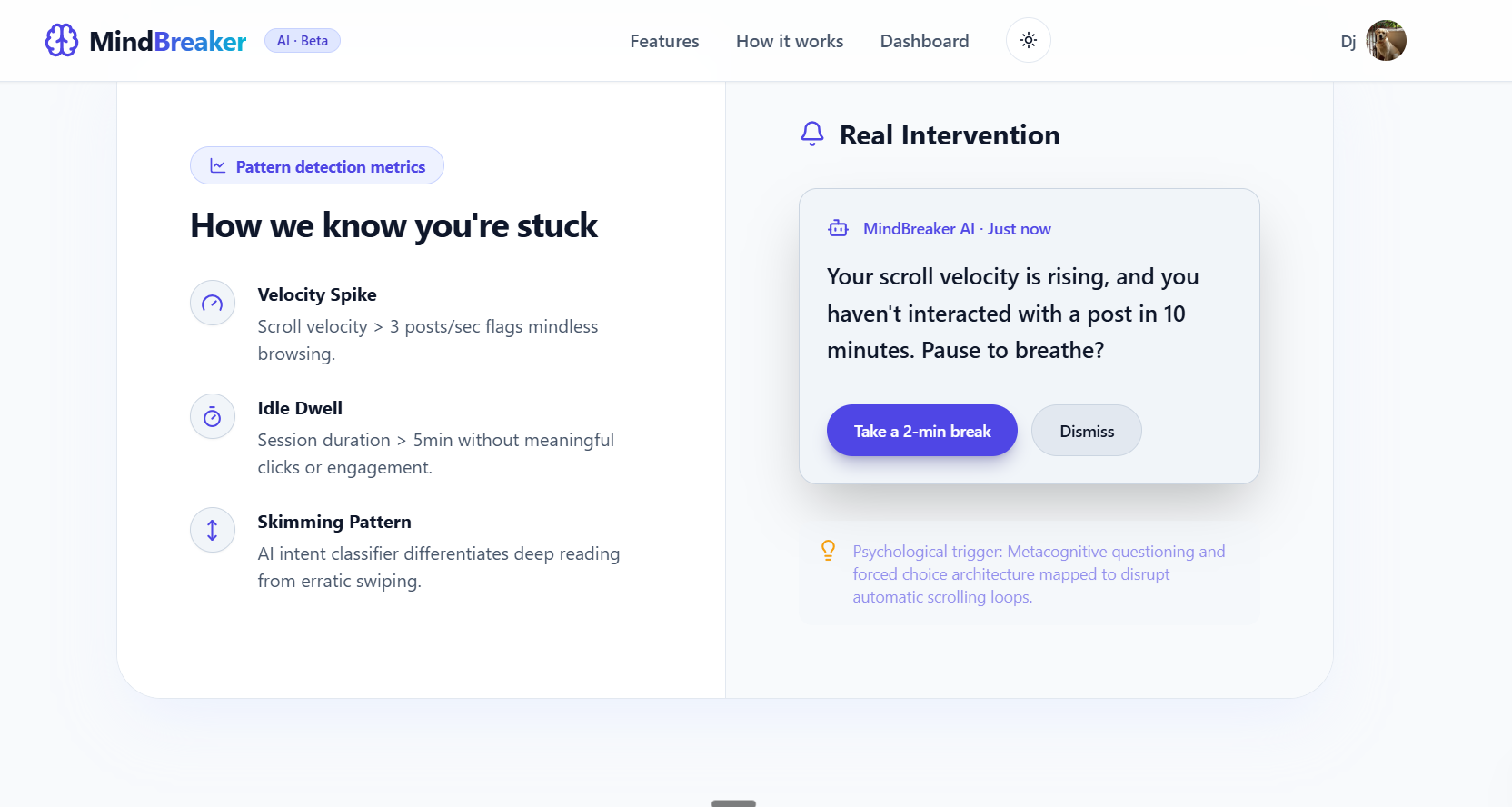
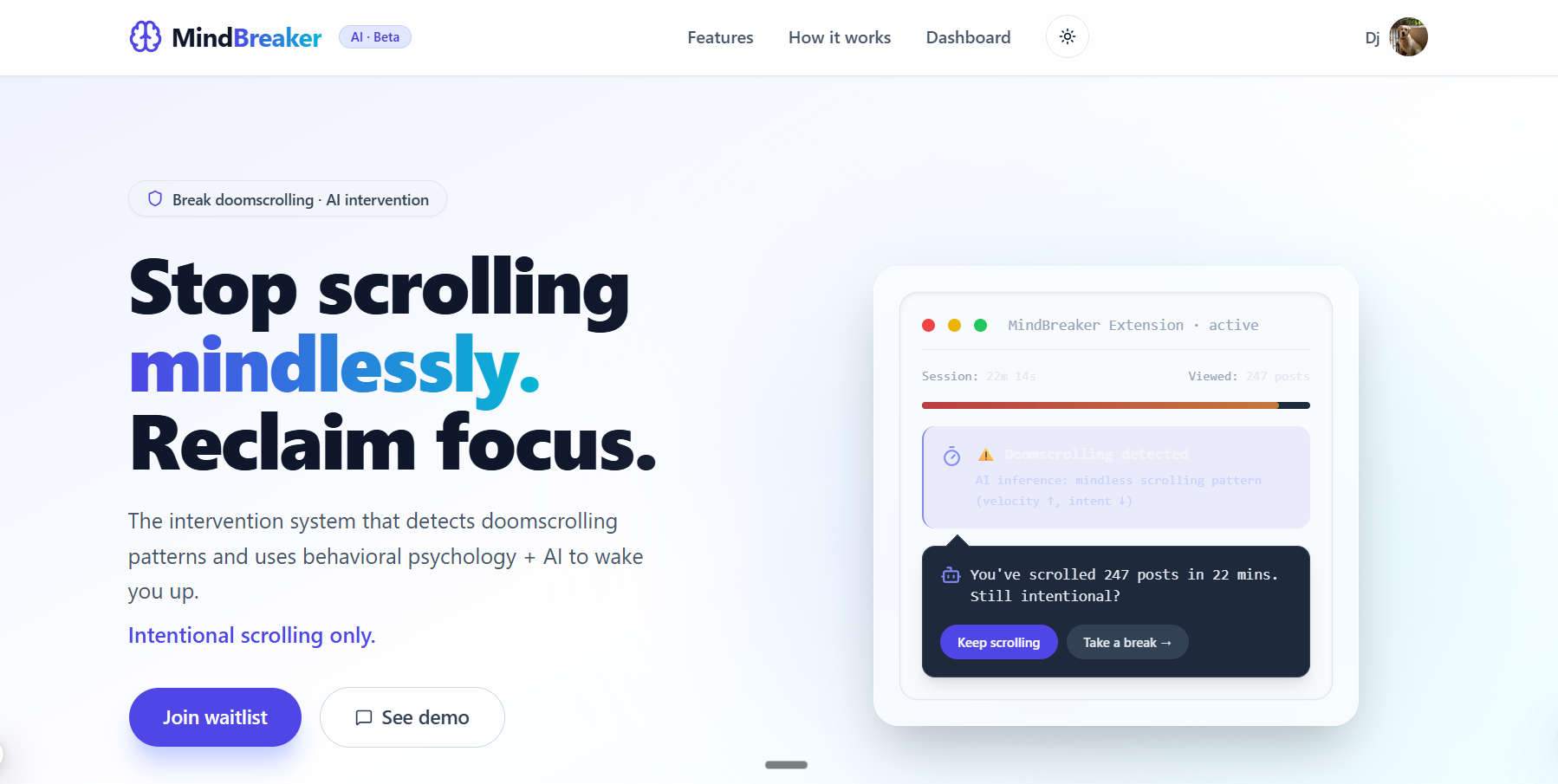
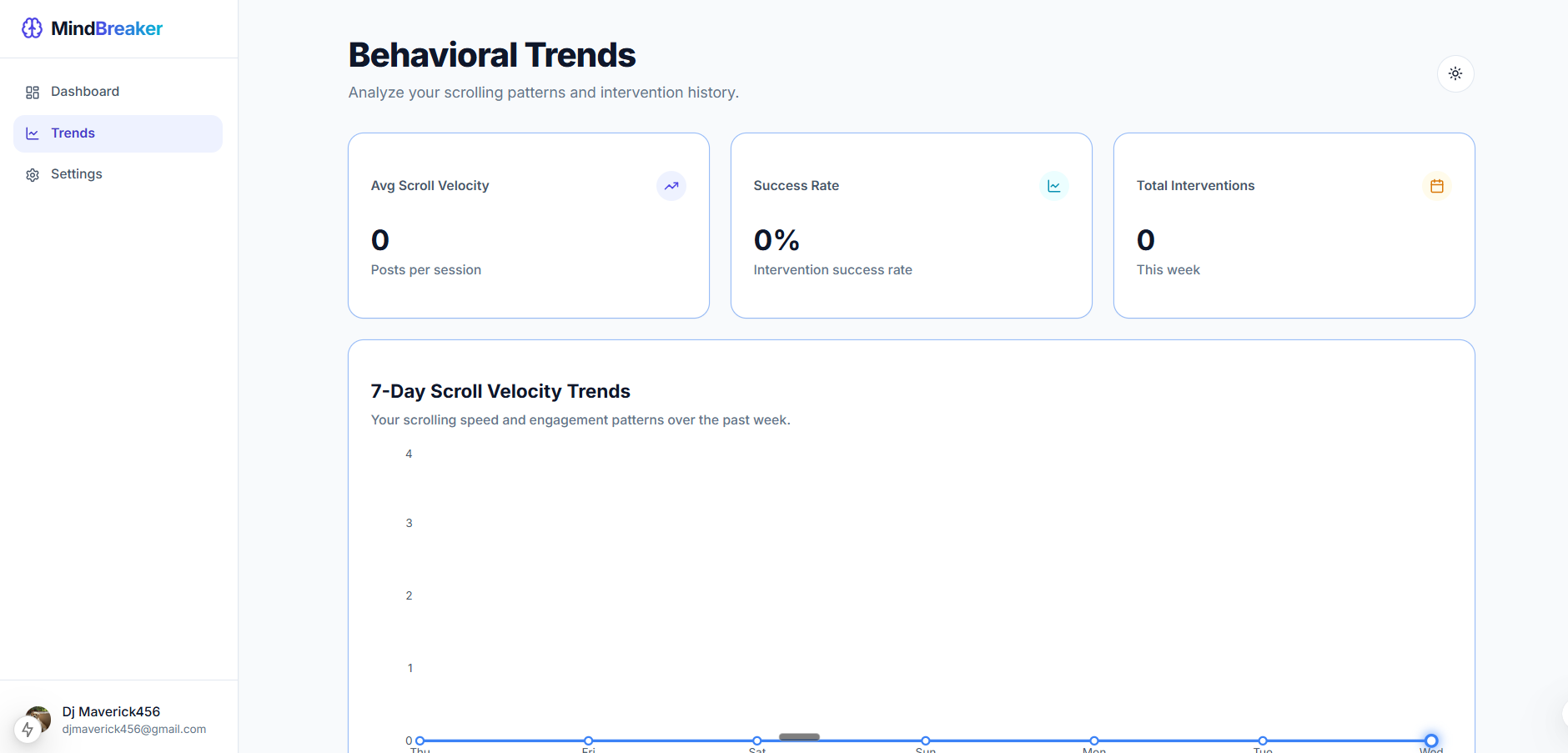
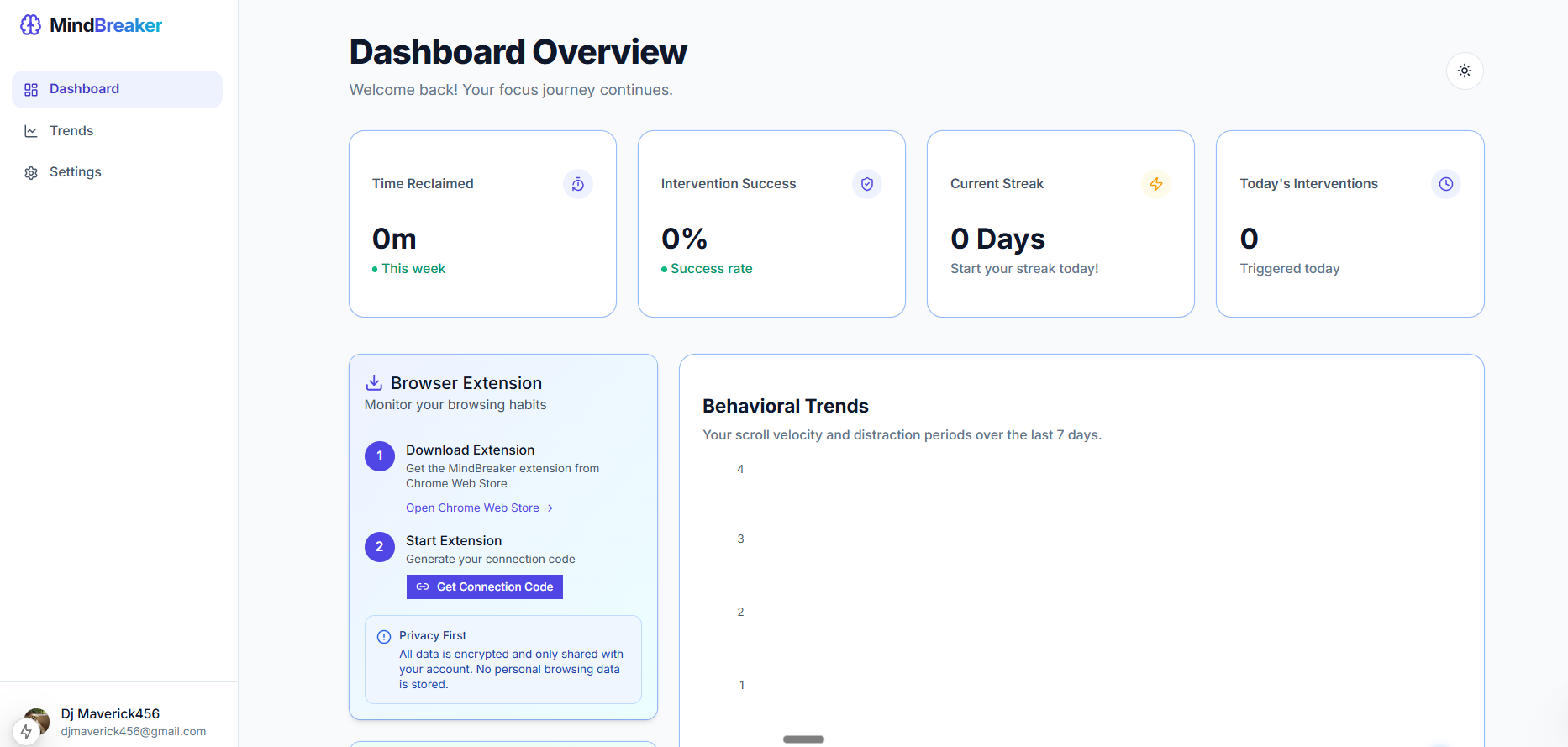
MindBreaker began with a simple frustration—the feeling of losing hours to social media after opening it for “just five minutes.” Instead of ignoring the problem, I chose to understand it. I realized that human behavior is complex, and helping people regain control would require more than just blocking apps—it needed intelligence, empathy, and the right tone.
As I built MindBreaker, each step became a lesson. I learned that small design choices, like how a message is phrased, can deeply influence user behavior. Creating a system that works in real time pushed me to design a strong architecture connecting the extension, backend, and database. Features like session tracking, AI-based personalization, and psychological profiling slowly shaped the product into something meaningful.
The journey wasn’t easy. There were technical challenges like security issues, performance limits, and system conflicts. But each obstacle led to a smarter solution—from efficient data handling to thoughtful intervention timing.
In the end, MindBreaker became more than a tool. It became a reminder that with the right balance of technology and understanding, we can take back control of our time and habits.
Built With
- asi-1-api
- asyncio
- backgroundtasks
- chrome
- chrome-extension-manifest-v3
- chrome-runtime-messaging-api
- chrome-storage-api
- clerk-oauth
- daily-stats
- fastapi
- git
- groq
- heroku
- interventions
- migrations
- next-themes
- next.js
- npm
- pip
- postgresql
- pydantic
- pytest
- pytest-asyncio
- python
- railway
- react
- session-metrics
- shadcn/ui
- sqlalchemy
- sqlite
- tailwind-cli
- tailwind-css
- telemetry-records
- typescript
- user-profiles
- users-table
- vercel
- vite
- webpack
- webstore

Log in or sign up for Devpost to join the conversation.