Inspiration
As someone who’s struggled with unexplained chronic headaches tied to stress, I wanted to bridge the gap between mental and physical health—something so many of us overlook. Western healthcare often silos body and mind, so I set out to build a tool that honors their connection, making it easy to track, understand, and act on these links daily.
What it does
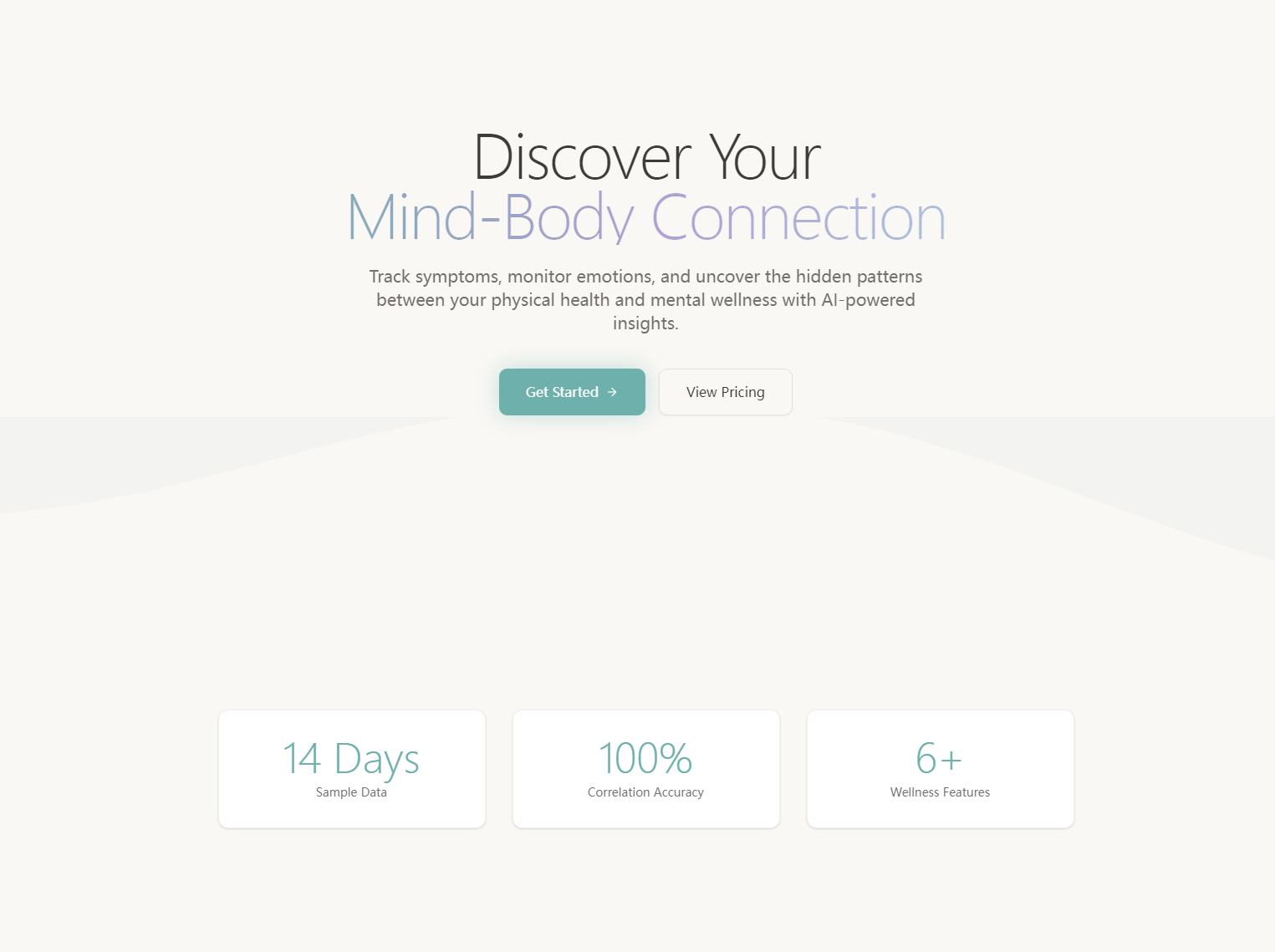
MindBodySync lets users log physical symptoms (headaches, fatigue) and emotional states (stress, anxiety), then uses data analysis to reveal clear correlations. It also offers mood-matched guided meditations, physical exercises, and exportable medical reports to share with care providers—all wrapped in a visually intuitive interface.
How we built it
I started with mapping core user journeys (daily logging, insight review, report export) and designing a calm, accessible UI with soft gradients and smooth animations. Using React for the frontend, I integrated GSAP for immersive interactions (particle backgrounds, 3D card tilts) and Chart.js for data visualizations. The backend (Node.js/Express) handles data storage, while WebAudioAPI powers synced meditation audio and PDFKit generates polished reports.
Challenges we ran into
Balancing performance with high-fidelity animations was tough—ensuring 60fps on all devices meant optimizing particle systems and parallax layers. Also, translating complex correlation data into simple, non-medical language took iterative testing to make insights actionable for everyday users.
Accomplishments that we're proud of
Creating an interface that’s both beautiful and functional—users don’t just track data, they feel engaged with their wellness journey. The AI-driven correlation insights (e.g., "migraines 3x more frequent with high stress") are clear and empowering, and the meditation feature’s synced breathing animations make relaxation accessible for busy lives.
What we learned
I deepened my understanding of frontend animation optimization and user-centered design for wellness tools. Most importantly, I learned how to translate technical data into empathetic, human-focused insights—wellness tech needs to feel supportive, not clinical.
What's next for this project
I plan to add personalized wellness reminders, integrate with wearable devices to capture real-time physical data, and expand the meditation/exercise library to include more culturally inclusive practices. Long-term, I want to partner with healthcare providers to validate the correlation insights and make the tool a staple in holistic care plans.

Log in or sign up for Devpost to join the conversation.