-
-
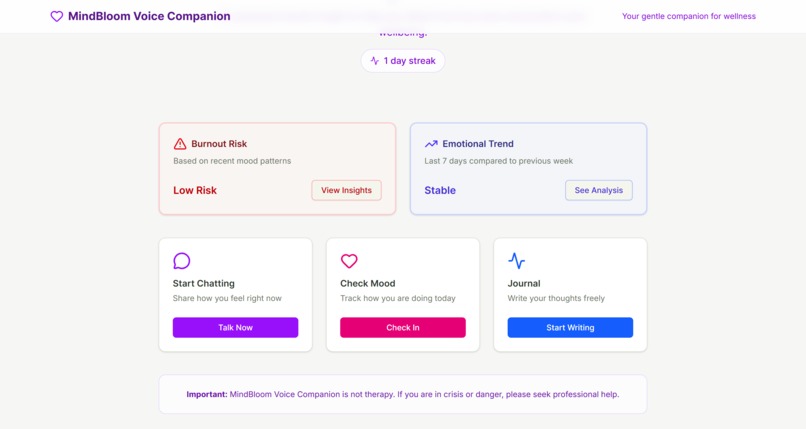
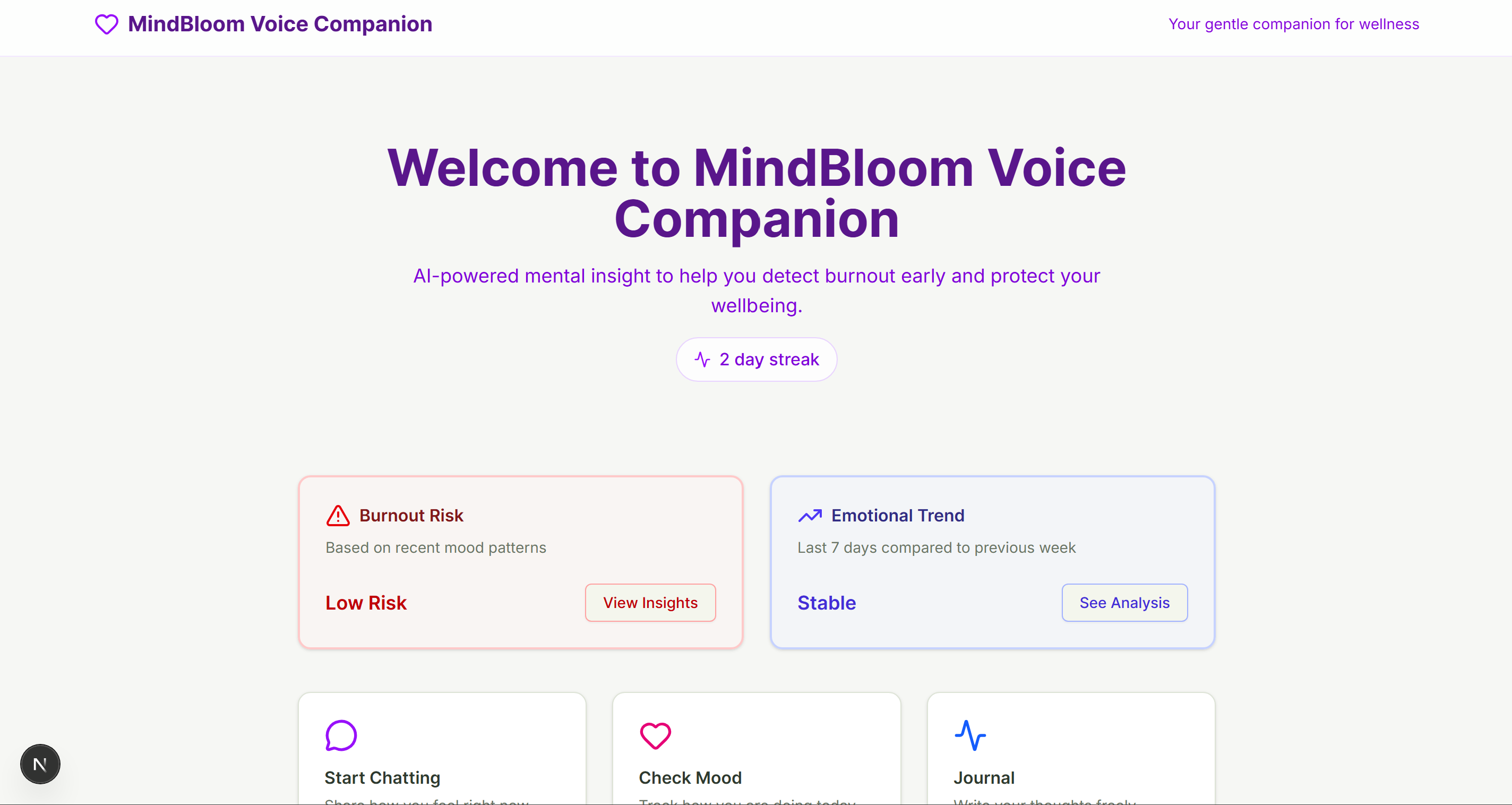
Ui
-
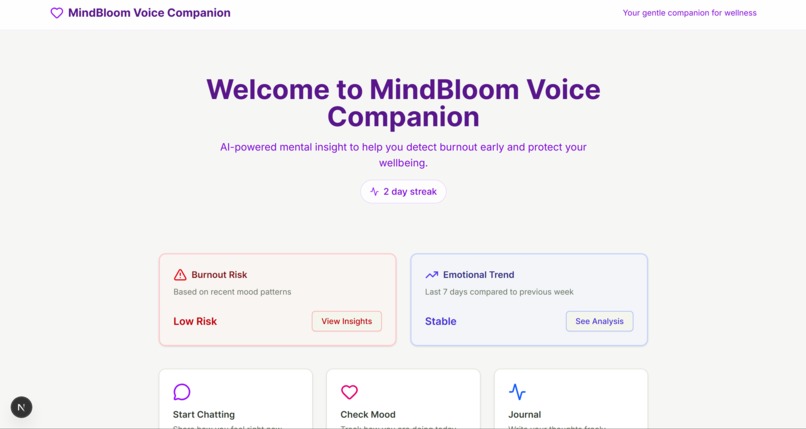
UI
-
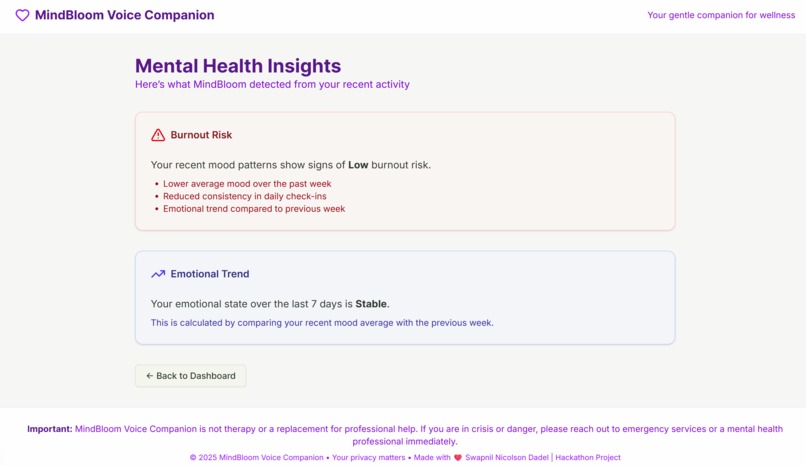
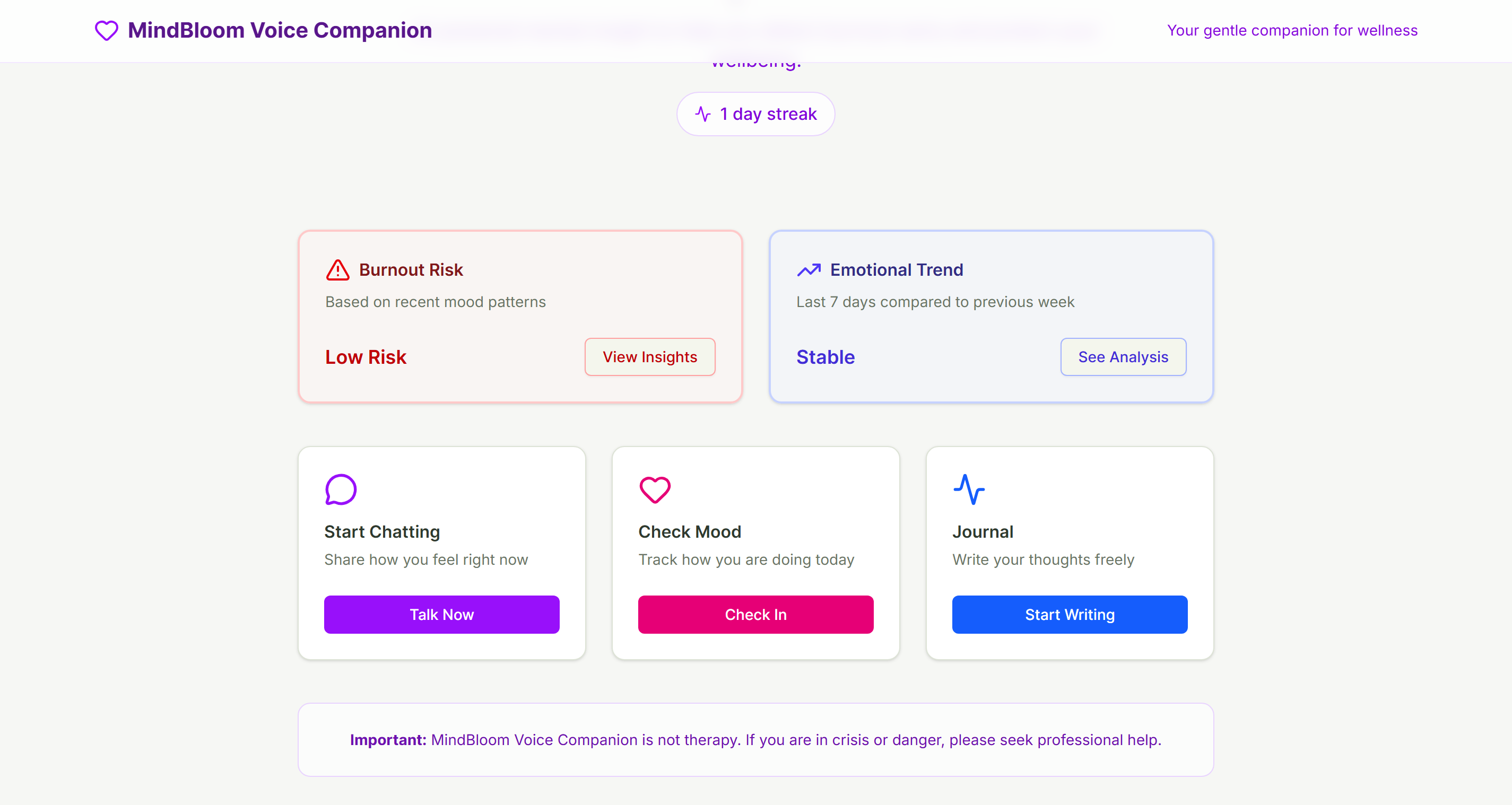
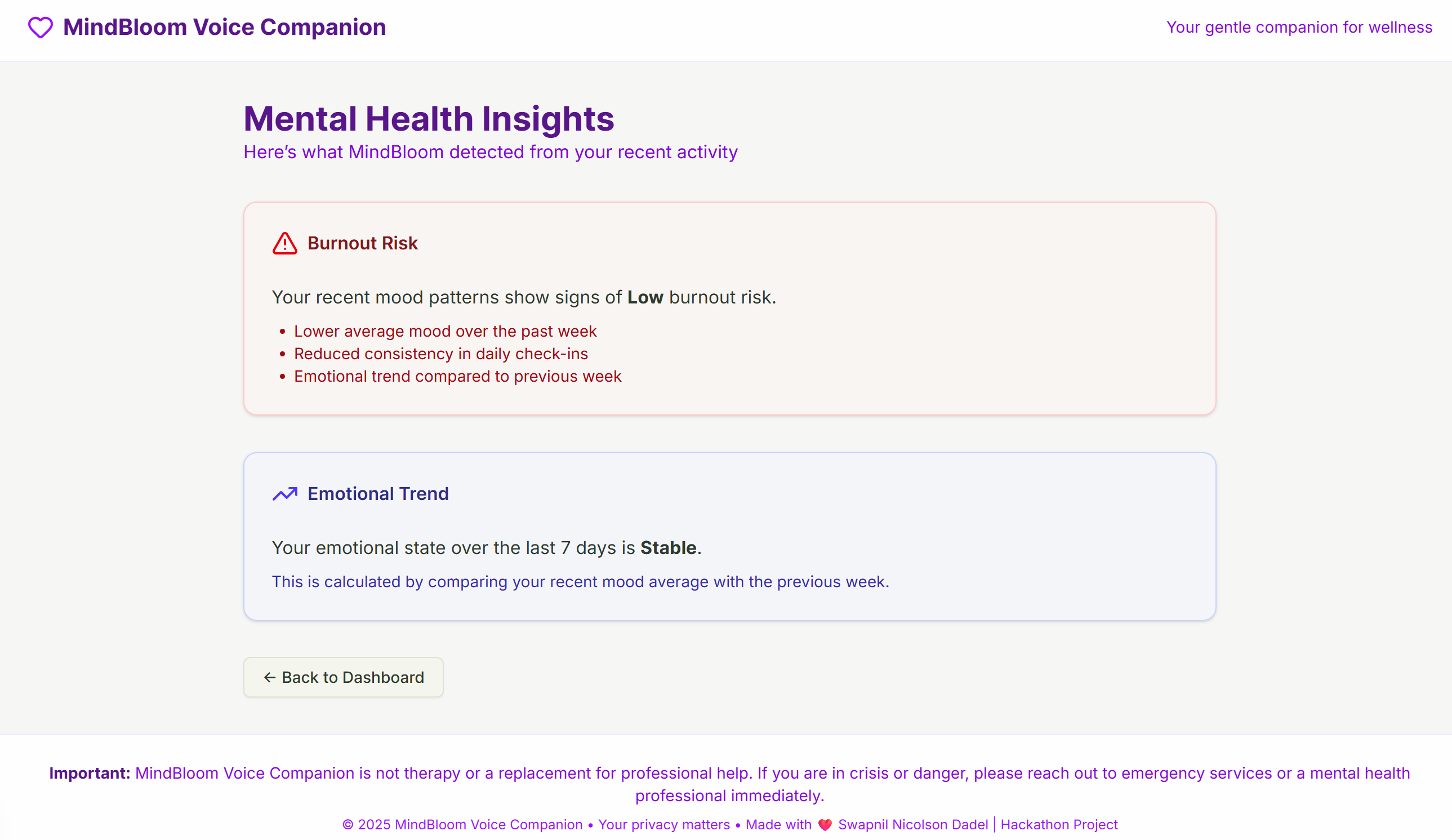
burnout score
-
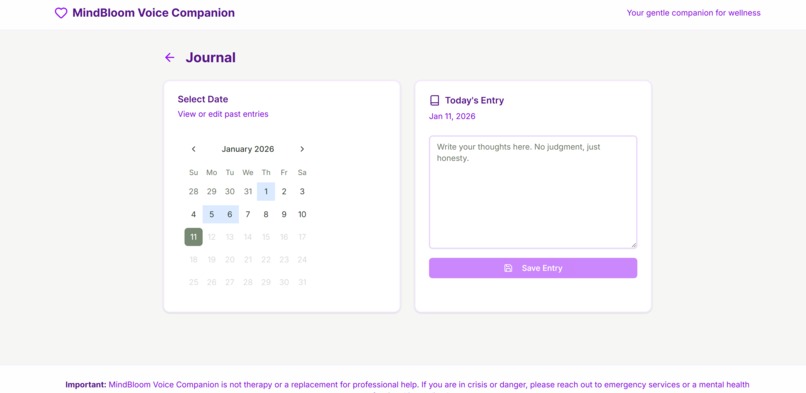
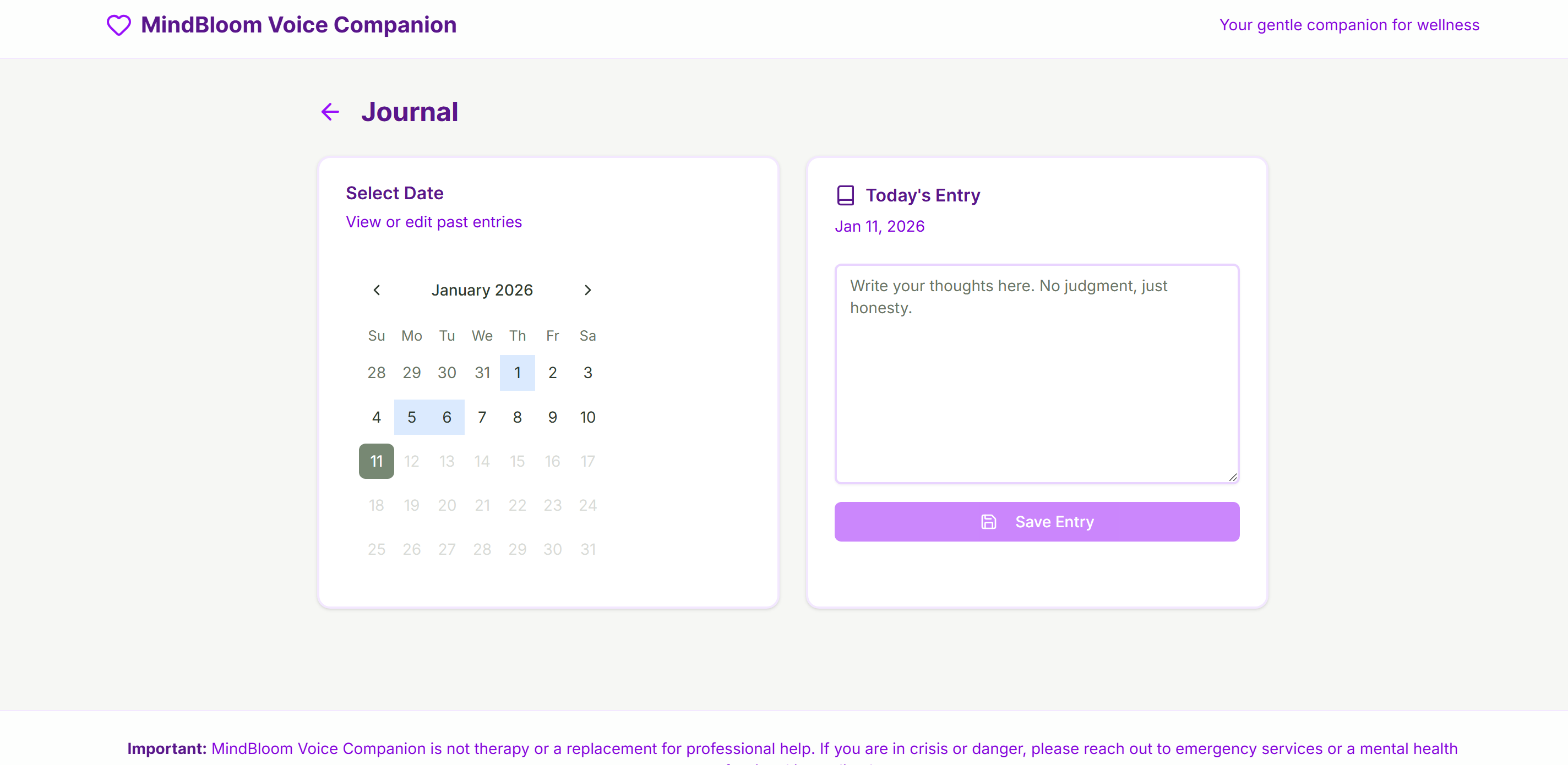
journal
-
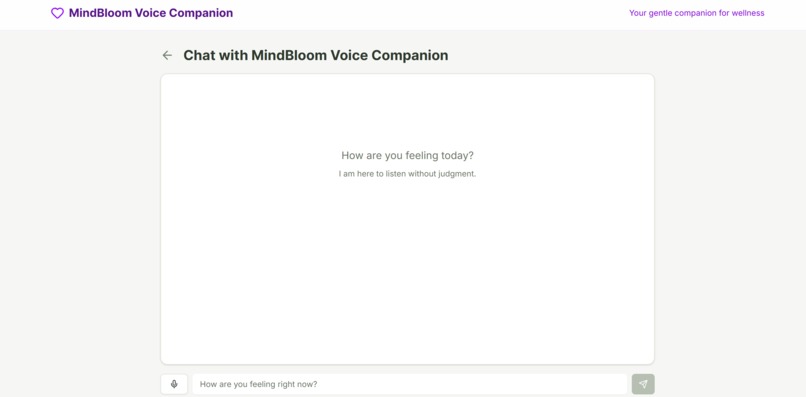
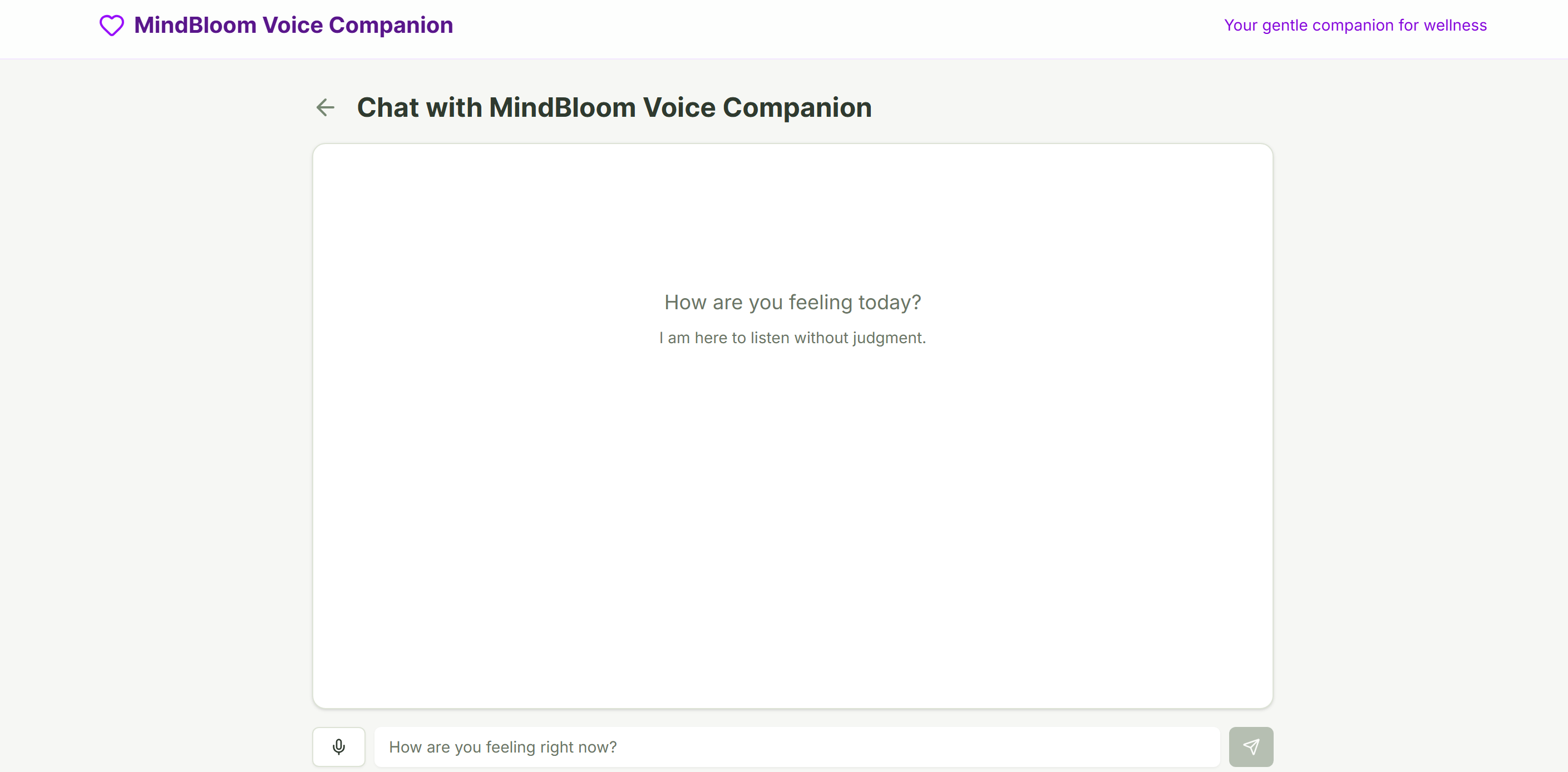
chat
-
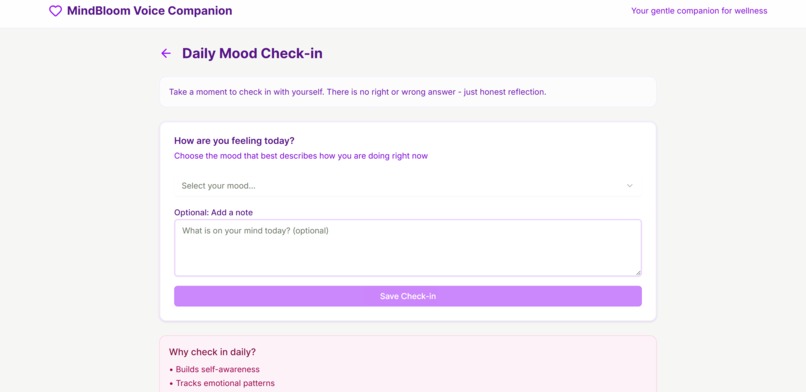
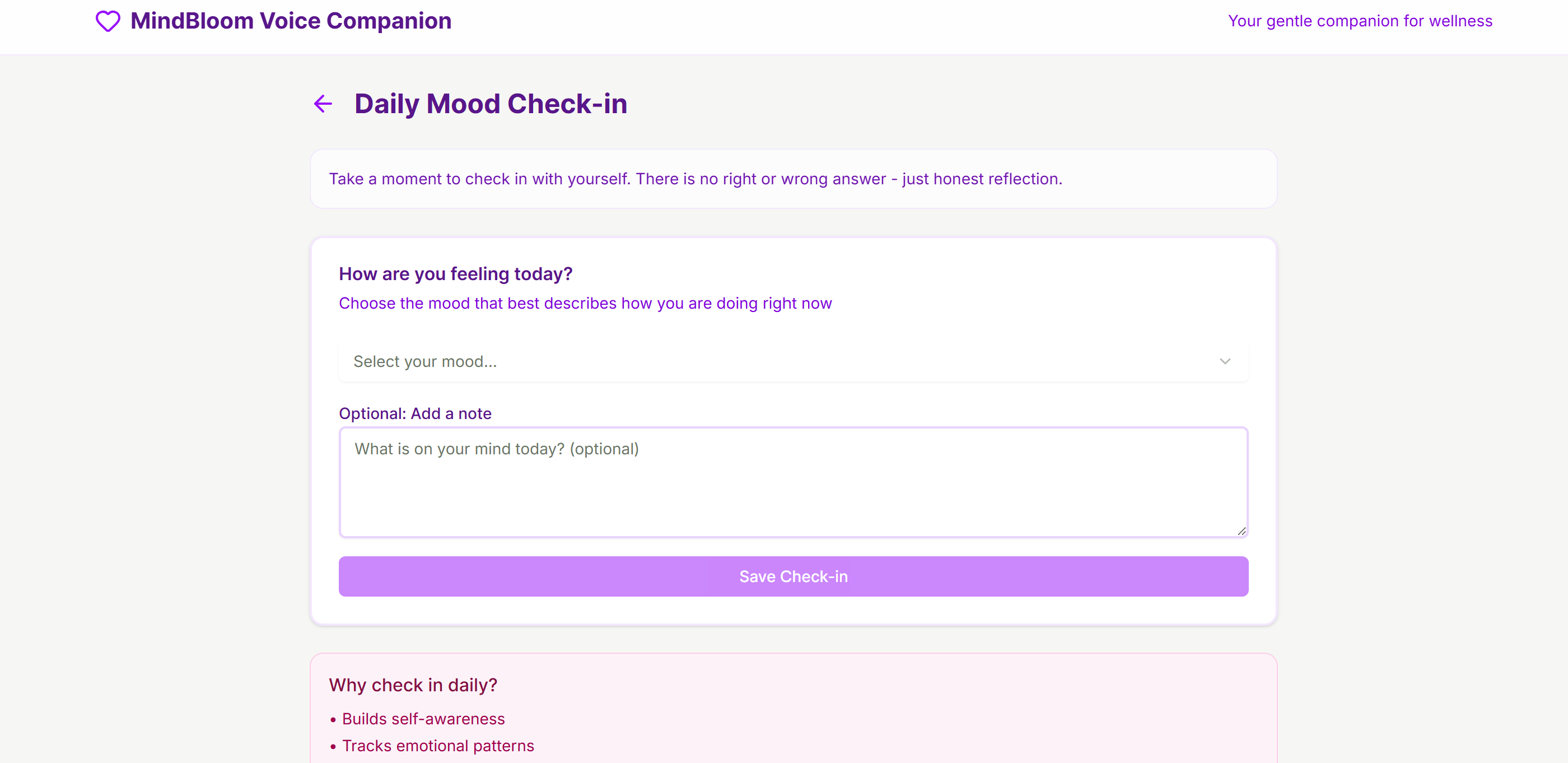
mood
Inspiration
Burnout rarely appears overnight. It builds silently through emotional fatigue, stress, and not knowing when to slow down.
As a student and builder, I noticed that most mental health apps react after people feel overwhelmed. They focus on motivation, journaling, or therapy-style conversations, but very few help users detect early warning signs of burnout — especially during moments when people are too tired or emotionally drained to type.
MindBloom Voice was inspired by the idea that early awareness is prevention. If users can recognise emotional decline sooner, they can take small corrective actions before burnout escalates.
What it does
MindBloom Voice is an AI-powered mental insight companion that helps users:
- Detect burnout risk early using mood patterns and emotional trends
- Infer emotional distress from voice input, not just text
- Track emotional trends over time (improving, stable, declining)
- Receive gentle, actionable guidance instead of generic motivation
- Interact hands-free using voice during moments of fatigue or stress
It is not therapy and makes no medical claims.
The focus is on early signals, clarity, and prevention.
How we built it
MindBloom Voice was built as a modern web application using Next.js (App Router) with a strong emphasis on clean architecture, explainable logic, and privacy-first design.
Key components include:
- Mood tracking and trend analysis using local data
- Burnout risk detection based on recent mood consistency and emotional decline
- Voice-based sentiment inference, where speech is transcribed using browser APIs and analysed through weighted language signals and contextual distress detection
- Explainable AI design, where internal signals are tracked for transparency but intentionally hidden from the UI to prioritise emotional comfort
- Gentle crisis awareness, offering optional support resources when severe distress language is detected
- Privacy-first storage, with all personal data kept entirely on the user’s device
AI is used purposefully, not as a gimmick — for insight and guidance, not diagnosis.
Challenges we ran into
Balancing explainability with emotional safety
Showing internal signals helps transparency, but can feel invasive to users. Finding the right balance was challenging.Avoiding overclaiming AI capabilities
Instead of claiming emotion detection from raw audio, the system uses honest, language-based inference.Handling client-side state correctly in Next.js
Managing localStorage-based insights without hydration issues required careful client-only logic.Creating a strong “wow moment”
Designing a demo that communicates value clearly within seconds took multiple iterations.
Accomplishments that we're proud of
- Building a voice-first emotional insight system using only free browser APIs
- Implementing burnout detection with explainable logic, not black-box AI
- Designing a responsible crisis-awareness flow without panic or pressure
- Maintaining 100% user privacy with no database or tracking
- Delivering a polished, deployed product within hackathon constraints
What we learned
- In sensitive domains like mental health, ethical design matters more than complexity
- Explainability builds trust — but doesn’t need to be exposed directly to users
- Voice-first interfaces can significantly improve accessibility during stress or fatigue
- Judges value intentional design decisions as much as technical depth
- AI should support humans, not overwhelm them
What's next for MindBloom Voice
With more time and resources, MindBloom Voice can evolve further:
- True voice-based sentiment analysis using acoustic features like pitch and speech rate
- Lightweight ML models to predict future burnout risk
- Long-term emotional summaries and pattern detection
- Optional encrypted sharing with trusted contacts or professionals
- Multilingual support for global accessibility
- Enhanced accessibility and mobile-first optimisations
MindBloom Voice aims to grow into a preventive mental wellbeing tool — helping users recognise early warning signs and act responsibly, before burnout takes hold.
Built With
- api
- browser
- css
- lucide
- nextjs
- openrouter
- react
- shadcn/ui
- speechrecognition
- speechsynthesis
- tailwind
- typescript
- vercel


Log in or sign up for Devpost to join the conversation.