-
-
breathing.jpg
-
mood_log.jpg
-
dashboard.jpg
-
challenges.jpg
Inspiration
As students, we are constantly juggling demanding coursework, exam pressure, social expectations, and uncertainty about the future. Studies show that over 1 in 3 students suffers from chronic stress and anxiety, yet most mental health tools available today feel clinical, sterile, and disconnected from youth culture. They look like medical dashboards rather than comforting daily spaces, causing most students to abandon them after just a couple of days. We wanted to change the narrative around student mental health. What if tracking your emotional state felt as rewarding as leveling up in your favorite game? What if daily mindfulness wasn't a chore, but an engaging, judgment-free habit? That spark became MindBloom— a sanctuary designed for students aged 13–21 to build emotional awareness, practice mindfulness, celebrate daily wins, and bloom into their best selves.
What it does
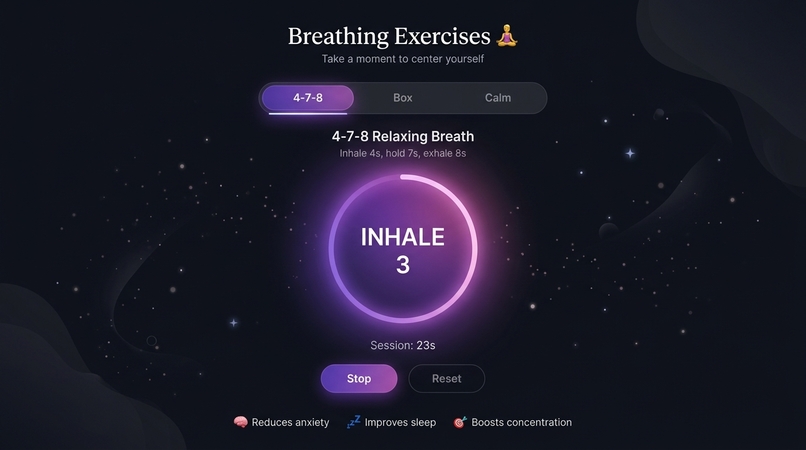
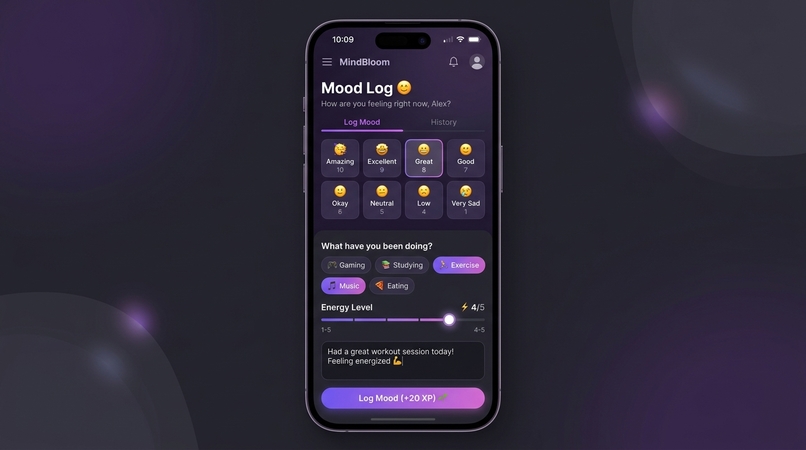
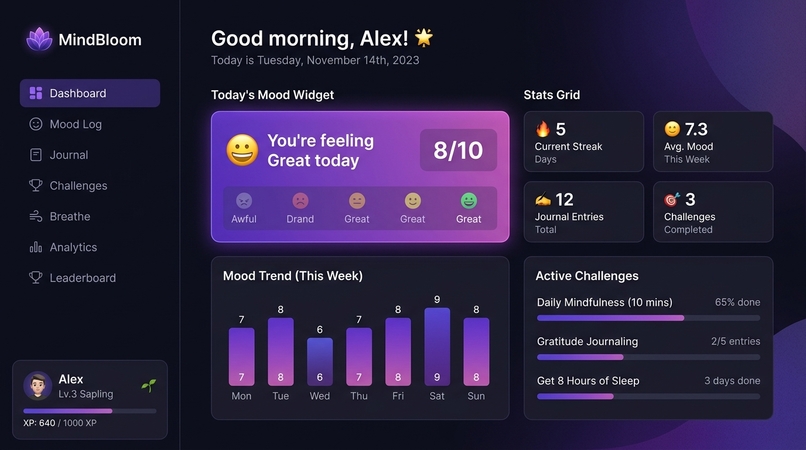
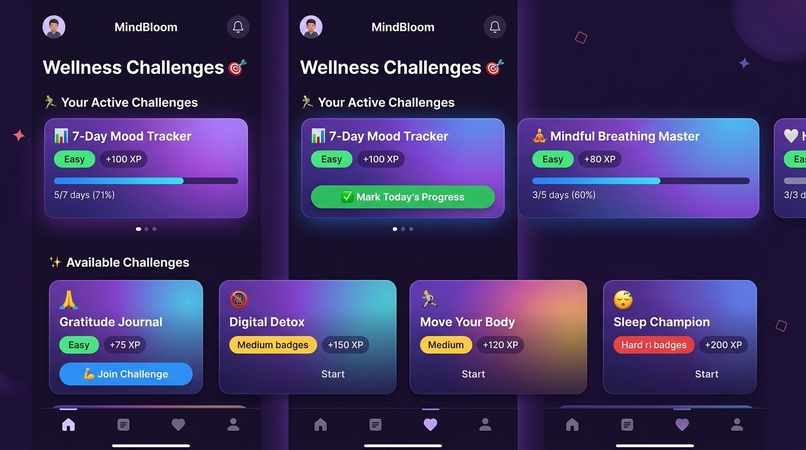
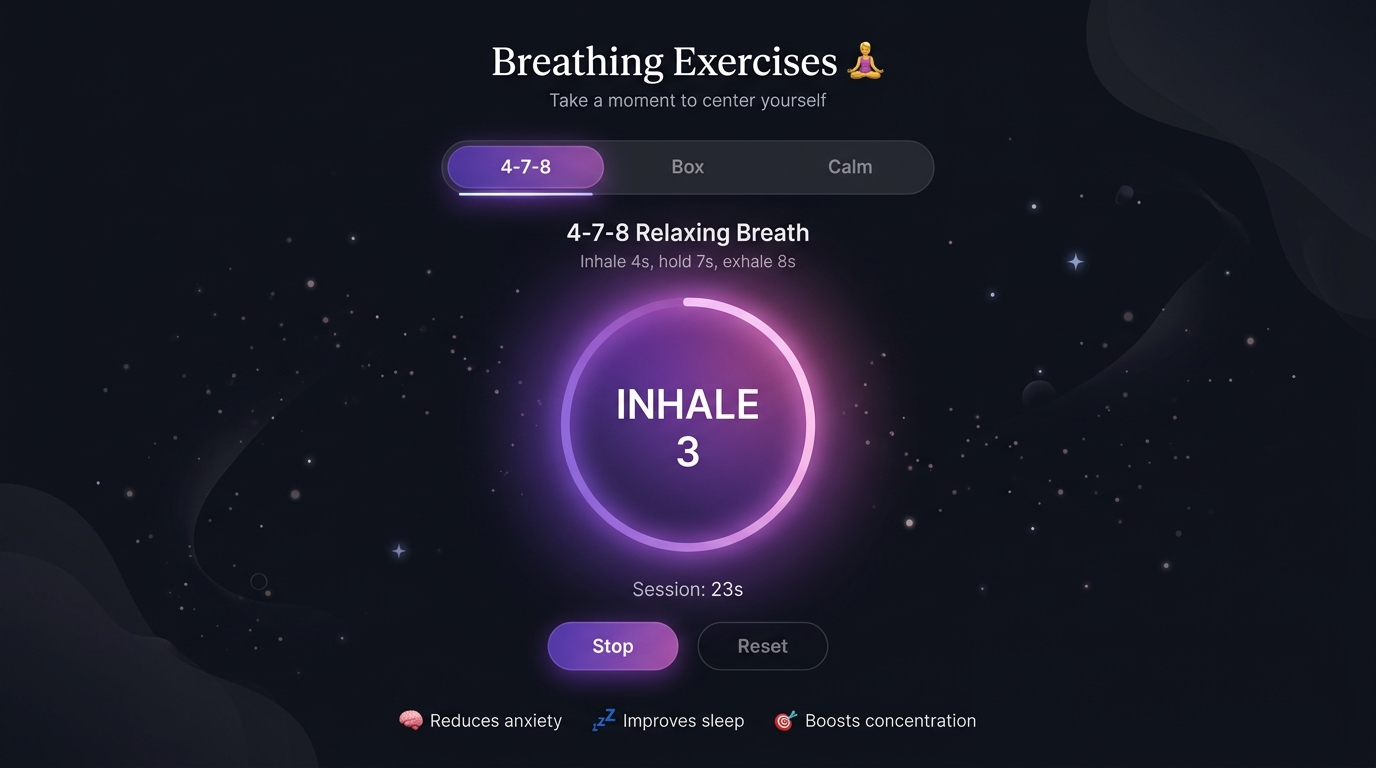
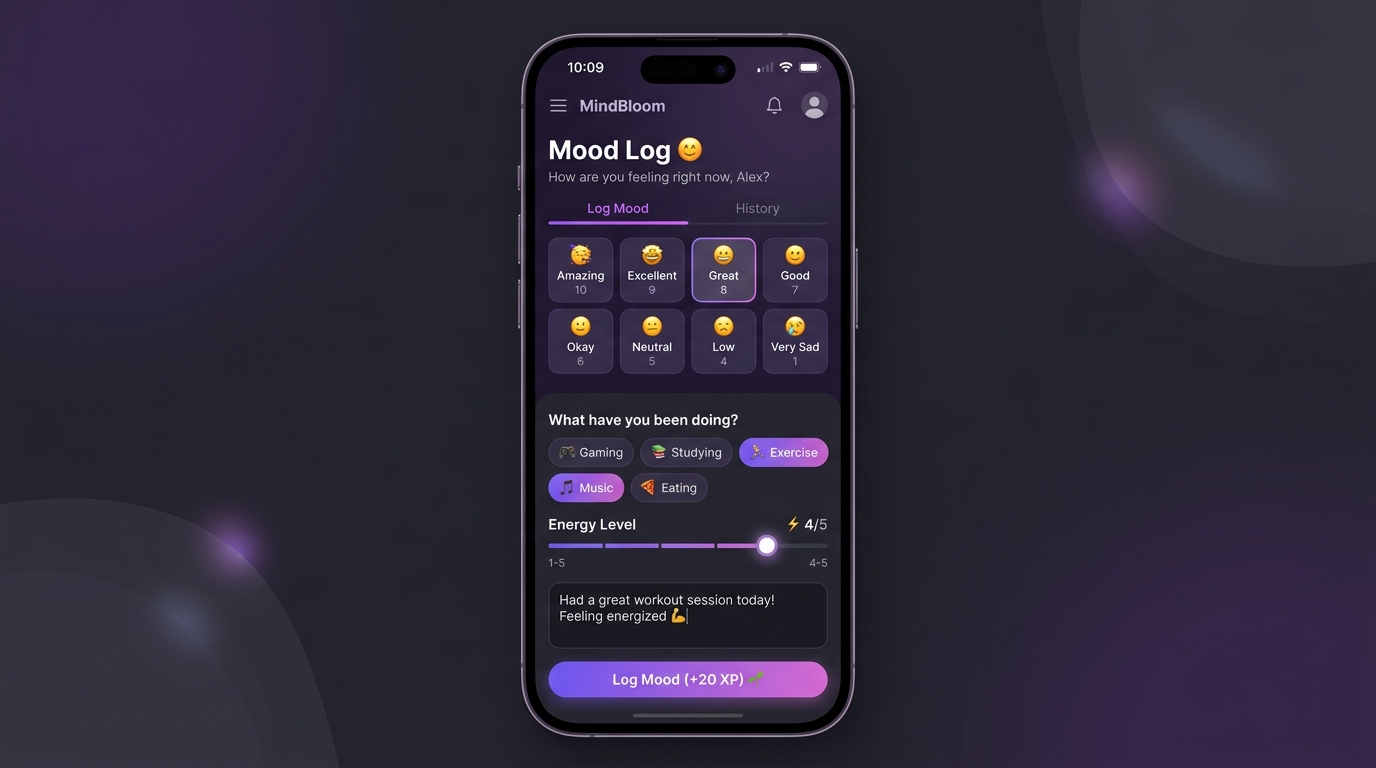
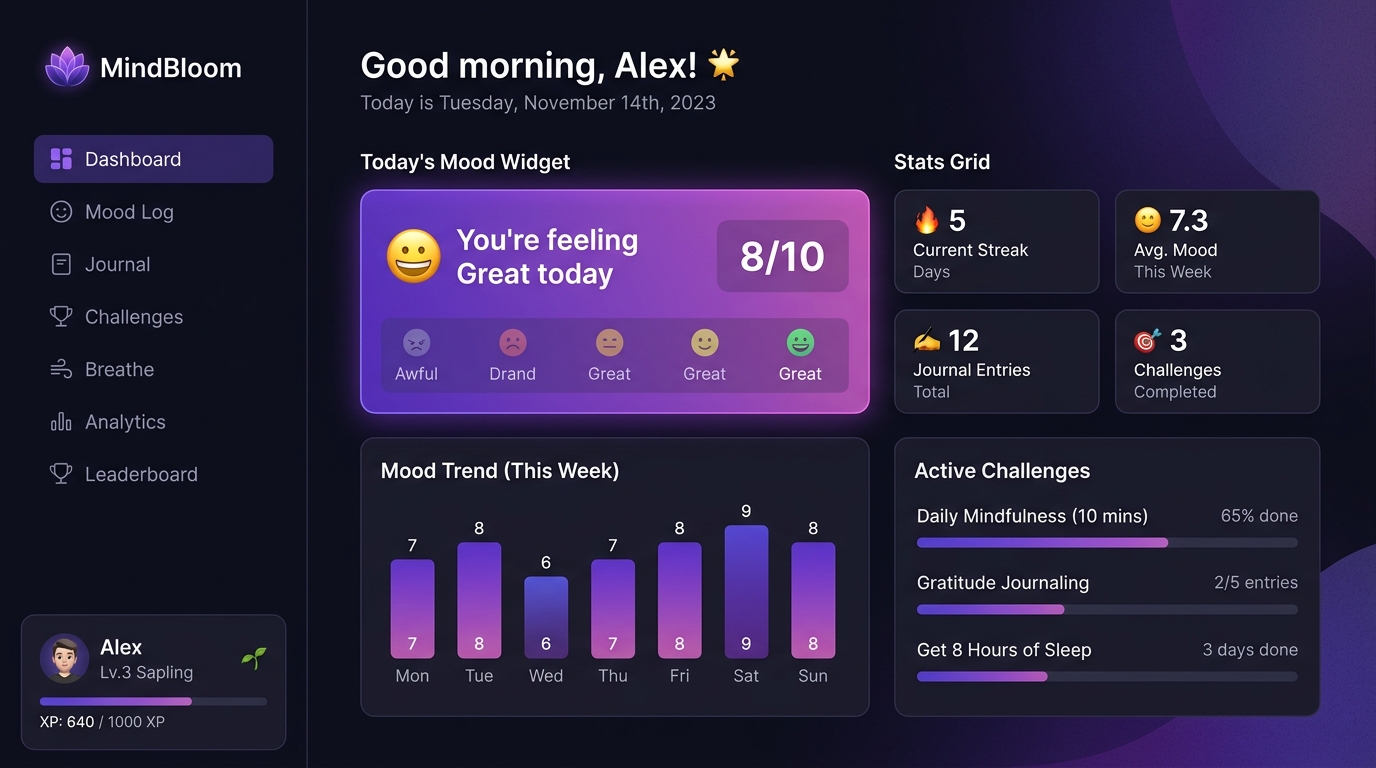
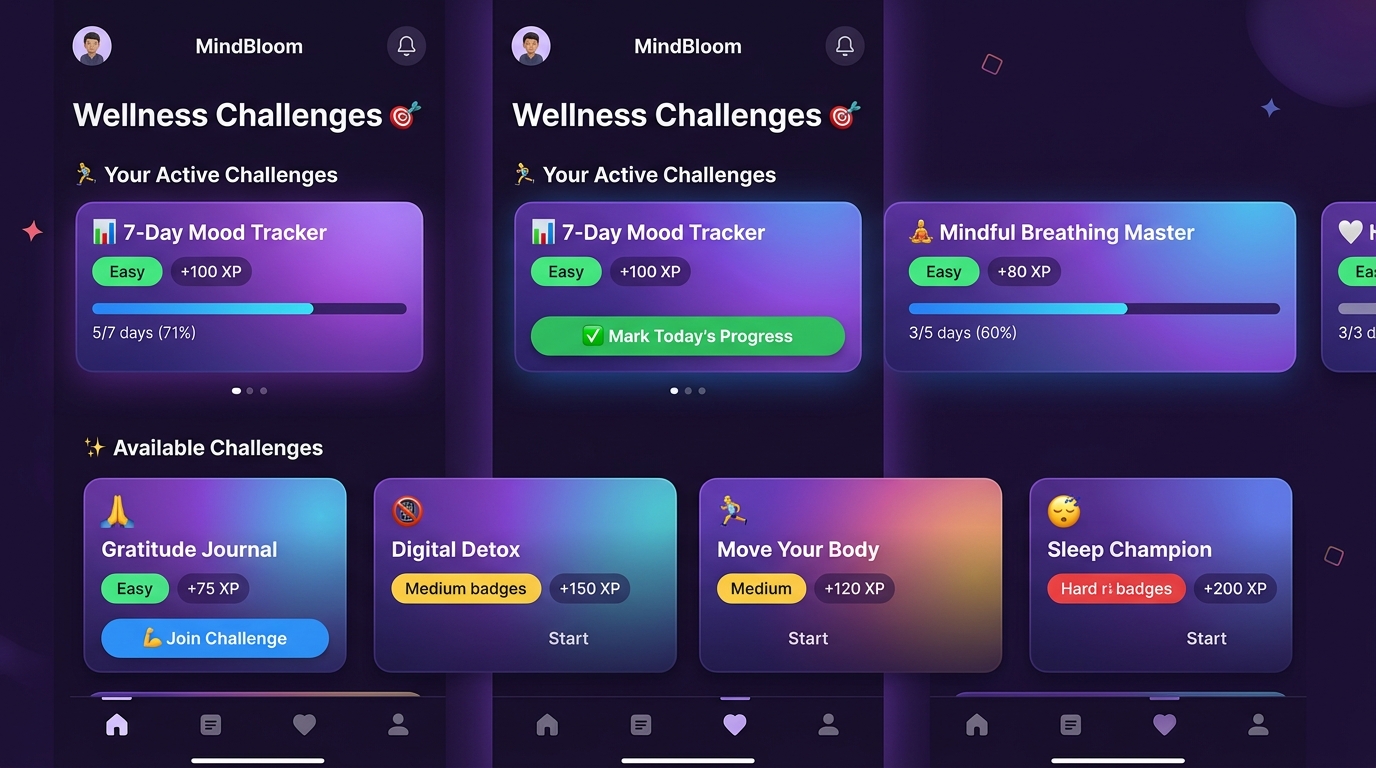
MindBloom is a full-stack mental health companion designed to make student wellbeing consistent, private, and rewarding: 1.Expressive 10-Point Mood Tracker: Students log how they feel with one tap using intuitive emoji scales, contextual activity tags (studying, gaming, workouts, friends), energy meters (1–5), and optional private notes. 2.Habit Streaks & Level System: Every check-in rewards XP (+20 XP for mood logs, +15 XP for journals). Students build daily streaks and level up through progression ranks: from Seedling to Sprout, Sapling, Tree, and finally Forest Guardian. 3.Guided Breathing Visualizer: A serene, animated respiration tool supporting science-backed rhythms (the 4-7-8 Relaxing Breath, Box Breathing, and Calming Pace). It expands and contracts dynamically in real-time to immediately lower heart rates during acute anxiety. 4.Private Reflective Journal: A personal markdown-friendly space to untangle thoughts, tag moods, and monitor word counts without fear of judgment. 5.Curated Wellness Challenges: 8 gamified habit quests (e.g., 7- Day Mood Tracker, Digital Detox, Gratitude Journal, Sleep Champion) complete with interactive daily checkboxes and bonus XP rewards. 6.Analytics & Community Leaderboard: Interactive 7-day and 30- day mood rolling averages to help students identify triggers and celebrate progress alongside a supportive community.
How we built it
We designed MindBloom from the ground up as a lean, production- ready full-stack application: • Frontend: Built with pure Vanilla JavaScript (SPA) to ensure near-instant load times with zero framework bloat. We styled it using custom CSS variables, responsive grid/flexbox layouts, micro- animations, and a calming dark-purple aesthetic. • Backend: Powered by Node.js (v22/24) and an Express.js REST API with modular routing for authentication, mood logs, journal entries, wellness challenges, and analytical stats. • Security & Auth: Implemented stateless JSON Web Tokens (JWT) for session management, bcryptjs password hashing (12 salt rounds), HTTP security headers via Helmet, and API protection with express- rate-limit. • Database: Leveraged Node 22/24’s cutting-edge native node:sqlite (DatabaseSync) module with WAL (Write-Ahead Logging) mode and automated schema seeding, eliminating heavy native C++ build toolchains while preserving blazing-fast SQL operations. • DevOps & Cloud: Containerized with an optimized Alpine Linux Dockerfile and deployed globally to Fly.io on an isolated internal port (Port 8080), complete with shared IPv4 and dedicated IPv6 routing.
Challenges we ran into
- Native C++ Build Dependencies on Windows: During initial
dependency setup, traditional native SQLite drivers failed to
compile due to missing Visual Studio C++ toolchains on Windows. We
innovated by refactoring the persistence layer to use Node 22’s
built-in node:sqlite (DatabaseSync), achieving zero-dependency,
ultra-fast embedded SQLite storage without native compilation
barriers.
- Smooth, Non-Blocking Respiration Timers: Coordinating real-time expanding/contracting breathing circles across 4-7-8 second intervals without blocking UI event listeners required architecting clean async loops with clean interrupt hooks.
- Multi-App Port Allocation: Deploying to Fly.io alongside other standing applications required configuring custom port isolation on port 8080, configuring explicit healthcheck spidering, and resolving global edge IP allocations via Flyctl. ## Accomplishments that we're proud of • Zero-Framework Reactive UI: Built a complete, responsive Single Page Application with dynamic modal dialogs, toast notifications, tab transitions, and animated SVG charts entirely in pure vanilla JavaScript and CSS. • Production Deployment in Hours: Successfully deployed a fully functional, containerized backend and database accessible worldwide at https://mindbloom-wellness.fly.dev. • Authentic Gamification Balance: Designed an XP and streak economy that motivates consistency without feeling transactional or overwhelming. • Complete Media Suite: Programmatically produced a full 1080p 3- minute video presentation and captured high-definition feature screenshots for our submission. ## What we learned • How to design and structure scalable RESTful API contracts with standardized error responses and token-based middleware verification. • The power of the modern web platform — you don't always need heavyweight client libraries when modern CSS variables and vanilla DOM APIs can deliver 60 FPS performance. • How to leverage modern Node.js native capabilities (node:sqlite) for robust, file-backed database storage in cloud containers. • The end-to-end hackathon lifecycle: turning an empathetic idea into code, containerizing it, pushing to GitHub, and deploying to global cloud infrastructure under a tight deadline. ## What's next for MindBloom — Student Mental Wellness & Mood Tracker • Smart Push Reminders: Gentle, non-intrusive notifications reminding students to check in during high-stress exam periods. • AI Sentiment Journal Companion: Private, on-device NLP that surfaces recurring emotional patterns and highlights personal growth milestones over time. • Peer Pods: Small, anonymized support circles where classmates can join wellness challenges together and encourage each other with positive reactions. • Progressive Web App (PWA) & Offline Sync: Native installability on iOS and Android devices with offline IndexedDB queueing so students can log moods even without an internet connection.
Built With
- css-|-grid/flexbox
- css3-custom-variables
- custom-keyframe-animations
- dedicated
- docker
- express-|-rate-limit
- express.js-rest-api
- fly.io
- fonts
- git
- github-rest-api
- grotesk
- helmet-http-security
- javascript
- json
- native
- node.js
- node:sqlite
- vanilla

Log in or sign up for Devpost to join the conversation.