
🌱 MindBloom
Inspiration
“What if tending to your mental health felt as natural as watering a plant?”
- Sparked during the world’s largest Bolt Hackathon, where I noticed wellness apps were either too clinical or generic.
- I wanted to create a playful, personalized experience that encourages daily self‑care.
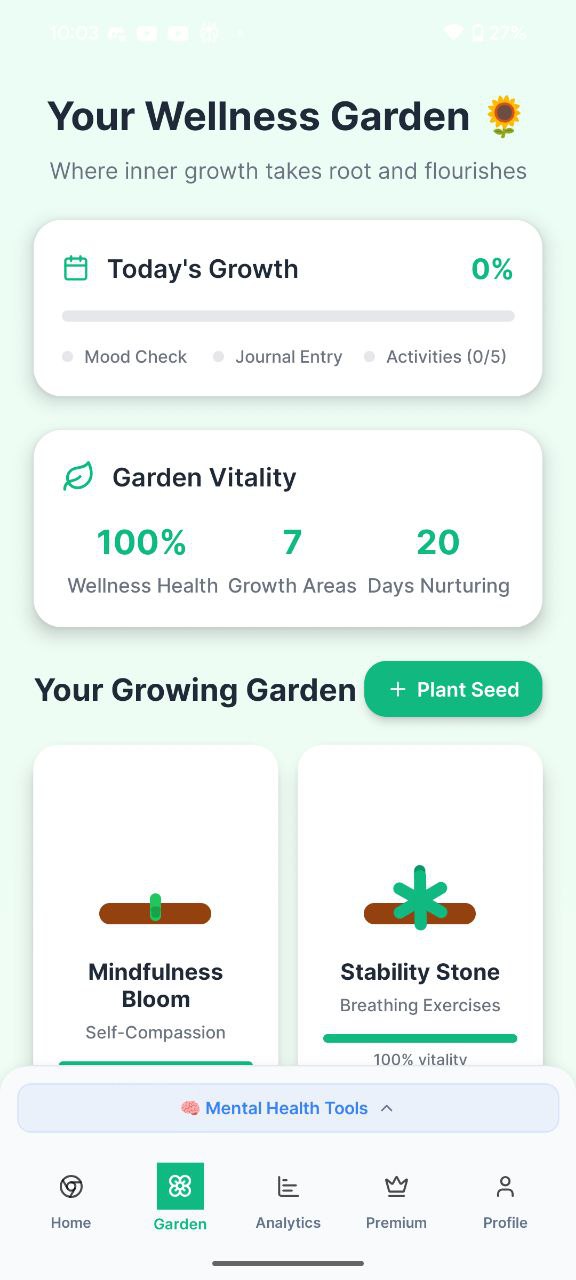
- The concept of a Mental Garden, where positive mood entries literally grow into flowers, became the heart of the idea.
What it does
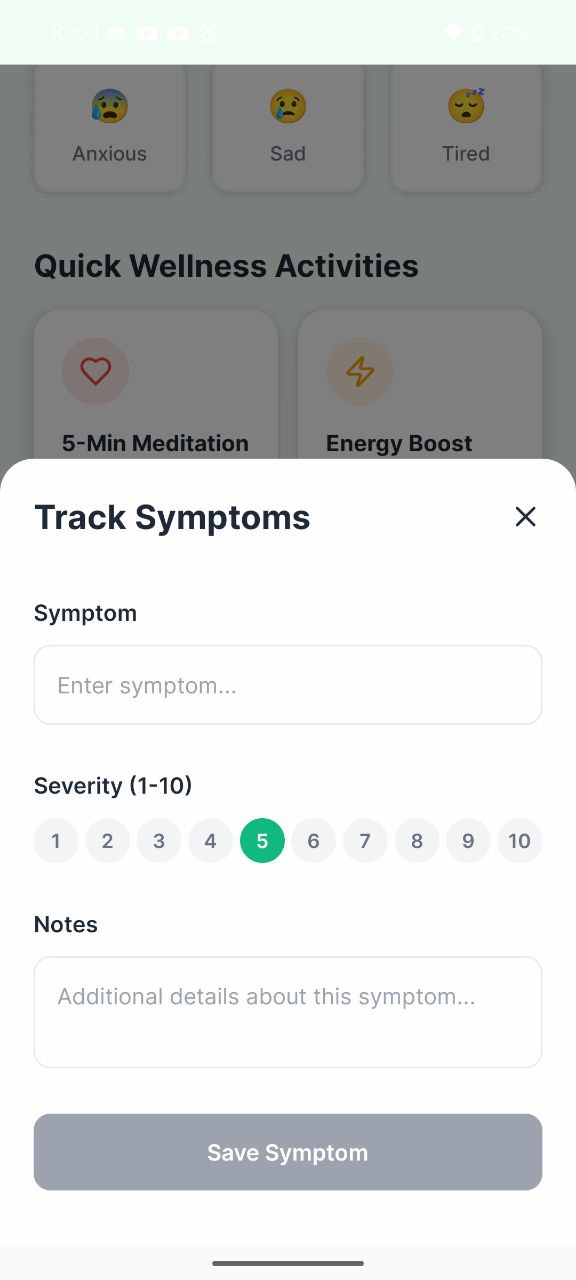
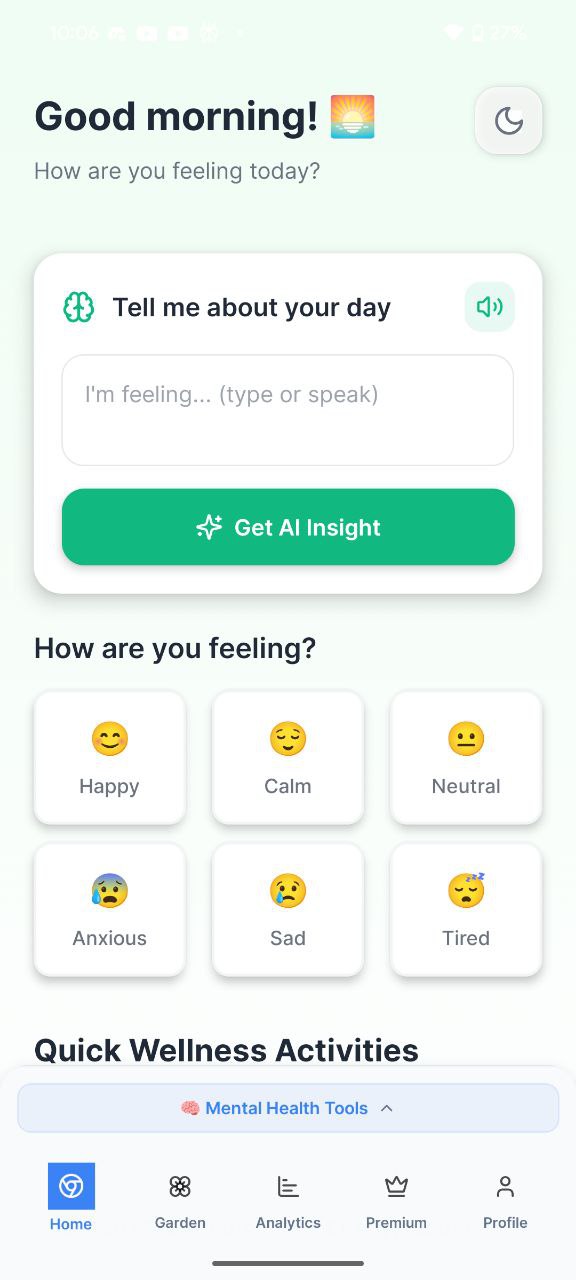
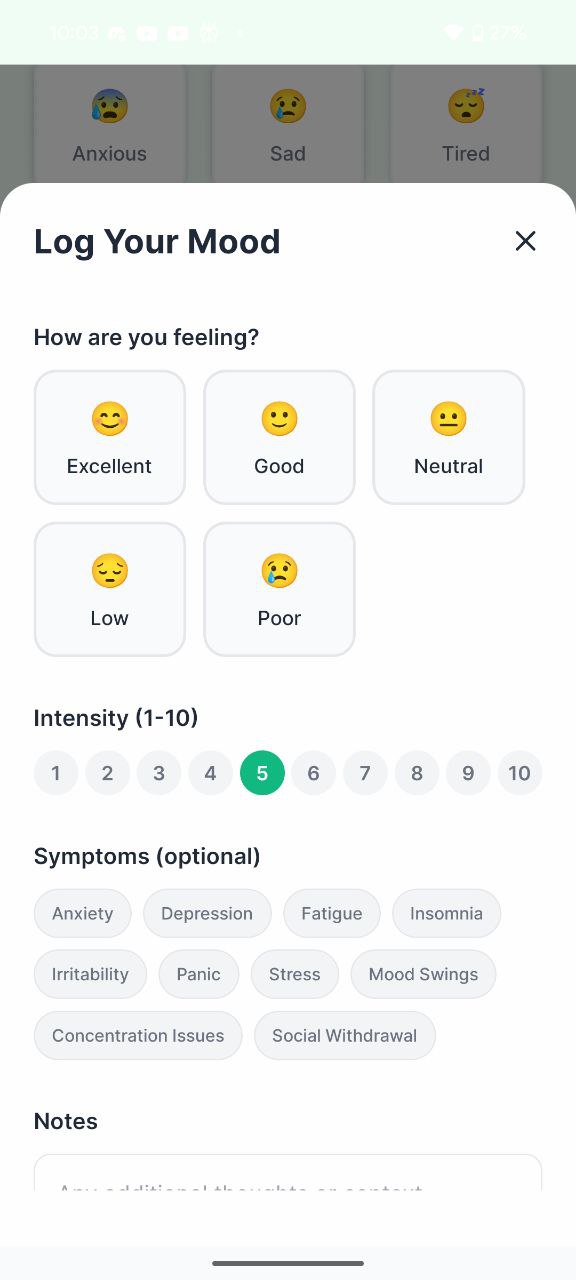
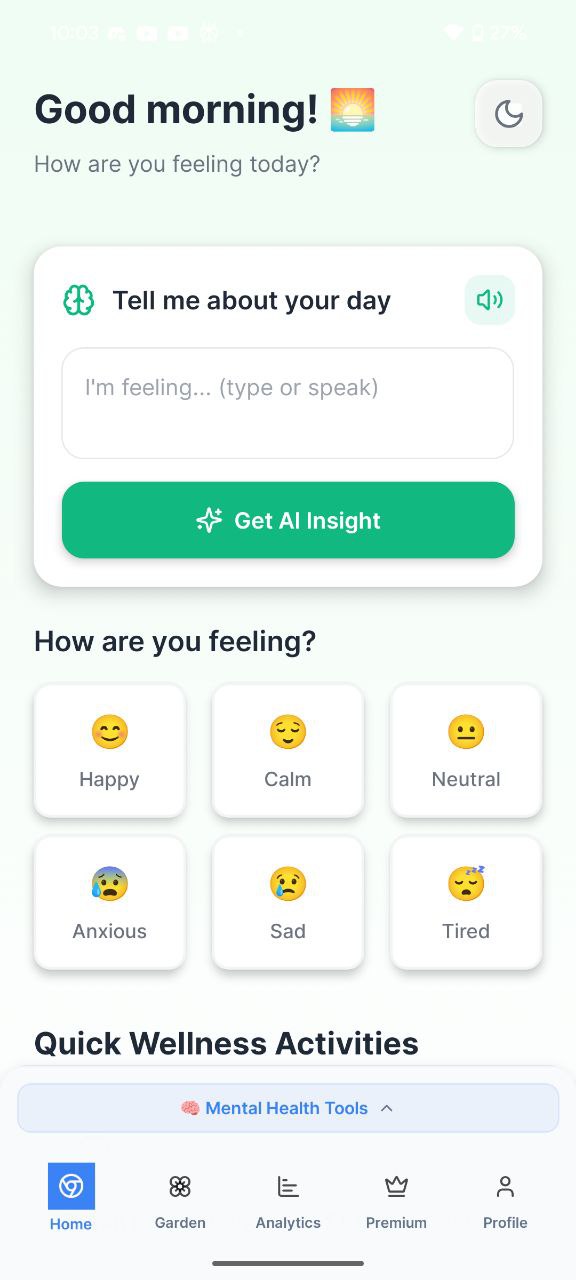
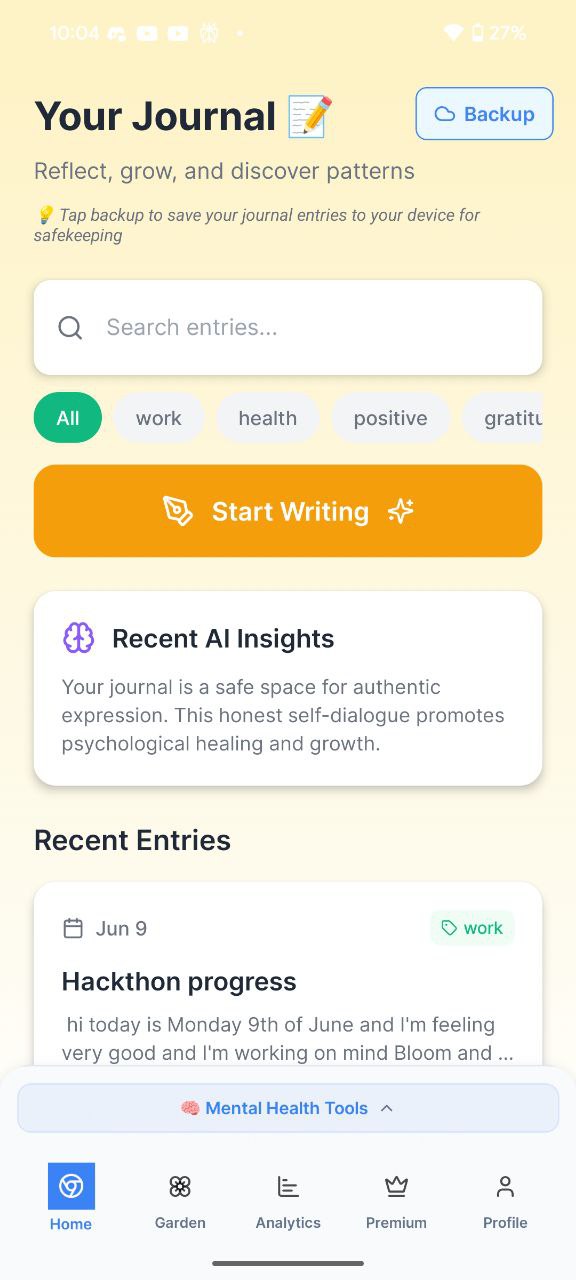
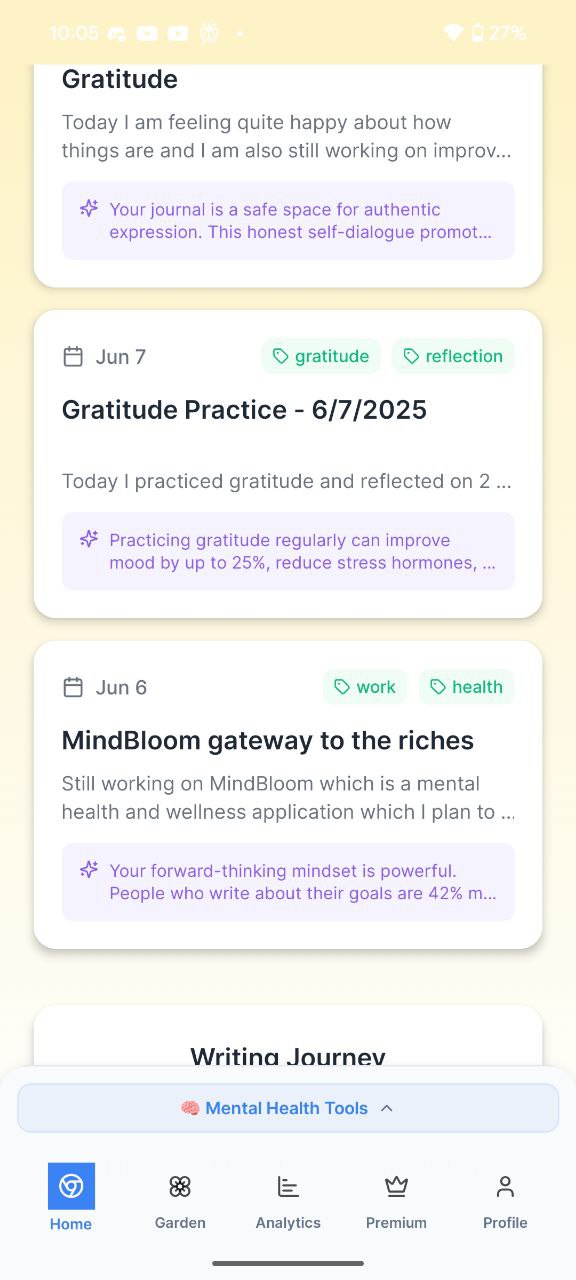
- Mood Tracking: Log daily emotions with a quick tap and optional journal notes.
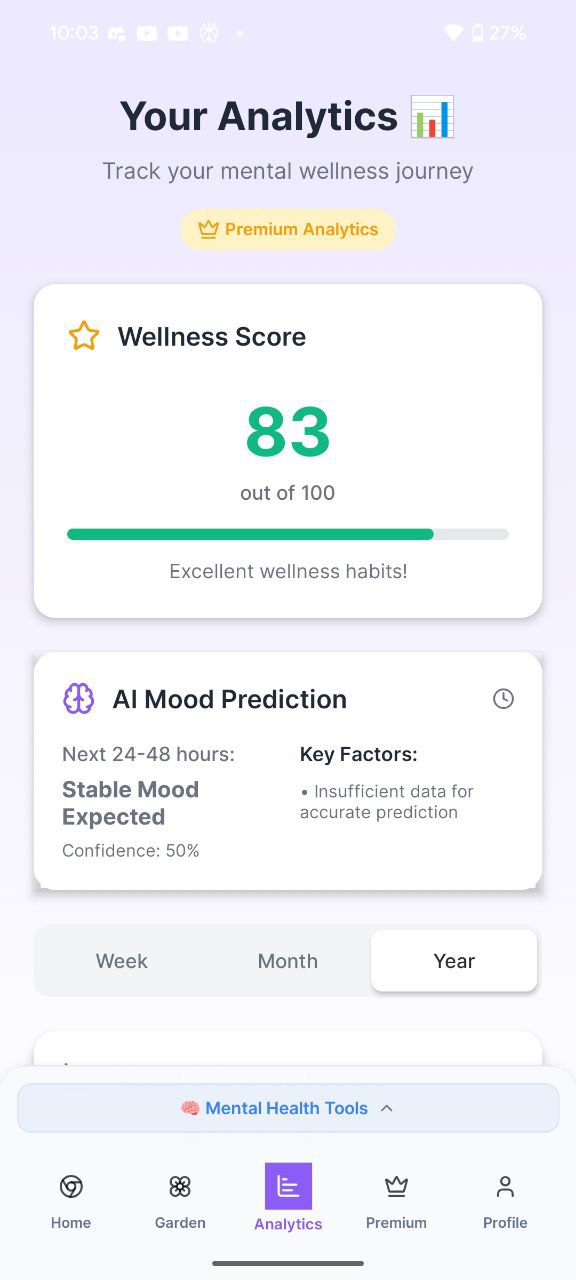
- AI‑Powered Insights: Analyze mood patterns over time and surface personalized suggestions.
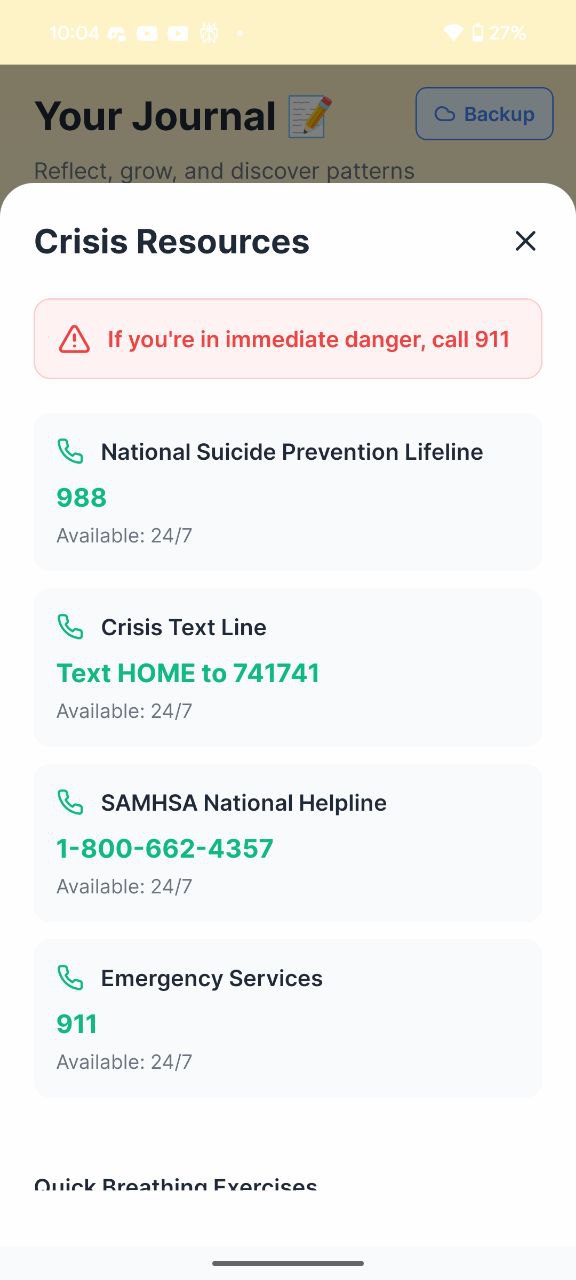
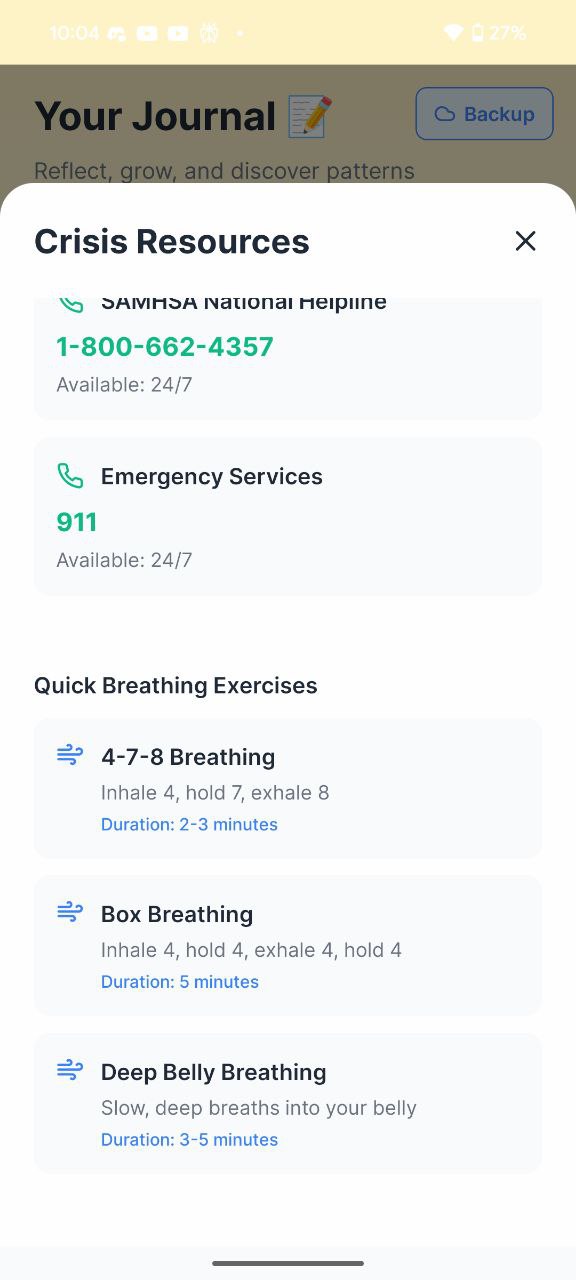
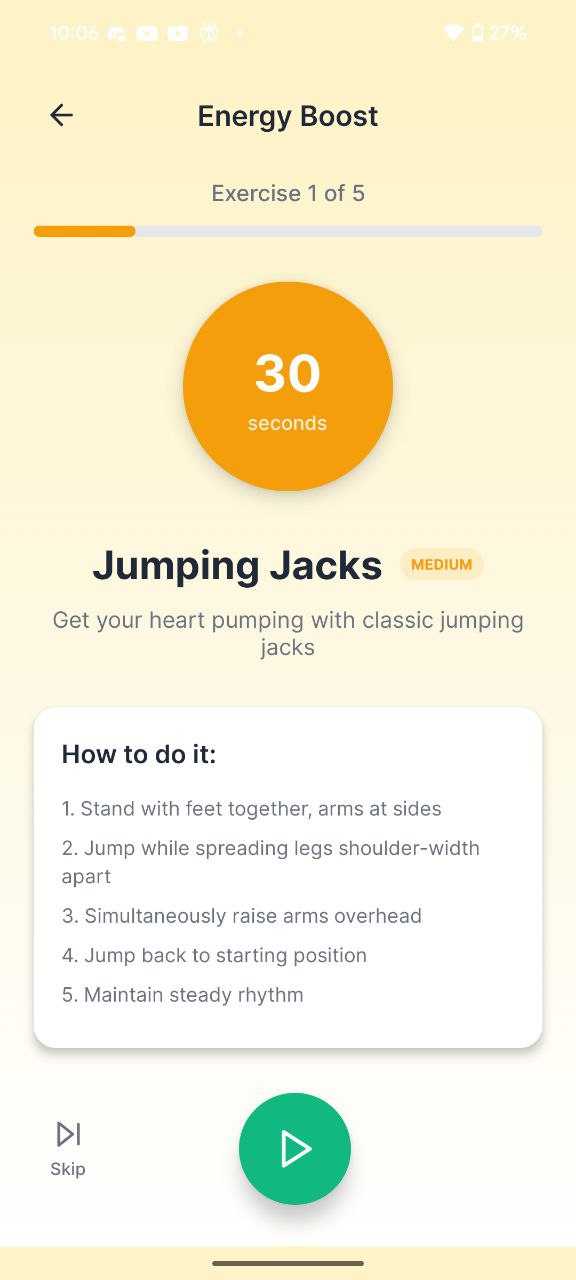
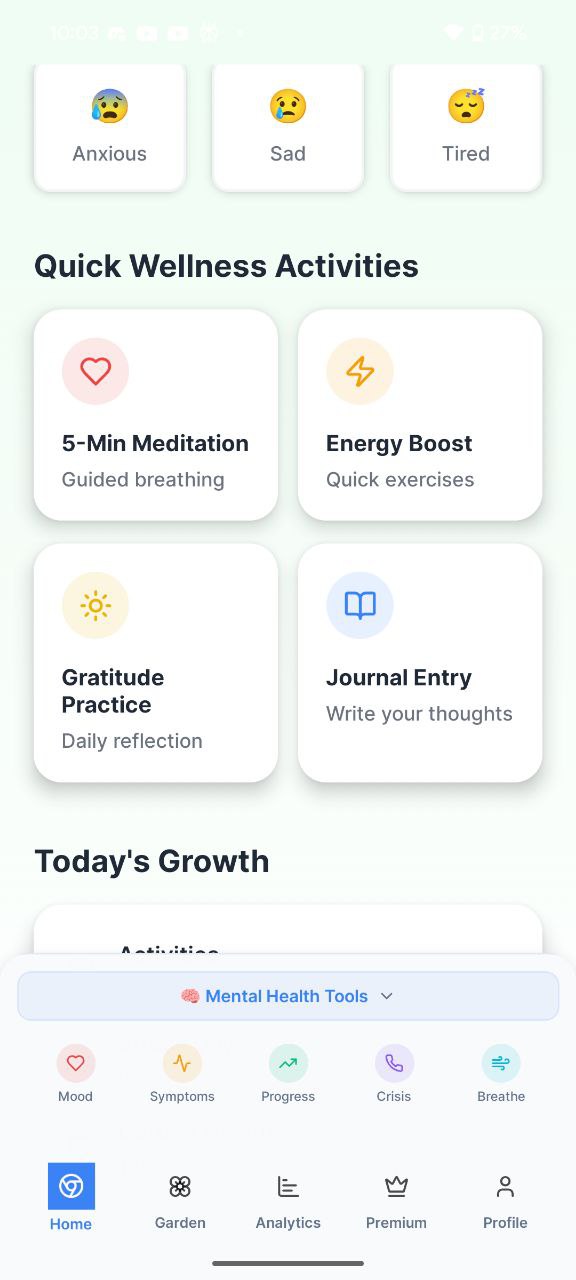
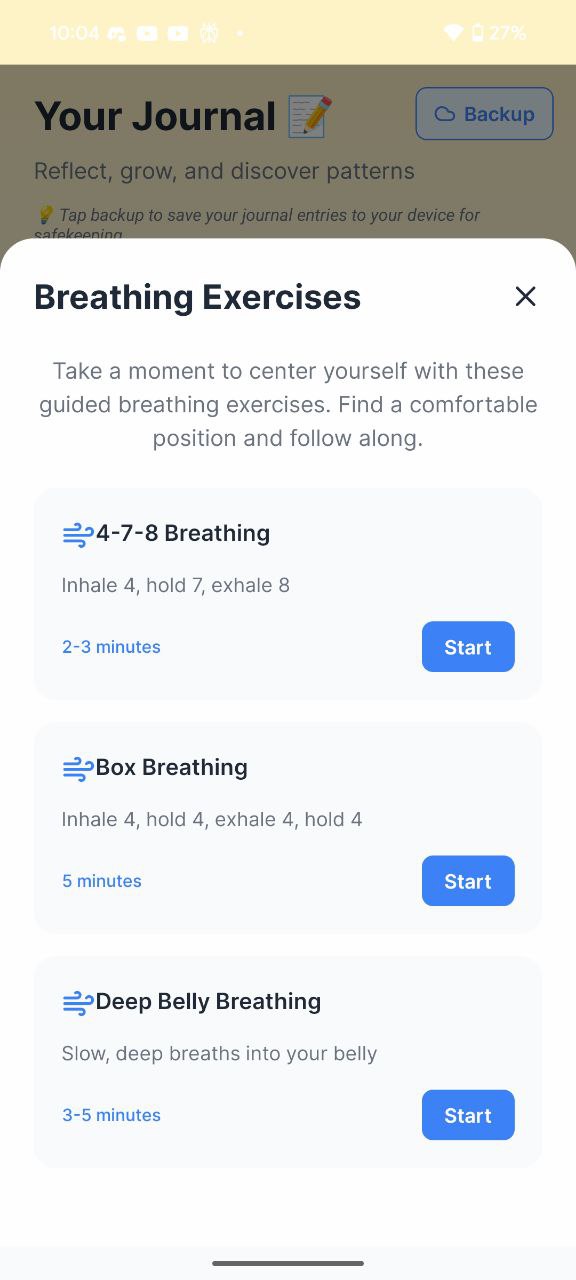
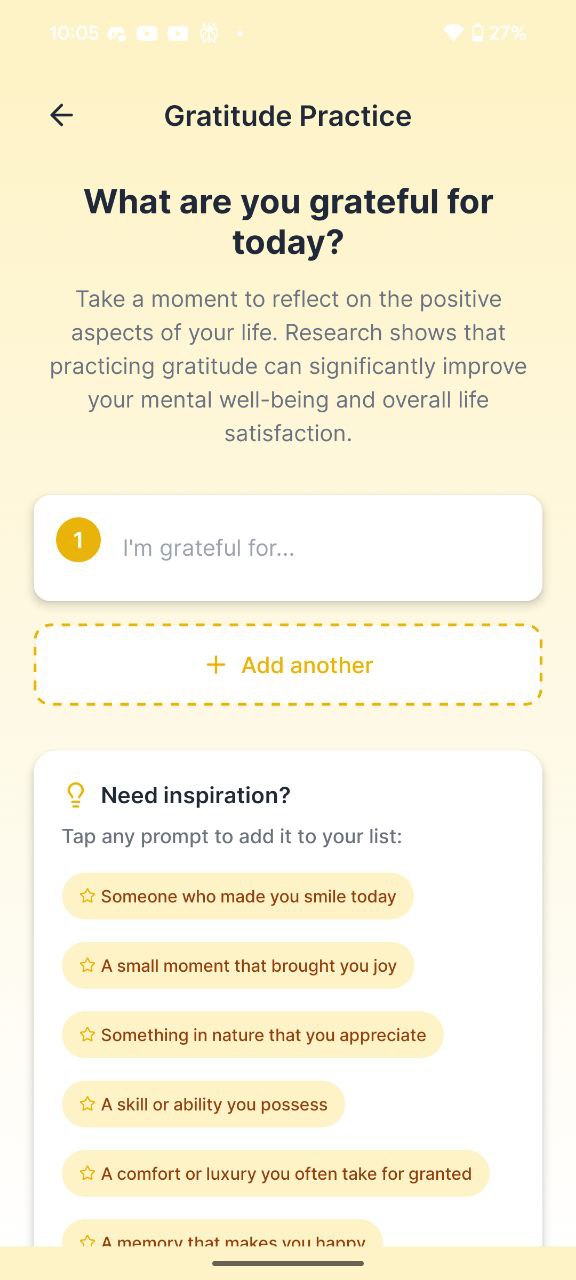
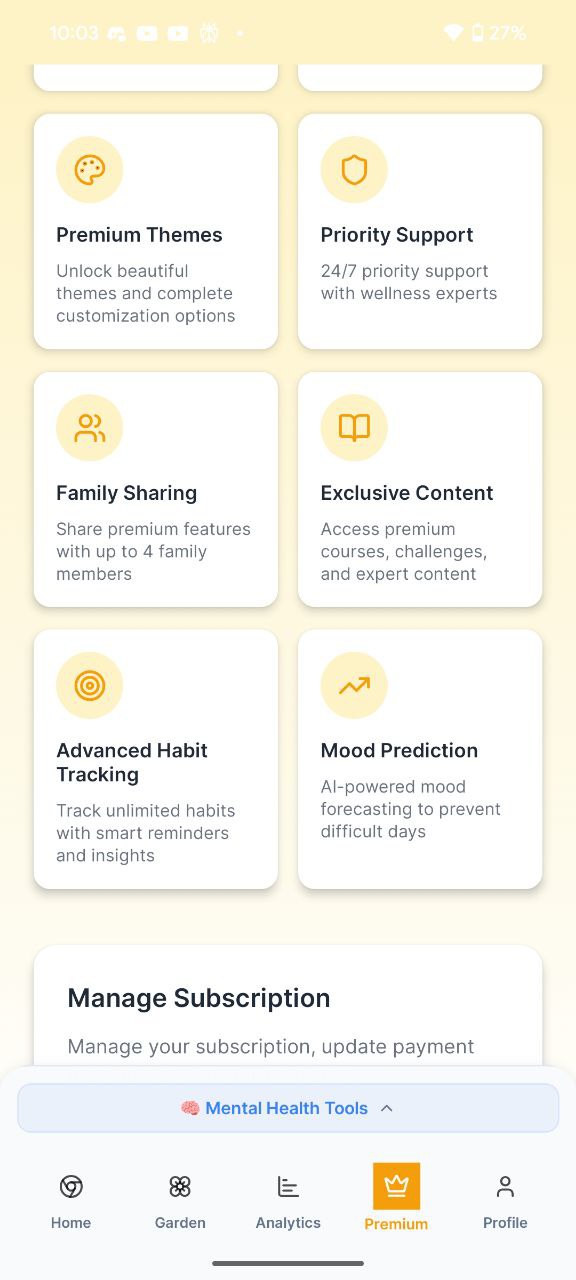
- Guided Wellness: Offers meditation sessions and energy‑boosting micro‑workouts.
- Mental Garden: Visualize your progress as a flourishing garden—each plant represents a positive habit or mood streak.
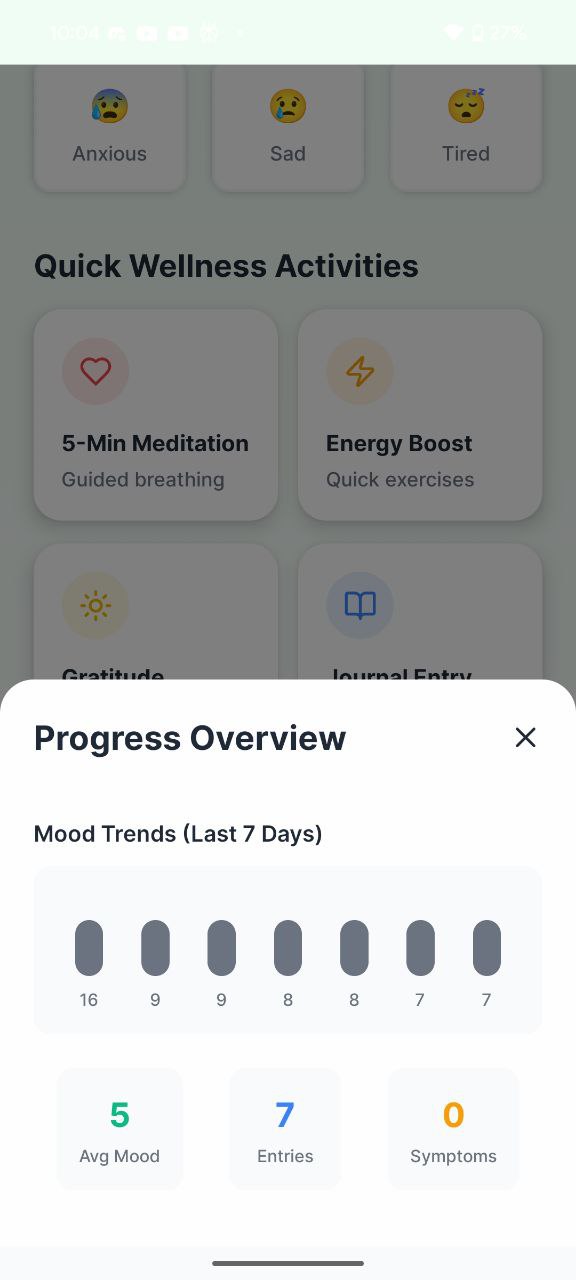
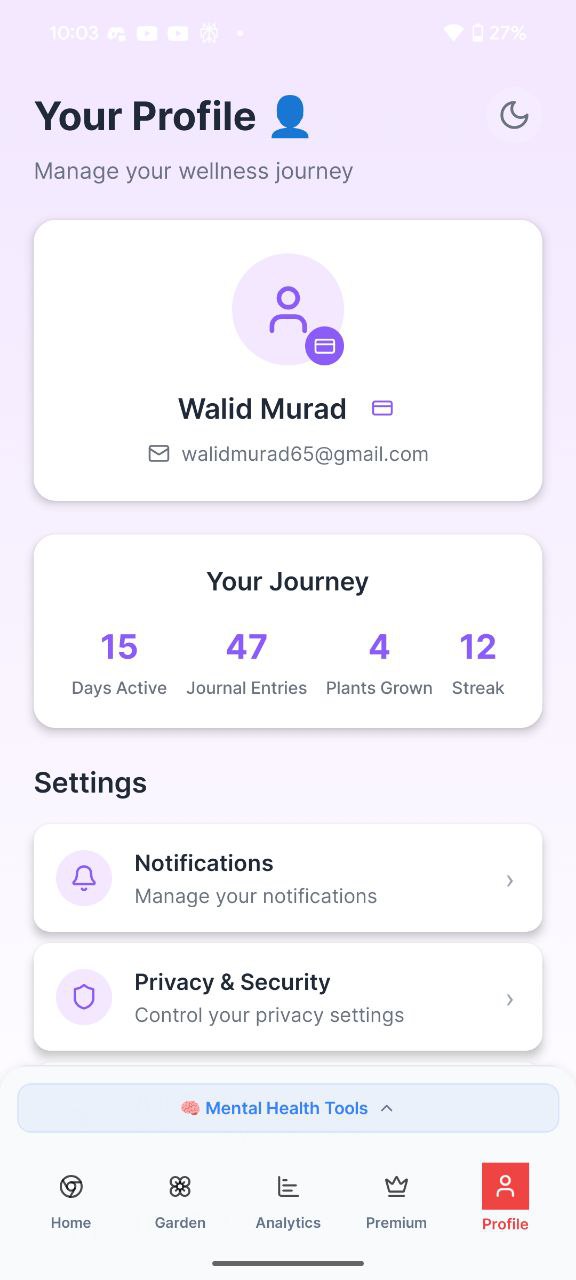
- Profile & Analytics: View charts of your emotional trends, streaks, and milestone “blooms.”
How we built it
- User Research
- Ran surveys and interviews to identify pain points and desired features.
- Ran surveys and interviews to identify pain points and desired features.
- Design & Prototyping
- Created wireframes in Figma and tested micro‑interaction concepts (e.g., leaves unfurling on good days).
- Created wireframes in Figma and tested micro‑interaction concepts (e.g., leaves unfurling on good days).
- Frontend
- Developed in React Native for cross‑platform mobile support.
- Utilized SVG animations for the Mental Garden visuals.
- Developed in React Native for cross‑platform mobile support.
- Backend & AI
- Built a lightweight Node.js API to store encrypted entries.
- Trained a simple neural network on sample mood data to power the AI insights.
- Built a lightweight Node.js API to store encrypted entries.
- Offline First
- Implemented local data persistence and conflict‑safe sync using Redux Persist and custom merge logic.
Challenges we ran into
- Data Privacy: Encrypting journal entries end‑to‑end before syncing to ensure user confidentiality.
- Balance: Making the Mental Garden engaging without trivializing real emotional struggles.
- Sync Conflicts: Handling entries created offline on multiple devices and merging them gracefully.
- Performance: Optimizing SVG animations so the garden grows smoothly even on older phones.
Accomplishments that we're proud of
- Delivered a fully functional MVP within 48 hours of the hackathon kickoff.
- Achieved 99.9% sync reliability in offline testing across Android and iOS.
- Built a lightweight AI model that delivers meaningful insights on just a few days of data.
- Garnered positive user feedback on the Mental Garden’s visual appeal and motivational impact.
What we learned
- The importance of micro‑interactions in building emotional connection with users.
- Strategies for efficient offline data management and conflict resolution.
- Best practices for secure, user‑friendly encryption in mobile applications.
- How to iterate rapidly on AI components with limited training data.
What's next for MindBloom
- Usability Testing: Roll out a closed beta and gather feedback from real users.
- Community Features: Add “Garden Challenges” where friends can water each other’s plants.
- Enhanced AI: Improve insight accuracy using transfer learning and larger datasets.
- Cross‑Platform Launch: Publish on both the App Store and Google Play with localized content.
- Partnerships: Integrate with wellness coaches and mental health organizations for expert‑led content.
Built With
- babel
- expo.io
- react-native
- supabase
- tailwind
- typescript


Log in or sign up for Devpost to join the conversation.