-
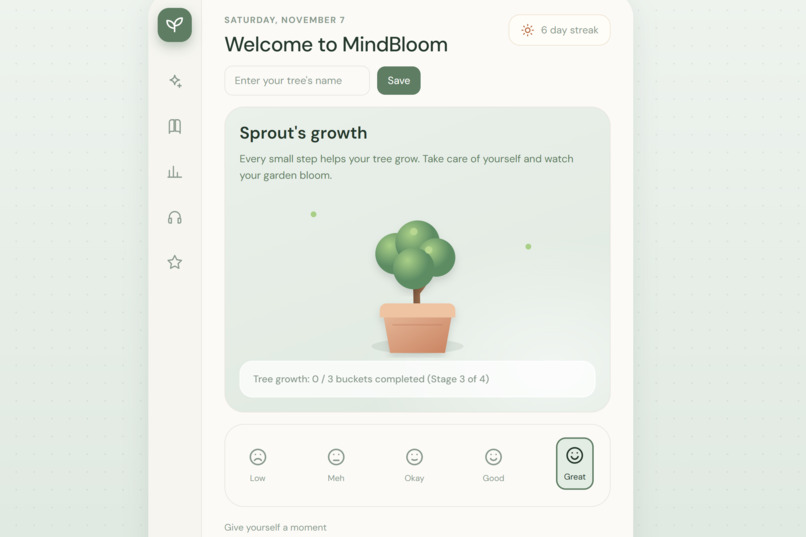
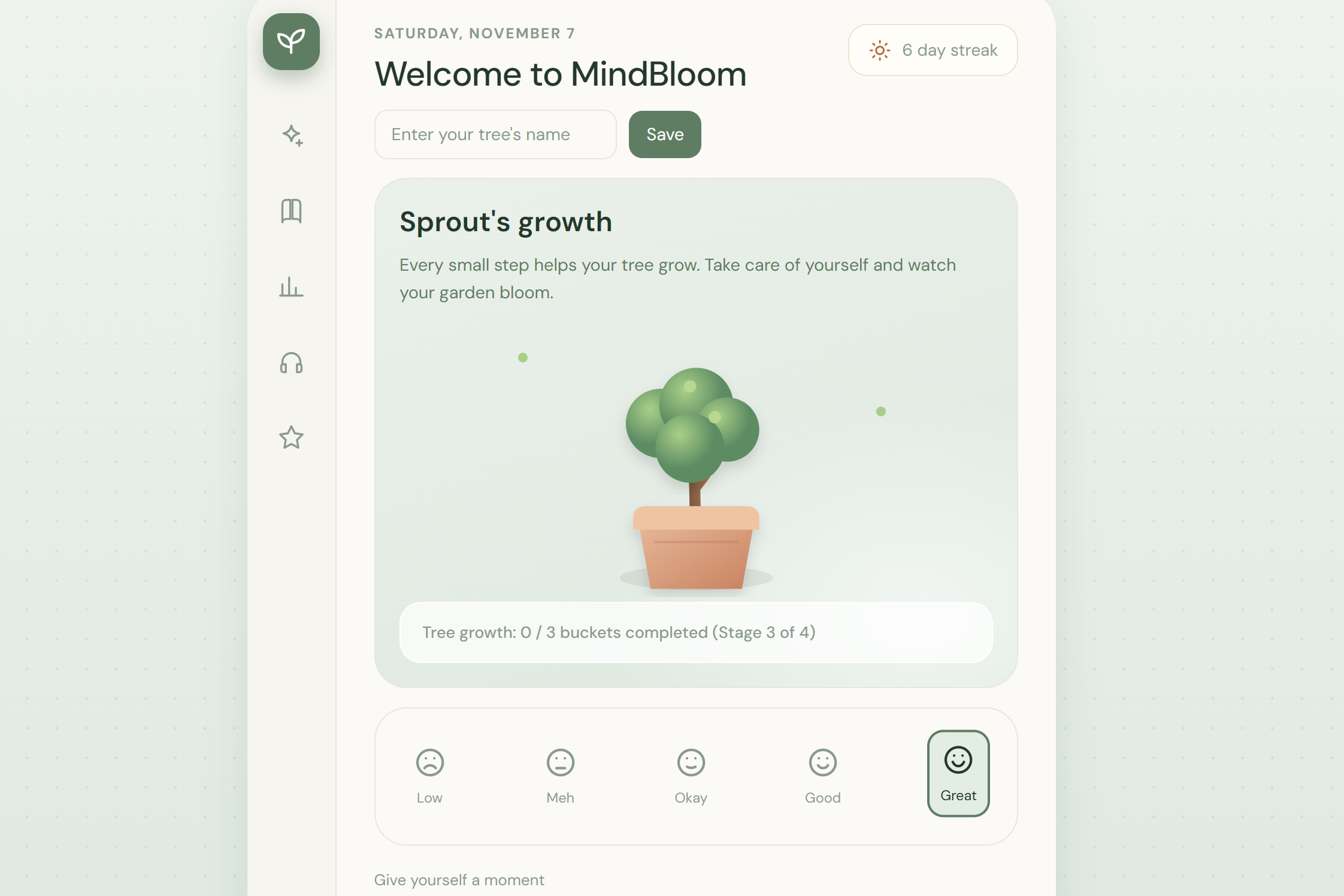
Home Page
-
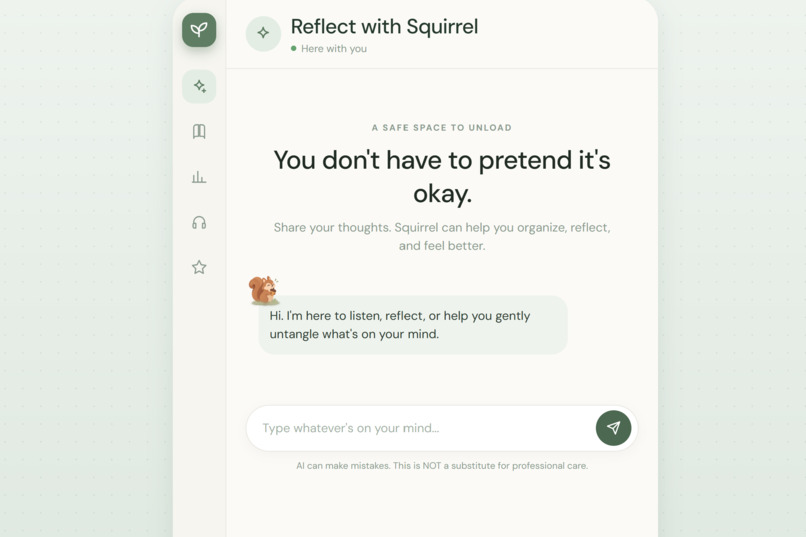
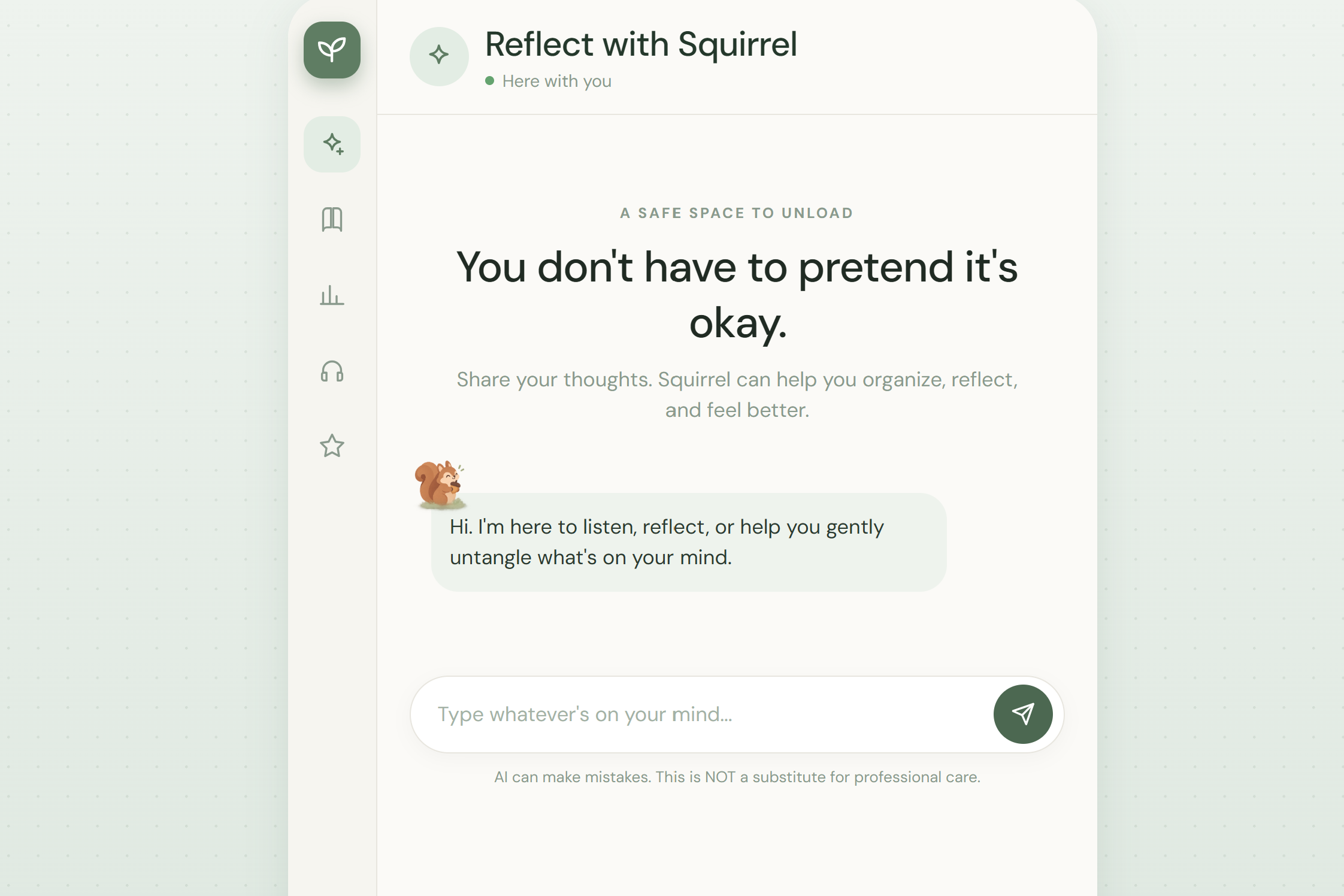
AI Chat
-
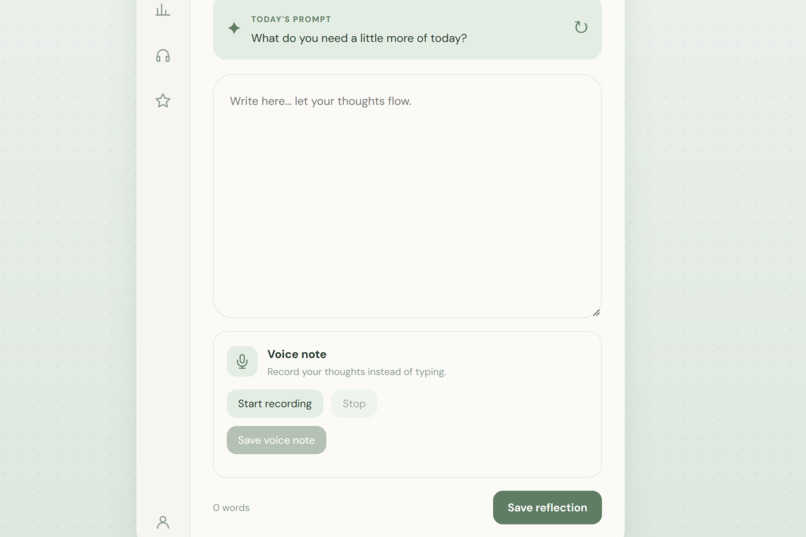
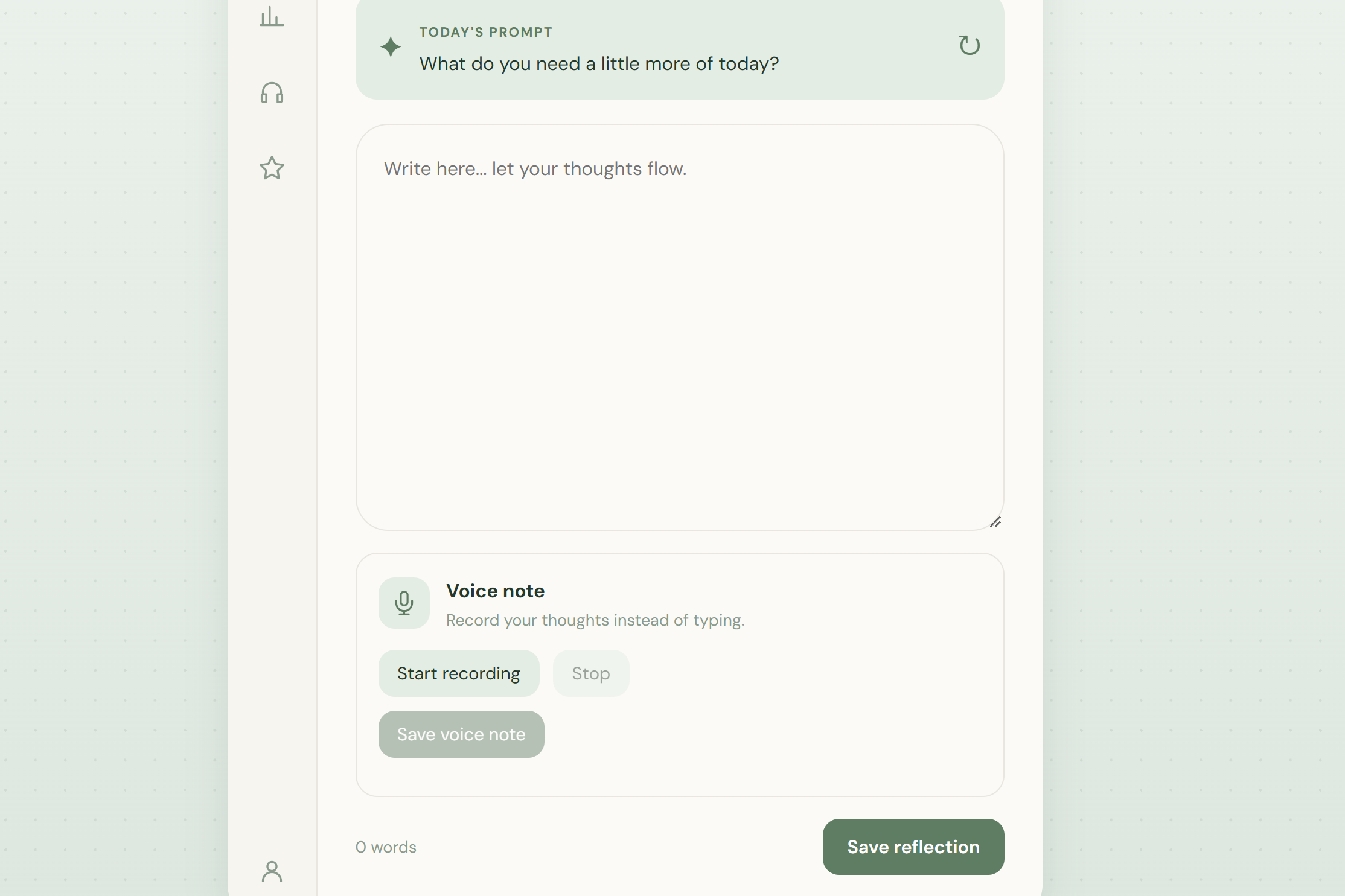
Reflection (journal + voice note)
-
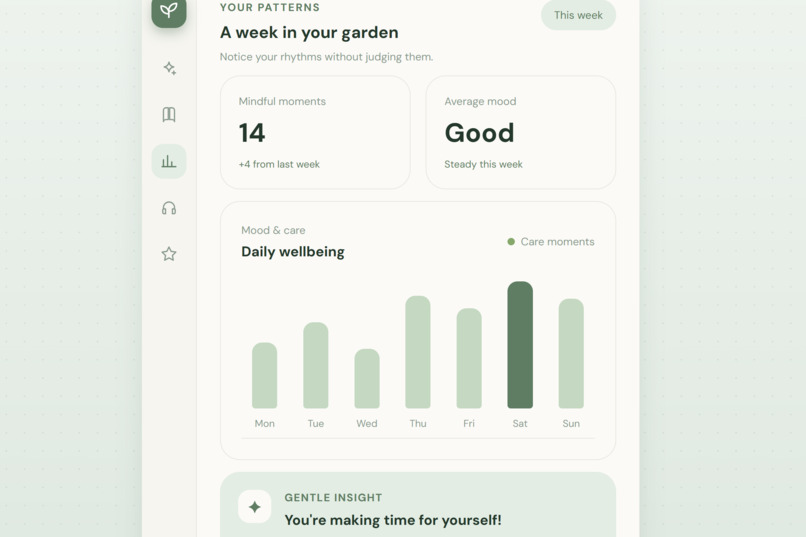
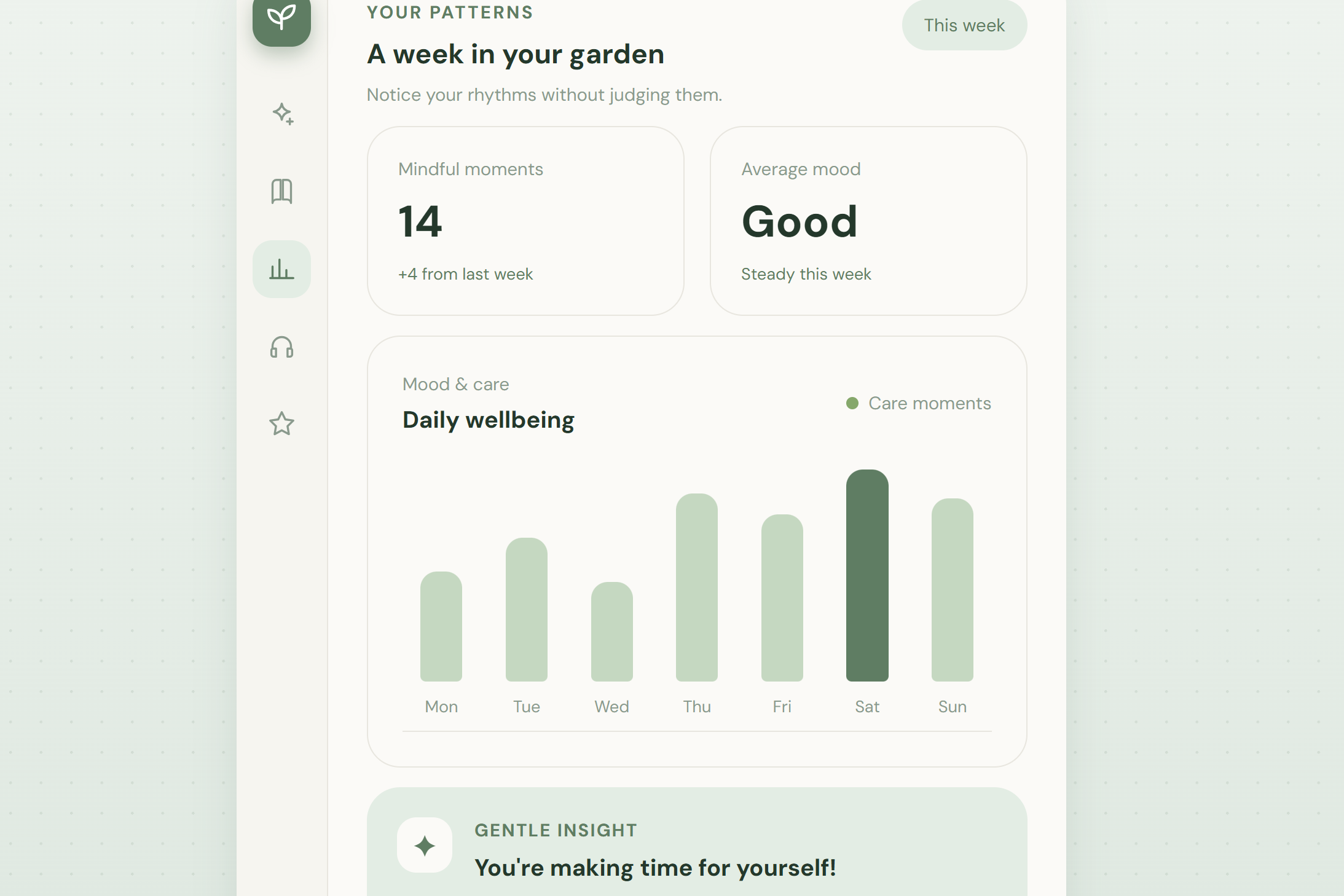
Statistics
-
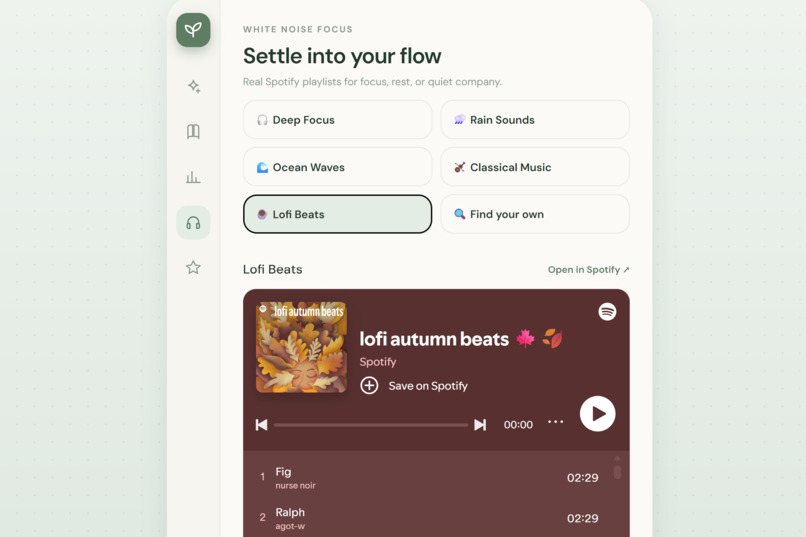
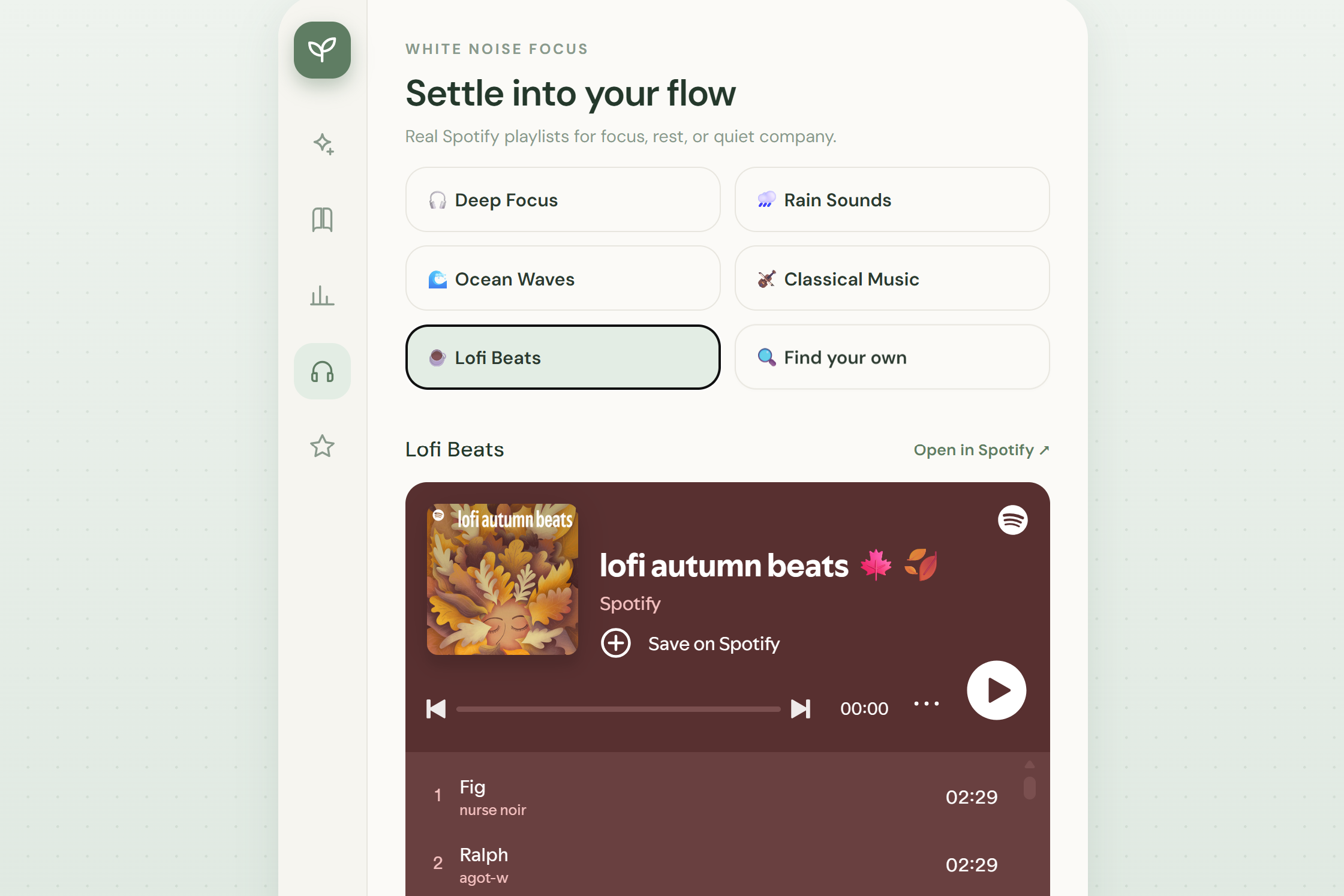
Music (add your own playlist)
🌱 MindBloom
A lightweight pop-up app for everyday emotional friction: the gap between doing nothing and seeking clinical help.
Inspiration
Many people experience everyday stress, but don't always know how to manage it. Professional support can be expensive or difficult to access, while social media can sometimes make stress worse. People may also struggle to recognize patterns in their emotions or find time for self-care.
There is a gap between doing nothing and seeking professional help. We wanted to create something that makes everyday self-care more accessible.
What It Does
MindBloom is a lightweight, interactive wellness app that encourages users to take small steps toward caring for themselves. We wanted the experience to feel light, welcoming, and rewarding rather than like another responsibility. Every completed self-care activity earns a bucket of water that helps a virtual tree grow, turning personal progress into something visual and encouraging.
Features
- 🌳 Growing tree (Sprout → Seedling → Sapling → Grown); each self-care activity earns a bucket of water; 3 self-care actions = next stage
- 😊 Daily mood log: A quick daily check-in that tracks how you’re feeling over time.
- 📓 Journal: Optional prompts, a free-form diary and log-able voice messages.
- 🌬️ Guided breathing: An inhale/hold/exhale animation with calming text.
- 🐿️ AI chat companion powered by Gemini: A cute squirrel chat that chats with you as a friend, gives affirmations, helps organize your thoughts, and suggests ways to feel better.
Accomplishments That We Are Proud Of
- Turning an idea into a working, polished app within the hackathon
- A tree that visibly grows from real self-care actions, making progress feel tangible
- A design that feels calm instead of clinical
- An app that will actually improve personal well-being
What We Learned
- How to reference a Figma prototype into working project, and how JavaScript projects are structured
- How to connect and prompt an AI model for a sensitive use case
- The small design choices, like the tree, a squirrel mascot, and a pop-up instead of a full app
- Teamwork, communication skills, time management
Tech Stack
Node.js, JavaScript, HTML & CSS, Gemini API
We started by designing our idea in Figma, where we planned the layout, pop-up window, and initial versions of the tree, mood log, journal, and breathing screens. We began writing code using Node.js, JavaScript, and CSS in VS Code, committing changes in GitHub. From there, we developed additional features and personalized the original design. These included the AI squirrel companion, Gemini integration, guided journal templates, the bucket-based tree-growth system, and achievements.
Future Development
We hope to make MindBloom more personalized by allowing users to customize their experience with different trees or even virtual pets. We also plan to introduce gentle reminders and notifications to encourage regular check-ins.
We want to expand the number of self-care activities so users can discover different ways to support their well-being. Other improvements could include a mobile app or widget, and more detailed progress tracking.
Additionally, we are considering an optional safety-support feature that could help users find appropriate support when they express serious distress. This would require clear user consent, strong privacy protections, transparent explanations of how information is handled, and appropriate safeguards. We would not treat AI monitoring as a substitute for human support or professional help.
Our goal is to make MindBloom more engaging, personal, accessible, and helpful while respecting each user's privacy and choices.
Team
Kelly Wang
Chloe Wong
Och-Erdene Khurelsukh
Sahaj Bhangu


