Inspiration
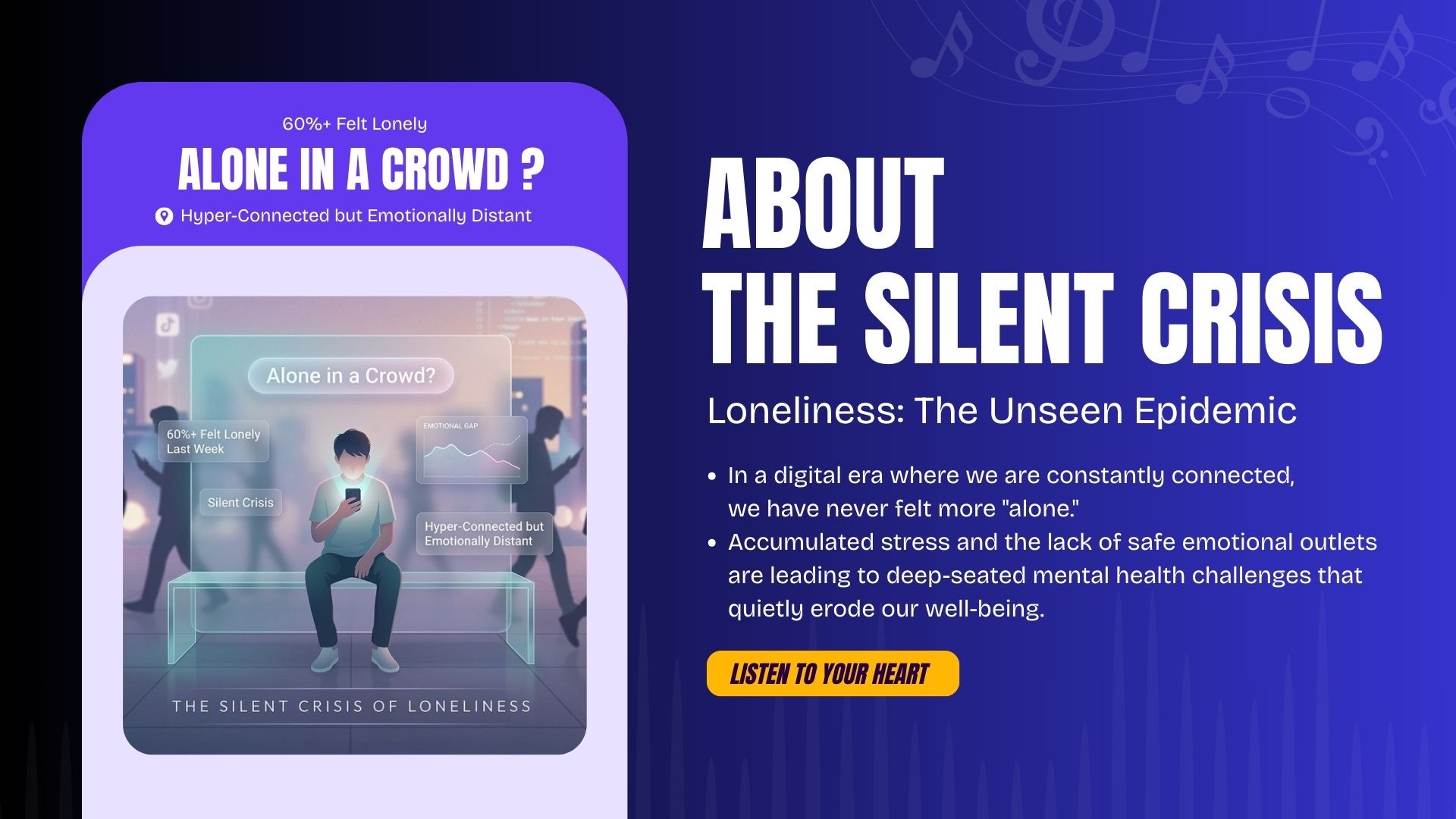
In an era of hyper-connectivity, genuine emotional outlets are surprisingly rare. Many people carry "invisible weights"—stress, anxiety, or fleeting sadness—but hesitate to share them for fear of being a burden or being judged. I was inspired to create MindBeat Live to prove that technology can be more than just cold logic. I wanted to build a "Digital Soulmate" that doesn't just process data, but listens, validates, and uses the healing power of music and poetry to transform a heavy heart into a moment of mindful reflection.
What it does
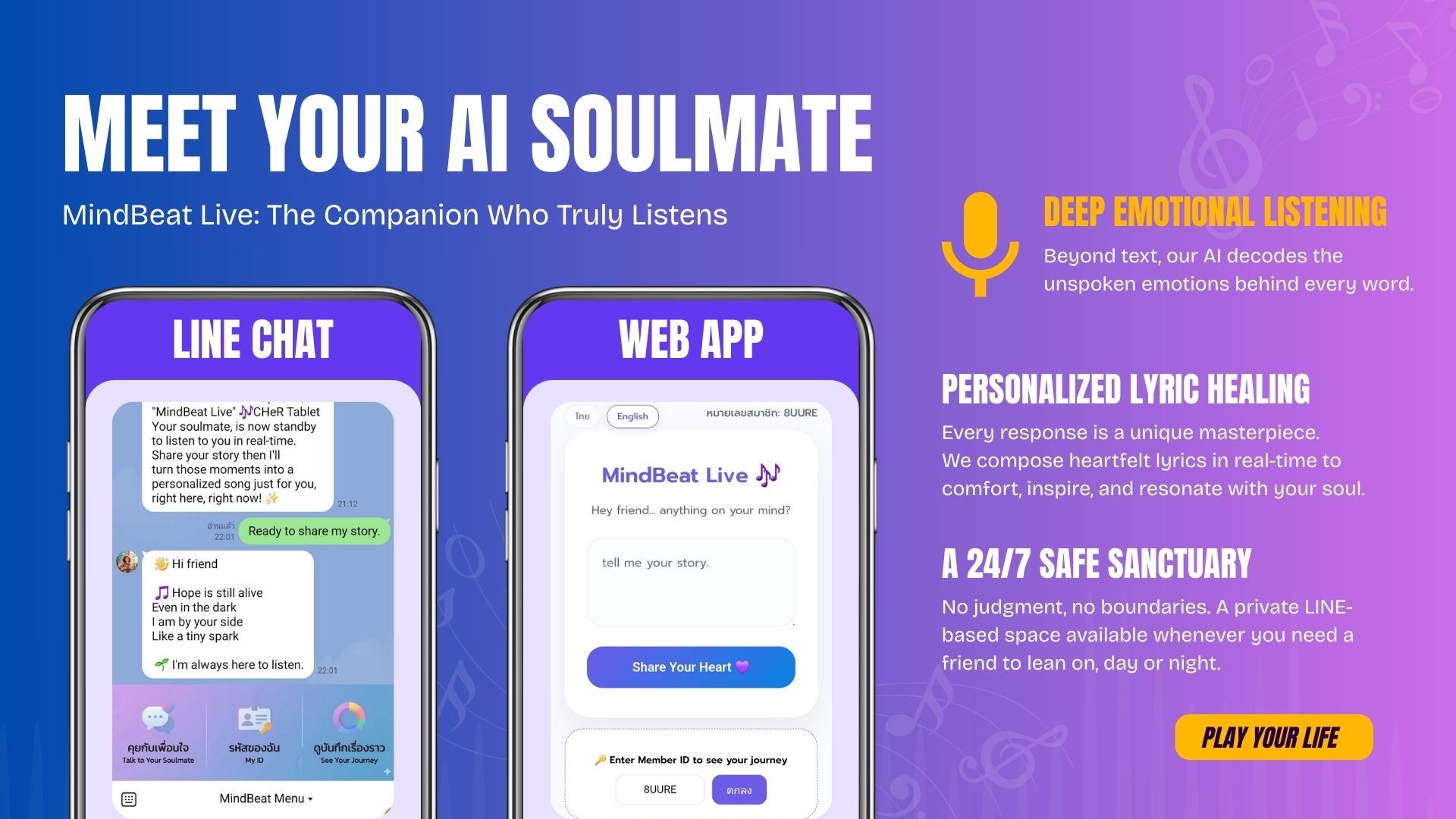
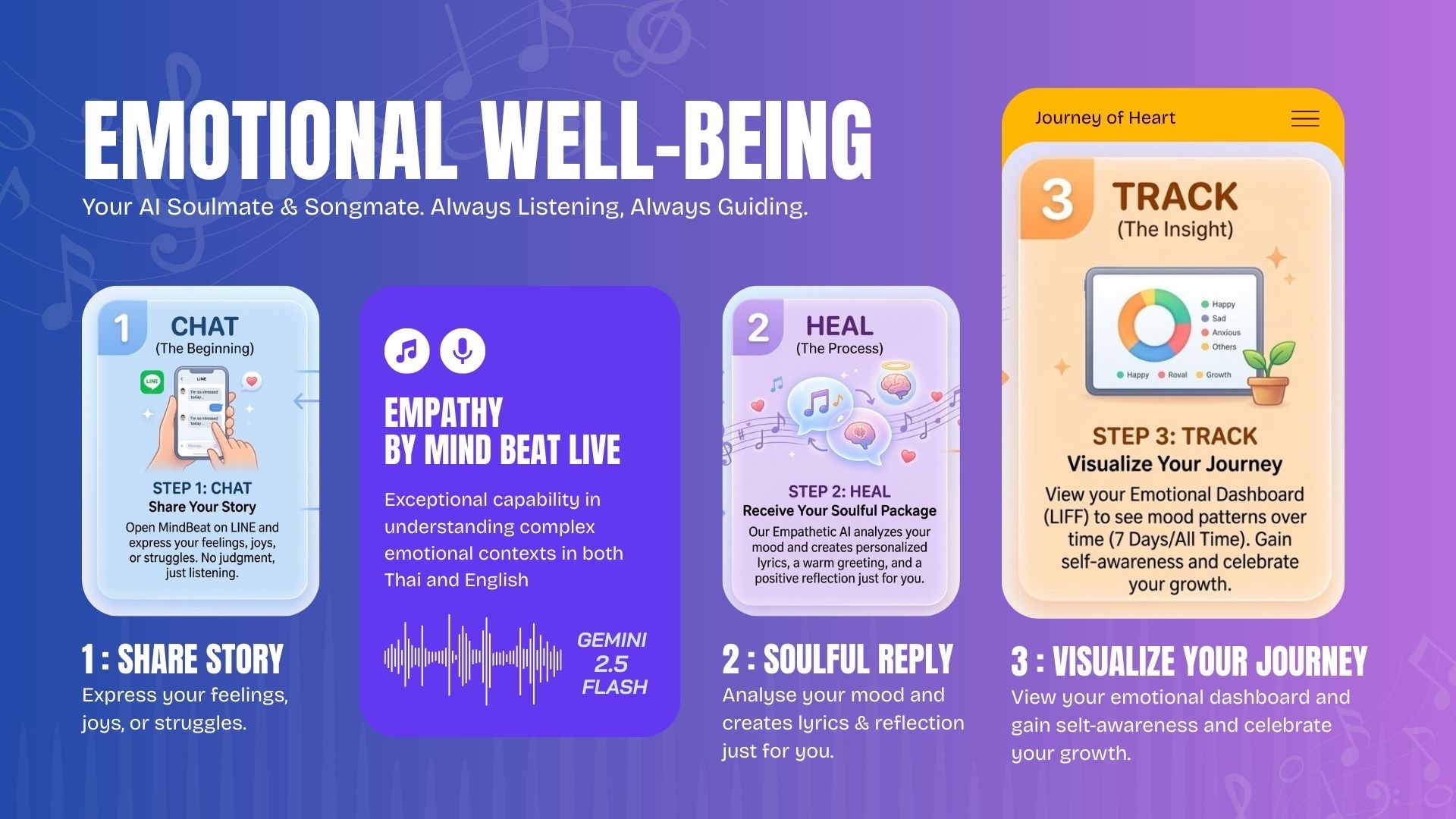
MindBeat Live is an empathetic AI companion on LINE that transforms user "vents" into a structured healing experience. By analyzing text inputs, it provides a 4-part Soulful Package:
- Mood Label: Identifying the user's current emotional state.
- Warm Greeting: A friendly, non-robotic response that feels like a close friend.
- Healing Song: A personalized 4-line composition tailored to the user's specific story.
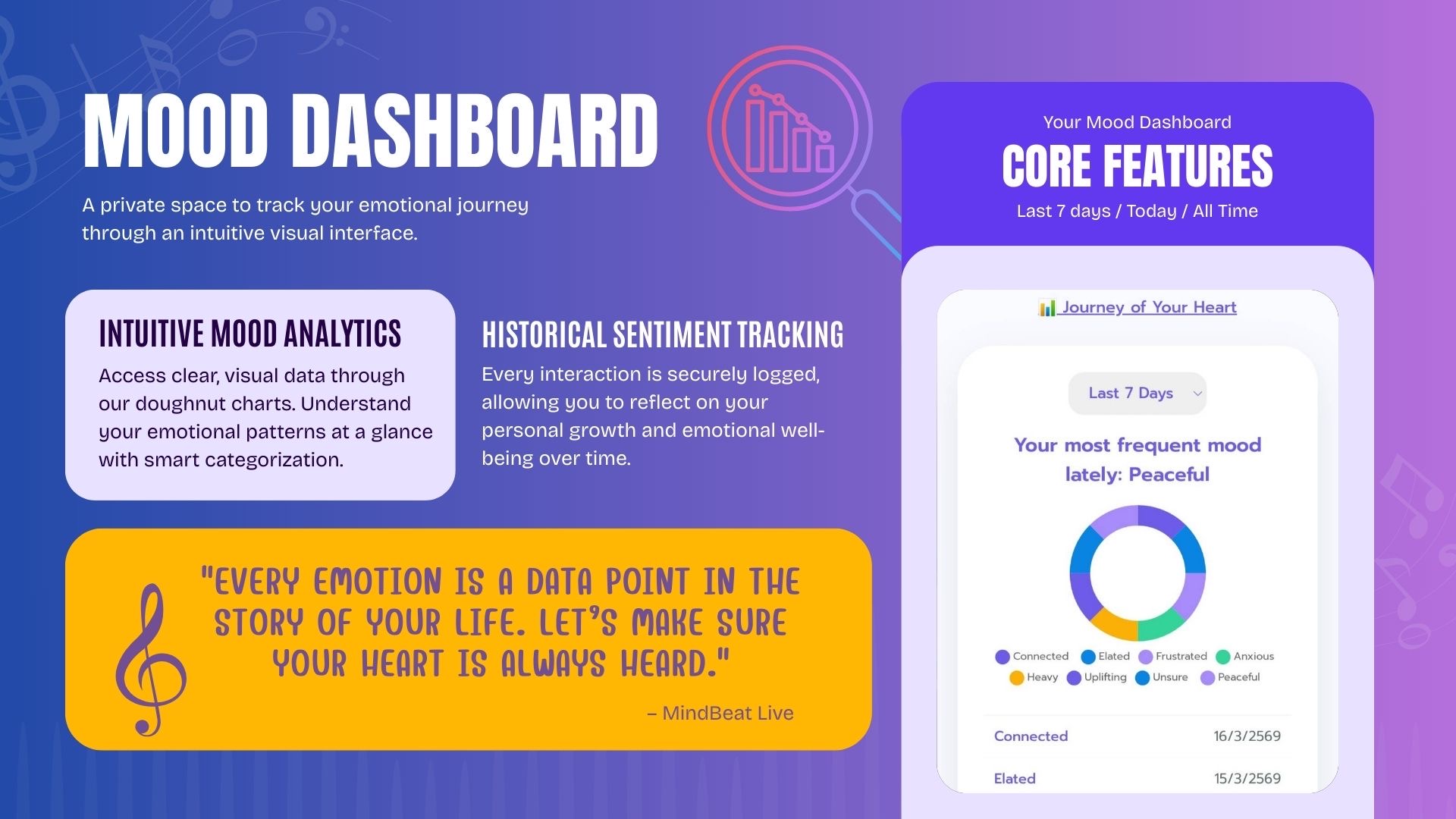
- Heartfelt Reflection: A brief, positive insight to encourage the user. Beyond the chat, it offers a personal Emotional Dashboard, allowing users to visualize their mood patterns over time through a dynamic Doughnut Chart, encouraging a journey of self-discovery.
How I built it
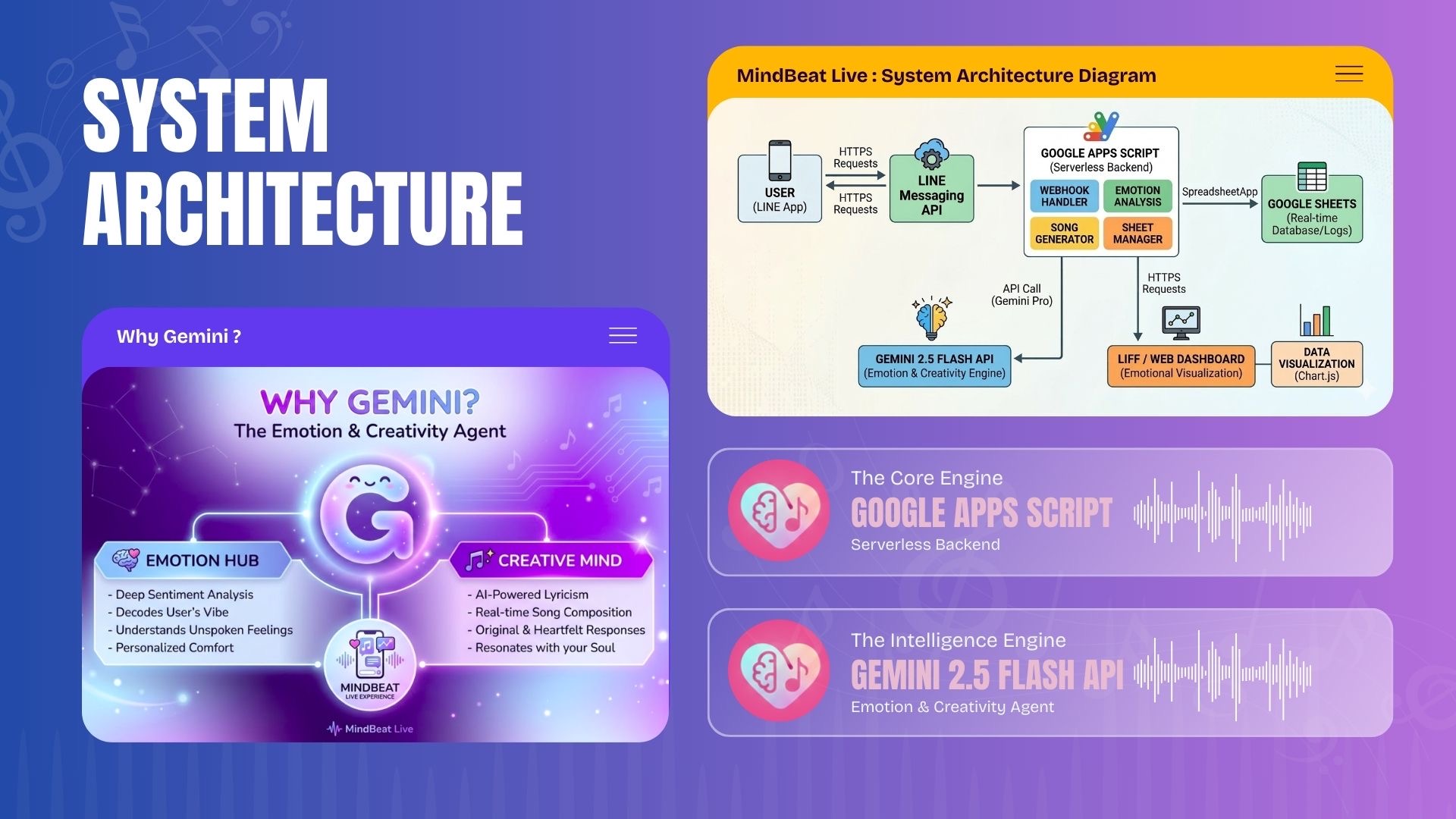
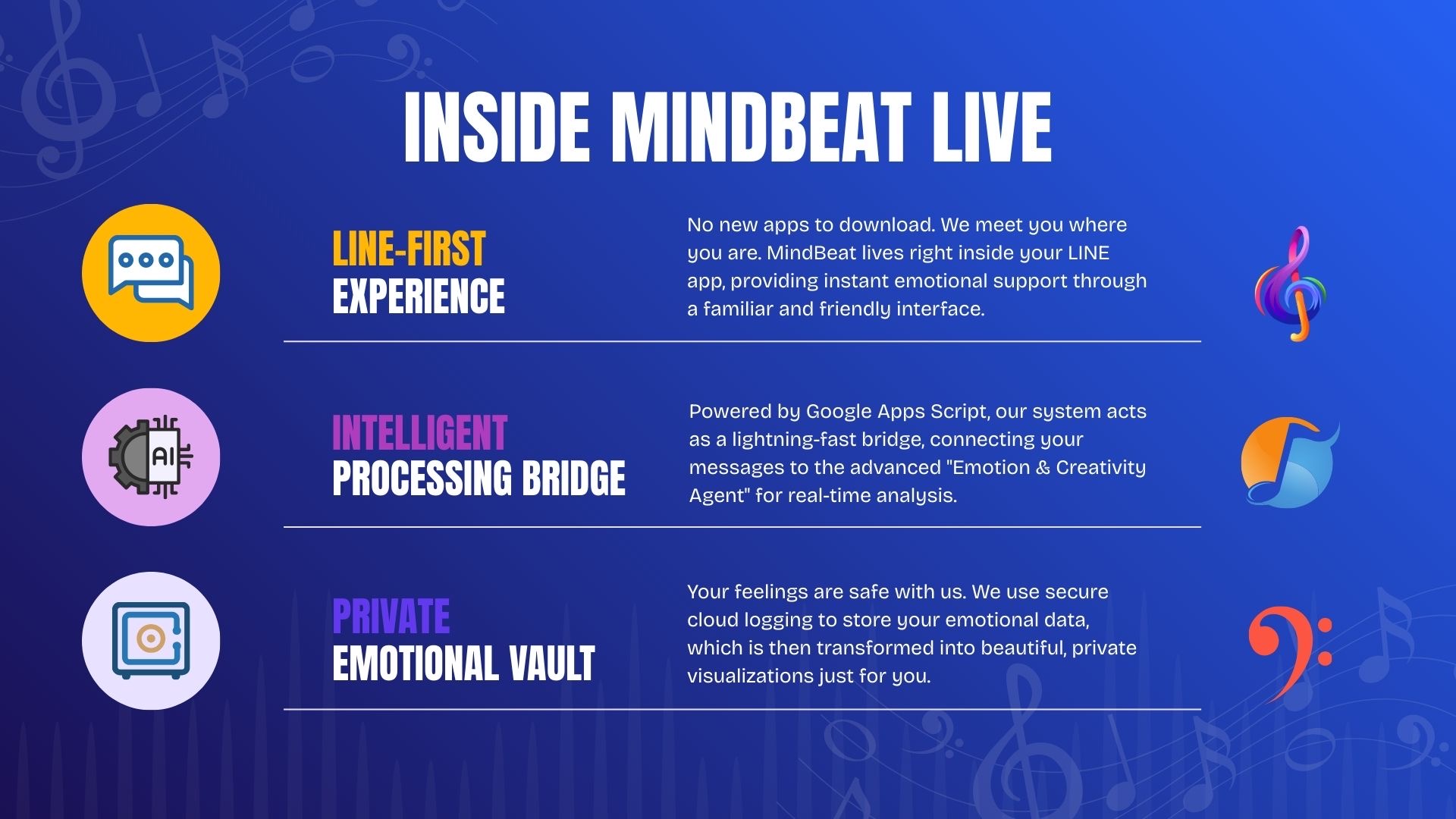
The project is built within the Google Cloud Ecosystem, utilizing Google Apps Script as a serverless backend. The "brain" of the project is the Gemini 2.5 Flash API, chosen for its ultra-low latency and superior emotional reasoning.
- Database: Data persistence is managed via Google Sheets, acting as a real-time database to log interactions and sentiments.
- Integration: The interface is delivered through the LINE Messaging API and LIFF (LINE Front-end Framework).
- Frontend: The dashboard is a custom-built HTML/CSS/JavaScript interface that fetches and visualizes personalized data directly from the script.
Challenges I ran into
Building a seamless experience across multiple APIs involved solving complex architectural puzzles:
- Webhook Timeout & Redelivery: Since LINE requires a response within 10 seconds, slow AI processing can trigger duplicate messages. I optimized the execution flow to prioritize the Reply function before performing database writes to ensure a "200 OK" connection.
- Architecture Resilience: Managing deployment permissions and HTTP 302 redirects between LINE and Google required meticulous debugging.
- Graceful Degradation: I designed smart Fallback Responses to handle API quota limits and media limitations (images/stickers), ensuring the bot remains in-character even when it encounters technical constraints.
Accomplishments that I'm proud of
I am incredibly proud of the Robustness of the system. Even under technical constraints, MindBeat Live maintains a consistent "soulmate" persona. The Dual-Language Auto-Detection (Thai/English) works flawlessly, adapting its poetic style to the user's language without manual toggling. Additionally, the Guest Access Mode allows users to access their emotional data across devices using a unique 5-digit Member ID.
What I learned
I learned that the best AI products aren't just about the model's raw intelligence, but about Architectural Resilience. I gained deep insights into managing asynchronous webhooks, optimizing API calls, and the importance of User-Centric Design. This project taught me how to bridge the gap between high-level AI capabilities and a warm, human-centric user experience.
What's next for MindBeat Live
The vision for MindBeat Live is to move toward Multimodal Empathy:
- Vision AI: To understand emotions through photos and facial expressions.
- Spotify Integration: Turning the AI’s generated lyrics into real, playable playlists that match the user’s emotional heartbeat in real-time.
- Voice Analysis: Detecting stress levels through a user’s tone of voice for even deeper emotional support.
Built With
- chart.js
- gemini-2.5-flash
- google-apps-script
- google-sheet-api
- html
- javascript
- liff
- line-messaging-api

Log in or sign up for Devpost to join the conversation.