-
-
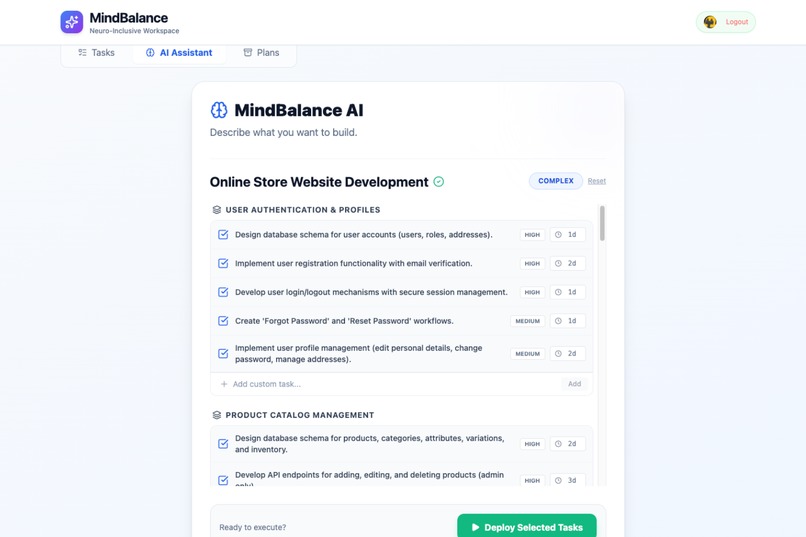
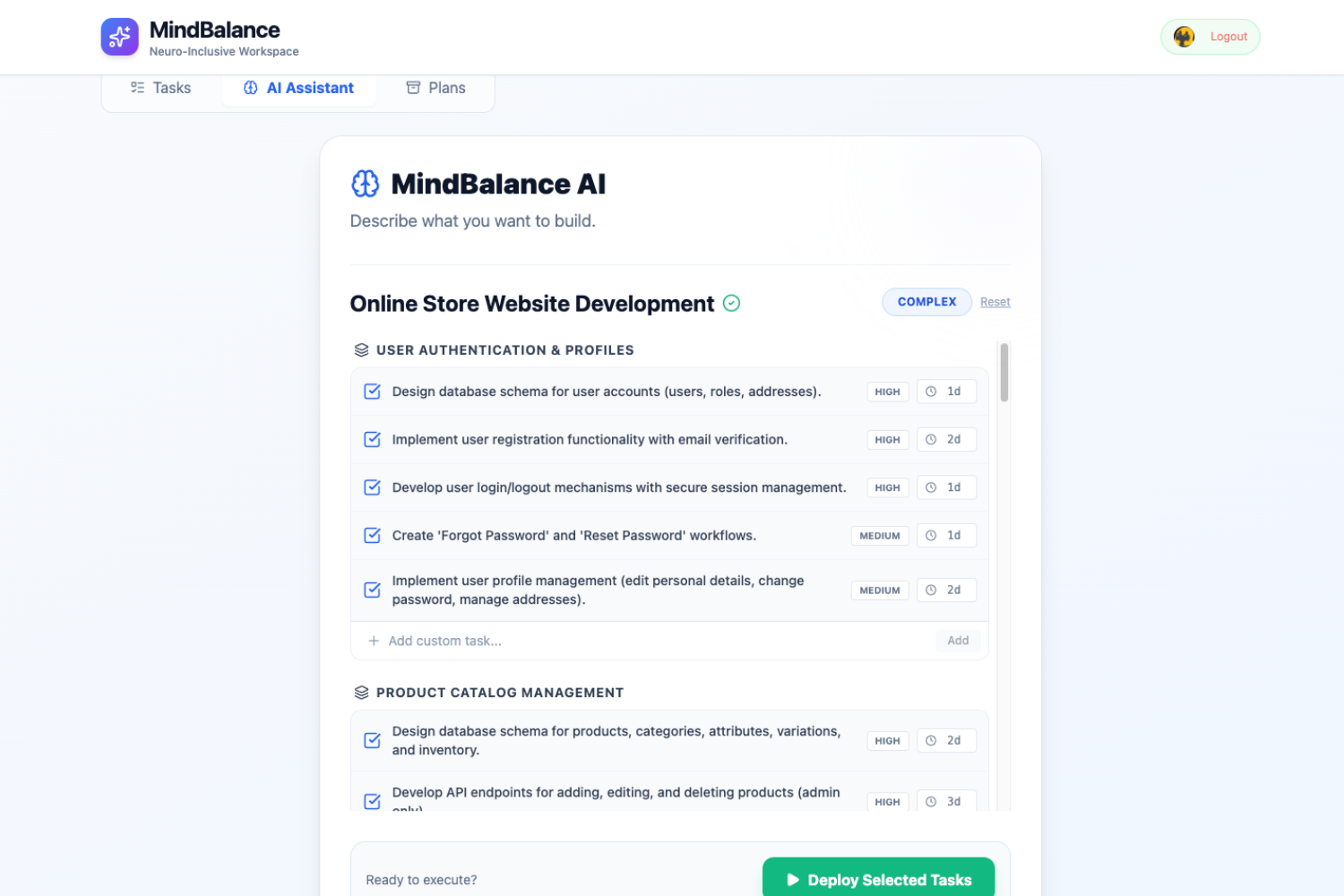
Describe your goal, and our AI instantly breaks it down into small, achievable steps while estimating the cognitive load for each task.
-
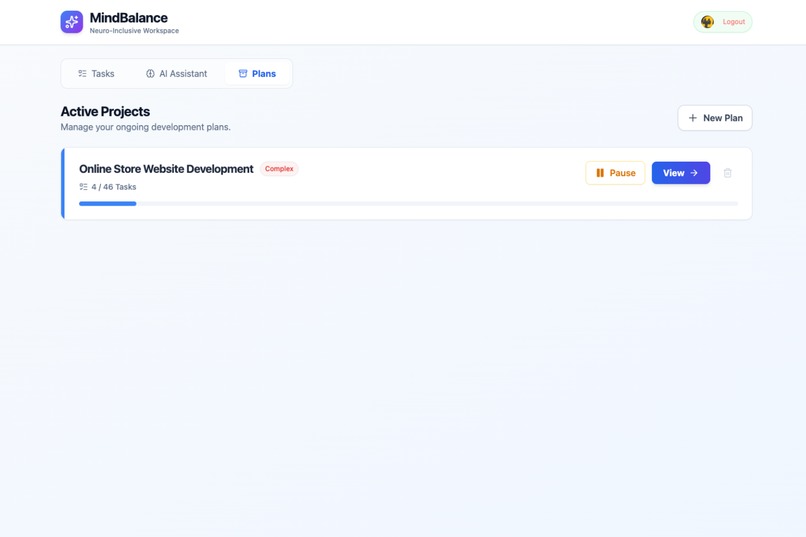
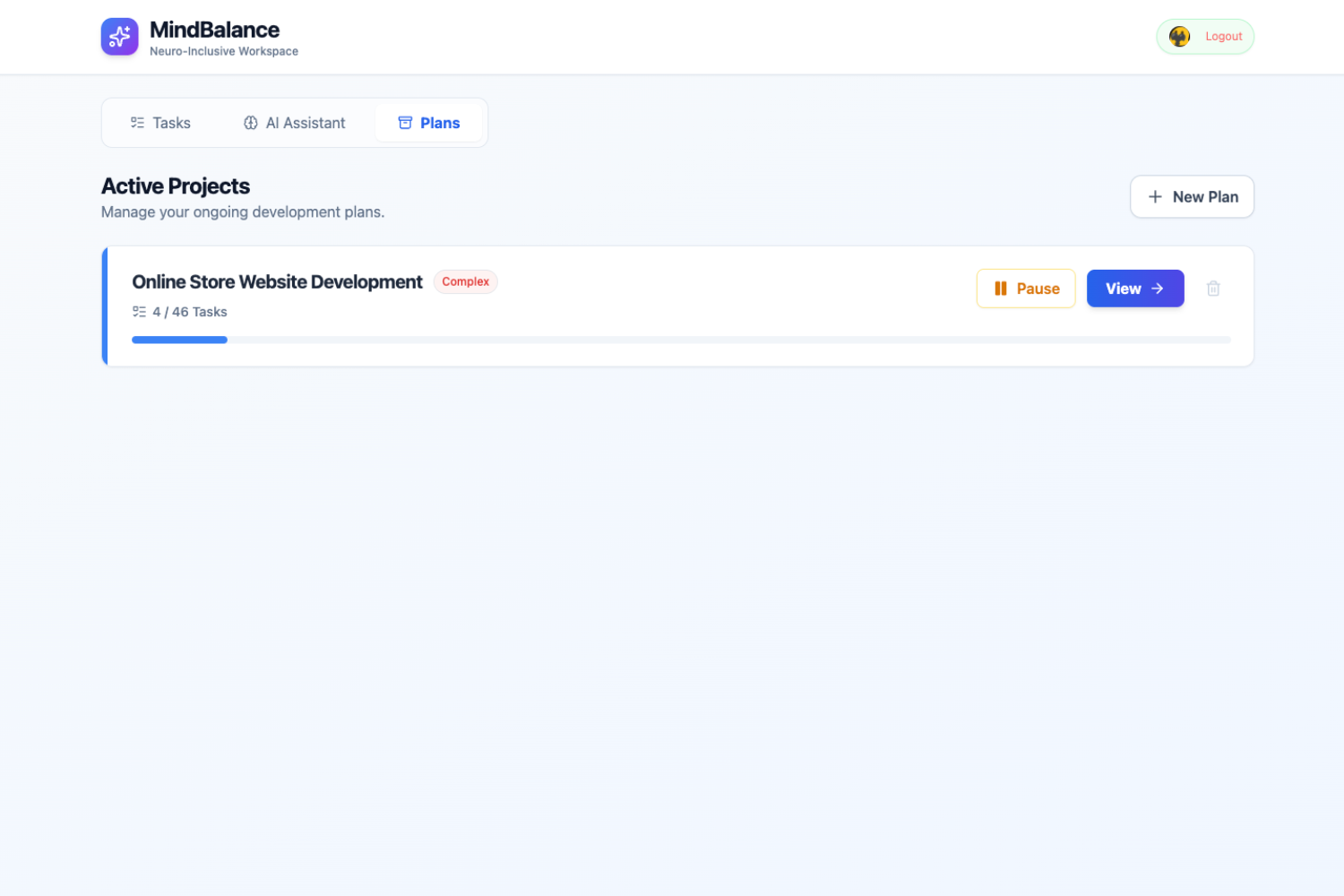
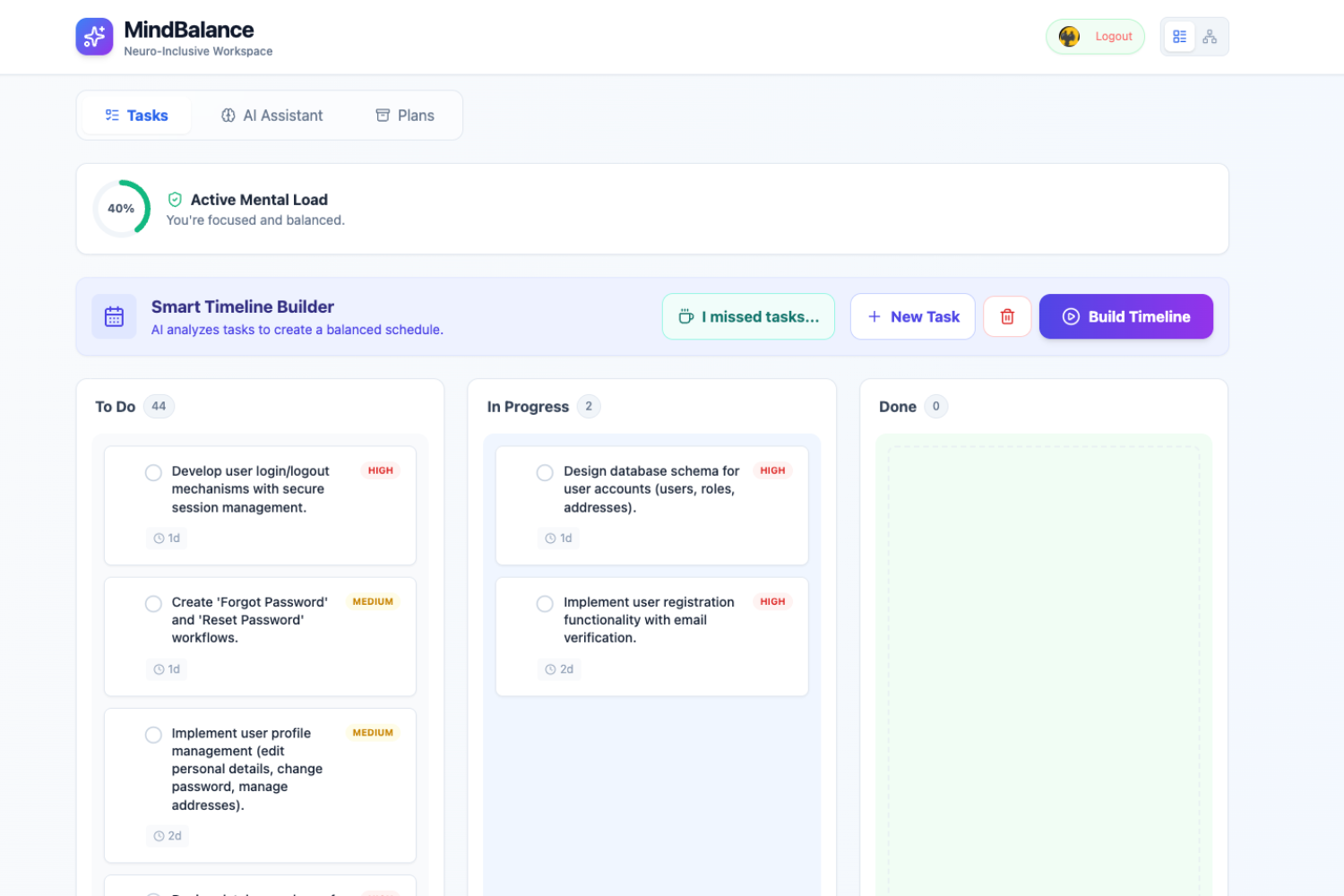
Once deployed, your tasks land here. Review your upcoming roadmap and select 'View' to dive into each task when you're ready to focus.
-
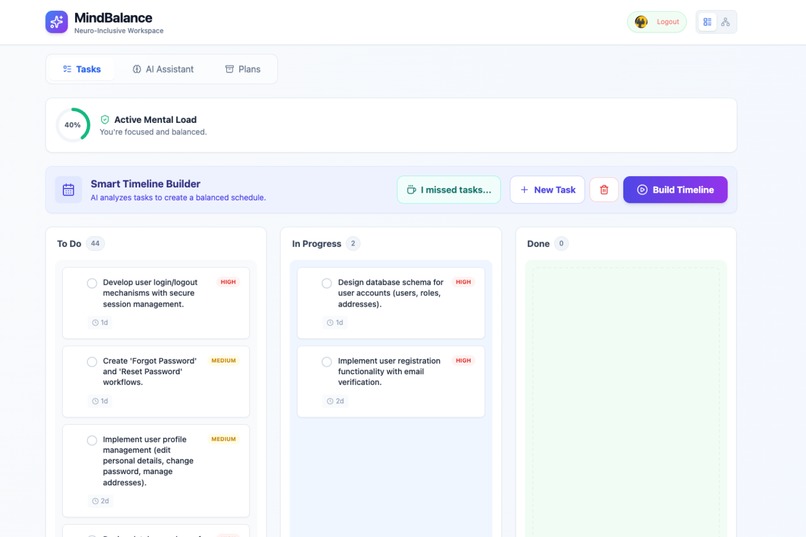
Active Task View: Track your progress in real-time. Manage your sub-tasks and monitor your energy levels as you work through your plan.
-
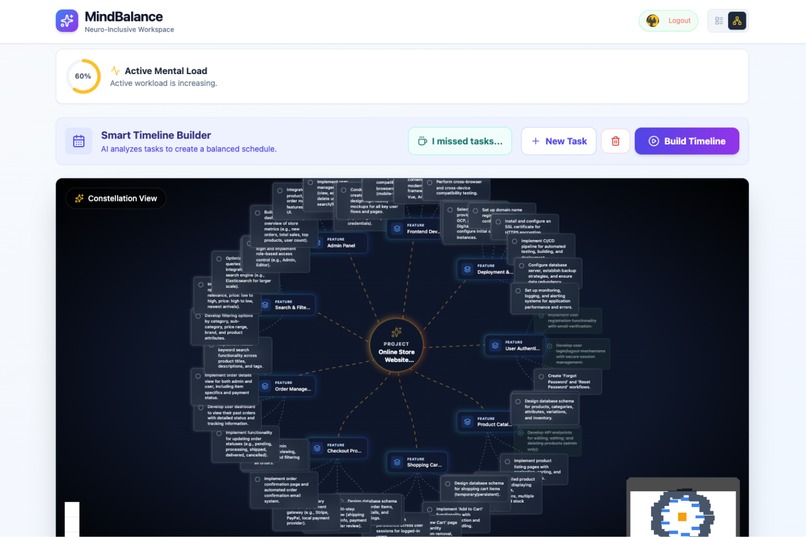
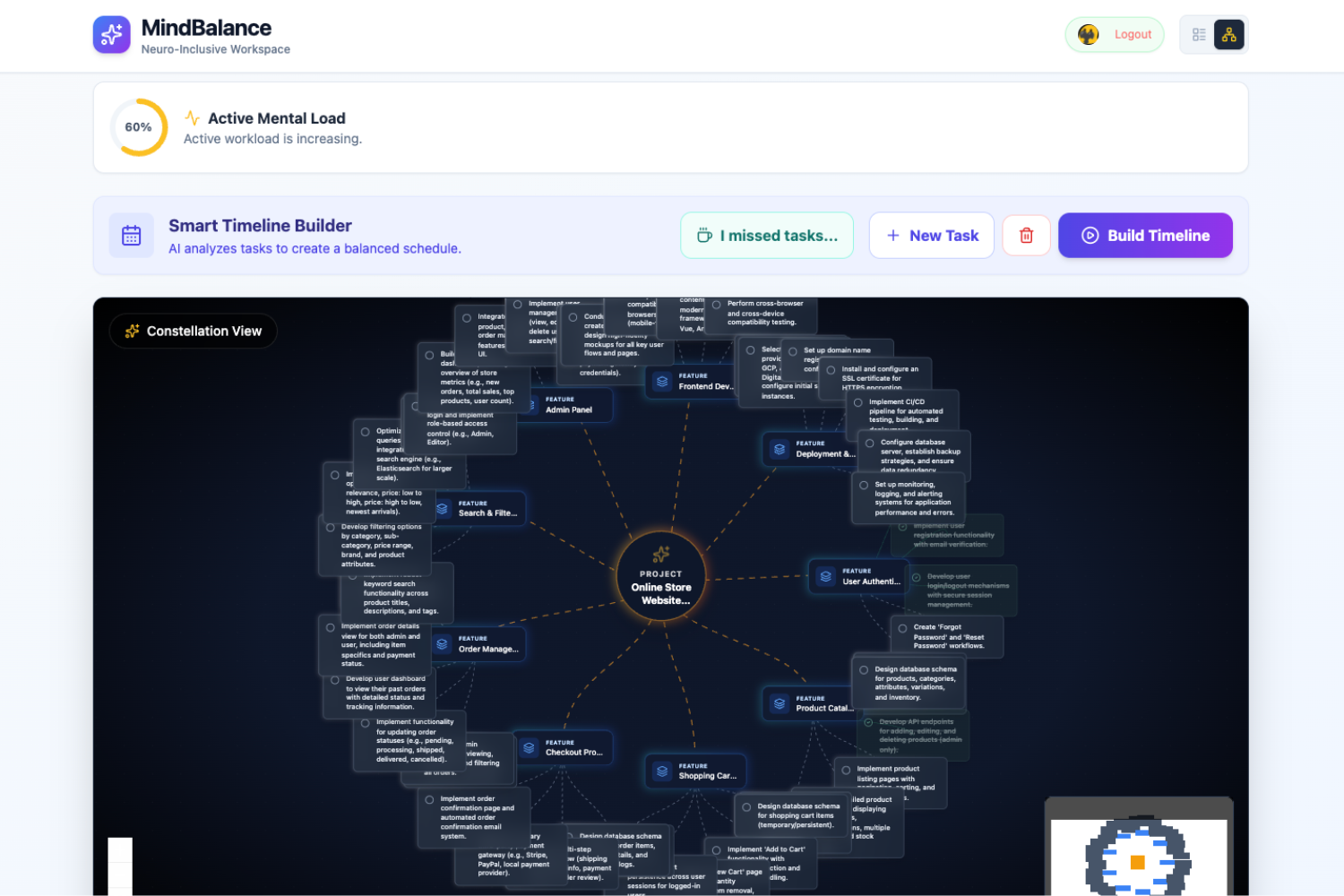
Experience your roadmap in 3D space. Navigate through your tasks like a galaxy, helping you see the big picture with a neuro-inclusive lens.
-
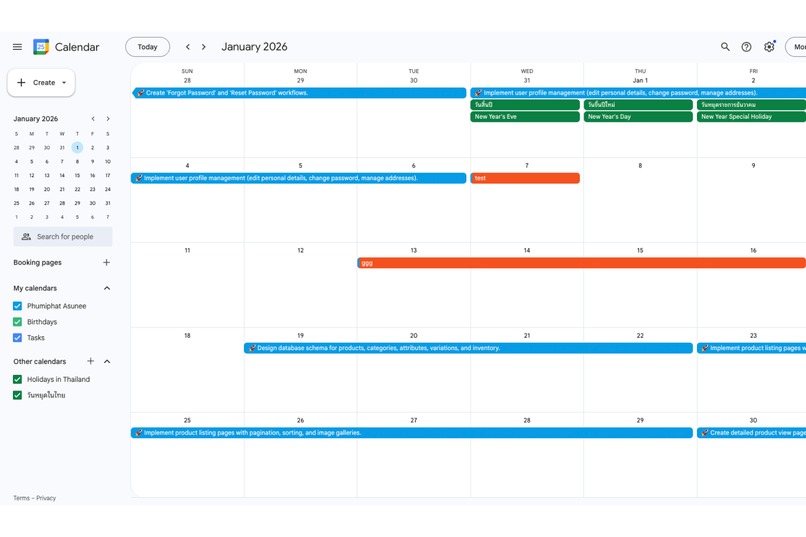
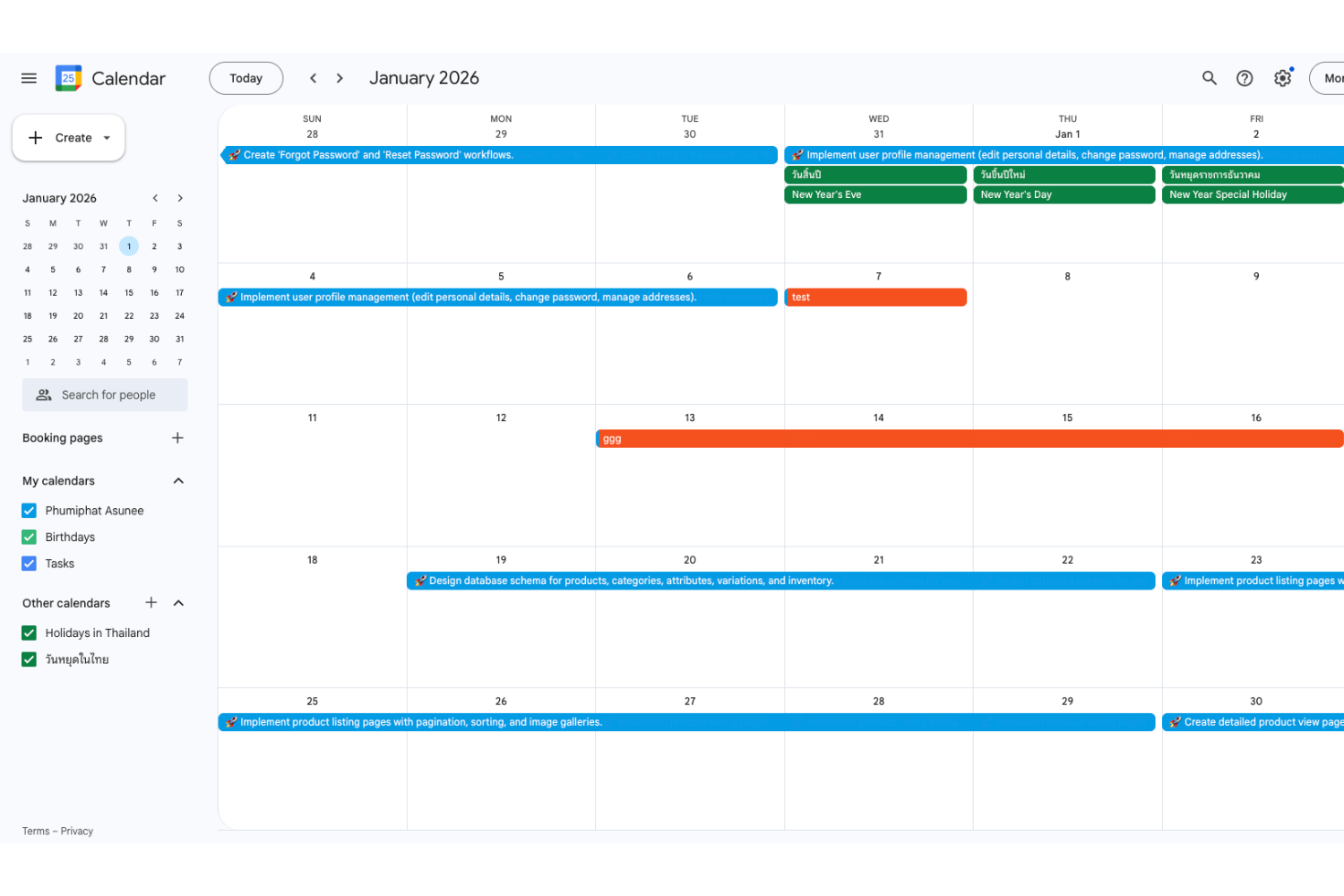
Build Timeline: AI analyzes your tasks and auto-syncs a perfect schedule to your Google Calendar.
-
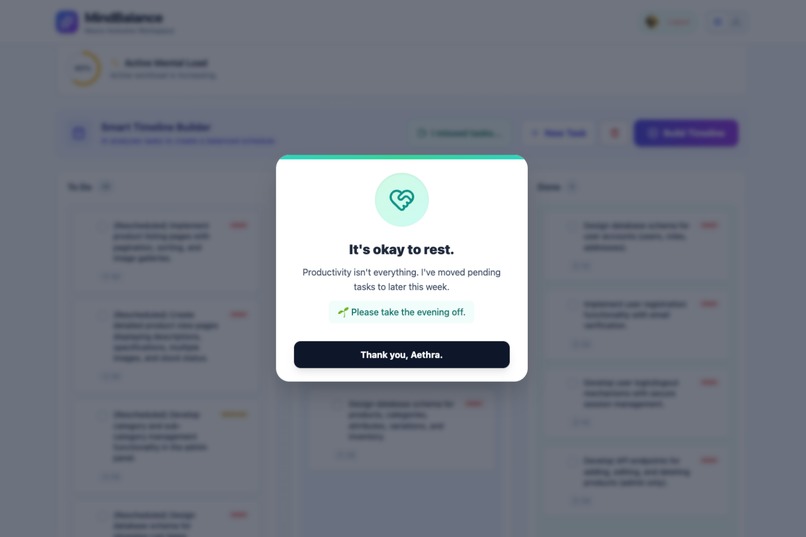
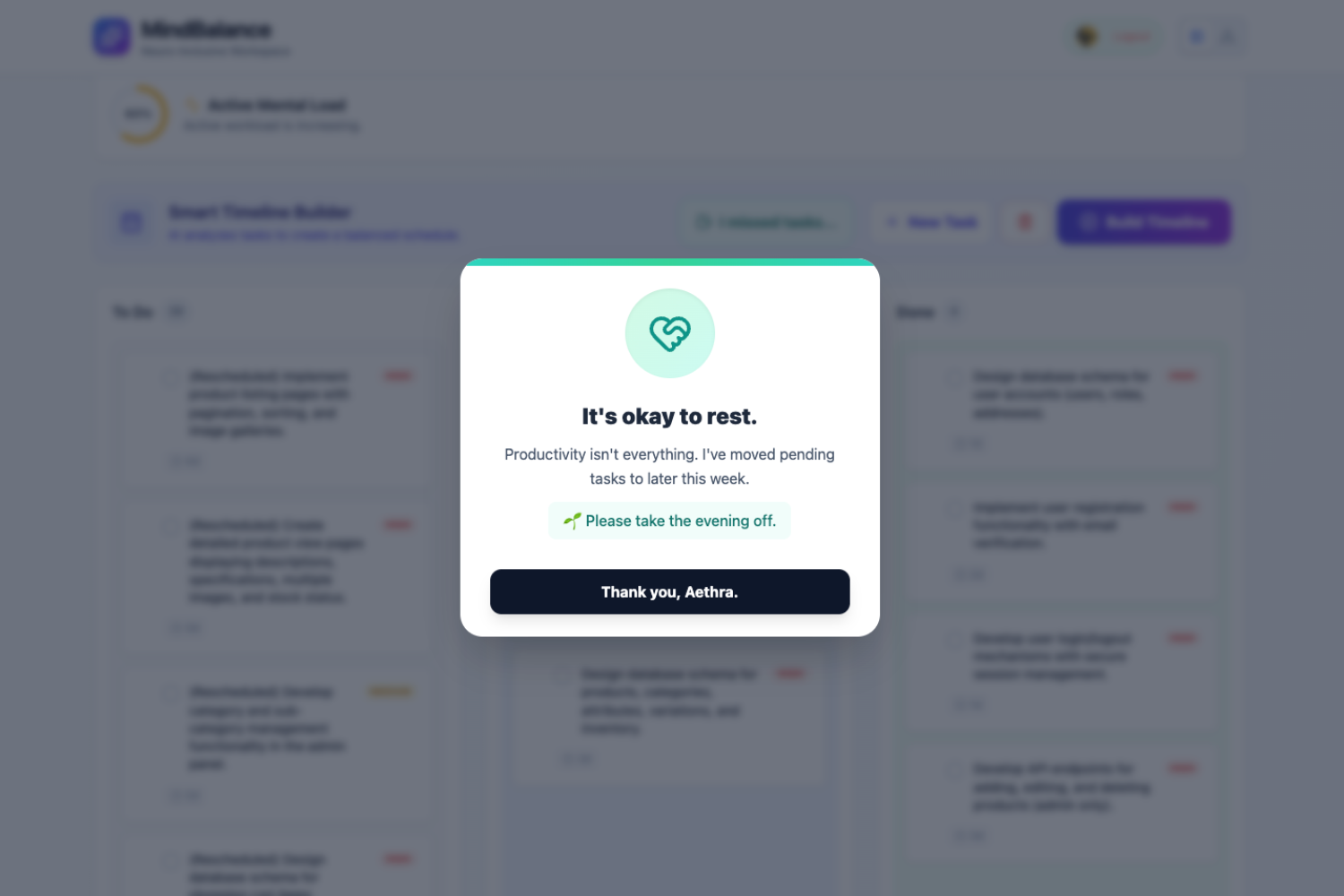
'I Missed' Button: No guilt, just progress. Click to instantly reschedule missed tasks and keep your momentum moving forward.
Inspiration
MindBalance was born from a simple yet profound realization: The world isn't designed for neurodivergent minds. For individuals with ADHD or Autism, traditional "To-Do lists" can be overwhelming, leading to "ADHD Paralysis" or burnout. We wanted to build more than just a task manager; we wanted to create a "Cognitive Shield"—a tool that understands that our mental energy isn't infinite.
What it does
MindBalance is a neuro-inclusive productivity ecosystem that transforms abstract stress into visual clarity.
Weighted Burnout Shield: Instead of just counting tasks, our algorithm calculates the "Cognitive Load" of each task, providing a real-time visual meter that warns users when they are approaching their limit.
Google Calendar Integration: Seamlessly syncs tasks into your real-life schedule to combat "Time Blindness."
Galaxy View (Spatial Mapping): Reimagines tasks as stars in a galaxy, helping users visualize the connections between tasks without the pressure of a rigid list.
Focus-First UI: A distraction-free interface designed to reduce sensory overload and help users enter a "flow state."
How we built it
We built a modern, responsive web application using a high-performance tech stack:
Frontend: React.js and Tailwind CSS for a sleek, accessible, and fast interface.
Backend & Auth: Supabase (PostgreSQL) for secure data storage and real-time updates.
External Integration: Google Calendar API (v3) via Google Identity Services for bi-directional scheduling.
Intelligence: A custom-weighted algorithm that factors in task complexity and duration to predict mental exhaustion.
Challenges we ran into
The biggest challenge was handling Google’s OAuth 2.0 flow and API restrictions while maintaining a smooth user experience. We also spent significant time refining the Burnout Algorithm—trying to find the perfect balance between "too many notifications" and "not enough warning." Designing a UI that is both beautiful and accessible for people with sensory sensitivities required many iterations and feedback loops.
Accomplishments that we're proud of
Successfully integrating Real-time Google Calendar Sync, allowing users to bridge the gap between their "Plan" and "Reality."
Developing the Burnout Meter that actually changes user behavior by encouraging them to take breaks.
Creating a Spatial Visualization (Galaxy View) that makes task management feel less like a chore and more like an exploration.
What we learned
We learned that "less is more" in neuro-inclusive design. We discovered that for many users, the problem isn't a lack of organization, but a lack of visual feedback on their energy levels. We also deepened our understanding of secure API management and environment variable safety (the hard way!).
What's next for MindBalance: The Neuro-Inclusive Productivity Shield
AI Smart Scheduling: Implementing AI to automatically suggest breaks based on the user's historical burnout patterns.
Community Templates: Allowing neurodivergent advocates to share "Energy-Efficient" workflows.
Wearable Integration: Syncing with heart-rate data from smartwatches to provide even more accurate burnout warnings based on physiological stress.
Built With
- gemini
- git
- github
- googlecalendarapi
- html5
- javascript
- json
- postgresql
- react
- supabase
- tailwind
- visual-studio


Log in or sign up for Devpost to join the conversation.