-
-
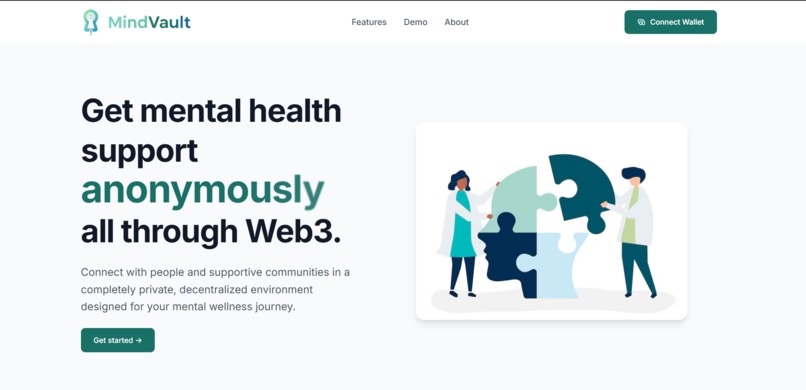
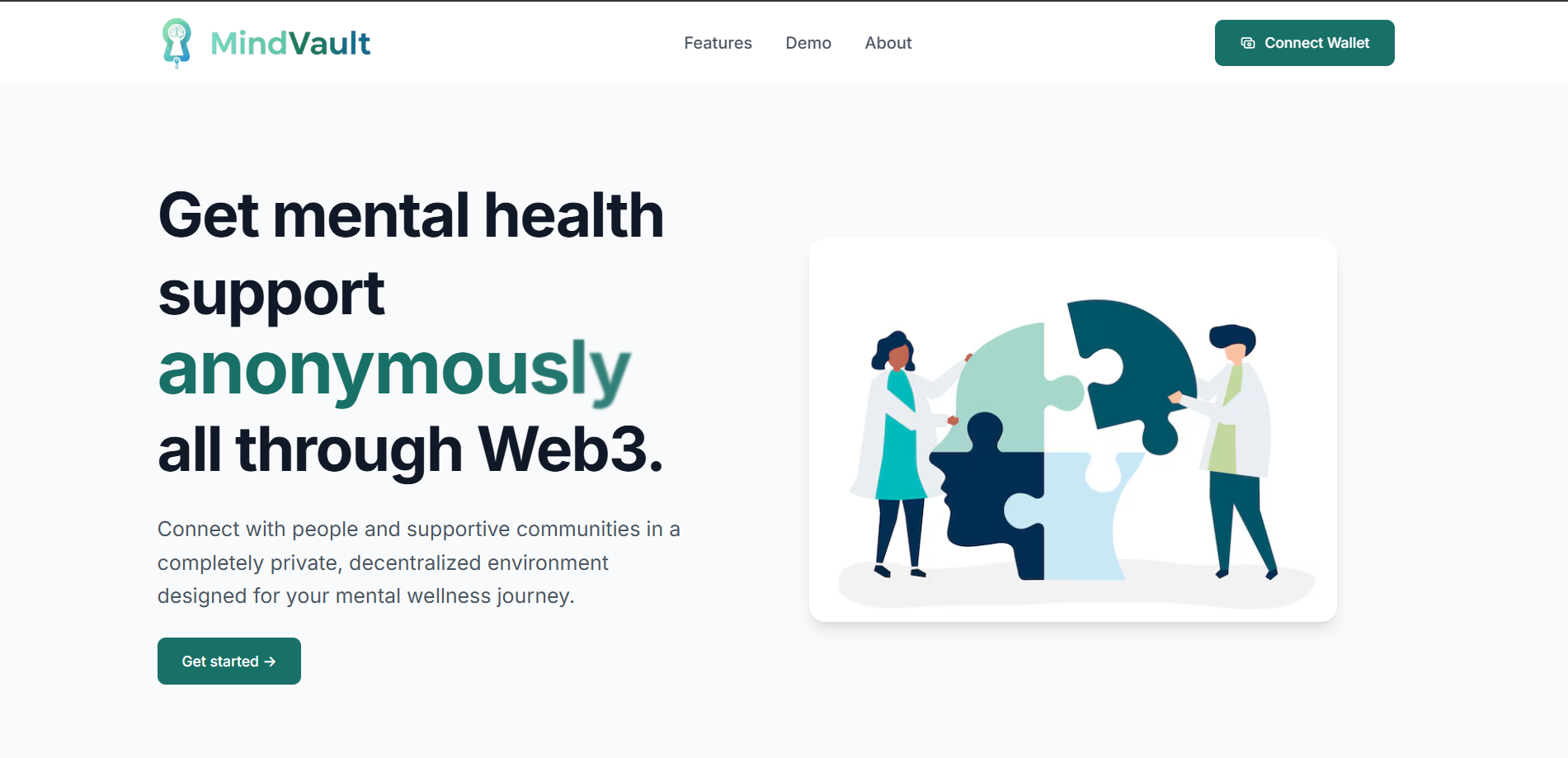
landing page
-
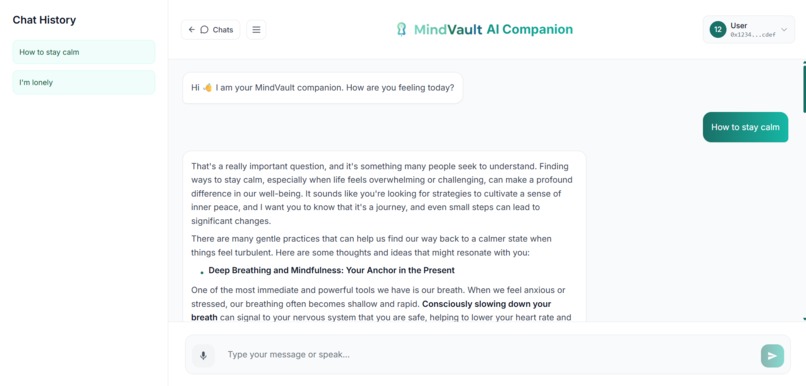
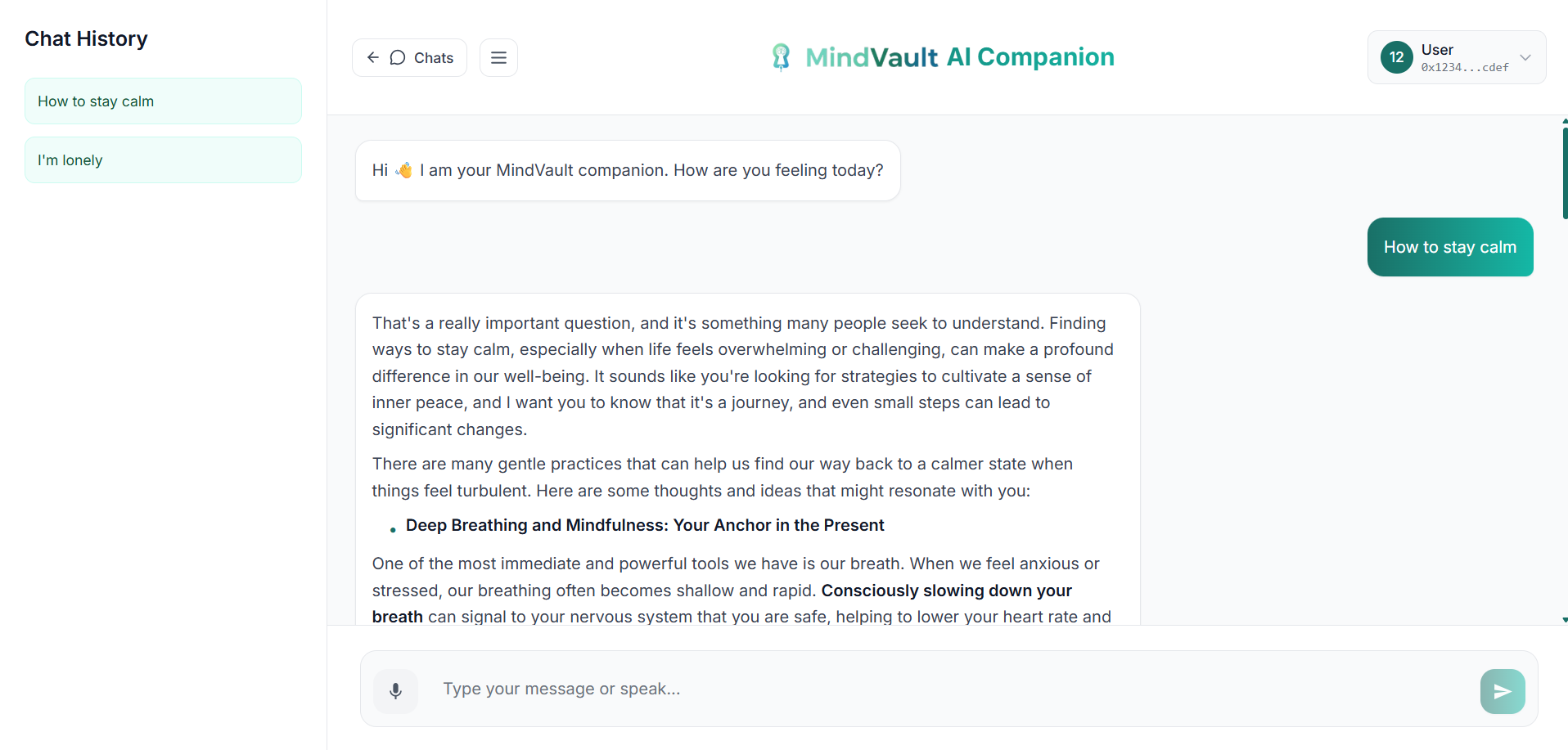
ai chatbot
-
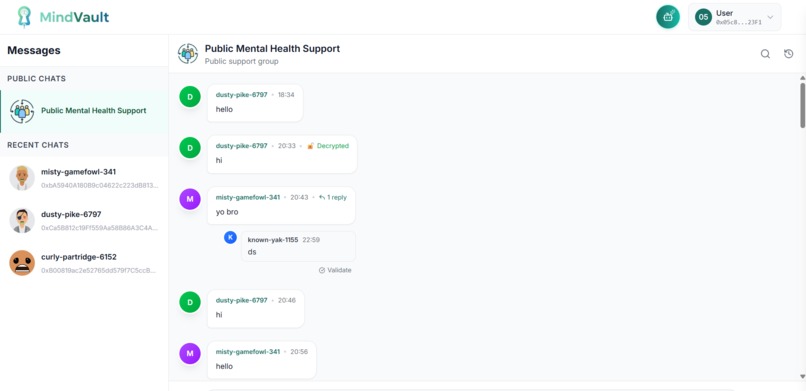
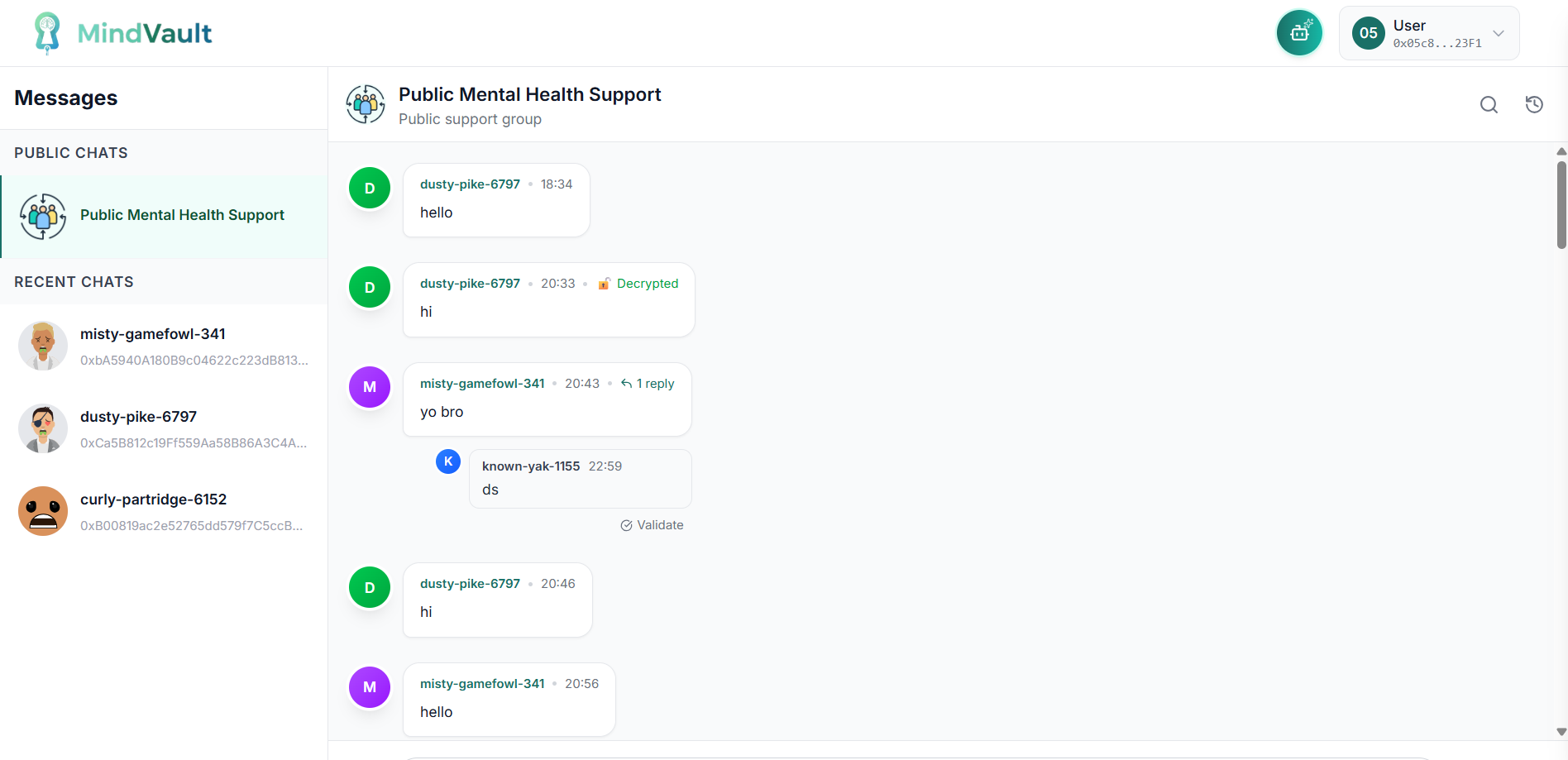
global chatroom
-
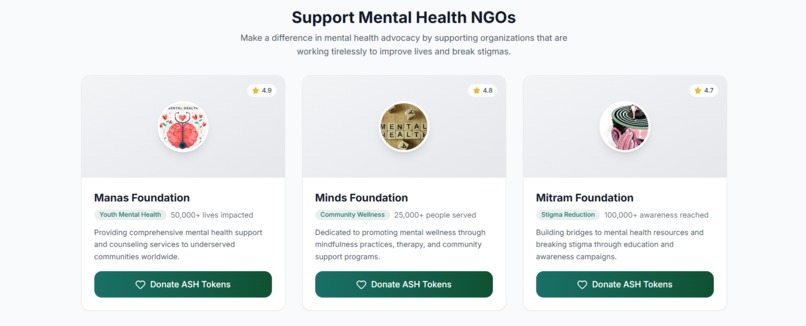
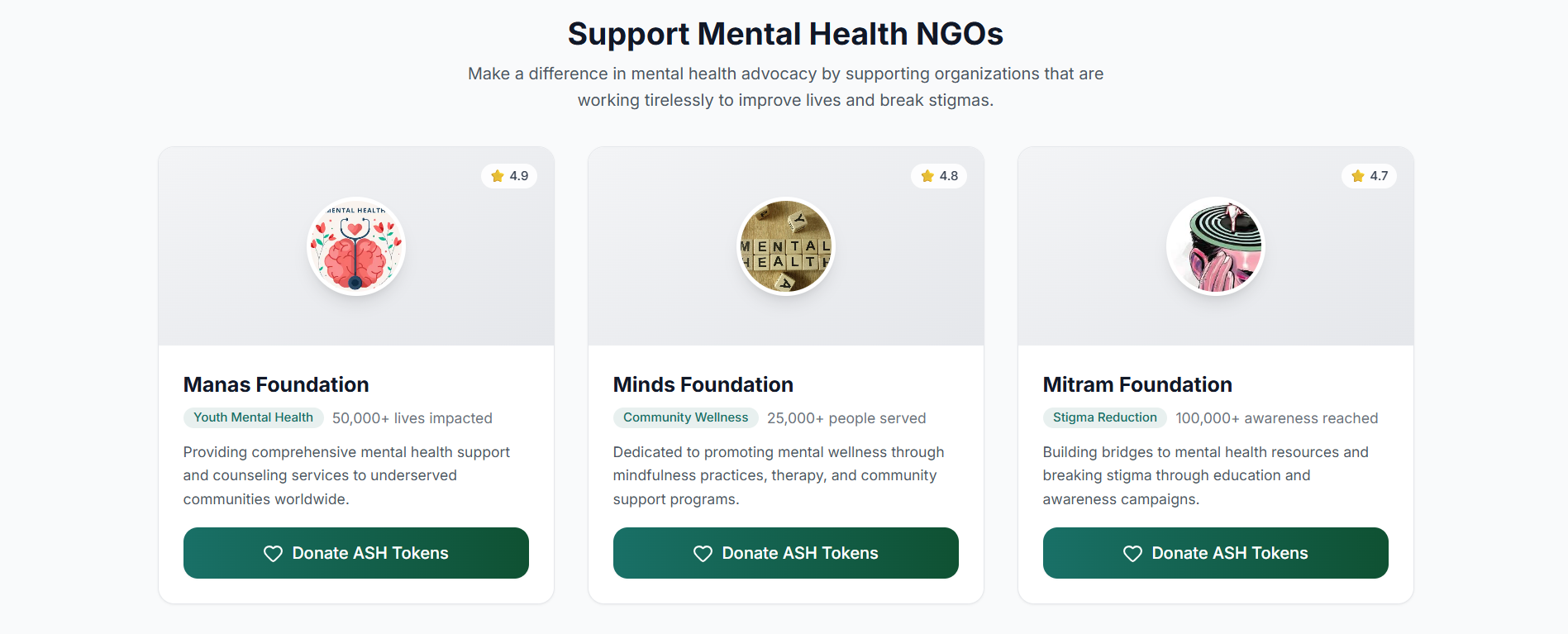
ngos to donate
-
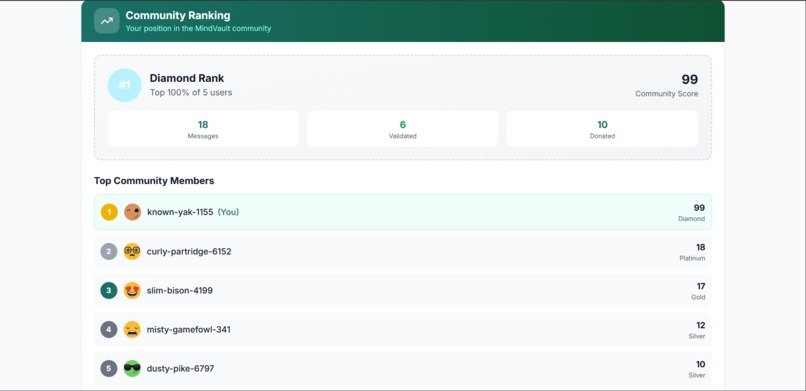
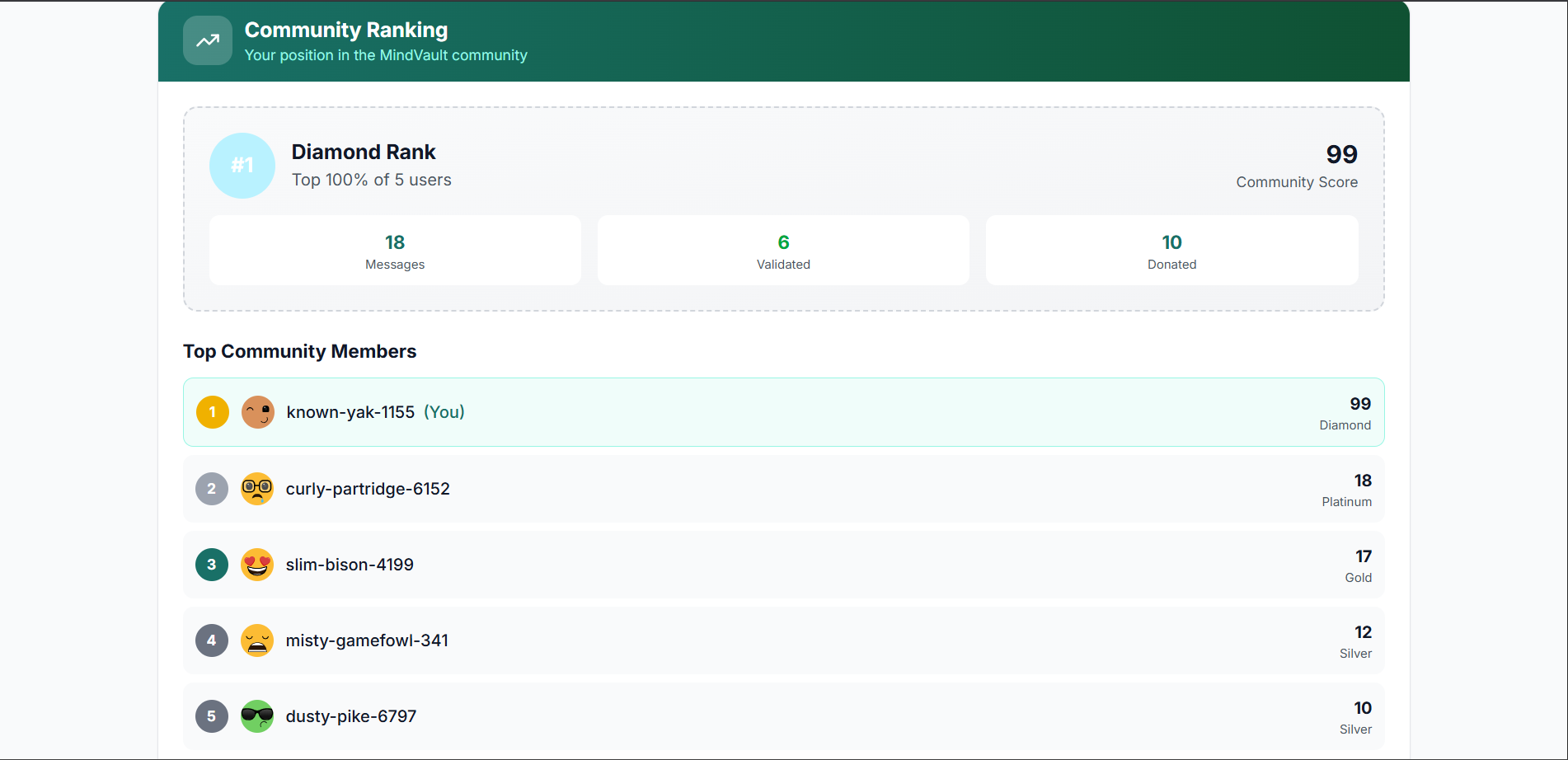
community leader board
-
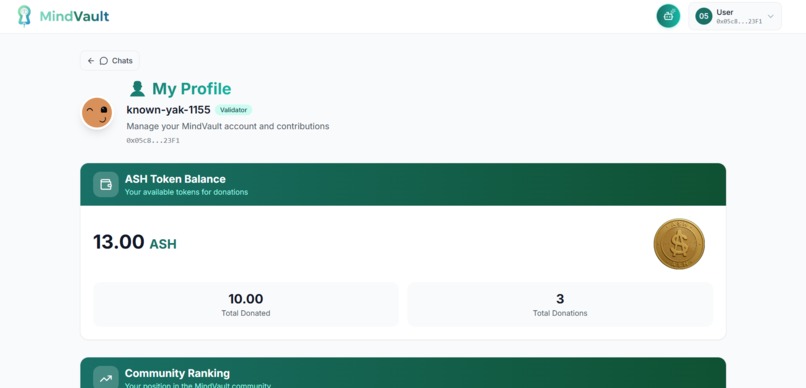
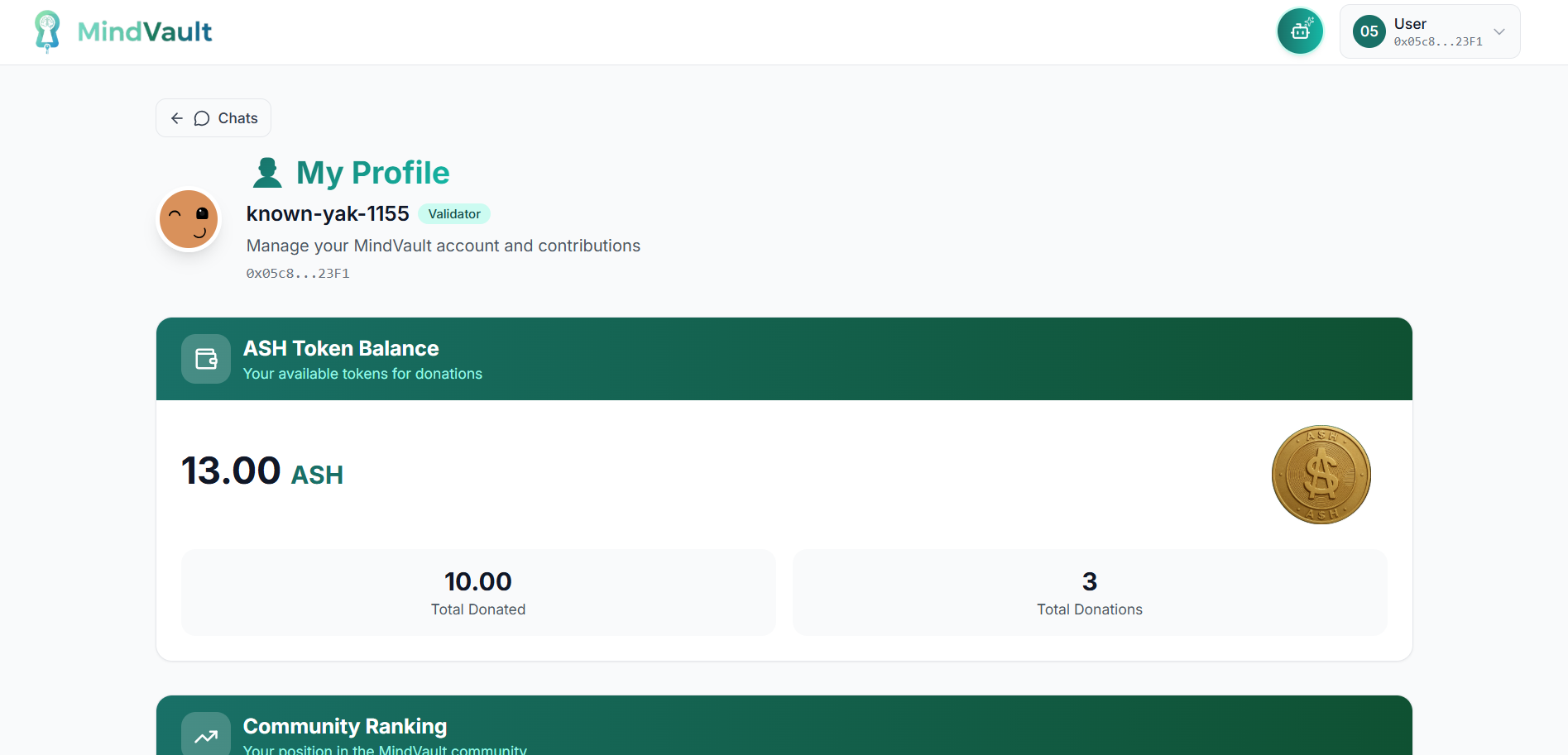
profile
-
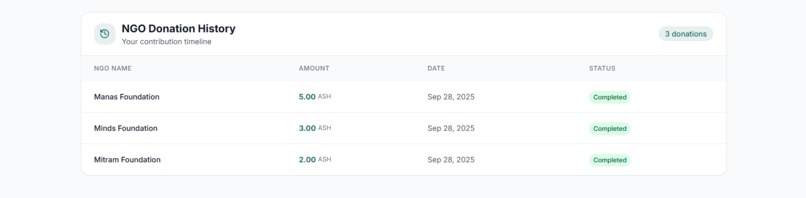
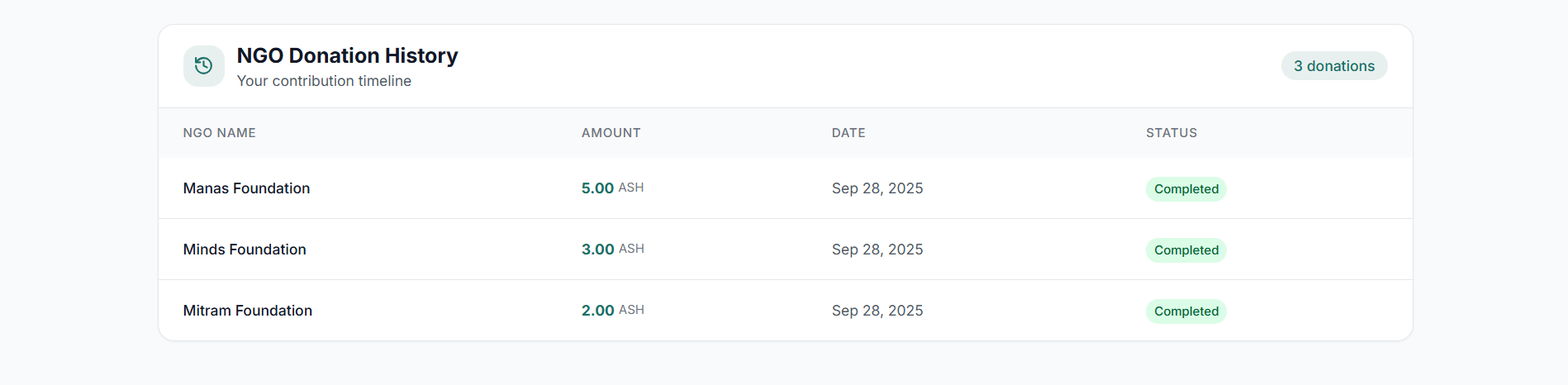
ngo donation history
🧠 Project Story: The Journey Behind MindVault
🚀 Inspiration
The idea for MindVault was born out of a shared frustration with how current mental health platforms operate.
We’ve seen people close to us struggle silently — because of stigma, cost, or lack of privacy around seeking help. Even the platforms that do exist often:
- Ask users to share personal information
- Store sensitive data centrally
- Don’t offer real-time support
We started asking ourselves:
“Can we use Web3 to build a safe, anonymous space for mental wellness?”
And more importantly:
“Can we empower everyday people to support one another — and get rewarded for it?”
These questions led us to create MindVault — a platform that blends privacy, AI assistance, blockchain trust, and community support into one seamless experience.
🛠️ How We Built It
We knew MindVault had to be secure, empathetic, and user-first. Here’s how we brought it to life:
🔐 Privacy & Security
- Anonymous login via Phantom or any wallet — no emails, no usernames.
- Lit Protocol encrypts all private messages end-to-end.
- No central storage of sensitive data — your identity stays with you.
🤖 AI-Powered Mental Health Support
- Integrated Gemini GPT as a 24/7 mental health assistant.
- Offers empathetic responses, detects crisis signals, and shares coping strategies.
- Maintains session context for more personalized conversations.
💬 Real-Time Community Interaction
- Built with Socket.IO for seamless real-time messaging.
- Users can engage in:
- 🫂 Anonymous support groups
- 🔐 Private, encrypted conversations
- 👍 Community validation (likes/upvotes)
🪙 Token-Based Incentives
- Introduced the ASH Token (ERC-20 on Sepolia):
- Users earn tokens for meaningful peer support.
- Tokens can be donated to verified mental health NGOs.
- Active users can stake for future rewards.
⚠️ Challenges We Faced
Building a privacy-first, empathetic platform was a balancing act. Here are some challenges we overcame:
- Encryption Complexity: Integrating Lit Protocol with dynamic keys took serious effort.
- AI Safety: Preventing unsafe AI outputs required filters, fallbacks, and moderator alerts.
- Token Abuse Prevention: Early users tried to game the system. We added validation and rate-limiting.
- Designing for Sensitivity: Every interaction needed to respect emotional vulnerability.
📚 What We Learned
- Privacy and empathy can co-exist — with intentional design.
- Web3 can empower users emotionally, not just financially.
- AI support is powerful, but human empathy makes it real.
- Mental health UX must be gentle, safe, and human-first.
🌍 Impact Potential
MindVault can:
- Make mental health support more accessible and affordable
- Break down stigma with anonymity and community
- Promote empathy at scale with incentivized support
- Deliver transparent social impact through blockchain donations
📅 What’s Next
✅ Phase 1 – Core Platform (Now)
- AI assistant for mental health support
- Encrypted real-time chat via Lit Protocol
- ASH token rewards and NGO donations
- Anonymous wallet-based login
🚧 Phase 2 – Enhanced Features (Q2 2025)
- Group therapy rooms with live moderation
- Mood tracking and emotional analytics
- Access to verified mental health professionals
📱 Phase 3 – Platform Expansion (Q3 2025)
- iOS and Android mobile apps
- Multi-language support
- Advanced analytics dashboards for users
🌐 Phase 4 – Ecosystem Growth (Q4 2025)
- DAO governance and community voting
- Mental health resource marketplace
- Cross-chain support and scalability optimization
💬 Final Thoughts
MindVault isn’t just a tech project — it’s a mission to build a more empathetic, private, and decentralized future for mental health.
We wanted to prove:
- ✅ You can be anonymous and still feel seen
- ✅ You can help others and get rewarded
- ✅ You’re never alone — even in Web3
Thanks for reading our story — and for supporting mental health innovation. 💚
If this resonates with you:
🌟 Star us on GitHub
🚀 Try the Live Demo
Together, let’s make mental wellness more human — and more secure — for everyone.

Log in or sign up for Devpost to join the conversation.