-
-
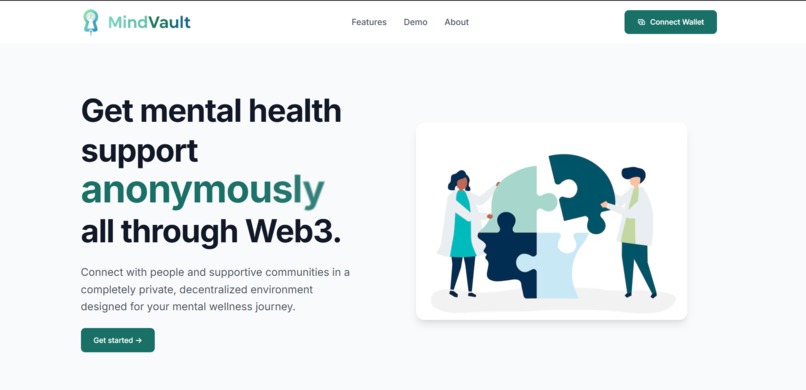
dashboard
-
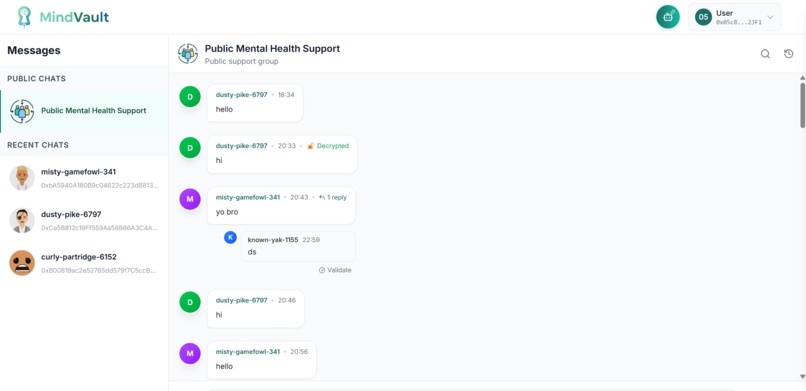
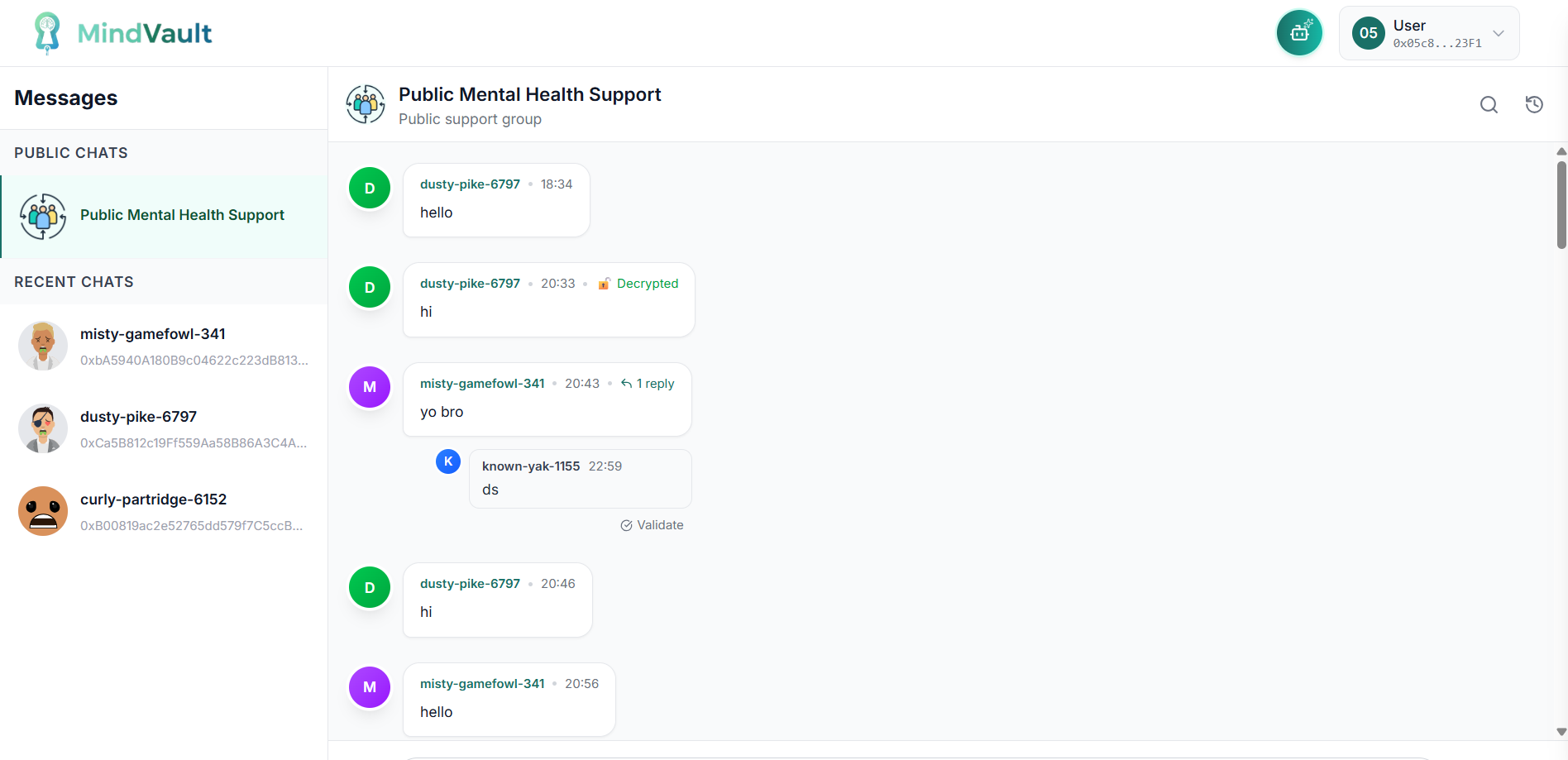
global chat
-
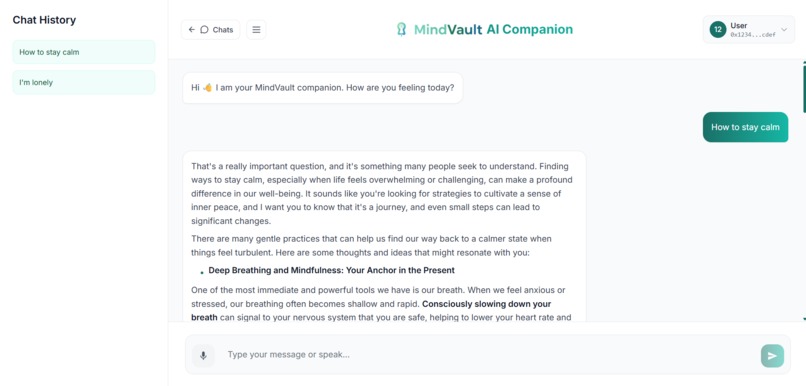
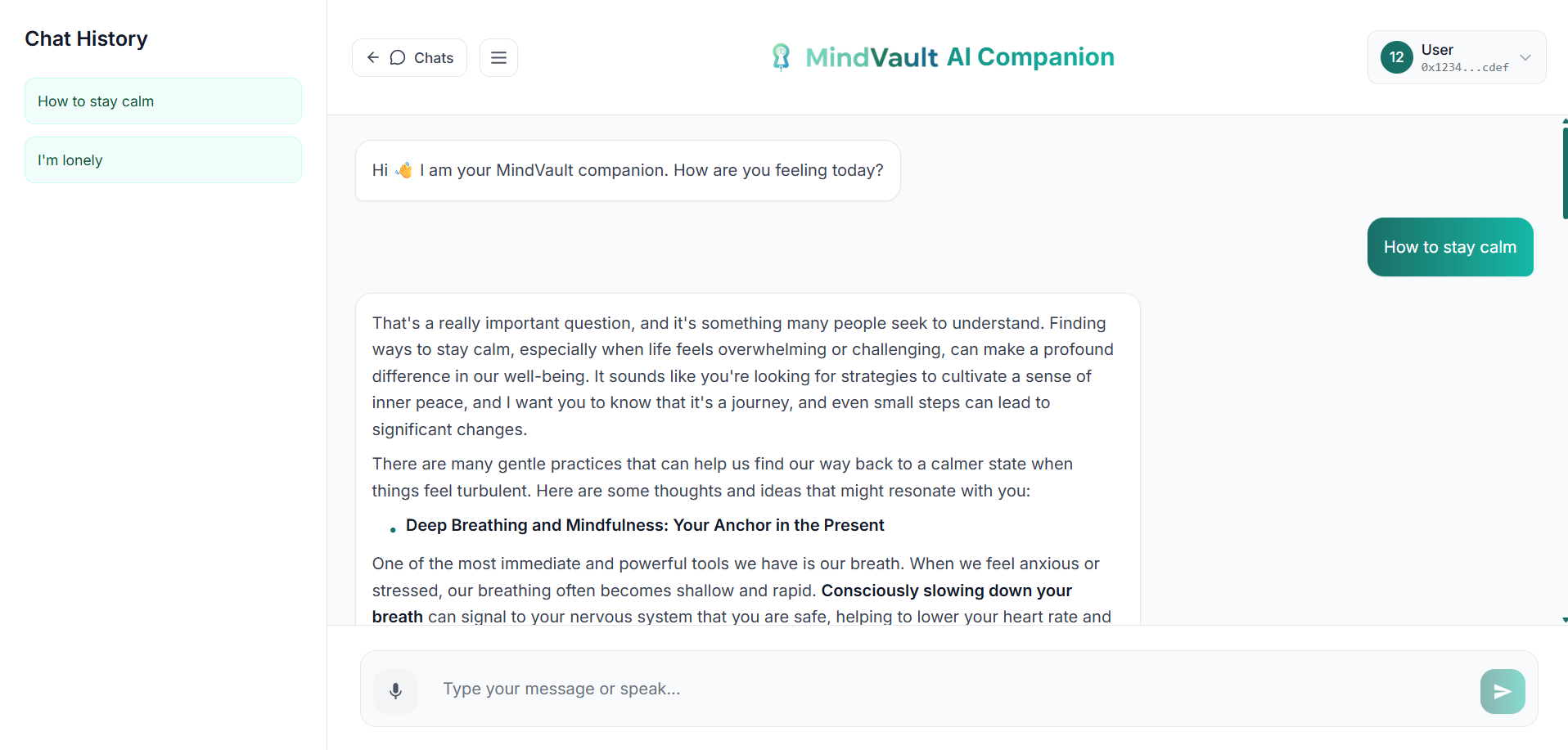
ai chatbot
-
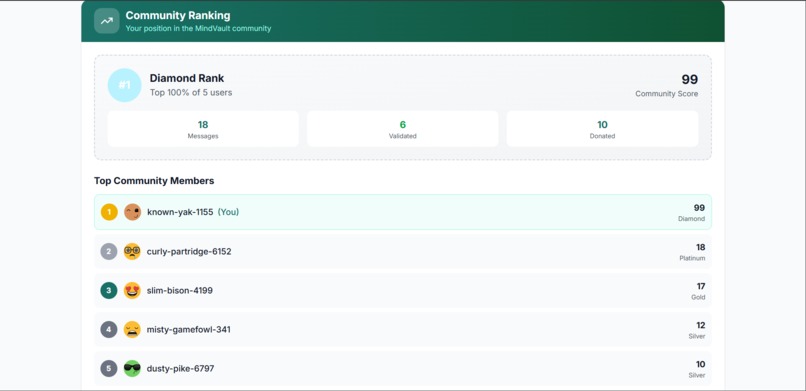
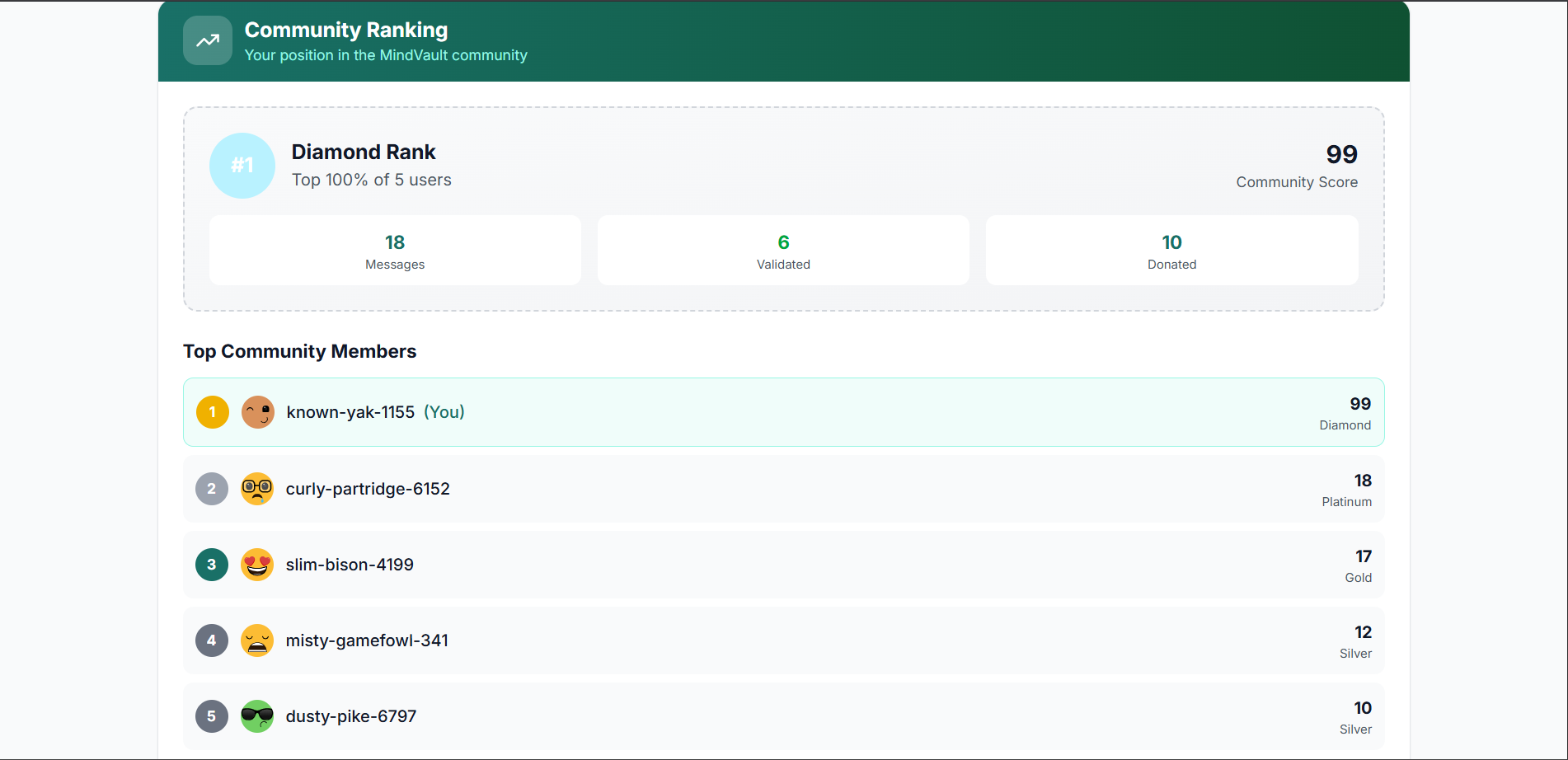
community leaderboard
-
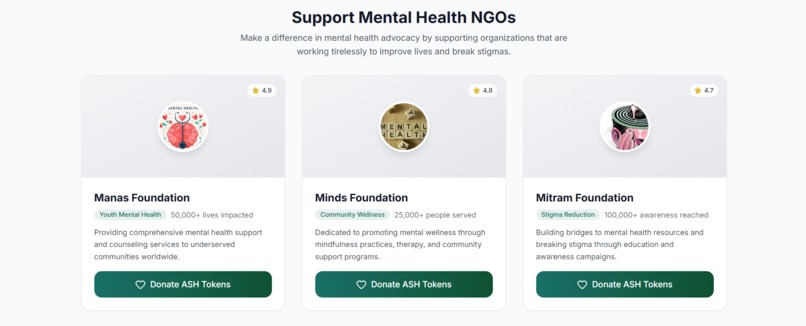
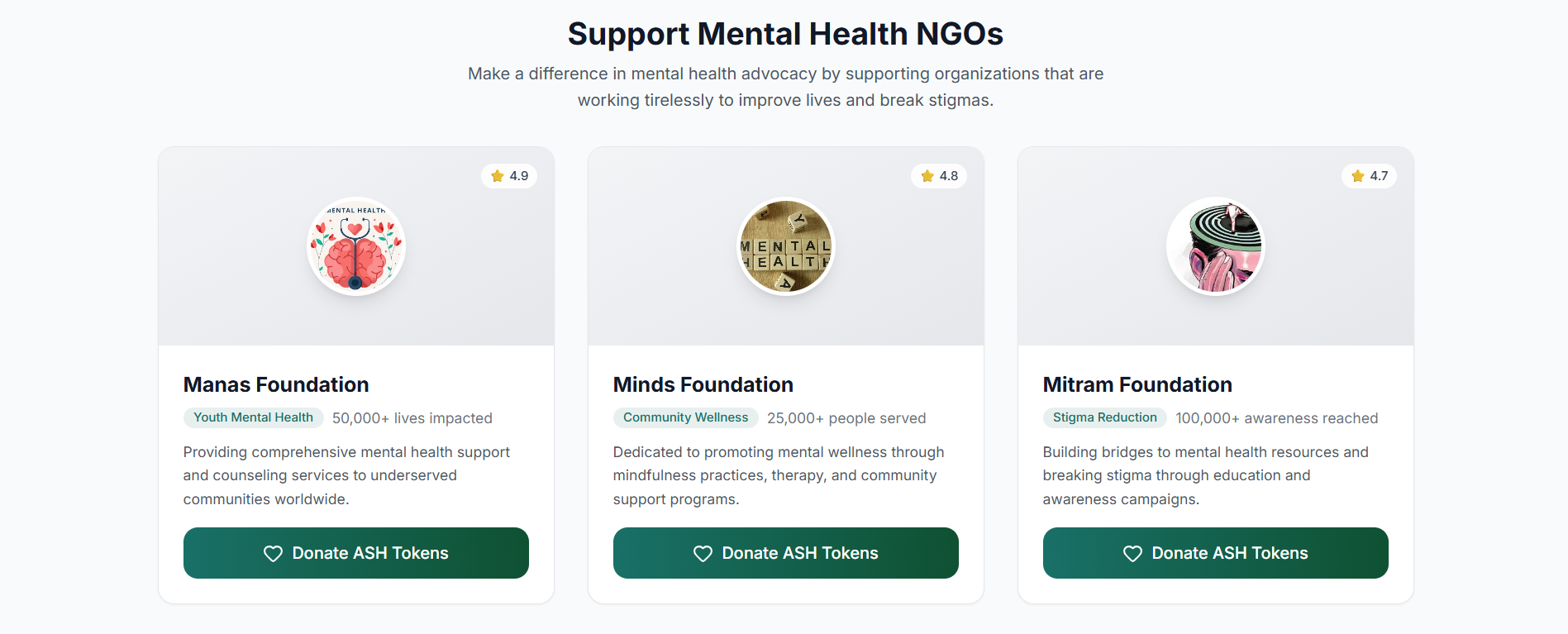
ngo donation
-
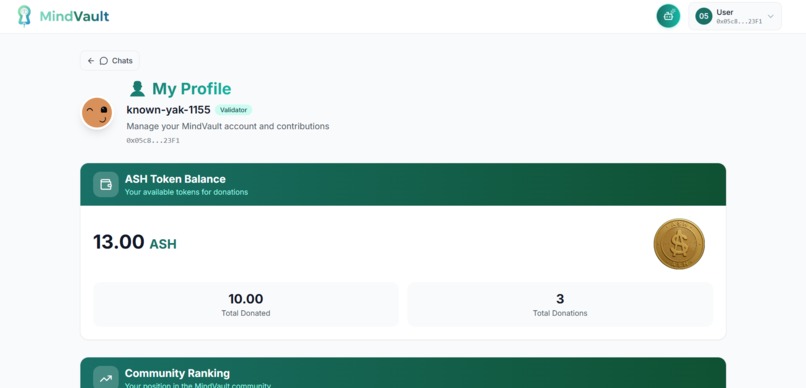
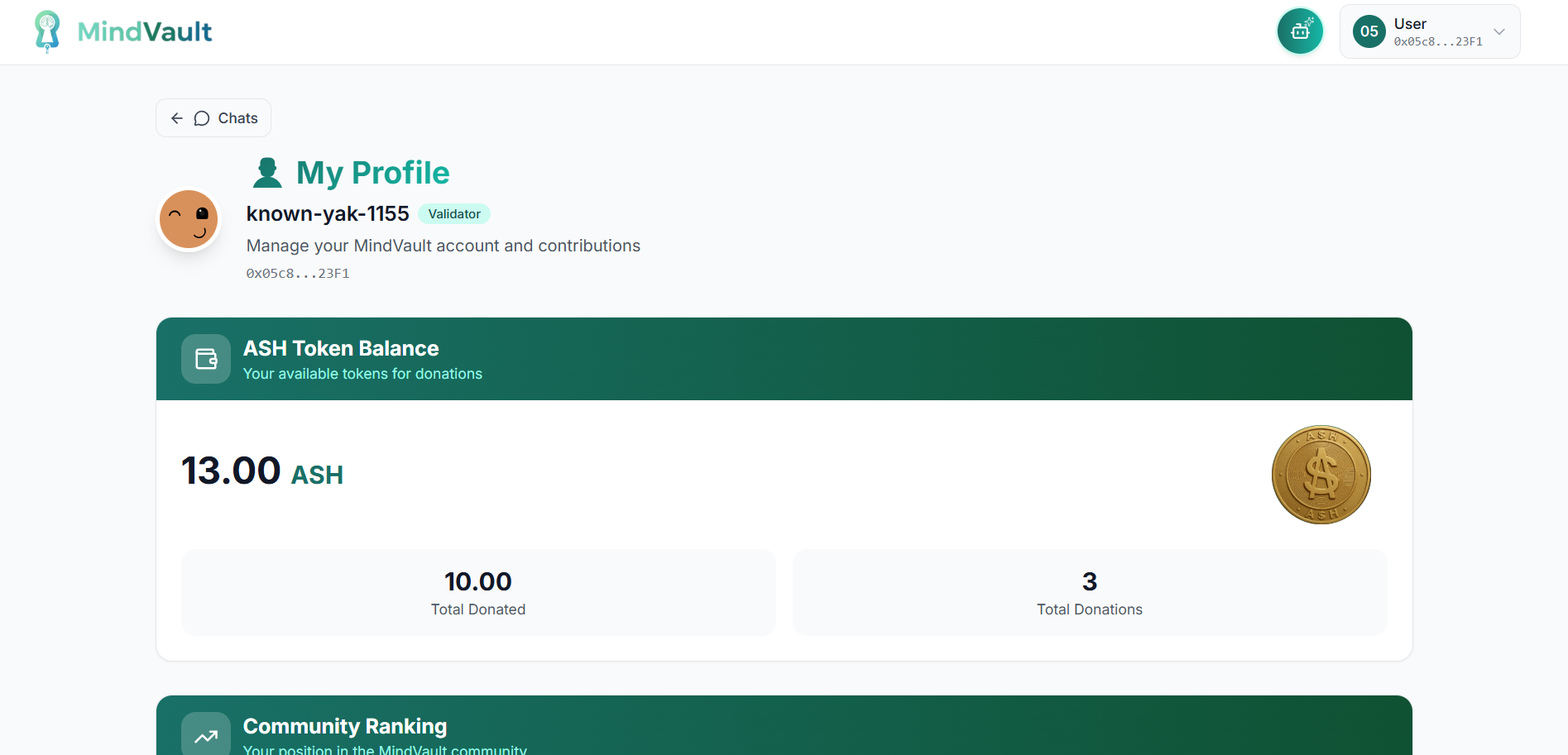
token balance and total ngo contribution
Project Story: The Journey Behind MindVault
Inspiration
The idea for MindVault was born out of a shared frustration with how current mental health platforms operate. We’ve seen people close to us struggle silently because of the stigma, cost, or lack of privacy around seeking mental health help. Even the platforms that do exist often ask users to share personal information, store sensitive data centrally, or don’t offer real-time help.
We started asking ourselves:
"Can we use Web3 to build a safe, anonymous space for mental wellness?"
And more importantly:
"Can we empower everyday people to support one another — and get rewarded for it?"
These questions drove us to build MindVault — a platform that blends privacy, AI assistance, blockchain trust, and community support into a single experience.
🛠️ How We Built It
We knew that to make MindVault truly impactful, we had to combine technologies in a way that was both secure and empathetic.
Privacy & Security
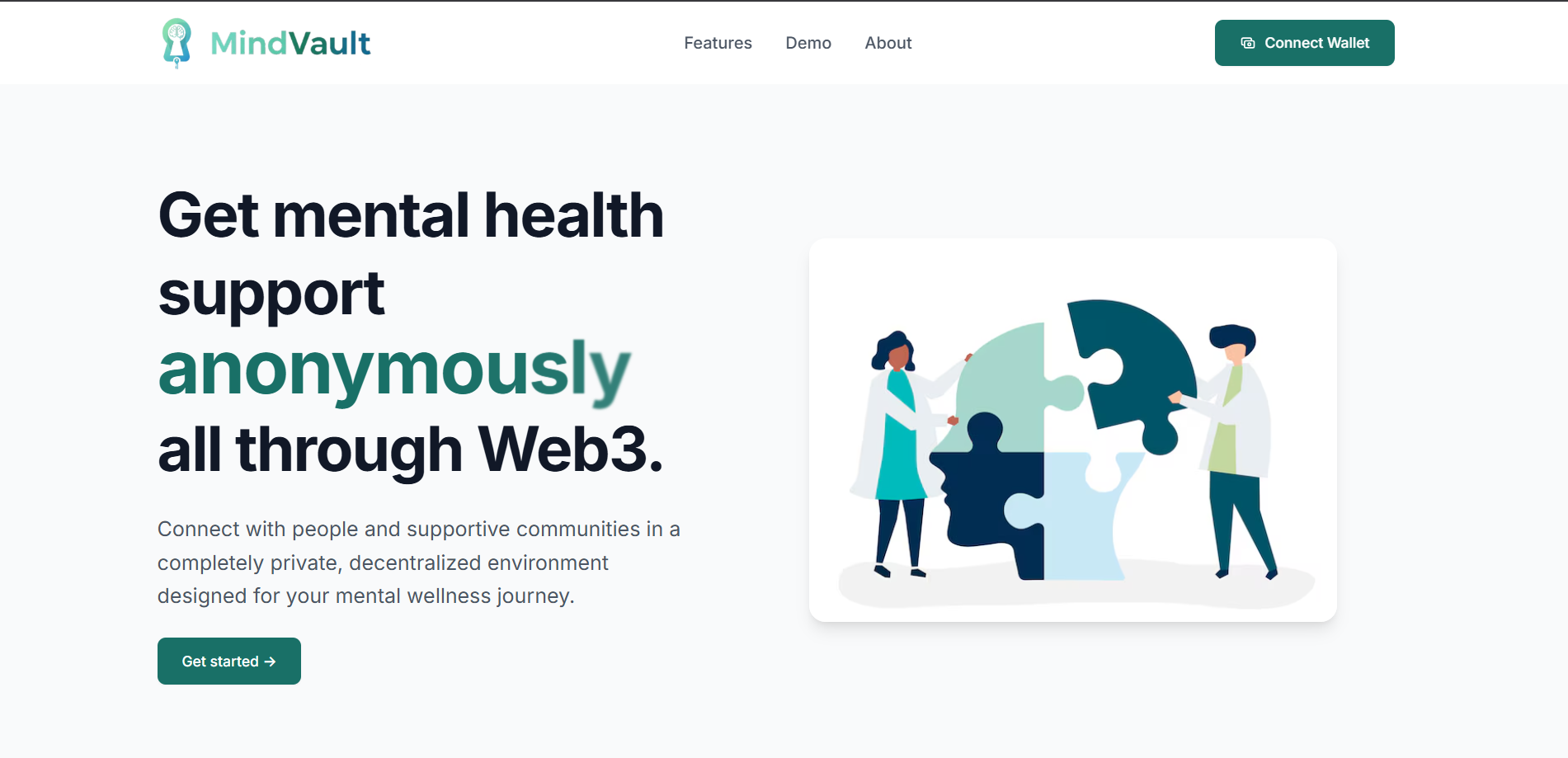
- Users log in anonymously via Phantom or any other wallet connection — no emails or usernames needed.
- Lit Protocol encrypts all private messages, ensuring end-to-end confidentiality.
- No sensitive data is stored centrally; your identity stays with you.
AI-Powered Mental Health Support
- We integrated Gemini GPT to create a mental health assistant that’s available 24/7.
- The assistant provides empathetic responses, recognizes crisis indicators, and shares coping strategies.
- It also learns context over a session to make conversations feel more personalized.
Real-Time Community Interaction
- Built with Socket.IO for seamless real-time chats.
- Users can engage in:
- Anonymous support groups
- Private encrypted conversations
- Community validation (likes/upvotes on helpful responses)
Token-Based Incentives
- We launched the ASH Token (ERC-20 on Sepolia) to create a reward system:
- Users earn tokens for providing meaningful peer support.
- Tokens can be donated directly to verified mental health NGOs.
- Active community members can stake tokens for future rewards.
Challenges We Faced
Building a privacy-first platform while keeping the UX smooth was a tough balancing act. Some of the challenges we hit included:
- Encryption Complexity: Implementing secure messaging via Lit Protocol took significant effort, especially for dynamic key management.
- AI Safety: Making sure the AI didn’t give unsafe or insensitive responses was critical. We added checks, fallbacks, and moderator alerts.
- Token Abuse Prevention: Early on, people could spam for tokens. We solved this with a validation system and rate limits.
- Designing for Sensitivity: Mental health is not just another app category — we had to treat every interaction with care and respect.
What We Learned
- Privacy and empathy can co-exist — if you design with intention.
- Web3 can empower users — not just financially, but emotionally.
- AI is a great first step — but pairing it with human support makes it truly powerful.
- Mental health UX needs empathy — not just clever code.
Impact Potential
MindVault has the power to:
- Make mental health support more accessible and affordable
- Break down stigma with anonymity and community
- Encourage empathy at scale through incentives
- Deliver transparent impact via blockchain donations to NGOs
What’s Next
MindVault's roadmap is structured into four key phases:
Phase 1 – Core Platform (Now)
- AI mental health assistant
- Encrypted real-time chat using Lit Protocol
- ASH token integration and donations
- Anonymous wallet-based onboarding
Phase 2 – Enhanced Features (Q2 2025)
- Group therapy rooms with moderation
- Mood tracking and mental health analytics
- Integration of verified mental health professionals
Phase 3 – Platform Expansion (Q3 2025)
- Mobile application (iOS and Android)
- Multi-language support
- Advanced user analytics dashboard
Phase 4 – Ecosystem Growth (Q4 2025)
- DAO governance for community decision-making
- Mental health resource marketplace
- Cross-chain compatibility and performance optimization
Final Thoughts
MindVault isn’t just a tech project — it’s a mission to build a more empathetic, private, and decentralized future for mental health support.
We wanted to prove that:
You can be anonymous and still feel seen.
You can help others and get rewarded for it.
And most importantly, you’re never alone — even in Web3.
Thanks for reading our story — and for supporting mental health innovation.
If this resonates with you, feel free to ⭐ star our GitHub repo or try the live demo.
Together, let’s make mental wellness more human — and more secure — for everyone.
Built With
- ethereum
- ethers
- gemini
- neondb
- node.js
- react
- solidity
- typescript
- websockets


Log in or sign up for Devpost to join the conversation.