

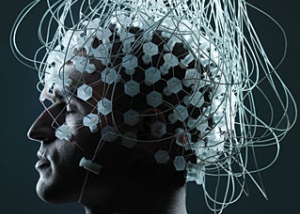
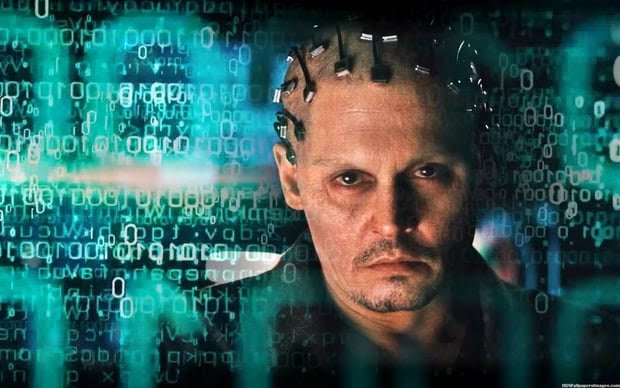


(Financially support me on my dreams http://patreon.com/ellerynewton*!
“Your suggestions are welcome. I've certainly attempted additional routes (e.g. Kernel LLC, 2045 Foundation, support by for-profit company Halcyon Molecular, and more). Nothing is out of the question. The reason this non-profit is here and you are able to participate in its discussions is simply that this model, despite its very small impact, has one attribute going for it, which is perseverance. It is not dependent on much and so it sticks around. That has its uses. Even if it's not the prime mover (at least not at its present funding level), it is a reliable node for those interested, a place to find a network, and an advocate for the goals.”
“To be clear, there are additional reasons why Carboncopies is a 501(c)(3) non-profit, for example, because we don't have a for-profit agenda, are not owned by corporate interests or government interests, it's pretty easy to talk with us and we have a fairly easy time maintaining a healthy network of positive relationships with researchers. You'll find that many researchers have had bruising experiences with for-profit ventures and that can create hurdles. I won't name names, but this has happened to some very prominent researchers at the forefront of R&D that is important to WBE. There are more reasons, but these two alone are in my opinion sufficient to always keep an unaffiliated non-profit organization for whole brain emulation alive.”
“John Searle says, “If you accept the irreducible existence of consciousness you’re giving up on science, you’re giving up on 300 years of human progress and human hope and all the rest of it.”
Nevertheless,
“Consiousness has to become accepted as a genuine biological phenomenon, as much subject to scientific analysis as any other phenomenon in biology, or for that matter, the rest of science.”
The two prerequisites are arousal and awareness.
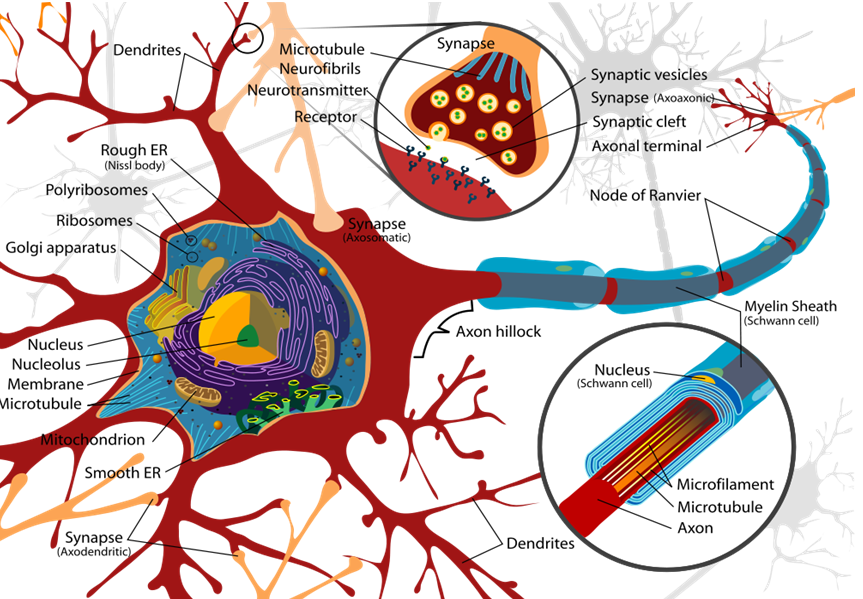
The “Human brain has 100 billion neurons and 100 trillion synapses, so it is not infinitely complex.”
We have 80,000 thoughts a day and make 30,000 decisions.“
This is a draft.
Reid Hoffman says, "If you are not embarrassed by the first version of your product, you've launched too late."
“The reason that our time and place is so unique in the arch of humanity is we literally now have the tools to build the kind of world we can dream of. So, if you take computer software, and biology, genomics, ai, virtual reality, and 3d printing we can literally program our existence.“ - Bryan Johnson (Founder of Kernel Co, Braintree, and OS Fund)
The project below requires financial support from Pentagon, China, EU, Wall Street, angel networks, family based investment funds that have professional management, scientifically trained billionaires in the double digits, superstars, scientists, attorneys, university faculty/students, leaders of countries.
Go to carboncopies.org to learn more.
Inspiration:
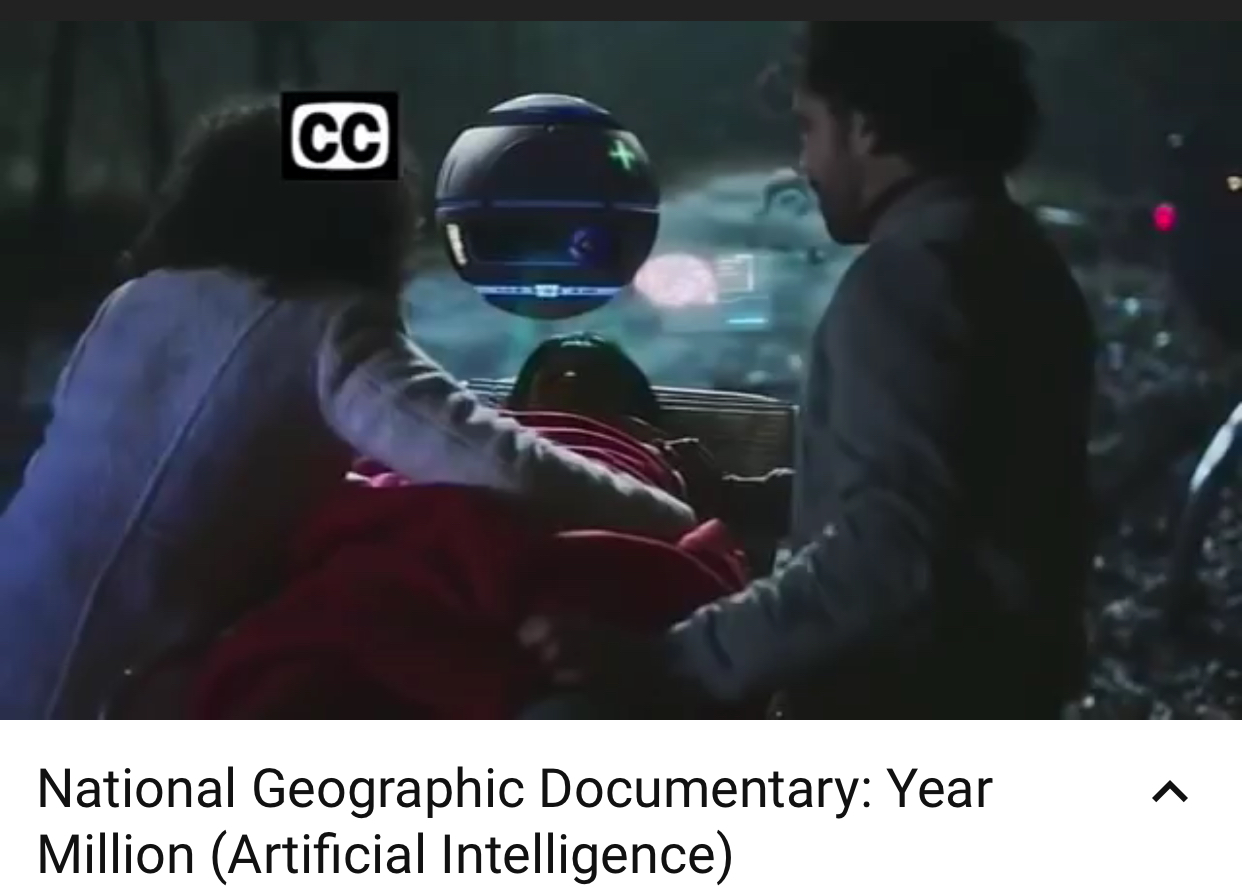
NatGeo did a documentary of Year 1 million: https://m.youtube.com/watch?v=-Xn6IDytVGw
The Year Million. We’re not talking about a date. It’s a figurative era. One where our world has gone through such a dramatic change,
“It only takes a moment for the unthinkable to become a reality. In the near future, tragedy may come with new choices. Imagine you’ve been in a car crash that killed your daughter. Or has it?
If you wish to scan your daughters brain for digitization and upload, you have approximately 5 minutes.
Now imagine the power you real when you can order a digital copy of your daughters brain. And you know what comes next?
One day, delivered to your doorstep is an artificially intelligent android that will act, look, emote just like your daughter. Every memory from birth on will remain in tact. But she’ll also be a walking computer with access to all the world’s knowledge.”
Brian Greene Theoreticaly physicsist
bg111(at)columbia.edu
There are several machinary and material companies bioprinting now including Allevi, Cyfuse Biomedical, 3D Bioprinting Solutions, Aspect Biosystems, Materialise NV, Rokit, Stratasys, Medprins, and Formlabs. Further, there are several companies brain computer interfacing and brain preserving including DARPA Brain Initiative, EyeWire.org, Carboncopies Foundation, Openwater project, Kernel Co, 2045 Initiative, Neurosteer, Blue Brain Project, Alcor Cryonics, Brain Preservation Foundation, and Neuralink.
However, no one has put the pieces together to hope to save people’s consciousness who are suffering as well as our risk of mortality into a mind upload center.
This past year I attended the Yale Hackathon and Yale Healthcare Hackathon. Additionally, I exchanged emails with professors at Yale, UConn, MIT, Harvard, Carnegie Mellon, Texas A & M as well as presidents of universities, dozens upon dozens of researchers, and partners at billionaire family offices.
I asked if they would share this with their students. In exchange, I collected all of what they said and articles online to come up with a concept business plan on how we can hope to achieve this.
(If you get bored/confused or feel I included too much, just keep scrolling down further to paragraphs that are of interest to you)
My motivation:
There are dozens of incurable diseases, cancers with 100% mortality (100’s of cancer total), and we’re biologically aging (Senescence). The Chan Zuckerberg Foundation says, “Today, the U.S spends 50 times more on treatments than on prevention and research.” List of cancer: https://www.cancer.gov/types List of incurable diseases: https://en.m.wikipedia.org/wiki/List_of_incurable_diseases
Physics says that, “in death, the collection of atoms of which you are composed (a universe within the universe) are repurposed. Those atoms and that energy, which originated during the Big Bang, will always be around.” Physics recently tested on the biggest computer and found we’re not in a simulation, neuroscience can recreate the god feeling experience with a helmet, neuroscience can point to prayer in the brain, and neuroscience identified the two prerequisites to consciousness are arousal and awareness. Simulation theory study article: https://futurism.com/sorry-elon-physicists-say-we-definitely-arent-living-in-a-computer-simulation Consciousness study article: https://www.sciencealert.com/harvard-scientists-think-they-ve-pinpointed-the-neural-source-of-consciousness Article on prayer in the brain: https://www.nbcnews.com/news/religion/power-prayer-what-happens-your-brain-when-you-pray-n273956
A. Ray Kurzweil says, “People say at 30, oh I only want to live to 90 but when they’re 90 they actually realize they maybe want to live to 91.” and “I want to live forever for the same reason I want to wake up tomorrow.”
B. Peter Thiel says, “I’ve always had this really strong sense that death was a terrible, terrible thing. I think that’s somewhat unusual. Most people end up compartmentalizing, and they are in some weird mode of denial and acceptance about death. I prefer to fight it.”
C. Sam Harris says, “Well I do have existential worries and I think I like anybody else am concerned about death its its its death in some ways unacceptable it’s just an astonishing fact of our being here that we die but I think worse than that if we live long enough we lose everyone we love in this world. People die and disappear and we are left with this stark mystery uh just the sheer not knowing of what happened to them.” , “I’m not arguing that consciousness is a reality beyond science or beyond the brain that it floats free of the brain at death I’m not I’m not making any spooky claims about its metaphysics” , and “Death is awful, and we need to get rid of it sooner rather than later. We need to lose this idea that not wanting to die is somehow crazy or deviant. Not wanting to die is actually one of the most rational beliefs a person can have.”
D. Anonymous says, “We can take it as axiomatic that life is good and death is bad.” Romans 322 displays live stats of mortality in America: https://www.romans322.com/daily-death-rate-statistics.php and this website displays live mortality worldwide: http://www.worldometers.info/
E. The Universe is 14b years old, the Earth is 4.5b years old, & humanity is 10k years old. Our human condition consists of “existence, growth, emotionality, conflict, aspiration, & mortality”. 107 billion people have deceased before us. We have needs & wants. There are 10 meanings of life.
An interface is just a communication channel. It is not a replacement of a piece of the brain. It's good that you ask about that, because the difference is often not noticed - and some, like Neuralink, actively blur that distinction, pretending that a communication link is the solution to all things.
Hi Dr. Koene,
Why should Carboncopies Foundation bother with R & D, if professors are already researching. On Facebook you said: “Please keep in mind that the stated question is already clearly in the minds of neuroscientists and has been addressed in review form (which is what Ellery is proposing here) several times, including through the incredibly thorough publications spearheaded by Adam Marblestone.”
I’m also confused on Twitter “AI” is listed in the bio and “brain-computer interfacing”. Yet in the email you said “There is a big difference between machine interfacing and whole brain emulation (which leads to mind uploading and substrate independence).”
“The engineering to replicate natural systems is steadily progressing toward the eventual capability to engineer at the microscopic scale as well as achieve the macroscopic organizational complexity of vast neural systems.
There are several companies brain-machine interfacing today including Kernel Co and Neuralink.
And how can CCF be heavily dependent on researching uncertain R&D.” Yet, before you said “It's a problem of technology development, more than it is a problem of scientific understanding.”
The Foundation is a 501(c)(3) tax exempt non-profit, so any amounts that would be received by the Foundation would be tax deductible and would contribute directly to mind uploading efforts. We aim to make our accounting public as well, so that's something to keep in mind.
it’s a matter of technology development.
Btw, thanks for starting that interesting thread on the FB Carboncopies group. It's already resulting in some useful feedback and referrals.
I'm not 100% sure that I understand what you're proposing, but if you're talking about a method that could provide funds to the Carboncopies Foundation for research purposes, etc, that is certainly possible.
Any further attempts that you want to push are more than welcome!
Btw, have we talked about you getting access to the Carboncopies Foundation yet? I'm not sure if you had mentioned wanting to join the team.
And I don’t
but both suffer from the fact that their founders desperately want for-profit results... which is very difficult in areas heavily dependent on uncertain R&D.
There are several companies brain-machine interfacing today including Kernel Co and Neuralink.
It is our understanding every attempt to get something going that would do direct R&D on mind uploading (whole brain emulation) that lasts more than 1-2 years has been unsuccessful. There are many reasons for that, but it's not for lack of trying.
Carboncopies Foundation mission aims to create the tools to record data from the brain at the resolution and scale that would give insights to achieve Substrate-Independent Minds.
We hope to overcome the largest hurdle of extracting detailed information from the brain: structure of the connectome + parameters that can be used to reconstruct physiologically functional components in that connectome, such that the resulting activity is a close emulation of the original activity.
And how can CCF be heavily dependent on researching uncertain R&D.” Yet, before you said “It's a problem of technology development, more than it is a problem of scientific understanding.”
The Foundation is a 501(c)(3) tax exempt non-profit, so any amounts that would be received by the Foundation would be tax deductible and would contribute directly to mind uploading efforts. We aim to make our accounting public as well, so that's something to keep in mind.
it’s a matter of technology development.
Btw, thanks for starting that interesting thread on the FB Carboncopies group. It's already resulting in some useful feedback and referrals.
I'm not 100% sure that I understand what you're proposing, but if you're talking about a method that could provide funds to the Carboncopies Foundation for research purposes, etc, that is certainly possible.
About your bone to pick: The Foundation actually has a proposal for development work, but it can only really get going when we can afford to pay researchers to do full time work. (People have to eat, as do their families.) Advocacy, by contrast, is pretty cheap. You can do quite a bit of advocacy in spare time (5 hours per week or so). Research is not like that. It's really a 60-80 hours per week type of thing.
If you're curious about what I've done so far, we could have a chat about that. For example, between 2014-2016 I did what I could to get Elon Musk and Bryan Johnson focused on mind uploading. The result was both Kernel LLC and Neuralink, but both suffer from the fact that their founders desperately want for-profit results... which is very difficult in areas heavily dependent on uncertain R&D. Before that, I tried the philanthropist route and got some support from Dmitry Itskov for GF2045, but as with all big philanthropists, you're kind of at the mercy of their particular eccentricity - and Dmitry was more interested in Shamanism than research, ultimately. Before that I tried getting the support from within a startup that was well funded and run by transhumanists (Halcyon Molecular). On the side, I've also worked with Ted Berger who is being funded by DARPA.
Any further attempts that you want to push are more than welcome!
Btw, have we talked about you getting access to the Carboncopies Foundation yet? I'm not sure if you had mentioned wanting to join the team.
And I don’t
but both suffer from the fact that their founders desperately want for-profit results... which is very difficult in areas heavily dependent on uncertain R&D.
“DARPA SyNAPSE program“
The year 1 million Natgeo: https://m.youtube.com/watch?v=-Xn6IDytVGw
Please note: most of the research is from a researcher. I took it directly from him. Please first click the article so he gets credit: https://www.ibiblio.org/jstrout/uploading/ Also took a comment directly from here: https://www.reddit.com/r/singularity/comments/8h3zrg/why_isnt_there_whole_brain_emulation_yet/
“The ideal customer is a physicalist, functionalist, and patternist”
The project below requires financial support from Pentagon, China, EU, Wall Street, angel networks, family based investment funds that have professional management, scientifically trained billionaires in the double digits, superstars, scientists, attorneys, university faculty/students, leaders of countries..
Perhaps model how lifespan.io set up their page and successfully received their target $: https://instagram.com/lifespan.io?utm_source=ig_profile_share&igshid=jfyc6upkz6c4
““We must continue to refine and scale up tools”: https://www.cell.com/cell/fulltext/S0092-8674(18)30787-6?fbclid=IwAR39xF3DUBVNrC7b0uA3XGYzTLC5unj78XvTSESnxhXhZSR_xBubE2V-J70
&
“Supercomputers have long passed the 1014 to 1016 cps threshold estimated by Ray Kurzweil in The Singularity is Near. So why haven't we tried uploading a brain? Is it purely an issue of scanning now”
https://www.reddit.com/r/singularity/comments/8h3zrg/why_isnt_there_whole_brain_emulation_yet/
http://www.kurzweilai.net/achieving-substrate-independent-minds-no-we-cannot-copy-brains
“We must continue to refine and scale up tools”: https://www.cell.com/cell/fulltext/S0092-8674(18)30787-6?fbclid=IwAR39xF3DUBVNrC7b0uA3XGYzTLC5unj78XvTSESnxhXhZSR_xBubE2V-J70
&
“Supercomputers have long passed the 1014 to 1016 cps threshold estimated by Ray Kurzweil in The Singularity is Near. So why haven't we tried uploading a brain? Is it purely an issue of scanning now”
https://www.reddit.com/r/singularity/comments/8h3zrg/why_isnt_there_whole_brain_emulation_yet/
Anyone who objects to this project can read our rebuttal on Jesús Zamora Bonilla's article called "Your mind will never be uploaded to a computer": https://carboncopies.us7.list-manage.com/track/click?u=168810b48b13a96b6a6aa384e&id=c803cee1a7&e=87bbf529dd
The rest of the content is from conversations I had with over professors and researchers in the field as well as my personal research to add on to the initial idea (who I have talked to, FYI). My timeline is 1-2 years. Thank you.
“The reason that our time and place is so unique in the arch of humanity is we literally now have the tools to build the kind of world we can dream of. So, if you take computer software, and biology, genomics, ai, virtual reality, and 3d printing we can literally program our existence.“ - Bryan Johnson (Founder of Kernel Co, Braintree, and OS Fund)
And for the argument for overpopulation, there are these resources:
- Post hoc
- Resource constraint
- Knowing better (we’re overpopulated)
- Utopia project
Inspiration:
My motivation:
There are dozens of incurable diseases, cancers with 100% mortality (100’s of cancer total), and we’re biologically aging (Senescence). The Chan Zuckerberg Foundation says, “Today, the U.S spends 50 times more on treatments than on prevention and research.” List of cancer: https://www.cancer.gov/types List of incurable diseases: https://en.m.wikipedia.org/wiki/List_of_incurable_diseases
Physics says that, “in death, the collection of atoms of which you are composed (a universe within the universe) are repurposed. Those atoms and that energy, which originated during the Big Bang, will always be around.” Physics recently tested on the biggest computer and found we’re not in a simulation, neuroscience can recreate the god feeling experience with a helmet, neuroscience can point to prayer in the brain, and neuroscience identified the two prerequisites to consciousness are arousal and awareness. Simulation theory study article: https://futurism.com/sorry-elon-physicists-say-we-definitely-arent-living-in-a-computer-simulation Consciousness study article: https://www.sciencealert.com/harvard-scientists-think-they-ve-pinpointed-the-neural-source-of-consciousness Article on prayer in the brain: https://www.nbcnews.com/news/religion/power-prayer-what-happens-your-brain-when-you-pray-n273956
Ray Kurzweil says, “People say at 30, oh I only want to live to 90 but when they’re 90 they actually realize they maybe want to live to 91.” and “I want to live forever for the same reason I want to wake up tomorrow.” Peter Thiel says, “I’ve always had this really strong sense that death was a terrible, terrible thing. I think that’s somewhat unusual. Most people end up compartmentalizing, and they are in some weird mode of denial and acceptance about death. I prefer to fight it.” Sam Harris says, “Well I do have existential worries and I think I like anybody else am concerned about death its its its death in some ways unacceptable it’s just an astonishing fact of our being here that we die but I think worse than that if we live long enough we lose everyone we love in this world. People die and disappear and we are left with this stark mystery uh just the sheer not knowing of what happened to them.” , “I’m not arguing that consciousness is a reality beyond science or beyond the brain that it floats free of the brain at death I’m not I’m not making any spooky claims about its metaphysics” , and “Death is awful, and we need to get rid of it sooner rather than later. We need to lose this idea that not wanting to die is somehow crazy or deviant. Not wanting to die is actually one of the most rational beliefs a person can have.” Anonymous says, “We can take it as axiomatic that life is good and death is bad.” 107 billion people have deceased before us. Romans 322 displays live stats of mortality in America: https://www.romans322.com/daily-death-rate-statistics.php and this website displays live mortality worldwide: http://www.worldometers.info/
Peter Thiel says, “I think “big data” is one of these buzzwords that when you hear it, you should almost always think “fraud,” because the problem is actually to find meaning within data. It’s to make big data small. That’s actually the core challenge. It’s not to collect more and more data.”
It is my understanding the overarching goal is to equip a mind upload with a prosthetic brain in a robotic body to a fully embodied and physical robotic scenario. Your ideal customer is a physicalist, functionalist, and patternist.
“The engineering to replicate natural systems is steadily progressing toward the eventual capability to engineer at the microscopic scale as well as achieve the macroscopic organizational complexity of vast neural systems.”
Depending on what the challenges are, we could email every neuroscientist/engineer/philosopher (their contacts listed on their school websites).
will be the necessary knowledge to overcome the technological challenge.
We could also set this up as a worldwide competition (similar to Elon Musk’s hyperloop competition) with a financial sponsor(s).
Do you believe the right question to ask is:
How do we create the tools to record data from the brain at the resolution and scale that would give insights to achieve Substrate-Independent Minds?
What it does:
There are several companies brain computer interfacing and brain preserving now including DARPA Brain Initiative, Carbon Copies, Openwater project, Kernel Co, 2045 Initiative, Neurosteer, Blue Brain Project, Alcor Cryonics, Brain Preservation Foundation, and Neuralink.
However, no one has organized the world’s neurotech to build a device to digitize the biological information embedded in the brain tissue to move our minds to fight mortality.
“better automated microtoming, automated tracing of the neuropil (which is a type of image recognition problem), better neural modeling. And then there's the sheer computing power needed to run such a simulation in real-time. (So if neuroscience isn't your cup of tea, computer science will also have valuable contributions to make.)”
“Whole brain emulation is just a more academic term for mind uploading. It is the only plausible route to immortality.”
“whole-brain activity mapping”
“We continue to scale up and refine tools”: (https://www.cell.com/cell/fulltext/S0092-8674(18)30787-6?fbclid=IwAR39xF3DUBVNrC7b0uA3XGYzTLC5unj78XvTSESnxhXhZSR_xBubE2V-J70)
How it works (it will likely be option 8) (what the 2045 initiative is also hoping to do):
Option 1: Transfer neural processing in the brain via decentralized adaptive process to a computer incrementally via adaptation.
Option 2: Build better fMRI machines that allow us to see the activity of individual cells.
Option 3: Extract conscious identity from the brain and inject into a computer that has a capacity for conscious emulation.
Option 4: “Scan the brain and see what all the proteins in it are doing, and then combine that data to "tune the knobs" of a human brain simulator, which conceivably puts the consciousness into a computer.”
Option 5: “Run a simulation model of the brain's information processing, run like the original brain.”
Option 6: “Copy-and-transfer neurons.”
Option 7: “Gradually replace neurons.”
Option 8: “Create a digital version of human consciousness stored in a synthetic brain and an artificial host.”
Option 9: Brain-computer interfacing
Option 10: neural prosthesis
Option 11: Read from the source brain
Option 12: Optogenetics
Option 13: Conectome
Option 14: build neurons from carbon nanotubes that emulate human brain function
Option 15: A lot of hand-waving. Microscopic robots with the computing power of supercomputers, that detect where they are in the brain and what's connected to what in great detail, and then somehow get that terabyte of data out to a real computer.
Option 16: Scan head that branches into two heads, each of which then branches (so now there are 4), and so on into a forest of billions of microscopic tools. You place this on top of the subject's head, and it slowly disassembles the head, while (somehow) keeping all the blood and cerebrospinal fluid and cell contents from spilling out, recording and replacing brain function gradually as it goes. Comes from the book "Mind Children" by Hans Moravec).
Option 17: Copy and transfer neurons via vitrification and serial sectioning, using microtechnology and a lot of automation converting the ultrastructure of the brain into a more useful and durable form taking the brain apart then digitally putting us back together afterward.” Serial ultramicrotome (or ultramicrotoming)/(An ultramicrotome is the proper term for the device that cuts ultra-thin slices of tissue for imaging.)
“better automated microtoming, automated tracing of the neuropil (which is a type of image recognition problem), better neural modeling. And then there's the sheer computing power needed to run such a simulation in real-time...computer science will have valuable contributions to make”
"Use a brain-computer interface to communicate with the sensory organs and limbs of your new whole body prosthetic. The bci hardware “connects with the brain through some variation of noninvasive interfaces being developed by scientists around the world, from tiny sensors that could be injected into the brain to genetically engineered neurons that can exchange data wirelessly with a hatlike receiver." - Kernel Co
Extract brain tissue neuron for neuron and duplicate it with transitors so for every neuron we take out of our brain, we replace it with a transitor. Sooner or later chunks of our brain are removed and inserted transistor for transistor inside the bionic body. During the time, fully conscious during this process. Part of the brain computes human body and part of our brain computes in the bionic body connected by wires. After a few hours, large portions of the brain are gutted and huge chunks of transitors are added to the bionic body made of sillicon and steel. When it’s finished, you have no brain in your head and a bionic body with a complete brain and a complete body. Artificial intelligence will be integrated into synthetic organs, so they can operate independently. Sensor technology will allow you to feel the essence of human experience. Other next steps would be, as your brain matures, genetic engineering will combat the aging process. Advancements in nanotechnology will offer extensive tissue repair and regeneration, including the repair of individual brain cells.
To transfer consciousness, as opposed to copy, you'd need to functionally replace not only neurons, but also the very specific molecular configuration of connections. Each neuron can have thousands of them. (Connectomics). Even rewiring the visual cortex of a mouse from brain slices is a very difficult task, with cutting edge technology. It's like transcribing Wikipedia to cave paintings and cuneiform tablets. “There isn't one because a mind upload center would need infrastructure and refinement. The infrastructure and refinement requires time, money, and brainpower to validate. It's hard enough providing necessities like food, water, healthcare, electricity, and stability to many parts of the world. Sadly, many investors and politicians still think of mind uploading as science fiction, not a profitable enterprise or political goal. The refinement will take years to do. Otherwise, a warehouse of preserved brains is just a tissue bank or cryonics facility, and images of brain scans and connection maps are just data on a server farm. Wish there was overwhelming support for this. The one factor that moves niche research towards the mainstream, though, is loads of money. Getting millionaires or billionaires, but they (and political lobbying) may be the best chance at organizing serious funding. Instead of just emailing startup incubators, you'd need an organization of your own to do it.”
Challenges:
“Humans aren’t meant to live forever!! We have an overpopulation problem as is.”
You’ve addressed housing but overpopulation is a far reaching issue. What are your solutions to depletion of natural resources and food/water supplies? What about the increased environmental impact from even more people it simply isn’t sustainable. And that’s only to name a couple.”
Philosophical--
Legal--
Technological--
Financial--
Computers “five orders of magnitude more inefficient than the human brain itself. So you need 1021 cps and not 1016 cps to simulate the brain. This number will go down as we optimize our hardware for these types of calculations, but today, we simply don't have this kind of hardware. So whole brain emulation is still a decade away.”
“The largest hurdle is still the matter of extracting detailed information from the brain: structure of the connectome + parameters that can be used to reconstruct physiologically functional components in that connectome, such that the resulting activity is a close emulation of the original activity.
It's a problem of technology development, more than it is a problem of scientific understanding.”
“An overview of the entire brain (the way all the neurons are connected and organized) A detailed understanding of the mechanisms of individual neurons and networks of neurons (how they work together) A system to mimic such behavior with sufficient processing power”
“Training a computer to act like you isn't the same as actually copying your brain into an artificial substrate. Who we are is encoded in the billions of connections between our brains -- way too much hidden state to infer from the outside, no matter how long you collect data.”
“Unfortunately it's not the activity we need, it's the physical structure, at a resolution of 10 nm or so. And there may be physical laws that prevent ever getting that kind of resolution from outside the skull.”..”may be physically impossible? The higher the resolution you require from far-field techniques like fMRI, the more energy you dump into the subject (i.e. the brain). I recall some calculations that getting this kind of resolution from outside the skull would require so much energy as to vaporize the brain anyway.”
“I have no idea what this means. It sounds like technobabble to me.”
“That sounds about right, though it's not just proteins that matter (much of structure is in the form of lipids, for example).”
“Is this the same as 1? Again I'm skeptical of any simulation that's not based on a precise, synapse-by-synapse reconstruction of the original.”
“That's how it will work. (Most likely, via vitrification and serial sectioning.)”
“This is a philosophical crutch for people who have not yet fully understood personal identity. It's not philosophically needed, and probably not technologically feasible.”
”Personal identity is a deep topic and I don't have time to go into it right now, though you can find quite a lot about it on the web. In brief: the end result is the same whether you replace one neuron at a time or replace them all at the end, and it makes no difference which procedure you used to got there; and personal identity is based on the sum total of the contents and structure of your mind, which (again) has nothing to do with how that was created.”
”People get squirmy about personal duplication (but not duplication of books, software, or other information entities) simply because they have no experience with it, and conflate personal identity with bodily identity. We are our minds, not our bodies.”
“Well, yeah. That's mind uploading in a nutshell, isn't it?”
“This doesn't offer a path to immortality, any more than interfacing your left arm with a prosthetic one does. We need to save the function of the 10^11 neurons we already have; adding more functions does not save those.”
“See above.”
“Read what?”
“This is a technique for controlling gene expression with light. It is not a path to immortality.”
“And this is even more general than #12.”
“Carbon nanotubes?! No. Artificial neurons will be made out of whatever other computer technology is based on (most likely silicon).”
“Those options are the classic cases: Ship of Theseus (1, gradual nanobot/machine replacement), and Ginsu (destructive upload, 2 and 3). For 2 and 3, you have to die and have brains preserved and then dissembled in a very precise manner to scan them. We do not have the technology to do those, although we almost do for the third case (say, a few decades or so). The problem is putting scanned brain cells back together is more complicated than we'd hoped. Even a cubic millimeter can have millions of connections. A BIG disclaimer, though. Just because we have a 3D connectome scan does not mean we know how to simulate the result brain. Given our shitty knowledge of neuroscience, that's still a tall order. “
“Mind uploading requires a far more thorough understanding of neuroscience than we currently have. The closest technology on the horizon is not mind uploading, but instead designing chatbots or online bots that mimic a person based on their social media/online activity profiles. Such a technology can be used for all manner of unpleasant purposes as well (identity theft, defamation of character, trolling, etc.). “
“Transposing and transplanting issue into an artificial body is VERY different than "transferring the natural substrate of the brain." NO ONE can transfer consciousness. NO ONE can emulate a human brain.”
It would take decades of research, even beyond an artificial body.
“We need to further develop serial microtoming, develop automated tracing (to do what EyeWire.org does through crowdsourcing), develop and validate better low-level models of neural function and work out how we can approximate those in more efficient high-level models without changing functionality, and much more.”
“Scanning brain tissue does not mean preserving the neuronal connections, let alone simulate how they used to act.”
“our consciousness can't exist on the internet, per se, because the internet is not a neural simulator.” ..”this will be done (when the technology is advanced enough).”
“this isn't a problem you can just throw money at. Yes, money applied in the right places (mostly grants and graduate fellowships) could make it go faster. But it can't compress 60 years of research into 6 years.”
“the fact that there is a lot of wealth doesn't mean money is available for any particular pet project. Everybody is constantly trying to get these guys to part with their money, and saying "no" is second nature to them.”
“You can slow that process down dramatically with cooling, and stop it altogether with vitrification. As long as the neural structures are intact, the person isn't lost -- that's the whole point.”
What I learned:
“one option is “digitize the biological information embedded in the brain tissue” via whole brain emilation. A second option is “copying and transferring neurons via vitrification and serial sectioning, which requires microtechnology and a whole lot of automation, but does not require nanotech.” The other is via “nanotech, which can do pretty much anything.” Waiting on results. View https://devpost.com/software/mind-upload-center”
“we are not even close to emulating the complexity of neuron-to-neuron interconnections on a large scale.”
“Emulating the behavior of billions (or even thousands) of neurons is computationally expensive”
“Human brain has 100 billions neurons and 100 trillions synapses, so it is not infinitely complex.”
“IF you were able to determine the entire connectome of a brain, you would still need the physical properties of each neuron to make sense of it.”
“We know the answers to these questions on a general level, but we would need to know the answers for each of the trillions of neurons in the brain to use the connectome. Technology really isn't at that point yet where we can measure the entire connectome and transcriptome of the whole brain of any higher organism.”
“There's new crowdfunding platforms for longevity purposes, like lifespan.io. However, they're focused primarily on senolytics (improving healthspan and lifespan), rather than cyborgs or mind uploading.”
“copying one's mind from the natural substrate of the brain into an artificial one, manufactured by humans“
“transferring the mental structure and consciousness of a person to an external carrier, like a computer.”
“science behind the science fiction”
“go to college and then graduate school in neuroscience. Become a neuroscientist, and join or run a lab working on the above problems.”
“get.. cryonics arrangements in place”
“Some people will live in artificial reality, as avatars. ../live in an artificial body in the real world, .. though that means .. subject to the limitations of real-world physics.”
“A simulated world is something like the Matrix, a virtual reality or simulation. It can also refer to a research simulation for simulated ecology.”
“Death is a process, not an event. You can slow that process down dramatically with cooling, and stop it altogether with vitrification. As long as the neural structures are intact, the person isn't lost -- that's the whole point.”
The bci isn’t an option - (because it mucks with the brain.)..lit doesn't copy the brain. It's like hacking into Microsoft Word and hooking in a few extra functions -- that's great, but it doesn't make a backup copy of Microsoft Word.”
The scientists “25-30 million.. work in “different research topics, and their jobs depend on them publishing regularly in whatever field they are already experts in
“WBE” .. “some other approach sometimes proposed, training a computer to behave like someone based only on external data (writings, videos, etc.). That's not an emulation at all; it's a simulation at best.”
“If science is not.. strong point, but you enjoy business and entrepreneurship, then another possibility is to try to make a lot of money so that someday you can direct it to this cause, in the same way that Musk and Bezos are directly advancing space development. Or at least become prominent enough to influence things like the X-Prize Foundation, which might be able to help things along a little.”
“There are rapid advancements being made in life science and biomedical engineering, the intersection of which makes bionic bodies or brains not so farfetched.“
Credit: John LaRocco in emails, a Caltech professor in an email, and an unknown article about Kernel Co
Featured quote: “I’ve always had this really strong sense that death was a terrible, terrible thing. I think that’s somewhat unusual. Most people end up compartmentalizing, and they are in some weird mode of denial and acceptance about death. I prefer to fight it.” -- “I’ve always had this really strong sense that death was a terrible, terrible thing. I think that’s somewhat unusual. Most people end up compartmentalizing, and they are in some weird mode of denial and acceptance about death. I prefer to fight it.” -- Peter Thiel in a Washington Post article
Other notes:
Mortality is physics, neuroscience, and psychology. 1st person mortality is neuroscience, 2nd person mortality is physics, and 3rd person mortality is psychology.
Did you know we can measure the energy of a person who died proving he or she goes back to room temperature?
Did you know we can quantify consciousness of the brain?
Did you know thoughts exist inside the brain and we can point to them?
Did you know twenty six million twenty seven thousand two hundred two people have died this year. The U.S is, one million one hundred ninety six thousand forty six?
“Consciousness is something that is hard to quantify. We can detect signs of it, and neural activity, but consciousness in the philosophical sense is a slightly different entity.
Carboncopies and Nectome are mostly working on brain emulation. That is, copying and simulating.
Alcor (and even the brain preservation foundation) hope to revive a brain or body that died. In other words, transplantation (plus reanimation or simulation in some cases). The major drawback is you die first.
2045 and my own work was more towards prosthetic bodies for transplanting living tissue into.
There's broadly speaking, 3 possible ways to go: Xerox, Ginsu, Theseus as the nicknames go. Xerox is non-destructive emulation, where you create a duplicate of a brain's connectome at a particular moment, and then emulate it on a computer or artificial substrate. Ginsu is destructive emulation, where you have to die first, your brain is preserved, and you destructively scan it into a computer before emulating it. Theseus (named for the Ship of Theseus in philosophy) is what Kaku describes. You basically replace each part of the brain with artificial components.
Isaac Arthur's youtube series on futurism and transhumanism does a great break down as well: https://www.youtube.com/watch?v=WFIdTo5bdJo
In order to do brain uploading, you'd need a lot of researchers, computing power, animal labs, money, and years of work to realize it.
The EU's Blue Brain initiative, which simulated only a part of a brain on a hefty supercomputer, was hardly enough for a human brain.
There is a caveat I'd add, though: Computer simulations of neurons are not the same as physical neurons. You may be able to model parts of the brain as 'black boxes' that neural networks/computer intelligence can approximate. When we simulated C. elegans for instance, a simulated neural network of 20-30 (digital) neurons was more than enough to approximate the behaviors of the flatworm's many, many more neurons. Check out the OpenWorm project for more info.
Now, predictive modeling of individual people, similar to the chatbot approach, could be combined with real-time neuro-imaging. This hybrid approach is essentially a combination of a 'black box' neural network with a 'chat bot' deep learning system. It's one I wish I saw more often in the literature, but I believe Carboncopies had ideas for something similar.”
“Brain emulation (copying and simulating) (Now, predictive modeling of individual people, similar to the chatbot approach, could be combined with real-time neuro-imaging. This hybrid approach is essentially a combination of a 'black box' neural network with a 'chat bot' deep learning system. It's one I wish I saw more often in the literature, but I believe Carboncopies had ideas for something similar.): Carboncopies and Nectome Revive a brain or body that died (plus reanimation or simulation): Alcor Prosthetic bodies for transplanting living tissue into: 2045 Brain implants: DARPA, Kernel, and Neuralink Non-destructive emulation, where you create a duplicate of a brain's connectome at a particular moment, and then emulate it on a computer or artificial substrate: Xerox Destructive emulation, where you have to die first, your brain is preserved, and you destructively scan it into a computer before emulating it (replace each part of the brain with artificial components): Ginsu or https://www.youtube.com/watch?v=WFIdTo5bdJo Brain uploading: researchers, computing power, animal labs, money, and years of work to realize it. simulated only a part of a brain on a hefty supercomputer, was hardly enough for a human brain (There is a caveat I'd add, though: Computer simulations of neurons are not the same as physical neurons. You may be able to model parts of the brain as 'black boxes' that neural networks/computer intelligence can approximate. When we simulated C. elegans for instance, a simulated neural network of 20-30 (digital) neurons was more than enough to approximate the behaviors of the flatworm's many, many more neurons): The EU's Blue Brain initiative or the OpenWorm project”
“There are many companies working on biotechnology including Carbone Copies, Nectome, Alcor, 2045, DARPA, Kernel, Neuralink, Xerox, Ginsu, Blue Brain initiative, OpenWorm project. Further, there are several companies bioprinting now including BioBots, Cyfuse Biomedical, 3D Bioprinting Solutions, Aspect Biosystems, Materialise NV, Rokit, Stratasys, Medprins, and Formlabs.
However, no one has put the pieces together to hope to bioprint a human body, mind upload, build whole body prosthetics.”
“Brain uploading refers to brain emulation, at least in that earlier context. There's 3 possible routes: Gradual replacement of the brain by brain implant/tissue replacement, non-destructive emulation, and destructive emulation.
Currently, all three are technologically out of our reach, but I believe we are closest to brain/tissue replacement. Prof. Theodore Berger at UCLA has worked a lot on that.”
“It's not something I can put a price on. You'd need to fund DECADES of expensive research.
Then you need to fund an infrastructure that is accessible to everyone, or at least vast segments of the population.
The US has enough issues delivering regular healthcare, and even countries with large public healthcare programs would have to invest a lot of capital in an upgrade like that.
It would easily be hundreds of billions, if not trillions, worth of contemporary USD. Well outside the range of even Musk and Branson. That's something you'd need the Pentagon, Wall Street, EU, China, or someone with similarly obscene amounts of money to invest.
I think the best way to get something like mind uploading working, though, is to look at how you can start something like that. For example, how to get convergent research in personality profiling and neurophysiological imaging? That's something quite doable today, and something that can appeal to both private and public sector actors. “
https://mashable.com/2013/07/23/bioengineered-body-parts/#2r2E4QzmxsqM
“ex vivo brains was of direct interest to me, since I'm interested in looking at ways to prevent neurological damage from extracorporeal life support.”
“a brain (either an animal donor brain, cultured neurons, or a brain 'organoid') should be connected to an input/output electrode system, placed in a life support system, and then control some external device or simulation. The goal would be to maintain the viability of the brain for as long as possible. Upon either a set period of time or expiration of the tissue, the cause of tissue death would be studied. It would be compared to neuropathologies/brain damage in ECMO patients.”
“test a new blood reoxygenation system to compare with Sestan's system, and we could even compare the results of pre- and post-exposure to cryopreservatives and freezing.”
“Robert McIntyre and Greg Fahy, who successfully cryo-preserved a rabbit brain. Here's their paper: https://www.sciencedirect.com/science/article/pii/S001122401500245X”
“Freezing and thawing out a viable 'brain' (whether cultured neurons or animal brain) would be a very impressive test, but let's not get too ahead of ourselves.”
“integrating artificial organs with biological components (like tissue grafts) is the most promising way forward. However, it will take decades of refinement to get there. That's why I prioritize the key organ systems (cardiopulmonary and circulatory) for my full body prosthetic project.”
What’s next:
We can consider recruiting talent, resources, and funding/sponsorships. Trusted Insight lists the billionaire family offices and institutional investors.
Credit: Upon request/Quora/various Image credit: https://bit.ly/
Image credit: https://goo.gl/images/kdeKJ7
http://www.aleph.se/Trans/Global/Uploading/
https://www.carboncopies.org/faqs
Image credit: https://goo.gl/images/9XD5vZ
Image credit: https://goo.gl/images/PNi8mS
https://www.carboncopies.org/team-1/
https://www.carboncopies.org/blog/
https://www.quora.com/Is-whole-brain-emulation-possible
https://www.quora.com/Does-whole-brain-emulation-require-special-hardware
http://www.kurzweilai.net/neuroscientists-devise-scheme-for-mind-uploading-centuries-in-the-future
https://www.reddit.com/r/singularity/comments/8h3zrg/why_isnt_there_whole_brain_emulation_yet/
Spirituality: http://www.awakeningguide.com/blog/2014/08/25/jesus-as-metaphor-for-spiritual-awakening
Credit: https://otakukart.com/tvshows/altered-carbon-season-2-release-date-rumors-cast-and-more/

Log in or sign up for Devpost to join the conversation.