-
the addiction
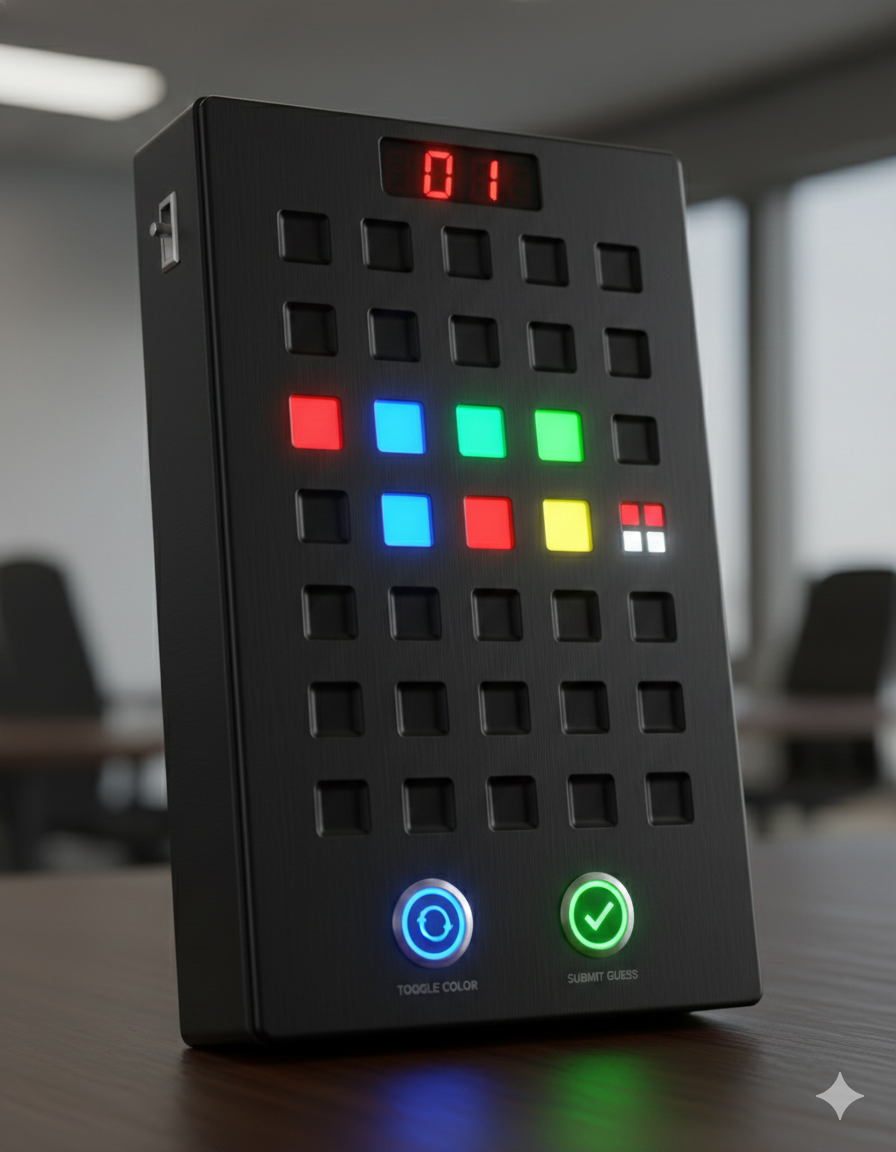
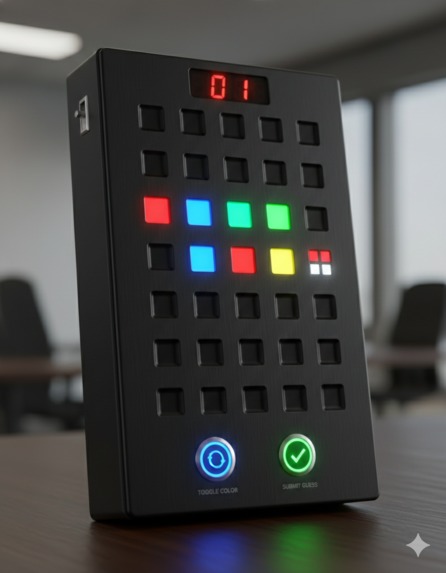
Mind Squeezer: Project Overview
Inspiration: The project was born from a desire to transform the classic Mastermind logic puzzle into a high-stakes, tactile handheld experience that keeps players on the edge of their seats.
What it does: Mind Squeezer challenges users to crack a randomised four-column secret code across seven levels of grid-based deduction, using real-time LED feedback to signal success or failure.
How we built it: We engineered the console using an ESP32-S3 microcontroller, integrating a 28-LED WS2812B grid, a multiplexed 7-segment display, and a dual-button interface programmed in C++.
Challenges we ran into: Our biggest hurdle was managing the complex power requirements and pin assignments of 36 concurrent LEDs and a display without overwhelming the ESP32-S3’s internal memory bus.
Accomplishments that we're proud of: We successfully optimised a high-speed multiplexing algorithm that allows the level tracker and RGB grid to run flawlessly without a single flicker during intense gameplay.
What we learned: Through this build, we mastered the intricacies of ESP32-S3 GPIO architecture, signal debounce logic, and the critical importance of shared ground planes in hardware prototyping.
What's next for Mind Squeezer: We plan to introduce a "Hard Mode" featuring a larger colour palette and a persistent high-score save system utilising the ESP32’s internal EEPROM.

Log in or sign up for Devpost to join the conversation.