-
-
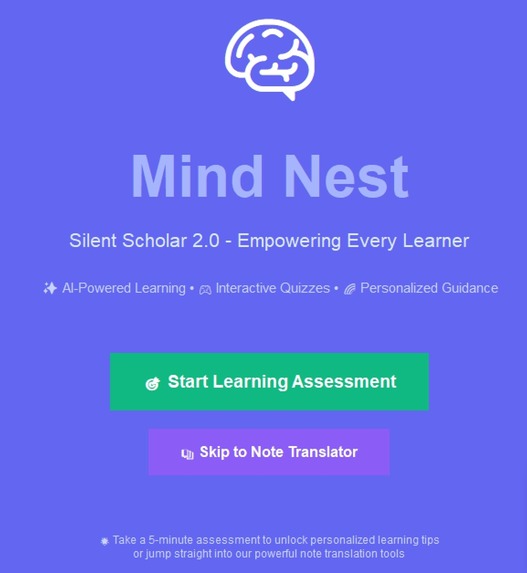
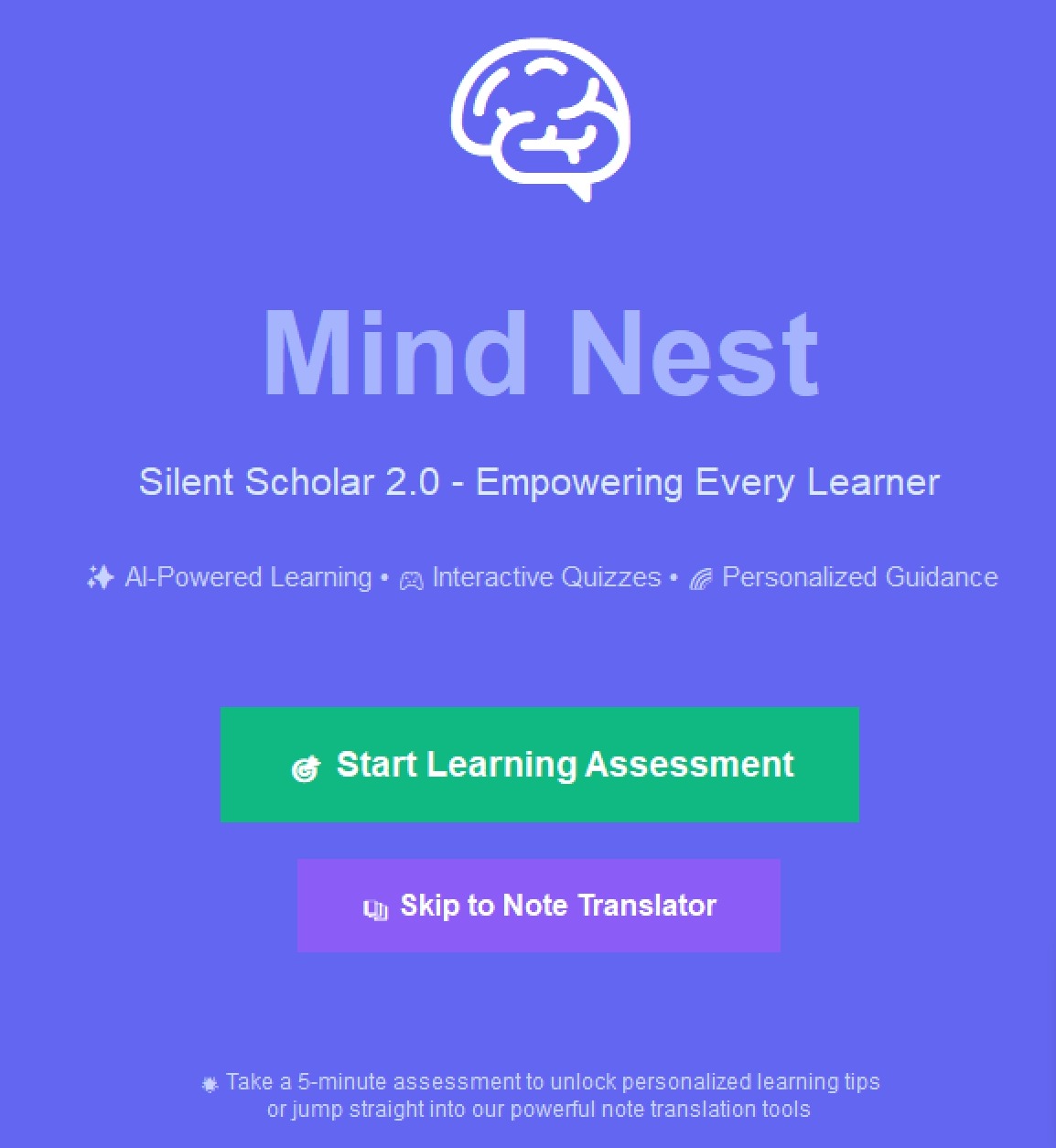
Launch Screen
-
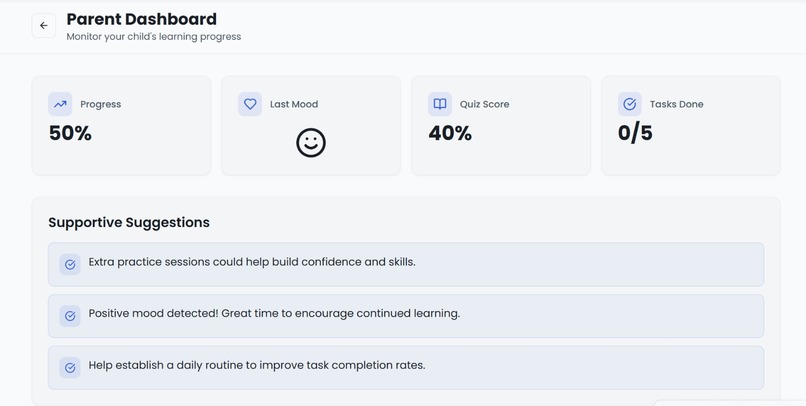
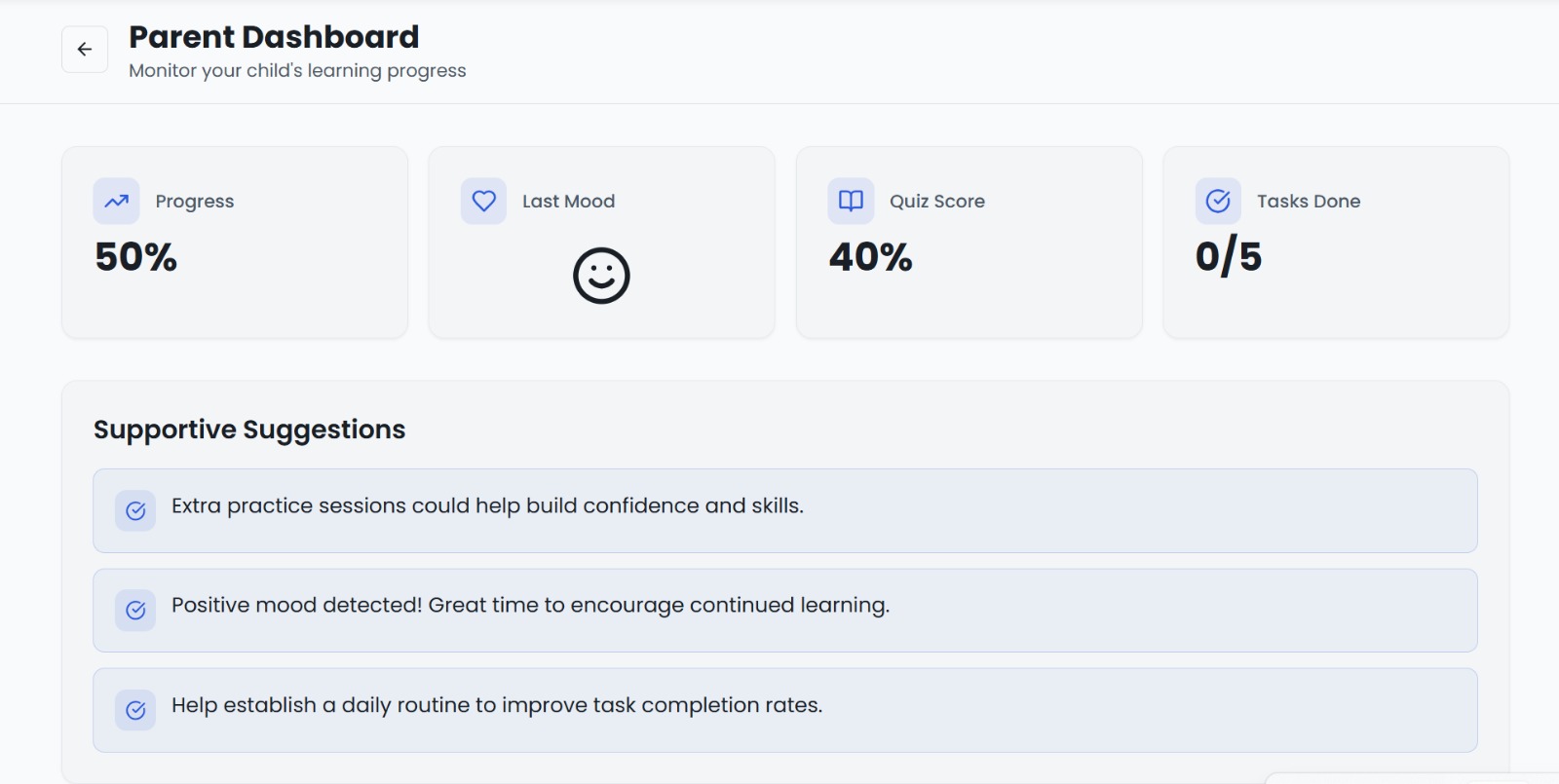
Parental Dashboard
-
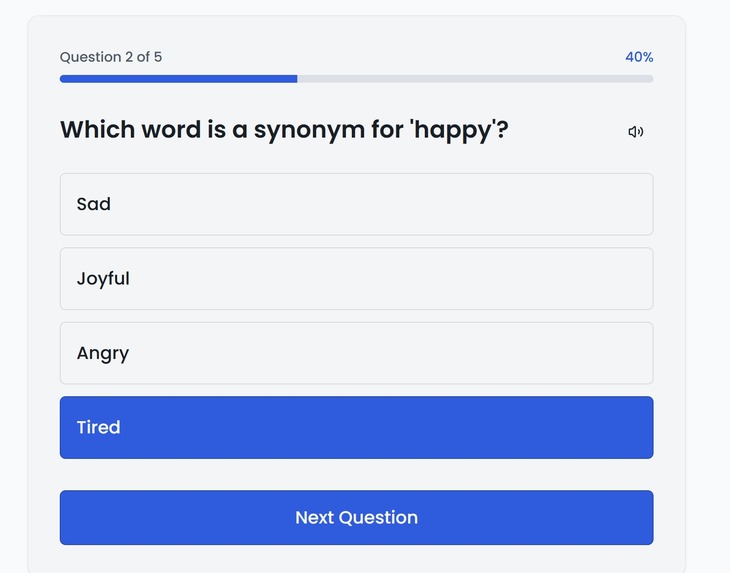
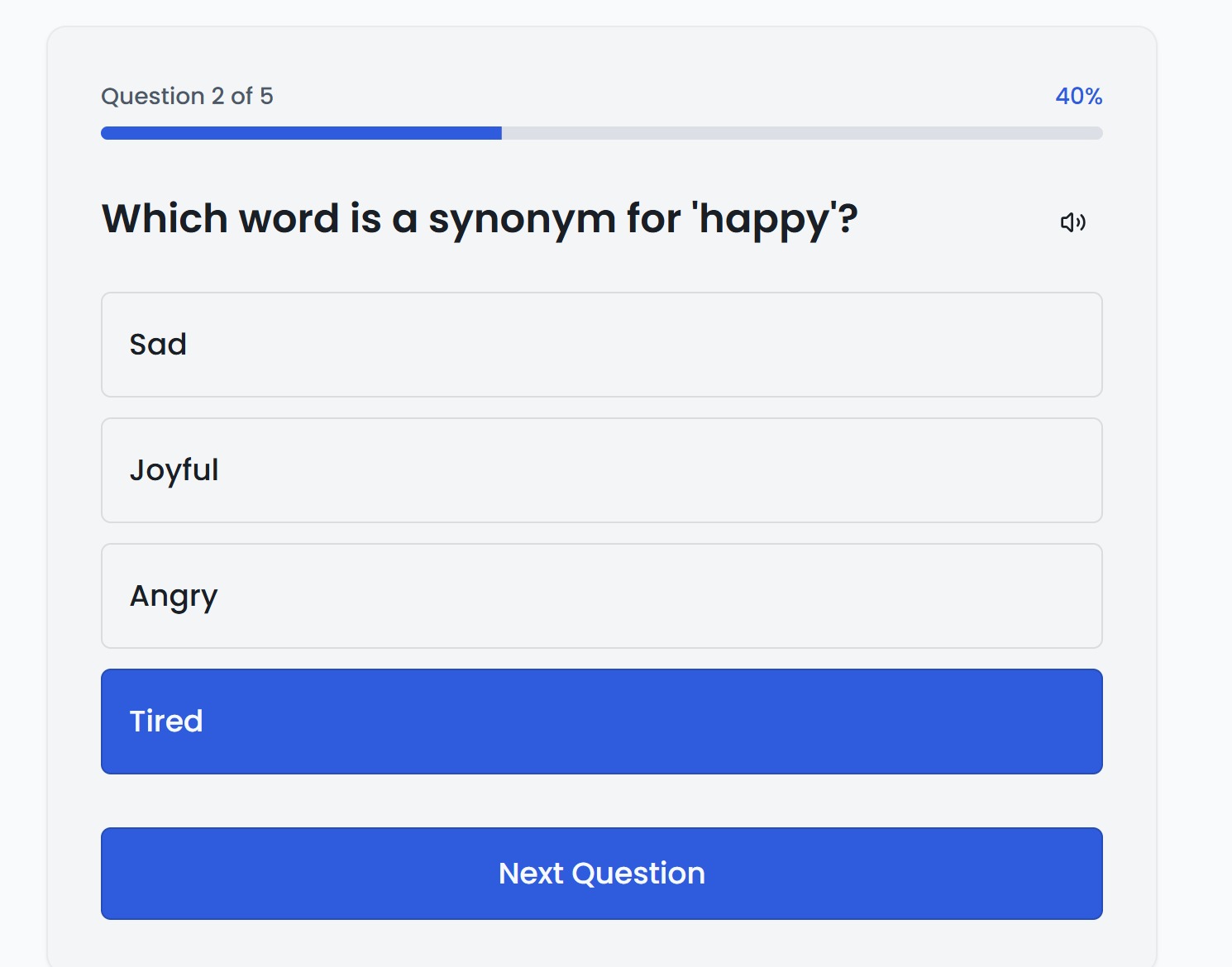
Quiz Demo Question
-
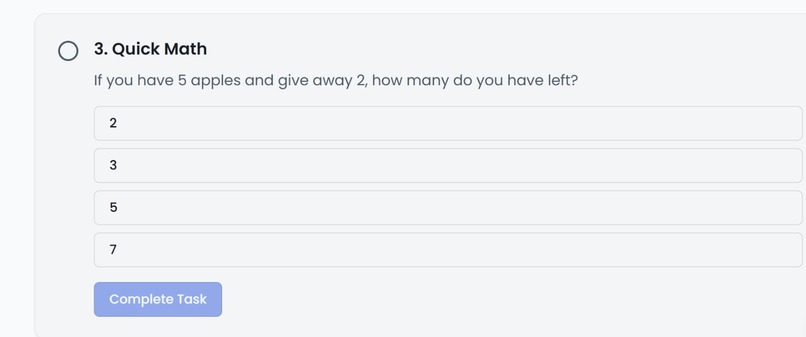
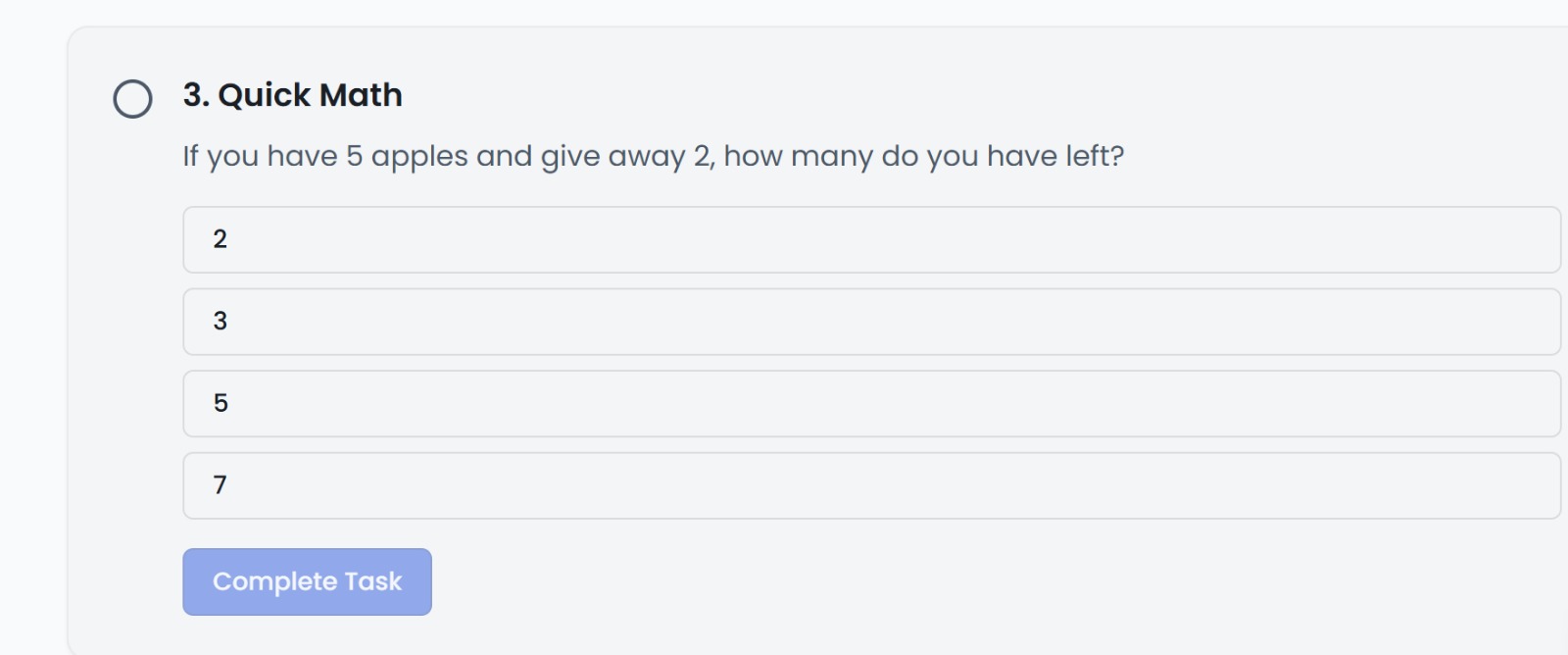
Daily task- Demo Question
-
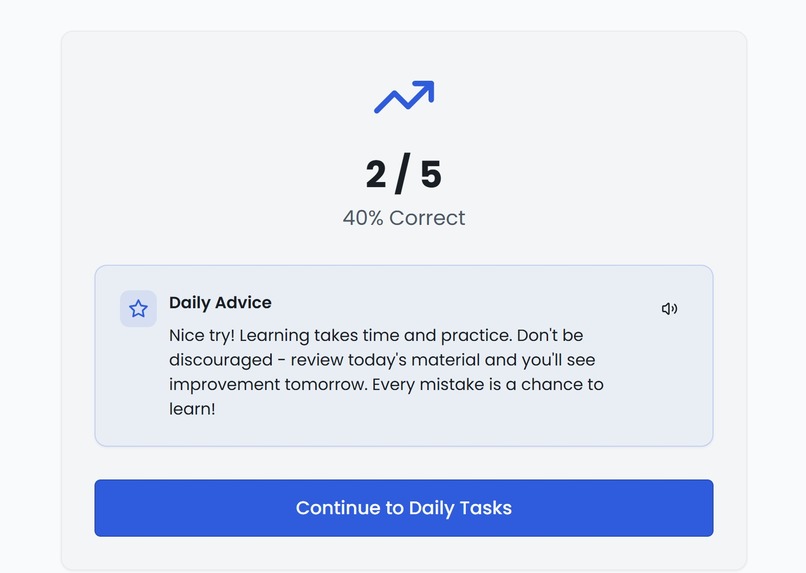
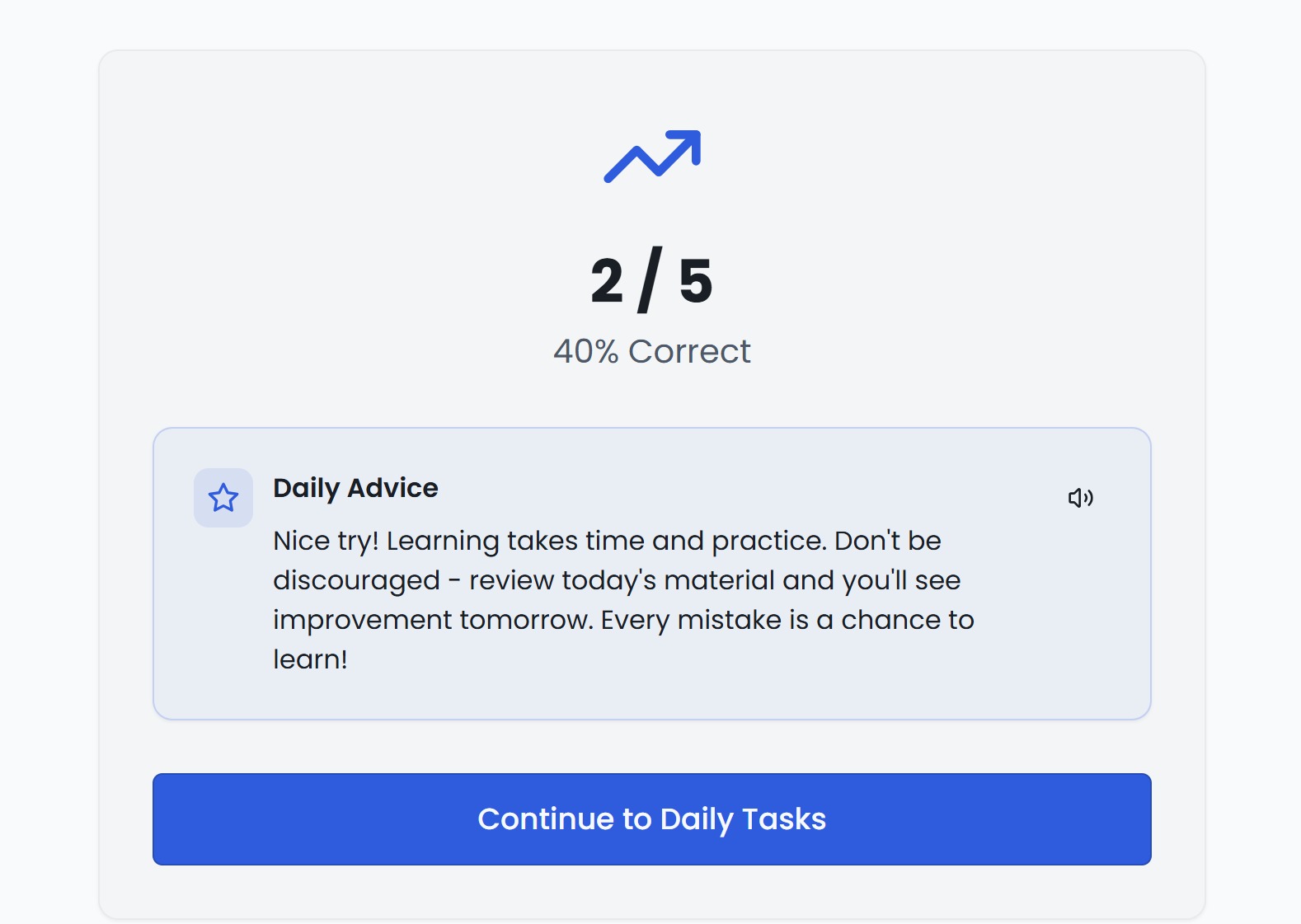
Analytics
-
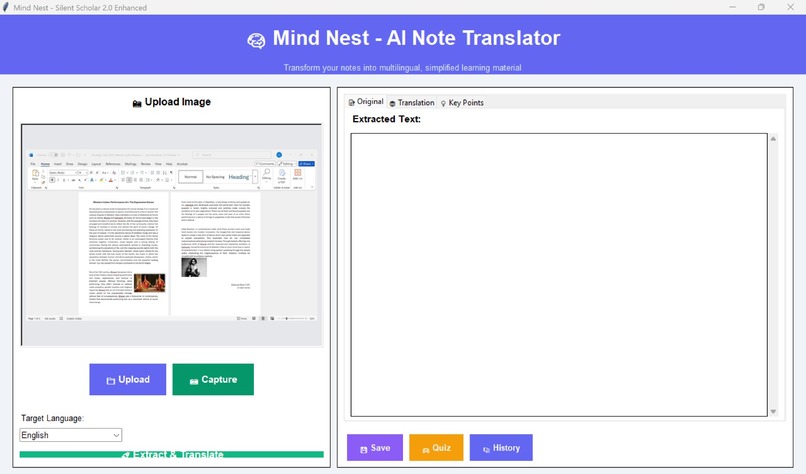
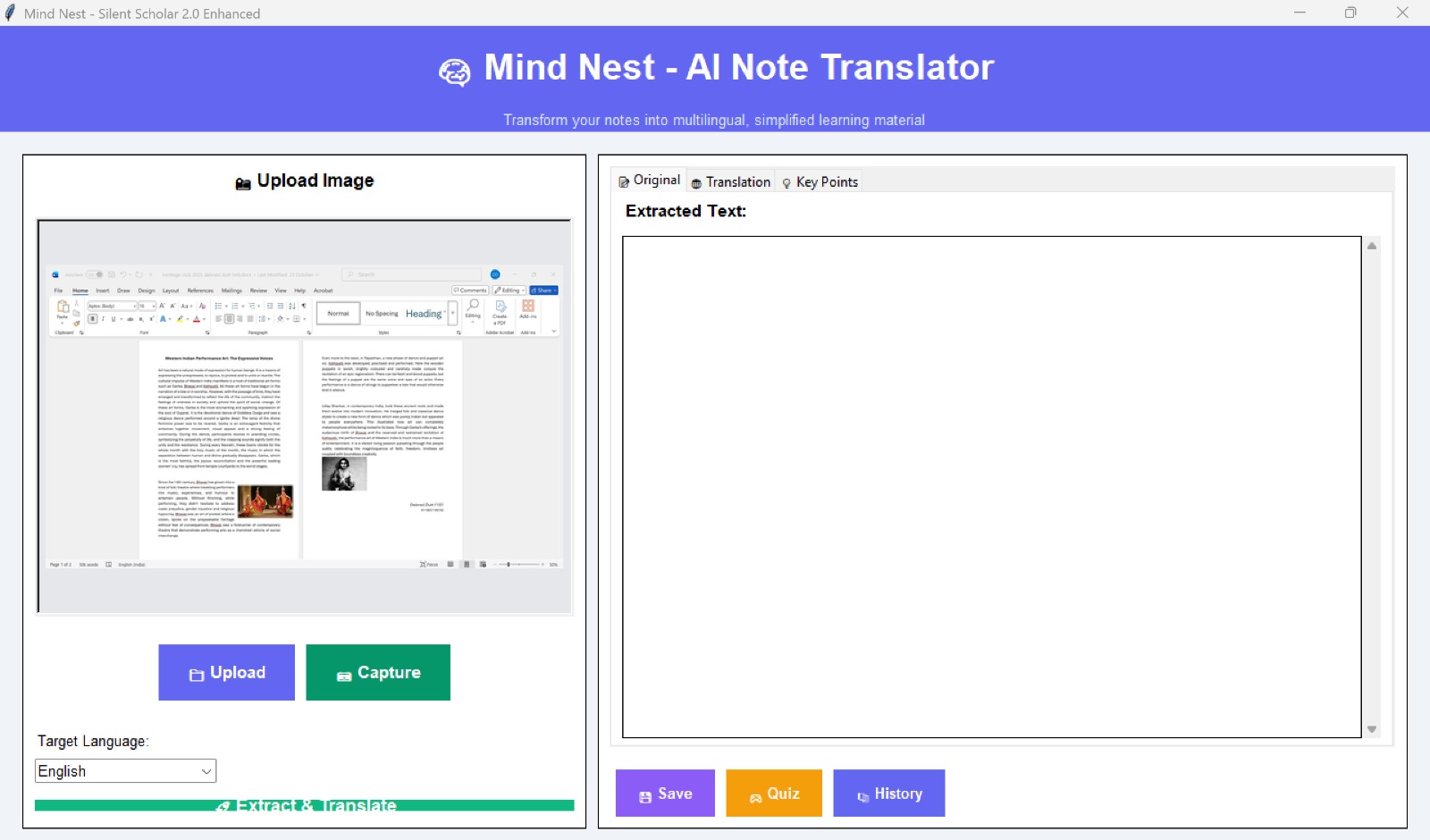
Notes language translator and summarizer and quiz generator
-
Mind Nest: Disability is the new Ability
Mind Nest
Inspiration A simple yet powerful observation inspired this project: “Students often carry their academic pressures and emotional stresses silently”. The society puts a tag on partially disabled children that they are “slow” or “weak,” but that is not true; they are just unlucky. Worldwide, 1 in 5 students suffer from processing disorders, dyslexia, ADHD, and more. Up to 40% of the middle schoolers experience difficulty in reading, understanding, and expressing. Over 50% of learning challenges and other difficulties faced by young minds go undiagnosed.
What It Does
Mind Nest is an app where a student facing difficulties in education can avail systems and methods to improve their mental health and learning abilities. It helps students and parents by: • Testing for their difficulties • Providing a safe environment for partially disabled children to seek guidance and improve learning • Showing clear, digestible summaries of their child’s progress • Identifying early signs of struggles or stress • Helps bridge communication gaps between children and parents This app helps students work their brains freely in an environment where they aren’t judged or undermined.
How We Built It
Mind Nest is designed using a layered structure that balances efficiency, privacy, and meaningful insight: 1. Student Interface A minimalistic interface that provides easy access to all tools present in the application. The student can choose their preferred font and dark/light mode. The app initially provides a daily quiz to assess the student's cognitive abilities, and the result provided by the quiz determines their progress level. According to this level, the app automatically provides suggestions/routine plans. The student then unlocks daily tasks that aim to improve hearing, comprehension, reasoning, pattern recognition, attention, memory, and matching abilities.
_2. The Insight Engine: The core of Mind Nest _
It analyses: • Repeated errors • Time taken to solve • Drops in engagement • Confidence fluctuations • Habits and patterns These signals are processed through a pattern-detection model that generates early indicators of academic and emotional risk zones. 3. Parent Insight Dashboard An easy, clean, and supportive interface that displays: • Weekly highlights • Strengths and challenges • Emotional trends • Actionable tips It only shows meaningful insights and no personal student information, which he/she does not want to share with their parents. It shows fundamental progress scores and reports that help determine a student’s condition.
Challenges We Ran Into • Designing privacy-respecting insights The biggest challenge was ensuring students feel safe expressing emotions while still giving parents useful information. • Making AI guidance empathetic It took time to design a recommendation language that encourages support instead of adding pressure. • Creating inclusivity for diverse families Ensuring Mind Nest works effectively in low-data environments, on low-end devices, and for non-tech-savvy parents required continuous simplification. • Bridging emotional and academic signals Combining educational analytics with emotional well-being insights demanded careful architectural planning. • Running tests and creating tasks to help challenged students overcome their hurdles
These challenges strengthened the project and shaped its mission and direction.
Accomplishments That We’re Proud Of • Building a concept alone, that does not exist in current ed-tech ecosystems: a parent–child wellbeing connection powered by AI • Achieving a balance between insight and privacy, something many apps overlook • Creating a system that is achievable, scalable, and globally relevant • Centering student wellbeing—not just academic scores—at the heart of the solution • Ideating an app that solves a critical yet overlooked problem in society: educating the disabled and treating them like humans Mind Nest stands out because it sees children as whole individuals, not just learners.
What We Learned • Academic performance cannot be separated from emotional well-being • Parents often lack visibility, not willingness • Responsible AI requires boundaries, empathy, and human-centered design • Simple user interfaces are often the hardest to design • Technology can strengthen relationships when used thoughtfully This project taught me that innovation is not only about new features—it is about understanding real human needs.
What’s Next for Mind Nest • ML integration: Training a lightweight pattern-detection model for early learning difficulty prediction • Using sound pattern questions and music to improve focus and mind stability • Growing the app and making it global and accessible to every student for free • School partnerships: Testing Mind Nest in real student-parent environments • Teacher integration: Adding an educator’s dashboard for holistic support • Using better AI systems: to analyse student reports and create better tasks • Localization: Multi-language versions for accessibility across India and globally • Offline mode: Support for rural or low-connectivity regions • Advanced wellbeing tools: Guided breathing, micro-meditations, positive prompts, and habit tracking


Log in or sign up for Devpost to join the conversation.